






Connect with us

News

16,000 doctors left Nigeria in seven years – Health Minister

Published

on

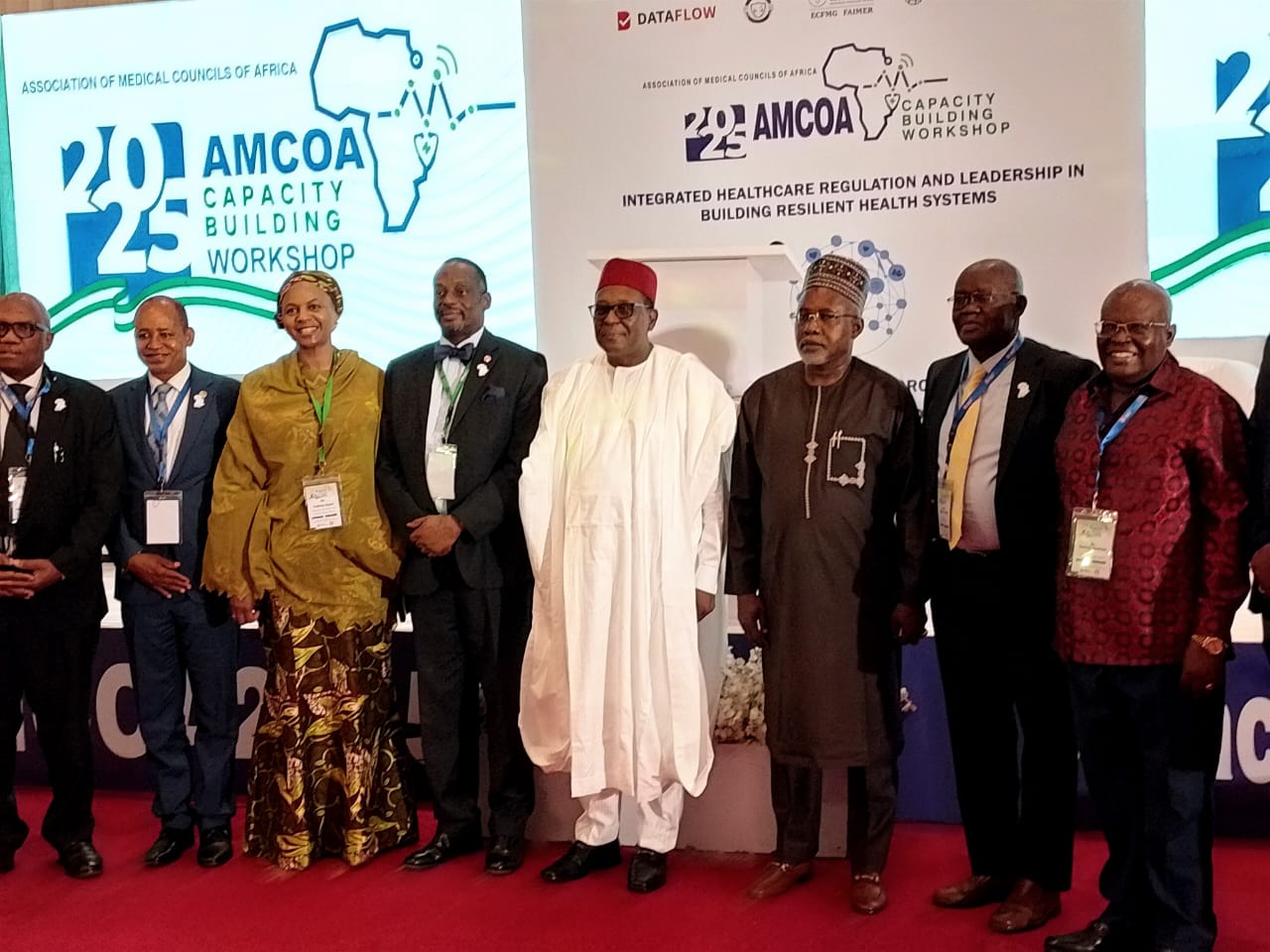
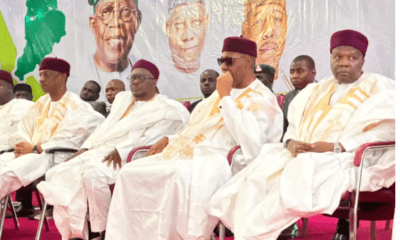
Members of AMCOA; the Registrar of MDCN, Dr Fatima Kyari; the Board Chairperson of MDCN, Prof Afolabi Lesi; the Coordinating Minister of Health and Social Welfare, Prof Muhammad Pate; the Minister of State of Humanitarian Affairs and Poverty Reduction, Dr Yusuf Sununu; and other AMCOA members. Credit: Lara Adejoro.
Spread the love

The Coordinating Minister of Health and Social Welfare, Prof Muhammad Pate, said over 16,000 Nigerian doctors have left the country in the last five to seven years to seek greener pastures in other countries.

Pate also said the doctor-to-population ratio is now 3.9 per 10,000 in the country, while the estimated cost of training one doctor exceeds $21,000.

This was as he lamented that nurses and midwives who left have also thinned the numbers healthcare workers in the country.

The minister disclosed this at the seventh annual capacity building workshop of the Association of Medical Councils of Africa in Abuja on Tuesday themed, “Integrated healthcare regulation and leadership in building resilient health systems.”

According to him, an increasing number of Nigeria’s talented healthcare professionals aspire to work in other countries—driven by factors such as economic opportunity, better working conditions, more advanced training, and superior research environments abroad.

Maduka College Advert

He said the migration of health professionals from developing countries is not new, but it has accelerated in recent years.

“In Nigeria alone, over 16,000 doctors are estimated to have left the country in the last five to seven years, with thousands more leaving in just the past few years. Nurses and midwives have also thinned in numbers. The doctor-to-population ratio now stands at around 3.9 per 10,000—well below the suggested global minimum.

“But this trend is not just about people leaving. It represents a fiscal loss. The estimated cost of training one doctor exceeds $21,000—a figure that reflects the magnitude of public financing walking out of our countries. It deeply affects our health systems—leaving many of our rural communities critically underserved.”

He, however, emphasised that the phenomenon offers an opportunity to rethink and reshape the policies, to manage the valuable health workforce in ways that benefit our countries first and foremost.

“In Nigeria, guided by the vision of President Bola Ahmed Tinubu, who African Heads of State appointed as the AU’s Continental Champion for Human Resources for Health and Community Health Delivery, we are pursuing a new direction. His vision is for Nigeria to become a prosperous, people-oriented country that contributes to a peaceful and thriving continent. Not a standalone Nigeria, but a Nigeria that is interlinked with all our neighbours and sister countries. Under the Renewed Hope Agenda, and within the framework of the Nigeria Health Sector Renewal Investment Initiative, we have embraced a new path—combining strategic realism with visionary ambition.

“The National Policy on Health Workforce Migration is a cornerstone of this path. It is designed to address health workforce migration with dignity—dignity for health workers, for the country, and the profession. It is data-driven, evidence-guided, and signals a clear direction. This is not a restrictive policy, nor is it one born out of resignation. We understand that the global health workforce shortage is at 18 million, and countries in the Global North face their human resource crises due to demographics and other factors. But our response is based on stewardship—balancing the rights of health professionals to seek opportunities abroad with our duty to protect the integrity and viability of our national health system.

“The objectives are clear – To retain and motivate health workers currently serving in Nigeria—thousands of whom work under difficult conditions; to establish ethical norms and explore bilateral frameworks for recruitment, aiming to correct global asymmetries; to expand training capacity—not only for domestic needs, but to contribute to global workforce needs, to enable structured reintegration for the thousands of Nigerian professionals abroad; and to strengthen governance, improve regulatory coordination, and build real-time data systems.”

He urged Africa to lead in forging a new global compact on health workforce mobility—anchored in pan-African training and accreditation standards; shared planning tools, evidence, and data; continental negotiating platforms with destination countries; and sustained investments in the people who care for our people.

The President of AMCOA, Prof Joel Okullo, stressed the importance of collaboration among African countries to tackle healthcare challenges and improve regulation and leadership across the continent.

He expressed the belief that the outcome of the workshop would produce actionable strategies to improve healthcare services across Africa.

“This year’s theme highlights our commitment to tackling the diverse array of challenges within the health regulatory landscape. It seeks to empower AMCOA members and associate members with the wisdom and skills needed for informed strategic and operational decisions in the coming year.

“In this intricate regulatory tapestry, our discussions will illuminate strategies and insights that will bolster regulators’ capabilities. Our focus will revolve around managing health workforce mobility, improving credentialing and information data management systems.

“Let us embark on this journey with enthusiasm and a shared sense of purpose. Our collaborative efforts today and over the next few days will lay the groundwork for transformative changes that will resonate across the healthcare landscape of Africa,” he noted.

The Registrar of the Medical and Dental Council of Nigeria, Dr Fatima Kyari, while welcoming participants to the event, noted that it was Nigeria’s first AMCOA workshop while commending the alignment of leadership towards the shared goal of patient safety.

The Board Chairperson of MDCN, Prof Afolabi Lesi highlighted the need for healthcare regulators to uphold global standards while adapting to local contexts.

Lesi, who is also the Chairman of the Local Organizing Committee for the workshop addressed the challenges of fragmented professional relationships that hinder implementation and compromise patient care.

“The reality is that while we have committed and clear directions at the level of governance, implementation of actions is bedevilled by the fractioned and fractious relationship among health workers who ought to be working as a team, with the patient (well-being and safety) as the primary focus of all our actions,” he said.

PUNCH

News

Enugu Govt begins Revalidation, Digitisation of Survey Records

Published

on

Spread the love

The Enugu State Government has commenced a Continuous Survey Revalidation and Digitisation Exercise as part of the ongoing Survey Records Digitisation Programme, aimed at establishing a fully digital, transparent and verifiable land administration system in the state.

The exercise, according to the government, is a key component of the digital transformation of the state’s land and survey records system and is designed to protect property rights, eliminate disputes arising from lost or defective records, and strengthen public confidence in land administration.

It also forms part of the comprehensive digital transformation agenda of the Governor Peter Mbah administration.

The government, in a statement signed by the Secretary to the State Government, Prof. Chidiebere Onyia, said the exercise was intended to ensure that land records in the state are properly verified, digitally captured and geographically mapped.

The government said the objective was to establish “a fully digital, transparent, and verifiable land administration framework that protects property rights, eliminates disputes arising from lost or defective records, and strengthens public confidence in land administration.”

Maduka College Advert

The statement said the participation of all landowners, estate developers, surveyors and property owners was required to ensure the accuracy and completion of the process.

According to the government, the affected persons are required to submit their Survey Plans, Layout Approvals and related land documents for verification and revalidation, digital identity creation and geospatial mapping, as well as the issuance of Digital Land Identity Cards.

To make the exercise faster, easier and more accessible, the government has designated six revalidation centres across the state.

The centres are the Office of the Surveyor General, 5/27 Colliery Avenue, GRA, Enugu; Enugu State Housing Development Corporation (ESHDC) Headquarters, No. 21 Kingsway Road, GRA, Enugu; and the Enugu Geographic Information System (ENGIS) Headquarters, 4 Chisimdi Ukpata Close, Ebeano Estate, Enugu.

Others are the Enugu State Ministry of Housing, State Secretariat, Enugu; Nsukka Local Government Area Secretariat, Nsukka; and Enugu East Local Government Area Secretariat, Nkwo Nike.

The government strongly advised all landowners to visit any of the designated centres and complete the process promptly, stressing that their participation was essential to the success of the exercise and the protection of their property interests.

“Full participation is essential for the success of this exercise and the protection of every genuine landowner’s interest,” the government said.

The exercise is expected to further strengthen the integrity of Enugu State’s land administration system by ensuring that survey records are properly verified, digitally captured, geographically mapped and readily verifiable, while reducing the risks associated with lost, defective or disputed land records.

Continue Reading

News

BREAKING: Bandits abduct Zamfara LG chairman, kill four security men

Published

on

Hon. Nura Umar Bungudu…abducted
Spread the love

Suspected terrorists have abducted the Chairman of Bungudu Local Government Area of Zamfara State, Hon. Nura Umar Bungudu, after launching a deadly night attack on his residence that left four security operatives dead.

The attackers reportedly stormed Bungudu town on Thursday night and headed straight to the council chairman’s residence in the Zango area, less than 20 kilometres from the state capital, Gusau.

During the attack, the gunmen allegedly overpowered the security personnel guarding the residence, killing two police officers and two vigilantes before abducting the council chairman and members of his family.

Efforts by security operatives to repel the attackers were unsuccessful as the assailants, said to be heavily armed, overran the security team and escaped with the chairman.

A resident of the community, who spoke on condition of anonymity, said the attack was swift and well coordinated, leaving little room for the security personnel to mount an effective defence.

Maduka College Advert

According to the source, two police officers and two vigilantes, including a volunteer vigilante who had been actively involved in defending the community against bandit attacks, lost their lives during the exchange of gunfire.

The resident said the security personnel fought bravely but were overwhelmed by the superior firepower of the attackers.

“The bandits came into the town determined to carry out their mission. The chairman’s security team resisted, but they were outgunned,” the source said.

The incident is the latest in a series of violent attacks that have continued to plague communities across Zamfara State despite ongoing security operations.

The source disclosed that the bandits initially abducted the council chairman, his wife and their children during the attack.

However, security operatives who pursued the fleeing gunmen reportedly succeeded in rescuing four or five of the children before the attackers escaped into the surrounding bush.

Despite the rescue effort, the chairman was taken away by the gunmen, while the fate of his wife could not be independently confirmed at the time of filing this report.

According to the resident, reinforcement teams were mobilised shortly after the attack, but they arrived after the assailants had already fled the area.

“The security personnel tried their best, but by the time reinforcements got there, the bandits had already executed their plan and escaped,” he said.

Continue Reading

News

Troops neutralise 85 bandits, rescue 283 hostages as 1 Brigade intensifies operations in Zamfara

Published

on

1 Brigade Commander, Brig-Gen Mustapha Jimoh
Spread the love

By ZAGAZOLA MAKAMA

The Headquarters 1 Brigade, Nigerian Army, has recorded significant operational successes in its ongoing counter-banditry campaign in Zamfara State, neutralising 85 bandits, rescuing 283 kidnapped victims, recovering a large cache of weapons and destroying several terrorist camps through sustained intelligence-driven operations.

The Brigade Commander, Brig.-Gen. Mustapha Jimoh, disclosed the achievements during an operational briefing, saying the successes were recorded through coordinated kinetic and non-kinetic operations conducted across the brigade’s Area of Responsibility (AOR).

Jimoh said the operations had significantly degraded the operational capability of armed groups operating in Zamfara State, while improving security for residents, farmers and commuters.

He explained that banditry in the North-West, particularly in Zamfara, had evolved over the years from isolated criminal activities such as cattle rustling into organised violent networks engaged in kidnapping for ransom, attacks on communities, highway ambushes, destruction of public infrastructure and attacks against security personnel.

Maduka College Advert

According to him, the proliferation of illicit small arms and light weapons, weak governance in remote communities and the exploitation of expansive forest reserves enabled criminal groups to establish strongholds and expand their operational reach.

He noted that from about 2011, armed groups became increasingly organised, establishing camps within the expansive forests of Kuyambana, Kagara, Kamuku and Gungu, which served as operational bases and mobility corridors for criminal activities.

“As the security situation deteriorated, some of these criminal groups adopted tactics commonly associated with terrorist organisations, including coordinated attacks on communities, the use of improvised explosive devices, sophisticated weapons and deliberate intimidation of civilian populations,” Jimoh said.

The Brigade Commander noted that the Federal Government subsequently intensified military operations and designated several of the armed groups as terrorist organisations under Nigerian law, providing a stronger legal and operational framework for confronting the threats.

He said Zamfara remains one of the country’s major security flashpoints because of its strategic location, vast forested terrain and proximity to neighbouring states, which criminal elements continue to exploit for movement, logistics and concealment.

According to him, the activities of the criminal groups have disrupted farming and commercial activities, displaced thousands of residents, destroyed livelihoods and threatened critical national infrastructure.

Jimoh said Headquarters 1 Brigade, in collaboration with other components of the Armed Forces, security agencies and relevant stakeholders, had sustained intelligence-led operations aimed at dismantling terrorist and bandit networks, destroying their camps, rescuing kidnapped victims, recovering arms and ammunition and restoring civil authority across affected communities.

He said the Brigade’s sustained operational efforts, enhanced inter-agency cooperation and robust civil-military engagements had continued to yield positive results despite the evolving security challenges.

Providing a breakdown of recent operational achievements, the Brigade Commander disclosed that troops neutralised 85 terrorists and bandits, while also recovering 144 motorcycles used by criminal elements for mobility, logistics and attacks.

He said the seizure of the motorcycles had significantly disrupted the operational capability and movement of the criminal groups across the theatre.

Jimoh further revealed that troops recovered a substantial cache of weapons, including 46 AK-47 rifles, one PKT machine gun, two General Purpose Machine Guns (GPMGs), three Rocket-Propelled Grenade (RPG) launchers, and six locally fabricated rifles.

He added that troops also recovered large quantities of ammunition, further weakening the firepower available to the criminal groups.

According to him, additional recoveries included 48 AK-47 magazines, one handgun magazine and one locally fabricated rifle magazine, significantly reducing the terrorists’ operational effectiveness.

In one of the most significant humanitarian outcomes of the operations, Jimoh disclosed that troops rescued 283 kidnapped victims, comprising women, children, students and other civilians held captive by criminal gangs.

He added that several rustled livestock recovered during operations had been returned to their rightful owners, helping affected families rebuild their livelihoods while restoring public confidence in security forces.

The Brigade Commander also disclosed that troops destroyed several terrorist camps, logistics bases and command hideouts during clearance operations, thereby denying criminal elements safe havens from which to launch attacks.

He noted that the Brigade had maintained sustained area domination through offensive clearance operations, fighting patrols, ambushes, long-range patrols, cordon-and-search operations and rapid response missions across identified flashpoints.

Jimoh explained that Headquarters 1 Brigade is responsible for military operations across Zamfara and Kebbi states, adding that while Kebbi remains relatively peaceful, Zamfara continues to experience persistent threats from banditry, kidnapping, cattle rustling and related violent crimes, particularly in the central and western senatorial districts.

To dominate the operational environment, he said the Brigade had established Forward Operating Bases (FOBs), combat locations, checkpoints and fighting patrols across vulnerable areas to ensure rapid response and sustained military presence.

The Brigade Commander described the operating environment as particularly challenging due to the vast forest reserves, rugged terrain and widely dispersed rural settlements, which provide concealment and mobility corridors for criminal elements.

Despite these challenges, he said sustained intelligence-led operations had considerably degraded the capabilities of armed groups, leading to improved freedom of movement for residents and safer conditions for farming, commerce and other socio-economic activities.

Jimoh assured that the Brigade would continue to intensify intelligence-driven offensive operations while strengthening collaboration with other security agencies and local communities to achieve lasting peace across Zamfara and Kebbi states.

“The evolving nature of the threat requires sustained military operations, credible intelligence, responsible media engagement and continuous support from local communities to achieve enduring peace and security,” he said.

He reaffirmed the Brigade’s commitment to protecting lives and property, restoring civil authority and creating a secure environment that would support sustainable socio-economic development across its area of responsibility. (Zagazola)

Continue Reading

Trending

Maduka College Advert