Politics
Aburi was not a single’s tennis match between Gowon and Ojukwu – Professor ABC Nwosu


Former Minister of Health and eminent statesman, PROFESSOR A. B. C. NWOSU, in this interview responded to some of the issues raised by General Yakubu Gowon in his recent interview, on his roles in the Nigeria – Biafra War. He is of the view that there are critical issues that the former Head of State did not address, warning that “Nigeria will continue to be an unstable state until we restructure.”
You must have read General Yakubu Gowon’s interview; as a person close to Chukwuemeka Odumegwu Ojukwu and final year undergraduate who was politically active, how did you feel at the time?
I felt sad. Very sad because I had expected that Gowon would reveal at least some of the things which have bothered me and Ndigbo from 1966 till now. Gowon’s interview was not only sad for me because of his self-serving half-truth but for the major things not said. I don’t think that Gowon believes that total deviation from the Aburi agreement was the cause of the civil war but everybody, and I mean everybody who was a “Biafran” at the time, doubted that it was. That’s why ‘On Aburi We Stand’ was the war cry from the East. If Aburi had been implemented there would have been no Nigeria – Biafra War. I thank the respected Journalist, Chuks Iloegbunam, for his masterful response to General Gowon published in the Vanguard.

For example, when General Gowon said that he didn’t call his Secretary to Government to the Aburi meeting whilst Ojukwu did, I said to myself that General Gowon has lost it because Aburi was not a single’s tennis match between him and his so-called friend, Ojukwu.
Why is Aburi critical for Nigeria?
Aburi was critical because every other discussion on what had happened namely, the January 15 coup, May 29 pogrom and the July 29 counter coup had failed to resolve the matter as the various delegations had feared for their lives and would not attend further meetings. Chief Obafemi Awolowo’s meeting with Ojukwu on May 5th and 6th, 1967 did not succeed in bringing the Eastern delegation to the meeting. As Gowon correctly said, the East could not attend any meeting in Nigeria because they feared for their lives. As Gowon also said, a British war plane as well as a Naval war ship were considered but rejected by the East because of the involvement of Britain in the conflict. So the acceptable venue was General Ankrah and his offer of Aburi in Ghana. It was not a meeting between Gowon and Ojukwu, that’s why I insist it was not a single’s tennis match between the two of them. It was a meeting between General Gowon, who came with the federal cabinet secretariat; General Hassan Usman Katsina and the Secretary to the Northern Government; Governor David Ejoor, who came with the Secretary of the Midwest Government; Governor Adeyinka Adebayo, who came with the Secretary of the Western Nigerian government and Governor Odumegwu Ojukwu, who came with Eastern Nigerian government. So, it was a full-fledged Nigerian meeting to avert a war and not a meeting between Gowon and Ojukwu.
One of the key unanimous decisions at Aburi was that the conflict would not be settled through a war. Therefore to say that we fought to live together is not true since all of them had agreed that fighting was not necessary and would not be used to settle the matter. In any case, the matter of dividing Nigeria into 12 states was neither tabled nor discussed at Aburi. What was discussed was devolution of powers from the centre to the federating units including coercive agencies of State like Police, Army etc. What was discussed with unanimity was in making appointments to “Super Permanent Secretaries”, Inspector General of Power, etc. This greatly irked the super permanent secretaries at the time, who submitted an anti-Aburu agreement memo.

What was required in order to keep good faith was a follow-up meeting by all those present at the original meeting where the original agreement was reached. The other members cannot implement their version of the agreement without consulting and getting the concurrence of the Eastern government that wore the shoes that were pinching them on all sides – refugees and rehabilitation, burial of so many dead bodies and fleeing citizens, etc. So, it was wrong to have implemented the civil servant-mutilated Aburi Agreement. If one checks the sequence of events leading to the Nigeria – Biafra war, the creation of 12 states on 5th May 1967, which was not part of Aburi, was done to take the wind off the sails of the urge for the creation of Biafra. This was clearly bad faith shown by the federal government. Unfortunately, this was the impetus that accelerated the declaration of Biafra on 30th May, 1967 because people of the East feared that the federal government could declare a state of emergency and invade the East. Biafra was not declared before the creation of the 12 states, which was not in the spirit of the Aburi agreement.
One of the major agreements of the Aburi was the repatriation of soldiers to their states of origin. The West continued to whine over this until the Nigeria – Biafra war, where they joined the fight against Biafra.
But Aburi will continue to hunt Nigeria in the form of RESTRUCTURING of the Nigerian polity along the intentions of the founding fathers of the republic, where there are no senior or junior Nigerians, and where the federating units are coordinate government, not this nonsense of sub-national government. Sub-national government implies that Tafawa Balewa was senior to Sir Ahmadu Bello, Chief Obafemi Awolowo and Chief Dr. Michael Okpara. To me that is arrant nonsense, and all these people using the term Sub-national government don’t know what a federation is.
You told me that you are worried about Gowon’s silence over January 15 coup in 1966 and the counter coup of July 1966, what are your worries?
I am worried about the January 15th coup because I know it was fully investigated by the special branch of the police under late Inspector General of Police MD Yusuf and the report up till now is not public, even though some people have managed to lay their hands on it. The report was said to have been submitted to the Chief of Army Staff under General Ironsi (which would be General Gowon) but Gowon has said nothing about it so far. I would have liked to know how many people were investigated; the statement that they made and in particular, whether it was an Igbo coup. I know for certain that the report indicated that Emmanuel Arinze Ifeajuna and Demola Ademoyiga were the central figures of the coup and that Chukwuma Kaduna Nzeogu was involved towards the later part of their planning. There are rumors that others were involved but Nigerians would like to see what the report was like. It was also sad that General Gowon kept total silence on the counter coup of July 29 and how he became Supreme Commander.
That interview by Gowon was also totally silent on the pogrom and killing of civilians in the North and West of Nigeria. Easterners, especially Ndigbo, would wonder why he was silent because these were the bases of fears of insecurity by Easterners, especially Ndigbo, about their lives and property in their own country without being protected by their own government. Knowing the reason why people get killed and their properties seized when they venture out of their states of origin, is critical for stability in Nigeria.
Gowon stated that he gave specific instructions on the rules of engagement for the Nigerian Army for the war…(cuts in)
Really, and were these rules enforced? I never read of the tribunal and trials of those behind the Asaba Massacre for example. Meanwhile, “Asaba still mourns” and have erected a memorial to give their sons respectable rest. The other day Ogbomosho people wanted National Honours for their son and hero, Brigadier Benjamin Adekunle. I wonder whether it was the same Brigadier Adekunle, the Black Scorpion, who ordered that anything moving should be shot, even the dogs, but I leave that for now. And the West still feels that Colonel Emma Nwaobosi should be publicly hanged for killing Governor Akintola and his wife whilst idolizing Chief Awolowo. It perplexes me. ,
Finally, on war crimes, I am still to come to terms with the fact that starvation of new born children, their mothers and toddlers could be a legitimate instrument of war. Is that part of the UN Convention? And yet nobody talks about these things, just wishing that those who lost their loved ones should just hide in the corner and shut their mouths. And Gowon kept quiet on this in the interview.
It is obvious, from what you said, that you expected more from Gowon’s interview…
Yes. As I would have expected from Ojukwu, if he ever gave an interview in the later part of his life. In three months it will be 55 years since the war ended and Nigerians are living together but the same problems that were to be solved by Aburi are still very much with us. We keep having conferences upon conferences on how to live in a more stable united country. We even had under Obasanjo a Truth and Reconciliation Commission under the renowned jurist, Chukwudifu Oputa with also renowned Bishop Matthew Hassan Kukah as Secretary, but nobody was ready to talk. Nobody also had any regrets. Governor Usman Farouk, Governor of Northwest State when Nigeria was a 12 state structure and member of the investigative panel of MD Yusuf Panel for the January 15 coup, wrote his book titled, “There were Victors and There were Vanquished”. Some of us have copies. Nobody is still ready to talk and say exactly what happened. Even when these national conferences agree on issues like State Police, Devolution of Powers, Less funds for the Federal Government, more percentage on Derivation Principle, they don’t get implemented either by a president who throws the report into the trash bin nor by a president, who is supposed to be an apostle of true federalism and fiscal federalism. The consoling issue is that we shall all go the way of all mortals whether we like it or not. And Nigeria will continue to be an unstable state until we RESTRUCTURE.









…Promises to prioritise roads, agriculture, education, electricity and peace
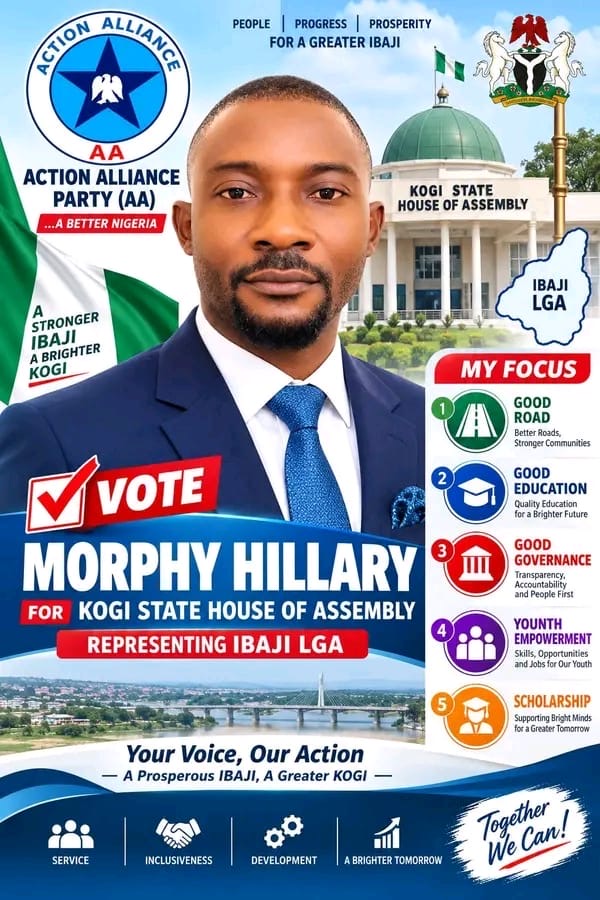
IYANO, Kogi State — The African Action Alliance(AA) candidate for the Kogi State House of Assembly seat representing Ibaji Local Government Area, Ugbaje Friday, has unveiled a development agenda focusing on road infrastructure, agriculture, education, electricity and peaceful coexistence among communities.
Friday, who hails from Iyano Ward in Ibaji, said his proposed legislative agenda would address critical challenges confronting residents and promote economic growth and improved public services across the local government.
Roads, Flooding and Rural Connectivity
The AA candidate identified poor road infrastructure and recurrent flooding as major obstacles to transportation, trade, education, healthcare delivery and other economic activities in Ibaji.
He said he would advocate the construction and rehabilitation of roads designed to withstand flooding and improve connectivity among communities.
According to him, better road networks would ease movement, improve access to essential services and enable farmers to transport their produce to markets more efficiently.
Agriculture and Economic Development
Highlighting agriculture as a major source of livelihood in Ibaji, Friday said he would pursue policies and legislative initiatives to strengthen the sector and support local farmers.
He noted that the area produces rice, yam and other agricultural commodities, adding that attention should also be given to processing, storage, transportation and market access to reduce post-harvest losses and improve farmers’ earnings.
He said a stronger agricultural value chain could create economic opportunities and support the growth of local enterprises.
Education and Electricity
Friday also pledged to make education a priority, promising to advocate improved school infrastructure and increased government investment in the education sector across Ibaji.
On electricity, he said he would seek government intervention to address persistent power supply challenges, noting that provision of electricity would benefit households, schools, healthcare facilities and small businesses.
He maintained that access to essential infrastructure and public services was critical to improving living standards and accelerating development in the area.
Peaceful Coexistence and Conflict Resolution
Addressing the issue of communal conflicts, the AA candidate said dialogue, reconciliation and cooperation would be central to his approach to promoting peace in Ibaji.
He pledged to work with traditional rulers, community leaders, youth groups, women’s organisations, security agencies and relevant government institutions to address the causes of disputes and encourage peaceful resolutions.
Friday stressed that sustainable development would be difficult to achieve without peace and cooperation among communities.
Constituency Projects and Legislative Priorities
The candidate said that, if elected, he would seek to facilitate constituency projects in critical sectors, including roads, education, healthcare, water supply, electricity and agriculture.
He also pledged to sponsor bills and support legislative measures aimed at addressing the needs of Ibaji residents and advancing their welfare.
He listed infrastructure development, agricultural support, education, electricity, community peace and effective constituency representation among the key areas of his proposed legislative agenda.
Calls for Credible Electoral Process
With the Kogi State local government council elections scheduled for October 17, 2026, Friday called on the Kogi State Independent Electoral Commission to ensure a transparent, credible and lawful electoral process.
He urged the electoral body to adhere to established procedures, ensure proper counting of votes and protect the integrity of the election.
The AA candidate also appealed to residents of Ibaji to support his candidacy and participate actively in the democratic process as he seeks to represent the local government in the Kogi State House of Assembly.
He said his campaign would remain focused on the interests of the people, peaceful coexistence and sustainable development.
For enquiries and further engagement:
* Email: morphyhillary@gmail.com
* Phone: 08038275895
Ugbaje Friday is the African Action Congress candidate seeking election to represent Ibaji Local Government Area in the Kogi State House of Assembly.
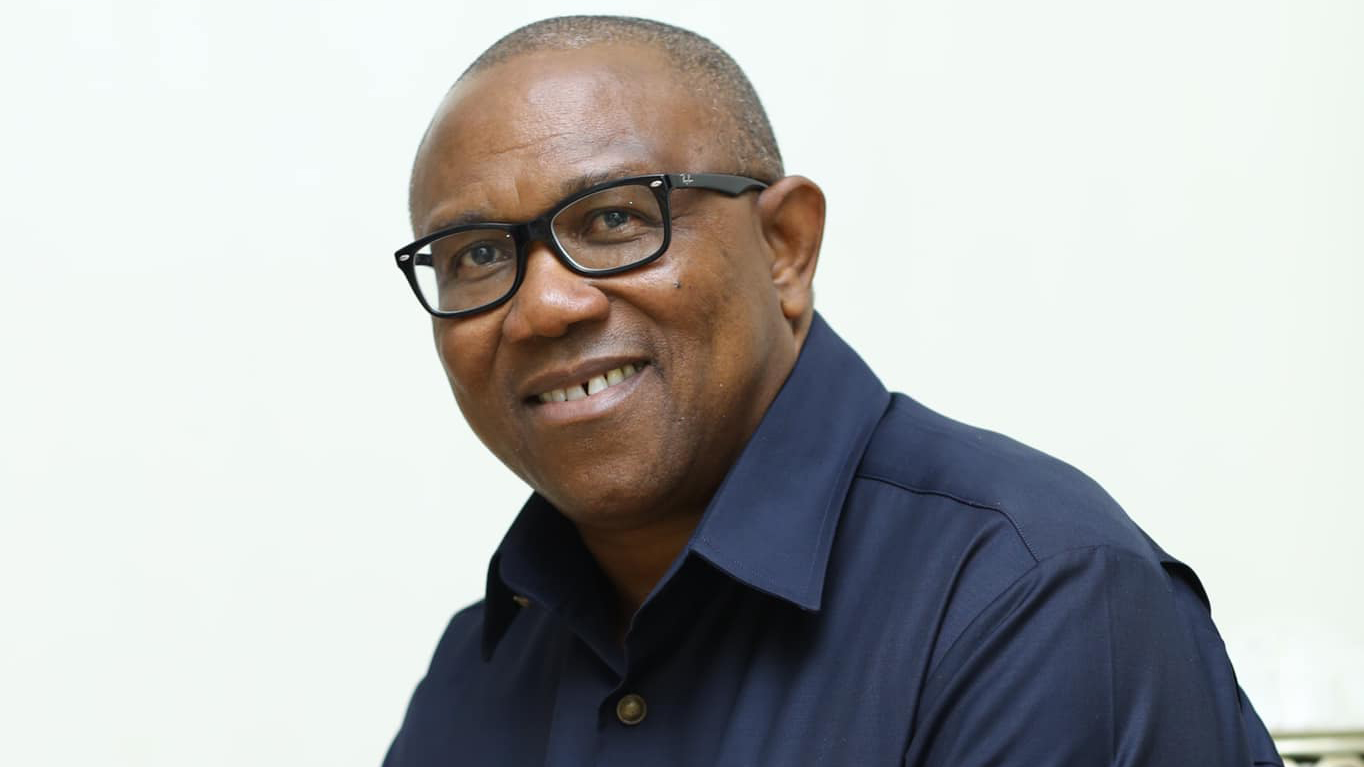
The Peter Obi Media Office has accused Vice-President Kashim Shettima of applying double standards in his treatment of opposition leaders, questioning why he would demand respect for former Vice-President Atiku Abubakar while reportedly describing Peter Obi as “diminished”.
In a statement issued on Sunday, October 18, 2026, the spokesman of the Peter Obi Media Office, Idris Zekeri Jnr., criticised Shettima’s reported remarks, describing them as contrary to the principles of political decency and mutual respect.
The office said the apparent contrast between Shettima’s call for respect for Atiku and his alleged disparagement of Obi raised questions about consistency, political tolerance and the treatment of opposition figures in Nigeria’s political space.
Zekeri argued that although Shettima had the right to disagree with Obi politically, such differences should not prevent him from extending the same courtesy he demanded for Atiku to other opposition leaders.
“Although Shettima has the right to oppose Obi, it is difficult to understand why he would demand respect for one opposition leader while casually dismissing another,” the statement said.
The media office questioned what it described as selective respect, insisting that political disagreements should not determine which opposition figures deserve dignified treatment.
According to the statement, the issue was not whether Shettima supported Atiku or opposed Obi, but whether the principle of respecting political opponents should apply equally, regardless of their regional backgrounds, political affiliations or electoral ambitions.
The office also maintained that Obi had conducted his political engagements with decorum, focusing on governance and public policy rather than personal attacks against political opponents.
It challenged Shettima to compare their respective records as former governors of Borno and Anambra states, claiming that Obi’s performance in key areas of governance surpassed that of the Vice-President.
The statement highlighted Obi’s record in fiscal discipline and investments in education and healthcare during his tenure as governor of Anambra State, arguing that his achievements should be assessed on the basis of verifiable facts.
It urged Shettima to provide evidence to counter Obi’s record if he disagreed with the former Anambra governor’s achievements, rather than resorting to personal descriptions.
“If Shettima contests any aspect of Obi’s record, he should present the facts rather than resort to political name-calling,” the statement added.
The media office further called on political leaders from the South-East, particularly members of the All Progressives Congress (APC), to reflect on the implications of the Vice-President’s reported comments.
It criticised South-East political figures who had allegedly shown disrespect towards Obi, arguing that political loyalty should not come at the expense of defending the dignity of fellow Nigerians.
The office insisted that no political affiliation should justify a situation in which respect was demanded for one opposition leader but withheld from another.
“Nigeria needs a contest based on records and ideas, not selective respect and political denigration,” the statement said.
It added that the Nigerian electorate, rather than political rhetoric or dismissive remarks by public office holders, would ultimately determine Obi’s political relevance.

The All Progressives Congress (APC) has won all chairmanship and councillorship positions in the just-concluded local government election in Kogi State.
The Chairman of the Kogi State Independent Electoral Commission (KOSIEC), Mamman Nda Eri, announced the results at the commission’s secretariat in Lokoja.
Speaking after the announcement, Eri emphasised that elections should not be seen as battles between enemies but as democratic contests among citizens with a shared destiny.
He noted that although political parties might differ in ideology and approach, the people of Kogi State had a collective responsibility to sustain peace and promote the development of the state.
The KOSIEC chairman urged residents to remain peaceful, law-abiding and united to accelerate the state’s development.
According to him, the election has produced representatives who now face the greater responsibility of building stronger communities and improving the living conditions of the people.
Eri also reaffirmed the commission’s commitment to protecting the integrity of the electoral process and strengthening grassroots democracy in the state.
Thirteen political parties participated in the local government election, which was described as generally peaceful across Kogi State.
-
 News23 hours ago
JUST IN: Former Delta Governor, Uduaghan, dies
-
Faith2 days ago
Awka Anglican Diocese Rejects Ibezim’s Suspension, Threatens to Leave Church of Nigeria
-
News3 days ago
BREAKING: Mbah Extends Enugu Movement Restriction to 10pm, Scraps Keke Ticketing
-
Politics2 days ago
Nigeria’s Weak Opposition and the Cost of One-Party Dominance: Can the Opposition Rebuild Before 2027?
-
News3 days ago
2027: Keke Riders Endorse Mbah, Tinubu
-
News23 hours ago
Federal High Court Upholds ENSSAA’s N150m Political Campaign Billboard Fee, CTC Reveals
-
News2 days ago
Corruption turning Nigerian Courts to ‘market stalls’ — Retired Justice Augie
-
Politics1 day ago
AA Assembly Candidate, Ugbaje Friday, Unveils Development Agenda for Ibaji