News
Fuel price hike: Nigerians lament worsening hunger, soaring transport fares


Nigerians have lamented worsening living conditions after the recent hike in fuel prices.
The hardship, which started after the removal of fuel subsidy and devaluation of the naira, was exacerbated on Wednesday when the pump price of fuel jumped from around N800 to N1,150 per litre.

Our correspondents noted that since then, there has been a skyrocketing increase in the prices of food items as transport costs soared.
Many Nigerians expressed frustration with the situation, saying they could no longer afford to feed their family members due to strained budgets.
Saturday PUNCH gathered that intra-city transporters in Abuja and the Federal Capital Territory, have increased their fares by N100 while those operating inter-state hiked fares by N500 to N1,000, depending on the destination.

A worker in a financial firm in Lagos, Donald Eke, said his transport fare from New Road to Lekki Phase 1 on Lagos Island increased by over 100 per cent.
“The fare has been increasing steadily, but since the recent fuel hike, a trip that used to cost N300 to my office now costs N700. With serious negotiation, you could pay N600,” he stated.
It was learnt that commuters from Iyana Iba to the Iyana Ipaja axis of Lagos, who used to spend N500, now pay between N700 and N800. Similarly, the fare from the Lagos State University gate to Iyana Ipaja, which used to be N400, is now N700, representing a 75 per cent increase.
Commuters who travel from Iyana Iba and LASU gate to Igando, who formerly paid N200, now spend N300 since the fuel hike began.
One of our correspondents also gathered that commuters from Igando to Egbeda, who used to pay N300, now spend between N400 and N500.
Ogun State
In Ogun State, passengers who ply the Lagos-Ibadan Expressway lamented the hike in transport fares, which they said increased by 100 per cent.
A sales representative, Treasure Ettah, who resides in Magboro, told Saturday PUNCH that the transport fare from the Prayer City axis of the Lagos-Ibadan Expressway to his workplace in Gbagada, Lagos, spiked by 100 to 140 per cent.
“My transport fare is normally N500, and at most N700 to Gbagada before. Now, it’s between N1,000 to N1,400 from Prayer City. I am just managing the situation because I can’t sit at home,” Ettah said.
A pharmacist, who resides in Magboro, Chinedum Ucheaga, and works at Ojodu, Berger, also told one of our correspondents that the fuel hike led to an increase in bus fares by at least 60 per cent.
“Before, I used to spend like N400, as the least fare to Berger. Now, it seems N500 is the lowest they can carry you because as of today (Friday), some passengers paid N700, while others spent N800 due to the blockage along the Lagos-Ibadan Expressway because of the construction. Some passengers spent as much as N1,000 going to Ikeja Secretariat,” he said.
Passengers reported that commercial buses from Ibafo to Magboro, previously charging N200, now charge N300, while the fare to Ikorodu was increased from N1,000 to N1,500.
Commuters from Magboro to Oshodi, who previously spent N800, now pay as high as N1,400, reflecting a 75 per cent increase.
Magboro to Ojota, which was N500, was hiked to N800; while Ketu fare was also hiked from N300 to N500.
A commuter, Ireti Ayodele, lamented that the hike in the cost of transportation had made a mess of her earnings.
She said, “My income is not even enough to cover transport costs again. The same place I paid N500 for on Thursday is now N1,000 today. This is too much.”
Osun, Ondo states
In Osun State, commercial operators known as Korope drivers in Osogbo, have also adjusted their fares due to the fuel hike.
A resident of the state, Kazeem Badmus, said the transport fares to Okuku, Ife, Ilesa and Iwo have been increased to N2,500, N2,000, N1,500 and N2,000 from N1,500, N1,200 and N2,000 respectively.
At the Aregbe Park in the state capital, the transport fare from Osogbo, which was formerly N3,500 as of Tuesday, has now increased to N4,000.
“Commuters travelling to Ondo, Ore, and Lagos now pay between N5,000 and N8,000,” an Osogbo resident told one of our correspondents.
Checks by Saturday PUNCH showed that the price of petrol ranged from N1,000 to N1,200 across most of the filling stations in Ondo State.
The transport fare of commercial vehicles at the shortest distance in Ondo State is now N200, while inter-state commercial vehicles have increased their fares by 20 per cent.
A car owner, Edwards Oladeinde, lamented that he bought four litres of petrol for N6,000.
He said, “The government should be consistent on fuel prices because this development has aggravated our suffering.”
Plateau, Yobe, Benue states
In Plateau State, residents expressed worry that due to increased transportation fares, more people might be forced to remain indoors.
A resident, Philip Dontur, who spoke with one of our correspondents, noted that the transport fare from Jos to Shendam, which used to be N4,000 a few months ago, has now increased to N6,000.
“Jos-Shendam route used to be very busy because of the high traffic volume of passengers but now, the situation has changed. Those loading in the park have to stay for hours without seeing passengers while the road has become virtually empty. All because of the high cost of transportation because people no longer want to travel,” Dontur stated.
A similar trend was observed in Yobe State where Saturday PUNCH gathered that transportation costs have also surged by about 50 per cent.
Previously, the transport fares from Damaturu to Potiskum ranged from N1,500 to N1,800, depending on the type of vehicle, with mass transit and Yobe Line buses which usually cost less than commercial vehicles.
In Makurdi, the Benue State capital, transportation costs have skyrocketed, including commercial motorcycles, a major means of transportation, which has also gone up from N200 for a short distance to N350.
A resident of High Level, Makurdi who simply identified himself as Teseer, said, “If there is no emergency, why do you need to move around, people have been forced to stay indoors.”
Foodstuff prices skyrocket
Related News
Over one million more Nigerians hit by severe food crisis in 2024 – Report
People close to Tinubu pushing harmful reforms – Ndume
Hike in fuel price may worsen scarcity, IPMAN warns
Saturday PUNCH also learnt that a bag of yam flours which was sold at N400,000 two weeks ago in Lagos, now sells at N550,000 as of the time of filing this report.
Also, a bag of rice that was previously sold at N80,000 has been increased to N100,000 according to a foodstuffs seller in Ibadan, Oyo State.
In Bauchi State, traders, customers and transporters of food produce lamented the hike in the prices of commodities.
Speaking with one of our correspondents, a trader in New GRA Bauchi, Anas Yusuf, explained that the cost of transporting goods from Kano to Bauchi skyrocketed due to higher fuel prices.
“When I order goods at a higher price, customers complain, and some even leave without purchasing anything because they can’t afford it. Customers often express their anger, but as a business owner, I have to remain patient to keep them coming,” Anas said.
A father of one, Muazu Husseini, explained that in the past, his family fed three times a day, but currently, they eat once due to the hike in food prices.
He added, “In the past, N10,000 was enough to last the family for two weeks, but now it is not enough to last even a week. While prices may go down sometimes, the relief doesn’t reach everywhere.”
A bread seller in the Rukuba Road community, in Jos, Plateau State, Mrs Charity Gideon, also lamented the hike in food prices.
“People no longer buy bread like before due to high price and everything is caused by high fuel cost. I don’t know what the government wants the people to do before they know that everything is virtually dependent on the price of fuel,” she said.
In Yobe State, several food sellers also complained about the significant drop in patronage in the food markets over the past two days.
During a visit to the popular Bayan-Tasha market in Damaturu, one of our correspondents observed a decline in the number of buyers and sellers present in the market.
A trader in the market, Mallam Haruna Mamman, said, “The price of a measure of rice, both local and imported, has increased significantly. The local variety, which used to cost between N3,700 and N3,900, now costs between N4,500 and N5,400, depending on the type.”
He continued, “Maize, which previously cost between N3,800 and N4,000, now costs between N4,500 and N4,600. Similarly, millet and sorghum, which were priced between N2,000 and N2,200, have also seen price hikes.”
Similarly, when one of our correspondents visited Wadatta Market in Benue State, he observed a drastic drop in the number of customers.
A trader at the market, who is known as Terdue, said many shop owners, especially those dealing in fabrics, utensils and other stuff, seldom come to the market.
He said, “The cost of a measure of local rice which was sold for N3,100 on Thursday now goes for N3,200 today (Friday).
“A basin of garri that used to cost N22,500 now goes for N32,000, so also other food items like beans, millet and corn.”
A trader, who gave his name simply as Mallam Yusuf and sells fruits at the market, said three oranges which used to be N100 now cost N250. Similarly, one apple which used to cost N200 is now sold for N400.
Hunger dey, Netizens cry out
Many Nigerians have also taken to social media to express their frustration over the recent fuel price hikes, lamenting that there is hunger in the land.
The mood seems to have been captured in a trending song by an up-and-coming artiste and skit maker, Lawal Michael, popularly known as Nasboi.
Michael, in the song titled, ‘Hunger dey’, said economic hardship is biting hard and Nigerians are suffering.
“There is no food, rice and garri are expensive. There is ulcer, and there is no food to cure it. Hunger will kill somebody in Lagos.”
His song resonated with the conditions of many Nigerians who also expressed frustration with getting by daily.
An X user, Dr Hafsatu Danladi, said Nigerians were sinking deeper into poverty because the economy was in free fall.
She wrote, “It is heartbreaking to watch a government so out of touch with the pain of its own people. How much more can we endure?
“Fuel prices have skyrocketed, inflation is at an all-time high, and survival feels like a daily battle. Meanwhile, T-pain (Tinubu) is holidaying in London on taxpayer money while Nigerians go to bed on empty stomachs. This is beyond shameful.”
Also commenting on the fuel hike, Benson Onyekachi, on his X handle, stated that Nigeria was experiencing the worst economic crisis in about 30 years, adding that the hardship was contributing to citizens’ mental health crises.
“People are not in their best selves anymore, the majority looking tensed and tired, overwhelmed with worries of how to sail through this present economic hardship without getting drowned in it. The atmosphere in Nigeria now is not encouraging at all, people just surviving to fight another day”, said Olayode Temitayo.
According to a netizen, Nnenna Okoronkeo, Nigerians have turned into beggars in their own country.
“We have been rendered destitute in what is supposed to be our free country. For how long are we going to keep adjusting? People have turned into beggars, they are fast losing their minds and even taking their own lives. It is crazy times in Nigeria, Tinubu is out to kill us,” she wrote.
Echoing the same complaint, an X user, Oluwawemimo Awe-Kolawole, lamented that commodities that used to be affordable to Nigerians became luxury within a year, adding that Nigerians are now “fighting each other on soup matter.”
Tinubu daring Nigerians –Protest organisers
The organizers of the #EndBadGovernance and #FearlessinOctober protests lampooned President Tinubu over the recent hike in the pump price of Premium Motor Spirit.
Speaking in separate interviews with our correspondent on Friday, the organisers demanded the immediate reversal of the fuel price.
The National Coordinator, the Take it Back Movement, Juwon Sanyaolu said the President was daring Nigerians with the latest price hike, adding that his group and other organisers would consider their next line of action.
On his part, the Initiator, Creative Change Centre, Omole Ibukun, noted that he and other organisers of the last protests were mobilising and would announce action which would be taken afterwards.
He said, “The continuous hike in fuel price is a reflection of how dubious the Nigerian government is when it comes to telling Nigerians the truth about the implications of the policies they implement on the masses. The government has fraudulently portrayed subsidy removal and deregulation as the key to lowering fuel prices for Nigerians, but we can all see that’s a lie.
“Our demand stands and it is that this country has enough resources presently to return fuel price to pre-May 29, 2023 price. One important way to achieve this is to get our public refineries working rather than put the Nigerian people at the mercy of imported fuel or at the mercy of a private refinery, despite Nigeria being a major oil-producing country.
“However, we are presently engaged in democratic mobilisation of efforts for the mass of Nigerians to agree on a form of direct action, which could be a protest, that we can use to respond to this new attack on our living conditions by the government. It is that democratic mobilisation that will determine when a protest will commence on this.” (PUNCH)










The Federal Government’s Independent Investigative Committee probing the deaths of 37 persons in the custody of the Nigeria Security and Civil Defence Corps in Niger State has found that the deceased died from asphyxiation.
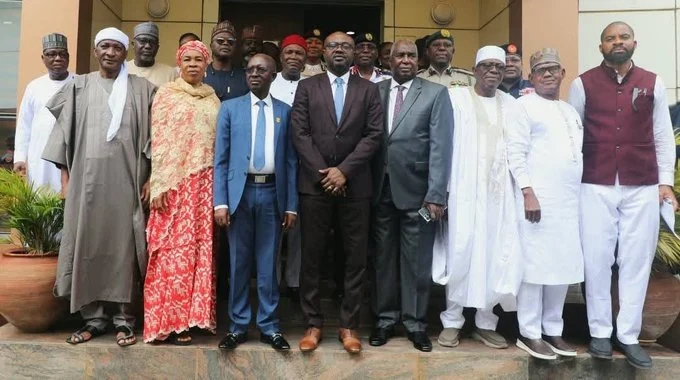
The committee Chairman and former Deputy Director-General of the Department of State Services, Jonathan Kure, disclosed this on Tuesday while presenting the panel’s report to the Minister of Interior, Olubunmi Tunji-Ojo, in Abuja.
Kure stated that the panel recommended that one point four billion be paid to the families of 33 victims and forty-four survivors.
The committee chairman added that the deaths were avoidable as the victims, inclng 14 minors, were held in inhuman conditions.
The committee also recommended summary dismissal of the state commandant of the Niger State Command of the Nigeria Security and Civil Defence Corps and all other officers who were directly involved in the detention and eventual death of the miners
The committee equally recommended institutional reforms for the Nigeria Security and Civil Defence Corps in order to strengthen the leadership of the corps.
The Minister of Interior, who received the report, promised to implement the recommendations of the committee in order to ensure justice for all affected persons.
Tunji-Ojo also directed the commandant of the Corps to immediately suspend all officers who cleaned up the detention centre in order to destroy evidence.
The finding marks a major development in the investigation into the deaths of the suspected illegal miners, who died on September 17, 2026, while in the custody of the NSCDC Niger State Command in Minna.
The victims were among dozens of persons arrested during operations against suspected illegal mining in the M.I. Wushishi and Lukoto areas of the state. (PUNCH)
…Sen. Nnamani, Nwobodo, Dr. Nnamani, Chime, Ugwuanyi, Prof. Nnaji, Arthur Eze, Frank Nweke, Madueke, others get advisory roles
…Udeh, Nwoye, Utazi, Egumgbe, Ben Collins Ndu, Onyia, others head 51 Directorates
…Council to be inaugurated on Tuesday
The Enugu State Chapter of the All Progressives Congress (APC), on Monday, unveiled the party’s Campaign Council ahead of the 2027 general elections.
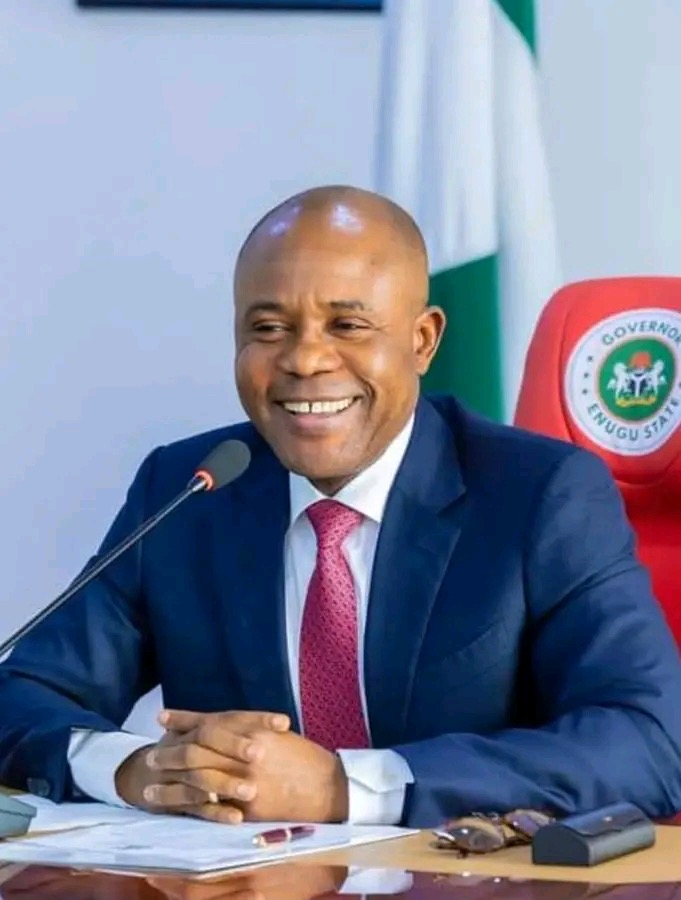
The Campaign Council, comprising 51 Directorates, is chaired by the Governor of the state, Dr. Peter Mbah, while the Deputy Governor, Barr. Ifeanyi Ossai; Deputy National Chairman, APC (South); Speaker, Enugu State House of Assembly, Hon. Uchenna Ugwu; and the Chairman of the party in the state, Dr. Martin Chukwunweike, are Vice Chairmen.
The list signed by Chukwunweike and the Secretary of Enugu APC, Hon. Chukwudi Nnadozie, also has Chief Charlie Mbah as the Director-General of the Campaign Organisation and Dr. Eric Oluedo as the Secretary-General.
Deacon Okey Ogbodo, Dr. Dan Shere, and Hon. S.K.E. Udeh-Okoye are Deputy Campaign DGs for Enugu East Senatorial District, Enugu North Senatorial District, and Enugu West Senatorial District, respectively.
Barr. Steve Oruruo is the Campaign Spokesperson and Director of the Public Communication Committee, with Dr. Austin Okolie as co-spokesperson and Dr. Malachy Agbo as Secretary.
Mazi Uche Anichukwu and Dan Nwomeh, both drawn from the Governor’s media team, head the Directorate of New Media and Strategic Communication and the Directorate of Mainstream Media, respectively. Dr. Collins Ogbu is the Secretary of the former, while Dr. Reuben Onyishi is the Secretary of the latter.
Barr. Victor Udeh leads the Administration Directorate, while Dr. Ben Nwoye and Arc. Uche Nwatu are the Director and Co-Director of the Fundraising Committee, respectively.
Former Chief of the Naval Staff, Vice Admiral Ikechukwu Ogalla (Rtd.), chairs the Security Directorate, while former Inspector General of Police, Ogbono Onovo (Rtd.), is the Secretary.
The Minister of Innovation, Science and Technology is in charge of the Directorate of Government Appointees Coordination (Federal and State), with Prof. Chidiebere Onyia as Secretary, while former Speaker of the Enugu State House of Assembly, Rt. Hon. Eugene Odoh, heads Inter-Party Affairs.
Senator Osita Ngwu, Senator Ikeje Asogwa, and Senator Kelvin Chukwu are Coordinators of the Campaign Council in Enugu West, Enugu North, and Enugu East, respectively.
Meanwhile, in their co-signed statement, Chukwunweike and Nnadozie said the size of the Campaign Council was a reflection of “the conviction that every community, ward, local government area, professional group, support organisation, youth body, women’s group, elder, party faithful and person of goodwill must be seen, heard and meaningfully engaged.”
“Appointment into the campaign structure is therefore not merely an honour; it is a call to duty, accountability and measurable contribution,” they stated.
The Council will be inaugurated at the International Conference Centre, Enugu on Tuesday, October 27, 2026.
All members of the Campaign Council are to be seated before 3pm.
CLICK LINK BELOW TO SEE FULL LIST:
APC ENUGU CAMPAIGN COUNCIL COMPOSITION-1
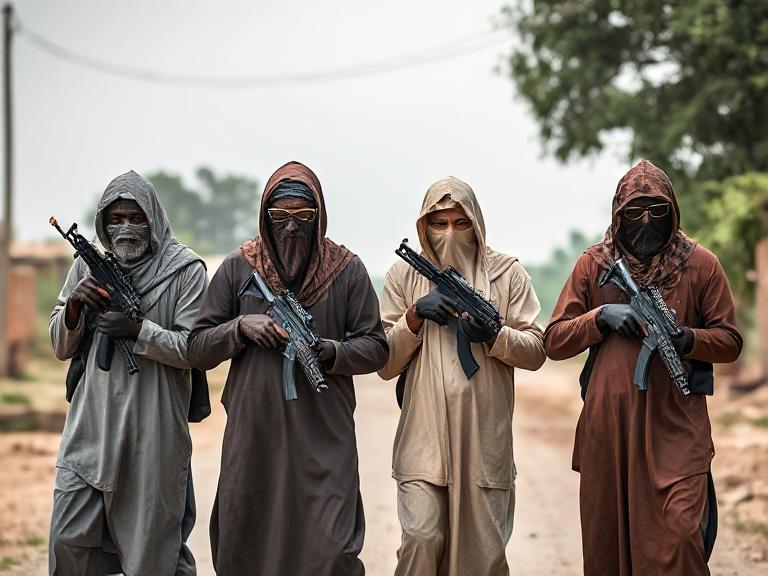
Tension has gripped parts of Kwara State following the reported abduction of members of the Iru Ekun Security Group, a security outfit spearheaded by Yoruba nation agitator Sunday Adeyemo, popularly known as Sunday Igboho.
The assailants reportedly abducted the security operatives and forced them to renounce their activities of protecting communities in the state.
According to reports, the abducted members pleaded for their release and were compelled to renounce their community protection activities.
The Iru Ekun Security Group was established to protect Yoruba communities in Kwara State against terrorist attacks and kidnappings.
The reported abduction has sparked fear among residents who rely on the group for protection against insecurity in their communities.
As of the time of filing this report, Igboho had yet to issue a statement on the reported abduction of the security group members.
-
 Features2 days ago
Mmesoma Umeorini: When Love Turns Deadly, and a Young Woman Pays With Her Life
-
Features2 days ago
Why Igbos Celebrate New Yam Festival Worldwide: The History, Cultural Significance and Lessons For The Younger Generation
-
News1 day ago
BREAKING: Tension as Video Shows Islamic Group Members Allegedly Calling for AK-47 to Kill Christians in Enugu, Jos
-
News2 days ago
Kogi Police Probe Alleged Murder-Suicide Involving Two Officers
-
News20 hours ago
Ifeanyi Ubah’s Elder Sister, Fidelia Chigbogu, Dies Suddenly at 61
-
News2 days ago
NCDC Reports Two Suspected Ebola Cases as Contacts Rise to 53
-
News2 days ago
Enugu Traders Pledge Support for Mbah’s Second Term, Cite Market Reforms
-
News20 hours ago
Terrorists Abduct Sunday Igboho’s Iru Ekun Security Group Members in Kwara