News
How doctor forgot scissors inside me, told me to shed weight after I complained — Nursing mother


In an exclusive interview, Ogochukwu said she developed swelling and complications due to particles left inside her when she underwent a C-section in May 2023, to deliver her baby.
Following the delivery, she noted that she began feeling severe pain in her abdomen with swollen legs.

When she complained, she noted that instead of taking it with seriousness, her doctor, Ejim Chibike, made a joke about her pains, saying she was getting fat and needed to exercise.
She stated, “On the 2nd of May 2023, I was at Faith Clinic at Ajao estate. I had been admitted there days before for a caesarean section. On that, I had my baby girl via CS and three days later, I was discharged. The doctor who did the CS and saw me through my antenatal was Dr Ejim Chibike. So, after the childbirth, I noticed that my legs had begun to swell up whereas they didn’t swell up during my pregnancy.
“But after I had the surgery, I noticed my legs were swelling up which I complained about and they said it was normal, I was discharged and I went home. I had a routine appointment with Dr Ejim, a week check-up after I had given birth. I came to the hospital and I complained to him that my stomach was painful to touch, and my legs and whole body were in serious pain.

“So, I complained to him that I didn’t know why I was still feeling like this even though that was my first CS, I’ve had two other pregnancies and my stomach should have gone down but the doctor made a joke about it that I should lose weight that I’m getting fat.”
Only a few days later, her condition took a drastic turn for the worse. She was rushed back to the hospital, where she was told that Chibike was unavailable. Instead, another doctor, Johnson, attended to her and ordered a series of scans and X-rays where the result showed retained products of conception in her womb.
With this, Ogochukwu said she underwent another surgery to remove the object, noting that despite undergoing a second surgery at the same hospital to remove the object, her condition worsened as the surgeon left some stitches unremoved, leaving her with another hopeless as the pain continued.
She said, “I then insisted on seeing Dr Chibike since he carried out the caesarean section after staying in the hospital for days and it got to a point that it was my husband making noise about the whole issue that we needed to see Dr Chibike. Later we noticed that he was practically avoiding us as they kept saying he was busy attending to other patients. Despite being in the hospital for five days, he didn’t come to see me.
“After my husband’s outburst, they came and told us that I needed to go to LASUTH to do a CT scan and we did and came back to the hospital. On getting back, they had gotten a general surgeon because they didn’t have one before. Just a look at me, he asked if I had gone through a CS and replied yes I did. He could not even touch me because I was in severe pain.
“I was then booked in for surgery the next day by 8 am. On the night before the surgery, they brought a bill of almost N1.4m which we paid and they carried out the surgery the next day. When I regained consciousness after the surgery, I noticed pipes connected to my body. When I asked what they were meant for, I was told that when they opened me up, the abscesses had gotten to some delicate parts of my body so they couldn’t reach there to get the abscesses out.
“Eventually, a few days after the surgery, the surgeon came and removed the pipes and I was discharged after asking us to pay a bill of about N800,000. We pleaded with them for a discount but they declined. My husband then paid the bills and I was discharged. Meanwhile, Dr Chibike practically disappeared. They asked me to come a few days later to remove the stitches.”
She added, “We were relieved that everything was over. So, I went back for that and the doctor was pulling the stitches painfully and I was shouting in pain all through the process. So, another doctor you heard my scream came in and saw what was going on. He said the doctor removing the stitches was not doing it well so he took over.
“Unfortunately, the new doctor didn’t remove all the stitches leaving a part of it in my abdomen. So days after, my stomach started swelling again and I was in pain. So, I called my aunty who advised me to rush to a hospital in Oshodi to do another scan for us to know what was wrong.
“Meanwhile, before this, I had started discharging abscesses. So, when I was getting ready to go to the hospital, we discovered a stitch from a hole in my under stomach which was from the initial surgery. The whole busted and the abscesses were just flowing out in large quantity from the whole. It was a mess. I had to use cotton wool to pad it up then we raced it to the hospital.”
In the span of just two months, she said she underwent three traumatic surgeries, each compounding her suffering, adding that doctors eventually informed her that her womb was severely damaged and she would never be able to have more children.
“I wanted to have three children, but now I can’t have any more,” she said, her voice heavy with grief.
As if the physical and emotional toll wasn’t enough, she said the financial strain became unbearable as the family spent over N3 million on medical bills, with no assistance or acknowledgement from Faith Clinic, where the nightmare began, adding that when they sought compensation from the hospital, they were offered a mere N150,000—a sum that felt like an insult to the pain and suffering they endured.
She is demanding full reimbursement of the medical costs and a formal apology from Faith Clinic, which has yet to respond to their demands.
“They caused all this pain and still refused to take responsibility. I want the money they extorted from us returned, and I want a sincere apology for the emotional, financial, and physical agony they put me through,” she demanded.
All efforts to get the reaction of the management of the hospital proved abortive as calls, texts and email messages were not replied to. (The PUNCH)










News
Sanwo-Olu, Lai Mohammed, Gbenga Daniel to discuss 2027 elections, insecurity at 7th Freedom Online lecture
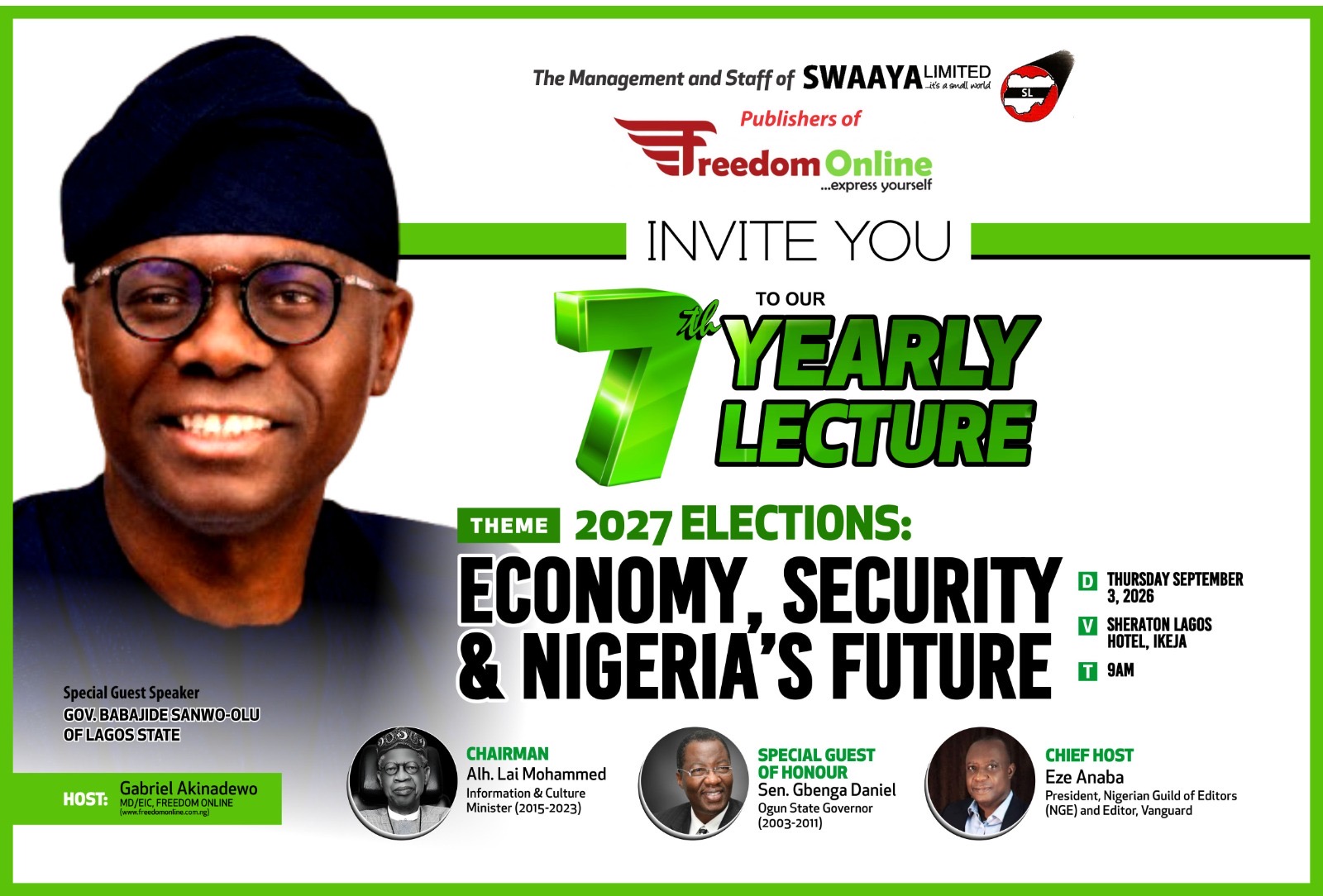
Challenges facing the economy and insecurity, especially associated with elections in a developing economy like Nigeria, will be the focus of discussion at the seventh yearly lecture of Freedom Online (www.freedomonline.com.ng) on September 3 in Lagos.
Freedom Online, according to a statement by its Managing Director/Editor-in-Chief, Gabriel Akinadewo, is focusing on how to tackle insecurity during the lecture “because it has become a monster, threatening to consume the nation-state called Nigeria.
“What does the future hold for Nigeria after the 2027 general elections? How will the election be conducted in a way that will be acceptable to all? Will the outcome lay a solid foundation for the future of the country?
“We believe that actions of politicians, security agents and INEC officials, before, during and after the election will, one way or the other, decide the fate of the more than 200 million Nigerians in this geographical space. Obviously, insecurity, part of which is thuggery during elections, leads to poverty, underdevelopment and other social vices. Nigeria’s political, economic and social fabric is disintegrating because of this time bomb and the outcome of the election will go a long way to decide Nigeria’s future in global affairs”.
Akinadewo said Governor Babajide Sanwo-Olu of Lagos State is the Special Guest Speaker while former Information & Culture Minister, Alhaji Lai Mohammed and former Ogun State Governor, Senator Gbenga Daniel, are the Chairman and Special Guest of Honour respectively.
The President of the Nigerian Guild of Editors (NGE) and Editor of Vanguard, Eze Anaba, is the Chief Host.
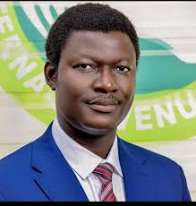
…Property Enumeration App to drive new land revenue regime
The Enugu State Internal Revenue Service (ESIRS) has announced a drastic reduction in land use charges payable by property owners across the state as part of measures to encourage tax compliance and broaden the state’s revenue base.
The Chairman of ESIRS, Mr Emmanuel Ekene Nnamani, disclosed this on Monday while briefing journalists on the activities and achievements of the agency in its three years under his leadership.
Under the revised arrangement, property owners in Independence Layout now pay N70,000 annually, while those in Abakpa pay N20,000. Owners of village houses, according to Nnamani, will pay N10,000 annually as land use charge.
Nnamani also announced plans to commence the implementation of a Property Enumeration App, which will facilitate the identification and enumeration of properties across the state and provide a database for the assessment and collection of land use charges.
He said students would be engaged to participate in the enumeration exercise, with each student expected to receive payment on a weekly basis, based on the number of houses enumerated.
According to him, the initiative would help ESIRS establish an accurate property register while creating opportunities for students to earn income through the exercise.
Nnamani explained that the Property Enumeration App would assign identification to properties and their owners, making it easier for the government to determine taxable properties and improve compliance.
He said the exercise was part of ESIRS’ broader strategy to expand the tax net and bring previously untapped sources of revenue into the formal revenue system.
The ESIRS chairman said the agency was also expanding its revenue collection activities to o other areas including haulage fees, land use charges, capital gains tax, stamp duties and withholding tax.
He disclosed that withholding tax would soon become operational in the state, urging individuals and organisations required to deduct the tax to ensure that the deductions were properly remitted to the government.
Giving an insight into the performance of ESIRS under his leadership, Nnamani said the agency had recorded a significant increase in internally generated revenue since 2023.
He said the state generated N37 billion in 2023, rising to N108.5 billion in 2024, while revenue increased substantially to N406.7 billion in 2025, representing tax and non-tax revenues.
Nnamani attributed the growth to the reforms introduced under Governor Peter Mbah’s administration, particularly the autonomy granted ESIRS and the deployment of technology for revenue collection.
He said the agency inherited a system characterised by poorly motivated personnel and fragmented revenue collection, but the autonomy granted by the state government enabled ESIRS to embark on fundamental reforms.
“Our Governor came with disruptive innovation and now it is time to give account,” Nnamani said.
He explained that the autonomy granted to ESIRS was backed by legislation, transforming the agency into a one-stop shop for revenue collection in the state.
According to him, ESIRS moved away from a mono-payment gateway operated through Interswitch and expanded the system to seven payment gateways, including UPS and Flutterwave.
He said taxpayers could now make payments through banks, transfers and more than 300 Point-of-Sale (POS) terminals, including from the comfort of their homes and even during weekends.
The development, he said, had significantly improved convenience and reduced opportunities for revenue leakages.
Nnamani said the agency also embarked on extensive training of its personnel and declared an emergency in which every staff member was required to have access to a laptop or tablet.
He added that ESIRS invested in reliable internet connectivity and solar energy to ensure that its operations were not disrupted by power challenges.
The ESIRS chairman said the agency had also banned cash payments as part of measures to strengthen transparency and accountability in revenue collection.
He said several revenue agencies that previously operated independently had been unbundled and brought under a centralised system, while ESIRS collaborated with relevant unions and revenue agencies to improve its operations.
According to him, the reforms were particularly significant in the informal sector, where revenues were previously paid to non-state actors before the new system was introduced.
Nnamani urged residents and businesses to familiarise themselves with the state’s tax laws, stressing that the agency was not interested in imposing arbitrary taxes but in ensuring compliance with existing legislation.
He said the law provides for certain exemptions, but taxpayers seeking exemption must undertake the required tax filing.
He noted that ESIRS was currently not implementing some provisions of the tax law to their full extent, citing the provision requiring the payment of one per cent of turnover in certain circumstances.
“We are only collecting N36,000 and people are complaining. I’m a tax collector and you have to convince me why you should not pay,” he said.
He urged taxpayers to study the tax laws and understand their obligations rather than evade payment.
The ESIRS boss further disclosed that the state was collecting Development Levy from new construction projects, noting that between 20 and 25 new buildings were being commenced daily across the state.
He said the levy was N150,000 in Enugu North Local Government Area, N100,000 each in Enugu South and Enugu East, N80,000 in Nsukka, while the rate for other local government areas stood at N50,000,”and you must pay to be permitted to commence development of the property”.
READ THIS Government Of Dr Peter Mbah Is Interested Practically, Conveniently To Relate With NUJ – _Aka Eze Aka_
He said ESIRS was also strengthening the collection of capital gains tax, particularly from property transactions, as well as stamp duty.
Nnamani maintained that the objective of the reforms was to create a sustainable and transparent revenue system capable of funding government programmes without placing undue pressure on taxpayers.
The chairman also dismissed concerns that the ongoing tax reforms were designed to frustrate businesses, particularly Igbo traders.
He said the forthcoming implementation of enhanced tax-compliance measures at both the federal and state levels should not be misconstrued as an attempt to shut down businesses.
According to him, the reforms are aimed at ensuring that individuals and businesses fulfil their statutory tax obligations.
“It is not aimed at shutting down Igbo business. People should pay their taxes and not evade it,” he said.
Nnamani said ESIRS would continue to expand the tax net while deploying technology to make payment easier, improve transparency and ensure that revenue due to the state was properly collected.
He said the agency’s ultimate objective was to build a modern revenue administration system in which taxpayers could meet their obligations conveniently while the state would accurately account for every naira collected.
-
 News3 days ago
APC Chairman slumps, dies during reconciliation meeting in Kogi
-
News2 days ago
‘Fake agency’ boss, Nwabueze, fights back with appointment letter
-
News3 days ago
Another fake agency uncovered, FG suspends three perm secs, orders arrest
-
News2 days ago
NDLEA arrests 101-year-old woman for selling cannabis in Ogun
-
News3 days ago
Tinubu unveils APC presidential campaign council, appoints self as chairman
-
News2 days ago
‘How fake federal agency tricked us’ – Anambra govt
-
News2 days ago
Four family members, dog die after eating Amala meal in Kogi
-
News3 days ago
1,844 killed in South-East in two years — Amnesty International reports