News
2,140 Nigerians kidnapped in seven months as insecurity worsens


The research was conducted through a careful analysis of various kidnapping incidents reported in four Nigerian newspapers, namely The PUNCH, The Guardian, The Nation, and Vanguard during the period under review.
It also showed that families of 62 victims, representing 2.89% of the total abductees, paid the sum of N389m as ransom to secure their release from the kidnappers.

Over the seven months, gunmen reportedly kidnapped 193 people in January, 101 in February, 543 in March, 112 in April, 977 in May, 97 in June, and 117 in July, totaling 2,140.
A total of 667 victims were kidnapped in Zamfara, 454 in Kaduna, 252 in Niger, 183 in Abuja/FCT, 121 in Borno, 117 in Katsina, 60 in Kogi, and 47 in Ogun. Others are Delta (35), Nasarawa (31), Oyo (20), Benue (19), Rivers (13), Ondo (33), Sokoto (15), Ekiti (10), Akwa Ibom (29), Abia (10), Anambra (5), Taraba (6), and Edo (2).
Among the reported incidents by The PUNCH was the case involving 85 travelers abducted along the Kaduna-Abuja highway near Katari, in the Kachia Local Government Area of Kaduna State, between January 4 and 5.

The most significant incident in February occurred on the first day of the month when a terrorist gang abducted no fewer than 60 wedding guests who were believed to be escorting a bride home in the Sabuwa Local Government Area of Katsina State.
The country also witnessed the outrageous kidnapping of no fewer than 280 pupils and teachers of Government Secondary School and LEA Primary School at Kuriga, Kaduna State, by bandits on Thursday, March 7.
That same month, terrorists kidnapped 87 people after launching a fresh attack on the Kajuru-Station community in the Kajuru Local Government Area of Kaduna State. This was in addition to 10 other different kidnapping incidents recorded during the month.
In April, 30 children were kidnapped by suspected bandits at Kasai village in Batsari Local Government Area of Katsina State.
May witnessed the most horrific case since the beginning of the year as bandits abducted over 500 persons, killing five in 50 villages in Zamfara State, according to a House of Representatives member from the state, Bello Shinkafi, as reported by The Guardian.
Also, on May 24, bandits killed four security task force members, and three villagers in a midnight attack. They abducted no fewer than 200 residents in Niger State. Members of the Kuchi community in the Munya Local Government Area of Niger State, which the bandits invaded, described the attack as the worst of its kind in the last five years.
In June, terrorists kidnapped 20 travelers along the Maiduguri-Kano Highway, among several cases reported that month.
The increasing rate of kidnap may have contradicted a recent claim by the Inspector General of Police, Kayode Egbetokun, who said there had been a decline in crime rates across the country.
Egbetokun attributed the decline to the strategies deployed by his officers.
N389m ransom paid
Between January and July, a total sum of N389m were reported to have been paid to secure release of 62 kidnap victims.
In January, the sum of N25m was paid to a gang of kidnappers to secure the release of a hotelier in Port Harcourt, Rivers State. Also, the former Minister for Communication and Digital Economy, Ali Pantami, mobilised the sum of N60m, which was paid as ransom to secure the release of Nabeeha and five of her sisters, who were abducted at their house in Abuja on January 2, 2024.
In February, the wife of a kidnapped former governorship candidate of the Labour Party in Anambra State, Obiorah Agbasimalo, told an Ihiala High Court sitting in Nnewi that her family paid N5.4m to her husband’s kidnappers. Also, kidnappers of nine persons in Ekiti State, comprising six pupils and three others, collected N15m as ransom before releasing them.
In May, the gang, which kidnapped and murdered a retired military officer in Owerri area of Imo State, Major General Richard Duru, collected the sum of $50,000 (N79.8m) as ransom from his family.
Also, the 30 kidnapped students of the Federal Polytechnic, Nasarawa, said they paid N40m as ransom before they were freed. Similarly, the Paramount Ruler of the Mbo Local Government Area of Akwa Ibom State, Ogwong Okon Abang, paid the sum of N50m to secure his freedom from kidnappers in May.
In June, some bandits killed a ransom negotiator in Kaduna after collecting the sum of N16m to release the hostages in their custody.
In July, kidnappers collected the sum of N76m as ransom to free three among the six persons they abducted near the office of the Federal Road Safety Corps in Awka, the Anambra State capital.
Worsening security in August
In the last two weeks, more Nigerians have been abducted as security agents appear helpless.
A total of 20 medical and dental students, along with a house officer, were kidnapped by gunmen in Benue State.
The victims, who were students of the University of Maiduguri and Jos, were travelling to Enugu, when they were abducted along the Otukpo/Otukpa/Enugu road.
The students were said to be heading for the Federation of Catholic Medical and Dental Students annual convention when they were ambushed around 5.30pm last Thursday.
Government functionaries are also becoming targets. The Commissioner for Youths Development in Anambra State, Patrick Aghamba, and his wife were also kidnapped on Friday.
An aide to the commissioner was said to have been killed by the hoodlums, while the victims were reportedly travelling to Abuja for the wedding of Governor Chukwuma Soludo’s daughter.
Gunmen were also reported to have kidnapped eight wedding guests during a traditional wedding in Amakor village, Nanka Community of Orumba North LGA of Anambra State.
An Ozo title holder, Emmanuel Ilo, said his escape was divine.
Police track suspects
The Force Public Relations Officer, Muyiwa Adejobi, insisted that the number of kidnap cases had reduced compared to previous years.
He noted that the police had built a full-fledged department headed by the Deputy Inspector-General of Police and were currently working with other agencies in the intelligence community for a proper identification index to trace criminals.
He said, “We believe that by breaking the cartel of guns and ammunition supply, they are powerless. Without arms, they are nobody, and you could even use a pen to slap them. So, we know that the chain of supply must be broken, and we have been able to do that to a large extent. We have arrested many who produce arms locally and those who run guns and supply arms and ammunition to them.
“Another key step is our ability to work with other ministries, departments, and agencies for a proper identification index. Many of them, before now, had no traceable identity. So, we have been able to strengthen the identification index of certain individuals, including criminals. We are working with the NCC and NIMC to see how we can use our technology to enhance that. Then, the IG has just acquired some equipment for the Technical Intelligence Unit of the police.
“The Technical Intelligence Unit monitors activities across the country and even beyond. The delivery of this new set of equipment is another feather in the cap of the police in that regard. The arrest of a large number of these criminals has been crucial. You know, we always go to their camps now. The Intelligence Response Team often goes to their camps, and in most cases, we have neutralised and arrested many of them, who are already in court.
“As I said, many of them are still in our cells. Since we have been able to identify some of these elements, we have dealt with the issue to a large extent. We still have some cases of kidnapping. We are not ruling out the fact that there are still kidnappings, but the ones happening now are just for them to have something to eat.”
In July, 2020, the Senate proposed the raising of the punishment for the offence of kidnapping from the former maximum punishment of 10 years imprisonment to life jail.
The following year, the parliament passed the bill, imposing jail terms of at least 15 years for paying a ransom to free someone who has been kidnapped, and made the crime of abduction punishable by death in cases where victims die.
But following the abduction epidemic in the country, no fewer than 10 states in January 2024, vowed to implement the death sentence and life imprisonment for convicted kidnappers.
Security experts, proffer solutions
Speaking on the matter, the Executive Director of the Centre for Anti-Corruption and Open Leadership, Debo Adeniran, lamented that President Bola Tinubu had yet to fulfill his campaign promise of recruiting five million Nigerian youths into the country’s security agencies as there was the need to increase the manpower in both the military and para-military to strengthen the security force.
“What I believe could solve the problem is for us to have a kind of realistic proportion of security, intelligence, and safety personnel guarding the people. We have recommended forest rangers for every forest to be properly monitored, then there are equipment that can penetrate even the thickest canopy of trees to see what is underneath. There is a way other advanced countries do their security system. Why can’t we do it and reduce the issue of kidnapping drastically? Basically, this is about the political will on the part of the government to ensure that we are adequately policed, secured, and kept safe wherever we are carrying out our economic activities,” he added.
The Managing Director of Beacon Security and Intelligence Limited, Dr Kabir Adamu, advised the Federal Government to improve on the security architecture of the country.
He said, “I mean the administration of President Tinubu through the National Security Advisor have all referred to the Terrorism Prohibition Act, to say that the administration will not pay ransom and those are the top people in security in the country. Unfortunately, despite that statement, ransom is still being paid.
“The solution is simple and it is to improve public protection so that the perpetrators will find it more difficult to kidnap people. Secondly, let’s make it very difficult or impossible for them to collect ransom and increase punishment for the kidnappers and kidnapping will become history.”
On his part, a fellow of the International Institute of Professional Security, Olalekan Jackson-Ojo, noted that there were leakages in the information management of the security forces in Nigeria as moles often revealed strategic information to some of the criminals.
He added that security agencies should improve on their technological facilities so that they could track the kidnappers and nib the crime in the bud.
Jackson-Ojo said, “I have suggested in the past that people should be checked when they are to be enlisted into the Army, Navy, Air force, NIA, DSS, police, Civil Defence, Immigration. They should begin to track their officers because the information must have been spreading out from them. All our technological facilities in the military, paramilitary and security agencies cannot track these people and they should improve on that. That means there are lots of complicities that need to be tackled.” (Sunday PUNCH)



News
Enugu Govt Refutes Report of Sale of Assets at ESBS, Water Corporation, Stadium, Lagos Liaison Office
…Says only unserviceable assets at affected locations are to be disposed of
The Enugu State Government has dismissed as false and misleading a report in circulation on social media claiming that it is selling assets belonging to the Enugu State Broadcasting Service (ESBS), Enugu State Water Corporation, Nnamdi Azikiwe Stadium and the State Liaison Office in Lagos.
The government, in a statement issued by the Commissioner for Finance and Economic Development, Dr. Nathaniel Urama, on Wednesday, said the publication did not emanate from either the Enugu State Government or the Ministry of Finance and Economic Development.
Urama clarified that the government’s intended notice, which had not been published as of Wednesday, August 27, concerns the disposal of some unserviceable assets located at the affected government facilities, and not the facilities or institutions themselves.
He emphasised that the government intends to dispose of certain assets that have become unserviceable and are no longer of use to the state, in line with extant laws and due process.
He added that interested bidders would be required to obtain details of the assets from the Ministry of Finance and submit their bids in accordance with due process.
“The information is erroneous and it is neither from Enugu State Government nor the State Ministry of Finance. We, therefore, advise the general public to please ignore the message circulating in the media,” he said.
The Commissioner urged the public and media organisations to verify information through official government channels before sharing or publishing it, warning against the spread of fake news and deliberate misrepresentation of government activities.
He reiterated that any official notice on the disposal of the unserviceable assets would be duly published through the appropriate channels.
Nigerians consumed a record 8.51 million terabytes of data in the first half of 2026, underscoring the country’s accelerating shift toward a digital-first economy.
Data from the Nigerian Communications Commission (NCC) confirmed this. Specifically, in January, consumption was 1.385 million terabytes; February, 1.260 million terabytes and March, 1.422 million terabytes.
In April, consumption was 1.414 million terabytes. It climbed to 1.504 million terabytes in May and 1.532 million terabytes in June.
In 2025 alone, Nigerians consumed over 13.2 million terabytes of data, a 35 per cent increase from 2024, reflecting how connectivity has become essential for daily life.
The surge in consumption was driven largely by the twin giants of the telecom sector, MTN Nigeria and Airtel Nigeria, whose half-year reports revealed data services have firmly overtaken voice as the primary revenue stream.
According to industry figures, average monthly data usage per subscriber rose sharply, reflecting the growing reliance on mobile broadband for work, entertainment, and commerce.
Streaming platforms, social media, fintech apps, and remote work tools have all contributed to the spike in demand.
MTN Nigeria reported that its 55.7 million active data subscribers consumed an average of 14.8 gigabytes per month, representing a 15.2 per cent increase year-on-year. Overall, MTN’s data traffic surged by 25.8 per cent across its network in the period.
This translated into a massive N1.70 trillion in data revenue, a 38.4 per cent jump compared to the same period in 2025. Data now accounts for more than half of MTN’s total service revenue, dwarfing its voice earnings of N993.5 billion, which grew at a modest 12 per cent.
Airtel Nigeria also posted strong numbers, recording N691 billion in data revenue ($507 million). While Airtel’s voice services contributed to a combined N1.42 trillion in voice earnings alongside MTN, the clear trend is that data has become the dominant driver of growth.
Together, MTN and Airtel generated N2.4 trillion from data services in H1 2026, cementing their role as the backbone of Nigeria’s digital economy.
MTN invested N620.5 billion in capital expenditure during the period, focusing on expanding 4G coverage, scaling 5G rollout, and strengthening fibre infrastructure. The company’s aggressive push into next-generation networks is aimed at meeting the surging demand for high-speed connectivity.
Airtel, meanwhile, faced challenges with fibre cuts and vandalism, forcing reinvestments to stabilize its network. The operator is blending 5G expansion with satellite partnerships to extend coverage into rural and semi-urban areas, where demand for reliable Internet is rising.
Despite these investments, many consumers continue to express dissatisfaction with service quality. Complaints of slow speeds, unstable connections, and high costs remain widespread, highlighting the gap between consumption growth and infrastructure capacity.
The NCC has repeatedly urged operators to deepen investments in fibre, towers, and spectrum to sustain the country’s digital transformation. Analysts note that the sector is undergoing a structural shift from voice-first to data-led growth, with internet connectivity now central to economic activity.
Industry experts predict that Nigeria’s data consumption will continue to rise exponentially as smartphone penetration increases and more services migrate online. The rollout of 5G is expected to further accelerate usage, enabling innovations in fintech, e-commerce, healthtech, and entertainment.
The consumption of 8.51 million terabytes in H1 2026 marks a historic high for Nigeria’s telecom industry. It reflects not only the appetite of a digitally hungry population but also the broader transformation of the economy.
With MTN and Airtel leading the charge, the challenge now lies in improving service quality, expanding infrastructure, and ensuring affordable access for millions of Nigerians. As data becomes the lifeblood of communication and commerce, the telecom sector’s ability to keep pace with demand will determine how effectively Nigeria harnesses the opportunities of the digital age.

…Dame Madueke: Mbah’s investments in Education, Healthcare, Infrastructure transforming Oji River
Women of Oji River Local Government Area of Enugu State have pledged their support for Governor Peter Mbah and the All Progressives Congress (APC) ahead of the 2027 general elections.
The women made their position known on Sunday at a gathering organised by the Enugu State Commissioner for Culture and Tourism, Dame Ugochi Madueke, at her country home in Inyi, Oji River LGA, as part of activities to celebrate womanhood and highlight the achievements of the Governor Peter Mbah administration in the council area.
Madueke said the event was organised to bring together women from Oji River irrespective of their political, religious or community affiliations, while also providing an opportunity to showcase projects and programmes executed by the state government in the area.

She said the Mbah administration had established 20 Smart Green Schools and 20 Type 2 Primary Healthcare Centres in Oji River, while work was progressing on the Umabi-Ehuhe Achi and Enugu-Aku-Inyi roads.
The commissioner also commended Governor Mbah for appointing indigenes of Oji River to various positions in his administration, as well as supporting women through different empowerment initiatives, including monthly financial assistance facilitated by the wife of the governor, Mrs Nkechinyere Mbah.
“Today, we are giving out a lot of wrappers, rice, food and empowerment for the women. We also have a medical team that will check their vitals and everything,” she said.
Madueke disclosed that the gathering was also used to assess Permanent Voter Card (PVC) ownership among participants, noting that only women with PVCs were welcomed into the venue.
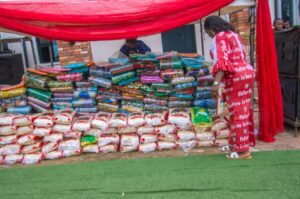
While noting that more than 3,000 women attended the gathering, she attributed the large turnout to sustained sensitisation efforts by the Executive Chairman of Oji River Local Government Area, Mr Greg Anyaegbudike.
The commissioner said the women had resolved to support Governor Mbah and APC candidates in the 2027 elections.
“We promise him that come 2027, Oji River will deliver votes for APC from top to bottom,” she declared.

Dame Madueke said the gathering was also a demonstration of the important role women play in community development and political participation, adding that the initiative was aimed at strengthening unity among women in Oji River and creating a platform for them to engage with government programmes and development initiatives.
She said the administration’s investments in education, healthcare, infrastructure and human capital development had created tangible benefits for communities across the state, including Oji River.
Speaking, the wife of the council chairman, Mrs Uche Anyaegbudike, said women across Oji River had benefited from various empowerment and welfare programmes.

She said the initiatives had provided uniforms and wrappers to women, while petty traders, church groups and other beneficiaries had received financial assistance.
According to her, about 150 women received N100,000 each during the previous August meeting, while 20 women currently receive N100,000 monthly under an empowerment scheme.
She said the interventions had enabled beneficiaries to expand their businesses and improve their livelihoods.
Also speaking, the council chairman, Mr Greg Anyaegbudike, described the large turnout as evidence of the women’s support for Governor Mbah and the APC.
He said the women were not compelled to make any political declaration, stressing that their support was based on the impact of the administration in the council area.
“What you see here is that the crowd is organic. You can see old women coming out in their various uniforms and various groups coming here to say it is Peter Mbah.
“This is about the Smart Green Schools, the hospitals, human capital development and scholarships,” he said.
Anyaegbudike further disclosed that more than 123 indigenes of Oji River were currently benefiting from the state government’s scholarship programme for students in higher institutions.
The Commissioner for Children, Gender Affairs and Social Development, Mrs Ngozi Enih, urged the women to sustain their support for Governor Mbah and the APC.
Enih said the governor had demonstrated commitment to improving infrastructure, human capital development and the welfare of residents across Enugu State.
She also commended Madueke for bringing the women together and creating a platform for them to celebrate womanhood, highlight government interventions and discuss further development in Oji River.
The Chief of Staff to the Governor, Barr. Victor Udeh, was among other dignitaries who attended the event.
-
 Entertainment2 days ago
Dolly Parton, Queen of Country Music, dies at 80
-
News19 hours ago
Tension mounts as bandits kill brother of Tinubu’s minister
-
News2 days ago
NFIU uncovers how terrorist financiers use women’s bank accounts, crowdfunding in operations
-
News1 day ago
Motorists trapped in Benin-Agbor-Asaba gridlock for days, Umahi inspects road
-
News2 days ago
Atiku’s Subsidy Reversal: Desperation For Power Must Not Endanger Nigeria’s Economy-Yilwatda
-
News3 days ago
Enugu Govt slashes Land Use Charges, cuts Property Rates
-
News3 days ago
Sanwo-Olu, Lai Mohammed, Gbenga Daniel to discuss 2027 elections, insecurity at 7th Freedom Online lecture
-
News2 days ago
Police detain officers accused of N40,000 extortion in Abuja