News
Attorney General asks Court to deregister ADC, Accord, three other parties

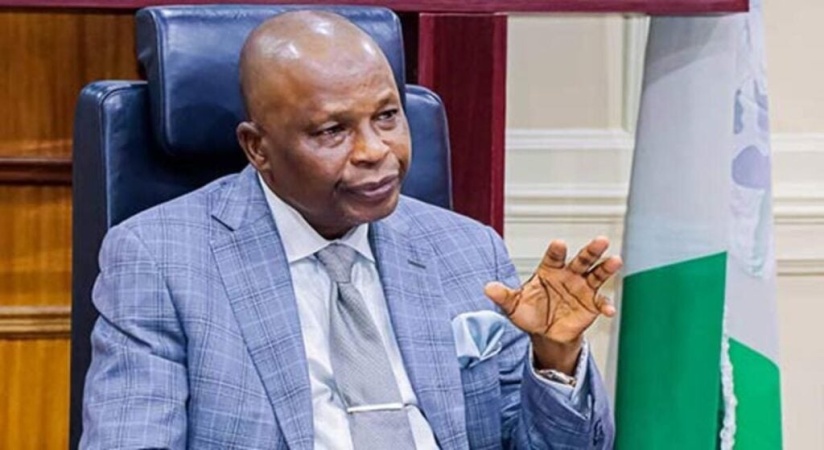
The Attorney General of the Federation has urged the Federal High Court in Abuja to compel the Independent National Electoral Commission (INEC) to deregister five political parties, arguing that their continued existence violates constitutional provisions and undermines Nigeria’s electoral integrity.
In court filings, the Attorney General contended that unless the court intervenes, INEC would “continue to act in breach of its constitutional duty” by retaining parties that have failed to meet the minimum requirements prescribed by law.

The filing stressed that the right to associate as a political party is not absolute and must be exercised within constitutional limits. It further argued that it is in the interest of justice for the court to grant the reliefs sought by the plaintiffs.
The suit, marked FHC/ABJ/CS/2637/2026 and filed at the Abuja Judicial Division of the Federal High Court, lists the Incorporated Trustees of the National Forum of Former Legislators as the plaintiff.
The defendants include INEC as the first defendant and the Attorney General of the Federation as the second defendant, alongside five political parties: African Democratic Congress (ADC), Action Alliance (AA), Action Peoples Party (APP), Accord (A), and Zenith Labour Party (ZLP).

At the center of the issue in the case is whether INEC has a constitutional obligation to remove parties that fail to meet electoral performance thresholds set out in Section 225A of the 1999 Constitution (as amended) and reinforced by the Electoral Act 2022 and INEC’s own regulations.
The plaintiffs argue that the affected parties have persistently failed to satisfy the constitutional benchmarks required to retain their registration. These include winning at least 25 per cent of votes in a state during a presidential election or securing at least one elective seat at the national, state or local government level.
They contend that the parties performed poorly in the 2023 general elections and subsequent by-elections, failing to win seats across key tiers of government, yet continue to be recognised by INEC as eligible political platforms.
The plaintiffs maintain that this continued recognition is unlawful and undermines the integrity of Nigeria’s electoral system.
In the affidavit supporting the suit, the forum’s national coordinator, Igbokwe Raphael Nnanna, states that allowing parties that have not met constitutional requirements to remain on the register “is unconstitutional, illegal and a violation” of the governing legal framework.
The suit asks the court to declare that INEC is duty-bound to deregister such parties and to compel the commission to do so before preparations for the 2027 elections advance further.
Beyond declaratory reliefs, the plaintiffs are also seeking far-reaching orders that would bar the affected parties from participating in the next general elections or engaging in political activities such as campaigns, rallies and primaries. They further request injunctions restraining INEC from recognising or dealing with the parties in any official capacity unless and until they comply strictly with constitutional provisions.
Central to the plaintiffs’ argument is their interpretation of the law as imposing a mandatory duty on INEC. They argue that the use of the word “shall” in the Constitution leaves no room for discretion once a party fails to meet the stipulated thresholds.
In their written address, they rely on statutory provisions and judicial precedents to contend that electoral performance is an objective condition that must be enforced to maintain discipline, transparency, and accountability in the political system.
Attorney General backs plaintiff
In a notice filed pursuant to Order 15 Rule 1 of the Federal High Court (Civil Procedure) Rules, 2019, the Attorney General, who is a defendant in the suit, formally admitted the plaintiff’s case to the extent of his constitutional responsibilities.
He maintained that, as the chief law officer of the federation, he is duty-bound to defend and uphold the Constitution, including ensuring compliance with the Electoral Act and other laws governing elections in Nigeria.
The filing emphasised that the Attorney General’s role extends beyond litigation to preventive oversight, ensuring that laws are faithfully implemented to maintain public confidence in the electoral process. It described the case as a public interest litigation aimed at safeguarding democratic integrity and promoting constitutional observance.
According to the document, the Attorney General argued that citizens, including the plaintiff group, have the right to challenge constitutional breaches, particularly where electoral processes are concerned. He added that supporting such litigation aligns with his dual role as both a defender of the state and an advocate for citizens’ rights.
The submission also highlighted the broader implications of non-compliance by political parties. It argued that the continued existence of parties that fail to meet constitutional thresholds contributes to ballot congestion, increases the cost of election administration, and undermines the intent of Section 225A of the 1999 Constitution (as amended), which empowers INEC to deregister underperforming parties.
The plaintiff further contended that INEC has no residual discretion to retain parties that do not satisfy the constitutional criteria, insisting that failure to deregister them constitutes a continuing breach of constitutional duty. The suit warned that such inaction could be challenged through public interest litigation, as is the case before the court.
Additionally, the filing noted that the plaintiff, comprising former legislators, possesses the requisite standing to institute the action, having been directly involved in the enactment and oversight of Nigeria’s constitutional and electoral framework.
The Attorney General also underscored the importance of access to justice, arguing that his support for the suit would help bridge gaps faced by citizens seeking to enforce constitutional rights. He maintained that collaboration between government institutions and civic actors is essential to strengthening legal literacy, accountability, and democratic participation.
The Attorney General of the Federation is represented in the suit by a team of lawyers led by Prof. J. O. Olatoke, SAN, alongside O. J. David, U. O. Olufadi, D. O. Bamidele, V. D. Maiye, Waheed Abdulraheem and A. K. Abdulmumin, all of whom signed the court filing before the Federal High Court in Abuja.
The case, which has drawn significant attention within political and legal circles, could have far-reaching implications for Nigeria’s party system ahead of future elections, particularly if the court grants the request to compel INEC to act against the affected parties. (TRIBUNE)















…moves online services to www.enuguairlines.ng
Enugu Air has announced the launch of its new official website, enuguairlines.ng, as part of efforts to provide passengers and customers with a better, safer and more convenient digital experience.
The airline said the migration to the new website is designed to improve how passengers connect with Enugu Air and access its services online, including flight bookings, schedules and the latest updates.
Announcing the development, the airline said: “We’ve moved! We’re innovating! We’ve migrated to a better, safer and convenient website to connect you to the world.”
Passengers can now access Enugu Air’s online services through its new web address, enuguairlines.ng, which the airline described as its new digital home.
The airline urged passengers and prospective travellers to save the new web address and use it for flight bookings, checking schedules and obtaining the latest information about its operations.
“Same Enugu Air. New web address,” the airline stated, emphasising that the change represents an improvement in its digital platform while retaining the Enugu Air brand and services.
The airline further encouraged customers to visit, www.enuguairlines.ng for all flight-related information and online services.
It further stated that the old website, enuguairlines•com has been discarded and no longer in use.

A kidnapped female police officer has been found dead in Ebonyi State after a suspected member of a kidnapping syndicate was arrested and led police operatives to the scene where her remains were recovered.
The Nigeria Police Force disclosed this in its state-by-state operational update issued by Force Public Relations Officer
Force Headquarters, Ani Iniedu on Monday, detailing several arrests, rescues and recoveries recorded across the country between September 19 and 20, 2026.
According to the police, the suspect was arrested following a sustained intelligence-led and technology-based investigation into the kidnapping of the female officer.
The suspect reportedly led combined police teams to the crime scene, where the remains of the officer were recovered.
The police said the case is being investigated by the State Criminal Investigation Department (SCID) in Abakaliki.
In a separate operation in Adamawa State, police operatives rescued two kidnapped victims from a suspected kidnappers’ hideout in Shako Forest, Toungo Local Government Area.
The operation, carried out on September 20 following actionable intelligence, also led to the recovery of two magazines containing 10 rounds of 7.62×39mm live ammunition.
A National Identification Number (NIN) card, mobile phone, passport and chain were also recovered from the suspected hideout.
In the Federal Capital Territory, police arrested 334 suspects during coordinated raids on criminal hotspots, black spots and uncompleted buildings across several locations.
The operation, conducted on September 19, also resulted in the recovery of various quantities of substances suspected to be illicit drugs.
Meanwhile, police in Anambra State arrested a suspected child trafficker who was allegedly intercepted while travelling with a six-month-old baby boy.
The baby was recovered and handed over to the appropriate authorities for necessary action, according to the police.
In Kaduna State, four suspected members of a kidnapping syndicate were arrested following intelligence-led operations.
Police said the suspects confessed to their alleged involvement in kidnapping and provided information about fleeing accomplices. A locally made Dane gun was recovered.
Another suspected kidnapping syndicate member was arrested at Soba Market in the state. Police said the suspect also confessed and gave information implicating five fleeing accomplices.
In Ogun State, police arrested a suspect linked to a fatal shooting incident in Isara, Remo North Local Government Area.
One single-barrel gun, one live cartridge and one expended shell were recovered during the operation.
In Imo State, a suspect was arrested during a raid on a suspected criminal gathering at Nekede, Owerri West Local Government Area, with police recovering a locally made cut-to-size single-barrel gun.
Police in Ekiti State also arrested two suspects linked to multiple shop-breaking and stealing incidents in Ado-Ekiti and recovered suspected stolen iron rods.
In another operation in Ado-Ekiti, police recovered an abandoned white sack containing a pump-action gun loaded with two live cartridges and a locally made single-barrel gun from a farmland.
In Benue State, police tactical teams, supported by personnel of the Police Mobile Force and military, intervened in a renewed communal conflict at Akpa-Mbakor Community in Tarka Local Government Area.
The security teams dispersed the rampaging youths and restored normalcy in the area, according to the police.
In Oyo State, police arrested a truck driver allegedly involved in a fatal road traffic incident along the Ijebu-Ode/Idi Ayunre Road.
The truck was impounded for further inspection and investigation.
The police said all the cases remain under investigation by the respective State Criminal Investigation Departments.

Teachers trained in Nigeria and Ghana are no longer eligible to apply for Qualified Teacher Status (QTS) in England under the United Kingdom’s overseas-trained teacher application route.
The change took effect on September 9 and means teachers trained in the two West African countries can no longer use the route to obtain QTS, a status recognised by many schools in England.
The UK Department for Education said countries included in the scheme must meet specific requirements to ensure that applicants’ qualifications, professional standing and teaching experience can be properly verified. One of the requirements is that a country must have a national regulator capable of confirming a teacher’s professional status and providing authenticated references.
According to the department, Nigeria and Ghana did not meet the reference-verification requirement.
“Our data shows that more than 70% of applications from teachers in Ghana and Nigeria include work history references that use public email addresses, such as Gmail or Hotmail, rather than a school’s official email domain. This means assessors spend additional time and resources trying to verify information provided in applications,” the department said.
The UK department said about 90 percent of applications are assessed within 12 months.
India was also removed from the eligible list because it does not have a national regulator capable of confirming teachers’ professional standing.
South Africa is now the only African country remaining on the list of countries whose teachers can use the QTS application route.
The department said the verification process was necessary to ensure that information provided by applicants was genuine and that teachers awarded QTS possessed the required skills and experience to teach in England.
To apply for QTS, overseas-trained teachers must have a valid passport, an undergraduate degree equivalent to a UK bachelor’s degree and professional recognition as a teacher in the country where they trained.
Applicants must also have completed any mandatory induction requirements needed for full teacher registration in their country of qualification.
They are required to demonstrate that they are qualified to teach children aged between five and 16 and have at least nine months of teaching experience gained after qualifying as a teacher.
Applicants must also provide employment references that verify their work history and use an email address linked to the school’s official domain.
Depending on the country where a teacher trained, additional requirements may include qualifications to teach pupils aged between 11 and 16 and a specialism in subjects such as mathematics, science, biology, chemistry, physics, French, German, Italian, Japanese, Latin, Mandarin, Russian or Spanish.
However, because teachers in England are employed by individual schools rather than the Department for Education, schools may consider alternative routes into teaching.
The department said teachers who are no longer eligible to use the QTS application service can explore other routes into teaching in England.
-
 Politics15 hours ago
WHEN PRIVACY BECOMES CONTENT: The Dangerous Normalisation of Leaked Private Conversations
-
Editorial3 days ago
Why Nigerian Graduates and Youths Are Jobless — and Increasingly Vulnerable to Crime and Other Vices
-
News21 hours ago
BREAKING: Gov Mbah appoints 101 new aides
-
News2 days ago
Former Kogi Gov, Ibrahim Idris, dies in UK at 77
-
News2 days ago
NDLEA intercepts N3.4bn drugs, arrests fake police officer
-
News2 days ago
Woman allegedly kills husband over plans to marry second wife
-
Politics3 days ago
NDC disowns purported OK Movement PCC, moves to sanction John Ugulu
-
News8 hours ago
UK excludes Nigerian, Ghanaian-trained teachers from teaching qualification list