News
Cholera outbreak: Nigeria runs out of vaccine as death toll hits 40

The NCDC boss stressed the need for the country to embrace the use of vaccines and other preventive measures to curb the spread of the acute diarrhoeal infection.
Cholera is a food and water-borne disease caused by the ingestion of the bacterium, Vibrio cholerae, in contaminated water and food.

Cholera kills 4,364 in four years
No fewer than 4,364 people have died out of the 139,730 Nigerians suspected to have been infected with the disease across the country in the last four years, an investigation by Saturday PUNCH has indicated. The incidence rate was derived from an analysis of the weekly cholera situation reports released by the Nigeria Centre for Disease Control between 2021 and 2024.
Recall that the NCDC recently alerted the public to the increasing trend of cholera cases across the country as the rainy season intensifies. In a statement signed by Idris on Thursday, June 13, 2024, the agency said that from January 1 to June 11, 2024, a total of 1,141 suspected cases, 65 confirmed cases, and 30 deaths from cholera had been reported from 96 local government areas in 30 states of the federation.

The NCDC listed the 10 states that contributed 90 per cent to the burden of cholera as Bayelsa, Zamfara, Abia, Cross River, Bauchi, Delta, Katsina, Imo, Nasarawa, and Lagos. As of then, the Lagos State Ministry of Health said it had recorded 350 suspected cases of the disease in 29 wards across multiple LGAs with 17 confirmed cases and 15 fatalities attributed to severe dehydration caused by delayed presentation.
However, on Friday, the state Commissioner for Health, Prof Akin Abayomi, said the cholera incidence rate in the state had risen to 417 suspected cases, and 35 confirmed cases, with 24 deaths.
In a post made on his Instagram handle on Friday afternoon, Abayomi said, “The situation report as of June 19, 2024, indicated 417 suspected cases, 35 confirmed cases, and 24 recorded deaths.”
“Let’s adhere strictly to personal and environmental hygiene. Let’s stay safe #ForAGreaterLagos.”
He said the cases were reported from the Agege, Badagry, Ikeja, Mushin, Ajeromi-Ifelodun, Epe, Ikorodu, Ojo, Alimosho, and Eti-Osa areas of the state.
Others he mentioned include Kosofe, Oshodi-Isolo, Amuwo-Odofin, Ibeju-Lekki, Lagos Island, Shomolu, Apapa, Ifako-Ijaiye, Lagos Mainland, and Surulere.
Also, the Ogun State Commissioner for Health, Dr Tomi Coker, told our correspondent on Thursday that the state had recorded one death and 14 cases.
This implies that in the last 12 days, the incidence rate of the disease in the country for this year had hit 1,222 suspected cases, 88 confirmed cases, and 40 fatalities.
The NCDC, however, stated that a multi-sectoral National Cholera Technical Working Group, led by the centre and comprising the Federal Ministries of Environment and Water Resources, the National Primary Health Care Development Agency, the World Health Organisation, the United Nations Children’s Fund, and other partners, had been providing support to the affected states.
With the latest incidence rate from Ogun and Lagos, investigations by Saturday PUNCH showed that a total of 4,364 deaths had been recorded out of the 139,730 people suspected to have been infected by the disease across the country since 2021.
Going by one of the NCDC’s cholera situation reports for week 52, there were a total of 111,062 suspected cases of the disease with 3,604 deaths across 435 local government areas in 34 states of the federation in 2021.
Another Cholera Week 52 report published by the NCDC and analysed by our correspondent revealed that in 2022, the country recorded 23,763 suspected cases with 592 deaths across 271 LGs in 33 states of the federation.
In 2023, there was a reduction in the incidence rate of the disease as the country recorded 3,683 suspected cases with 128 deaths across 166 LGs in 31 states of the country.
The prevalence rate of the disease further went down in 2024 with 1,141 suspected cases and 30 deaths recorded across 84 LGs in 30 states of the federation.
There were 473,000 cholera cases reported to the World Health Organisation in 2022, which was a 100 per cent increase compared to the rate reported to the global health organisation in 2021.
More so, a further increase in cases by 700,000 was estimated in 2023, while the latest data from the WHO showed that a cumulative total of 145,900 cholera cases and 1,766 deaths had been reported from 24 countries across five WHO regions.
In the latest global rate, Africa recorded the highest numbers, followed by the Eastern Mediterranean region, the region of the Americas, the South-East Asia region, and the European region.
However, speaking with Saturday PUNCH, the NCDC boss said while it is the National Primary Health Care Development Agency that is dealing with the issue of cholera vaccines, he is aware that the health minister has requested more vaccines from donor agencies.
“I know that the minister has requested more vaccines. But, I don’t know when they will come, because other countries also make requests internationally. I know that when they come, NPHCDA will decide how to distribute or use them.
“We don’t have enough to prevent an outbreak, because we need to give these things before that time. The problem is that to get vaccines, we need to plan ahead, and we don’t have the funds. Most countries plan ahead. When it comes to health security, we are supposed to stockpile some things in anticipation of an emergency.
“We don’t manufacture vaccines. We get them from donor agencies, just like any other country does. Whatever they supply will not be enough for us to use and in any case, it doesn’t give long-lasting immunity, so it has to be a combination of all control measures.
“The minister has requested support for these vaccines. He told me that last week. When they will come, I don’t know. However, we don’t necessarily have to rely on all those things if we can adopt other control measures,” the NCDC boss said.
Dr Idris also noted that the demand for cholera vaccines outpaces supply, adding that to consistently have adequate vaccines to curb diseases, the nation must plan ahead. He also stressed that Nigeria must embrace a combination of preventive measures to curb cholera outbreak, noting that cholera vaccines are not long-lasting.
“Cholera vaccine demand is far ahead of supply so most people who need them place orders and plan ahead. It is the same thing with all vaccines, not just cholera.
“We also know that cholera vaccines are not long-lasting. They only work for some time, so a combination of vaccines where necessary and all other preventive measures are the mainstay of the effort to curb the infection.
“The mainstay is to treat people if they are dehydrated, so they can replace lost fluids, maintain personal, environmental and sanitary hygiene, etc. We talk about boiling water before eating, washing hands after using the toilet, and before and after preparing food. If anybody suspects contamination, they should boil water before drinking and using it. It is a combination of all these preventive measures that will go a long way in helping to curb the outbreak,” Idris said.
Also speaking during a recent programme on Channels Television, the NCDC Director General had said that prevention was key in fighting the disease in Nigeria.
Idris noted that as the rainy season intensified, there were possibilities of increasing cases of cholera in the country. He said, “The Nigerian Meteorological Agency has said that the rains this year are going to be heavier, and when you have rains, you’re going to have floods, and this leads to contamination of our water sources. So, the chances are that cholera cases will increase.”
The DG, who blamed the outbreak of the infection on poor sanitation, personal and environmental hygiene, and lack of access to clean water, noted that the agency was conducting a risk assessment, and had alerted all the states about the outbreak. He said the state governments must ensure access to clean water and toilets for their citizens. (Saturday PUNCH)



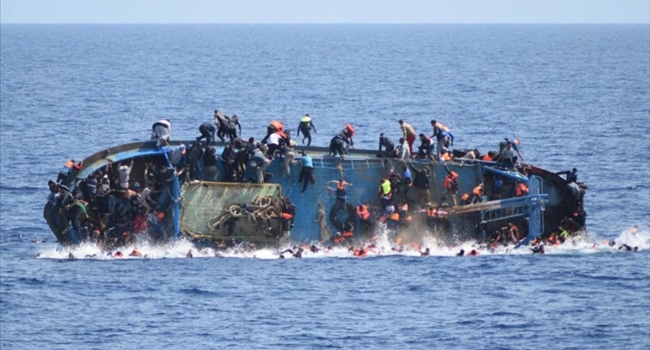
Six mourners are reportedly missing after a boat carrying more 70 people capsized on the Buruku River in Buruku Local Government Area of Benue State on Saturday.
The incident reportedly occurred around 11am as the mourners, who were from neighbouring Gboko Local Government Area, were returning from a burial ceremony.
The Chairman of Buruku Local Government Area, Raymond Zege, confirmed the incident, saying the boat’s engine reportedly developed a fault while it was on the river.
According to him, the occupants struggled to manoeuvre the boat and remain afloat before another boat arrived to rescue them.
He said the boat was overloaded and the occupants reportedly panicked as they encountered water waves, causing the vessel to sink.
Zege said, “There are over 70 people on board but we have not seen about six persons.”
The chairman also expressed concern over compliance with safety measures among commuters using the river crossing, noting that authorities had provided life jackets but enforcement had been difficult because some passengers complained that wearing them was uncomfortable.
Meanwhile, the Commissioner for Marine and Blue Economy, Denis Iyaghigba, said preliminary reports indicated that a strong water current swept the boat into an abandoned barge at a corner of the river, causing it to overturn.
Iyaghigba urged families and members of the public to remain calm while authorities continued efforts to establish the facts and locate those still missing.
He said he had directed boat operators and their union downstream to mobilise and support the ongoing search and rescue operation.
A funeral ceremony in Aleto, Eleme Local Government Area of Rivers State, reportedly turned tragic on Friday after a pastor collapsed and died while delivering a sermon on the certainty of death.
The cleric was identified as Deacon Steve Eyo, the Resident Pastor of the Redeemed Christian Church of God (RCCG), Aleto.
He was preaching before more than 300 mourners when he suddenly collapsed as he was concluding his message.
Eyo’s sermon was titled “The Certainty of Death and Hope Beyond.”
According to eyewitness accounts cited by multiple local news outlets, he began preaching at about 1:10 p.m., speaking about the inevitability of death and urging those present to live their lives with the awareness that nobody knows when death will come.
In illustrating his message, the pastor reportedly compared life to going to the market, explaining that some people leave early while others remain until later, just as some people die young while others live longer.
About 15 minutes into the sermon, at approximately 1:25 p.m., Eyo reportedly collapsed while rounding off his message.
His sudden fall initially confused some mourners, with eyewitnesses saying some thought the pastor was demonstrating the suddenness of death as part of his sermon.
The situation quickly became clear, however, as church ministers, choir members and others rushed to his aid.
People at the scene reportedly prayed for him while individuals with medical knowledge attempted to administer first aid.
He was subsequently taken to a nearby medical facility in the same ambulance that had been hired to convey the remains of the deceased person whose burial was taking place.
He was reportedly confirmed dead at the hospital, after which his remains were taken to a mortuary.
The circumstances surrounding Eyo’s death have not been publicly established in the reports reviewed, and no specific medical cause of death was disclosed.
However, the timing of the incident has left mourners and members of the Aleto community deeply shocked because of the subject of his final sermon.
According to eyewitness accounts, Eyo had urged the congregation to “number your days and prepare, for it can happen anytime” shortly before he collapsed.
The incident transformed what had begun as a solemn farewell for one deceased person into another moment of mourning, as attendees were confronted with the sudden death of the minister delivering the funeral sermon.p pm
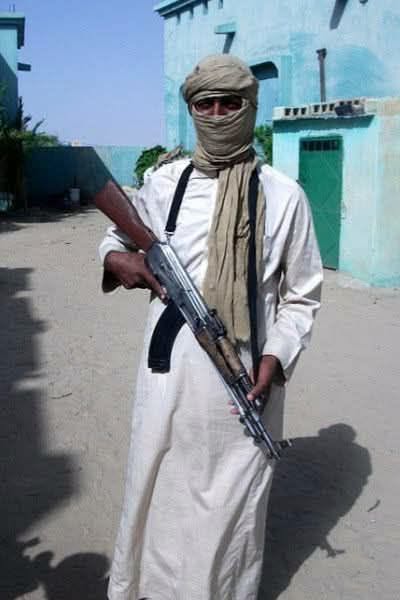
Mahmoud Adam, a suspected militant allegedly linked to deadly attacks on Christian communities in Nigeria’s Middle Belt, has reportedly been arrested in Plateau State.
The arrest was disclosed in an exclusive report published on Friday by the US-based Daily Caller, which identified Adam as an alleged secret leader of the Fulani Ethnic Militia (FEM) operating in Plateau State and surrounding parts of the Middle Belt.
According to the report, Adam was arrested in the early hours of September 12 at his compound in Plateau State, where he was known as a prominent Fulani community leader.
A former US intelligence officer with expertise in Islamist terrorism reportedly confirmed Adam’s alleged role in FEM, while Nigerian journalist Masara Kim of Truth Nigeria was also cited as having reported evidence allegedly linking him to deadly attacks in Plateau State.
The Daily Caller said information from a whistleblower indicated that Adam had previously established contacts with senior Nigerian military figures and had allegedly received high-value gifts from military officers.
The report also alleged that a serving senator had intervened in 2024 to secure Adam’s release following an earlier arrest.
The senator, Shehu Buba, has previously denied allegations of links to criminal networks. Separate reports said photographs showing Buba and Adam together have emerged, prompting calls for further investigation.
The Daily Caller reported that Adam was previously released from custody several days after his 2024 arrest following the alleged intervention.
Photographs cited by the publication reportedly show Adam meeting a Nigerian major general in 2023. According to the account accompanying the photographs, the military officer handed over five motorcycles to Adam and associates as part of efforts described as aimed at restoring peace in Plateau State.
The latest arrest comes amid renewed security concerns in Plateau State, where several communities have experienced deadly attacks in recent weeks. Local reports have linked some of the violence to armed groups, although attribution for individual attacks remains subject to confirmation by security authorities.
Reports of Adam’s arrest have also generated reactions in the United States. US Representative Riley Moore welcomed the reported arrest, describing it as evidence of increased US-Nigeria security cooperation, while the circumstances surrounding the allegations against Adam remain subject to official investigation and clarification.
As of the latest reports, the Nigerian security agencies had not publicly released a detailed statement outlining the charges against Adam or the evidence being relied upon in the investigation.
-
 News19 hours ago
NYSC Abduction: Families panic over N950m ransom demand
-
News1 day ago
I fought to save passengers, says Flydubai pilot
-
News1 day ago
How I killed my girlfriend after HIV dispute — Suspect
-
News2 days ago
NYSC members, other travellers ‘abducted’ along Owerri-Onitsha Expressway
-
News9 hours ago
Tragedy as RCCG pastor collapses, dies during sermon at funeral in Rivers
-
News2 days ago
Police confirm NYSC members among abducted passengers on Owerri-Onitsha Road, rescue 10
-
Features17 hours ago
Mbah Lists Projects Driving Enugu’s Revenue Growth, Says Less Than 13% Comes From Taxation
-
News3 days ago
We can’t erase decades-long problems in 4 years, says Tinubu