

Connect with us

News

NEW ENUGU SMART CITY: Peter Mbah’s Audacious Blueprint For A Global City And A New Economic Frontier

Published

on

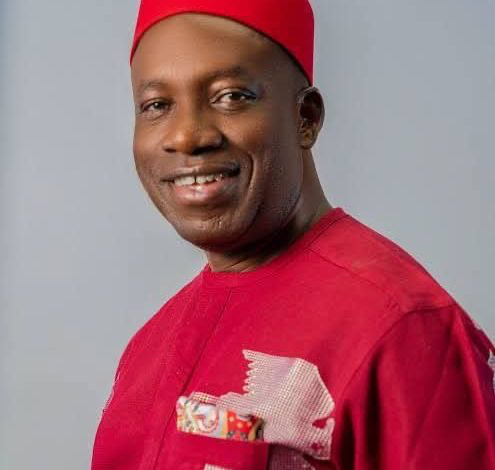
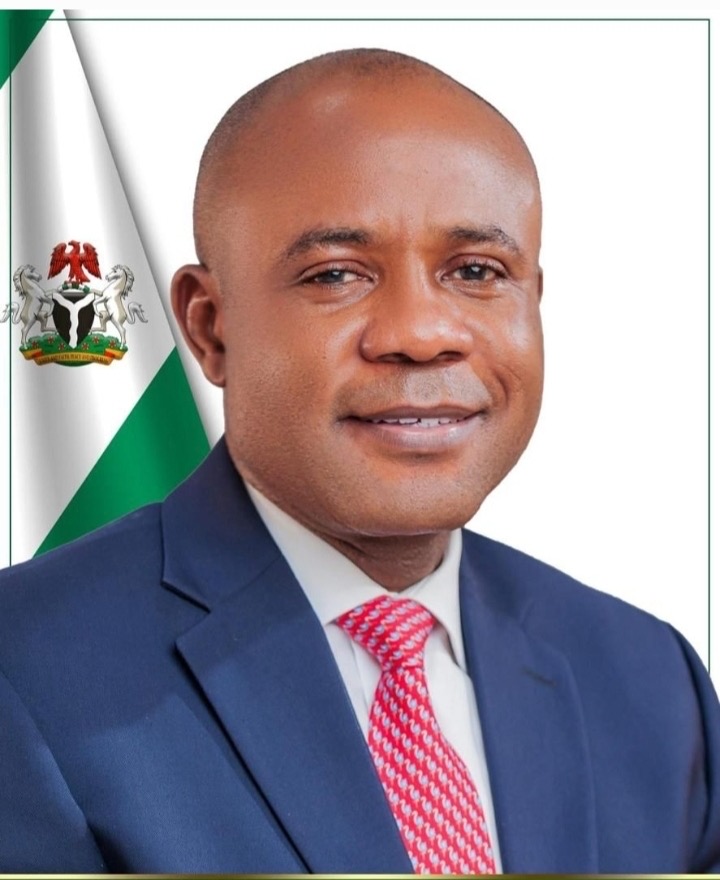
Enugu Gov Dr Peter Mbah
Spread the love

By Dr. Collins Ogbu

Cities are the new engines of global prosperity. Across the world, nations are no longer competing merely on the strength of their natural resources; they are competing on the efficiency, innovation, livability and attractiveness of their cities. From Dubai to Singapore, from Kigali to Shenzhen, the story is the same: governments that deliberately build modern urban ecosystems create wealth, attract investors, generate employment, and redefine the future of their people.

This is precisely the philosophy driving *Governor Peter Ndubuisi Mbah*’s ambitious vision for Enugu State.

When Governor Mbah declared his determination to grow Enugu’s economy from $4.4 billion to $30 billion, many saw it as audacious. But history teaches that transformational leadership is often mistaken for impossible ambition; until execution begins to silence doubters. Today, the New Enugu Smart City stands as one of the clearest physical manifestations of that economic revolution: a bold urban expansion project designed not merely as a real estate development, but as a futuristic economic ecosystem that will fundamentally alter Enugu’s economic trajectory.

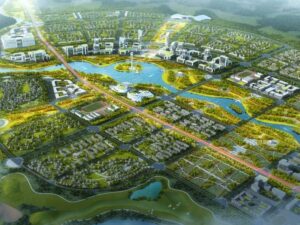
The New Enugu Smart City

For decades, the old Enugu metropolis has borne the pressure of population growth, rising commercial activity, inadequate housing supply, traffic congestion, urban sprawl, and increasing pressure on public infrastructure. Like many fast-growing African cities, urban expansion often happened without long-term planning. Roads became overstretched, commercial clusters became chaotic, and housing shortages intensified. The answer to such pressures globally has never been to merely manage congestion; it has been to build new cities.

Maduka College Advert

Abuja was built to decongest Lagos and create a more centrally planned capital. _Eko Atlantic_ emerged as a premium urban extension to accommodate business growth. _Konza Technopolis_ was conceptualized as Africa’s Silicon Savannah. _King Abdullah Economic City_ was created to diversify an oil-dependent economy.
_Songdo International Business District_ became a global reference point for smart urban development through integrated digital infrastructure.

The _New Enugu Smart City_ belongs in that class of visionary projects.

It is strategically designed as a modern mixed-income, mixed-use urban settlement that caters to both high-net-worth individuals and middle-income earners. Unlike elitist urban projects that often exclude the average citizen, Enugu’s model deliberately creates opportunities for luxury housing, commercial districts, technology hubs, hospitality centres, industrial clusters, retail spaces and affordable residential schemes. This means that whether one is a corporate executive, diaspora investor, entrepreneur, civil servant, student, artisan or hospitality investor, there is a place for everyone within the emerging urban ecosystem.

At the heart of every smart city lies infrastructure intelligence. The New Enugu Smart City is envisioned with modern road networks, integrated drainage systems, uninterrupted power architecture, smart security systems, broadband-enabled connectivity, efficient waste management systems, green recreational spaces, industrial layouts, commercial districts, healthcare facilities, educational institutions and technologically enabled public services.

This is what separates a smart city from conventional urban settlements.
Traditional cities often expand reactively. Smart cities expand intentionally.
Traditional cities battle traffic chaos. Smart cities deploy intelligent mobility systems.
Traditional cities struggle with utility inefficiency. Smart cities integrate modern infrastructure from inception.
Traditional cities create informal congestion. Smart cities optimize space for productivity.
And productivity is where the real conversation begins.

Land itself is one of the greatest wealth creation tools available to governments. Globally, cities such as Dubai generated billions through strategic land development, infrastructure-led real estate appreciation, tourism expansion, and business investments. The New Enugu Smart City presents similar revenue-generating opportunities through land allocation, property taxes, business licensing, hospitality investments, industrial occupancy, tourism spending and foreign direct investment inflows.

As property values appreciate, internally generated revenue rises.
As businesses move in, employment expands.
As investors arrive, confidence deepens.
As population shifts, congestion reduces in the old city.
It is a cycle of growth that smart economies understand very well.

The decongestion benefits alone are enormous. Existing commercial centres in Ogbete, Independence Layout, Abakpa, Coal Camp and surrounding districts have long experienced infrastructure pressure due to concentrated economic activities. By creating an entirely new urban destination, government is redistributing population density and commercial activity in a way that ensures balanced development across the state.

This is how globally competitive cities are built;not by overburdening old districts, but by creating new economic corridors.

And what makes this even more strategic is that the New Enugu Smart City is not developing in isolation.

It is rising within a broader ecosystem of transformational infrastructure already being built by the Mbah administration.

Enugu Air is opening Enugu to regional and global connectivity while positioning the state as a major aviation hub in southeastern Nigeria. New dual carriageways and modern road corridors are dramatically reducing travel time across urban and rural communities. The development of world-class transport terminals is redefining organized mass transit and improving urban mobility.

The construction of Smart Green Schools across the 260 political wards in Enugu State is creating the human capital pipeline that future industries within the Smart City will require. These schools are embedding digital literacy, innovation and modern learning systems into the educational ecosystem. The ongoing rollout of Type-2 Primary Healthcare Centres ensures healthcare accessibility at the grassroots level, while the 300-bed international hospital is positioning Enugu as a destination for advanced medical services and medical tourism.

The International Conference Centre, alongside the nearly-completed five-star ICC hotels, further strengthens Enugu’s business tourism credentials. Conferences, summits, exhibitions and international business events require premium accommodation, modern residential options and commercial infrastructure; and the New Enugu Smart City provides exactly that complementary ecosystem.

Governor Mbah’s target of attracting three million visitors annually becomes significantly more realistic when supported by a city that can comfortably absorb tourists, investors, conference attendees, returning diaspora citizens and business travelers.

Visitors need hotels.
Professionals need homes.
Investors need infrastructure.
Businesses need certainty.
The Smart City answers all four.

More importantly, this project opens massive opportunities for private sector participation. Real estate developers, construction firms, fintech companies, hospitality brands, logistics operators, retailers, healthcare providers, educational institutions and manufacturing concerns all stand to benefit from the city’s growth trajectory.

This is how new economies emerge.
A construction economy first.
Then a services economy.
Then a technology economy.
Then a tourism economy.
Then a manufacturing ecosystem.
Then sustainable long-term prosperity.

This model has transformed Shenzhen from a fishing settlement into a global manufacturing giant. It transformed Dubai from a desert outpost into a global investment capital. It transformed Kigali into one of Africa’s cleanest and fastest-growing urban destinations.

Enugu is writing its own version of that story.
The symbolism is equally powerful.

For decades, Enugu has proudly borne the identity of the Coal City. But the future demands a broader identity; one rooted in innovation, enterprise, global competitiveness and smart urban planning. This is why the Governor now calls it: THE CITY OF GREAT MINDS!

The New Enugu Smart City represents that transition.
From legacy economy to future economy.
From administrative capital to investment destination.
From regional relevance to global competitiveness.
From potential to performance.

Governor Peter Ndubuisi Mbah understands what many leaders fail to grasp; that economic greatness is often built through infrastructure decisions whose true value unfolds over decades.

The New Enugu Smart City is not just about buildings.
It is about building confidence.
It is not just about roads.
It is about creating routes to prosperity.
It is not just about urban expansion.
It is about economic expansion.

And years from now, when investors, tourists, multinational corporations, technology firms and families choose Enugu as their preferred destination, many will look back at this moment and recognize that this was where the future began.

A city is being built.
But beyond that;
an economy is being born.

• By Dr. Collins Ogbu – SSA to the Governor of Enugu State on Strategic Communications

News

FULL LIST: US releases identities of Nigerian, firms designated as terrorist financiers

Published

on

Gunmen kill Governor’s aide, wife during night raid
Terrorists
Spread the love

The United States has designated a Nigerian national and three companies operating in the country as alleged financial facilitators of activities linked to the terrorist group, the Islamic State of Iraq and Syria.

They were designated in the latest action, which targeted a total of three individuals and six entities accused of facilitating the movement of funds for ISIS operations globally.

In a statement issued on Monday and sighted on Tuesday, U.S. Department of State spokesperson, Thomas Pigott, said designations cut across France, Syria, Türkiye, and Nigeria.

He described the network as one that enables ISIS to move money across borders.

“Today’s designations target three individuals and six entities operating across Europe, the Middle East, and West Africa who have enabled ISIS to move money across borders — exposing a network that spans from France and Syria to Türkiye and Nigeria.

“Among those designated is a France-based facilitator who provided information concerning the use of explosives to ISIS supporters, a Syria-based operator who used cryptocurrency to transfer funds on behalf of ISIS associates in multiple countries, including the United States, and a Nigeria-based facilitator whose money exchange businesses served as conduits for ISIS financing,” the statement added.

Maduka College Advert

In a further update released on Monday, the US released the identities of the three persons and six companies designated.

Apart from the Nigerian national, three of the six designated companies are also from Nigeria, two from Lagos State and one from Kano.

Full List of Specially Designated Nationals (SDN)

ABDELHAKIM, Boukich (a.k.a. “ALHOLANDI, Abu Sulayman”; “BABILI, Muhammad”); Syria; DOB 15 Dec 1993 (alt. 01 Jan 1991); POB The Hague, Netherlands (alt. Aleppo, Syria); nationality Netherlands; male; National ID No. 02040063438 (Syria) [SDGT] (Linked To: ISIS).

ABDERRAHMANE, Miloud (a.k.a. “GHAZI, Ibrahim”); France; DOB Aug 1992; nationality/citizenship France; male; Digital Currency Addresses: TRX TBXMiRqUp1XH1zLazWu8cWitMAScv4HsYq; TRX TDFj8tYzfLDkwEMo4MJ2DfrbpMztuCCnan [SDGT] (Linked To: ISIS).

MUHAMMAD, Mukhtar Adamu (a.k.a. ADAMU, Mukhtar; MUKHTAR, Muhammad); No. 45 Abimbola Street, off Capital Road, Morcas Agege, Lagos State, Nigeria; DOB 02 Aug 1990 (alt. 03 Aug 1990); nationality Nigeria; male; Passport Nos. A11904741; A07422697 [SDGT] (Linked To: ISIS-WEST AFRICA).

ALKARAM DANISMANLIK GAYRIMENKUL IC VE DIS GENEL TICARET LIMITED SIRKETI (a.k.a. AL-KARAM COMPANY; AL-KARAM MONEY TRANSFER COMPANY; SPIDER COMPANY ISTANBUL EXCHANGE RATES); Fatih, Istanbul, Türkiye; [SDGT] (Linked To: ISIS).

BITCOIN EXCHANGE AGENT IDLIB’S NO.1 COIN EXCHANGE (a.k.a. IDLIB NO 1 BTC; NO.1 BITCOIN EXCHANGE AGENT; BITCOIN XCHANGE); Idlib, Salqin, Darkush, Sarmada, Syria; [SDGT] (Linked To: ISIS).

GENERATION CURRENCY BUREAU DE CHANGE LIMITED; Lagos, Nigeria; RC 1555604; [SDGT] (Linked To: Mukhtar Adamu / ISIS network).

MANHATTAN BUREAU DE CHANGE LIMITED; No. 59 Murtala Mohammed Way, Wapa, Kano, Nigeria; RC 1763824; [SDGT] (Linked To: Mukhtar Adamu / ISIS network).

NINE TO NINE EXCHANGE BUREAU DE CHANGE LIMITED; Ikeja, Lagos State, Nigeria; RC 1462752; [SDGT] (Linked To: Mukhtar Adamu / ISIS network).

SPIDER GAYRIMENKUL VE GENEL TICARET LIMITED SIRKETI (a.k.a. SPIDER MONEY TRANSFER COMPANY; SPIDER TICARET); Istanbul, Türkiye; [SDGT] (Linked To: ISIS).

The U.S. reaffirmed its “strong partnership with Nigeria,” which joined the United States in the May 16, 2026, operation that resulted in the killing of Abu-Bilal al-Minuki, described as the number two official in ISIS.

Pigott said the United States would continue to apply diplomatic and legal measures against ISIS and its supporters worldwide.

“We will continue to use every diplomatic and legal tool available to hold ISIS and its supporters accountable — wherever they operate and however they move money. We remain fully committed to protecting American lives, defending religious minorities, and working with international partners to eliminate the threat that ISIS poses to global peace and security,” he said.

The action, according to the statement, was taken under Executive Order 13224, as amended.

It also noted that ISIS, formerly known as al-Qa’ida in Iraq, was designated a Specially Designated Global Terrorist (SDGT) organisation in 2004. (PUNCH)

Continue Reading

News

Former Kebbi APC Chairman dies in kidnappers’ custody

Published

on

Spread the love

Alhaji Muhammadu Mai Barga Besse [Right], former Chairman of the All Progressives Congress (APC) in Koko/Besse Local Government Area of Kebbi State, died while in kidnappers’ den

Alhaji Muhammadu Mai Barga Besse, the immediate past Chairman of the All Progressives Congress (APC) in Koko/Besse Local Government Area of Kebbi State, has tragically died while in captivity after being abducted by bandits earlier in June 2026.

He was held alongside another captive, identified as Yahya, in the notorious Birnin Gwari forest in North-West Nigeria—a region long plagued by banditry and violent criminal activity.

A disturbing video circulated widely on social media showed Besse and Yahya pleading desperately for help.

In the footage, Besse confirmed his past role as APC Chairman but clarified that he no longer held the position.

Maduka College Advert

Both men appeared visibly frail and weak, lamenting their deteriorating health conditions.

They appealed to relatives, community leaders, and government authorities to intervene and secure their release.

The video sparked outrage and sympathy across Nigeria, drawing attention to the vulnerability of even prominent figures in the face of unchecked banditry.

On June 23, 2026, reports confirmed that both captives—Besse and Yahya—had died in the kidnappers’ den.

Their deaths have left families, political associates, and the wider community devastated.

The incident has reignited debates about the government’s handling of security in Kebbi State and across Nigeria’s North-West.

The tragedy underscores the deepening insecurity in Nigeria’s North-West, where bandit groups continue to terrorize communities through abductions, extortion, and killings.

It highlights the failure of negotiation and ransom-driven approaches, which often embolden criminal gangs rather than deter them.

Analysts warn that the incident is a stark reminder of the urgent need for comprehensive security reforms, stronger intelligence gathering, and coordinated military action.

Community leaders have called for decisive government intervention.

They stressed that the persistence of such crimes erodes public trust in governance and threatens national stability.

A Kebbi State official expressed grief in a heartfelt statement:

“I have received the heartbreaking news that one of the victims abducted by bandits, a former APC Chairman of Koko/Besse Local Government, has sadly passed away while in the hands of his captors.

“I extend my deepest condolences to his family, relatives, friends, and all those affected by this painful loss.

“May Almighty Allah forgive his shortcomings, shower His infinite mercy upon him, and grant him Aljannatul Firdaus.

“May Allah also comfort his family and grant them the strength to bear this difficult loss.”

The official further prayed for an end to the persistent insecurity troubling Kebbi State and Nigeria as a whole.

He urged for lasting peace, safety, and stability in affected communities.

The death of Alhaji Muhammadu Mai Barga Besse and his associate Yahya in captivity has sparked outrage and renewed calls for urgent solutions to Nigeria’s worsening insecurity.

Their passing is a grim reminder of the human toll of banditry, the fragility of life under such conditions, and the pressing need for decisive action to restore peace and stability in Kebbi State and across Nigeria.

Continue Reading

News

Petrol depot prices fall in Lagos as Dangote holds firm

Published

on

Fuel price rises to N750.17 per litre – NBS
Spread the love

…Rain Oil leads cuts with N18/litre reduction

…Diesel prices crash by up to N70/litre

Depot prices of Premium Motor Spirit (PMS), commonly known as petrol, eased across several terminals in Lagos yesterday  as petroleum marketers adjusted prices amid shifting supply dynamics in Nigeria’s downstream oil market.

The latest market data showed a broad-based decline in Lagos, with most major depots reducing their ex-depot prices by between N1 and N18 per litre, while diesel prices recorded even steeper reductions in some locations.

The price movement comes as competition among petroleum product suppliers continues to influence market pricing, particularly with increased domestic refining capacity.

The Dangote Refinery remained relatively stable, with its Lagos PMS price inching up marginally from N1,175 per litre to N1,176 per litre, a difference of just N1.

However, several other terminals reduced prices. Rain Oil recorded the biggest cut among Lagos depots, lowering its petrol price by N18 from N1,180 to N1,162 per litre.

A.A Rano also reduced its price from N1,165 to N1,161 per litre, while AIPEC and Bono moved down from N1,165 to N1,160 per litre.

Maduka College Advert

NIPCO cut its PMS price by N4 from N1,165 to N1,161 per litre, while AITEO adjusted slightly downward from N1,161 to N1,160 per litre.

Other terminals including Masters, Matrix, Sigmund and T.S.L also recorded declines, reinforcing the downward trend in the Lagos depot market.

Masters reduced petrol from N1,203 to N1,197 per litre, Matrix moved from N1,205 to N1,197 per litre, while Sigmund and T.S.L adjusted their prices from N1,200 to N1,195 per litre.

Despite the general decline in Lagos, some terminals in other regions recorded increases, reflecting regional supply and logistics differences. In Port Harcourt, Africanterminal raised its PMS price from N1,495 to N1,505 per litre, while Duport increased from N1,490 to N1,505 per litre.

Gulftreasure and T.Time were quoted at N1,505 per litre, while Dangote’s Port Harcourt terminal recorded a slight reduction from N1,501 to N1,500 per litre.

The diesel market recorded a more significant shift, particularly in Port Harcourt, where prices fell sharply at some depots.  Matrix reduced automotive gas oil (AGO) from N1,630 to N1,560 per litre, representing a N70 drop, while Sigmund cut its diesel price by N68 from N1,628 to N1,560 per litre.

In Lagos, AGO prices also softened at some terminals, with Matrix reducing diesel from N1,630 to N1,560 per litre, while Sigmund moved from N1,628 to N1,560 per litre.

Meanwhile, Calabar recorded a slight upward movement in petrol prices. Mainland depot increased PMS from N1,187 to N1,190 per litre, while Northwest moved from N1,190 to N1,195 per litre.

The Chief Executive officer, Petroleumprice.com, Olatide Jeremiah, said the latest adjustments highlight the increasingly competitive nature of Nigeria’s petroleum products market, where local refining output, depot inventories and transportation costs continue to determine price movements.

He said: “With more domestic supply entering the market, especially from major refining facilities, marketers are expected to continue reviewing depot prices in response to changing supply conditions.

“The immediate impact on consumers will depend on how quickly the reductions at depot level translate into retail pump prices, as marketers factor in haulage expenses, operating costs and profit margins.” (Vanguard)

Continue Reading

Trending

Maduka College Advert