News
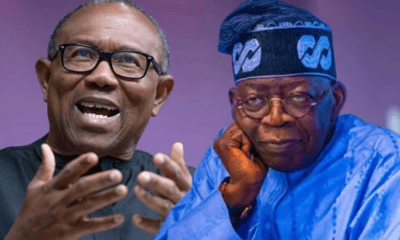
Bloomberg: Western multinationals fleeing Nigeria being replaced by Asian, Turkish firms

As United States and Europe-based multinationals exit Nigeria, Asian and local companies are stepping in to fill the void, Bloomberg has reported.
Last week, London-based Diageo Plc sold its controlling stake in Guinness Nigeria Plc to Singapore’s Tolaram Group Inc.

The Fouani Group, a local firm, operates a diaper and sanitary pad plant in a complex where Cincinnati-based Procter & Gamble Co. shuttered a $300 million facility making the same products.
Lagos-based Fidson Healthcare Plc is expanding its manufacturing range after the UK’s GSK Plc closed its Nigerian distribution arm. Turkish diaper-maker Hayat Kimya AS has also established itself in Nigeria.
Nigeria, with a population of more than 200 million, is Africa’s most populous nation, in theory presenting a huge market for consumer goods. But rampant unemployment, widespread poverty and insecurity, a plummeting currency, sky-high inflation and decades of economic mismanagement have turned it into a graveyard for multinational consumer goods companies.

The naira has swung wildly in recent months and is 56 per cent down against the dollar over the past year, the most of any African currency. That’s made it difficult for companies that import goods and service foreign debts to make a profit as they struggle to pass the necessary price increases to consumers.
And while the central bank has now cleared a $7 billion backlog that companies were seeking to repatriate the difficulty in doing so in recent years made many businesses unsustainable, Bloomberg added.
The gaps in the market left by the departing multinationals present an opportunity for domestic companies and foreign firms that focus on sourcing raw materials in Nigeria and manufacturing locally, thereby avoiding the currency risk that has hounded some foreign companies out.
And while the departures show just how unattractive the Nigerian consumer market has become they also highlight the success of strategies of companies such as Hayat and Tolaram, which have each turned their brands into household names.
For companies such as Tolaram, used to operating in challenging environments such as Indonesia, the answer has been to localise as many costs as possible. That’s helped it turn Indomie instant noodles into one of Nigeria’s most popular brands, and led it into joint ventures with US cereal and snack maker Kellanova and Danish dairy giant, Arla Foods.
“Brands can’t continue to operate the way they’re used to. You need to adapt to the market accordingly,” said Girish Sharma, an executive director at Tolaram. “There is hardly anything in Indomie that we import. We have our own flour milling, we have our own palm oil refining, we have our own packaging.”
Tolaram operates 24 “fully backwardly integrated” plants in Nigeria, meaning the company produces the raw materials they need, and is even setting up its own oil palm plantations, Sharma said in an earlier interview. GSK, by contrast, imported its products. That doesn’t mean that local firms aren’t struggling.
“In theory, we think we can better manage the difficulties of doing business in Nigeria,” said Jide Ogundare, managing director of MBO Capital Management Ltd, which took over supermarkets run by Shoprite Holdings Ltd. when the South African company quit Nigeria in 2021. “In actual fact, we face the same challenges as the foreigners except that we can’t leave and go elsewhere,” he added.
Still, despite the narrowing margins and reduced spending power, the weaker naira is making Nigerian manufacturing competitive.
“We’re exporting to some West African countries like Mali and to East Africa and our target is to export to another five to 10 countries by the end of next year,” said Imokha Ayebae, Fidson’s executive director.
The exodus of firms including Kimberly-Clark Corp., Sanofi SA and Bayer AG are hindering Nigerian President Bola Tinubu’s bid to breathe life into the struggling economy.
Microsoft Corp. in May said it would shut the engineering section of its Africa Development Centre in Nigeria two years after it opened. Meanwhile, oil majors Shell Plc, Exxon Mobil Corp. and Eni SpA have all sold their onshore operations to local companies, denting confidence in the industry that accounts for most of Nigeria’s exports and leaving behind decades of environmental devastation.
By contrast, Tinubu’s spokesman said Tolaram’s $70 million purchase of the Guinness stake was a vote of confidence in the Nigerian economy.
“The multi pronged reforms and interventions being implemented on the economic and financial fronts would deliver sustained growth and enduring profitability,” Bayo Onanuga, special adviser to the president on information and strategy, said in a post on X.
For now the companies still invested aren’t seeing that uptick. South Africa’s Multichoice Group, the biggest satellite television provider in Nigeria, saw subscriber numbers fall 18 per cent in the year to March saying that Nigerian customers “had to prioritize basic necessities over entertainment.” Revenue at Johannesburg-based MTN Group Ltd., which runs Nigeria’s biggest mobile phone network, fell 53 per cent in the first quarter of the year when measured in its home currency.
But in challenging environments there is also opportunity, said Tolaram’s Sharma, who emphasised the company’s belief in Nigeria’s potential.
“If everything was good I don’t think Guinness would think of partnering with Tolaram. Now when they saw there’s adversity they chose to partner with us,” he said. “Nigeria has 200 million people. They have to eat, they have to drink. We don’t see why Nigeria should not be the country where we’ll continue to stay and continue to invest,” he stressed..



News
Ojukwu Property Dispute: OTL petitions IGP over demolition, construction at Macpherson Avenue Property
By Tony Edike
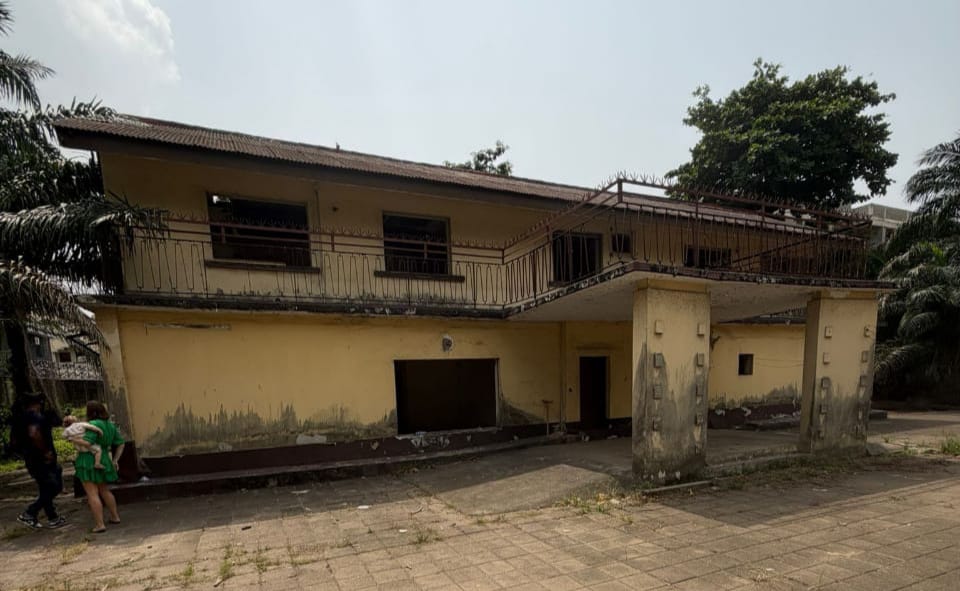
The long-running property dispute involving Bianca Ojukwu and Ojukwu Transport Limited (OTL) has taken a fresh turn following the demolition of a property at 4 Macpherson Avenue, Ikoyi, Lagos, and what the company describes as ongoing unauthorised construction on the site.
In a petition dated August 20, 2026 and addressed to the Inspector-General of Police (IGP), OTL called for the immediate cessation of activities at the property and its return to the company pending the resolution of outstanding court proceedings.
The company said the property was taken over on May 1, 2025, when officers from Zone 2, Lagos, accompanied by lawyers representing Bianca Ojukwu, identified in the petition as Omeye and Duru, took over the premises.
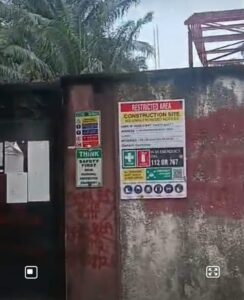
Ongoing construction at the site
OTL alleged that the police action was based on what it described as “false claims” made by Bianca Ojukwu and her lawyers.
According to the company, the property had previously been the subject of litigation and enforcement proceedings. OTL said it had, pursuant to a 2018 judgment by Justice Adedayo Oyebanji, obtained and executed a warrant on the properties in 2022.
The company further stated that it subsequently commenced an appeal process against the 2022 judgment of Justice A.M. Lawal and served the relevant stay processes.
OTL said that despite the unresolved legal proceedings, the property at Macpherson Avenue was demolished and construction subsequently commenced on the site.
OTL’s fresh petition to IGP
In the August 2026 petition, Ojukwu Transport Limited, said it had previously petitioned the IGP on August 22, 2025, with a reminder in January 2026, seeking the return of the property.
The company said that its earlier complaints had not been responded to, while activities at the property had continued.

A new structure under construction at the site
“OTL, the owner of the property, discovered that the same property taken over by police with no response to our previous petitions/demands had been demolished and construction now ongoing,” the company stated in the petition.
It consequently asked the IGP to urgently intervene by stopping all activities on the property and removing persons allegedly occupying or working on the premises.
The company also requested that the property be returned to it while the outstanding court issues are allowed to run their course.
“Criminality and abuse of power should not be condoned,” the petition stated.
Earlier police petitions
OTL said its initial petition in August 2025 was prepared by Chief O. Ugolo, SAN, on the instructions of Chief Chukwuemeka Odumegwu-Ojukwu Jnr, whom the company identified as head of the Ikemba branch of the family as well as a shareholder and director of OTL.
The company maintained that Bianca Ojukwu and her sons, Afamefuna and Nwachukwu, are not shareholders or directors of OTL.
A separate petition was also reportedly submitted to the Assistant Inspector-General of Police, Zone 2, in September 2026, specifically concerning the alleged demolition and ongoing construction at the Macpherson Avenue property.
OTL alleged that the ongoing development was taking place with the knowledge and protection of police personnel.
However, these allegations have not been independently established in the materials made available to The Advocate.
Contempt proceedings
OTL said Bianca Ojukwu and her sons had earlier, in 2024, applied for Form 49 contempt proceedings before Justice Lawal.
The company also alleged that proceedings had suffered delays because the case file earlier requested by Bianca’s lawyers was unavailable or had not been returned to court on two consecutive occasions.
Other properties involved
According to OTL, the matter before Justice Lawal includes, in addition to 4 Macpherson Avenue :
* 30 Gerrard Road, Ikoyi
* 29 Oyinkan Abayomi, Ikoyi
* 13 Ojora, Ikoyi
* 32 Commercial Avenue, Yaba
OTL maintains that it is the owner of the properties.
OTL demands return of property
OTL described the alleged demolition and construction as a “blatant and provocative disregard for the rule of law” and accused a serving federal government minister and her lawyers of abuse of office and power.
Those allegations are OTL’s position and have not been independently established.
The company is demanding that the alleged construction be stopped, all persons allegedly occupying the property be removed and the property returned to OTL pending the conclusion of the court proceedings.
The latest development is another chapter to the long-running legal dispute with Ojukwu Transport Limited.
News
2027: How Atiku told me to persuade Peter Obi to accept VP slot – Babachir Lawal Ex-SGF Babachir Lawal
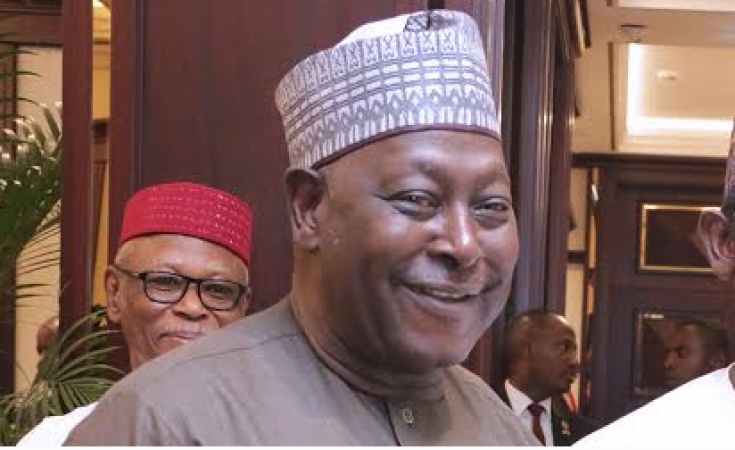
Former Secretary to the Government of the Federation (SGF), Babachir Lawal, has disclosed that former Vice President Atiku Abubakar asked him to persuade Peter Obi to join the African Democratic Congress (ADC) and accept the position of his running mate in the 2027 presidential election.
Babachir Lawal made the disclosure in an interview with Diaspora Digital Media while recounting events surrounding the opposition negotiations that preceded the eventual divergence of the Atiku and Obi camps.
According to him, Atiku personally contacted him and gave him the task of approaching Obi with the proposal.
“Atiku called me and told me that he wanted to work with me. He gave me a mission to convince Peter Obi to join the ADC and serve as his vice president,” Lawal said.
He said Atiku’s proposal included an arrangement under which the two would serve for four years and subsequently pursue a constitutional amendment to create a single six-year presidential term, which Obi would then benefit from.
“He explained that during their four-year term, they would amend the Constitution to a single six-year term, which Obi would benefit from. I went to Obi with this proposal, but Peter Obi said he was not interested,” he added.
Lawal’s account has, however, been disputed by Obi, who said he could not have rejected an offer that was never made to him.
The disclosure comes amid continuing political realignments ahead of the 2027 presidential election.
Lawal had earlier resigned from the ADC in June 2026, alleging irregularities in the party’s presidential primary that produced Atiku as its candidate. Atiku’s camp rejected the allegations.
Lawal subsequently joined the Nigeria Democratic Congress (NDC) in September and declared support for the party’s Peter Obi-Rabiu Kwankwaso presidential ticket. (Nigerian Tribune)
…Unveils 25-year plan to sustain transformation beyond individual administrations
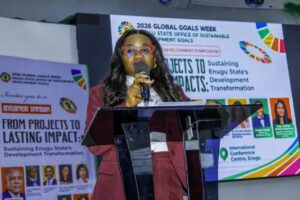
The Enugu State Government has unveiled a 25-year development plan aimed at ensuring that the state’s ongoing transformation outlives individual administrations, with Governor Peter Mbah declaring that the government’s focus is shifting from simply delivering projects to building strong institutions and achieving lasting improvements in the lives of citizens.
Mbah made the declaration at the 2026 Enugu State Global Goals Week Symposium, held at the International Conference Centre (ICC), Enugu, with the theme, “From Projects to Lasting Impact: Sustaining Enugu State’s Development Transformation.”
Governor Mbah, who was represented by the Secretary to the State Government, Prof. Chidiebere Onyia, said the state’s development agenda was being deliberately aligned with the Sustainable Development Goals (SDGs) to ensure that investments in infrastructure, human capital and critical services produced measurable and enduring impact.
He said the administration had continued to prioritise investments in education, healthcare, roads, agriculture, water, technology, security and other critical sectors, stressing that the projects were not ends in themselves but part of a broader strategy to build systems capable of sustaining development over the long term.
“Our objective is not merely to execute projects, but to build systems and institutions capable of delivering enduring development and ensuring that the transformation we are driving today is sustained beyond the tenure of any single administration,” Mbah said.
He said the 25-year development plan would provide continuity, guide long-term investments, strengthen institutions, expand economic opportunities, improve human capital and promote inclusive development across the state.
Mbah noted that the state’s commitment to the SDGs was reflected in the spread of development interventions across the 260 electoral wards, particularly through the Smart Green Schools and Primary Healthcare Centres.
He assured that the government would continue to strengthen institutions, improve service delivery and put in place mechanisms to sustain the development gains achieved under the administration.
In a welcome address, the Senior Special Assistant to the Governor on Sustainable Development Goals and Enugu State SDGs Focal Person, Onyinye Akubuilo-Okpalanma, said the state’s transformation must remain people-centred, inclusive and sustainable.
She said government programmes should be judged not simply by the number of projects completed or funds spent, but by their impact on residents, the opportunities created and the communities strengthened.
“The success of government programmes should not be measured only by the number of projects completed or the amount of money spent, but by the extent to which those interventions improve the daily lives of our people, expand opportunities and strengthen communities,” she said.
Akubuilo-Okpalanma called for stronger community participation, continuous monitoring, reliable data and greater transparency in public finance and project implementation. She also urged greater attention to vulnerable groups and sustained investment in education, primary healthcare and environmental protection.
She called on development partners, civil society organisations, traditional institutions, the private sector and community leaders to work with government to sustain development gains, stressing the importance of continuity, institutional memory and long-term planning.
“Enugu’s transformation will be judged not only by the projects visible today, but also by the quality of institutions, opportunities and services available to future generations,” she said.
In a keynote address titled “From Projects to Lasting Impact: Sustaining Enugu State’s Development Transformation,” former Minister of Information, Frank Nweke Jnr., commended the scale and pace of public investment in the state over the past three years.
Nweke said the Mbah administration had reported more than 1,500 kilometres of roads constructed or reconstructed, over 7,000 classrooms and 260 Type-2 Primary Healthcare Centres.
He also cited the 2025 budget, in which ₦837.9 billion, representing 86 per cent of the budget, was allocated to capital expenditure, while ₦320.6 billion, representing more than one-third of the total budget, was allocated to education.
He stressed that improved domestic revenue mobilisation was essential to sustaining ambitious development, noting that the financial capacity to fund projects, maintain public assets and support institutions was critical to long-term transformation.
“Projects can transform places, but strong institutions are necessary to ensure that the transformation endures,” Nweke said.
He identified five priorities for sustaining Enugu’s development: linking investments to clearly defined problems and measurable outcomes; embedding the SDGs in planning and budgeting; measuring outcomes rather than expenditure alone; providing for the maintenance of public assets from the outset; and strengthening institutions, professional capacity and accountability mechanisms.
In separate goodwill messages, the UNICEF Field Office, Enugu representative, Juliet Chiluwe; the Special Adviser on Legislative Matters, Rt. Hon. Paul Nnajiofor; and Amb. Amaka Nweke commended the state’s development efforts and emphasised the need for inclusive, accountable and sustainable development that would continue to benefit present and future generations.
The event brought together government officials, development partners, traditional and community stakeholders, civil society representatives and members of the National Youth Service Corps (NYSC), among other participants.
-
 News2 days ago
Igbo leaders reject Abuja restructuring communiqué
-
News3 days ago
Enugu Air Lands in Douala, Opens New Air Corridor Between South-East Nigeria, Cameroon
-
International2 days ago
27 feared dead after two mass shootings in South Africa
-
News2 days ago
Pastor abandons Kwara church, flees with family, members over bandit threat
-
News2 days ago
‘Where is Nigeria’s president?’, Peter Obi questions Tinubu’s absence from UNGA
-
News2 days ago
Europe-based newlywed arrested with cocaine at Enugu airport
-
News2 days ago
Woman arrested for allegedly smuggling alcohol to inmate in Ogun prison
-
News2 days ago
APC wins all Chairmanship, Councillorship seats in Enugu