News
FG summons 80 private jets owners over operating papers

Consequently, no fewer than 80 operators of private jets are expected to appear at the headquarters of the NCS in Abuja with their aircraft import documents.
The special aircraft import verification exercise, which begins on Wednesday (tomorrow), is expected to last for 30 days, according to a public notice issued by Customs.

The notice, sighted by one of our correspondents, read in part, “The Nigeria Customs Service announces a verification exercise for privately owned aircraft operating in Nigeria. This exercise aims to identify improperly imported private aircraft without documentation, ensuring proper imports and maximum revenue collection.”
According to the notice, owners and operators of private jets in the country are to come with some relevant documents.
These include aircraft Certificate of Registration, Nigerian Civil Aviation Authority’s Flight Operation Compliance Certificate, NCAA’s Maintenance Compliance Certificate, NCAA’s Permit for Non-Commercial Flights, and Temporary Import Permit (if applicable).

The latest plan to clamp down on operators of improperly imported private jets came more than one year after the Federal Government suspended the action.
In the past three years, the government had planned to recover import duty running into billions of naira from some private jet operators who had used certain technical loopholes to evade the payment of import duty.
A few private jet owners paid the mandatory import duty after the Hameed Ali-led NCS took some significant steps to recover the revenue. However, several owners and operators of private jets in the country have yet to pay the statutory duty.
Many private aircraft operators in the country have allegedly explored technical loopholes in the regulation to fraudulently obtain a Temporary Import Permit from the Nigeria Customs Service instead of paying the statutory import duty on their imported aircraft.
The TIP, which is valid for an initial period of 12 months, can be extended by six months twice, according to the regulations.
However, several operators of private jets in the country have continued to extend the TIP indefinitely, a development that prompted the Customs to effect past clampdowns.
According to new findings by our correspondents, no fewer than 80 private jet operators are expected to present their aircraft import documents for verification during the one-month exercise.
“Based on the data we have, we are expecting no fewer than 80 private aircraft operators for the verification exercise. These include operators of about 20 private aircraft that have been imported since the last verification exercise,” a top official close to the verification exercise told The PUNCH on condition of anonymity because he was not authorised to speak on the matter
The exercise is expected to lead to the payment of the mandatory import duty, while aircraft operators who fail to pay may have their jets grounded.
The TIP has been described by some stakeholders as a fraudulent means of evading the mandatory import duty. Importers of private jets, especially foreign registered private jets, are expected to pay five per cent of the value of the private jet as import duty.
However, due to the high cost of private jets, some owners often prefer not to pay the import, according to Customs officials.
Instead, the operators prefer to obtain a TIP under the guise that the aircraft is coming into the country for a temporary period, quoting the International Civil Aviation Organisation Convention Article 24 which focuses on Customs waiver for commercial aircraft operating in a country temporarily.
But the new leadership of Customs appears poised to get all operators to pay the import duty.
Unconfirmed sources said the government might get close to N100bn in unpaid import duty on imported private aircraft due to the high exchange rate.
This analysis is however dependent on whether the Customs chooses to implement the 25 per cent penalty fee such aircraft owners are meant to pay for delayed payment. The 25 per cent penalty fee is in addition to the statutory five per cent import duty.
It is unclear If the private aircraft operators will be willing to cooperate with the government to pay the duty.
Some operators had in the past gone to court to stop the government from collecting the revenue.
Meanwhile, National Public Relations Officer, NCS, Abdullahi Maiwada, on Monday, confirmed the verification exercise, which is scheduled to begin on Wednesday.
In response to enquiries by The PUNCH on what actions the agency would take after the verification exercise, Maiwada simply said, “All we are doing is to ensure maximum revenue collection for the Federal Government. Relevant sections of our extant laws and regulations will guide our actions and inaction during and after the exercise.”
Sometime in 2021, about 17 owners of foreign-registered private jets, comprising top business moguls, leading commercial banks, and other rich Nigerians, dragged the Federal Government to court, seeking to stop the grounding of their planes over alleged import duty default.
This came after the Federal Government approved the decision of the Nigeria Customs Service to the ground about 91 private jets over their alleged refusal to pay import duties running to over N30bn.
The NCS had in a letter directed the Nigerian Civil Aviation Authority, the Federal Airports Authority of Nigeria, and the Nigerian Airspace Management Agency to ground the affected private jets with immediate effect.
However owing to issues bothering on inter-agency rivalry and disagreements, the relevant government agencies could not ground the private jets.
The jet owners who sued the government were seeking a judicial review as to whether it was lawful for them to pay the controversial import duty on their private jets or not.
They had sued the government using the foreign shell companies and trustees through which the foreign-registered jets were purchased.
Oftentimes, Nigerians and corporate bodies buy their foreign-registered private jets through foreign shell companies and trustees. Experts believe Nigerians prefer to register their jets in foreign countries like the United States, United Kingdom, and Isle of Man, among others, to preserve the value of the aircraft in the event they want to sell it. This also helps them to pay cheaper insurance premiums.
According to the court document, the 17 applicants, which are mostly foreign companies of the Nigerian jet owners are Aircraft Trust and Financing Corp Trustee, UAML Corp, Bank of Utah Trustee, Masterjet AVIACAO Executive SA, and Cloud Services Limited.
Others are MHS Aviation GmbH, Murano Trust Company Limited, Panther Jets, SAIB LLC, Empire Aviation Group, and Osa Aviation Limited.
The list also includes BUA Delaware Inc., Flying Bull Corporation Limited, Air Charter Inc., Sparfell Luftahrt GmbH, WAT Aviation Limited, and ATT Aviation Limited.
The NCAA and Customs were listed as respondents to the suit.
However, in a written address in support of the first respondent’s objector notice of preliminary objection, the court paper had read in part, “The brief facts of this case are that the first respondents, having discovered that some operators of aircraft imported them under the guise of Temporary Importation Permit, were permanently imported into Nigeria and given TIP status to evade payment of lawful customs.”
The NCS had in 2021 embarked on a review of import duties paid on private jets brought into the country since 2006.
Following the alleged discovery that several private jet owners, under the guise of Temporary Import Permit, had failed to pay the statutory import duty to the coffers of the government, the then CG of Customs, Hameed Ali, set up a verification panel to review all TIPs and the relevant aircraft import documents of all private jets in the country.
At the end of the 60-day exercise, 57 private jets, which had licences for commercial charter operations, were cleared and issued Aircraft Operators Certificates by the Customs.
However, 29 private jets, whose owners came for the verification, were found to be liable to pay the import duty.
The Customs also compiled a list of another 62 private jets whose owners failed to appear for the verification exercise but were found liable for import duty payment.
However, other private jet owners seeking to pay their import duty were given a 14-day ultimatum to clear the debts.
The number of jet owners who later paid the duty is still unclear. It is still unclear to what extent the new management of Customs is willing to get the powerful private jet owners to pay their import duty.










News
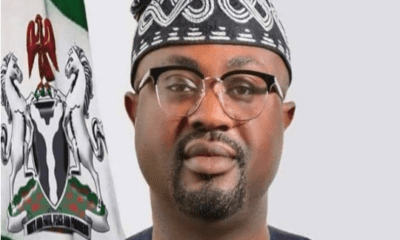
Court Orders Interior Minister Tunji-Ojo to Respond to Suit Seeking Release of His NYSC Records
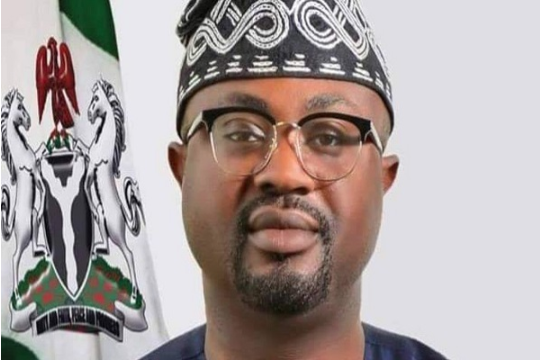
The Federal High Court in Abuja on Monday ordered the Minister of Interior, Olubunmi Tunji-Ojo, to respond to a suit seeking to compel the release of records of his National Youth Service Corps (NYSC) scheme.
Justice Salim Ibrahim gave the order when the matter came up for hearing.
The Incorporated Trustees of Pathway to Equity and Charity Foundation had filed the suit, marked FHC/ABJ/CS/1812/2026.
The group prayed the court to compel the NYSC to disclose documents supporting the minister’s claim that he completed the mandatory one-year national service.
The foundation also sought an order of mandamus directing the Federal Capital Territory Administration (FCTA), the 2nd respondent, to produce records showing that the minister did his primary assignment at the FCTA.
When the case was called, counsel to the applicant, Chief Solomon Akuma, SAN, told the court he was ready to proceed with the hearing.
However, Abiola Olaniji, who appeared for the minister, said he had filed an application for Tunji-Ojo to be joined as the 3rd respondent.
Olaniji said the applicant (foundation) had responded with a counter affidavit raising serious issues, to which he needed time to reply.
The lawyer stated that the minister was ready to take part in the proceedings as an interested party.
But Akuma opposed the application, arguing that the minister was not a proper party.
He said the suit only sought an order of mandamus compelling the respondents (NYSC and FCTA) to produce documents that are not in the minister’s custody.
Justice Ibrahim directed the minister to file and serve his reply to the applicant’s counter affidavit, which opposed his application to be joined as a party in the suit before the next hearing date.
The judge then adjourned the matter until Oct. 18 for hearing.
The applicant had sought from the NYSC the mobilisation or call-up letter issued to Tunji-Ojo in 2006 or any other year; the posting letter to the FCTA in 2006 or any other year; and his application for mobilisation.
It also sought the evidence of approval of his remobilisation by the NYSC’s Director-General; evidence of payment of allowances to him; the record of his Community Development Service and his discharge certificate.
The foundation equally sought from the FCTA, the mobilisation or call-up letter, the posting letter, his attendance record during the service year, evidence of any allowance paid to him, among others.
It said the application was brought under Section 14 of the Federal High Court Act, Order 34 Rules 1, 2 and 5 of the Federal High Court (Civil Procedure) Rules 2019.
It also cited Sections 20, 21 and 25 of the Freedom of Information (FOI) Act, 2011.
(NAN)

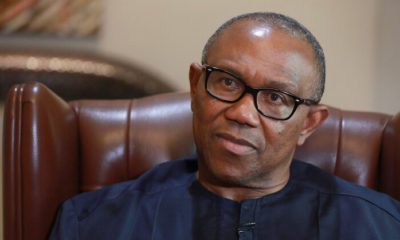
The presidential candidate of the Nigeria Democratic Congress, Peter Obi, has advised Nigerians residing in the United Kingdom to stop sending money to people who seek financial help at home.
Obi also advised them to urge their relatives to vote for productive leaders.
He made the remarks at a town hall meeting with diaspora supporters in Manchester, United Kingdom, on Sunday.
He stressed that Nigeria’s prevailing economic hardship resulted from bad leadership, arguing that continuous financial assistance only cushions the effects of poor governance without addressing the root causes.
“You have people at home in Nigeria today who are begging you for money. Tell them no!” he said.
The former Anambra State governor insisted that his record in public office distinguished him from other governors, claiming none of them matched his achievements in saving public funds.
“I’m not saying I’m a saint, but I saved money. I’ve not seen one governor who has saved 10 per cent of what I saved. No governor has done it.
“Let’s start with this one that is less corrupt. That’s how other countries change.”
He maintained that his conversations with the people reinforced the need for collective responsibility, stressing that building a new Nigeria would require citizens to take an active role in addressing challenges facing the country.
Obi also urged Nigerians to take the 2027 election seriously, describing the contest as a critical moment for the nation.
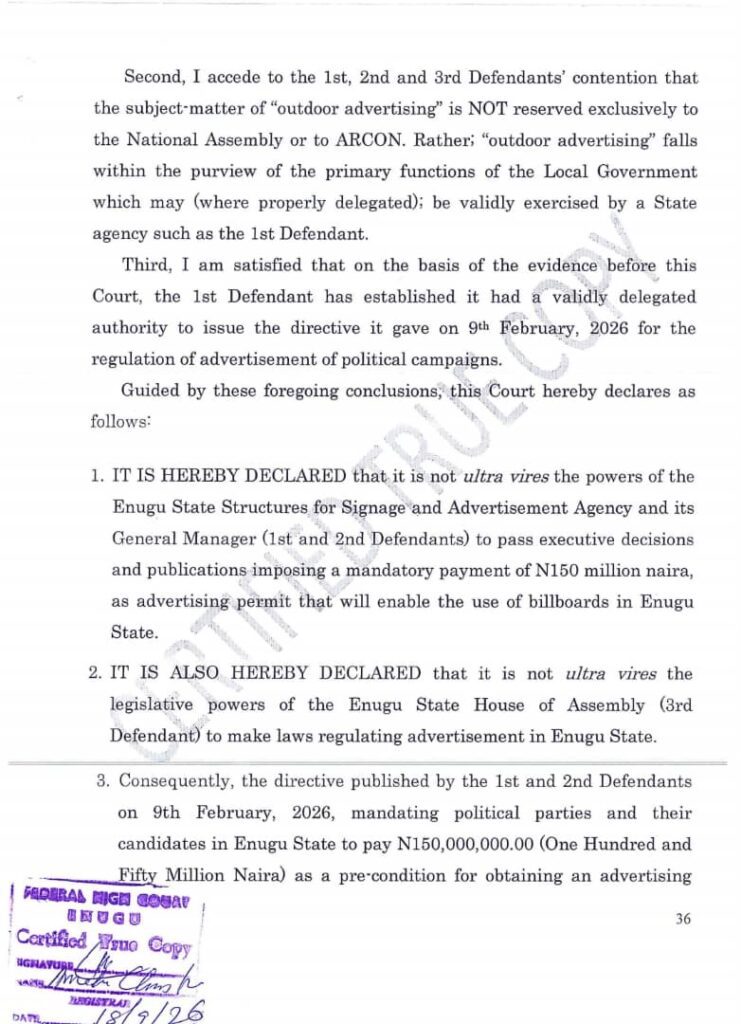
Contrary to false and misleading reports on social media that a Federal High Court (FHC) sitting in Abuja had nullified the N150 million fee prescribed by the Enugu State Structures for Signage and Advertisement Agency (ENSSAA) for political campaign billboards, findings have revealed that the court actually ruled in favour of the agency, upholding its powers to prescribe the fee.
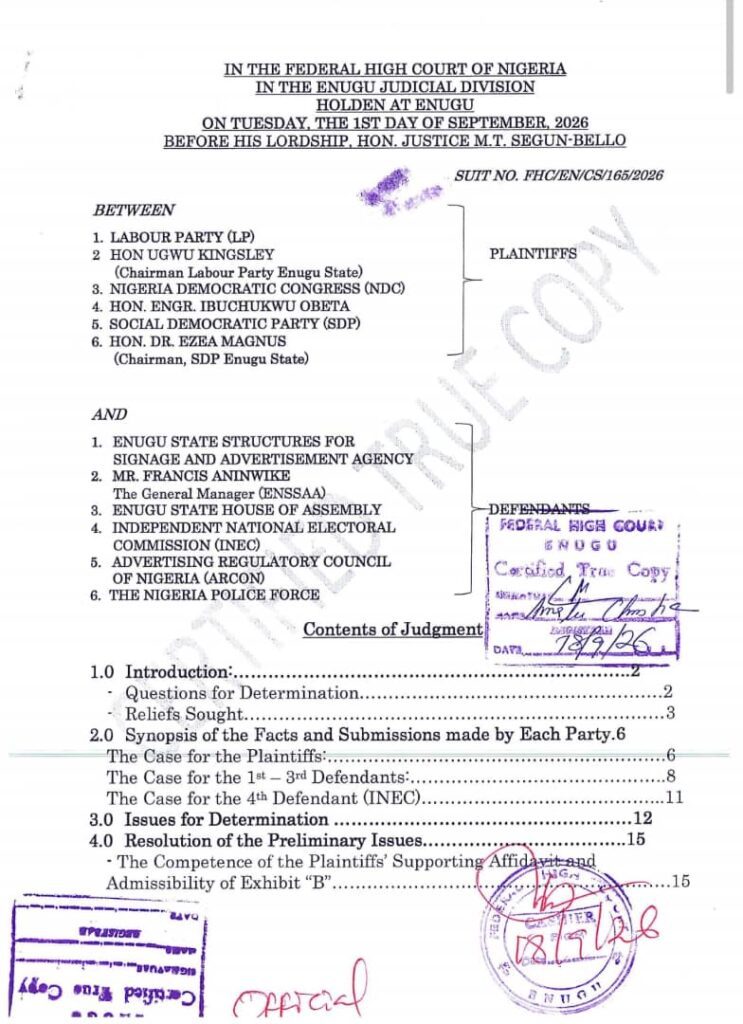
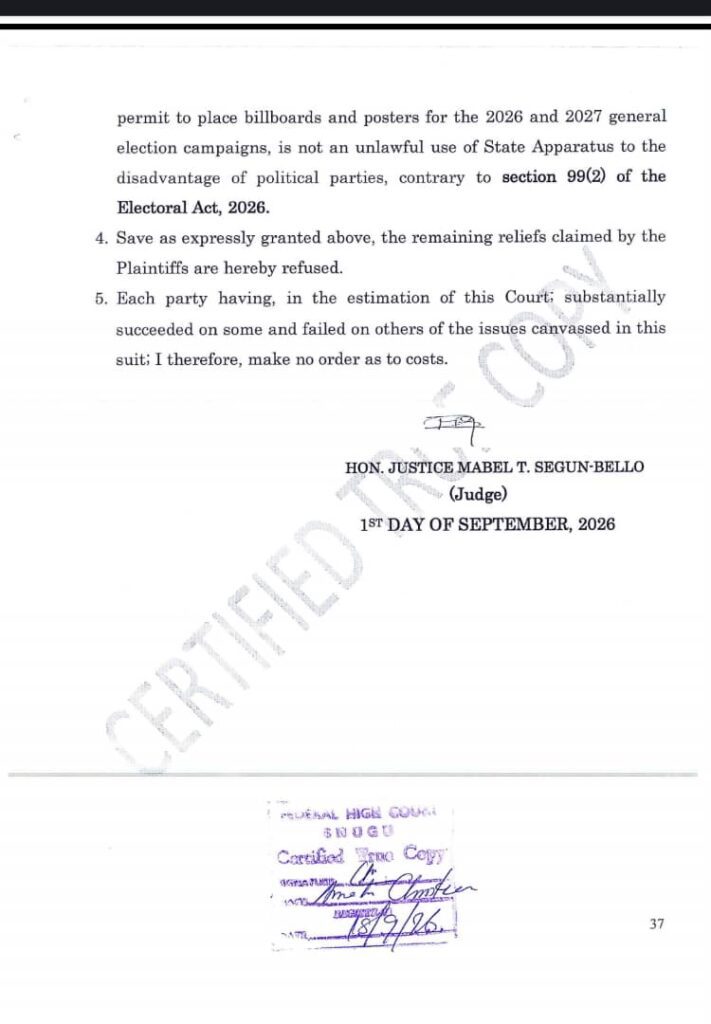
According to a certified true copy (CTC) of a judgment of FHC sitting in Enugu, the court had on September 1, 2026, dismissed a suit by opposition parties and figures challenging ENSSAA’s authority to impose a mandatory N150 million fee on each political party seeking to erect campaign billboards or display posters ahead of the 2027 general election.
The judgment rendered by Justice Mabel Segun-Bello held that it was within the legislative competence of the Enugu State House of Assembly to make laws on outdoor advertising and for ENSSAA to exercise powers donated to it by state law.
The suit marked FHC/EN/CS/165/2026 had the Labour Party; Chairman of the Labour Party (LP) in Enugu, Hon. Kingsley Ugwu; Nigeria Democratic Congress (NDC); NDC factional state Chairman, Engr. Ibuchukwu Obetta; the Social Democratic Party (SDP) and its state Chairman, Hon. Magnus Ezea, as plaintiffs, while ENSSAA; its General Manager, Mr. Francis Aninwike; the Enugu State House of Assembly; Independent National Electoral Commission (INEC); Advertising Regulatory Council of Nigeria (ARCON); and Nigeria Police Force were the respondents or defendants.
The plaintiffs had in June 2026 approached the court seeking a declaration that, by virtue of Sections 99 (1) and (2) of the Electoral Act, 2026, and Section 153 of the 1999 Constitution, which donated exclusive powers to INEC to regulate electoral campaigns of political parties in Nigeria, it was ultra vires the powers of ENSSAA and its General Manager to make executive decisions and publications imposing a mandatory payment of N150 million by political parties and their candidates in the state as an advertisement permit fee for the placement of billboards for the council election and the 2027 election.
They equally sought a declaration by the court that it was unlawful and ultra vires the legislative powers of the Enugu State House of Assembly to make laws regulating the advertisement of political campaigns in the state.
Consequently, the plaintiffs sought an order of the court setting aside the mandatory N150 million fee, as well as an injunction restraining the agency and its GM, the Enugu State Government, its agents and representatives from enforcing ENSSAA’s executive directive.
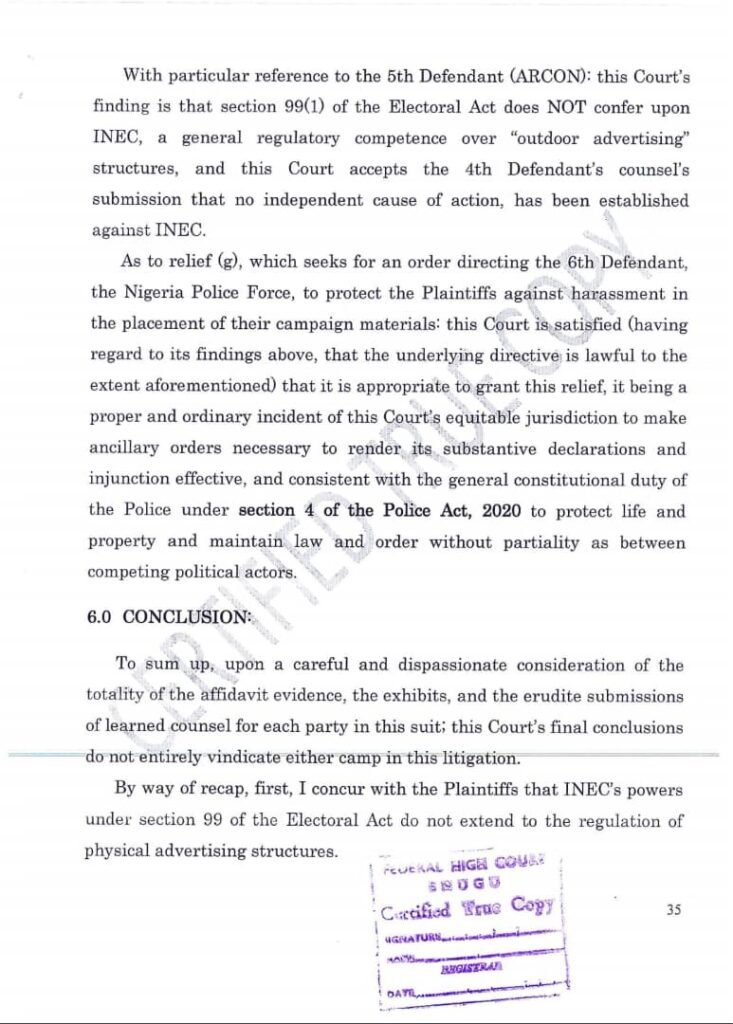
They finally sought an order of the court mandating the Nigeria Police Force to protect political parties in Enugu State against possible harassment for the placement of billboards and posters for the council election and the 2027 elections.
However, delivering her judgment in September, after a careful consideration of the totality of the affidavit evidence, the exhibits, and submissions by both parties, the presiding judge, Justice Mabel Segun-Bello, held, among other things, that the National Assembly does not hold exclusive legislative powers over outdoor advertising.
“I accede to the 1st, 2nd and 3rd Defendants’ contention that the subject matter of ‘outdoor advertising’ is NOT reserved exclusively to the National Assembly or to ARCON.
“Rather, ‘outdoor advertising’ falls within the purview of the primary functions of the Local Government, which may (where properly delegated) be validly exercised by a State agency such as the 1st Defendant (ENSSAA).
“Third, I am satisfied that on the basis of the evidence before this Court, the 1st Defendant has established it had a validly delegated authority to issue the directive it gave on 9th February, 2026, for the regulation of advertisement of political campaigns,” she stated.
Guided by these foregoing conclusions, Justice Segun-Bello held that “it is not ultra vires the powers of the Enugu State Structures for Signage and Advertisement Agency and its General Manager (1st and 2nd Defendants) to pass executive decisions and publications imposing a mandatory payment of N150 million naira, as advertising permit that will enable the use of billboards in Enugu State.”
Continuing, she said, “It is also hereby declared that it is not ultra vires the legislative powers of the Enugu State House of Assembly (3rd Defendant) to make laws regulating advertisement in Enugu State.
“Consequently, the directive published by the 1st and 2nd Defendants on 9th February, 2026, mandating political parties and their candidates in Enugu State to pay N150,000,000.00 (One Hundred and Fifty Million Naira) as a pre-condition for obtaining an advertising permit to place billboards and posters for the 2026 and 2027 general election campaigns, is not an unlawful use of State Apparatus to the disadvantage of political parties, contrary to Section 99(2) of the Electoral Act, 2026.
“Save as expressly granted above, the remaining reliefs claimed by the Plaintiffs are hereby refused.”
Meanwhile, the Enugu State Government says that unlike the practice in most states, the N150 million fee is for each political party, not for candidates, as misrepresented on social media and by some commentators.
The Secretary to the State Government, Prof. Chidiebere Onyia, made the clarification recently while fielding questions from Government House correspondents in Enugu, adding that there was no court judgment on the fee by any FHC in Abuja, as falsely circulated.
In a related development, finding show that the Abia State Structures for Signage and Advertising Agency (ABSSAA) prescribed feea for candidates ranging from N20 million for State House of Assembly candidates to N200 million for presidential candidates.
Imo State fees range from N3.55 million for each House of Representatives candidate to N55 million for each governorship candidate, while the permit fees range from N300,000 for local council candidates to N150 million for presidential candidates.
The campaign permit fee ranges from N100,000 for each councillorship candidate to N50 million for each presidential candidate, while Kwara State fixed its fees at N2 million for each House of Assembly candidate and N100 million for presidential candidates.
The Certified True Copy of the Court Judgement :
-
 Faith2 days ago
Awka Anglican Diocese Rejects Ibezim’s Suspension, Threatens to Leave Church of Nigeria
-
News2 days ago
BREAKING: Mbah Extends Enugu Movement Restriction to 10pm, Scraps Keke Ticketing
-
Politics2 days ago
Nigeria’s Weak Opposition and the Cost of One-Party Dominance: Can the Opposition Rebuild Before 2027?
-
News8 hours ago
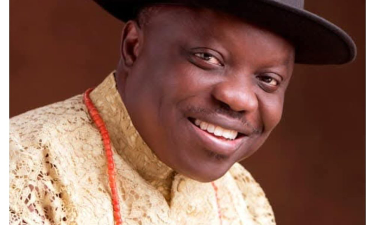
JUST IN: Former Delta Governor, Uduaghan, dies
-
News2 days ago
2027: Keke Riders Endorse Mbah, Tinubu
-
News1 day ago
Catholic priest dies as crucifix falls on him during Mass
-
News21 hours ago
Corruption turning Nigerian Courts to ‘market stalls’ — Retired Justice Augie
-
News3 days ago
Enugu Approves ₦32bn Legacy Gratuity Payment, Begins Disbursement Next Week