News
Tinubu orders CBN to suspend implementation of cybersecurity levy

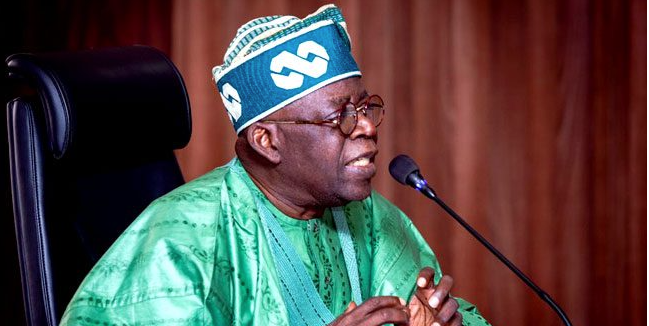
President Bola Tinubu has asked the Central Bank of Nigeria to suspend the implementation of the controversial cybersecurity levy policy and ordered a review.
This followed the decision of the House of Representatives, which, last Thursday, asked the CBN to withdraw its circular directing all banks to commence charging a 0.5 per cent cybersecurity levy on all electronic transactions in the country.

The CBN on May 6, 2024, issued a circular mandating all banks, mobile money operators, and payment service providers to implement a new cybersecurity levy, following the provisions laid out in the Cybercrime (Prohibition, Prevention, etc) (Amendment) Act 2024.
According to the Act, a levy amounting to 0.5 per cent of the value of all electronic transactions will be collected and remitted to the National Cybersecurity Fund, overseen by the Office of the National Security Adviser.
Financial institutions are required to apply the levy at the point of electronic transfer origination.

The deducted amount is to be explicitly noted in customer accounts under the descriptor “Cybersecurity Levy” and remitted by the financial institution. All financial institutions are required to start implementing the levy within two weeks from the issuance of the circular.
By implication, the deduction of the levy by financial institutions should commence on May 20, 2024.
However, financial institutions are to make their remittances in bulk to the NCF account domiciled at the CBN by the fifth business day of every subsequent month.
The circular also stipulates a timeframe for financial institutions to reconfigure their systems to ensure complete and timely submission of remittance files to the Nigeria Interbank Settlement Systems Plc as follows: “Commercial, Merchant, Non-Interest, and Payment Service Banks – Within four weeks of the issuance of the Circular.
“All other Financial Institutions (Microfinance Banks, Primary Mortgage Banks, Development Financial Institutions) – Within eight weeks of the issuance of the Circular,” the circular noted.
The CBN has emphasised strict adherence to this mandate, warning that any financial institution that fails to comply with the provisions will face severe penalties. As outlined in the Act, non-compliant entities are subject to a minimum fine of two per cent of their annual turnover upon conviction.
The circular provides a list of transactions currently deemed eligible for exemption, to avoid multiple applications of the levy.
These are loan disbursements and repayments, salary payments, intra-account transfers within the same bank or between different banks for the same customer, and intra-bank transfers between customers of the same bank.
Exemptions include other financial institutions’ transfers to their correspondent banks, interbank placements, banks’ transfers to CBN and vice versa, inter-branch transfers within a bank, cheque clearing and settlements, letters of credit, and banks’ recapitalisation-related funding.
Others are bulk funds movement from collection accounts, savings, and deposits including transactions involving long-term investments such as treasury bills, bonds, and commercial papers, and government social welfare programmes transactions.
These may include pension payments, non-profit and charitable transactions including donations to registered non-profit organisations or charities, educational institutions transactions, including tuition payments and other transactions involving schools, universities, or other educational institutions, and transactions involving the bank’s internal accounts, inter-branch accounts, reserve accounts, nostro and vostro accounts, and escrow accounts.
The introduction of the new levy sparked varied reactions among stakeholders as it is expected to raise the cost of conducting business in Nigeria and could potentially hinder the growth of digital transaction adoption.
Members of the House of Representatives on Thursday asked the Central Bank of Nigeria to withdraw the circular directing financial institutions to commence implementation of the 0.5 per cent cybersecurity levy, describing it as “ambiguous”.
The development was in response to a motion on the urgent need to halt and modify the implementation of the cybersecurity levy, moved by Kingsley Chinda.
According to the House, the CBN is to withdraw the initial circular, and “issue a more understandable one”.
Chinda had drawn the attention of the House to multiple interpretations of the CBN directive against the specifications in the Cybersecurity Act.
The House then expressed worry, that the Act would be implemented in error if immediate steps were not taken, to address the concerns around the interpretation of the CBN directive and the Cybersecurity Act.
However, sources with knowledge of Tinubu’s position on the issue disclosed that the President was aware of the economic burden on Nigerians since his hardline economic reforms began last May, adding that he did not want to risk adding to the burden with more levies.
A senior presidency official who preferred not to be named told The Punch, “The President is sensitive to what Nigerians feel. And he will not want to proceed with implementing a policy that adds to the burden of the people.
“So, he has asked the CBN to hold off on that policy and ordered a review. I would have said he ordered the CBN, but that is not appropriate because the CBN is autonomous. But he has asked the CBN to hold off on it and review things again.”
Another presidency official who preferred to remain anonymous as he was not authorised to speak on the issue said these discrepancies prompted the President to order a review.
“If you look at it, the law predates the Tinubu administration. It was enacted in 2015 and signed by Goodluck Jonathan. It is only being implemented now.
“You know he (Tinubu) was not around when that directive was being circulated. And he does not want to present his government as being insensitive. As it is now, the CBN has held off the instruction to banks to start charging people. So, the President is sensitive. His goal is not to just tax Nigerians like that. That is not his intention. So, he has ordered a review of that law.”
Tax reforms not to frustrate Nigerians — Shettima
Meanwhile, the Vice President, Kashim Shettima, on Saturday, said the tax reforms undertaken by the Bola Tinubu administration were not aimed to frustrate Nigerians but to sustain the country’s investment friendliness.
The VP, represented by his Special Adviser on General Duties Dr Aliyu Umar, spoke at the close-out retreat of the Presidential Fiscal Policy and Tax Reforms Committee held at the Transcorp Hilton, Abuja. Shettima’s Spokesperson, Mr Stanley Nkwocha, revealed this in a statement titled, ‘Our tax reforms initiated for overall benefits of Nigerians – VP Shettima’.
He argued that contrary to speculations in some quarters, “we are not here to frustrate any sector of our economy but to create an administrative system that ensures the benefits of a thriving tax system for all our citizens”.
Levy suspension welcome development – PDP
Reacting to the decision of the President, the Peoples Democratic Party’s National Publicity Secretary, Debo Ologunagba, welcomed the suspension of the cybersecurity levy policy implementation, noting that the policy should not have been introduced at all.
He said, “It was an anti-people decision from the beginning. It was an insensitive decision from the beginning. It was an ambush on the people who had already been frustrated by the multiple layers of taxes from the beginning. So, it was a very cruel introduction because you do not need to tax us to have cybersecurity.
“You do not need to tax the villagers or the people in the rural areas for cybersecurity. People who do not even have light. They don’t even have access to an internet connection. Well, if that is a show that the president is listening, then that is good. Then, he must now continue to listen more and begin to look at where the problem started and that is the issue of removal of subsidy without any cushioning of its effect. What will happen is that the president should go back further so that Nigerians can breathe by ensuring a policy that will reduce the hardship of the sudden removal of the subsidy.”











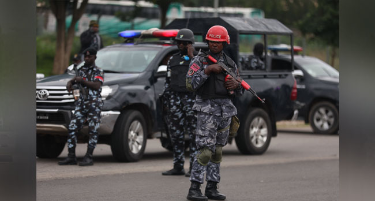
The Imo state police command says members of the National Youth Service Corps (NYSC) were among those abducted along the Owerri-Onitsha expressway on Thursday morning.
Okoye Henry, police spokesperson in Imo, said in a statement that 10 of the victims had been rescued.
He said the exact number of persons abducted was still being verified and would be made public once confirmed.
Reports said that there was tension on the road in the early hours of Thursday after gunmen attacked two 18-seater buses carrying passengers and took them into the bush.
According to a viral video circulated on X, the victims were travelling to Akwa Ibom and Abia states in buses branded with the Abia state government logo when the attackers intercepted the vehicles and robbed the passengers.
Okoye said the incident occurred around 6:30am, adding that NYSC members were among those abducted.
“The incident occurred at about 0630hrs on 1st October, 2026, along the Owerri-Onitsha Road, by Umunoha. Two buses conveying NYSC corps members and other passengers from Ibadan to Uyo, Akwa Ibom State, and Bende, Abia State, respectively, were attacked by suspected armed men,” the statement reads.
“Following a swift response by the Police and other security agencies, both buses have been recovered and 10 victims were rescued at the scene.
“The rescued victims are in safe hands and are being attended to. The exact number of persons abducted is being verified and will be made public once confirmed.”
The police spokesperson said operatives were still conducting coordinated search and rescue operations, backed by intelligence to track the suspects and rescue the remaining victims.
He said the commissioner of police in Imo, alongside other service commanders, have visited the scene for an on-the-spot assessment and to give operational direction.
“He assured the public that the Command will sustain the operation until all victims are safely recovered and the suspects are brought to justice,” Okoye said.
He said the command was working with the NYSC directorate to reach the families of the affected corps members, who would be kept informed as the situation developed.
He added that the affected section of the expressway had been reopened and traffic was flowing, while security personnel remained deployed to protect commuters.
The command appealed for calm and urged the public to remain vigilant, adding that anyone with credible information should report to the nearest police station or contact the command’s emergency lines.
“All information will be treated in confidence,” Okoye added.
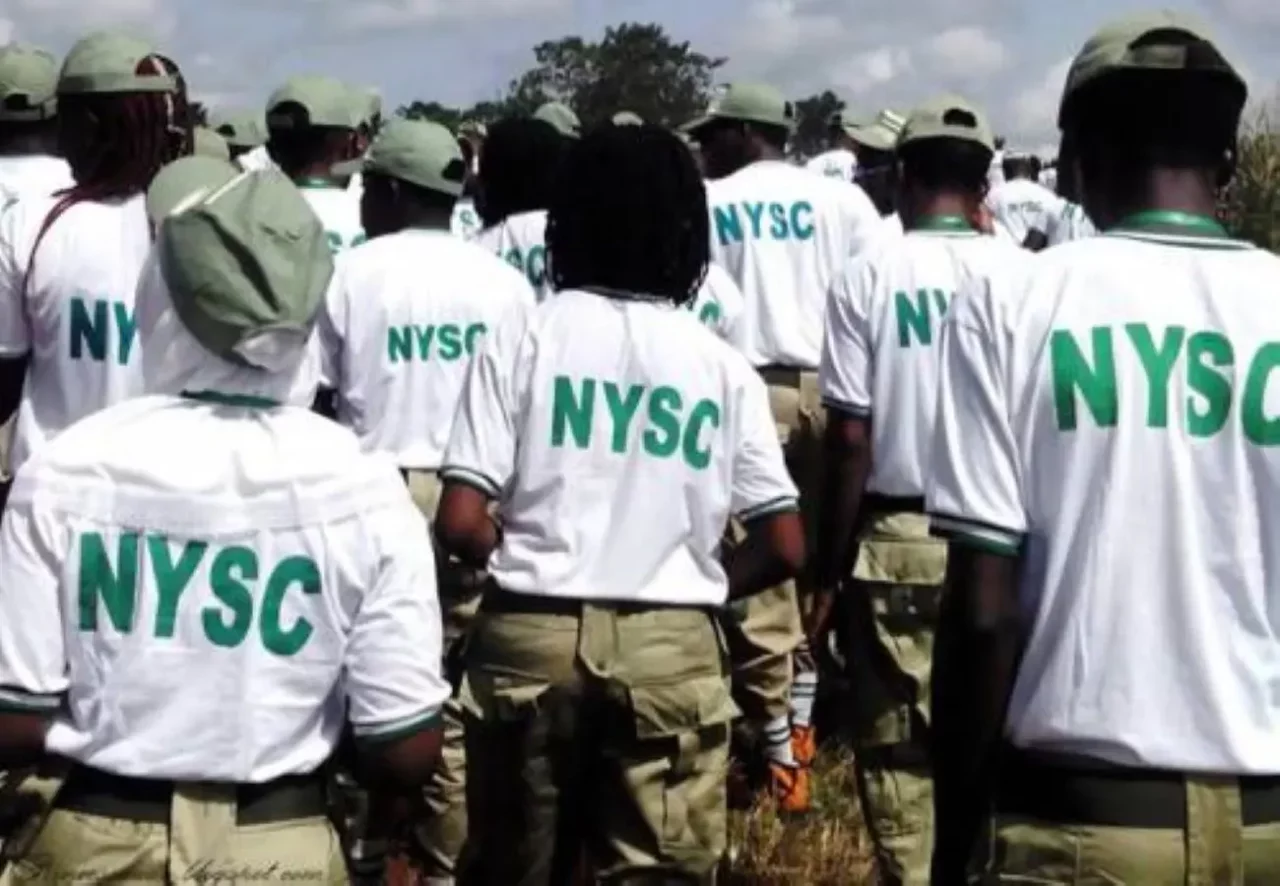
An unspecified number of travellers, including National Youth Service Corps members, have reportedly been abducted by armed men along the Owerri-Onitsha Expressway in Imo State on Thursday, October 1.
The incident reportedly occurred around 5:30am when at least two commercial buses were attacked, with passengers allegedly robbed and taken into the bush. The exact number of people affected remains unclear.
According to reports and videos circulating online, some of the passengers were corps members who had departed from Samonda, Ibadan, in buses operated by Uko Akwa Ibom Motors.
The corps members were reportedly travelling to their assigned orientation camps in states across the South-East and South-South, including Akwa Ibom, Enugu, Imo and Abia.
An eyewitness, in a video shared online, said the attackers intercepted buses travelling from Lagos towards Anambra State and took passengers into the bush after dispossessing them of their belongings.
“Good morning, my fellow Nigerians. I am reporting from the Owerri-Onitsha Road. This happened this morning,” the eyewitness said.
He added that security personnel had arrived at the scene, while soldiers reportedly entered the bush in an attempt to locate and rescue the victims.
“The police came this morning, and the army has already entered the bush to see if they can rescue the victims,” he said.
Footage from the scene showed two buses abandoned by the roadside, with one bearing the inscription “Uko Akwa Ibom Motors Nig. Ltd” and the number Uko/133.
The reported attack has heightened concerns among families whose relatives were travelling to NYSC orientation camps in different parts of the South-East and South-South.
In a separate video shared by Agidigbo FM Ibadan, a distressed woman appealed for assistance, saying her daughter was among the corps members whose whereabouts had become unknown.
According to the woman, her daughter left the Samonda park in Ibadan on Wednesday alongside other corps members travelling to the eastern part of the country.
She said the family received a message from her daughter in their WhatsApp group shortly after 6am on Thursday. The message reportedly contained the word “kidnapper”, after which her daughter’s phone became unreachable.
Describing the family’s distress, the woman said: “Since past 6am, I have not been able to hear from my child, and we couldn’t get her exact location anymore. Please, federal government, help us. I only have the two of them.”
She identified the missing corps member as Kehinde and said her twin sister, Taiwo, had already arrived in Enugu for her orientation camp.
Other relatives reportedly visited the park where their loved ones had boarded buses in Ibadan as they sought information about the missing travellers.
However, the identities and number of people allegedly abducted, as well as their current whereabouts, remained unclear at the time of reporting.
The Imo State Police Command had yet to issue an official statement confirming the incident. Its spokesperson, Henry Okoye, had also not responded to requests for comment at the time of the reports.
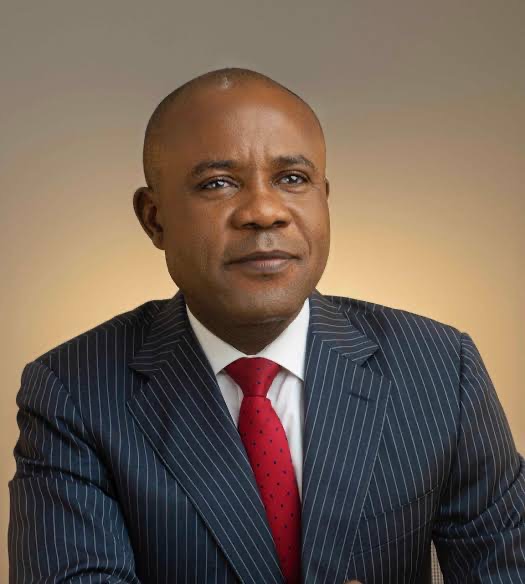
In commemoration of Nigeria’s 66th independence anniversary, Governor Peter Mbah of Enugu State has approved the pardon, release, and commutation of sentences of 13 inmates of the Nigerian Correctional Centres, Enugu State.
This is in the exercise of his power of Prerogative of Mercy under Section 212 of the 1999 Constitution (as amended) and in consultation with the Advisory Council on Prerogative of Mercy, Enugu State.
According to a statement released by the Mbah’s media aide, Uche Anichukwu, on Independence Day, the Governor’s approval was conveyed to the Comptroller, Nigerian Correctional Service, Enugu State Command by the Chief of Staff to the Attorney General and Commissioner for Justice, Barr. Osinachi Nnajieze.
The beneficiary inmates are Kenneth Ozioko, Moses Saliyat, Promise Ndudim Olung, Chijioke Ugwu, Samuel Ani, and Eugene Odo.
Others are Celsus Emeachi, Caleb Jatto, Calistus Eze, Gabriel Onu, Timothy Ani, Ernest Okeke, and Ejike Nwodo.
While some of the inmates were pardoned and released, some had their death sentence commuted to life imprisonment.
Mbah’s decision was predicated on reports of ill health and or proven reform in character, and following recommendation by the Correctional Services to the Advisory Council on Prerogative of Mercy, chaired by the State Attorney-General and Commissioner for Justice.
Membership of the Council equally comprises representatives of the Nigerian Correctional Service, Carmelite Prisoners Interest Organisation (CAPIO), and the Catholic Institute for Development, Justice and Peace (CIDJAP), among other reputable bodies in the justice sector.
Section 212 (1) of the 1999 Constitution (as amended) provides that: “The Governor may (a) Grant any person concerned with or convicted of any offence created by any law of a state a pardon, either free or subject to lawful conditions; (b) grant to any person a respite, of the execution of any punishment imposed on that person for such an offence; (c) substitute a less severe form of punishment for any person for such an offence; or (d) remit the whole or any part of punishment for any punishment imposed on that person for such any offence or of any penalty forfeiture otherwise due to the state on account of such an offence.”
Section 212 (2), however, provides that the powers of the governor under subsection (1) shall be exercised after consultation with an advisory council of the state on the prerogative of mercy as may be established by law of the state.
-
 News3 days ago
2027: How Atiku told me to persuade Peter Obi to accept VP slot – Babachir Lawal Ex-SGF Babachir Lawal
-
News2 days ago
Ojukwu Property Dispute: OTL petitions IGP over demolition, construction at Macpherson Avenue Property
-
News1 day ago
Fuel Price Hike: Workers to begin strike in October
-
News2 days ago
‘I’m strong, ready to work’ – Tinubu speaks after return from vacation
-
News2 days ago
Xenophobia: Nigerian Consulate condemns killing of three Nigerians in South Africa
-
News20 hours ago
We can’t erase decades-long problems in 4 years, says Tinubu
-
News1 day ago
Military records 367 attacks, kills 52 terrorists in September
-
News1 day ago
Enugu leads as four states cut domestic debt by over 20% in six months