Connect with us

Business

Holy Ghost Bus Terminal: Jubilation as Enugu govt pays compensation to business owners, provides alternative locations

Published

on

Spread the love

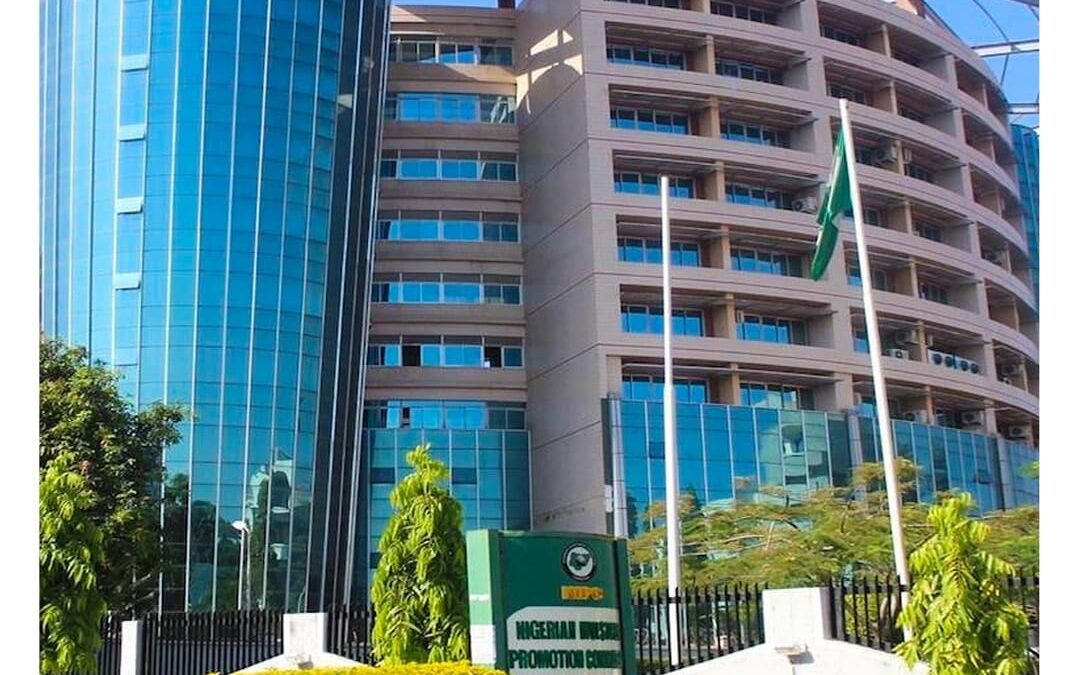
Enugu State Government has commenced payment of compensations to property and business owners to be relocated from the Holy Ghost axis of the Coal City where the government has proposed to develop a world-class Transport Interchange (Enugu Central Station).

This followed the town-hall meeting convened by the State Government through the Ministry of Transport with the property and business owners at the Nigerian Railway Corporation’s land over 8 months ago, which activated a series of negotiations and discussions on the proposed development of a world-class Transport Interchange alongside other innovative facilities at the Holy Ghost axis.

Proposed Holy Ghost Bus Terminal:

Fulfilling its promise, which marked a significant milestone, the state government has commenced the payments of considerable compensations to the affected persons.

Some of the jubilant beneficiaries, who confirmed payments on Monday, said the state government had, in addition to monetary compensations, also provided temporary locations for them to carry on their businesses pending the completion of the project.

This initiative, according to the beneficiaries, underscores the government’s commitment to transform and remodel the transportation sector, decongest traffic in the state capital and make it one of the leading transportation systems in Africa that would also allow them the right to carry on their businesses in the facilities.

Maduka College Advert

“I just received confirmation from my bank notifying me about the clearance of a huge sum of money from the Enugu State Government. At first, I thought it was the usual scam from internet fraudsters until I visited the bank.”

“We have already relocated to the temporary site provided for us by the state government after we were notified by the railway corporation authority that the state government had taken the land in the overriding public interest.”

“I want to thank Governor Peter Mbah for the compensation. I didn’t believe that the government would even do anything,” a transport owner who simply identified himself as Mr. Udoka Aku said.

Another business owner, Chief Ignatius Okpara, who said the Railway Property Management had leased some portion of its land to him for business, told our correspondent that the Enugu State Government engaged them sometime in October 2023 on its plan to construct a modern transport interchange on the land as part of its urban regeneration strategy to eliminate the traffic jams and hardships motorists face in the area as well as to address the longstanding security issues and criminal activities in that axis.

“At first, some of us were sad; however, during our discussions with the railway management and the state governor on the options available to us and the fact that compensations would be paid; we accepted it in good faith. This was followed by another letter from Railway Property Management Company Ltd, sometime this year, which came as a notice of recovery of railway land on Market Road.”

“I had no option but to start relocating because the project is good and will benefit everyone. Besides, all of us who had property there were even given the right of first refusal after the completion of the terminal. To God be the glory, my bank reached out to me about some money that the state government was crediting to my account. I want to appreciate the governor for not abandoning us,” he stressed.

A visit to the area unveiled a concerning reality: the Railway Road and its surroundings, housing big transport companies, are now being used as hideouts for criminals and kidnappers. This alarming development calls for urgent intervention from the government.

Some of the business owners who spoke to our correspondents said they received notice of recovery from the government over 7 months ago. Despite this, they have continued operating their businesses as they perceived that the government was unprepared to take action.

“Yes, we were invited by Governor Peter Mbah for discussion. We were about 29 in number, including Onitsha South Transport Company, Anaocha South Mass Transit, Chisco Transport Company, Farm Associates Limited, Dozzy Oil Limited, A.C. Decanal Limited, Harco Oil, Nigerian Red Cross, Pilgrimage Sisters (Osisatech), Okeyson Transport Limited, MDS Logistics, FCMB, Ecobank and others, and we had fruitful discussions as the state government gave us the right of first refusal and other compensations. I’m still here because I feel I will easily switch to my new place any time the government comes.”

One of the transport managers who spoke to our correspondent said that the Chairman of Chisco Transport Ltd, Dr. Chidi Anyaegbu, who represented affected transport owners in the area, had lauded the state government for the initiative when he visited the government for further discussion on the interchange project, saying the Transport Infrastructure Project would enhance efficiency and profitability for transporters if it’s completed on time.

A middle-aged wholesale trader, Mr. Ekene Mojekwu, selling assorted wares, shared his perspective on the situation. He acknowledged the risk of remaining on the premises, noting that the evacuation notice had already expired.

Despite this, he emphasized his willingness to comply whenever the government initiates the demolition on the site.


Business

Amukpe-Escravos pipeline and the real cost of ignoring current value, By Sufuyan Ojeifo

Published

on

Spread the love

Nigeria’s oil infrastructure has a habit of telling uncomfortable truths. Not just about barrels and flow rates, but about how a country chooses to value what it cannot afford to lose, and what it risks when it gets that calculation wrong.

Take the Amukpe-Escravos Pipeline, for example. A syndicate of lenders, led by Sterling Bank, is pushing back against efforts to revive a collapsed transaction involving a 40% stake in the asset. Their argument is not complicated. It is rooted in numbers and contractual discipline.

To be clear, a deal that fell apart in 2024 is being reconsidered using a valuation from that same year. However, since then, the asset has proved its worth. Independent assessments now place that stake closer to $600 million. The earlier benchmark sits far below that. The gap is not cosmetic. It is material. And if left unaddressed, it becomes a cost.

The original $243 million offer did not collapse by accident. It was terminated in October 2024 after Conpurex Limited failed to meet payment obligations, breached key terms, and sought to shift risk back to the seller. By the time the Technical Committee closed the process, confidence had already drained out of it. That much is settled.

Ordinarily, that should have been the end. Instead, there are moves to return to a September 2025 approval linked to that same process. The lenders describe this as an administrative carryover. Their response is simple. Start again. Set aside the old approval. Bring in an independent adviser. Return the asset to the market and let current value speak.

What is striking is not just the position itself, but how unusual it sounds in the Nigerian context. In a system where strategic assets have too often travelled through corridors of convenience, an insistence on valuation and process can sound almost rebellious. It should not be so.

Maduka College Advert

Because this is not entirely about one pipeline. It is about whether a terminated deal remains terminated. Whether contracts still mean what they say. Whether performance counts for anything once the paperwork has been filed away. And, crucially, who bears the cost when value is ignored.

The numbers, as always, are blunt. A 2025 independent valuation, referenced in the March 2026 edition of Africa Oil+Gas Report, places the 40% stake at a mid-case of $372 million, a high case of $544 million, and an upside of $641 million. These are not speculative figures. They reflect an asset that has quietly done its job in a difficult environment.

With a capacity of 160,000 barrels per day and uptime consistently above 95%, the Amukpe-Escravos Pipeline has become one of the more reliable evacuation routes in a system where reliability is often in short supply. While other corridors struggle with theft and disruption, this one works.

That fact matters a great deal. Because when an asset proves itself under pressure, its value does not stand still. It moves. To price it as though nothing has changed is not just a technical choice. It is a financial one. And every financial choice has consequences.

It says performance can be ignored. It says time does not count. It says administrative continuity can outrun economic reality. To be fair, the earlier process gave enough warning signs. Lenders questioned the assumptions. Coordination was weak. When Continental Oil and Gas stepped back, Conpurex entered without a clean transition and soon began to reopen settled terms, shifting obligations and introducing new conditions that unsettled the commercial balance. The eventual termination was not dramatic. It was inevitable.

What unsettles stakeholders now is the possibility that a process that ran its course may still shape the outcome. If a concluded transaction can reappear without a clear restart, the line between closure and continuity begins to blur. Once that line blurs, contractual uncertainty follows. And when certainty weakens, serious capital takes notice.

This is where the issue widens beyond the pipeline itself. Back in March, Africa Oil+Gas Report described the Amukpe-Escravos matter as no longer just a transaction story, but a test of how Nigeria governs, values, and safeguards strategic oil infrastructure. That reading feels even more relevant now.

Because what is at stake is not simply who acquires a stake in a pipeline. It is how the country signals to those willing to invest in its most critical assets. It is about whether value is recognised only in theory, or protected in practice. It is about whether losses are acknowledged, or quietly absorbed.

The lenders’ position is often described as resistance. It is better understood as discipline. Reset the process. Revisit the approval. Bring in independent oversight. Return the asset to the market through a transparent and competitive process that reflects present realities. Ensure capable counterparties. Align all stakeholders.

These are not extravagant demands. They are the basics. Nigeria has seen too many assets drift from promise to regret. Too many structures that once worked reduced to cautionary tales. When something works, when something proves resilient in a difficult system, the least that can be done is to treat it with the seriousness it has earned.

Moments like this do not announce themselves as turning points. They arrive quietly, dressed as routine decisions.

But they reveal everything. For an economy seeking disciplined capital and trying to rebuild confidence, the signal matters. Let the process be reset. Let valuation reflect reality. Let the outcome show that when Nigeria recognises value, it also knows how to protect it, and what it stands to lose when it does not.

Until then, the lenders’ position stands as a reminder that in a system where too much has been taken for granted, some lines are too important to be crossed and must be held.

● Sufuyan Ojeifo publishes THE CONCLAVE online newspaper.

Continue Reading

Business

Nova Bank Appoints Jude Anele as Managing Director/CEO

Published

on

Jude Anele, Managing Director/CEO, NOVA Bank Ltd
Spread the love

Meets CBN Capital Requirements, to Open Eight New Branches in 2026.

NOVA Bank Limited has announced the appointment of Jude Anele as its Managing Director and Chief Executive Officer, following the approval of the Central Bank of Nigeria.

The appointment comes at a pivotal moment in the Bank’s evolution, following its transition from merchant banking to commercial banking and the successful completion of its recapitalisation programme ahead of the March 31, 2026, regulatory deadline.

Anele brings more than 33 years of banking experience across West and Central Africa, with deep expertise in retail /commercial banking, corporate banking, risk management, institutional transformation and executive leadership. Over the course of his career, he has led complex banking operations, strengthened governance frameworks, delivered sustainable revenue growth and built high-performance teams.

The appointment reflects the Board’s strategic commitment to consolidating NOVA Bank’s commercial banking platform while accelerating growth across its Corporate, Commercial and Retail segments, as well as priority markets.

Speaking on his appointment, Anele said he was honoured to assume leadership of the Bank at a defining stage of its growth.

“Nova Bank has built a strong institutional foundation defined by regulatory compliance, capital strength, disciplined governance and a clear commercial mandate. Our focus now is execution deepening customer relationships, expanding responsibly across priority markets, strengthening risk discipline and delivering sustainable value to our shareholders, he said.

Maduka College Advert

The Bank’s Chairman, Phillips Oduoza, also expressed confidence in the new leadership.

“The Board is pleased to welcome Mr. Jude Anele as Managing Director and Chief Executive Officer. His depth of experience, strategic clarity and proven leadership record align strongly with NOVA Bank’s growth ambitions,” Oduoza said.  He added that with recapitalization completed ahead of the regulatory timeline, the Bank is entering a new phase defined by scale, stability and structured expansion.

NOVA Bank also confirmed that it has met the recapitalization requirements set by the Central Bank of Nigeria ahead of the regulatory deadline, reinforcing its capital adequacy and long-term financial stability. The capital raise, supported by new and existing shareholders, further strengthens the Bank’s balance sheet and positions it for disciplined growth.

In 2025, Global Credit Rating reaffirmed NOVA Commercial Bank’s national scale long- and short-term issuer ratings of BBB(NG) and A3(NG) respectively, while Agusto & Co. reaffirmed the Bank’s “Bbb” rating with a stable outlook, reflecting its strong capital base, sound liquidity position and resilient asset quality relative to its risk profile.

NOVA Bank currently maintains operations in Lagos, Abuja, Owerri and Port Harcourt, with plans to open eight additional branches across key commercial hubs in 2026 as part of its expansion strategy.

The commissioning of the Bank’s regional office in Owerri marked a significant milestone in its South-East and South-South growth strategy. The event attracted government officials’business leaders and Nigerians in diaspora and underscored NOVA Bank’s commitment to supporting enterprise development and economic growth.

NOVA Bank Limited is a commercial bank licensed and regulated by the Central Bank of Nigeria. Commencing operations in 2018 as a merchant bank, the institution transitioned to a commercial bank in 2024 and provides retail, SME, corporate and commercial banking services through its Phygital modelan integrated approach combining physical branch presence with digital banking infrastructure.

Continue Reading

Business

Dangote reduces fuel price by N100 as global crude slumps

Published

on

Spread the love

The Dangote Refinery on Tuesday reduced its petrol gantry price by N100, from N1,175 to N1,075 per litre.

The move followed a slump in global oil prices, with Brent crude dropping to $89 per barrel from over $100 on Monday.

Officials of the refinery confirmed the development to newsmen, adding that diesel prices have also been reduced.

They stated that petrol supplied via coastal distribution channels will now sell for N1,050 per litre, reflecting a slight differential for marine logistics.

Similarly, diesel is now N1,430 per litre at the gantry, representing a N190 reduction from the earlier price of N1,620 per litre.

According to oilprice.com, Brent crude prices witnessed a dramatic reversal on Tuesday, plunging nearly 27 per cent from the previous day’s high of $119 per barrel to as low as $87 per barrel.

Maduka College Advert

The Dangote Refinery reportedly blamed global crude volatility for the repeated price hikes, citing tensions arising from the US-Iran conflict.

Continue Reading

Trending

Maduka College Advert