News
Court remands Ex-DSS Officer in Kuje Prison over alleged support for IPOB


The Federal High Court in Abuja, on Thursday, ordered the remand in Kuje Correctional Centre of a retired officer of the Department of State Services, Nwaogu Ihechimere Ezeakolam over his support for the outlawed Indigenous People of Buafra, IPoB.
The retired officer was arraigned by the Department of State Services for, among other things, supporting the proscribed terrorist organization.

He was arraigned on a four-count charge, including joining IPOB, posting messages in support of the proscribed organization, and involvement in acts capable of inducing unsuspecting members of the public to join IPOB.
The DSS told the court presided over by Justice Muhammed Umar, that what the retired officer did was contrary to and punishable under Sections 13, 25, 26 of the Terrorism (Prevention and Prohibition) Act, 2022.
When the charges were read out to Ezeakolam, he pleaded “not guilty” to all the four counts. Thereafter, the prosecution applied for a trial date and urged the court to remand him in custody pending trial.

Justice Umar adjourned the matter to October 29 for commencement of trial and ordered that Ezeakolam be remanded at the Kuje Correctional Centre.
Count One of the charges brought against Ezeakolam, reads: “That you, Nwaogu Ihechimere Ezeakolam, adult, male, sometime 2025 and 2026, at Abuja and Abia State, within the jurisdiction of this Honourable Court, did directly and indirectly render support by providing moral assistance and disseminating terrorist information of Indigenous People of Biafra (IPOB, a proscribed organization, through the internet and your social media platforms, and thereby committed an offence contrary to and punishable under Section 13 of Terrorism (Prevention and Prohibition) Act, 2022.
Count Two: “That you, Nwaogu Ihechimere Ezeakolam, adult, male, sometime 2025 and 2026, in Abia State, within the jurisdiction of this Honourable Court, did join Indigenous People of Biafra, a proscribed organization, and thereby committed an offence contrary to and punishable under Section 25 of Terrorism (Prevention and Prohibition) Act, 2022.
Count Three: “That you, Nwaogu Ihechimere Ezeakolam, adult, male, sometime 2025 and 2026, at Abuja and Abia State, within the jurisdiction of this Honourable Court, did knowingly directly and indirectly aid and abet the Indigenous People of Biafra (IPOB) by posting on social media platforms messages calculated to induce unsuspecting members of the public to support Indigenous People of Biafra (IPOB), a proscribed organization, and thereby committed an offence contrary to and punishable under Section 26 of Terrorism (Prevention and Prohibition) Act, 2022.
Count Four:
“That you, Nwaogu Ihechimere Ezeakolam, adult, male, sometime 2025 and 2026, at Abuja and Abia State, within the jurisdiction of this Honourable Court, on social media platforms did post and cause to be accessed, messages aimed at advancing the cause of Indigenous People of Biafra (IPOB), a proscribed organization and thereby committed an offence contrary to and punishable under Section 18 of Cybercrimes (Prevention, Prevention, etc) Act, 2015, as amended,” the charge said.











By Sufuyan Ojeifo
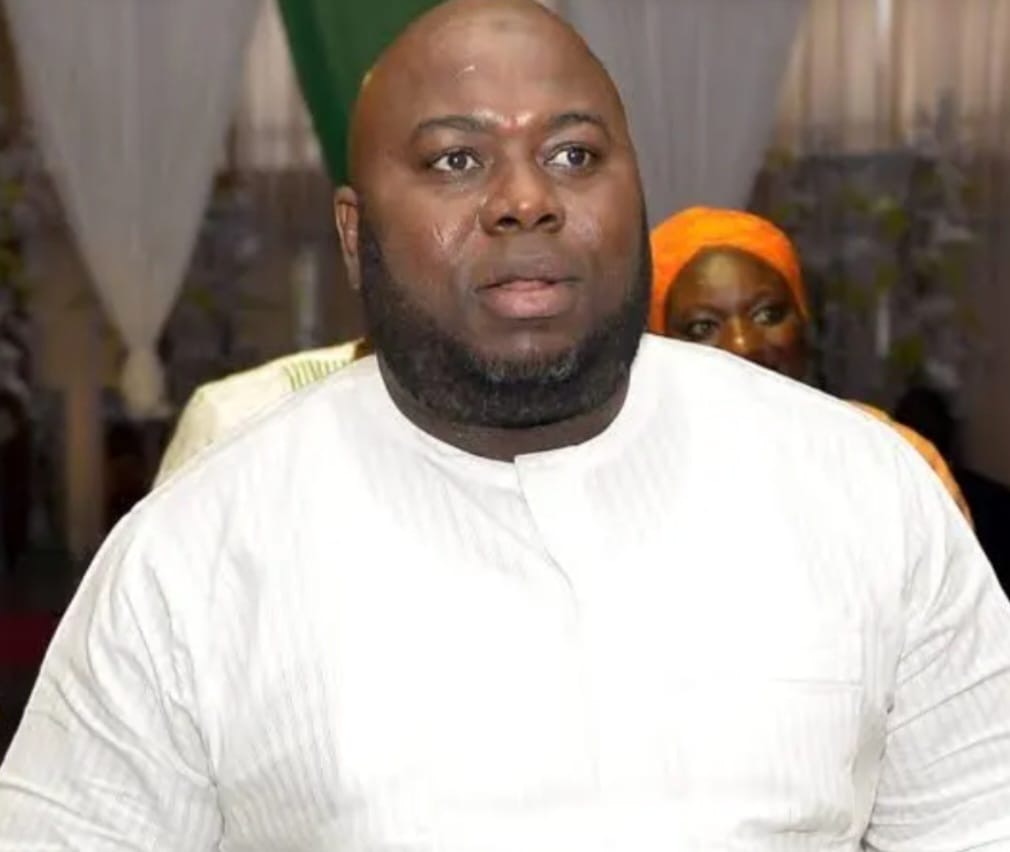
There is something deeply troubling about the latest public outburst by Asari Dokubo.
It has little to do with the legitimate demand that public contracts face scrutiny. Men like Tompolo are not beyond criticism, nor should they be. The real concern lies in the peculiar logic with which Dokubo has chosen to defend one figure while attacking others.
In a video now circulating widely, Dokubo alleges that the Olu of Warri and Dr Osahon Okunbo collect ₦2.7 trillion annually for pipeline surveillance. He then introduces ethnicity into the argument, suggesting that the two escape scrutiny because they are “Benin” and “Itsekiri”, while Tompolo is being singled out.
The question that follows is simple: where is the evidence?
Dokubo has produced no contract, no payment record and no documentary proof of any kind to substantiate this extraordinary claim. The Olu of Warri’s representative has publicly challenged him to produce the evidence.
A figure of ₦2.7 trillion is not a sum one casually introduces into national discourse and expects responsible citizens to accept on the strength of a speaker’s word alone.
If Dokubo has the documents, let him publish them. If he has the contract, let him display it. If he has evidence of payment, let him present it.
That is how serious allegations are made.
In the absence of such proof, what remains is an allegation dressed up as fact.
There is a more troubling dimension to the argument.
Dokubo appears to suggest that because pipeline surveillance occurs in the Niger Delta, contracts associated with it are somehow the proprietary entitlement of Niger Delta actors. That proposition should concern every Nigerian.
The Niger Delta belongs to Nigeria. Its oil belongs to Nigeria. The pipelines are national infrastructure. Contracts for protecting them are matters of public procurement, public accountability and national security.
They are not tribal dividends.
If a company from Rivers State is competent, let it compete. If a company from Delta State is competent, let it compete. If a firm from Edo, Abia, Lagos, Kano or Kaduna possesses the expertise, resources and capacity and wins a properly awarded contract, that should be welcomed as evidence that Nigeria remains a country rather than a collection of ethnic fiefdoms.
The idea that a contract is somehow “Niger Delta money” until someone from elsewhere secures it, at which point it becomes private enrichment, is a dangerous distortion of federalism.
It is precisely the kind of thinking that has kept Nigeria trapped in the politics of ethnic entitlement.
Perhaps the most unfortunate aspect of the intervention is the attempt to drag the Olu of Warri into a commercial argument in which the monarch has not been shown to be the contractor alleged.
The Olu of Warri, Ogiame Atuwatse III, is married to Olori Atuwatse III, daughter of the late Captain Hosa Okunbo. Osahon Okunbo is Captain Hosa’s son. The family connection is a matter of public record.
But marriage does not turn a traditional ruler into a commercial contractor.
Being someone’s son does not make a businessman guilty of whatever detractors choose to allege against him.
That distinction is elementary.
Osahon Okunbo currently serves as Executive Director of Pipeline Infrastructure Nigeria Limited. Publicly available information indicates that PINL has been involved in pipeline infrastructure and surveillance activities, including the deployment of camps, vessels, drones and other assets along pipeline corridors.
That work should be scrutinised, as should every naira of public money and the performance of every contractor. But scrutiny is not the same as slander. An allegation is not evidence.
There is another question Dokubo should answer: If the real concern is the cost and effectiveness of pipeline surveillance, why does the argument repeatedly return to the ethnic identity of those involved?
Why does “Benin” matter?
Why does “Itsekiri” matter?
Why does “Ijaw” matter?
The only questions that should matter to the Nigerian taxpayer are straightforward: who received the contract, under what terms, for what amount, to perform what work, and what did the country receive in return?
That is the conversation worth having.
If a contract is inflated, expose it.
If a contractor has failed, expose the failure.
If public funds have been misused, let the appropriate agencies investigate and prosecute.
If procurement rules have been breached, pursue the evidence. But if all that exists is a video, an allegation and a theory about ethnicity, then one has not established corruption. One has established noise.
There is also something deeply distasteful about dragging a dead man into this quarrel.
Captain Hosa Okunbo died in August 2021. He cannot answer for himself, produce a document or challenge an allegation. That places an additional responsibility on those who invoke his name.
Captain Hosa was a businessman whose interests spanned maritime, transportation, logistics, agriculture, hospitality and security. At his death, tributes from across Nigeria recognised both his commercial achievements and his philanthropy.
His son has chosen to continue in business. His daughter is married to the Olu of Warri.
Neither fact constitutes evidence of wrongdoing. Neither fact grants anyone the right to convert family relationships into an ethnic conspiracy.
There is, finally, a curious irony in Dokubo’s intervention.
A man presenting himself as an advocate of the Niger Delta should be particularly careful about reducing the region’s legitimate grievances to a crude contest over who gets what contract.
The Niger Delta’s historical grievances are real. Environmental degradation is real. The failures of successive governments are real. The region’s demand for justice, development and a greater stake in the management of its resources is legitimate.
But those grievances are diminished, not strengthened, when they are converted into a doctrine that says public opportunity belongs first to one ethnic constituency and everyone else is an interloper.
That is not justice.
It is simply another form of entitlement.
Dokubo is entitled to question government contracts. He is entitled to criticise Tompolo’s critics. He is entitled to demand greater participation by Niger Delta businesses. He is even entitled to argue that pipeline surveillance should be organised differently.
What he is not entitled to do is manufacture certainty where there is no evidence and then dress the allegation in ethnic colours.
That is not agitation.
That is recklessness.
Nigeria has suffered enough from those who mistake volume for evidence, anger for courage and ethnic mobilisation for patriotism.
If Asari Dokubo possesses evidence that the Olu of Warri or Osahon Okunbo received ₦2.7 trillion annually for pipeline surveillance, he should produce it.
*Watch the Asari Dokubo video posted on Facebook via the link below:*
_*https://www.facebook.com/share/v/1FJbNd2Gf2/?mibextid=wwXIfr_*
Let the documents speak.
Let the contracts speak.
Let the auditors speak.
Let the law speak.
But if he cannot produce the evidence, the responsible course is to withdraw the allegation.
In a country already strained by suspicion, insecurity and ethnic distrust, there are some accusations a responsible man should not make without proof.
This is one of them.
■ Sufuyan Ojeifo, is a journalist and publisher.
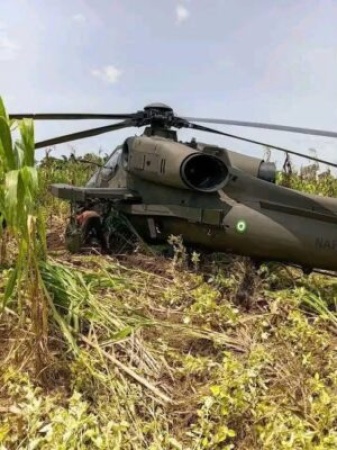
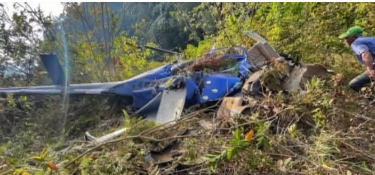
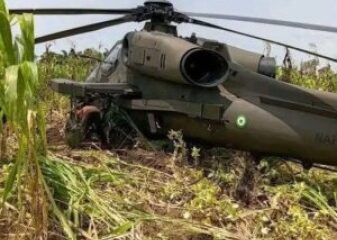
Just two days after the Nigerian Air Force lost 25 personnel in the tragic Ondo aircraft crash, another NAF helicopter on Wednesday made an emergency landing on a farmland in Makurdi, Benue State.
The incident occurred at Utur Tse-Igboji, Bar Council Ward, along the Welfare Quarters–Mopol 13 Ring Road.
According to eyewitness Stephen Ikpam, the helicopter reportedly developed a technical fault, forcing the crew to make an emergency landing.
Residents rushed to the scene to assist the officers on board.
All those on board reportedly survived and came out safely.
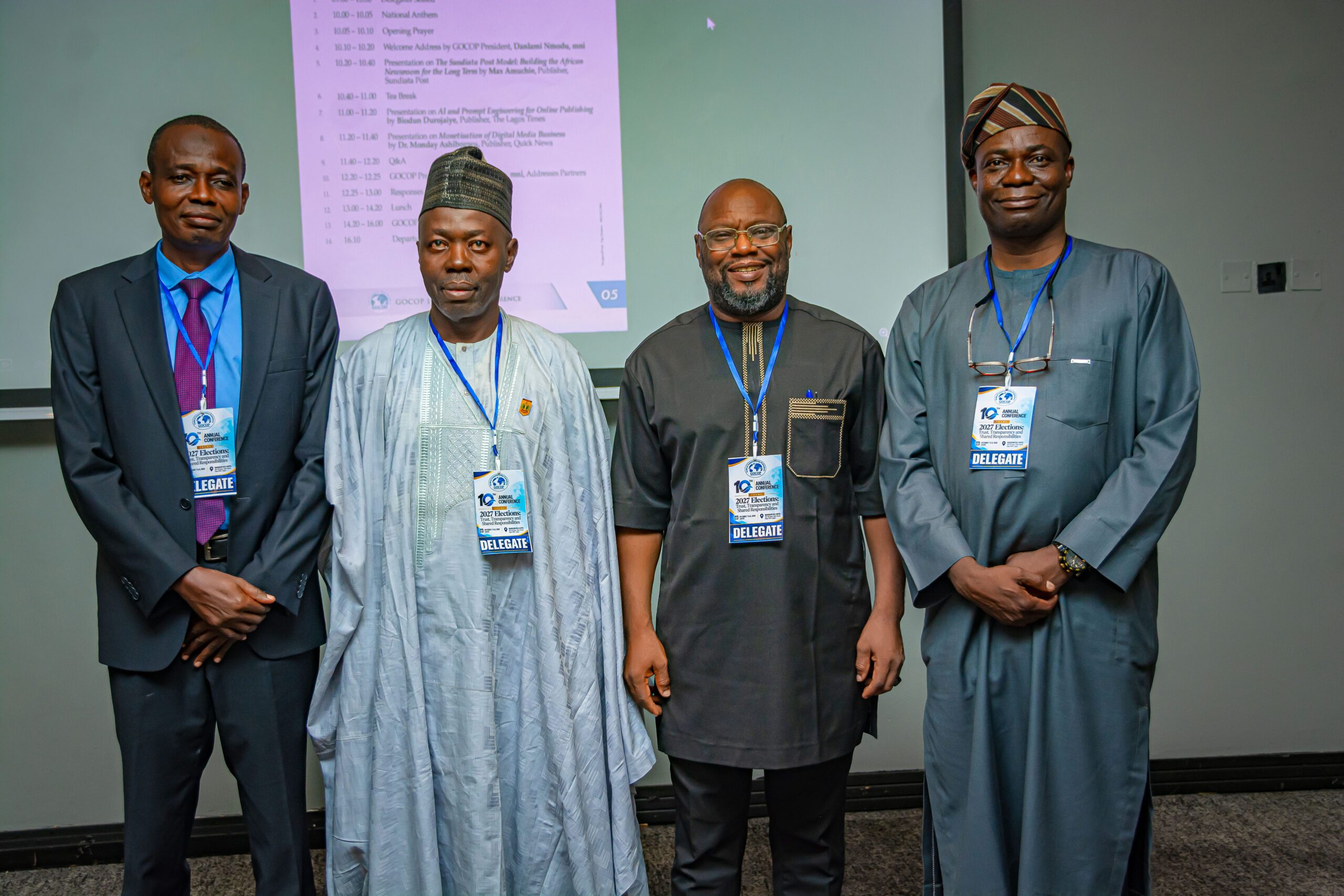
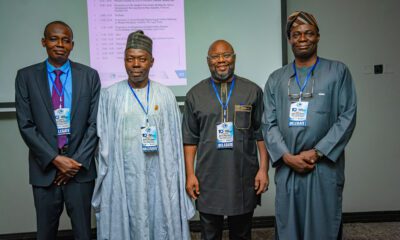
The Guild of Corporate Online Publishers (GOCOP) has organised a training session for its members on effectively deploying Artificial Intelligence (AI) tools as part of measures to help them publish faster, better, and more professionally to increase profitability.
The training comes on the sidelines of the Guild’s 10th Annual Conference, holding October 8-9, 2026, at the Radisson Blu Hotel, GRA, Ikeja, Lagos, with the theme: “2027 Elections: Trust, Transparency and Shared Responsibilities”.
The training session, which was anchored by an AI expert and publisher of The Lagos Times, Sulaimon Durojaiye with the title: “The AI-Powered Newsroom: AI & Prompt Engineering for Online Publishing”, explored how participants can publish faster, better and more profitably in the age of AI.
Durojaiye defined AI as technology that enables computers to perform tasks that normally require human intelligence.
While observing that publishing has changed over time from its yesteryear structure of the newsroom-newspaper-reader, he noted that AI understand language, recognises patterns, analyses information, generates content, solves problems, makes predictions, assists decision-making, insisting that one does not need to be a programmer to use AI.
He listed three AI terms every publisher should know, comprising Generative AI, which creates text, images, audio, video and code.
He also listed Large Language Models, which are systems trained on enormous amounts of information that understand and generate human language, such as ChatGPT, Gemini, Claude and Copilot.
He also noted that AI is not Google Search Engine, as it finds information for the user, returns links and sources, while you investigate and decide.
According to him, generative AI works with information, creates, transforms and analyses, but could be wrong many a time, a development that makes it incumbent on the user to verify every piece of information sourced from AI so as not to run into trouble.
He also took participants through the rudiments of what he described as ‘Enter Prompt Engineering’, which is the art and science of giving AI clear instructions to produce useful results.
He differentiated a Bad Prompt, which might involve a prompt like write a story about the budget, and a Better Prompt, which might just be like asking the AI to act as a senior Nigerian newspaper correspondent, who might be required to analyse the supplied budget speech, write a 600-word news story, lead with the most significant development in the budget speech, using the inverted pyramid format in news writing.
He further listed the Five-Part Prompt Formula comprising: Role, Task, Context, Requirements and Output, warning that better instructions would produce better results and vice versa.
On the AI Newsroom, he told participants that AI can be deployed for both news gathering and research, as it can analyse long speeches and reports, summarise government documents, extract key facts, compare documents, generate interview questions and also identify story angles.
Other newsroom and research capabilities of the AI include its ability to analyse datasets, research background information, convert complex materials into plain English and help to investigate, but it is warned that it does not replace investigation itself.
Other uses of the AI listed include its ability to assist across the publishing workflow comprising news gathering, research interviews, transcription, writing, editing and SEO social newsletter analytics, noting that it is not just one tool, but rather an entire workflow.
According to him, with the use of AI, one news event can become multiple content products. including news stories, features and explainers, profiles and interviews, opinion drafts, headlines and captions, newsletters, press-release transformation, adding that while AI accelerates production, the journalist remains responsible for facts, context and news judgement.
Durojaiye also disclosed that AI could be used for SEO, which underscores the fact that one does not just need to publish, but to get found, noting that it could be used for search-friendly headlines, SEO titles and meta descriptions, keywords and search intent, FAQs, content structures, internal-link suggestions and content clusters
“The story isn’t finished when you publish it. It is finished when the right audience can find it”, he said.
-
 Editorial1 day ago
Nigeria’s Roads: Where a Driver’s Licence May Not Mean a Driver Can Drive
-
News2 days ago
Nigerian Air Force releases names of passengers on board crashed Aircraft in Ondo
-
News3 days ago
“Stop chasing shadows” – Obi’s camp fires back at Soludo over anti-Obi campaign
-
News23 hours ago
Over 1,000 Islamic clerics ask Tinubu to drop 2027 re-election bid
-
Features24 hours ago
TWENTY YEARS IN MEMORY: MARIA UKAMAKA IFEOMA OJUKWU
-
News2 days ago
Ralph Obioha, Ex-NADECO founding member, dies at 80
-
News1 day ago
Military, DSS, police rescue 20 NYSC corps members, civilian in Imo
-
News2 days ago
90-year-old father of ADC Edo South candidate abducted