News
BREAKING: APC asks Rivers House of Assembly to impeach Governor Fubara immediately


The opposition All Progressives Congress (APC) in Rivers State has directed the State House of Assembly led by Rt. Hon. Martin Amaewhule, to, with immediate effect, commence impeachment proceedings against the state governor, Sir Siminilayi Fubara.
APC Caretaker Committee (CTC) chairman in the State, Chief Tony Okocha, gave the directive at a press briefing in Port Harcourt, the state capital on Tuesday.

The majority 27 members of the State Assembly are loyalists of the immediate-past governor of the state and current FCT Minister, Nyesom Wike.

Okocha said the decision of the party followed the remarks by Fubara that the intervention of President Bola Tinubu in the political crisis rocking the state was only a political solution and not constitutional.

Okocha stated that where the Assembly fails to commence the impeachment process, the party will invoke the relevant sections of its constitution to discipline them as APC members.
It will be recalled that Governor Fubara had on Monday declared the 27 members of the State Assembly as “non-existent”.
The back story
Recall that Fubara, and the State House of Assembly have been at each other’s throat over the passage of the Amended State’s Procurement Bill.
The Assembly, at its 173th Legislative Sitting, overrode the assent of Governor Siminialayi Fubara, to pass the Rivers State Public Procurement (Amendment) Bill, 2024 into Law.
Amaewhule’s led assembly, took the decision to override the Governor after the governor allegedly withheld his assent.
But, the Rivers State Governor, Siminalayi Fubara, criticised the attitude of the members of the state legislature towards his administration, saying the members would cease to exist as legislators if he so decides.
The House had passed the Rivers State Public Procurement (Amendment) Bill, 2024 on the 26th of March, 2024 and transmitted same to the Governor for assent, but the housed claimed that the Governor had declined assent.
Speaking on the Bill which was represented by the Majority Leader, Hon. Major Jack and debated upon by Members, the Speaker, Rt. Hon. Martin Amaewhule, reiterated the essence of the Bill, noting that it would secure taxpayers’ money and ensure that taxpayers’ money are not spent on frivolities and twisted contracts.
Amaewhule regretted a situation where contracts awarded without legal backing and the State being governed in a dictatorial manner.
He added that despite all the malfeasance, the House would continue to uphold the Laws of Rivers State and the 1999 Constitution of the Federal Republic of Nigeria as altered; stressing that if the Governor, Sir. Siminialayi Fubara, continue in this manner, the House would at the appropriate time take more stringent measures.
According to him, the House cannot stand aloof and watch the Governor continue to breach the Laws of the State in a tyrannical manner.
However, the governor of the state, Fubara in quick reaction said: “Those group of men who claim that are Assembly members are not Assembly members, they are not existing.”
Fubara said the lawmakers are only existing based on his interest on the Abuja peace accord initiated by President Bola Tinubu.
Fubara, who spoke while addressing a delegation of political and traditional leaders from Bayelsa State, who visited him in the Government House, Port Harcourt, to seek and end to the political crisis in Rivers State and an improved relationship between both states.
Those in the delegation included the first Military Governor of old Rivers State, Alfred Diete-Spiff, who is the Traditional Ruler of Twon Brass in Bayelsa State, other Traditional Rulers, former Commissioners, former Governor of Bayelsa State and Senator representing Bayelsa West, Henry Siriake Dickson, former State and National Assembly members and PDP executives.
Fubara told the delegation that despite wielding state powers which he can deploy to achieve his aim, he has continued to act as the big brother in the face of intimidation and unwarranted attacks.
He revealed that he had always been present at any meeting that was called to resolve the crisis in the state but after each meeting, he was met with a new dimension of the crisis from the opposing side.
He said: “Those group of men who claim that are Assembly members are not Assembly members, they are not existing. I want it to be on record. I accepted that Peace Accord to give them a floating. That is the truth.
“There was nothing in that Peace Accord that’s a constitutional issue; it’s a political solution to a problem. And I accepted it because these were people that were eating in my house, these were people I have helped paid their children’s school fees when I wasn’t even a governor. So, what is the thing there?
“We might have our division but I believe that one day, we could also come together but it has gotten to a time when I have to make a statement that they are not existing. Their existence is me allowing them to exist. If I de-recognise them, they are nowhere. I want you to see the sacrifice I have made in allowing peace to reign in our state.”




By Kenneth Ofoma
When Governor Peter Mbah of Enugu State mounted the podium at the Peter Mbah Law Auditorium of Godfrey Okoye University, Enugu, on Thursday, October 29, to present his administration’s manifesto performance update, it was more than a political event. It was a defining moment in democratic accountability, an opportunity to measure promises against performance and assess how far Enugu State has travelled since May 29, 2023.
The symbolism of the venue was particularly striking. It was the same auditorium where Mbah had presented his manifesto in October 2022, months before the governorship election that eventually brought him to office.
Interestingly, the facility itself was built and donated to the university by Mbah before he contemplated becoming governor, making its use for both the presentation of his political vision and the subsequent account of its implementation a compelling coincidence.
Titled “Our Commitment to Ndi Enugu: The Journey So Far,” the event brought together an impressive cross-section of society, including academics, students, civil society organisations, business owners, professional bodies, political leaders and the media. But beyond the speeches and ceremonial exchanges, what distinguished the presentation was the extensive use of pictorial, video and infographic evidence displayed on giant screens strategically mounted within and outside the venue.
Rather than relying solely on political rhetoric, the governor took his audience through projects, interventions and policy reforms intended to demonstrate the practical translation of his campaign promises into governance outcomes.
From the launch of Enugu Air and the construction of more than 260 Smart Green Schools and 260 Type-2 Primary Healthcare Centres to the reconstruction of Hotel Presidential, the International Conference Centre, Nigergas, road infrastructure and transportation reforms, the presentation offered a broad picture of an administration seeking to redefine the economic and social landscape of the state.
From a Troubled Beginning to Renewed Confidence
Reflecting on the circumstances surrounding his assumption of office in May 2023, Mbah painted a picture of a state confronted by insecurity, deteriorating infrastructure, declining commercial activities and weakening public confidence. He recalled a period when Mondays had effectively become non-working days in Enugu because of the sit-at-home order, leaving markets, shops and businesses shut, schools deserted and ordinary citizens deprived of their daily earnings.
“There was a time when Monday was no longer an ordinary working day in Enugu. Shops remained closed. Roads were deserted. Parents were afraid to send their children to school,” he recalled.
He also highlighted the poor condition of roads, inadequate public services, struggling schools and healthcare facilities, as well as the declining commercial relevance of Enugu as a regional economic hub. According to him, the Akanu Ibiam Intwrnational Airport had barely two incoming flights daily, while businesses and major events were increasingly looking towards other cities.
The governor, however, argued that the restoration of security and public confidence had provided the foundation for the wider economic transformation his administration envisaged.
“Today, people are going about their business with a freedom that had been denied to them for far too long. A trader can plan a full working week. Children can attend school. Businesses can receive customers, move goods and keep their employees working,” he said.
This restoration of normal economic and social activities, he maintained, was fundamental to the administration’s ambition of eradicating poverty and growing Enugu’s economy from an estimated $4.4 billion to $30 billion.
Infrastructure as the Foundation of Economic Growth
One of the most visible aspects of the Mbah administration’s scorecard is its investment in infrastructure, particularly road construction and urban development.
With more than 1,521 kilometres of roads constructed or reconstructed across urban and rural communities, the administration has pursued an extensive road development programme aimed at improving connectivity, opening up rural economies and facilitating the movement of people and goods.
Strategic projects, including the Owo-Ubahu-Amankanu-Ikem corridor and several urban and rural road networks, are designed to strengthen Enugu’s position as a commercial and transportation hub.
Equally ambitious is the development of the New Enugu Smart City, a proposed 10,000-hectare urban development project incorporating integrated road networks, water supply, electricity, telecommunications and sewage infrastructure.
These investments reflect the administration’s conviction that economic expansion requires more than policy declarations; it demands the physical infrastructure capable of supporting businesses, attracting investments and creating employment.
Investing in the Future Through Education and Healthcare
Perhaps nowhere is the administration’s development philosophy more evident than in its investments in education and healthcare. Through the Smart Green Schools initiative, the government is constructing and equipping modern schools across the state’s 260 political wards. The programme, which has delivered more than 260 school facilities and over 7,000 classrooms, is designed to transform basic education through technology, experiential learning and improved learning environments.
The schools feature digital classrooms, ICT centres, robotics and artificial intelligence laboratories, e-libraries, solar-powered facilities and smart farms to expose pupils to practical agricultural knowledge. The provision of learning materials, tablets, uniforms and daily meals further underscores the administration’s attempt to address barriers to basic education.
With education receiving approximately 33 per cent of recent state budgetary allocations, the investment signals a recognition that human capital development is indispensable to the state’s long-term economic ambitions.
In healthcare, the construction and equipping of 260 Type-2 Primary Healthcare Centres, one in each political ward, represents another significant intervention. Supported by the recruitment of thousands of healthcare personnel, the facilities are intended to provide round-the-clock primary healthcare services closer to the people.
The ongoing development of the 300-bed Enugu International Hospital is also expected to strengthen specialist medical services and reduce the need for residents to seek treatment outside the state.
Together, these projects demonstrate an approach to development that places social infrastructure alongside economic growth.
Repositioning Enugu for Business, Tourism and Investment
The administration’s ambition to restore Enugu’s status as a preferred destination for business, tourism and investment is reflected in its efforts to revive strategic economic assets and expand the state’s connectivity. The launch of Enugu Air has opened a new chapter in the state’s aviation development, while increased flight connections into Enugu have improved accessibility for businesses, investors and visitors.
The modern transport terminals, deployment of compressed natural gas-powered buses and other reforms are also intended to modernise public transportation and make mobility more efficient.
Similarly, the reconstruction of Hotel Presidential and the development of the International Conference Centre complex, including a five-star hotel component, are strategic investments in hospitality, tourism and conference tourism.
The revitalisation of moribund industrial assets, including Nigergas, alongside interventions in agriculture and agro-processing, points to another dimension of the administration’s economic agenda: moving the state beyond dependence on traditional commercial activities towards productive industries.
In agriculture, the development of farm estates across the wards, support for thousands of smallholder farmers and investments in mechanisation, storage and processing are designed to strengthen food production and create rural economic opportunities.
The administration’s water infrastructure interventions, which have significantly increased production capacity in the Enugu municipal area, also form part of the broader effort to improve living conditions and support economic activities.
Beyond Projects: Institutional and Fiscal Reforms
While physical infrastructure provides visible evidence of governance, the sustainability of development depends equally on strong institutions and efficient public finance management.
The Mbah administration’s Citizens Charter, established through Executive Order 001 signed on May 29, 2023, provides an accountability framework intended to strengthen transparency and make public officials more responsive to citizens.
Revenue automation, fiscal reforms and improved internally generated revenue have also expanded the state’s financial capacity to undertake capital projects.
The administration has reported substantial growth in internally generated revenue, reflecting efforts to broaden the revenue base, improve collection mechanisms and reduce leakages.
These reforms are particularly significant because the governor’s $30 billion economic ambition cannot be achieved through government expenditure alone. It requires a functional institutional environment capable of attracting private capital, supporting enterprise and sustaining productivity.
Indeed, the administration’s September 2026 presentation of a compendium documenting more than 10,000 milestones further provided a reference point for examining its development trajectory.
Accountability and the Politics of Performance
Beyond the impressive array of projects, perhaps the most important message from the manifesto performance presentation was its underlying principle of accountability. By returning to the same venue where he unveiled his manifesto in 2022 to explain what had been achieved, Mbah demonstrated the importance of connecting electoral promises with measurable governance outcomes.
Vice-Chancellor of Godfrey Okoye University, Prof. Christian Anieke, acknowledged this significance, commending the governor for returning to the institution to render an account of his stewardship. He urged other political leaders to emulate the practice of periodically returning to the people to explain their performance and account for the promises upon which they were elected.
Anieke also described the administration’s accomplishments as evident and verifiable, noting that many of the projects and interventions could be seen across the state.
The presentation was punctuated by repeated applause and enthusiastic reactions from the audience, with the governor receiving overwhelming endorsements for a second term from supporters who saw the occasion as evidence of the administration’s performance.
However, beyond the political excitement, the governor’s appeal was for citizens to become active participants in the state’s development.
He urged Ndi Enugu to contribute their ideas, skills, enterprise and experience towards building stronger institutions, expanding economic opportunities and creating a prosperous future for succeeding generations.
His message to supporters and political allies was equally significant: take the administration’s projects and programmes to the people rather than rely on empty political rhetoric.
Ultimately, the significance of Mbah’s manifesto scorecard lies not merely in the number of roads constructed, schools established, hospitals equipped or economic assets revived. It lies in the larger question of whether these interventions are collectively moving Enugu towards the prosperous, secure and economically competitive state promised in 2022.
No administration’s scorecard should be considered beyond scrutiny, particularly when some projects remain ongoing and the ambitious $30 billion economic target is still a work in progress. But the scale and spread of the interventions presented offer a basis for assessing the direction of the state’s development.
For Mbah, the challenge now is to sustain the momentum, consolidate the gains and ensure that the benefits of the ongoing transformation reach every community and household.
As the state approaches another electoral cycle, the governor’s record will inevitably form a major part of the political conversation. For his supporters, the argument for continuity rests on the belief that the foundations being laid require time, consistency and consolidation.
Ultimately, the choice belongs to Ndi Enugu. But in a democracy where performance should matter more than promises, the governor’s decision to return to the people with a scorecard has provided another opportunity for citizens to assess the journey so far and determine the direction they want their state to take.
The message from the presentation was unmistakable: Enugu’s future must be built on measurable results, institutional accountability and a shared commitment to progress. That, perhaps, is the most enduring test of the Tomorrow Is Here promise.
Kenneth Ofoma, is Senior Special Assistant (SSA) Policy and Communication to Enugu State Governor, Dr Peter Ndubuisisi Mbah
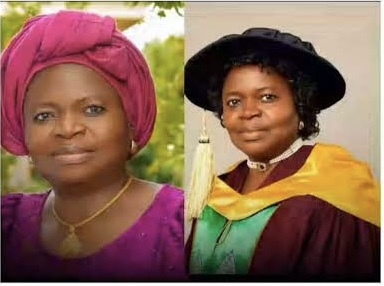
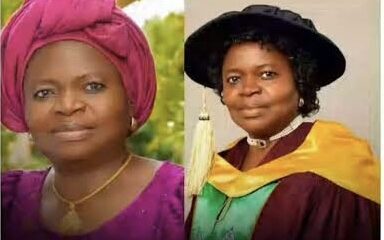
A Nigerian pastor, Dr Mrs Asabe Toye, has died aboard an aircraft while returning to Nigeria from a vacation in the United States.
The 68-year-old reportedly suffered a medical emergency while travelling with her husband on a flight from the United States to Frankfurt, Germany.
According to a family announcement, the incident occurred during the couple’s journey back to Nigeria.
Passengers and other occupants of the aircraft reportedly made efforts to save her after she developed a health complication.
Medical assistance was administered to her during the flight, while prayers were also offered in the hope of restoring her health. However, despite efforts to revive her, she eventually died before the aircraft completed its journey.
Her death has thrown her family and loved ones into mourning, turning what was supposed to be a return trip home into an unexpected tragedy.
Following the incident, the family expressed appreciation to the Nigerian Embassy in Germany and the Nigerian Customs Service for their support and assistance.
The family particularly acknowledged their roles in facilitating arrangements to bring her remains back to Nigeria after the necessary clearances had been obtained.
Dr Mrs Asabe Toye was 68 years old at the time of her death.
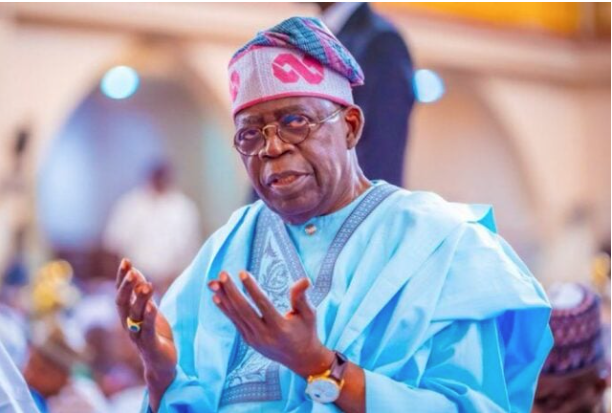
President Bola Tinubu has directed the release of at least 78 suspects arrested in connection with an attack on his convoy in Abuja.
The President’s motorcade was reportedly attacked by some Muslim youths after Jumu’ah prayers at a mosque in the Garki area of the Federal Capital Territory (FCT) on Friday, November 13.
In a statement issued on Monday, the FCT Police Public Relations Officer, CSP Josephine Adeh, said a joint security team led by the Police swiftly responded to the incident, resulting in the arrest of 78 suspects.
Adeh, however, disclosed that following the extension of presidential clemency to those involved in the attack, the Presidency directed that the arrested suspects be warned and released.
“ In compliance with the directive, the Command wishes to inform the public that the suspects are currently undergoing the necessary release processes,” the statement said.
The police spokesperson added that the Commissioner of Police in the FCT, CP Ahmed Mohammed Sanusi, had warned against acts of violence, public disorder and destruction of property.
The statement further urged political parties, political actors and their supporters to embrace peaceful political engagement as preparations for the 2027 general elections gather momentum.
“As preparations for the 2027 general elections intensify, the Command urges all political parties, political actors and their supporters to embrace peaceful political engagement and shun violence, intimidation, inflammatory statements and incitement,” it added.
-
 News1 day ago
BREAKING: Kwankwaso’s Convoy Attacked by Suspected Thugs in Kano, Vehicles Damaged
-
News1 day ago
10 Killed or Missing, 2,000 Displaced as Communal Clash Destroys 150 Houses in Anambra – NEMA
-
News2 days ago
Police Arrest Three, Including Governor’s Wife’s Orderly, Over Her Unauthorised Departure from Kano Government House
-
News5 hours ago
Nigerian Pastor Dies Aboard Flight From US
-
Faith22 hours ago
‘Many Wrote Us Off, But God Proved Them Wrong’ – Enenche Celebrates Dunamis @ 30
-
News2 days ago
Kano Governor’s Second Wife, Zainab Kwankwaso, Files for Divorce, Offers to Refund Dowry
-
News2 days ago
Mbah: We’re Working to Bring Ekweremadu Back to Nigeria to Complete Prison Sentence
-
News2 days ago
ESUT Teaching Hospital Staff March in Support of Mbah’s Re-election, Hail Health Sector Transformation