Connect with us

News

EFCC releases full list of 58 Ex- Governors accused of looting over N2. 2trillion within 25 years

Published

on

Alleged N100m fraud: Prosecute Yahaya Bello now – PDP chieftain tells EFCC
Spread the love

The Economic and Financial Crimes Commission, EFCC has revealed names of 58 former governors who allegedly looted, embezzled, laundered or misappropriated the sum of N2.187 trillion in 25 years.

This figure excludes seized properties across the globe and others under probe, which run into billions of Naira.

The looted N2.2 trillion is equivalent to the entire 2024 budget of Lagos State, valued at N2.25 trillion, as well as the combined budgets of all the South-East states in the same year, totaling N2.29 trillion.

Notably, this sum surpasses the budgets of both the North-Central and North-East states for 2024.

The 58 former governors under EFCC scrutiny hail from various regions of the country, reflecting the widespread nature of the alleged corruption.

Maduka College Advert

Since the inception of civil rule on May 29, 1999, Nigeria has seen a total of 170 governors across its 36 states.

A breakdown of the governorship landscape reveals significant variations among states.

For instance, Abia State has seen four governors, including notable figures like Orji Uzor Kalu and Theodore Orji. Conversely, Ekiti State, despite being the second least populated state in Nigeria, has witnessed a revolving door of eight governors within the same period, indicating a high turnover rate.

Furthermore, the EFCC’s data highlights the complex legal battles faced by some former governors.

While 18 governors served in acting capacities or had their elections annulled, 36 are currently serving, and 114 completed their terms. Only four former governors have been convicted of fraud-related charges, including prominent figures like Lucky Igbinedion and James Ibori.

Despite the EFCC’s aggressive prosecution efforts, no former governor has been among the 6,981 individuals convicted of fraud by the commission between 2020 and 2022.

However, cases against several ex-governors are still pending, while others have been dismissed or resulted in acquittals.

The EFCC’s list of former governors under investigation includes names like Timipre Sylva, Ayo Fayose, and Peter Odili, with alleged amounts ranging from billions to hundreds of millions of Naira.

The commission has vowed to revisit cases involving a total of N772 billion against 13 former governors, signaling its determination to hold corrupt officials accountable.

Amidst allegations of operating a Ponzi scheme, retired Commissioner of Police Aderemi Adedoye has come under scrutiny for his involvement in an investment club.

Adedoye, who vehemently denies any wrongdoing, asserts that the club operates legally and transparently, with assets valued at around N20 billion.

The EFCC’s pursuit of justice against corrupt officials underscores the ongoing battle against graft in Nigeria.

As investigations continue and legal proceedings unfold, the fate of these former governors hangs in the balance, with accountability and transparency at the forefront of public discourse.

The 58 ex-governors who are currently or have previously faced investigations by EFCC, with alleged amounts in question, consist of:

Late Abubakar Audu (N10.966 bn),

TA Orji and sons (N551 bn)

Yahaya Bello (N80.2 bn)

Chimaroke Nnamani (N5. 3 bn)

Sullivan Chime (N450 million)

Kayode Fayemi (N4bn)

Ayo Fayose (N6.9 bn)

Abdullahi Adamu (N15bn)

Danjuma Goje (N5bn)

Aliyu Wamakko (N15 bn)

Sule Lamido (N1.35 bn)

Joshua Dariye (N1. 16 bn)

Timipre Sylva (N19.2 bn)

Saminu Turaki (N36bn)

Orji Uzor Kalu (N7. 6bn)

Bello Matawalle (N70 bn)

Lucky Igbinedion (N4. 5 bn)

Musa Kwakwanso (N10bn)

Peter Odili (N1000 bn)

Jolly Nyame (N1.64 bn)

James Ngilari (N167 m)

Abdulaziz Yari (N84 bn)

Godswill Akpabio (N100bn)

Abdul fatah Ahmed (N9 bn)

Ali Mode-Sheriff (N300bn)

Willie Obiano (N43 bn)

Ibrahim Dankwambo (N1. 3bn)

Darius Ishaku (N39bn)

Ramalan Yero (N700m)

Achike Udenwa (N350m)

Rochas Okorocha (N10. 8bn)

James Ibori (N40 bn),

DSP Alamieyeseigha (N2.655bn)

Gabriel Suswam (N3. 111bn)

Samuel Orton (N107bn)

Murtala Nyako (N29bn)

Rashid Ladoja (4.7bn)

Christopher Alao-Akala (N11. 5 bn)

Abdulkadir Kure (N600m)

Babangida Aliyu (N4bn)

Abubakar Audu (N10bn)

Idris Wada (N500m)

Ibrahim Shekarau (N950m)

Adamu Aliero (N10bn)

Usman Dakingari and wife (N5. 8bn)

Attahiru Bafarawa N19. 6bn)

Jonah Jang (N6. 3bn)

Aliyu Doma (N8bn)

Tanko Al’Makura (N4bn)

Boni Haruna (N93bn)

Bindow Jibrila (N62bn)

Adamu Muazu (13bn)

Isa Yuguda N212bn)

Mohammed Abubakar (N8. 5bn).

News

SDGs: Mbah moves Enugu beyond projects, targets lasting development impact

Published

on

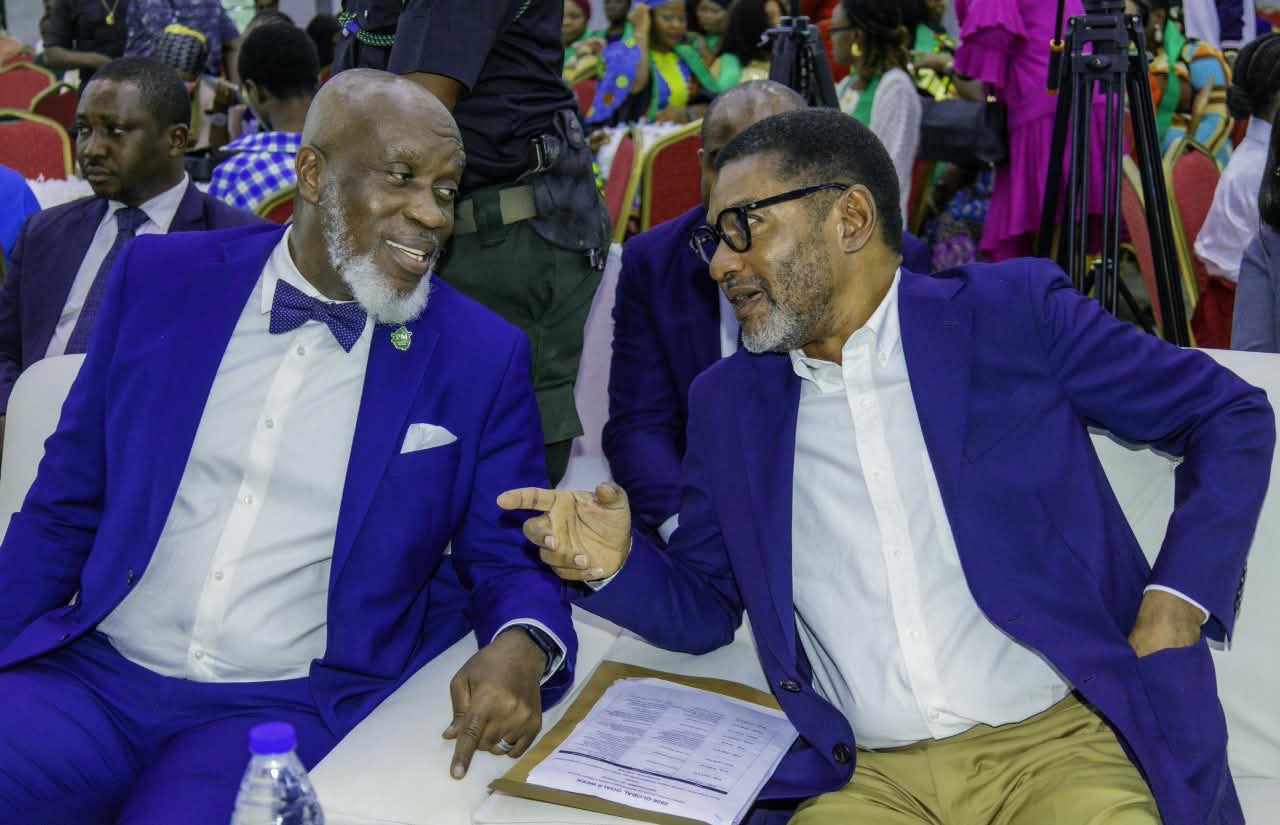
Enugu SSG, Prof Chidiebere Onyia and Frank Nweke Jnr
Spread the love

…Unveils 25-year plan to sustain transformation beyond individual administrations

The Enugu State Government has unveiled a 25-year development plan aimed at ensuring that the state’s ongoing transformation outlives individual administrations, with Governor Peter Mbah declaring that the government’s focus is shifting from simply delivering projects to building strong institutions and achieving lasting improvements in the lives of citizens.

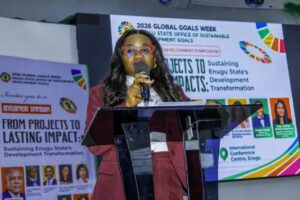
Mbah made the declaration at the 2026 Enugu State Global Goals Week Symposium, held at the International Conference Centre (ICC), Enugu, with the theme, “From Projects to Lasting Impact: Sustaining Enugu State’s Development Transformation.”

Governor Mbah, who was represented by the Secretary to the State Government, Prof. Chidiebere Onyia, said the state’s development agenda was being deliberately aligned with the Sustainable Development Goals (SDGs) to ensure that investments in infrastructure, human capital and critical services produced measurable and enduring impact.

He said the administration had continued to prioritise investments in education, healthcare, roads, agriculture, water, technology, security and other critical sectors, stressing that the projects were not ends in themselves but part of a broader strategy to build systems capable of sustaining development over the long term.

Maduka College Advert

“Our objective is not merely to execute projects, but to build systems and institutions capable of delivering enduring development and ensuring that the transformation we are driving today is sustained beyond the tenure of any single administration,” Mbah said.

He said the 25-year development plan would provide continuity, guide long-term investments, strengthen institutions, expand economic opportunities, improve human capital and promote inclusive development across the state.

Mbah noted that the state’s commitment to the SDGs was reflected in the spread of development interventions across the 260 electoral wards, particularly through the Smart Green Schools and Primary Healthcare Centres.

He assured that the government would continue to strengthen institutions, improve service delivery and put in place mechanisms to sustain the development gains achieved under the administration.

In a welcome address, the Senior Special Assistant to the Governor on Sustainable Development Goals and Enugu State SDGs Focal Person, Onyinye Akubuilo-Okpalanma, said the state’s transformation must remain people-centred, inclusive and sustainable.

She said government programmes should be judged not simply by the number of projects completed or funds spent, but by their impact on residents, the opportunities created and the communities strengthened.

“The success of government programmes should not be measured only by the number of projects completed or the amount of money spent, but by the extent to which those interventions improve the daily lives of our people, expand opportunities and strengthen communities,” she said.

Akubuilo-Okpalanma called for stronger community participation, continuous monitoring, reliable data and greater transparency in public finance and project implementation. She also urged greater attention to vulnerable groups and sustained investment in education, primary healthcare and environmental protection.

She called on development partners, civil society organisations, traditional institutions, the private sector and community leaders to work with government to sustain development gains, stressing the importance of continuity, institutional memory and long-term planning.

“Enugu’s transformation will be judged not only by the projects visible today, but also by the quality of institutions, opportunities and services available to future generations,” she said.

In a keynote address titled “From Projects to Lasting Impact: Sustaining Enugu State’s Development Transformation,” former Minister of Information, Frank Nweke Jnr., commended the scale and pace of public investment in the state over the past three years.

Nweke said the Mbah administration had reported more than 1,500 kilometres of roads constructed or reconstructed, over 7,000 classrooms and 260 Type-2 Primary Healthcare Centres.

He also cited the 2025 budget, in which ₦837.9 billion, representing 86 per cent of the budget, was allocated to capital expenditure, while ₦320.6 billion, representing more than one-third of the total budget, was allocated to education.

He stressed that improved domestic revenue mobilisation was essential to sustaining ambitious development, noting that the financial capacity to fund projects, maintain public assets and support institutions was critical to long-term transformation.

“Projects can transform places, but strong institutions are necessary to ensure that the transformation endures,” Nweke said.

He identified five priorities for sustaining Enugu’s development: linking investments to clearly defined problems and measurable outcomes; embedding the SDGs in planning and budgeting; measuring outcomes rather than expenditure alone; providing for the maintenance of public assets from the outset; and strengthening institutions, professional capacity and accountability mechanisms.

In separate goodwill messages, the UNICEF Field Office, Enugu representative, Juliet Chiluwe; the Special Adviser on Legislative Matters, Rt. Hon. Paul Nnajiofor; and Amb. Amaka Nweke commended the state’s development efforts and emphasised the need for inclusive, accountable and sustainable development that would continue to benefit present and future generations.

The event brought together government officials, development partners, traditional and community stakeholders, civil society representatives and members of the National Youth Service Corps (NYSC), among other participants.


Continue Reading

News

FG slashes interest rate on late tax payment

Published

on

Spread the love

The Federal Government (FG) has reduced the penalty interest rate for late settlement of tax liabilities, with the new regime taking effect from October 1, 2026.

Under the new arrangement, interest on tax liabilities payable in naira will be pegged to the Central Bank of Nigeria’s (CBN) Monetary Policy Rate (MPR) plus one percentage point, down from the previous five-percentage-point penalty.

The measure is contained in the Nigeria Tax Administration (Interest on Late Payment of Tax) Order, 2026, issued yesterday by the Minister of Finance and Coordinating Minister of the Economy, Mr Taiwo Oyedele, pursuant to Section 65 of the Nigeria Tax Administration Act, 2025.

According to the minister, the new Order will apply uniformly to taxpayers dealing with federal, state and Federal Capital Territory (FCT) tax authorities.

However, the applicable interest rate on naira-denominated tax liabilities will not fall below the yield on 364-day Treasury Bills, reflecting the Federal Government’s cost of borrowing when tax payments are delayed.

Maduka College Advert

For tax liabilities payable in foreign currencies, interest will be charged at the Secured Overnight Financing Rate (SOFR) plus six percentage points.

The Order further provides that where SOFR is discontinued, its officially designated successor rate will apply.

Explaining the rationale for the new regime, Oyedele said the objective was to align the cost of late tax payments more closely with prevailing market conditions while providing taxpayers with greater certainty about their obligations.

“Tax that is due belongs to the public. When it is paid late, Government may have to borrow to fill the gap, and the cost falls on everyone.

“This Order ties the cost of late payment to real market rates, so that delaying tax does not become a cheaper form of credit than the market itself,” he stated.

Continue Reading

News

APC wins all Chairmanship, Councillorship seats in Enugu

Published

on

Spread the love

The All Progressives Congress (APC) has won all chairmanship and Councillorship seats contested in the Sept. 26 Local Government Election in Enugu State.

The Enugu State Independent Electoral Commission (ENSIEC) conducted election into the 17 Chairmanship and 260 Ward Councillorship positions in the state on Saturday.

Declaring the election results at the ENSIEC headquarters in Enugu on Sunday, the Chairman of the Commission, Prof Christian Ngwu, said that the election was free and fair.

Ngwu said that the election was conducted according to rules guiding the Commission, and “subsequently, we are issuing the winners with certificate of returns.”

Speaking after collecting his certificate of return, Chairman of Enugu South Local Government Area, Chief Caleb Ani, attributed the landslide victory of the candidates of APC to the massive developmental works of Gov. Peter Mbah.

Maduka College Advert

Ani urged the residents of the state to vote for Mbah en masse in the forthcoming 2027 General Election to continue the good works.

“Gov. Mbah has done well in all ramifications, this is partly while the APC candidates won overwhelmingly.

“I urge the people to vote for him, come 2027 General Elections so that he will continue with his good works and do more,” he said.

Reacting, the APC Chairman in Enugu State, Dr Martin Chukwunweike, said that the resounding victory at the polls indicated the dominance of the national ruling party, APC, in the state.

“We will not rest as we push the developmental efforts of President Bola Tinubu and our amiable governor, His Excellency Dr Peter Ndubuisi Mbah, for the world to see.

“Tinubu, Mbah and all the APC candidates will be reelected in 2027 as they have performed exceptionally well in the past three years,” he said.

In the numerical figures of the results pronounced, APC chairmanship candidates won with margins while the opposition parties trailed behind with minimal votes.

For instance, in Udenu, Igbo-Eze North and Igbo-Eze South local Government Areas respectively, the APC chairmen elect secured virtually the whole votes cast.

Continue Reading

Trending

Maduka College Advert