International
Israeli air strike kills hundreds at Gaza hospital on eve of Biden’s visit

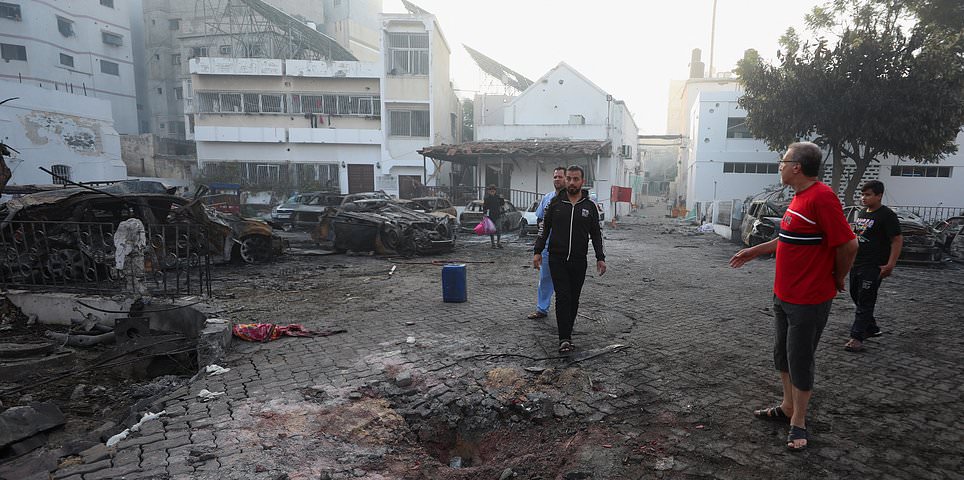
Israeli air strikes on a hospital compound in the Gaza Strip killed at least 200 people, officials in the Hamas-run Palestinian territory said on Tuesday, sparking widespread condemnation and fury.
But Israel’s army blamed a rocket misfired by militants in Gaza.

Al Jazeera footage from the scene showed medics and civilians recovering bodies with white bags or blankets. Bloodstains and multiple torched cars were visible in the dark hospital courtyard.
The strike came just hours before US President Joe Biden was due in the Middle East, to balance US backing for Israel with stopping its war against Hamas from spiralling into wider regional conflict.
Thousands have been killed on both sides since Hamas’s deadly October 7 strike on Israel, with retaliatory air strikes and a siege of Gaza having a devastating impact on ordinary Palestinians.

In an escalation in tensions, the health ministry in Hamas-ruled Gaza said between 200 and 300 people displaced by 10 days of heavy bombardment were killed in “occupation (Israeli) strikes” at the Ahli Arab hospital in central Gaza.
“Hundreds of victims are still under the rubble,” a statement said, calling it a “war crime”, and prompting condemnation from the World Health Organization.
Hospitals and their grounds have been seen as safe havens for Gazans made homeless or displaced by the bombing, as they have been relatively spared from strikes.
In the Jordanian capital Amman, dozens of protesters incensed by the strike in Gaza attempted to storm the Israeli embassy, an AFP correspondent said.
Jordan was among Arab and Muslim states condemning the hospital strike, as did Qatar.
Separately, the United Nations agency supporting Palestinian refugees said six people were killed when one of its schools sheltering displaced families was hit, during Israeli air strikes.
Biden’s trip will come 12 days after the Palestinian militants of Hamas — under cover of a rocket barrage — burst through Israel’s heavily fortified Gaza border, shooting, mutilating and burning more than 1,400 people.
Shell-shocked Israel has responded with withering air strikes against targets in Gaza, leaving about 3,000 Gazans dead, according to a toll from the health ministry in Gaza before the Ahli Arab strike.
Israel has also imposed a crippling siege on the impoverished territory and deployed tens of thousands of troops on the border with Gaza in preparation for a full-scale ground offensive.
It has vowed to destroy Hamas while also seeking to rescue the at least 199 hostages taken into Gaza by Hamas, which has released a video of one of the captives, French-Israeli woman Mia Shem.
Her mother, Keren Shem, made an emotional plea for her safe return. “I am begging the world to bring my baby back home,” she told a new conference in Tel Aviv.
Diplomatic bids to free the hostages have gathered pace. Turkey said it was in talks with Hamas to secure their release.
But there were mixed views about how effective Biden could be, with some Palestinians blaming the United States for backing Israel, and even Israelis sceptical.
“We don’t believe anymore in politicians,” said Omer Nevo, 23. “I don’t trust anyone anymore after what has happened here.”
Iran Warning
Israelis are still reeling from the worst attack in the country’s 75-year history, which has sparked a mass mobilisation of reservists and the evacuation of residents from areas near Gaza and Lebanon.
In southern Israel, dozens of mourners gathered for the funeral of five members of the same family killed when militants attacked their kibbutz at Kfar Aza.
All five coffins were draped in Israeli flags.
US Secretary of State Antony Blinken, back in Israel after a whistlestop regional tour, said Biden’s visit would be a statement of “solidarity with Israel” and an “ironclad commitment to its security”.
Support also came from Germany, whose Chancellor Olaf Scholz was in Tel Aviv.
“The world must stand united behind Israel to defeat Hamas,” Israel’s Prime Minister Benjamin Netanyahu said, alongside Scholz.

• The scene of destruction at Al Ahli hospital after an air strike in Gaza City on Tuesday
Washington has already sent two aircraft carrier strike groups to the eastern Mediterranean “to deter hostile actions against Israel”.
The Pentagon has put 2,000 troops on deployment alert to be able “to respond quickly to the evolving security environment in the Middle East”. US media said the troops would cover support roles such as medical assistance and handling explosives.
Israel’s arch foe Iran, which backs both Hamas and Lebanon-based Hezbollah militants, has repeatedly warned against a Gaza invasion and Monday raised the spectre of a possible “pre-emptive action” against Israel “by the resistance axis.”
Iran’s supreme leader Ayatollah Ali Khamenei said Tuesday that “no one can stop” forces opposed to Israel if it keeps up its bombardment of Gaza.
Deadly flare-ups have rocked Israel’s northern border with Lebanon.
Israel’s army said Tuesday it had killed four militants attempting to infiltrate from Lebanon.
Hezbollah later said five of its fighters were killed “performing jihad”, taking the number of its fighters killed in the intensifying border skirmishes to 10.
White House National Security Council spokesman John Kirby was asked on CNN whether US authorities had so far noticed Iran engaging in the conflict in new ways.
“Outside of the rhetoric…, no we haven’t,” he replied.
‘Corpses in the street’
Biden will also try to quietly steer Israeli’s military response, as international alarm has grown about the devastating impact of the war on Palestinian civilians.
Entire neighbourhoods have been razed and survivors are left with dwindling supplies of food, water and fuel.
The health ministry in Gaza said hospitals were at breaking point, with more than 30,000 people taking shelter at the Al-Shifa hospital in Gaza City alone.
It said it was “extremely concerned” about disease outbreaks due to poor water supply and sanitation.
“There are corpses in the streets. Buildings are crashing down on their inhabitants,” said Jamil Abdullah, a Palestinian-Swede, hoping to flee the blockaded enclave.
“The smell of the dead is everywhere.”
UNRWA says more than one million Palestinians — almost half of Gaza’s population of 2.4 million — have fled their homes.
An UNRWA flour storage near Gaza City was hit by an Israeli strike, an AFP photographer said. Even as the smoke was still rising from the rubble, desperate residents collected flour from the ground.
“We are dying of hunger,” said Abu Hussni al-Hujein, 60.
Israel has ordered residents of north Gaza to leave for the south, hoping to clear the area of civilians in preparation for a ground assault that would involve gruelling urban combat.
No Escape
Entire families, young children and the elderly have gathered belongings and fled to southern Gaza, bedding down in any available space, indoors and out.
Egypt kept closed Gaza’s only border crossing not controlled by Israel, Rafah, meaning there is no escape.
Israel has repeatedly struck the area on the Palestinian side and denied reports of any temporary ceasefire deal to open it.
Rafah’s closure has so far prevented the escape of thousands of Palestinian-Americans and others hoping to get out of Gaza, or the entry of relief goods now loaded on truck convoys waiting in Egypt.
For now Gazans remain trapped, with neighbouring Arab nations also fearful that if Palestinians leave the territory they could be permanently exiled. (AFP)














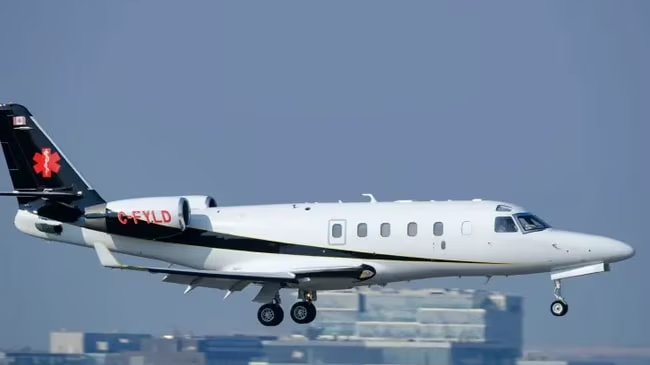
There are grave fears for the passengers of a private plane that suddenly vanished mid-flight, sparking a major search off the coast of the US.
US authorities say the Gulfstream G100 lost contact with air traffic control about 2am local time on Saturday (4pm Saturday AET) while flying from L.F. Wade International Airport in Bermuda to Boston Logan International Airport.
The US Coast Guard said the Federal Aviation Administration alerted it after contact was lost with the aircraft – which plummeted from 23,500 feet to 11,000 feet in just three minutes, according to FlightAware data.
“We are praying for a safe outcome,” a spokesperson for Latitude Air Ambulance, which operates the missing plane, told City News.
A search is now under way off Nantucket in the air and on water as crews work to locate the missing jet, the Coast Guard said. Data from FlightRadar24 showed a number of aircraft searching south of the island.
Six people are missing after a private jet vanished, sparking a major search off the coast of Nantucket in the US.
The plane was en route from Bermuda to Boston when it vanished.
“Air & surface crews have launched in search of the aircraft. Updates will be provided here as info becomes available,” the Coast Guard Northeast District said on X.
The plane was carrying out a medical evacuation in Bermuda – a British overseas territory in the north Atlantic Ocean, according to Clarence Togeretz, Director of Flight Operations at Latitude Air Ambulance.
“We always get rather concerned when our crew doesn’t report to us in a timely manner,” he told NBC News.
“But I will say that again, optimistically and positively, that doesn’t mean that the worst has happened.”
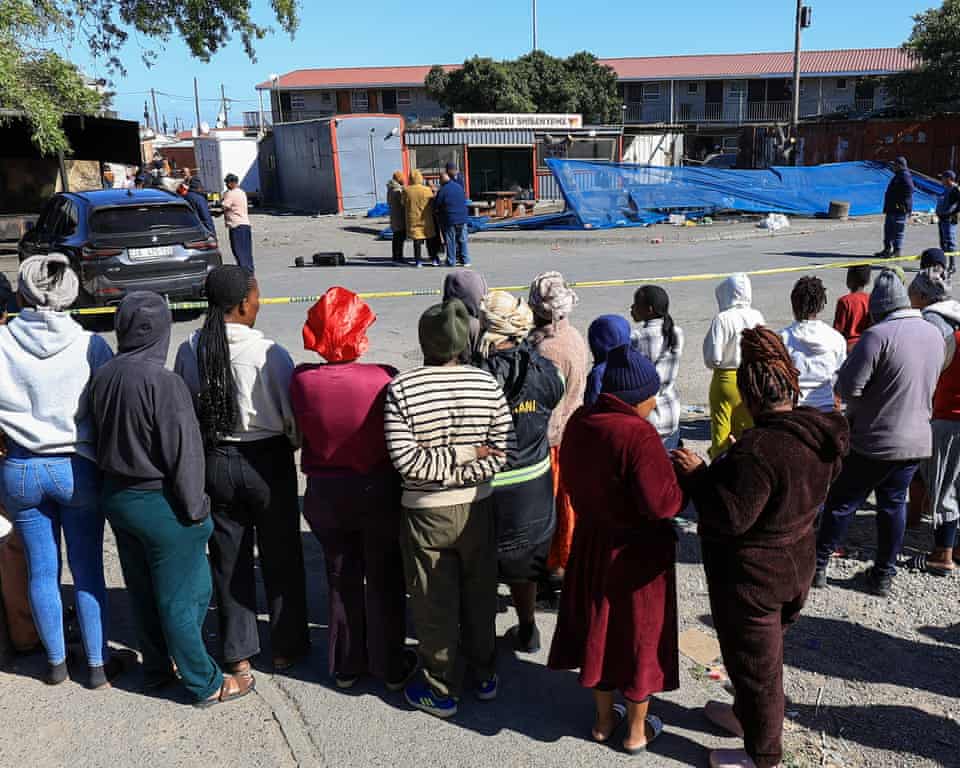
Seventeen people were killed when eight gunmen stormed a bar close to Johannesburg on Saturday evening, with 15 more injured.
In a separate shooting in the early hours of Sunday morning, 10 people were killed outside an entertainment venue in a township near Cape Town and a further 11 were injured.
South Africa has one of the highest murder rates in the world and has struggled to contain gang-related gun violence in recent years. Police have not indicated a motive for either of the latest attacks.
In Johannesburg, gunmen opened fire on customers outside the bar before continuing the attack inside and torching two vehicles before fleeing.
Police said thirteen men and four women were killed.
Deputy provincial police commissioner Maj Gen Fred Kekana said the attack may have been a retaliation for an incident last month, in which one person was killed and another wounded, according to AFP news agency.
Speaking at the scene, he said police had clear pictures and in some cases names for the suspects.
In Cape Town, five victims died at the scene and a further five people died in hospital.
No arrests had been made in either case on Sunday morning.
The two mass shootings came days after 11 people were killed in the city of Duban when gunmen stormed a house in the KwaMakhutha township.

Illegal weapons are prevalent in South Africa and gun violence has been a persistent problem for decades, with about 60 murders recorded every day in the country of 62 million.
But a recent spate of mass shootings has raised fears that the problem is deepening, with violence often linked to turf wars between gangs engaged in drug trafficking and illegal mining.
In February, President Cyril Ramaphosa called organised crime “the most immediate threat to our democracy, our society and our economic development”.
Earlier this year the military was deployed alongside police in areas with the highest murder rates in an effort to reduce armed violence.
On Saturday a tenth woman’s body was found in Ekurhuleni, to the east of Johannesburg, with local police saying they were unable to rule out a serial killer operating in the area with similarities between the deaths. (BBC)
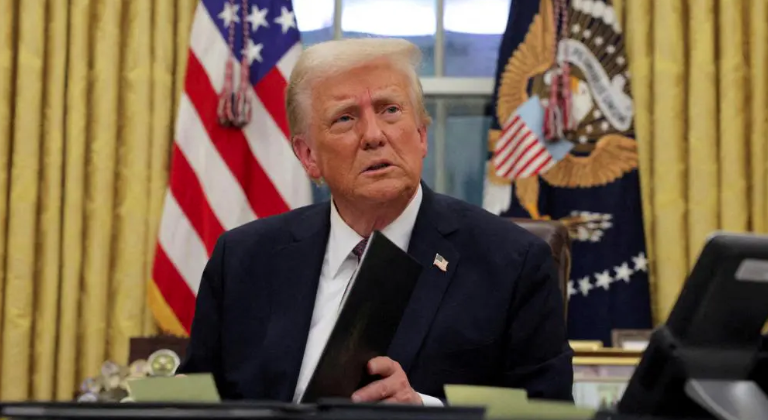
The United States has deported more than 25,000 people under secretive agreements with 35 countries to take migrants with no ties to those nations, according to an investigation published Monday.
Since US President Donald Trump took office in January 2025, Washington has been signing deals with developing countries to take migrants who cannot legally be sent home.
The investigation by Forbidden Stories found the administration has earmarked $410 million to be paid directly to the receiving countries, or to UN agencies to facilitate the returns.
At least 25,447 people had already been deported to third countries by August 31, 2026, according to data compiled by Forbidden Stories with a consortium of international journalists.
The vast majority — around 20,000 — were sent to Mexico, but the rest were dispersed to 27 other countries across Latin America, Africa, and the Pacific, and agreements have been finalised with seven more.
The deals vary, including over which nationalities can be deported and whether people with criminal records can be accepted.
An AFP investigation earlier this year found Washington is using visa bans and restrictions on African countries to strongarm them into accepting deportees.
Lawyers told AFP that deportees were being thrown into a “legal black hole”, held without charge in countries where they have no ties and few if any rights.
Forbidden Stories said 49 of Africa’s 54 countries had been approached about accepting third-country deportees.
A little-known State Department division called the Office of Remigration, created in May 2025, has handled most of the negotiations and payments, according to Forbidden Stories.
The office is headed by Christian Jove Ehrhardt, a 41-year-old diplomat who previously worked as a security officer.
The report details his visits to Cameroon, which signed a memorandum of understanding with the US in December on accepting deportees. A week later, it also signed a five-year health assistance programme worth nearly $400 million.
The following month, the State Department said it would provide a further $30 million to the UN Refugee Agency (UNHCR) in Cameroon to “facilitate the voluntary return of refugees and combat illegal immigration.”
The first plane carrying deportees arrived in Cameroon on January 14.
– Payments –
Other agreements have involved direct payments to governments.
Palau, a small Pacific island nation with a population of under 18,000, signed an agreement in December 2025 to accept up to 75 third-country nationals in return for $7.5 million.
However, only three people have so far been sent under the agreement.
In Eswatini, 32 people have arrived since July 2025 out of a possible 160 under an agreement worth more than $5 million. It has accepted deportees with criminal records, the investigation found.
Of the $410 million planned for the agreements, internal State Department records showed that $81 million was earmarked for signatory governments.
The rest was intended for aid organisations, including more than $178 million for the UN’s International Organisation for Migration, and $123 million for UNHCR.
The agencies have faced criticism over their involvement, although UNHCR told Forbidden Stories that it was not party to the bilateral agreements and that US funding was being used in line with its mandate to strengthen asylum systems.
An IOM spokesperson told Forbidden Stories that the agency’s decisions to accept funding rested “on a single question: whether our engagement will improve the lives of the migrants affected. In these instances, we believe strongly it does.”
-
 News3 days ago
FG confirms Ebola case in FCT, identifies 44 contacts
-
Features23 hours ago
Kogi’s Kidnapping Crisis: Why Do Forests Remain Safe Havens for Criminals Under Ododo’s Watch?
-
News2 days ago
“It’s not debatable, we can’t go back,” Mbah Backs Tinubu on Fuel Subsidy Removal
-
News23 hours ago
Kidnappers kill seven-year-old boy after ransom demand
-
News3 days ago
Afenifere leader, Fasoranti, dies at 100
-
News2 days ago
Mbah: Enugu Now Produces 120 Million Litres of Water Daily, Expands Agricultural Investment
-
Politics2 days ago
Mike Igini: Politicians Infiltrate Agencies Responsible for Election Personnel as Electoral Laws Go Unenforced
-
Politics2 hours ago
2027: Atiku, Obi, Duke, Others in Talks on Single Opposition Candidate – Coalition