International
BREAKING: Israel ‘at war’ as Hamas gunmen launch surprise attack from Gaza


• Hamas gunmen enter Israel in unprecedented attack
• At least 22 Israelis killed in attack, says ambulance service
• Israel says Hamas declares war, commits ‘grave mistake’
• Barrage of rockets launched into Israel from Gaza
• Reports of gunbattles in towns in southern Israel
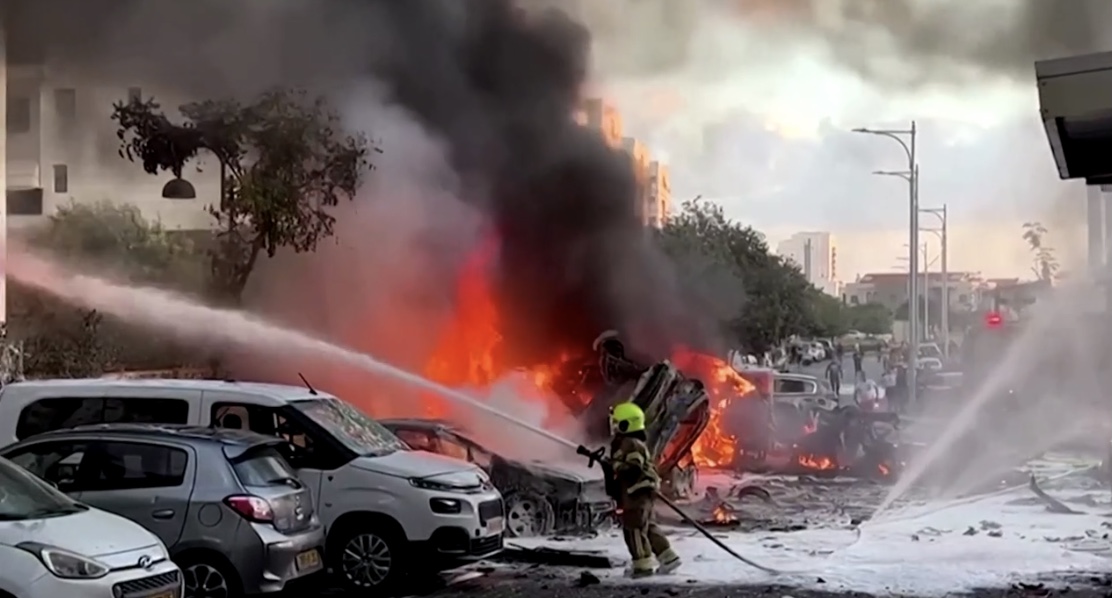
JERUSALEM/GAZA, Oct 7 (Reuters) – Palestinian Islamist group Hamas launched the biggest attack on Israel in years on Saturday, killing more than 20 people and wounding hundreds in a surprise assault that combined gunmen crossing into Israel with a barrage of rockets fired from Gaza.
Israel said the Iran-backed group had declared war as its army confirmed fighting with militants in several Israeli towns and military bases near Gaza and Prime Minister Benjamin Netanyahu vowed to retaliate.

“Our enemy will pay a price the type of which it has never known,” he said. “We are in a war and we will win it.”
At least 22 Israelis were killed in the attack so far, Israel’s ambulance service said. Around 545 Israelis had been wounded, the health ministry said.
The Israeli military said it had responded with air strikes into Gaza, where witnesses reported hearing heavy explosions and multiple dead being carried into hospitals.

The attack marked an unprecedented infiltration into Israel by an unknown number of Hamas gunmen crossing from the Gaza Strip, and the heaviest blow for Israel in the conflict with Palestinians since the suicide bombings of the Second Intifada some two decades ago.
The militant Islamic Jihad group said it had joined the attacks and was holding several Israeli soldiers captive and Hamas social media accounts showed footage of what were said to be Israeli captives being taken alive into Gaza.
The Israeli military has declined to comment on the reports but has not denied them either, saying it would address the reports later.
Israeli broadcaster Reshet 13 TV News said militants were holding Israelis hostage in the town of Ofakim, and that five Palestinian militants had been killed in the town of Sderot and homes had been set on fire.
Israeli media reported gunbattles between bands of Palestinian fighters and security forces in towns in southern Israel. Israel’s police chief said there were “21 active scenes” in southern Israel.
In Gaza, people rushed to buy supplies in anticipation of days of conflict ahead. Some evacuated their homes and headed for shelters.
Hamas military commander Mohammad Deif announced the start of the operation in a broadcast on Hamas media, calling on Palestinians everywhere to fight.
“This is the day of the greatest battle to end the last occupation on earth,” he said, adding that 5,000 rockets had been launched.
Israel and Hamas fought a 10-day war in 2021.
PLEASE SEND HELP’
Speaking to Israel N12 News by phone from Nir Oz, a kibbutz near Gaza, a woman identified as Dorin said militants had infiltrated her house and tried to open the bomb shelter where she was hiding.
Rocket barrages launched towards Israel from Gaza
“They just came in again, please send help,” she said. “There are a lot of homes harmed … My husband is holding the door closed … They are firing rounds of bullets.”
Israeli Defence Minister Gallant said “troops are fighting against the enemy at every location” and authorised the call-up of reservists.
Israeli media reported that gunmen had opened fire on passers-by in Sderot, and footage circulating on social media appeared to show clashes in city streets as well as gunmen in jeeps roaming the countryside.
“We were told there are terrorists inside the kibbutz, we can hear gunfire,” a young woman named Dvir, from Beeri Kibbutz, told Israeli Army Radio from her bomb shelter.
BACKDROP OF SURGING VIOLENCE
The escalation comes against a backdrop of surging violence between Israel and Palestinian militants in the West Bank, which together with the Gaza Strip is part of the territories where Palestinians have long sought to establish a state.
It also comes at a time of political upheaval in Israel, which has been riven by deep divisions over moves to overhaul the judiciary, and as Washington works to strike a deal that would normalise ties between Israel and Saudi Arabia.
The Iran-backed Lebanese group Hezbollah said the operation was a “decisive response to Israel’s continued occupation and a message to those seeking normalisation with Israel”.
An adviser to Iran’s Supreme Leader Ali Khamenei congratulated Palestinian fighters for the attack.
Hamas media displayed videos of what it said were bodies of Israeli soldiers brought into Gaza by fighters, and Palestinian gunmen inside Israeli homes and touring an Israeli town in jeeps reportedly been driven into Israel by the attackers.
Reuters was not immediately able to verify the footage.
Hamas media also circulated video footage apparently showing a destroyed Israeli tank.
In Gaza, the roar of rocket launches could be heard and residents reported armed clashes along the separation fence with Israel, near the southern town of Khan Younis, and said they had seen significant movement of armed fighters.
Palestinians in Gaza were bracing for Israel’s response.
“We are afraid,” Palestinian woman, Amal Abu Daqqa, told Reuters as she left her house in Khan Younis.
Others in Gaza expressed disbelief at the infiltration into Israel. “It is like a dream. I still can’t believe it,” said one Gaza shopkeeper.
The attack came a day after Israel marked the 50th anniversary of the 1973 war that brought the country to the verge of catastrophic defeat in a surprise attack by Syria and Egypt. (Reuters)














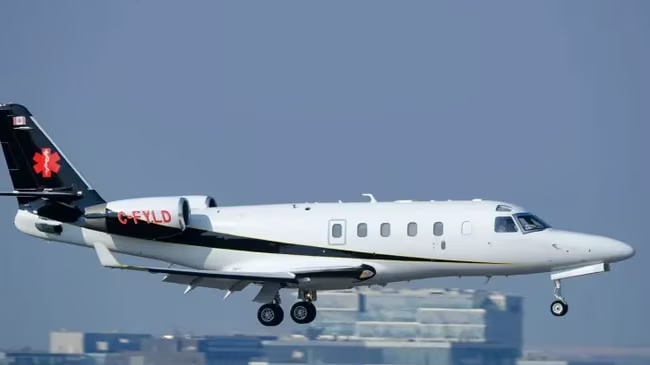
There are grave fears for the passengers of a private plane that suddenly vanished mid-flight, sparking a major search off the coast of the US.
US authorities say the Gulfstream G100 lost contact with air traffic control about 2am local time on Saturday (4pm Saturday AET) while flying from L.F. Wade International Airport in Bermuda to Boston Logan International Airport.
The US Coast Guard said the Federal Aviation Administration alerted it after contact was lost with the aircraft – which plummeted from 23,500 feet to 11,000 feet in just three minutes, according to FlightAware data.
“We are praying for a safe outcome,” a spokesperson for Latitude Air Ambulance, which operates the missing plane, told City News.
A search is now under way off Nantucket in the air and on water as crews work to locate the missing jet, the Coast Guard said. Data from FlightRadar24 showed a number of aircraft searching south of the island.
Six people are missing after a private jet vanished, sparking a major search off the coast of Nantucket in the US.
The plane was en route from Bermuda to Boston when it vanished.
“Air & surface crews have launched in search of the aircraft. Updates will be provided here as info becomes available,” the Coast Guard Northeast District said on X.
The plane was carrying out a medical evacuation in Bermuda – a British overseas territory in the north Atlantic Ocean, according to Clarence Togeretz, Director of Flight Operations at Latitude Air Ambulance.
“We always get rather concerned when our crew doesn’t report to us in a timely manner,” he told NBC News.
“But I will say that again, optimistically and positively, that doesn’t mean that the worst has happened.”
Seventeen people were killed when eight gunmen stormed a bar close to Johannesburg on Saturday evening, with 15 more injured.
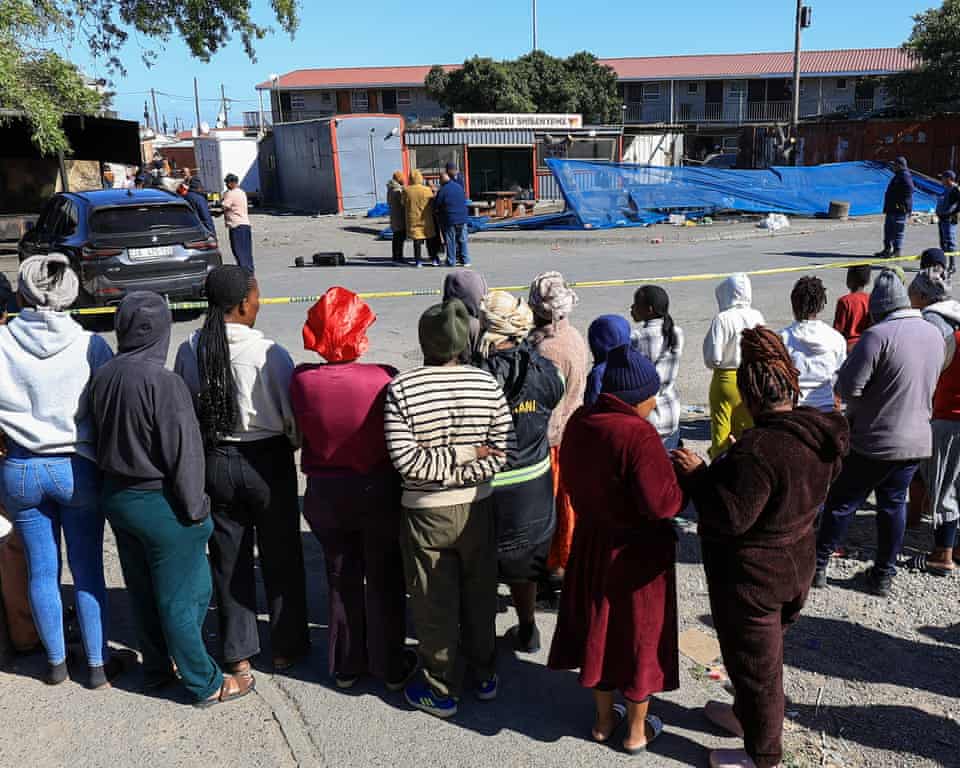
In a separate shooting in the early hours of Sunday morning, 10 people were killed outside an entertainment venue in a township near Cape Town and a further 11 were injured.
South Africa has one of the highest murder rates in the world and has struggled to contain gang-related gun violence in recent years. Police have not indicated a motive for either of the latest attacks.
In Johannesburg, gunmen opened fire on customers outside the bar before continuing the attack inside and torching two vehicles before fleeing.
Police said thirteen men and four women were killed.
Deputy provincial police commissioner Maj Gen Fred Kekana said the attack may have been a retaliation for an incident last month, in which one person was killed and another wounded, according to AFP news agency.
Speaking at the scene, he said police had clear pictures and in some cases names for the suspects.
In Cape Town, five victims died at the scene and a further five people died in hospital.
No arrests had been made in either case on Sunday morning.
The two mass shootings came days after 11 people were killed in the city of Duban when gunmen stormed a house in the KwaMakhutha township.

Illegal weapons are prevalent in South Africa and gun violence has been a persistent problem for decades, with about 60 murders recorded every day in the country of 62 million.
But a recent spate of mass shootings has raised fears that the problem is deepening, with violence often linked to turf wars between gangs engaged in drug trafficking and illegal mining.
In February, President Cyril Ramaphosa called organised crime “the most immediate threat to our democracy, our society and our economic development”.
Earlier this year the military was deployed alongside police in areas with the highest murder rates in an effort to reduce armed violence.
On Saturday a tenth woman’s body was found in Ekurhuleni, to the east of Johannesburg, with local police saying they were unable to rule out a serial killer operating in the area with similarities between the deaths. (BBC)
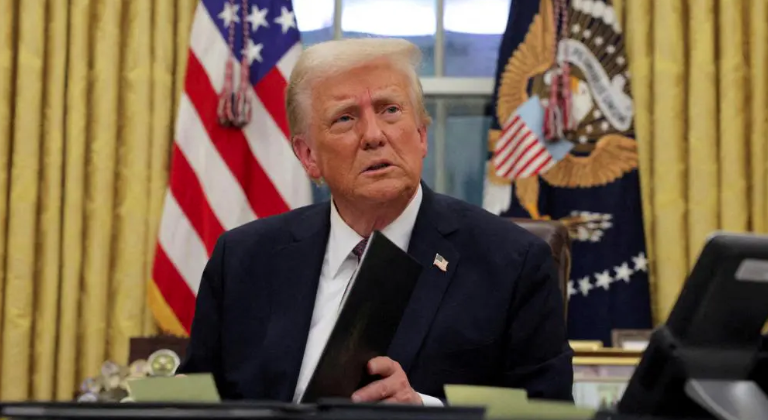
The United States has deported more than 25,000 people under secretive agreements with 35 countries to take migrants with no ties to those nations, according to an investigation published Monday.
Since US President Donald Trump took office in January 2025, Washington has been signing deals with developing countries to take migrants who cannot legally be sent home.
The investigation by Forbidden Stories found the administration has earmarked $410 million to be paid directly to the receiving countries, or to UN agencies to facilitate the returns.
At least 25,447 people had already been deported to third countries by August 31, 2026, according to data compiled by Forbidden Stories with a consortium of international journalists.
The vast majority — around 20,000 — were sent to Mexico, but the rest were dispersed to 27 other countries across Latin America, Africa, and the Pacific, and agreements have been finalised with seven more.
The deals vary, including over which nationalities can be deported and whether people with criminal records can be accepted.
An AFP investigation earlier this year found Washington is using visa bans and restrictions on African countries to strongarm them into accepting deportees.
Lawyers told AFP that deportees were being thrown into a “legal black hole”, held without charge in countries where they have no ties and few if any rights.
Forbidden Stories said 49 of Africa’s 54 countries had been approached about accepting third-country deportees.
A little-known State Department division called the Office of Remigration, created in May 2025, has handled most of the negotiations and payments, according to Forbidden Stories.
The office is headed by Christian Jove Ehrhardt, a 41-year-old diplomat who previously worked as a security officer.
The report details his visits to Cameroon, which signed a memorandum of understanding with the US in December on accepting deportees. A week later, it also signed a five-year health assistance programme worth nearly $400 million.
The following month, the State Department said it would provide a further $30 million to the UN Refugee Agency (UNHCR) in Cameroon to “facilitate the voluntary return of refugees and combat illegal immigration.”
The first plane carrying deportees arrived in Cameroon on January 14.
– Payments –
Other agreements have involved direct payments to governments.
Palau, a small Pacific island nation with a population of under 18,000, signed an agreement in December 2025 to accept up to 75 third-country nationals in return for $7.5 million.
However, only three people have so far been sent under the agreement.
In Eswatini, 32 people have arrived since July 2025 out of a possible 160 under an agreement worth more than $5 million. It has accepted deportees with criminal records, the investigation found.
Of the $410 million planned for the agreements, internal State Department records showed that $81 million was earmarked for signatory governments.
The rest was intended for aid organisations, including more than $178 million for the UN’s International Organisation for Migration, and $123 million for UNHCR.
The agencies have faced criticism over their involvement, although UNHCR told Forbidden Stories that it was not party to the bilateral agreements and that US funding was being used in line with its mandate to strengthen asylum systems.
An IOM spokesperson told Forbidden Stories that the agency’s decisions to accept funding rested “on a single question: whether our engagement will improve the lives of the migrants affected. In these instances, we believe strongly it does.”
-
 Editorial2 days ago
Nigeria’s Roads: Where a Driver’s Licence May Not Mean a Driver Can Drive
-
News2 days ago
Over 1,000 Islamic clerics ask Tinubu to drop 2027 re-election bid
-
Features2 days ago
TWENTY YEARS IN MEMORY: MARIA UKAMAKA IFEOMA OJUKWU
-
News2 days ago
Military, DSS, police rescue 20 NYSC corps members, civilian in Imo
-
News3 days ago
90-year-old father of ADC Edo South candidate abducted
-
News2 days ago
GOCOP Trains Members On Deployment Of AI Tools to Boost Efficiency, Profitability
-
News3 days ago
Mbah Constitutes Development Centres Across Enugu, Appoints New Coordinators (FULL LIST)
-
News2 days ago
Gov Mbah Seeks National Emergency in Education, Launches Enugu Education Policy