News
FG eyes N200,000 minimum wage as Senate explains N500b, $800m approval for Tinubu


Senate has clarified grey areas in its recent approval of N500 billion and $800 million for the President Bola Tinubu administration. The development had left many Nigerians bewildered, fearing the new government, like its predecessor, would increase benchmark for borrowing.
The 9th National Assembly had enabled former President Muhammadu Buhari to amass a national record breaking debt burden in eight years, going even further to approve more debts in the last days of the administration. The Debt Management Office put the total national debt at N46.25 trillion, as of December 2022.

However, Senate spokesperson, Adeyemi Adaramodu, explained that lawmakers okayed the N500 billion for use as palliatives to cushion the effect of fuel subsidy removal on Nigerians. He said: “The other issue which the Senate treated was the N500 billion palliatives, which the President asked for, to cushion negative effects of fuel subsidy removal on common Nigerians. Definitely, that may not be enough because there are many other aspects, which the government can delve into, especially as we learnt that government has been having talks with organised labour, and I think Federal Government is going to do something in that area.
“But in the immediate, what is the stopgap for, especially, dependent Nigerians, to lift them up before other palliatives come? We feel the problems, and that is why we believe that the average Nigerian must be assisted because we are running a human-faced government. When we are running a human-faced government, everything that will be done must be targeted at Nigerians.”
He added: “That was why we expeditiously acceded to the request of Mr. President because appropriations belong to the National Assembly. No kobo can be spent without appropriation by the National Assembly. It took us time to pass it because we have all pointers that this palliative is going to yield result. It is going to touch the people it is supposed to touch. That is why it was passed.”

MEANWHILE, the Federal Government is favorably disposed to raising the minimum wage to as high N200,000 per month as demanded by Labour, but state governors are urging caution, while Anambra State governor, Charles Soludo, has been asked to chair a technical working group to resolve the issues and its various dimensions.
Sources disclosed that the matter was seriously discussed at last month’s National Economic Council meeting, and it was there that the Salaries, Incomes and Wages Commission made a presentation on how the Federal Government can meet up with the demand of N200,000 per month minimum wage.
The sources added that President Bola Ahmed Tinubu is specifically and personally convinced that the demand of Labour is not unrealistic, pointing to his campaign promises as a proof of the President’s readiness.
Indeed then President-elect also said on Workers’ Day: “In the Nigeria, I shall have the honour and privilege to lead from May 29, workers will have more than a minimum wage. You will have a living wage to have a decent life and provide for your families.”
At the NEC meeting which the President inaugurated in June, the Salaries and Wages Commission costed the financial implications of the said minimum wage increase and showed how the Federal Government could pay it, with a certain recommendation that it was well within the capacity of the government. But at the meeting, state governors, who make up the membership of NEC, raised questions querying the proposal.
Leading the governors at the meeting was Anambra State governor, Charles Soludo, who argued that before adopting the presentation to significantly raise the National Minimum Wage, it would be important for NEC to first understand where the money would come, how much would come, and what states would get.
Part of the expectation and planning is that with the new Foreign Exchange policy, more naira cash would be available to be shared by the Federal Government and the states under the FAAC monthly distribution. In which case, according to informed sources, there would be enough surplus naira cash to enable significant raising of the minimum wage from N30,000 to N100, 000 monthly.
Similarly savings from the subsidy would further mean more cash inflow to the Federation Account. At the June NEC meeting, a sub-committee was formed to review the situation as was publicly announced, composed of governors led by Kebbi State governor with six other governors among the members. They are governors from Anambra, Benue, Kaduna, Bauchi, Cross Rivers and Oyo States, with each representing a geopolitical zone.
In the committee were also the Director-General of Budget Office of the Federation, Governor of Central Bank of Nigeria, Accountant General of the Federation and representative of NNPCL. Others included representatives from the Organised Labour (TUC and NLC) and Ms. Rukayyat El-Rufai, according to a statement from the Office of the Vice President who is NEC’S Chairman.
A source reports that the committee, at its meeting, soon after NEC last month, a technical working group was formed with Soludo as chairman, to interrogate issues around raising the minimum wage, understanding that it is both the federal Government and the states, not just the Federal Government that would be responsible to pay.
Under Soludo’s leadership, technical working group has met at least thrice last month: on 24, 27 and 30. One of its major resolutions was that “negotiations with Labour must be two-tracked between the federation (on the one hand) and the Federal Government (on the other.)
Later this month, NEC would meet to receive the report of the sub-committee and take a final decision on the National Minimum Wage which would then be forwarded to the President as an advisory.
Sources said what is most likely is that at the very least Federal Government workers would be receiving the huge minimum wage increase, while the agreed accrual to the states, which the Soludo technical working group is working out, would determine the fate of the states.
Specifically, the mission of the National Salaries, Incomes and Wages Commission, the agency of the Federal Government responsible for fixing the wages of workers in the federal public sector is “to achieve an equitable, affordable and sustainable remuneration system.” (The Guardian)









• Abia, FCT, Bayelsa top states with highest tax contributions to IGR
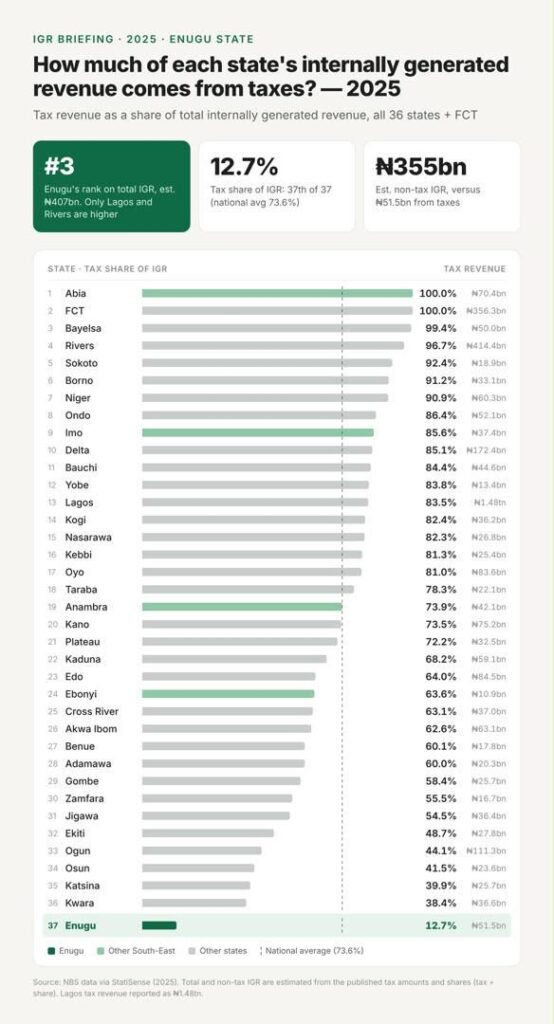
Enugu State recorded the lowest tax revenue-to-Internally Generated Revenue (IGR) ratio among the 36 states and the Federal Capital Territory in 2025, according to figures from the National Bureau of Statistics (NBS), as reported by StatiSense.
Data published on StatiSense’s verified X handle showed that Enugu generated N51.52 billion in tax revenue, representing 12.67 per cent of its total IGR of N406.7 billion in 2025. The remaining revenue came from non-tax sources.
The figures indicate that taxation accounted for a relatively small proportion of Enugu State’s total internally generated revenue, with income from other sources making up the bulk of its earnings.
This comes after the NBS earlier ranked Enugu among the leading states in IGR growth, placing it third nationally, behind Lagos and Rivers states.
In the breakdown of tax contributions to IGR, Abia State ranked first, with 100 per cent of its N70.41 billion IGR coming from tax revenue.
The Federal Capital Territory (FCT) also recorded a 100 per cent tax contribution to its N356.34 billion IGR, according to the figures.
Bayelsa ranked third with 99.39 per cent, followed by Rivers with 96.72 per cent and Sokoto with 92.44 per cent, completing the top five states with the highest tax-to-IGR ratios.
Apart from Enugu, other states with relatively low tax contributions to their IGR included Kwara (38.42 per cent), Katsina (39.93 per cent), Osun (41.53 per cent) and Ogun (44.10 per cent).
The figures come amid public debate over the revenue policies of Governor Peter Mbah’s administration, which has repeatedly dismissed allegations of overtaxation in the state.
Speaking at a recent town hall meeting in Enugu, which was televised live by some national television stations, Mbah attributed the allegations to opposition narratives and resistance from individuals who benefited from the irregularities and sharp practices that characterised the state’s revenue collection system before his administration introduced reforms.
The governor maintained that the growth in Enugu’s IGR was driven by improved revenue collection, the deployment of technology to block leakages, economic diversification and the activation of previously dormant government assets, rather than increased taxes.
He also argued that taxation falls under the Exclusive Legislative List of the Constitution, noting that states do not have the authority to independently determine or increase federal tax rates such as Personal Income Tax, Company Income Tax, Value Added Tax and Withholding Tax.
According to him, his administration’s strategy has been to expand the tax net by bringing more eligible individuals and businesses into the system, rather than increasing existing tax rates.
“This is one falsehood that has been so peddled that it’s even beginning to take a semblance of a truth.
“Meanwhile, overtaxation does not exist, and I think those who think we may be taxing more are essentially looking at the sort of growth we have recorded in our IGR.
“Because they couldn’t have imagined such growth happening within the period it happened, they felt perhaps the only justification is that we have burdened the people of Enugu to realise that. But that’s far from the truth,” he said.
Explaining the measures responsible for the increase in revenue, Mbah said the government had eliminated cash-based revenue collection on its behalf to improve transparency and accountability.
“So, what did we do to grow our IGR? First of all, we plugged all the leakages. We ensured that nobody makes payments in cash on behalf of the state government.
“But, importantly, we have so far activated a whole lot of our dormant assets. We now earn quite a lot from those assets, and we built new ones,” he stated.
The governor listed the Hotel Presidential, Enugu United Palm Products Limited, Nigergas, Nike Lake Resort and the International Conference Centre, among others, as government assets his administration had recovered, completed or resuscitated and subsequently optimised for revenue generation.
He also identified newly established revenue-generating ventures, including Enugu Air, as part of the administration’s strategy to diversify the state’s income sources.
Mbah acknowledged, however, that the contribution of tax revenue to the state’s IGR was expected to increase as economic activities expanded and more businesses became operational.
The governor further said some payments made by residents for government services were often wrongly classified as taxes.
He cited payments for the processing of Certificates of Occupancy (C-of-O) and waste disposal services provided by the Enugu State Waste Management Authority (ESWAMA), explaining that such charges were payments for services rather than taxes.
He said the administration had also consolidated several charges and service costs to reduce the financial burden on residents and businesses.
“How much did we say they should pay? N36,000 annually for businesses. And that includes business premises and other rates and services. So, it’s N100 per day.
“We also had the complaints about people going to the market, I’m sure maybe from the local governments, to collect money. I made an announcement to stop that; that nobody should collect N100 or N200 from our market women,” he explained.
News
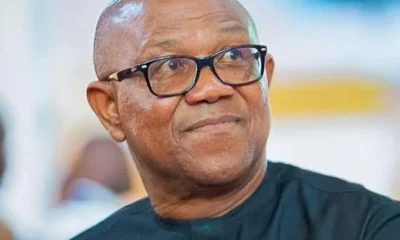
NDC Spokesperson Dismisses Concerns Over Peter Obi’s Health, Attributes Condition to Exhaustion
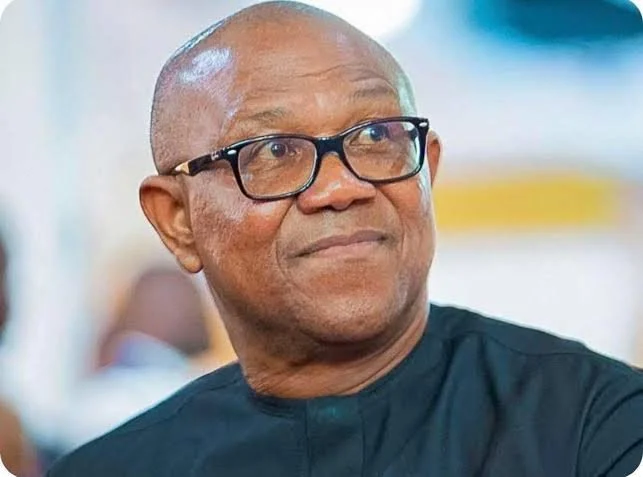
The Deputy Campaign Spokesperson of the Nigeria Democratic Congress (NDC), Dr Sam Omale, has dismissed concerns over the health of the party’s presidential candidate, Peter Obi, insisting that he is in good health and is only experiencing exhaustion from his demanding schedule.
Omale made this known during an interview on Channels Television, where he attributed Obi’s physical exhaustion to his hectic political engagements and frequent travels across different locations.
He explained that Obi’s commitment to his political activities often sees him undertake multiple engagements within a short period, leaving him with little time to rest.
“Sometimes I wonder where he gets his energy from. He is in London today and the following morning in Enugu. I’m wondering how he does it. Exhaustion comes in; he is a human being,” Omale said.
The NDC spokesperson, however, maintained that there was no cause for alarm over Obi’s health, stressing that the presidential candidate was not suffering from any known medical condition.
“He is in perfect health. There’s nothing wrong with him. It’s just exhaustion, and we are trying to calm him down to take a sleep. He is fine,” he added.
Omale further assured that the temporary exhaustion would not affect the party’s ongoing political activities and campaign engagements.
Background
Omale’s comments come amid recent speculation about Obi’s health following the circulation of viral reports and photographs on social media claiming that the former Anambra State governor had been hospitalised after allegedly breaking his neck in a gym accident.
However, Obi’s spokesman, Idris Zekeri, had on Sunday dismissed the report as false, describing it as a fabricated story allegedly designed by the candidate’s political opponents to score cheap political points ahead of the 2027 presidential election.
Zekeri, who said he was with Obi at about 7 am on Sunday before the latter boarded a flight for an international engagement, insisted that the presidential candidate was in good health.
“There is zero iota of truth in that rumour. No such thing happened. I was with His Excellency, Mr Peter Obi, at about 7 am today (Sunday) when he got on a flight for an international engagement.
“But I can assure you that he is safe, sound and in the finest state of health, mind, body, soul and spirit. He is ready to continue to engage with Nigerians as we prepare to kick out the faceless and lying APC,” he said.
He also described the photographs circulating on social media as doctored images, insisting that Obi remained physically and mentally fit.
Zekeri added that the campaign team was not perturbed by the reports, maintaining that Obi was in sound health and prepared to continue his political engagements.
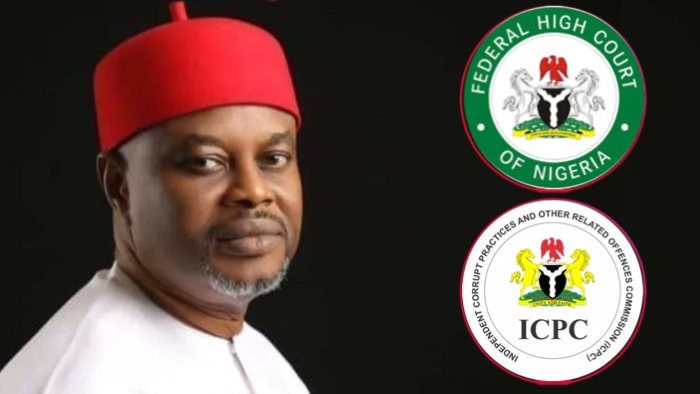
The National Youth Service Corps (NYSC) has disowned a discharge certificate linked to former Minister of Innovation, Science and Technology, Geoffrey Nnaji, telling a Federal High Court in Abuja that the document was not issued by the Corps.
Testifying on Tuesday as the second prosecution witness (PW2) before Justice Joyce Abdulmalik, an NYSC Assistant Director in the Department of Certification, Yusuf Abubakar Jumare, said an investigation conducted by his department established that the certificate was not authentic.
Nnaji is facing six charges, including alleged forgery of his NYSC discharge certificate and University of Nigeria, Nsukka (UNN), degree certificate.
The Independent Corrupt Practices and Other Related Offences Commission (ICPC) is prosecuting him over allegations of certificate forgery and money laundering in charge No. FHC/ABJ/CR/389/2026.
Led in evidence by prosecution counsel, Jimoh Abdulmumuni, SAN, Jumare told the court that his department commenced an investigation into the disputed certificate following a request from the ICPC.
He identified four major discrepancies which, according to him, established that the certificate was not issued by the NYSC.
First, he said the certificate number, purportedly issued in 1985, carries the prefix “A”, which the Corps did not introduce until 1990.
Second, the call-up number on the document is “0137”, a four-digit number, whereas call-up numbers issued in 1985 had five digits.
Third, he said the certificate indicates a service period of 13 months instead of the required 12 calendar months.
The fourth discrepancy, according to the witness, relates to the designation of the NYSC chief executive who purportedly signed the document.
He explained that from the establishment of the Corps until after the period of Nnaji’s claimed service, the designation of its chief executive was “Director”, whereas the disputed certificate was signed by an official described as “National General”.
The prosecution also tendered copies of correspondence between the ICPC and the NYSC concerning the disputed certificate. The documents were admitted in evidence and marked as exhibits.
However, the defence informed the court that it had not been served with the documents and reserved its right to challenge their admissibility at a later date.
In response, prosecution counsel explained that he had only recently taken over the case and undertook to make the documents available to the defence.
During cross-examination by Bode Olanikpekun, SAN, Jumare maintained that the certificate was not issued by the NYSC.
He told the court that his department is the custodian of all NYSC certificates, which are issued to corps members upon successful completion of their service year as evidence of their participation in the scheme.
The witness further explained that the NYSC sends call-up letters to universities for onward distribution to graduates, while universities are responsible for forwarding the names of eligible graduates to the Corps for mobilisation.
However, Jumare admitted under cross-examination that he did not verify whether Nnaji had ever been issued an NYSC certificate.
Nnaji, who is the Peoples Democratic Party (PDP) candidate in the forthcoming Enugu State governorship election, was represented in court by a team of lawyers led by Chief Wole Olanikpekun, SAN. Other members of the legal team included Chief Ugwu Onoja, SAN; Bode Olanikpekun, SAN; and George Ibrahim, SAN.
Justice Abdulmalik adjourned the case until November 30 for the continuation of the cross-examination of PW2, while January 29 was fixed for the continuation of the trial.
-
 News3 days ago
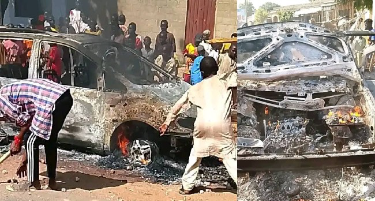
APC Supporters Attacked, Campaign Vehicle Set Ablaze in Katsina
-
News2 days ago
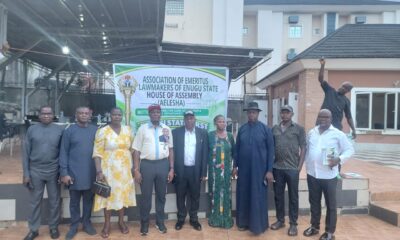
Former Enugu Lawmakers Endorse Mbah for Second Term, Back APC Candidates
-
News2 days ago
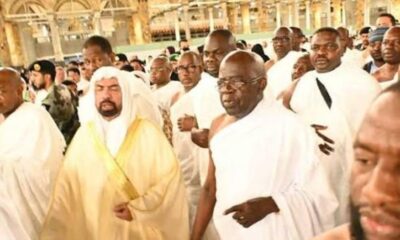
Power Belongs To Allah, He Can Take It From Me And Give Another Person, Tinubu Says During Mecca Visit
-
News15 hours ago
Forgery Trial: NYSC Disowns Nnaji’s Certificate, Identifies Four Discrepancies
-
Editorial2 days ago
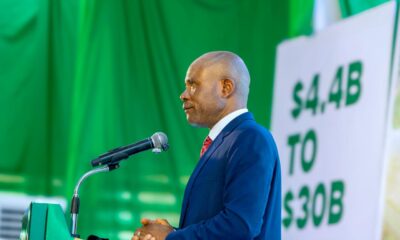
MANIFESTO: Mbah Presents Governance Scorecard, Highlights Enugu’s Progress, Sets $30bn Economic Growth Target
-
Politics3 days ago
UNMASKING THE ALARMISM OF NDC: A CLARION CALL FOR ENUGU’S EXTRA VIGILANCE
-
News14 hours ago
NDC Spokesperson Dismisses Concerns Over Peter Obi’s Health, Attributes Condition to Exhaustion
-
News3 days ago
Enugu APC Accuses NDC of Spreading False Claims Over Amadeo Event Centre Dispute