News
Confusion at Tribunal as Enugu LP misquotes Nkanu East BVAS Codes, lists Igboeze North Codes instead


Labour Party’s petition against Dr. Peter Mbah of the Peoples Democratic Party (PDP) suffered a major setback on Sunday as it misquoted the codes of BVAS machines used in Owo and Ugbawka in Nkanu East LGA during the 18th March 2023 governorship election, listing BVAS codes for Igboeze North LGA instead.
This came on a day the LP closed its case against Mbah’s election.

The Independent National Electoral Commissioner, INEC, which was subpoenaed to produce specific BVAS machines used during the election in some isolated areas, told the tribunal that it had provided all the BVAS requested by LP based on the codes listed on the subpoena.
The BVAS codes as contained in the subpoena served on INEC were 14/08/01/003, 14/08/01/002, 14/08/06/005, 14/08/06,003, and 14/08/17/012, which are all for Igboeze North LGA, not Nkanu East. The sixth BVAS code, being 14/08/009, was however incomplete.
INEC, which was represented by its Public Relations Officer in Enugu, Mr. Victor Okafor, clarified that only five BVAS machine codes were fully listed on the subpoena, while the sixth one, being 14/08/009 was incomplete.

“According to the list in the subpoena, we were mandated to produce five BVAS, and I am here with the five BVAS”, he stated.
Asked if he also brought the BVAS for Owo and Ugbawka I Registration Areas of Nkanu East L.G.A, the REC said INEC BVAS could only be identified by codes and that the electoral body responds only to Codes and not name.
Probed further, he explained: “It is because he (Petitioners’ counsel) did not call out any code numbers, the BVAS machines I have here, are the five code numbers contained in the subpoena”.
Asked if he had BVAS code 14/08/009, he said, “The code is unclear, there is no machine bearing such code”.
The tribunal consequently told the petitioners that the court could not grant them prayers, in this case, BVAS machines not asked for in the subpoena.
It thereafter adjourned to Tuesday 18th July when INEC is expected to open its defence.
Meanwhile, briefing journalists at the end of the sitting, Counsel to Dr. Peter Mbah and 2nd respondent, Alex Iziyon, a Senior Advocate of Nigerian (SAN) said: ” What happened in court today is that the petitioners brought in their remaining witnesses and the court also asked INEC to bring some BVAS machines, which were brought and tendered.
“We also asked REC what transpired during the election and he confirmed that everything went well peacefully and things were in order.
“The five BVAS, which were indicated were brought, but they were over 4,000 BVAS machines in polling units in Enugu State and that was it and the Labour Party closed their case.
When asked about the position of the Subpoena on Owo and Ugbawka in Nkanu East Local Government, he said the petitioner asked for only one polling unit, which was brought to the court.










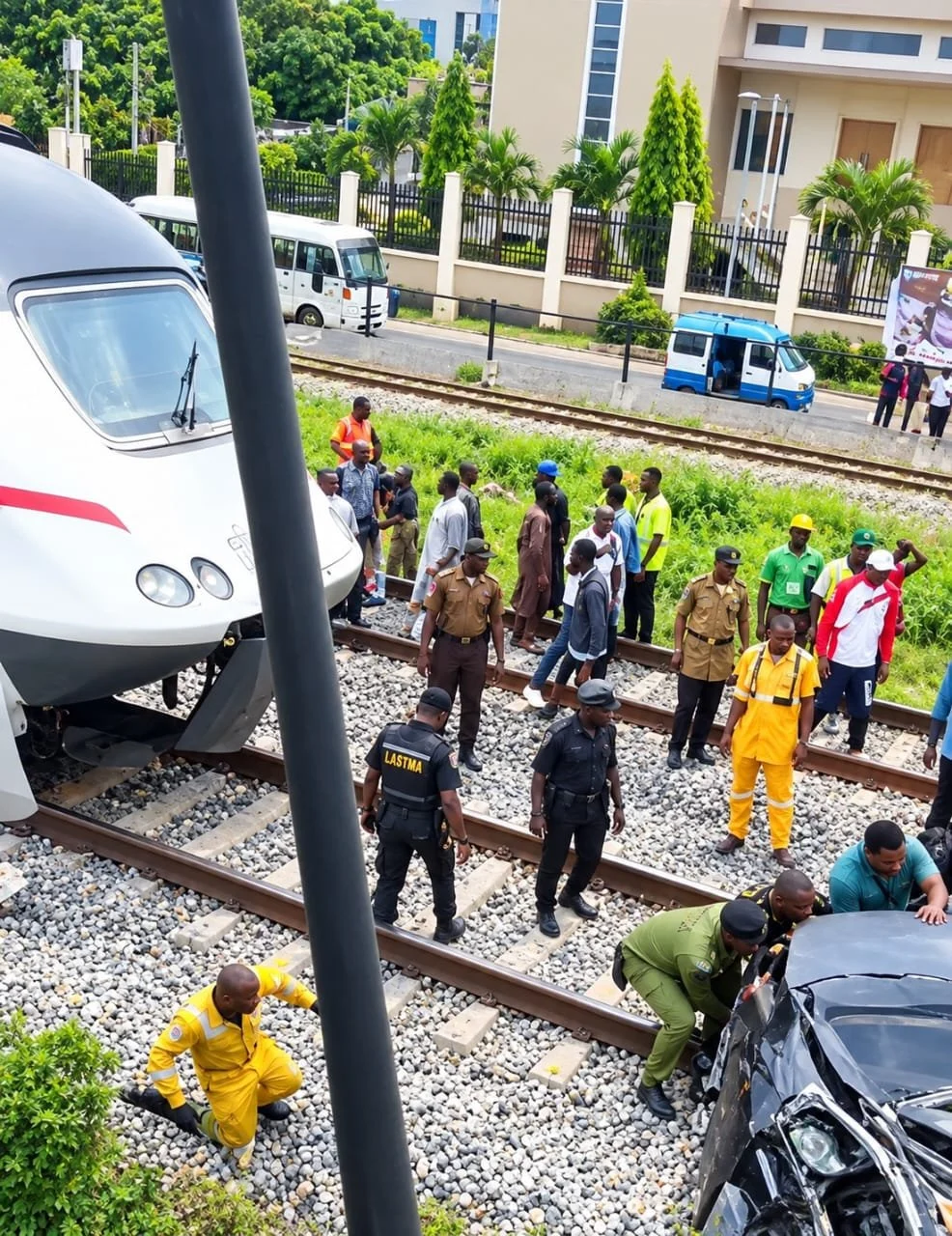
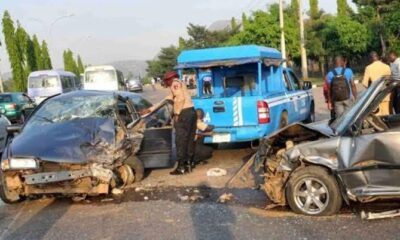
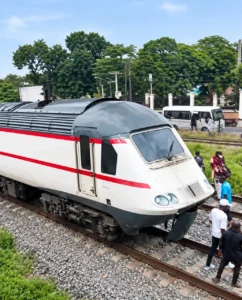
A 55-year-old driver escaped injury after a train rammed into his Honda car at the PWD railway crossing in Lagos.
The accident involved a train heading towards Agege and a Honda car with registrationi number EKY 902 JT, which sustained extensive damage.
The Lagos State Traffic Management Authority said its officials, alongside security personnel, rescued the motorist and cleared the damaged vehicle from the tracks, enabling the train to continue its journey.
Despite the clearance, traffic congestion remained around the PWD area after the incident.
LASTMA said the wrecked vehicle was handed over to security personnel to facilitate an investigation into the circumstances surrounding the collision.
The agency’s General Manager, Olalekan Bakare-Oki, praised the officials and security personnel for their swift response, noting that their joint efforts highlighted the need for effective collaboration during emergencies involving railway lines and adjoining roads.
He advised motorists to be vigilant when approaching railway crossings and areas designated for train movement.
Bakare-Oki cautioned drivers against crossing railway tracks when a train was approaching or in motion, warning that “reckless disregard for railway safety protocols could precipitate devastating and irreversible consequences”.
LASTMA also urged road users to obey traffic rules and railway safety guidelines.
The agency emphasised that “the preservation of human life must remain paramount in all road-use decisions”, adding that responsible driving and compliance with safety instructions were essential to preventing avoidable accidents.
Recall that in March, the Nigerian Railway Corporation announced that 26 passengers and crew members sustained varying degrees of injuries following a train incident along the Abuja–Kaduna rail corridor on Monday.
The Managing Director of the NRC, Kayode Opeifa, said the incident occurred near Asham Station when a loud bang was heard as part of the train formation collided.
He said the Kaduna–Abuja service (KA-2) departed Rigassa Station at 7:15 a.m. and arrived at Jere Station one minute ahead of schedule at 8:52 a.m.
News
Ihejirika lauds Mbah’s infrastructure drive as Coal City University inaugurates Governing Council
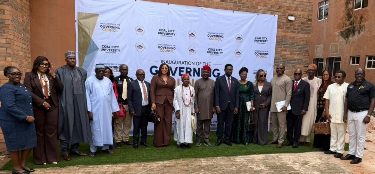
Former Chief of Army Staff, Lt. Gen. Azubuike Ihejirika (rtd.), has commended Enugu State Governor, Peter Ndubuisi Mbah, for his infrastructural development efforts across the state.
Ihejirika gave the commendation in a special message to Governor Mbah during the inauguration of the Governing Council of Coal City University, Enugu, held on Wednesday, October 7, 2026.
The former Army Chief’s commendation came as the university formally inaugurated its new Governing Council, with its chairman pledging to provide strategic leadership aimed at strengthening academic excellence, good governance and sustainable growth.
In his inaugural address, the Chairman of the Governing Council described his appointment as both an honour and a major responsibility, saying the council had been entrusted with the future of an institution impacting thousands of young people.
He commended the Chancellor and Proprietor of the university, Sir Chinedu Ani, for his vision, determination and personal commitment to establishing and developing Coal City University.
ADVERTISEMENT
According to him, building a university requires enormous resources, infrastructure, courage and perseverance, stressing that universities remain critical to nation-building because they prepare young people for employment, responsible citizenship and leadership.
The council chairman said the new Governing Council would work closely with the Chancellor, Vice-Chancellor and management to ensure that the university remained faithful to its founding vision.
He identified five major principles that would guide the council: academic excellence; good governance and accountability; student development; institutional growth and sustainability; and preservation of institutional values and integrity.
He said the university would support initiatives aimed at strengthening teaching, research, innovation and scholarship, while promoting transparency, prudent management of resources and adherence to regulatory standards.
On student development, he stressed the need to produce graduates who combine intellectual excellence with discipline, integrity, entrepreneurship, creativity, leadership and respect for human dignity.
The chairman also noted that the higher education sector was changing rapidly due to technology, artificial intelligence, evolving workplace demands, research and innovation.
He therefore called for stronger partnerships, international outlook, research capacity, infrastructure development and financial sustainability to enable Coal City University to anticipate and respond effectively to emerging challenges.
He further warned that the reputation of the university would depend not only on its physical infrastructure but also on the integrity, professionalism, fairness and accountability of members of its community.
The council chairman assured the university’s management of the council’s support while emphasising that the governing body would respect the distinction between governance and administration.
He charged the Vice-Chancellor and principal officers to maintain high standards of excellence, transparency and accountability, while commending members of staff for their contributions to the development of the institution.
He also urged students to take full advantage of the opportunities offered by the university, pursue knowledge with seriousness and cultivate discipline and integrity.
He said the long-term ambition should be for Coal City University to gain recognition for the quality of its graduates, relevance of its research, integrity of its leadership and positive contribution to society.
The chairman expressed appreciation to the Board of Trustees and the Chancellor for the confidence reposed in the newly inaugurated council and prayed for wisdom and courage for its members.
The event was attended by the Chancellor and Proprietor of Coal City University, Sir Chinedu Ani; the Vice-Chancellor; members of the Board of Trustees; principal officers; members of the newly inaugurated Governing Council; university staff and other distinguished guests.
The event ended with prayers for the continued growth of Coal City University, the development of Enugu State and the progress of Nigeria.
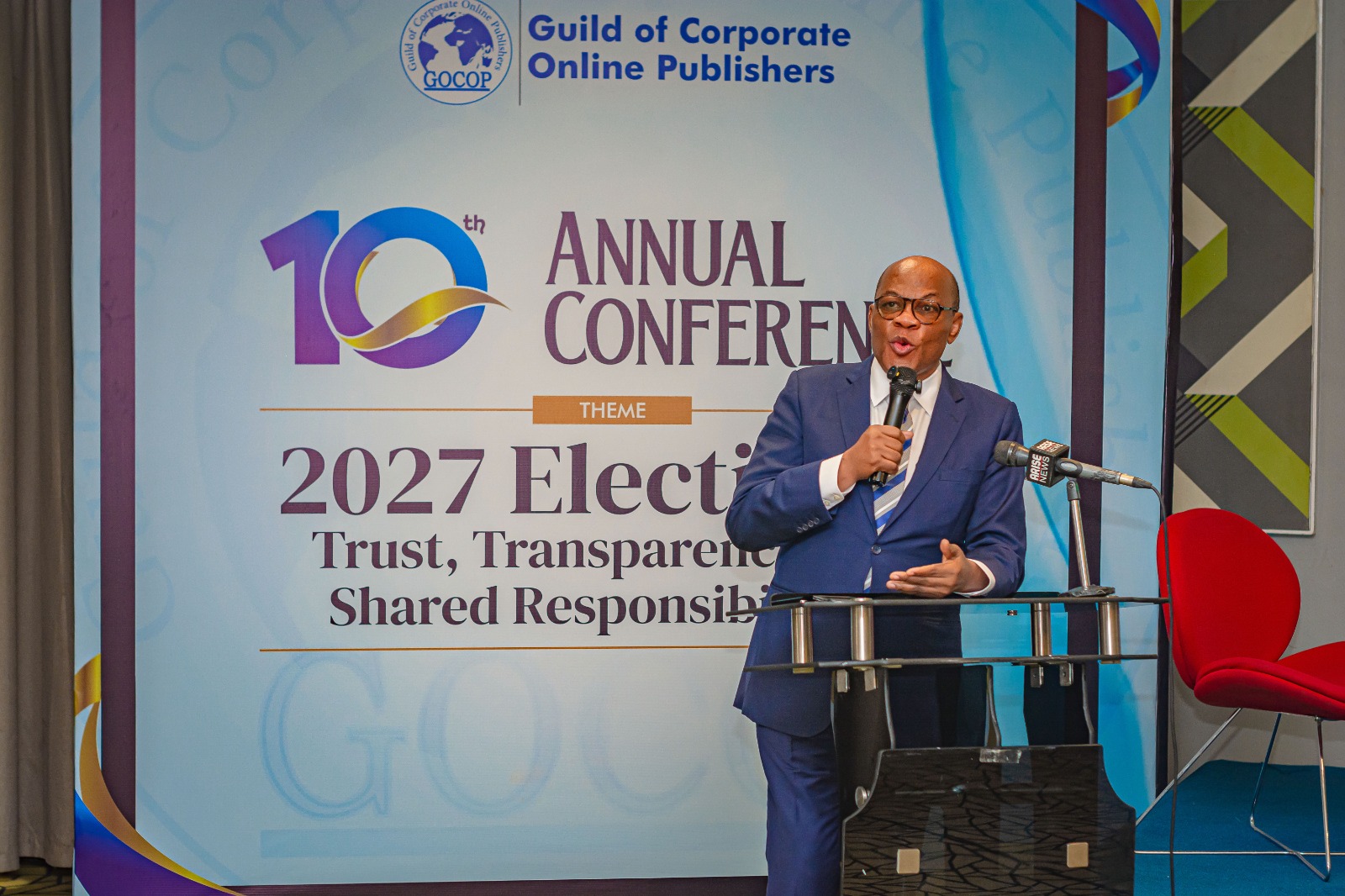
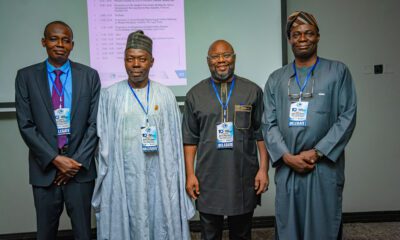
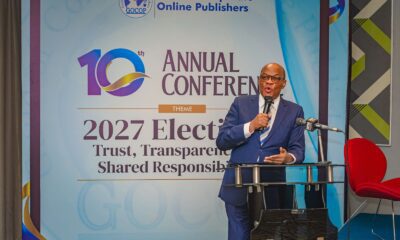
Agbakoba, a former President of the Nigerian Bar Association, made the call at the GOCOP Conference held on Thursday at the Radisson Blu Hotel, Ikeja, Lagos, with the theme, “2027 Elections: Trust, Transparency and Shared Responsibilities.”
He said that while the Electoral Act gives the Independent National Electoral Commission (INEC) authority to announce election results at different levels, Section 39 of the Constitution gives the press the right to obtain and disseminate information.
Agbakoba urged GOCOP and the wider media community to seek judicial clarification on the matter, drawing a comparison with recent legal action by some American media organisations over access to the White House.
“Media will not be gagged. The Rule of Law won in the US case, so test it in Nigeria.”
He also pointed to exit polls and the media’s role in reporting the choices made by voters, arguing that the media should be able to report election-related information within the limits of the law.
Agbakoba said every Nigerian should regard himself or herself as a shareholder in “Nigeria PLC”, with the 2027 general elections serving as an annual general meeting in which citizens would assess the direction of the country.
He also said economic hardship was likely to be a major issue in the 2027 elections, citing the sharp increase in the cost of essential medicines as an example of the pressure facing Nigerians.
In his welcome address, GOCOP President, Danlami Nmodu, mni, said the conference came at an important time as Nigeria approaches the 2027 general elections.
Nmodu said the theme reflected GOCOP’s contribution to democratic development and the need for trust in institutions, transparency in the electoral process and shared responsibility for credible elections.
“As the country moves towards another general election, there is a need for trust in institutions, transparency in the electoral process, and a clear understanding that responsibility for credible elections does not belong to one institution or one group alone.”
He said journalists had a responsibility to scrutinise both the government and the opposition and to report facts fairly and accurately.
“We must report facts and be fair and balanced. Credible journalism is one of the ways we can contribute to a healthy democratic process.
“I also call on government to do more to tackle insecurity, enhance peace, and support economic activity. Better security will give our people greater opportunity to work, invest, and improve their lives.”
In a goodwill message, Imo State Governor Hope Uzodinma, represented by the Commissioner for Information, Declan Emelumba, urged the media to remain objective and focused on facts in its coverage of the electoral process.
He said the media had an important role to play in informing Nigerians about the conduct of elections and used the opportunity to highlight the achievements of his administration in Imo State, including its plans to develop the state as a digital and industrialised economy.
-
 Editorial3 days ago
Nigeria’s Roads: Where a Driver’s Licence May Not Mean a Driver Can Drive
-
News2 days ago
Over 1,000 Islamic clerics ask Tinubu to drop 2027 re-election bid
-
Features2 days ago
TWENTY YEARS IN MEMORY: MARIA UKAMAKA IFEOMA OJUKWU
-
News2 days ago
Military, DSS, police rescue 20 NYSC corps members, civilian in Imo
-
News2 days ago
GOCOP Trains Members On Deployment Of AI Tools to Boost Efficiency, Profitability
-
News3 days ago
Mbah Constitutes Development Centres Across Enugu, Appoints New Coordinators (FULL LIST)
-
News2 days ago
Gov Mbah Seeks National Emergency in Education, Launches Enugu Education Policy
-
News1 day ago
Enugu Secures $200m Investment for 100MW Solar Power