Health
Buhari signs Mental Health Bill into Law …Psychiatrists hail action

Decades after mental health regulatory reforms have languished in the legislative chambers with failed attempts at overhaul in 2003 and 2013; President Muhammadu Buhari has finally signed into law the Mental Health Bill harmonised by both Houses of Assembly in 2021.
The signing which seems to be a parting gift to Nigerians from the president is also the 1st Mental Health Act/ Law post Independence and will also replaced the Lunacy Act of 1958.

It could be recalled that in 2019, the mental health legislation was advanced, with the Senate passing it for second reading and holding public hearings in 2020.
On the 28th of November, 2022, the National Assembly passed the National Mental Health Bill, 2021, and forwarded it to President Buhari for consideration and assent last week, according to a memorandum by the Clerk to the National Assembly.
The President of the Association of Psychiatrists of Nigeria, APN, Prof Taiwo Obindo, who confirmed the Presidential assent, described it as a great relief adding “this is a victory for Mental Health Care and practice in this nation.

“A final culmination to over two decades of several efforts by the Association of Psychiatrists of Nigeria now has an Act/Law on Mental Health governance and we are now part of the global space with best global practice,” he stated.
Also, speaking, immediate past President of APN, Prof Taiwo Shielk expressed gratitude to God Almighty that the Mental Health Bill has been signed into law by The President and Commander In Chief of FRN. Congratulations to APN for our tenacity and advocacy for the voiceless.
“Our profound gratitude to Senator Dr. Ibrahim Oloriegbe, Senator Ahmad Abubakar, Dr. Ibrahim Gambari (COS), CBM International, Johnson & Johnson and all our partners. After several attempts, by His Grace we finally reached the milestone.
“We pray that The Lord will reward all those who contributed to the success of this project.”
According to psychiatrists, the law will help replace the Lunacy Act of 1958, which practitioners condemn as outdated and inhumane.
Some provisions of the National Mental Health Bill include creating a Department of Mental Health Services in the Federal Ministry of Health and a Mental Health Fund.
It will help to establish human rights protections for those with mental health conditions, such as banning discrimination in housing, employment, medical, and other social services.
Improving care by guaranteeing those receiving treatments have the right to participate in formulating their medical plans and eliminating forced treatment, seclusion, and other methods of restraint in facilities, additionally, expanding community-based coverage.
The law will also address the way and manner mentally ill populations are to be catered for without stigma or discrimination and also form global best practices in enshrining the human right of the mentally ill, how care can be accessed, and outlawing chaining or other forms of coercion.
The law, among other benefits, will help in making access to care for the mentally ill easier and ensuring that the human rights of the mentally ill are enforced.
It will also help in regulating the activities of mental health practitioners and eliminates stigma and discrimination.
It will also help in addressing the issue of funding for mental health care in Nigeria.



• Eight deaths recorded in Irele LG
The Ondo State Government has confirmed more deaths in connection with the consumption of suspected poisonous alcoholic drinks in Odigbo Local Government Area.
The Commissioner for Health, Banji Ajaka, told journalists on Wednesday in Akure, the state capital, that 49 fatalities have now been reported, as against 39 reported last week.
The government also said the cases increased from 60 to 170 as of last Friday.
Mr Ajaka said some incidents have been reported in the Irele Local Government Area, with eight fatalities recorded in the area.
The Health Commissioner for Health, while giving an update on the situation, said that health authorities were intensifying surveillance, case management and contact tracing to contain the outbreak and identify the source of the poisonous substance.
He expressed concern that while eight of the deaths were recorded in Irele, the overall number of people affected across the areas by the incident has risen to 170.
He said the government was yet to relent in its efforts to establish the source of the substance, adding that investigators were examining whether the poisoning originated from a single source or multiple sources.
According to Ajaka, teams had been deployed to the affected communities to monitor the situation, manage cases and trace the source of the suspected poisonous substance.
He said the state government was also working with security and regulatory agencies, including the National Agency for Food and Drug Administration and Control, National Drug Law Enforcement Agency, Department of State Services, Nigeria Security and Civil Defence Corps and other relevant agencies.
Ajaka said the matter was discussed at a national meeting involving commissioners for health across the country and officials of the Nigeria Centre for Disease Control and Prevention, where Ondo State’s rapid response in surveillance, case management and tracking was commended.
He said the government would continue its investigation until the source of the poisoning was established.
The latest figures came after the commissioner had earlier disclosed that 29 people had died in connection with the suspected poisoning in Odigbo Local Government Area, with 121 persons affected at that stage.
Ajaka had linked the Odigbo outbreak to locally produced alcoholic and alcoholic-herbal substances consumed during two naming ceremonies in the affected communities.
He said investigations showed that an individual who was not a member of one of the families hosting a naming ceremony procured the substance and brought it to the event for guests to consume.
The affected communities previously identified in Odigbo include New Town, Odole, Okele, Orita Odigbo, Araromi-Obu and Oniparaga.
Following the outbreak, the state government banned the production and sale of locally brewed alcoholic and alcoholic-herbal beverages in Odigbo Local Government Area as a precautionary measure.
The commissioner also confirmed the arrest of a suspect in Araromi-Obu in connection with the production and distribution of the substances.
Ajaka warned residents against consuming unregulated alcoholic and herbal preparations, stressing that substances promoted for medicinal purposes could also pose serious health risks if their contents were unknown or unregulated.
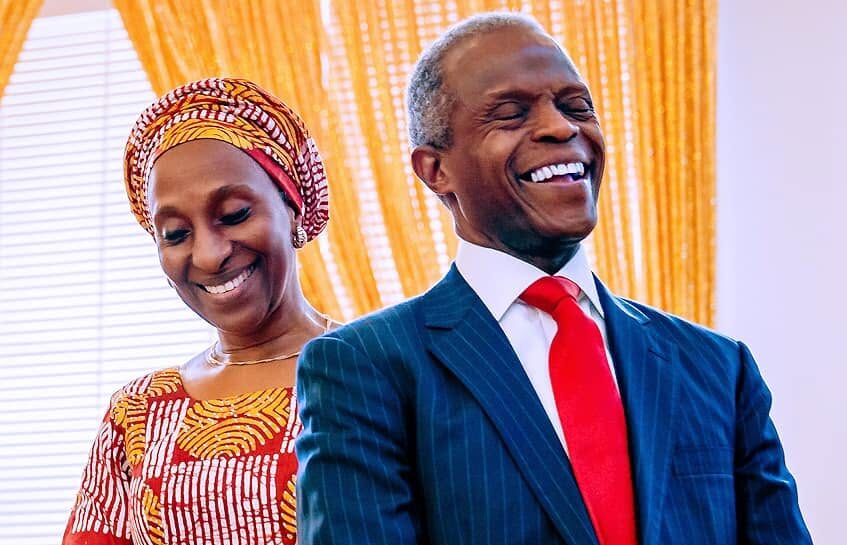
Former Vice-President Yemi Osinbajo has raised concerns over the use of dangerous chemicals in ripening and preserving fruits, recounting how a laboratory test found his wife’s freshly squeezed orange juice “not fit for human consumption”.
Osinbajo spoke at the Open Day for Gardeners’ Seminar themed “Leaving the Earth Better Than We Found It”, held in Lagos on August 28, with a video of the event shared on his YouTube channel on Wednesday.
Osinbajo said his wife, Dolapo, developed frequent headaches after she began drinking freshly squeezed orange juice every day.
“Dolly, my dear wife, likes to have a full glass of freshly squeezed orange juice every day, a very healthy habit, by the way, especially since she stopped consuming any form of carbonated drinks many years ago,” he said.
“But then after a while she started having some strange headaches drinking her fresh juice every day. Then she checked everything she was eating and drinking, and we were wondering what could the cause of this be?”
He said they initially ruled out the orange juice because it was considered a healthy drink.
“We assumed, of course, it couldn’t be the ‘healthy’ orange juice,” he said.
“The results came back. It showed the orange juice, freshly squeezed, was not fit for human consumption.”
Osinbajo attributed the result to the use of harmful chemicals by some farmers and fruit sellers, warning that the problem could expose Nigerians to health risks.
His words, “Apparently farmers use dangerous pesticides for fruits and vegetables, and fruit and vegetable sellers use very dangerous chemicals sometimes to ripen or preserve fruits and vegetables.”
“Calcium carbide is used very frequently to force fruits such as bananas, mangoes, pawpaws and tomatoes to change colour and look ripe very quickly,” Osinbajo added.
The former vice-president cited studies from different parts of the country which he said had documented the use of chemicals among some fruit sellers.
He referenced a 2024 study in Ado-Ekiti, Ekiti State, where, according to him, half of 20 fruit sellers interviewed admitted using calcium carbide. Similarly, another study in Uyo, Akwa Ibom State, where 25 per cent of fruit sellers reportedly admitted to using the chemical to ripen fruits.
Osinbajo further referred to a 2023 survey in Lagos, saying 22 out of 50 fruit retailers admitted using chemicals to preserve their produce.
“These were the ones who agreed they do,” he said.
His call comes amid growing concerns over the proliferation of counterfeit and substandard products in Nigeria, with NAFDAC and SON facing increased pressure as Nigerians use social media to expose food, drugs, cosmetics and other consumer goods suspected to be dangerous.
…Set to launch hospital, targets large share of medical tourism
_…Facility attracts outpouring of interest from diaspora medics
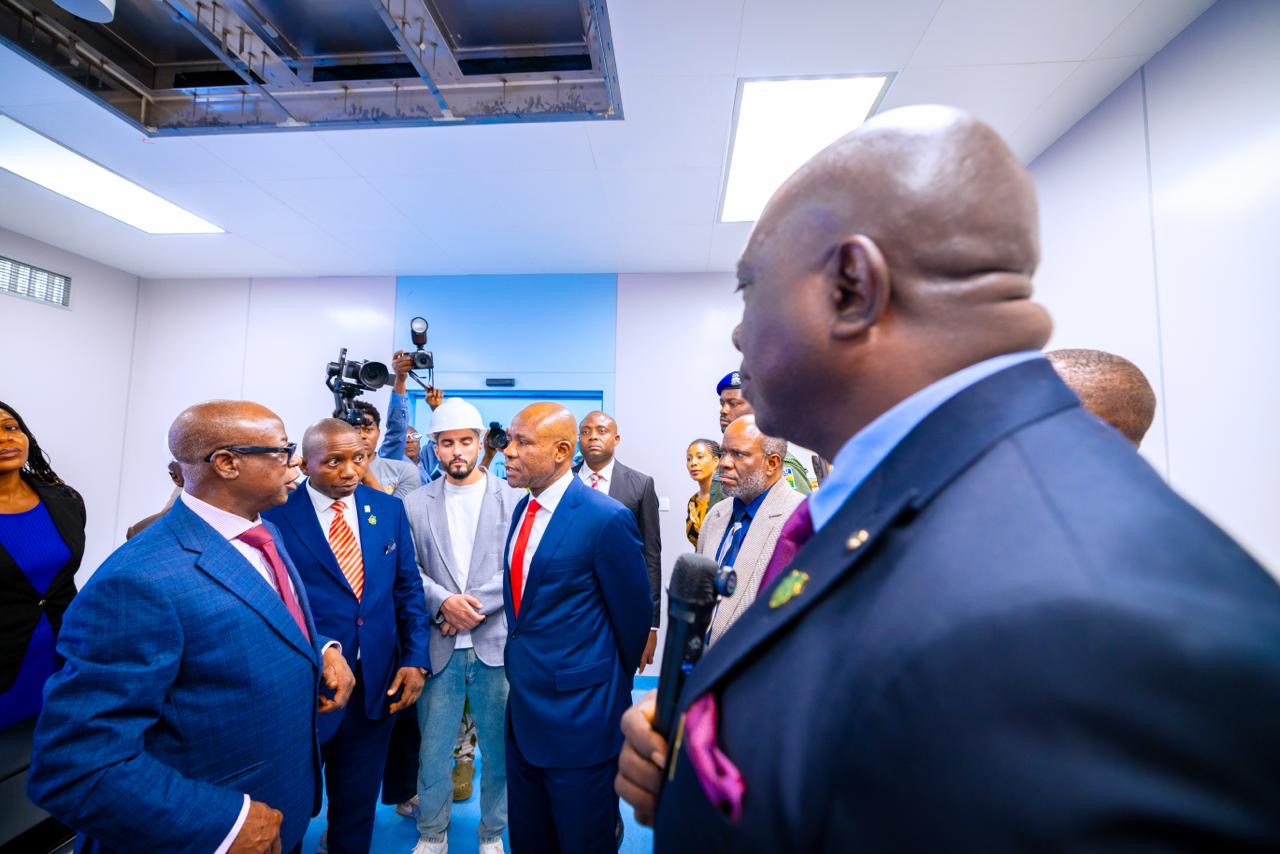
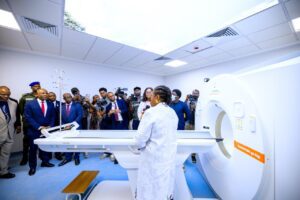
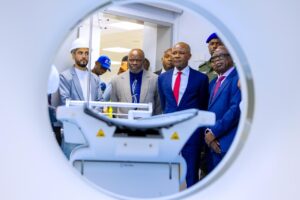
Ahead of the imminent inauguration of the Enugu International Hospital, Governor Peter Mbah of Enugu State has undertaken a tour of the facility, declaring that Enugu State was ready to welcome the world.
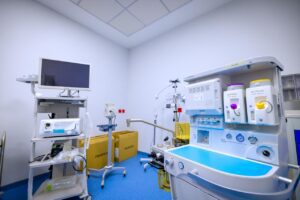
Mbah said the hospital was now fully installed with state-of-the-art medical equipment and would help to reverse medical tourism out of the country, ensuring that the state secures a large chunk of the multibillion-dollar market.
Fielding questions from newsmen on Thursday evening after a pre-launch walkthrough of the facility situated at Rangers Avenue, Independence Layout, Enugu, Mbah said the hospital was a product of a deliberate health agenda.

“If you recall our manifesto during our campaign for office, we made it clear that we were committed to making Enugu a medical tourism hub on the continent.
“We knew the size of that market and wanted to have a good share of that market. But we knew also that it was never going to be wished into existence.
“We knew that we needed to do things differently and build a world-class facility and, most importantly, attract top-notch professionals to provide services. We cannot wait to welcome the world to Enugu,” he stated.
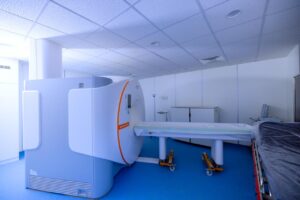
Mbah regretted that there was just about one functional location for PET Scan services in the country, but noted that the hospital would now bridge the wide gap in advanced medical services in the country.
“We have quite a lot of Ndi Enugu, and Nigerians who travel to India, Turkey, the United States, and the United Kingdom to seek medical attention. So, what we are asking for is just a fraction of what they would have spent overseas for the same quality services,” he said.
“We felt that if we want to compete globally, then we must also have the ability to provide advanced oncology services. Therefore, we are not only able to give you an advanced diagnosis, but we’re also able to treat. So, both diagnostically and therapeutically, the place to come to is right here in Enugu.
“We have also received an outpouring of interest from our healthcare professionals in the diaspora. Some of them were doing well here at some point and now went overseas to practice. They are now happy to come back home and give back to the society that nurtured them. We are excited about that,” he stated.
He added that the Enugu International Hospital would equally engage in telemedicine as one of its areas of strength.
“Of course, you may be in love with the building and the equipment, but you should also engage professionals from across the globe. You see this in our commitment to telemedicine, digital and electronic medical practices and equipment,” he explained.
He emphasised that the hospital was part of his administration’s agenda for the health sector as a major part of his government’s vision to grow the state’s economy from $4.4bn to $30bn, and ensure high quality and increased life expectancy for the people.
“If you look at our intervention in the healthcare sector, from the primary healthcare to the secondary, tertiary, and now the quaternary, it is intentional.
“We are investing heavily in security and healthcare because we know that these are what investors would ask you: ‘Am I safe? If I fall sick, would I have a place where I can get quality medical attention?’” he said, adding that the hospital would also create jobs.
Speaking, the Chief Executive Officer, Prof. Sam Agwu, listed six specialty areas the hospital would provide services in once commissioned.
“We have earmarked six specialty centres here. In the Cancer Centre, we are going to provide medical, surgical, and nuclear medicine therapeutics and diagnostics.
“Then we are going to have the Heart and Vascular Centre of Excellence to deal with all heart problems and open-heart surgery, as you may know; cardiology consultation and diagnostics, electrophysiology and arrhythmia care, coronary care and acute cardiac pathways, interventional cardiology and cath-lab procedures, heart-failure and cardiac rehabilitation clinics, and of course vascular assessment and collaborative surgical care.
“We are going to have the Neurosciences Centre where we will deal with stroke, epilepsy, brain and spine tumours, neurosurgical procedures, among others.
“We are going to have a Renal and Transplant Centre of Excellence covering full kidney, chronic kidney disease clinics, early nephrology review, dialysis support and transplant assessment.
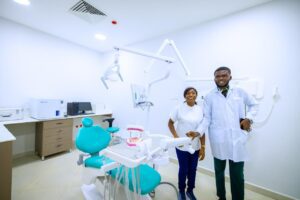
“Then, apart from all the centres of excellence, we are going to have wellness and regenerative medicine, while the usual departments that you know of – mother and child, general surgery, ENT, dental, ophthalmology, among others – will all be here.
Former Chairman of the Nigerian Medical Association, Enugu State, Dr. Sunday Nwafor, hailed the milestone, saying the hospital would promote brain gain by reversing the mass exodus of medical doctors from the country.
“Going forward, our doctors have a place of international standard where they can practice with state-of-the-art equipment and also earn well,” he said.
Mbah was accompanied by the Commissioner for Health, Prof. George Ugwu, among others.
MORE PHOTOS



-
 Faith3 days ago
BREAKING: Anglican Church Places Archbishop Ibezim on Six-Month Leave, Bars Him From Church Duties
-
News3 days ago
Gunmen Abduct Catholic Priest in Benue, Police Launch Rescue Operation
-
News3 days ago
Tinubu Orders Rescue of Kidnap Victims, Demands Peaceful 2027 Elections
-
Faith1 day ago
Awka Anglican Diocese Rejects Ibezim’s Suspension, Threatens to Leave Church of Nigeria
-
News1 day ago
BREAKING: Mbah Extends Enugu Movement Restriction to 10pm, Scraps Keke Ticketing
-
Politics23 hours ago
Nigeria’s Weak Opposition and the Cost of One-Party Dominance: Can the Opposition Rebuild Before 2027?
-
News1 day ago
2027: Keke Riders Endorse Mbah, Tinubu
-
News2 days ago
Enugu Approves ₦32bn Legacy Gratuity Payment, Begins Disbursement Next Week