News
All govt payments must be cashless from March — NFIU

• Says only President can grant waiver for excess cash withdrawal
• Payments for whatever purpose from public treasury affected by new guidelines

• Embassies, devt partners, others affected
• Violators to face money laundering, corruption charges
• As FG withdraws N225bn; states N701bn; LGAs N156bn cash from 2015 till date

• State govts react
The Federal Government on Thursday served a notice to the three tiers of government that all payments from the public treasury beyond the threshold approved for daily cash limit by the Central Bank of Nigeria must be done electronically with effect from March 1, 2023.
In effect, the Nigerian Financial and Intelligence Unit, NFIU, which made the announcement, warned that anyone who flouts the new guideline would be charged in accordance with relevant instruments on money laundering and corruption operating in the country.
The notice generated mixed reactions from some state governments. While some saw it as necessary, others kicked against it.
However, the Director of NFIU and Chief Executive Officer, Mr Modibbo Hamman Tukur, who made the pronouncements at a briefing in Abuja, warned that with the publication of the new guidelines, cash withdrawals from public accounts had been prohibited by the requirement of the laws under reference, while the payment of estacodes and overseas allowances to civil and public servants in cash had also been outlawed.
Sanctions and penalties
The NFIU boss also warned that any public office at the federal, state and local government levels, who flout the new cash policy, would face the full weight of the law, irrespective of his/her position.
The NFIU said: “It is hereby stated clearly that any individual or corporate body who violates the provisions of these guidelines is in direct contravention of provisions of Section 2 of MLPPA, 2022, Section 13 of MLPPA, 2022, NFIU Act, 2018 and Section 26 of POCA, 2022, and their attendant principles and interpretations and will be liable to necessary prosecution and penalties from the effective said date. Cash withdrawals from public accounts would be treated as a money laundering offence.
“Also, it is hereby provided that any public officer or any citizen who comes into contact with the provisions of these Guidelines with its attendant principles shall as a matter of obligation promote the implementation and success of the guidelines.
Take-off date
“The effective date for the enforcement and/or implementation of this guideline by all public authorities, institutions and organizations in the financial sector, financial institutions and designated non-financial institutions is March 1, 2023.”
Exceptions
The NFIU, however, gave one condition under which a public officer might be allowed to withdraw more cash than is allowed under the law, saying only the Presidency could provide such a window.
According to Tukur, the waiver to withdraw more daily cash than approved by the CBN, can be granted by the Presidency, based on exigency.
He explained: “There is nothing in these guidelines to suggest or indicate there is reason to compel or warrant a public official at federal, state and local government to go to a financial institution to withdraw cash. In the unlikely event that a public official feels he may need cash withdrawal, he may apply for approval for a waiver from the Presidency which may be granted on a case-by-case basis.
“Under no circumstance, shall any category of public officers be given a standing or continuous waiver to withdraw cash from any public account in any financial institution or designated non-financial institution.
“The application of these guidelines includes all foreign missions operating in Nigeria, accounts of all development partner institutions, and the accounts of all instituted funds in form of independent funds to be operated as mutual funds such as insurance funds, cooperative funds, brokerages funds, political party funds or pressure group/union funds, once the funds are designated to exist as funds or to operate independently for management and/or investment.
“By these guidelines, the local government’s N500,000 cash withdrawal limit with regards to public accounts and instituted funds are hereby discontinued. These guidelines supersede and repeal the N500,000 cash withdrawal limit of local government funds and also, since it is for criminal purposes, supersedes the CBN’s regulation on cash withdrawal limit with regards to public accounts and instituted funds”.
Why the guidelines became imperative
The NFIU explained that the application of the new measures became necessary to enable Nigeria to comply with the Enforcement, Guidelines and Policies for the Mitigation of Money Laundering, Terrorist Financing, Proliferation of Weapons and Prevention of Predicate Crimes.
Tukur said: “In considering the provisions and enforcement requirements of the law, particularly Sections 2 and 13 of the MLPPA, 2022, Section 26 of the Proceeds of Crime (Recovery and Management) Act, (POCA) 2022, and the Central Bank of Nigeria (CBN) circular on the revised cash withdrawal limits, issued pursuant to its powers under the CBN Act, 2007, and Banks and Other Financial Institutions Act, 2020, the NFIU noticed in the process of its financial transactions analysis that civil servants are becoming more and more vulnerable to money laundering and its predicate offences due to their exposure to cash withdrawals from public accounts.
“Although this guideline is meant to enforce the provisions of Sections 2 and 13 of MLPPA, 2022, to discontinue cash withdrawal from public accounts and establish a clear audit trail, and mitigate corruption and other vices in public expenditure; it is also aimed at supporting law enforcement and the entire criminal justice system by strengthening transparency in the investigation.
“According to NFIU analysis covering the period 2015 to 2022, the Federal Government withdrew N225.72 billion cash; state governments, N701.54 billion cash; and local governments, N156.76 billion cash.
“The cash withdrawals directly contravene the provisions of the MLPPA, 2022 and the Proceeds of Crime (Recovery and Management) Act, 2022 (POCA, 2022) which provide the legal framework setting limitations on cash transactions and sanctions for infringement of the provisions.
“Section 2 of the MLPPA, 2022 restricts cash payments of a sum exceeding N5 million (or its equivalent) for individuals, and N10 million or its equivalent for a body corporate. Section 19 of the MLPPA, 2022 imposes a fine of at least N10 Million or imprisonment for a term of at least three years (or both), in the case of individuals; and a fine of N25 million in the case of a body corporate. Section 26 of POCA, 2022 makes provision for the seizure and detention of cash over the prescribed amount under the law.
“Most cash withdrawals from public accounts are in excess of N5 million and N10 million respectively which is prohibited and liable to imprisonment upon conviction.
‘’The breach of this particular provision became so rampant because there are heavy withdrawals of cash from public accounts necessitated by inflation and changes in the economy, and also due to payment for overseas travels in terms of estacode and other overseas allowances.
“By the principles of Section 2 (Cash Transaction Outside Financial Institutions Limit), and Section 13 (Use of New Products, Business Practices and New Technologies) of the MLPPA, 2022, cash withdrawals must be prohibited in order to mitigate the risk of exposure of public servants to these crimes and protect the financial system from continuous abuse.
“In the meantime, this is not only indicting chief accounting officers of Ministries Departments and Agencies (MDAs) but in the context of Nigeria’s democracy, it gives room for adversaries, political opponents and antagonists to exploit the law against their competitors, or to their individual political advantage.
“Considering the provisions of Section 13 of the MLPPA, 2022, which depicts that in the light of the vulnerability stated above and risk, there must be a redesign of products and technologies to respond to new circumstances and developments which directly apply in this particular case, for the protection of the innocent public servants against terms of imprisonment. Convictions on account of Section 2 of MLPPA, 2022 were becoming frequent in the law courts.
“Sections 3(1)(e), (n), and (l) as well as 23(2)(a) of the NFIU Act empowers the Unit to respond in line with our primary duty and issue guidelines, advise, monitor and report compliance on this to law enforcement and prosecutorial authorities. We support the CBN circular on cash withdrawal limit which is in harmony with the law, provided in Section 2 of MLPPA, 2022. This guideline will support the efforts of the CBN.
No big deal about the cashless transaction —Lagos govt
Reacting to the notice yesterday, the Lagos State government described the planned introduction of a cashless policy as a welcome development, saying the state had always been implementing the policy.
The Commissioner for Information and Strategy, Gbenga Omotoso, said: “Lagos State government has always been in support of the cashless policy.
“It’s not a new thing to us because we have always been on a cashless policy from inception. Not a big deal to us in Lagos.”
We’ll embrace any developmental policy, says Adeleke’s spokesman
When contacted, Governor Ademola Adeleke of Osun State, who spoke through his spokesperson, Mr Olawale Rasheed, said the young administration in the state is willing to embrace any policy that will enhance the growth and development of its people.
He added that the new government had plans to invest in technology innovation to ensure ease of doing business,, hence it would not shy away from embracing the policy if it aids it agenda.
His words: “Well, ours is a young administration and we are still studying the details of the policy. However, we have plans for technology innovation and, in the interest of the development of our people; we are willing to embrace any policy that will enhance the quality of life of our people. If this policy will enhance business and investment in the state, we will be part of it.”
Bayelsa govt faults policy
On his part, Bayelsa State deputy governor, Senator Lawrence Ewhrudjakpo, faulted the monetary policy of the Central Bank of Nigeria on daily cash withdrawal limits, noting with concern that the policy would not favour predominantly rural states as Bayelsa because of the absence of banking services in the rural areas.
His words: “The current monetary policy is not in favour of those of us who are more of a rural state, as Bayelsa. This policy will not do well for us for now. So, we pray the Federal Government to reverse the policy and encourage the free flow of cash in order not to further stifle our fragile economy.”
Vanguard




The Senate on Thursday called for an investigation into the circumstances surrounding the death of a corps member, Etimbuk Daniel, at an NYSC orientation camp in Enugu.
The resolution followed a motion of urgent public importance moved by Sen. Aniekan Bassey (APC-Akwa Ibom North-East) during plenary.
Bassey said the Senate received with shock and profound grief the news of Daniel’s death while undergoing the mandatory National Youth Service Corps (NYSC) programme in Enugu.

Etimbuk Daniel
He described the deceased as an outstanding student leader and former Students’ Union Government (SUG) president of Akwa Ibom State University who had embarked on national service.
Bassey expressed concern over reports that Daniel died following complications from a minor headache after allegedly experiencing delays in receiving adequate medical attention at the camp’s clinic.
He said the incident raised concerns about healthcare services in NYSC orientation camps, particularly the availability of qualified medical personnel, functional facilities and effective emergency referral systems.
The senator said the reported lapses highlighted the need to review healthcare delivery in orientation camps to prevent similar tragedies and protect corps members.
He emphasised that the government had a constitutional responsibility to safeguard citizens’ welfare, adding that young graduates mobilised for national service deserved adequate medical care throughout their service.
Bassey said Daniel’s death had plunged his family, the Akwa Ibom State University community and the entire state into mourning.
Seconding the motion, Sen. Mohammed Monguno (APC-Borno North) supported the call for an investigation, emphasising the importance of establishing the circumstances surrounding Daniel’s death and ensuring accountability.
The Senate observed a minute of silence in honour of the deceased and prayed that God would grant his family the strength to bear the loss.
It also called for a thorough investigation to establish the facts surrounding Daniel’s death and determine whether negligence contributed to the incident.
The Senate directed its committees on Police, Judiciary, Human Rights and Legal Matters, Youth Development, and Health to investigate the matter alongside the Nigeria Police Force and the Department of State Services (DSS).
Deputy Senate President Barau Jibrin, who presided over the proceedings, thanked Bassey for bringing the matter before the Senate and urged the relevant committees to conduct a thorough investigation. (NAN)
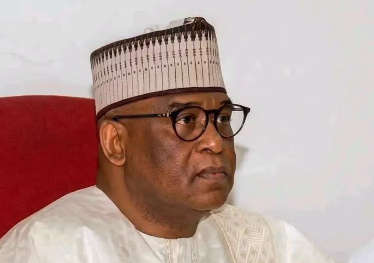
Senator Abdul Ningi has recounted how his colleague, Bello Mandiya, reportedly died after slipping in his bathroom and hitting his head, with his body discovered about 72 hours later in his Abuja residence.
Ningi, who represents Bauchi Central Senatorial District, said neighbours discovered Mandiya’s lifeless body after a foul smell began emanating from his apartment and residents became concerned about his prolonged absence.
Speaking during a Senate plenary session, Ningi said he was in Saudi Arabia when he received a telephone call from his son informing him of Mandiya’s death.
He said his son was among those who discovered the former lawmaker’s body on Monday, September 7, 2026.
Recounting the events leading to the discovery, Ningi said a colleague had last seen Mandiya at about 11am on Friday, September 4, before the former senator returned to his residence, where he lived alone.
According to him, Mandiya was preparing to attend the Friday congregational prayer when he reportedly slipped and hit his head after bathing.
“He brought out his cap, his phones, and put them on the bed, and went into the bathroom to take his bath,” Ningi said.
“After taking his bath, when he was out of the bathroom, then he slipped and knocked his head in the bathroom.”
Ningi said nobody realised what had happened until the stench from Mandiya’s apartment began spreading to neighbouring properties.
“For 72 hours, Mr President, nobody knew where Bello Mandiya was,” he told the Senate.
He said the chief imam of Apo also raised the alarm after noticing that Mandiya, who regularly joined other Muslims for the five daily prayers, had been absent for three consecutive days.
The combination of the imam’s concern and the foul smell prompted residents to investigate the apartment.
Ningi said those who went to the residence eventually broke open the door and found Mandiya’s body in the bathroom.
“And there lies Bello Mandiya in the bathroom, lifeless. Seventy-two hours, and that’s a simple tragedy,” he said.
Expressing sadness over the circumstances of his colleague’s death, Ningi said the incident highlighted the uncertainty of life, noting that nobody could predict when death would come.
He also expressed condolences to Mandiya’s family, the people of Katsina State and the constituents he represented in the Senate.
Before his election to the Senate, Mandiya served as chief of staff to former Katsina State Governor Aminu Bello Masari.
He was elected in 2019 on the platform of the All Progressives Congress to represent Katsina South Senatorial District and served in the ninth National Assembly until 2023. He also chaired the Senate Committee on Water Resources.
Mandiya’s death prompted tributes from political leaders and former colleagues, who remembered him for his contributions to public service in Katsina State and at the national level.
Ningi, who said he had known Mandiya since 2002, described the loss as a reminder that political office, wealth and social status could not shield anyone from the fragility of life.
“There is nothing permanent about anything. Nothing permanent about our position, nothing permanent about our wealth,” he said.
He prayed for Allah to grant the deceased eternal rest and give his family the strength to bear the loss. (Daily Trust)
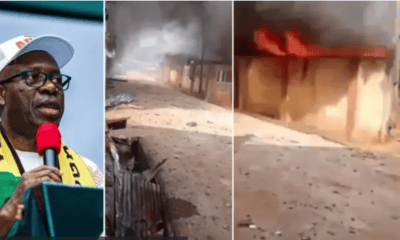
Suspected political thugs have attacked the secretariat of the Nigeria Democratic Congress (NDC) in Ikpoba-Okha Local Government Area of Edo State, destroying property at the facility.
The attack, reported on Wednesday, October 14, comes barely a week after NDC complained of a similar incident in Enugu.
A video circulating on social media showed damage to property within the Edo secretariat, although no casualties had been reported as of the time of filing this report.
In the footage, a woman accused the ruling All Progressives Congress (APC) of being responsible for the attack, linking the incident to the earlier violence in Enugu, which is being investigated by the police.
“The last one happened in Enugu, where one person allegedly died. Now they have brought it to Edo. APC, your end is here,” she said.
Her allegation against the APC has not been independently verified, while the identities of those responsible for the attack remain unknown.
The reported incident follows growing concerns over political violence ahead of the 2027 general elections.
The earlier incident in Enugu had prompted Governor Peter Mbah to demand an impartial police investigation, warning that anyone found responsible would face prosecution regardless of political connections.
It was not immediately clear whether security agencies had commenced an investigation into the Edo attack or identified any suspects.
-
 News1 day ago
2027: Why I wont attend every campaign rally – Tinubu
-
News13 hours ago
How Senator Mandiya died after bathroom fall in Abuja Home – Ningi
-
Features2 days ago
Aguleri/Umuoba Anam Crisis: The Bloody Battle Between Close Neighbours
-
News1 day ago
EFCC probes Atiku over alleged corruption committed as Vice President
-
News11 hours ago
Senate fumes over death of NYSC Corps member at Enugu Camp, orders probe
-
News2 days ago
‘Anyone who attempts suicide and fails will go to jail,’ says Akpabio
-
Features3 days ago
Enugu Political Flashpoint: Mbah orders Impartial Probe as NDC Incidents Trigger Controversy
-
News3 days ago
BREAKING: Soludo, Wike, Adeleke, others appointed member of APC Presidential Campaign Council