Business
Afrinvest banking sector report shows banks’ resilience despite economic downturn
The 2022 Afrinvest Banking Sector Report has shown that commercial banks recorded modest improvement in all regulatory indicators despite daunting economic challenges.
The report, presented by Deputy Group Managing Director, Afrinvest West Africa, Mr Victor Ndukauba, showed that the banks beat all the prudential guideline limits set by the Central Bank of Nigeria, showing resilience and strength during the year.
Its presentation was made at the launch of the 17th edition of the Nigerian Banking Sector Report and unveiling of Optimus, Afrinvest’s digital investment app, in Lagos on Wednesday night.
The occasion also marked the announcement of Afrinvest’s new subsidiaries and expansion of its leadership team as well as the unveil of Afrinvest’s refreshed logo(brand identity)
The report’s assessment of CBN’s financial stability indicators showed that Industry Liquidity(Liquidity Ratio) and Non-Performing Loan ratios both improved by 130 basis points(up) and 75bps(down), respectively, to 42.6 per cent and 4.95 per cent.
Although, the Capital Adequacy Ratio(CAR: 14.1 per cent) underperformed the June 2021 level by 140bps, all the indicators beat the prudential guideline limits of 30 per cent(LR), five per cent(NPLs), and 13.0 per cent(CAR), respectively, despite myriads of challenges in the business environment.

The report said the improvement is expected to be sustained over the coming years.
It explained that the fiscal challenges presented by weak Federal Government earnings have contributed to the muddling of monetary policy and strong use of Cash Reserve Ratio debits as a subtle strategy, in our view, to compensate for the inflationary effect of ballooned overdraft to the government.

It insists that in increasing its developmental financing role, especially in agriculture financing, the CBN risks crowding out banks and private sector financing, which is more effective in de-risking the sector and incentivising growth without moral hazards.
“Importantly, the weak economic growth has robbed banks of the dividend of large and youthful demographics. Over the last 10 years to 2021, real Gross Domestic Product has grown by a compound annual growth rate (CAGR) of 1.9 per cent compared to 2.3 per cent CAGR for the population.
In line with the decline in income level, poverty has risen to 40.1 per cent based on national standards of annual real per capita expenditure threshold of N137,430
” For banks, this reality means that upscaling would be less efficient than in an economy where growth exceeds population expansion. Not surprising, Nigeria’s financial depth is weak as is for countries with high fertility rates and a fragile economic base.,” it said
To turn the tide, the BSR recommended that critical reforms be undertaken as matter of urgency to avoid a repeat of the negative trends seen in the last decade.
“Some other measures advised include the tapering of fiscal deficit financing – credit to the government – to check money supply expansion, alignment of rates across windows and the adoption of market reflective forex rate via the crawling peg regime. We believe that the outcome for banks in the coming decade would rely on the policy actions taken today to address the issues raised,” it said.
On exchange rate management, the report said CBN’s strategy (differentiated rates across market segments and capital control) failed the litmus test over the reviewed period, as anticipated in the 2021 report.
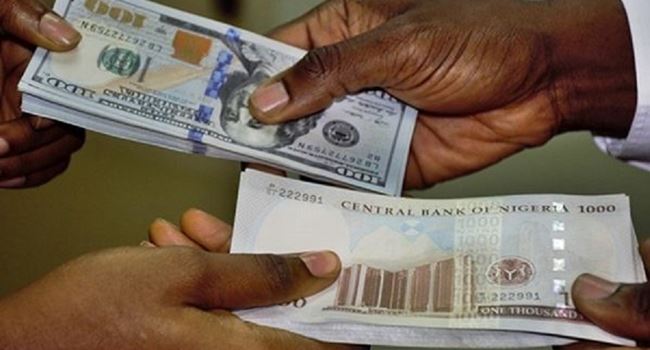
It said the value of the Naira depreciated further by 5.6 per cent and 23.2 per cent to N436.50/$1.00 and N712.00$1.00 (on 19/09/2022) at the NAFEX window and parallel market, respectively. It sated that near-term improvement in the exchange rate is not in sight, given forex supply constraints due to the self-inflicted injuries in Nigeria’s oil & gas sector (the largest source of FX accretion).
On the economy, the report said that in 2021, the Nigerian economy recovered markedly from the pandemic-induced strain of the prior year.
“Real Gross Domestic Product (GDP) grew 3.4 per cent (2020: -1.9 per cent), beating our projection by 0.4ppts. The recovery was mainly driven by the expansion of activities in the non-oil sector (up 4.4 per cent), while the oil sector remained in a recession. This growth momentum was sustained into 2022 albeit with a wider divergence between the oil and non-oil sectors.,” it said.
The report stated that, given the resilient half-year 2022 performance and expectation of sustained positive performance by key non-oil activity sectors in third and fourth quarters of the year, it reviewed the 2022 baseline growth forecast upward by 40bps to 3.3 per cent.
However, it maintained that growth momentum in the medium term would remain short of the level that can meaningfully lift the average well-being of the citizenry due to persistent domestic and external headwinds.
It said oil price level, domestic inflation rate has remained persistently high, averaging 14.3 per cent in the last six years.
In first half of 2022, headline inflation averaged 16.7 per cent owing to the impact of the Russia- Ukraine war on input prices, continued forex illiquidity, and structural challenges. Based on the World Bank estimate, the stinging fang of the elevated price level would drag five million more Nigerians into extreme poverty (to reach 95.1m) by 2022 year-end.
The report suggested that only concerted fiscal and monetary policy efforts targeted at resolving insecurity challenges, optimising exchange rate management, fixing structural loopholes, and curbing reckless fiscal spending would resolve the high inflation quagmire.
It however, acknowledged that the CBN has taken the lead in the efforts at curtailing the runaway inflation rate as seen in the back-to-back hike of the Monetary Policy Rate in May, July, and September 2022 to 15.5 per cent.
On the fiscal policy front, it said the divergence between the share of FG’s recurrent (debt & non-debt combined) and capital expenditure component has widened significantly in the last decade.
“Sadly, economic growth and fiscal stability have suffered the biggest impact from the worsened divergence. Before then, we observed a strong nexus between capital expenditure performance and growth in the decade to 2009. From 1999 to 2009, the divergence between the size of recurrent and capital expenditure averaged 48.5 per cent,” it stated.
It explained that over this period, GDP growth (average: 7.0 per cent) out- paced population growth (2.6 per cent p.a.) significantly. This trend dovetailed into a strong labour market perfor- mance as the unemployment rate eased steadily to about 5.0 per cent by 2009 year-end, according to NBS data.
Also, GDP per capita surged by 279.9 per cent to $1,891, while fiscal condition ended the decade strong as FG revenue to expenditure ratio printed at 76.5 per cent (2009) with public debt stock (N3.8tn) to GDP ratio of 7.5 per cent. Sadly, this trend has completely reversed over the last decade.
It explained that between 2010 and 2021, the divergence between the share of recurrent and capital expenditure budgets widened to 74.3 per cent on average.
“As a result, the share of capital expenditure in the total budget has dropped to an average of 18.9 per cent per annum. When examined from 2015, the divergence is wider at an average of 75.3 per cent, while the average share of capital expenditure in the total budget printed lower at 18.5 per cent This suggests that the economy’s average propensity to consume (represented by recurrent expenditure) has increased by more than 20.0 per cent in the last decade,” the report said.
In his comments, the Group Managing Director, Afrinvest West Africa, Ike Chioke, said Nigerians should prepare for reforms that would turn the economy around.
He said that looking ahead, Nigeria was set for another cycle of leadership in 2023 as the tenure of President Muhammadu Buhari, 30 state governors, and over 1,000 legislatures draw to a close.
“At a time when there is daunting fiscal, monetary, and social challenges to surmount, Nigerians cannot afford to elect leaders who lack the competence, capacity, and creativity to find lasting solutions to the national quagmire. Even with a leadership that is willing to introduce the needed reforms, the present challenging environment would worsen before it can get better,” Chioke said.
According to the him, regardless of who the President is, Nigerians will need to brace for impact.
“Noteworthy, the political will of the incoming administration to implement tough reforms that would curtail major economic leakages such as the subsidy regime on PMS(which has gulped over N7.0tn since 2010) and ensure the proper channelling of scarce resources to critical sectors would be a refreshing start,” he added.


Business
Nova Bank Appoints Jude Anele as Managing Director/CEO
…Meets CBN Capital Requirements, to Open Eight New Branches in 2026.
NOVA Bank Limited has announced the appointment of Jude Anele as its Managing Director and Chief Executive Officer, following the approval of the Central Bank of Nigeria.
The appointment comes at a pivotal moment in the Bank’s evolution, following its transition from merchant banking to commercial banking and the successful completion of its recapitalisation programme ahead of the March 31, 2026, regulatory deadline.
Anele brings more than 33 years of banking experience across West and Central Africa, with deep expertise in retail /commercial banking, corporate banking, risk management, institutional transformation and executive leadership. Over the course of his career, he has led complex banking operations, strengthened governance frameworks, delivered sustainable revenue growth and built high-performance teams.
The appointment reflects the Board’s strategic commitment to consolidating NOVA Bank’s commercial banking platform while accelerating growth across its Corporate, Commercial and Retail segments, as well as priority markets.
Speaking on his appointment, Anele said he was honoured to assume leadership of the Bank at a defining stage of its growth.
“Nova Bank has built a strong institutional foundation defined by regulatory compliance, capital strength, disciplined governance and a clear commercial mandate. Our focus now is execution — deepening customer relationships, expanding responsibly across priority markets, strengthening risk discipline and delivering sustainable value to our shareholders,” he said.

The Bank’s Chairman, Phillips Oduoza, also expressed confidence in the new leadership.
“The Board is pleased to welcome Mr. Jude Anele as Managing Director and Chief Executive Officer. His depth of experience, strategic clarity and proven leadership record align strongly with NOVA Bank’s growth ambitions,” Oduoza said. He added that with recapitalization completed ahead of the regulatory timeline, the Bank is entering a new phase defined by scale, stability and structured expansion.
NOVA Bank also confirmed that it has met the recapitalization requirements set by the Central Bank of Nigeria ahead of the regulatory deadline, reinforcing its capital adequacy and long-term financial stability. The capital raise, supported by new and existing shareholders, further strengthens the Bank’s balance sheet and positions it for disciplined growth.
In 2025, Global Credit Rating reaffirmed NOVA Commercial Bank’s national scale long- and short-term issuer ratings of BBB(NG) and A3(NG) respectively, while Agusto & Co. reaffirmed the Bank’s “Bbb” rating with a stable outlook, reflecting its strong capital base, sound liquidity position and resilient asset quality relative to its risk profile.
NOVA Bank currently maintains operations in Lagos, Abuja, Owerri and Port Harcourt, with plans to open eight additional branches across key commercial hubs in 2026 as part of its expansion strategy.
The commissioning of the Bank’s regional office in Owerri marked a significant milestone in its South-East and South-South growth strategy. The event attracted government officials’business leaders and Nigerians in diaspora and underscored NOVA Bank’s commitment to supporting enterprise development and economic growth.
NOVA Bank Limited is a commercial bank licensed and regulated by the Central Bank of Nigeria. Commencing operations in 2018 as a merchant bank, the institution transitioned to a commercial bank in 2024 and provides retail, SME, corporate and commercial banking services through its Phygital model—an integrated approach combining physical branch presence with digital banking infrastructure.

Business
Dangote reduces fuel price by N100 as global crude slumps
The Dangote Refinery on Tuesday reduced its petrol gantry price by N100, from N1,175 to N1,075 per litre.
The move followed a slump in global oil prices, with Brent crude dropping to $89 per barrel from over $100 on Monday.
Officials of the refinery confirmed the development to newsmen, adding that diesel prices have also been reduced.
They stated that petrol supplied via coastal distribution channels will now sell for N1,050 per litre, reflecting a slight differential for marine logistics.
Similarly, diesel is now N1,430 per litre at the gantry, representing a N190 reduction from the earlier price of N1,620 per litre.
According to oilprice.com, Brent crude prices witnessed a dramatic reversal on Tuesday, plunging nearly 27 per cent from the previous day’s high of $119 per barrel to as low as $87 per barrel.

The Dangote Refinery reportedly blamed global crude volatility for the repeated price hikes, citing tensions arising from the US-Iran conflict.

Business
BREAKING: Soludo shuts Onitsha market for one week over prolonged sit-at-home
Anambra State Governor, Professor Chukwuma Soludo, has ordered the closure of the Onitsha Main Market for one week following traders’ failure to comply with the state government’s directive to disregard the Monday sit-at-home order.
The governor gave the directive on Monday during an on-site visit to the market, along with some of his aides and other government officials.
Soludo warned that the closure could be extended if traders fail to comply with the directive, adding that security agencies have sealed the market to enforce the order.

Anambra state governor, Chukwuma Soludo
The governor described the development as the latest—and perhaps most drastic—salvo in a protracted struggle over control of economic life in the South-East on Monday.
Soludo said that despite repeated assurances of enhanced security and appeals to reclaim public spaces, many traders at the iconic market once again chose to keep their stalls locked.

According to him, their absence amounted to a quiet rebellion that nonetheless spoke volumes about the lingering climate of fear.
Soludo said, “The government cannot stand by while a few individuals willfully undermine public safety and disregard official directives meant to restore normalcy. This is plain economic sabotage.
“We are not going to allow this. The closure is a protective measure for law-abiding citizens.”
He, however, issued a stern warning that if the market fails to reopen after the one-week shutdown, it will be sealed for one month.
Related News
Monday sit-at-home peaceful civil protest, not a crime, IPOB tells Soludo
Nigeria in safe hands under Tinubu, says Ekwunife
Anambra to deduct workers’ salaries over IPOB sit-at-home
“You either decide that you are going to trade here or you go elsewhere. I am very serious about this,” the governor added.
The scene at the market on Monday was marked by tense enforcement, as a joint task force comprising police, army, and other security agencies was seen securing the perimeter.
As the gates remain locked this week, the standoff in Onitsha highlights the broader struggle to abolish the Monday sit-at-home.
When the market is scheduled to reopen next Monday, attention will be on the traders—whether they will return to their stalls following the state’s show of force, or whether empty aisles will deliver a different verdict.
The outcome may determine not just the fate of the market, but the rhythm of economic life in Anambra State on Mondays.
The state government had earlier directed traders and businesses to continue normal activities on Mondays as part of efforts to restore economic stability and end disruptions caused by recurring sit-at-home observances.
Meanwhile, PUNCH Online had reported on Saturday that the state government would begin pro-rata salary payments for workers across the state as part of efforts to end the Monday sit-at-home.
The state Commissioner for Information, Law Mefor, disclosed this to journalists in Awka, noting that effective February 2026, civil servants’ salaries would be paid according to attendance on Mondays.
Mefor said the decision was reached during the end-of-tenure retreat of the Anambra State Executive Council held in Awka, which reviewed the administration’s activities over its concluding four-year tenure and outlined priorities for the new term beginning on March 17, 2026.
According to government sources, the shutdown will initially last one week. However, authorities warned that if the market fails to fully reopen by next Monday, the closure will be extended to one month, a move that could have far-reaching economic consequences for traders and supply chains across the South-East and beyond.
“This is no longer about fear or compliance under duress. It is about restoring law, order, and economic sanity,” a senior government official said.
Onitsha Main Market serves as a commercial nerve centre for millions of traders and consumers nationwide.
The state government insists that continued observance of sit-at-home undermines public safety efforts, emboldens criminal elements, and projects Anambra as unsafe for business and investment.
The government also issued a stern warning to market unions, transport operators, and individuals suspected of enforcing or promoting the sit-at-home order, stating that anyone found aiding or abetting the practice would face legal and regulatory sanctions.
Security agencies have reportedly been placed on alert to ensure compliance and protect traders willing to open their shops.
While some traders welcomed the government’s firm stance, describing it as long overdue, others expressed fear and uncertainty, citing security concerns and past incidents of violence linked to defiance of sit-at-home orders.
The Anambra State Government, however, reassured residents that adequate security measures are being put in place to protect lives and property, urging traders to cooperate in the interest of collective economic survival.
As the countdown to next Monday begins, all eyes are now on Onitsha Main Market—where the decision to reopen or remain shut could shape the economic direction of Anambra State in the weeks ahead.

-
News2 days agoJAMB: Gunmen abduct UTME candidates, others
-
News2 days agoBillionaire trader Habby Forex hospitalized in Canada, undergoes surgery
-
News22 hours agoJAMB to release Thursday’s UTME 2026 results today
-
News7 hours agoBREAKING: JAMB releases first batch of 2026 UTME results, warns against score manipulation
-
News3 days agoCybersecurity breach hits CAC as Nigerian Agency confirms unauthorised access to system
-
News1 day agoPastor sentenced to life imprisonment for raping church member’s daughter
-
News7 hours agoArewa APC Forum withdraws support for Tinubu citing nepotism, incompetence
-
Politics2 days agoAtiku says 2027 presidential election will be his last outing