



Connect with us

Features

Enugu Political Flashpoint: Mbah orders Impartial Probe as NDC Incidents Trigger Controversy

Published

on

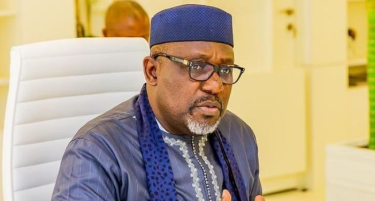
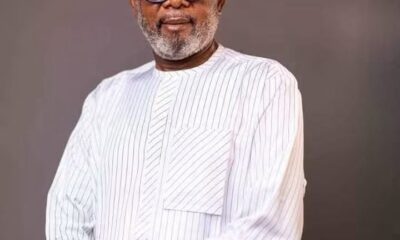
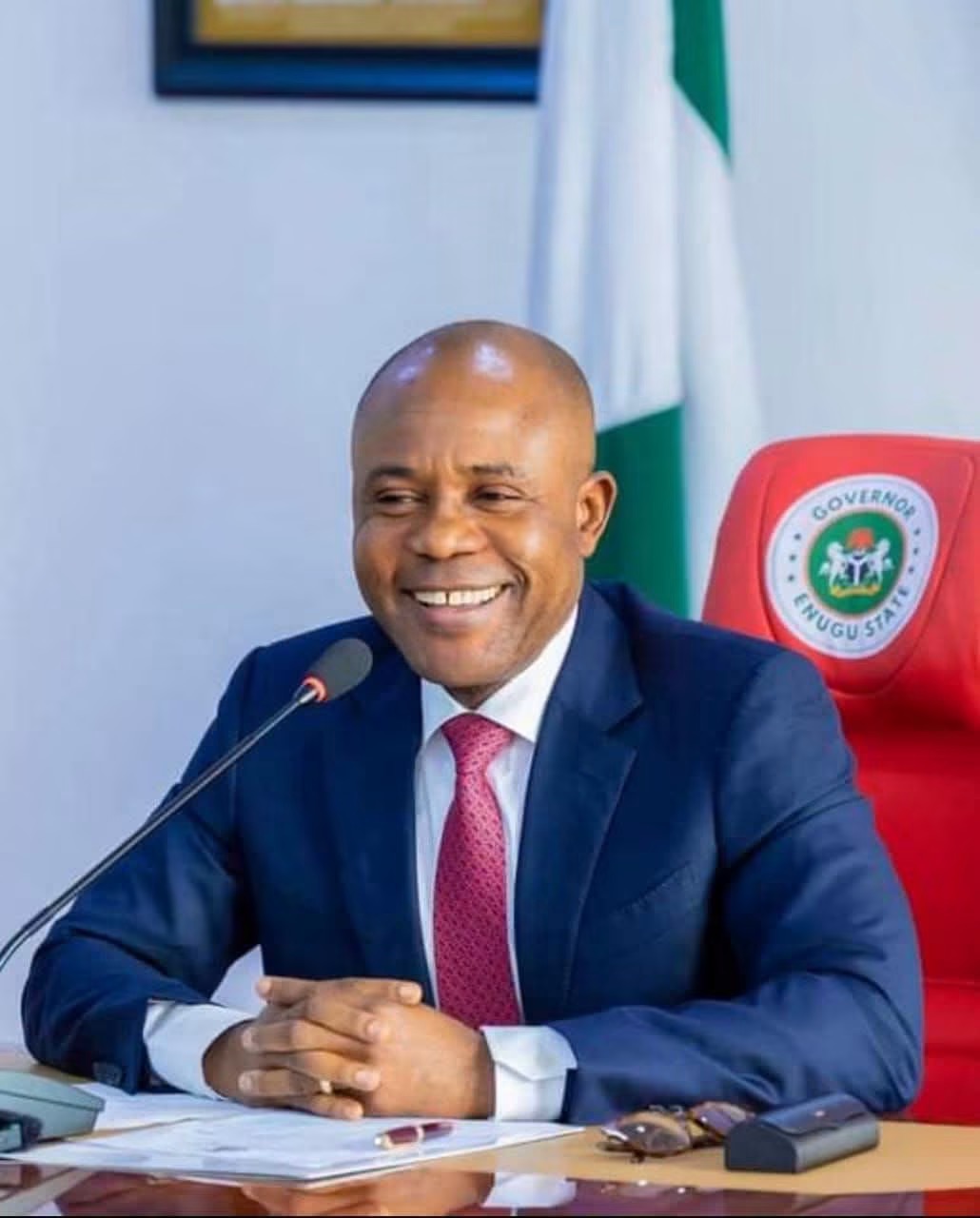
Enugu Governor, Dr Peter Mbah
Spread the love

Governor vows accountability regardless of political affiliation as police investigate shooting at NDC secretariat and confrontation at Akanu Ibiam International Airport ahead of 2027 elections

By Tony Edike

Governor Peter Ndubuisi Mbah has called for a thorough and impartial police investigation into the recent incidents of political violence in Enugu State, pledging that anyone found culpable will face the law irrespective of political affiliation.

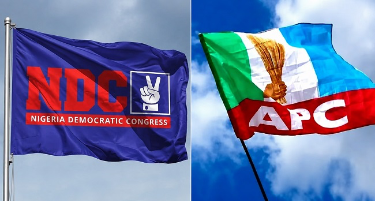
The governor’s intervention comes amid growing controversy over two incidents involving the Nigeria Democratic Congress (NDC) on Saturday, October 10, 2026: a confrontation between party supporters and authorities at Akanu Ibiam International Airport, Enugu, and a shooting near the party’s state secretariat that left a man injured.

The incidents have triggered competing narratives, with the NDC and some of its supporters raising concerns about political intimidation, the Enugu State Government rejecting allegations of complicity and the police commencing an investigation into the shooting.

Maduka College Advert

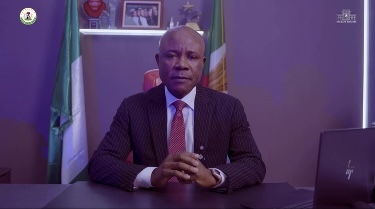
In a broadcast to the people of Enugu State, Mbah expressed concern over the reported violence, particularly the shooting that injured a citizen, and emphasised that the welfare of the injured person, the residents and affected families remained his immediate priority.

“I know how much our people value the peace and security we have worked so hard to establish in Enugu. Incidents such as these cause anxiety and deserve our full attention,” the governor said.

He stressed that every citizen, regardless of political affiliation, must be able to exercise their political rights without fear, intimidation or violence.

The governor said preliminary findings made it necessary for the police to conduct a comprehensive and impartial investigation to establish the circumstances surrounding the incidents and identify those responsible.

He further assured residents that anyone found culpable would be held accountable through the appropriate legal process, regardless of political connections.

The governor’s intervention places renewed emphasis on the need to establish the facts surrounding the incidents, as political activities intensify ahead of the 2027 general elections.

Mbah’s Intervention: A Promise of Accountability

The governor’s call for an impartial investigation represents a significant statement of the administration’s declared position amid allegations of political violence.

While the government had earlier rejected claims linking it to the incidents, Mbah’s broadcast stressed the need for the police to establish the facts and ensure that those responsible face the law.

“The Enugu State Government has made its position clear regarding allegations of involvement in this violence,” the governor stated.

He reaffirmed his administration’s responsibility to maintain peace and security across the state, while assuring residents that their safety and well-being remained a priority.

The message is particularly important because allegations of politically motivated violence can undermine public confidence in government institutions, especially when the ruling party and opposition groups offer conflicting accounts of events.

As ordered by the governor, the police will need to determine who was responsible for the shooting near the NDC secretariat, whether the perpetrators acted independently or with assistance, and whether any political actors or security personnel were involved in unlawful conduct.

The investigation into the airport confrontation must similarly establish the sequence of events, the circumstances under which party supporters were dispersed and whether the actions taken by security personnel complied with applicable laws and procedures.

Mbah’s assurance that political connections will not shield anyone from accountability therefore sets a clear standard against which the handling of the investigations can be assessed.

Airport Confrontation: Conflicting Accounts of What Happened

The first incident occurred at the entrance to Akanu Ibiam International Airport, where NDC members and supporters had gathered to welcome the party’s governorship candidate, Christian Chinyeaka Ohaa.

According to the Enugu State Police Command, the confrontation happened at approximately 11:30 a.m. after airport authorities restricted the entry of large numbers of supporters seeking to receive the candidate.

The restriction reportedly triggered a misunderstanding that escalated into a fight, prompting the intervention of joint police and military operatives.

Videos circulated on social media showed supporters fleeing the scene amid allegations that tear gas was being deployed and that sounds of gunshots were heard.

Some supporters accused security operatives of failing to protect them, raising questions about the management of the confrontation and the circumstances in which force was used.

The Enugu State Government subsequently offered its account of the events.

Addressing a press conference at Government House, Enugu, on Sunday, October 11, Secretary to the State Government, Professor Chidiebere Onyia, said the NDC had advertised an event described as its “Grand Statewide Campaign Flag-off 2026” at the airport.

Enugu SSG, Prof Chidiebere Onyia briefing journalists in Enugu on Sunday

Onyia said the party’s state organisation and its governorship candidate had publicised the proposed event.

According to the SSG, the police advised the party to obtain approval from the Federal Airports Authority of Nigeria (FAAN) before proceeding with the proposed activity.

He alleged that the NDC did not obtain the necessary approval but nevertheless mobilised supporters to the airport.

The government said the attempt to gain entry into the facility resulted in a confrontation with airport authorities, after which security agencies intervened to restore order.

The police account similarly attributed the confrontation to restrictions on access to the airport.

The airport is a sensitive national facility, and legitimate security restrictions must be respected. At the same time, the allegations made by supporters concerning the use of force deserve scrutiny.

The critical questions are whether the restrictions were properly communicated, how the crowd responded, what actions security operatives took and whether those actions were lawful and proportionate. An impartial investigation should answer these questions.

Alleged Shooting at NDC Secretariat Leaves Man Injured

The second incident occurred near the NDC state secretariat in Enugu at about 2:30 p.m. on Saturday, according to reports.

The Enugu State Police Command said unidentified armed hoodlums allegedly opened fire in front of the party’s secretariat.

Police Public Relations Officer, Superintendent of Police Daniel Ndukwe, said the victim was repairing a vehicle parked along the road when he sustained a suspected gunshot injury.

Police operatives reportedly responded to a distress call, restored normalcy and rushed the injured man to a hospital for treatment.

The police said he was in stable condition.

The state government identified the victim as Ifeanyi Nworie, 43, and said he was initially taken to the Enugu State University Teaching Hospital, Park Lane, where he was stabilised before being transferred to the National Orthopaedic Hospital, Enugu, for further medical attention.

The government rejected reports that deaths occurred during the incident.

The police also reported that five parked vehicles were damaged.

Commissioner of Police Mamman Bitrus Giwa directed the State Criminal Investigation Department to conduct a thorough investigation, identify the perpetrators and ensure their arrest.

Enugu CP, Mamman Bitrus Giwa

The shooting remains one of the most serious aspects of the controversy because the available accounts do not establish the identity or political affiliation of the alleged gunmen.

The police investigation should determine who fired the shots, the motive behind the attack, whether the incident was connected to the airport confrontation and whether anyone else was injured.

The investigation should also establish the extent of the damage to vehicles and whether any other offences were committed.

Until these questions are answered, allegations of responsibility should not be treated as established facts.

Government Rejects Allegations of State-Sponsored Violence

The Enugu State Government has strongly denied allegations that Governor Mbah’s administration sponsored or supervised attacks against the opposition.

At Sunday’s press conference, Onyia said the governor had sworn to protect the lives and property of residents regardless of political affiliation or religious beliefs.

He argued that peace and security were essential to the administration’s ambition to transform Enugu into a $30 billion economy and a preferred destination for investment, business, tourism and residence.

The SSG also rejected an allegation that the governor’s Chief Security Officer was present and supervised the shooting at the NDC secretariat.

According to Onyia, the official was with the governor at the Teachers Grassroots Movement mega rally at Okpara Square, Enugu, at the time of the incident.

The government further criticised opposition figures for allegedly observing a minute’s silence for a person it said was alive, describing the action as an attempt to mislead the public and attract political sympathy.

These statements represent the government’s position in the controversy. Their claims, like allegations made by the opposition, must be distinguished from findings independently established through investigation.

Mbah’s call for an impartial probe provides an opportunity for the authorities to address the allegations through evidence rather than political exchanges.

A credible investigation would protect the innocent, identify those responsible for wrongdoing and help restore public confidence in the security system.

Serious Allegation of a Plot to Import Armed Thugs

At the same press conference, the state government alleged that it had uncovered plans by some opposition elements to procure the services of armed thugs and bandits to create panic and insecurity ahead of the 2027 general elections.

Onyia did not publicly identify the alleged plotters or provide detailed evidence of the purported plan in the statement presented to the press.

The allegation could not be independently verified from the accounts available though the security agencies investigating the incidents are expected to come up with their findings to enable the authorities take lawful steps to prevent violence and hold those responsible accountable.

However, the allegation should not be treated as proof of wrongdoing by any opposition party or individual without supporting evidence.

In an increasingly charged political environment, the distinction between a genuine security threat and an unsubstantiated political accusation is crucial.

The governor’s insistence that accountability must apply regardless of political affiliation should extend to all allegations of planned violence, whether they concern members of the ruling party, opposition parties or individuals acting independently.

The Obuofia Incident and Concerns Over Political Safety

The latest controversy also revives concerns surrounding an earlier incident at Obuofia in Nkanu West Local Government Area on September 12, 2026.

The NDC had alleged that armed men disrupted a grassroots meeting and that eight of its members sustained injuries.

The party accused unnamed political actors of using violence and intimidation to interfere with its activities.

The police confirmed that armed hoodlums disrupted the gathering and said an investigation had been ordered.

The state government subsequently said investigations had identified the alleged perpetrators, who were being prosecuted by the police. Details of the accused persons and the outcome of the proceedings were not provided in the material available for this report.

The APC in Enugu State had previously denied allegations linking its leadership and the Mbah administration to political violence, describing the accusations as unsubstantiated and politically motivated.

The recurrence of allegations involving attacks on political gatherings raises legitimate questions about the security of opposition members and the environment in which political parties operate.

Nevertheless, establishing a coordinated pattern of state-sponsored violence requires evidence connecting individual incidents to those alleged to have organised, financed or enabled them.

The appropriate response is to investigate each incident thoroughly, establish responsibility and pursue prosecution where the evidence supports criminal charges.

The Test of Democratic Competition in Enugu

The controversy goes beyond the immediate dispute between the NDC and the state government. It raises fundamental questions about democratic competition, political tolerance and the protection of civil liberties.

Political parties must be able to hold lawful meetings, mobilise supporters, communicate their programmes and present candidates without unlawful intimidation.

These rights operate alongside legitimate security requirements. Parties must respect the law, comply with applicable restrictions on public facilities and ensure that their activities do not endanger others.

Security agencies, for their part, must enforce the law and protect the rights of all citizens.

The airport incident illustrates the need to balance operational security with freedom of political participation. The secretariat shooting underscores the potentially grave consequences when armed violence occurs in the context of political activity.

Neither incident should be used to justify indiscriminate restrictions on opposition politics, nor should political affiliation be used to shield anyone who violates the law.

Mbah’s public commitment to impartial investigation should therefore be seen as a welcome development by all the parties.

Security, Investment and Enugu’s Economic Ambitions

The controversy also carries implications for Enugu’s economic development.

The Mbah administration has presented its development agenda as an effort to transform the state into a more diversified economy driven by investment, infrastructure, tourism and business activity.

Such ambitions depend partly on the perception that the state is secure and that investors, residents and visitors can operate without fear.

Political violence can undermine that confidence. Equally, unsubstantiated reports of insecurity can damage public perceptions and create unnecessary alarm.

The answer is neither to suppress criticism nor to dismiss reports of violence as political mischief. It is to establish the facts, respond to genuine threats and communicate verified findings transparently.

A peaceful political environment is a public interest that benefits the government, the opposition, businesses and ordinary residents.

It is therefore in the interest of every political actor to ensure that electoral competition does not degenerate into intimidation, violence or unlawful acts capable of causing tension among the people of the state.

What the Police Must Establish

The governor’s call for an impartial investigation places responsibility on the police to demonstrate professionalism and credibility.

The secretariat investigation should establish the identity of the alleged gunmen, the circumstances of the shooting, the motive behind the attack and any evidence of sponsorship or assistance.

The airport investigation should establish the sequence of events, the permissions sought or obtained for the proposed gathering, the applicable access restrictions and the conduct of security operatives.

Where allegations of official involvement or plans to import armed criminals are supported by credible evidence, the relevant authorities should act in accordance with the law.

Political parties should also cooperate with lawful investigations, provide relevant evidence and discourage their supporters from spreading unverified claims.

The public deserves accurate information about the incidents, while the injured man and other affected persons deserve justice.

Conclusion: Beyond Political Accusations to Accountability

The incidents of October 10 have produced sharply conflicting narratives about political security in Enugu State.

The NDC and some of its supporters have raised concerns about intimidation and the safety of political participants. The state government has denied responsibility for the violence, defended the handling of the airport incident and alleged that opposition elements were planning to import armed criminals into the state. The police have confirmed an investigation into the shooting near the party’s secretariat.

Governor Mbah has now called for a comprehensive and impartial investigation, promising that anyone found culpable will face the law regardless of political affiliation.

That assurance is important and the various parties are expected to remain calm and await the outcome of the investigations as well as desist from any action that could further create political tension.

However, the credibility of Enugu’s democratic process will ultimately be measured not by the strength of political accusations, unverified claims and sponsored propaganda in the social media, but by the fairness of the investigations, the accountability of those responsible and above all, the freedom of Ndi Enugu to choose their leaders peacefully. .

Features

TWENTY YEARS IN MEMORY: MARIA UKAMAKA IFEOMA OJUKWU

Published

on

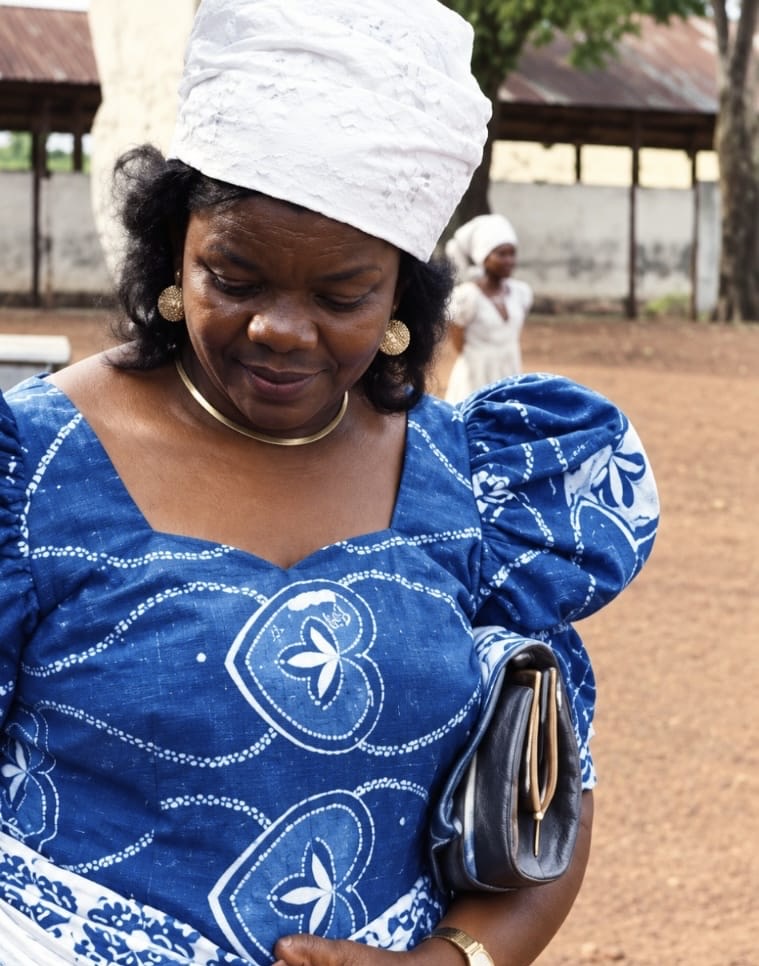
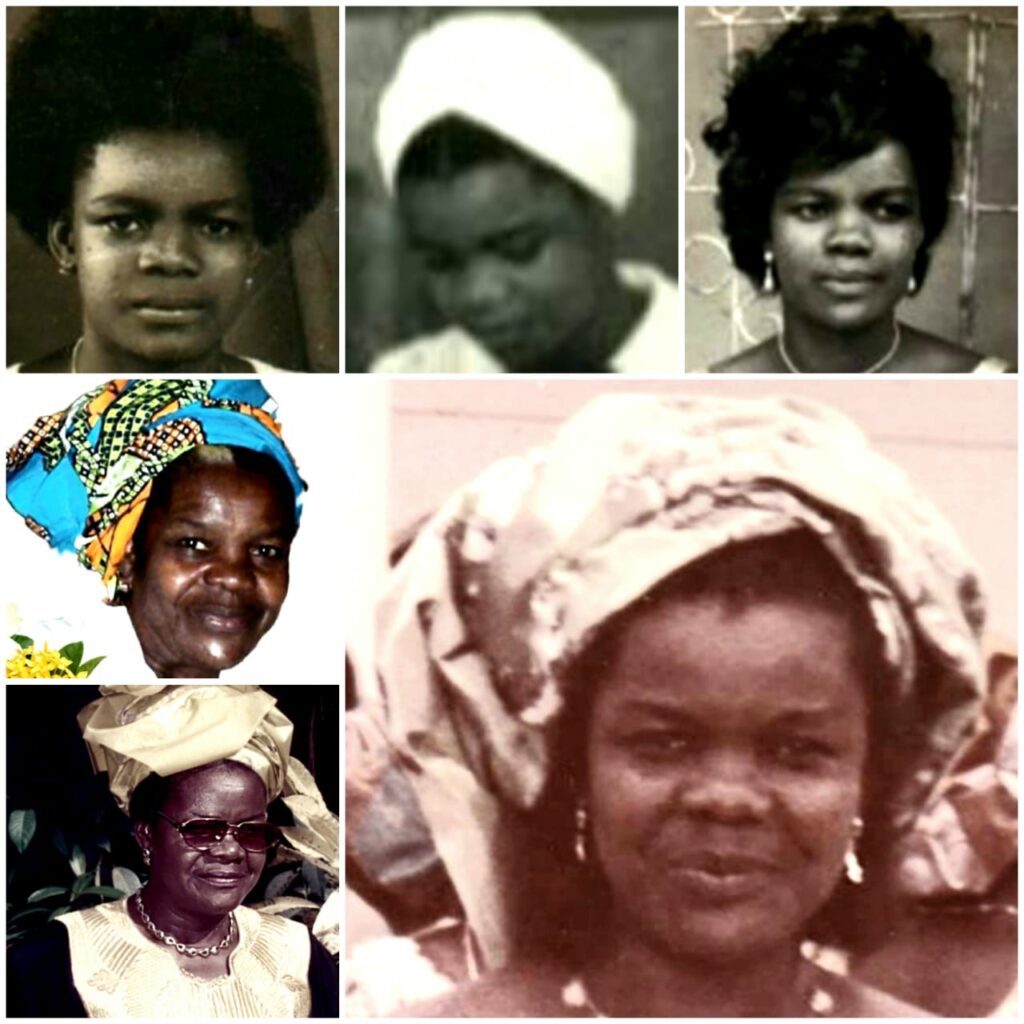
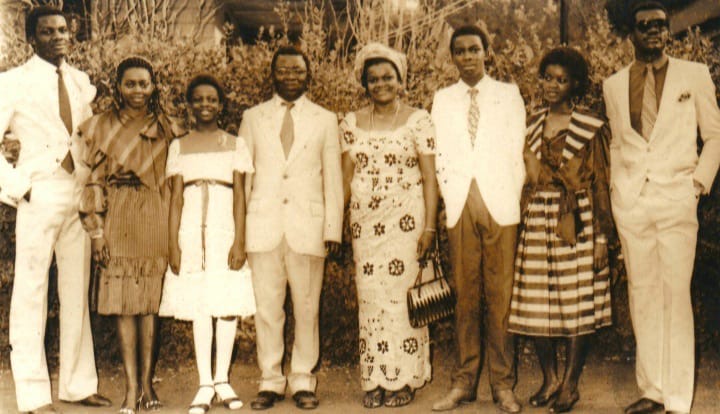
Maria Ukamaka Ifeoma Ojukwu (née Aghaji)
Spread the love

Ochechinyelu • Eziakpaka

3 December 1938 – 8 October 2006

Twenty years have passed, yet the memory remains remarkably fresh.

Twenty years after her passing, Maria Ukamaka Ifeoma Ojukwu (née Aghaji) remains deeply etched in the hearts of those who knew, loved and depended on her.

She was a woman of faith, courage, discipline, enterprise and uncommon family devotion. She was a mother, wife, sister, grandmother, homemaker and businesswoman whose life was shaped by duty and service to her family and community.

Maduka College Advert

She died on Sunday, October 8, 2006, and was laid to rest in the family compound at Umudim, Nnewi.

Today, two decades later, her family remembers not merely the woman they lost, but the remarkable life she lived.

The daughter of teachers

Maria was born on December 3, 1938, the first of nine children of James and Matilda Aghaji—six girls and three boys.

Her siblings were Rose, Veronica, Emmanuel, Josephine, Bernadette, Martin, Aloysius and Chinweokwu.

Her parents were teachers and devout Catholics who raised their children in a home where dignity, integrity, morality, discipline and self-respect were regarded as non-negotiable values.

Because her father was a teacher who was frequently transferred, Maria attended schools in different places as the family moved from one posting to another. On occasions, her father was actually her teacher.

She grew up exceptionally close to her parents and was particularly attached to her mother, with whom she shared a relationship that was described as being almost that of younger sister and elder sister.

From an early age, she developed the characteristic that would define much of her life: she was an action woman.

She was deeply attached to her siblings and was prepared to sacrifice for them. That love was reciprocated by her brothers and sisters throughout her life.

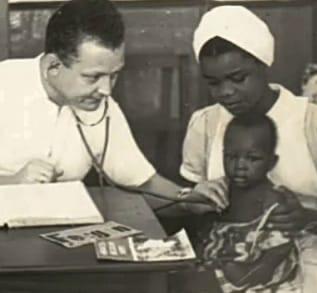
She later received nursing training at Our Lady of Lourdes Hospital, Ihiala, and subsequently undertook administrative and secretarial courses abroad.

In the early and mid-1960s, she worked at the African Continental Bank in Lagos, but as her family grew, her principal occupation became that of wife and mother, supplemented by several small business ventures.

A marriage into the Ojukwu family

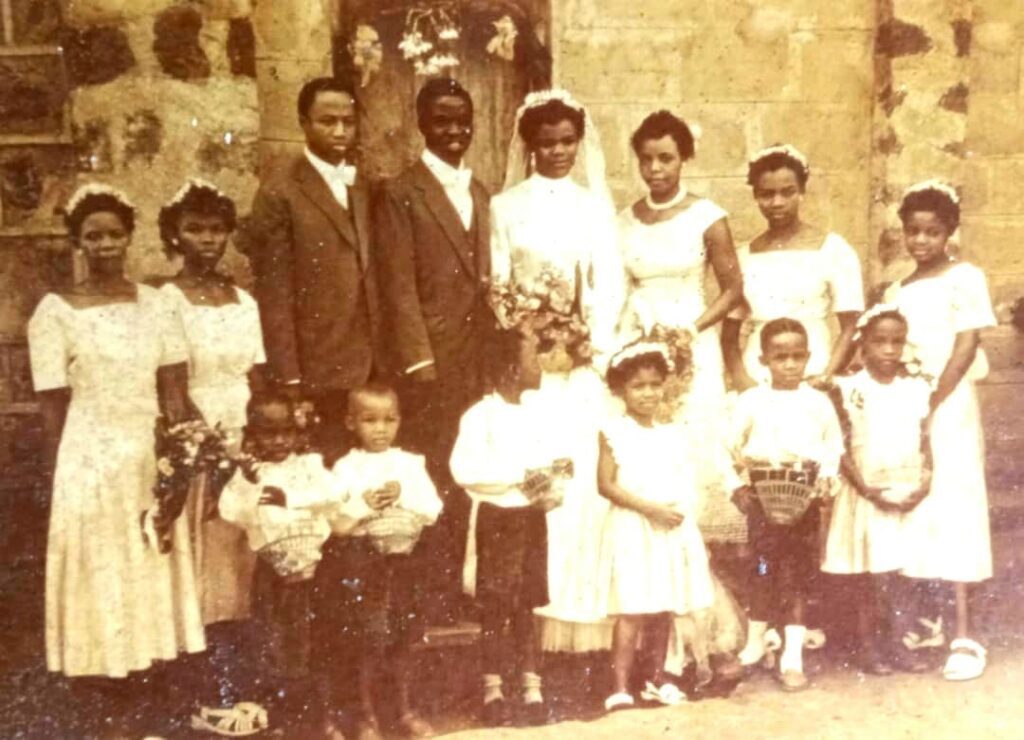
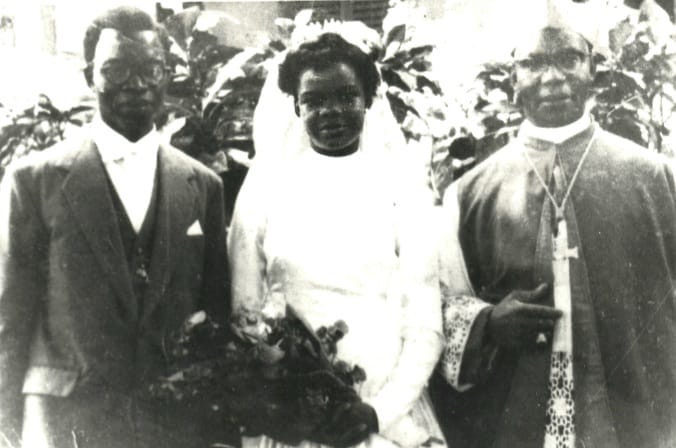
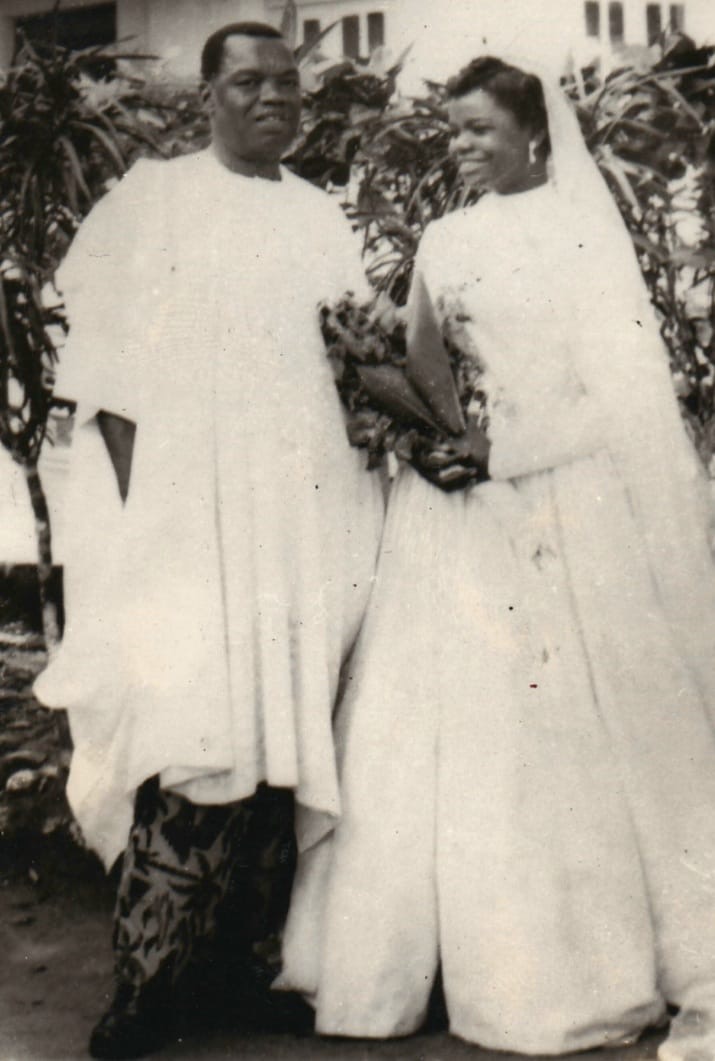
In 1957, at a young age, Maria married Dr Joseph Okwuabudike Ojukwu, a medical doctor and eldest son of Sir Louis Philip Odumegwu Ojukwu and Ogbenyeanu Janet Malize, daughter of Chief Edward, the Warrant Chief of Ukpor.

The marriage took place at St Michael’s Catholic Church, Umudim, Nnewi, with Bishop John Cross Anyogu officiating.

For the young Maria, the marriage represented a transition from the modest, disciplined world of a teachers’ family into one of Nigeria’s prominent and wealthy families.

It was not always an easy transition.

Yet she met the challenges of her new environment with determination.

She became fiercely protective of her husband and children and was never afraid to stand her ground.

Her children remember a mother who was determined that family relationships should be maintained, even where differences existed.

During visits to the East in the 1960s, she would insist that the young family visit her husband’s relatives—including those who were not particularly favourably disposed towards them.

Her father-in-law, Sir Odumegwu Ojukwu, developed a particularly strong affection for her.

He admired what he described as her initiative, loyalty and character, and considered her free of the traits he despised—avarice, dishonesty, jealousy, ingratitude and waywardness.

He supported her, encouraged her and even acquired shares in her name.

When she gained admission to further her studies while the family was abroad, Sir Odumegwu wrote to her, counselling that with three children under the age of five, the benefits of further studies or employment could be outweighed by the consequences of being away from the children.

His death in 1966 was a devastating blow to the family.

Motherhood as a calling

Maria was first and foremost a mother.

She and Joseph were blessed with children, and she devoted herself to their upbringing with remarkable energy.

She was the family’s disciplinarian.

Dr Joseph, occupied largely with his medical practice and patients, often played the role of the final court of appeal.

When he believed Maria had made her point, he would intervene with the familiar:

“Maria, ozugozie.”

Maria, it is enough.

But discipline never diminished affection.

Her children understood that punishment was usually connected to responsibility and consequences.

She supervised their schoolwork, arranged lessons and constantly checked their progress.

She encouraged them to work hard and repeatedly reminded them never to disgrace themselves or the family.

The children were also raised to be practical and responsible.

They washed and ironed their clothes and those of their parents, washed dishes and performed household chores whether or not there was domestic help.

Before they were allowed to drive, they were expected to learn how to wash a car, change a tyre and check the oil, engine and battery.

The boys spent time with mechanics and became familiar with Coal Camp and the business of sourcing spare parts.

For Maria, raising children was not simply about providing food and education. It was about preparing them for life.

The woman who could cook a feast in thirty minutes

Those who knew Maria remember her as an exceptional cook.

She could prepare a meal with remarkable speed and without drama.

She would sometimes joke:

“Good soup, na money make am.”

Yet the family remembers that the quality of her cooking often exceeded what the modest expenditure would suggest.

The children’s upbringing around food was equally disciplined.

They were expected to finish what was served to them, whether they liked it or not.

On days when meat was available, two small pieces were regarded as the normal allocation.

Anyone demanding more might hear the teasing question:

“Igolu ogo bee agu?”

Are you in-laws with the tiger or lion family?

Before the Nigerian Civil War, the family’s menu could include snails, crab, lobster, duck, lamb, pork, nchi, okporoko, fresh fish and ukwa, while garri, pounded yam and later semolina served as staples.

Turkey and goat were largely reserved for Christmas and Easter.

At other times, it could simply be beans and sardine.

The lesson was as important as the food: appreciate what you have.

War, hardship and courage

The Civil War tested Maria in ways few people could imagine.

The family moved from Lagos to the East in late 1966, stayed briefly in Onitsha and moved to Enugu in early 1967.

When Enugu fell to Federal forces later that year, the family moved to Nnewi and subsequently to Umuahia.

Maria was only 29, pregnant and caring for four children.

Yet she drove a small two-door Vauxhall Viva with her children to Umuahia.

In 1968, during the height of the war, her son Nnanna was born at Queen Elizabeth Hospital, Umuahia.

The war also brought profound personal losses to her own family.

Her 20-year-old younger brother, Emmanuel, went to the war front and never returned.

Another brother, Aloysius, who was only 15, lost an eye at the front.

Martin, the remaining middle brother, was fortunate to return.

For Maria, the war was not simply a historical event. It was hunger, fear, death, separation and uncertainty experienced at close quarters.

And yet, even amid scarcity, she remained generous.

She shared scarce salt and relief materials with people who needed them and visited and donated to refugee camps, including the camp at Akokwa, as well as the prison at Ekwulobia.

She gave even when she had little.

A bond with Njideka Ojukwu

During the war, Maria developed a particularly close relationship with Njideka Ojukwu, the wife of her husband’s brother, Chukwuemeka Odumegwu Ojukwu.

The two women were married to brothers from the same prominent family and found themselves living through extraordinary circumstances.

While one brother was deeply involved in the war effort and affairs of State and the other was occupied with medicine and the constant stream of wounded patients, the two women provided each other with companionship and emotional support.

They attended some functions together and helped each other navigate the psychological burden of the war.

On one occasion in Umuahia, Njideka came to pick Maria up to attend the funeral of the Biafran Air Force Chief, Colonel Chude-Sokei, whose death had been particularly painful.

The family also remembers that contrary to some assumptions, Maria, her husband and children visited the State House only three times throughout the war—once in Enugu and twice in Umuahia.

One of the children’s most vivid memories was the day their uncle, the Biafran Commander-in-Chief, visited their father at Umudike, Umuahia.

He arrived alone, driving a convertible sports Mercedes-Benz, dressed casually in slacks and a short-sleeved shirt.

There was no obvious motorcade.

It was only after the children welcomed him with their excited:

“Uncle Emeka has come! Uncle, welcome!”

that they noticed that the farm behind the building was filled with security and military personnel.

It was one of those childhood memories that remained vivid decades later.

Rebuilding after the war

The end of the war in 1970 brought another chapter.

The family lived in a one-and-a-half-bedroom flat in GRA, Enugu.

Her husband, employed at the Specialist Hospital, did not believe in private medical practice.

Maria, however, believed in enterprise.

She needed to supplement the family income.

She therefore acquired a second-hand Morris Minor and put it into taxi service.

It was not an easy business.

Drivers sometimes kept part of the daily proceeds for themselves, while maintenance and mechanical problems consumed time and money.

She eventually sold the Morris Minor and bought a second-hand Volkswagen Danfo.

Later came a Toyota Corolla taxi and two Peugeot 504 station wagons for long-distance transport.

At one point, a 12-year-old son was occasionally sent to work as a conductor on the Danfo so that he could see for himself what the day’s actual returns were.

Maria also secured distributorships for Nigercem cement and Golden Guinea Beer.

These ventures helped sustain the family during a difficult post-war period.

Her entrepreneurial spirit was unmistakable.

She was not content simply to complain about financial difficulties. She looked for ways to solve them.

A woman of faith

Underlying Maria’s life was an unwavering Catholic faith.

Morning Mass and Benediction were part of her routine.

She was proud of her association with the St Anthony’s Society, popularly known as Anto Padua.

She was also an active foundation member of Mater Medic and Mediatrix and belonged to several Umudim and Nnewi women’s associations.

Her faith was not merely ceremonial.

It was reflected in the way she raised her children, treated people and responded to hardship.

Her titles, Ochechinyelu and Eziakpaka, reflected the respect she earned within her community.

The “action woman”

Maria’s family remembers her as a woman who acted.

She was not easily intimidated.

On one occasion, she was dispossessed of the family Mercedes-Benz 200 by armed hoodlums near the expressway in Enugu.

Rather than simply surrendering the vehicle, she immediately flagged down a taxi, paid the driver and instructed him to pursue the fleeing criminals.

Rattled by the pursuit, the hoodlums eventually abandoned the Mercedes by the roadside and fled into the bush.

It was an incident that perfectly captured the character of Maria Ojukwu:

fearless, decisive and resourceful.

Grandmotherhood brought another joy

If motherhood occupied a central place in her life, grandmotherhood brought her another dimension of happiness.

She absolutely adored her grandchildren.

The woman who had spent decades disciplining her own children became a deeply affectionate grandmother.

Her family grew to include grandchildren, great-grandchildren and an extended network of relatives, friends and well-wishers.

The values she had received from James and Matilda Aghaji were passed to another generation.

Twenty years later

Maria Ukamaka Ifeoma Ojukwu died on October 8, 2006.

She was 67.

Twenty years have passed.

The world has changed.

The children she raised have grown into accomplished adults. Her grandchildren have grown. Great-grandchildren have arrived.

But certain things have not changed.

The lessons remain.

The memories remain.

The laughter remains.

The discipline remains.

The stories remain.

And above all, the love remains.

Her children remember a mother who could be firm but loving; disciplined but generous; deeply traditional yet enterprising; fiercely protective yet devoted to family reconciliation.

They remember a woman who could cook a feast in thirty minutes, run a taxi business, sell cement and beer, supervise schoolwork, attend Mass, raise children, care for relatives and still find time to help someone who had less than she did.

They remember the woman who insisted that her children visit their relatives.

They remember the mother who would say, in effect, do not disgrace yourself or your family.

They remember her courage during the Civil War.

They remember her generosity when food and relief materials were scarce.

They remember her love for her husband.

They remember her devotion to her grandchildren.

And they remember the woman who lived by action rather than words.

A legacy that refuses to die

A person’s life is ultimately measured not only by the years spent on earth but by what remains after those years have passed.

Maria’s legacy lives in her children:

Barrister Margaret-Mary Ogonna Nwagbo;
Dr Patrick Ike Ojukwu;
Dr John Chukwudi Ojukwu;
Dr Mary-Ann Ukonwa Ijeomah;
Engr. Nnanna Louis Philip Ojukwu; and
Miriam-Mary Chizoba Ojukwu.

It lives in her grandchildren and great-grandchildren.

It lives in her sisters, brother, nieces, nephews, cousins, in-laws, friends and the many people whose lives she touched.

It lives in the values she taught.

It lives in the family she built.

And it lives in the stories that continue to be told about her.

Twenty years after her departure, Maria Ukamaka Ifeoma Ojukwu remains loved, remembered and irreplaceable.

Her family does not remember her merely because she died.

They remember her because she lived—and lived meaningfully.

Forever missed.

Forever loved.

Forever irreplaceable.

Maria Ukamaka Ifeoma Ojukwu (née Aghaji)
“Ochechinyelu” • “Eziakpaka”
3 December 1938 – 8 October 2006

May her gentle soul continue to rest in perfect peace. Amen.

Continue Reading

Editorial

Nigeria’s Roads: Where a Driver’s Licence May Not Mean a Driver Can Drive

Published

on

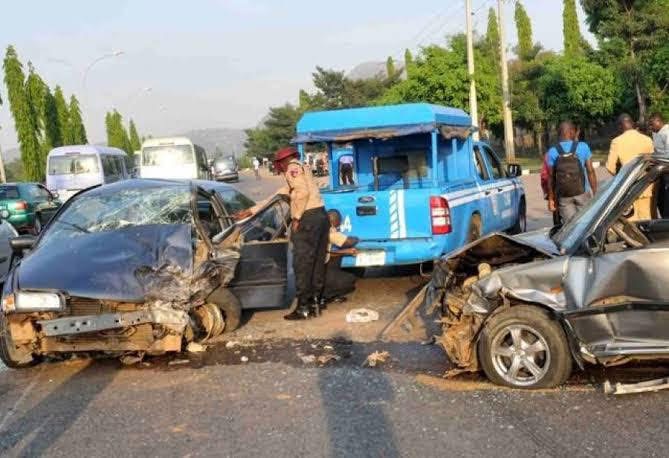
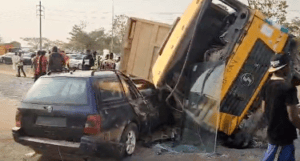
An auto crash in Nigeria
Spread the love

By Tony Edike

There are journeys Nigerians make every day without giving much thought to the danger involved.

We enter a car, fasten—or sometimes do not fasten—our seat belts, tell the driver where we are going and assume that we will arrive safely.

But increasingly, driving on Nigerian roads feels like an exercise in uncertainty.

The reckless overtaking.

Maduka College Advert

The speeding.

The sudden lane changes.

The driver overtaking on a blind bend.

The motorist beating a red light.

The commercial bus forcing its way into traffic.

The driver using a mobile phone while driving.

The young man who bought a car yesterday and is driving it today as though years of experience came with the vehicle.

The question that should concern every Nigerian is simple:

How many people on our roads have actually demonstrated that they are competent to drive?

That question becomes even more important when we consider that the Federal Road Safety Corps recorded 10,446 road traffic crashes and 5,289 deaths in Nigeria in 2025.

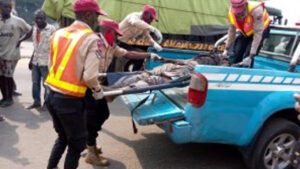
FRSC officials rescuing accident victims

Compared with 2024, the total number of crashes increased by 9.2 per cent, from 9,570 to 10,446. The number of people injured also increased by 7.2 per cent, from 31,154 to 33,400. Fatal crashes rose from 2,532 to 2,608, even though the overall number of deaths fell slightly from 5,421 to 5,289. (Nan News)

These are not merely statistics.

Behind every number is a person.

A father.

A mother.

A child.

A breadwinner.

A student.

A passenger.

A pedestrian.

A motorcyclist.

Somebody who left home expecting to return.

When a licence becomes a piece of plastic

Nigeria’s official driver-licensing system does require training.

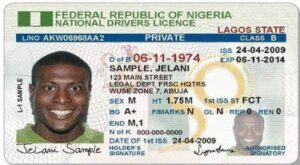
The FRSC’s current driver’s licence portal states that a first-time applicant must be at least 18 years old and must have completed driving school. The application process also involves a driving test through the relevant Vehicle Inspection Office process. (Nigeria Driver’s Licence)

The FRSC’s Driving School Standardization Programme is even more specific.

A certified driving school is expected to have roadworthy dual-control training vehicles, licensed instructors, a classroom, Highway Code materials, traffic-law materials, first-aid facilities, a fire extinguisher and a driving range, among other requirements.

FRSC’s operating procedure states that certified schools are expected to train students for at least 26 sessions of a minimum of one hour each, with training sessions recorded on the FRSC system. (FRSC)

So the problem is not that Nigeria has no rules.

The problem is whether the rules are being followed rigorously enough.

A law that exists on paper but is poorly implemented cannot adequately protect the public.

A driving-school certificate should mean that somebody actually learned to drive.

A driving test should mean that somebody actually demonstrated competence.

And a driver’s licence should mean something more than the possession of a plastic card.

The young man who bought a car today

There is a growing phenomenon that deserves serious attention.

A young Nigerian saves money or makes money through unconventional means, obtains a car—or receives one from his parents—and suddenly becomes a driver.

Sometimes the person has never received formal driving instruction.

Sometimes a friend gives a few lessons.

Sometimes the person learns by watching someone else drive.

Then, almost immediately, the vehicle enters one of Nigeria’s busiest roads including the highways.

That is dangerous.

A car is not a bicycle.

It is a machine capable of weighing more than a tonne and travelling at speeds at which a mistake can become fatal within seconds.

The ability to start an engine, move a vehicle forward and turn a steering wheel does not constitute driving competence.

Driving requires judgment.

It requires hazard perception.

It requires understanding right of way.

It requires knowing when not to overtake.

It requires knowing how to react when another driver makes a mistake.

It requires understanding braking distances.

It requires lane discipline.

It requires the ability to remain calm when confronted with unexpected situations.

And, perhaps most importantly, it requires experience.

The embarrassment of the learner’s sign

There is another attitude we must confront.

Some new drivers are reluctant to identify themselves as learners.

They consider displaying a learner’s sign on their vehicles embarrassing.

There is an unfortunate social perception that says:

“If I have bought a car, why should people know that I am still learning?”

But learning is not shameful.

In fact, identifying a learner should be seen as an act of responsibility.

Other motorists need to know that the person behind the wheel may still be developing confidence and road experience.

Britain takes this principle seriously.

Learners in Great Britain must display L plates at the front and rear of the vehicle, and failure to display the required plate can attract penalty points. (GOV.UK)

Nigeria should consider a similarly serious approach to learner identification.

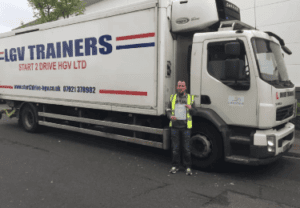
A standard training school for Truck Drivers

If a person is still learning, let the road know.

There is nothing shameful about saying:

“I am learning. Please give me room.”

Britain does not treat driving as automatic

There is an important lesson Nigeria can draw from the British system.

In Great Britain, becoming a driver involves several stages.

A learner obtains a provisional licence and learns under the prescribed conditions.

The driver must then pass a theory test before taking the practical driving test. The theory examination includes knowledge and hazard-perception components. (GOV.UK)

The practical test then determines whether the applicant can actually drive safely.

This distinction is important.

Knowing the Highway Code is one thing.

Applying it while controlling a moving vehicle in real traffic is another.

Nigeria should strengthen that distinction.

A person should not merely be able to answer questions about road signs.

The person should demonstrate that he or she can safely operate a vehicle around pedestrians, motorcycles, buses, trucks, traffic lights, intersections and other motorists.

America has another lesson: don’t rush beginners

The United States offers another interesting model.

The National Highway Traffic Safety Administration describes Graduated Driver Licensing, or GDL, as a three-stage system:

Learner’s permit → Intermediate licence → Full licence.

During the learner stage, driving is supervised.

During the intermediate stage, the new driver is allowed greater independence but may face restrictions on high-risk situations such as night driving and carrying young passengers.

Only later does the driver receive an unrestricted licence. (NHTSA)

The reasoning is straightforward.

A new driver needs experience.

But experience should be acquired progressively.

The NHTSA says the strongest GDL programmes are associated with substantial reductions in crashes among young drivers. It cites research associating the most restrictive programmes with a 38 per cent reduction in fatal crashes and a 40 per cent reduction in injury crashes among 16-year-old drivers. (NHTSA)

Nigeria may not need to reproduce the American system exactly.

But the principle is highly relevant:

Do not give inexperienced drivers unrestricted exposure to every dangerous driving situation immediately.

Nigeria needs a “graduated driver” system

Nigeria should seriously consider introducing a stronger graduated licensing arrangement for new and young drivers.

For example:

Stage One: Learner

The applicant would:

● obtain a learner permit;

● pass a theory examination;

● complete mandatory practical training;

● display a learner identification sign;

● drive only under prescribed supervision;

● complete a minimum number of verified training hours.

Stage Two: Provisional Driver

After passing the practical test, the driver would receive a provisional licence.

During this period, there could be restrictions appropriate to novice drivers, particularly around high-risk behaviours.

Stage Three: Full Licence

After completing the required period without serious traffic violations, the driver would graduate to a full licence.

Such a system would introduce an important principle:

A driving licence should be earned progressively, not simply obtained.

But who is teaching the drivers?

This is another question that deserves national attention.

Who owns some of Nigeria’s driving schools?

Who teaches there?

What qualifications do the instructors possess?

How often are the schools inspected?

Are training hours genuinely completed?

Are students actually taught road safety or merely given certificates?

These questions matter because FRSC itself recognises the need for standardisation.

Its Driving School Standardization Programme says schools are assessed on their facilities and trainers and that certification can be suspended or withdrawn when minimum standards are compromised. (DSSP)

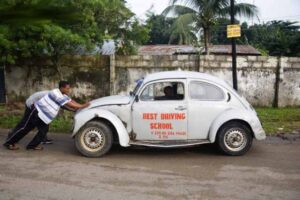
A Nigerian driving school operator

That means enforcement should be visible.

Nigeria should maintain and regularly publish an updated national register of approved driving schools and licensed instructors.

A prospective student should be able to enter a website, type the name of a driving school and immediately know:

● whether the school is accredited;

● when its accreditation expires;

● whether its instructors are certified;

● how many vehicles it has;

● whether the vehicles are roadworthy;

● whether the school has been sanctioned.

Transparency would help drive bad operators out of the industry.

The examiner must be independent

There is another reform worth serious consideration.

The person who teaches a candidate should not be the person whose word alone determines that the candidate is ready for an unrestricted licence.

Nigeria needs a strong, independent and standardised practical examination.

The test should assess actual competence, including:

● vehicle control;

● reversing;

● parking;

● lane discipline;

● turning;

● signalling;

● mirror use;

● speed management;

● safe overtaking;

● traffic-light compliance;

● pedestrian awareness;

● hazard perception;

● emergency braking;

● interaction with motorcycles and commercial vehicles.

And the examination should be digitally recorded.

Why?

Because once the examination is recorded, an applicant can challenge an unfair result and authorities can investigate suspicious patterns.

If one examiner passes virtually everyone, that should trigger an audit.

If another examiner fails almost everyone, that should also trigger an audit.

Technology can make the licensing system more transparent.

The problem is not only drivers

We must also resist the temptation to blame every road crash entirely on motorists.

Road safety is a system.

The driver matters.

The vehicle matters.

The road matters.

Traffic enforcement matters.

Emergency medical services matter.

Urban planning matters.

Road signs and markings matter.

Public transport regulation matters.

A competent driver can still encounter a mechanically defective truck.

A careful motorist can still meet a dangerously designed intersection.

A pedestrian can still be exposed to a road without adequate crossing facilities.

And a crash victim’s chances of survival can depend on how quickly emergency medical assistance arrives.

Consequently, Nigeria needs a comprehensive road-safety strategy rather than periodic enforcement campaigns.

Speed is not a small matter

One of the most dangerous behaviours on Nigerian roads is excessive speed.

At high speed, the driver has less time to react and the vehicle requires a greater distance to stop.

The consequences of a collision are also more severe.

Nigeria should therefore expand intelligent speed enforcement.

Speed cameras and red-light cameras can complement human enforcement.

But technology must be transparent.

There must be proper calibration.

There must be reliable evidence.

There must be procedures for challenging erroneous penalties.

And enforcement should be designed primarily around saving lives, not generating revenue.

We need to know where crashes are happening

Nigeria also needs better public crash data.

The 2025 FRSC figures tell us the national picture, but policymakers need much more.

Every serious crash should produce a standardised record showing, where available:

● location;

● time;

● road condition;

● vehicle type;

● driver age;

● licence status;

● training status;

● estimated speed;

● weather;

● road design;

● injuries;

● fatalities;

● vehicle condition;

● suspected impairment;

● emergency response time.

FRSC already operates a Road Safety Observatory and has identified high-risk locations from its crash database.

The country should build on that work.

If a particular junction produces repeated fatal crashes, authorities should not simply erect another sign and move on.

They should ask:

What exactly is wrong with this location?

Is it the road design?

The speed?

Poor visibility?

Pedestrian movement?

Lack of traffic control?

Illegal parking?

Poor lighting?

The answer should determine the intervention.

Road safety should begin in school

We also need to change the culture before young Nigerians become motorists.

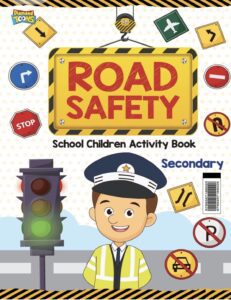
Screenshot

Road safety education should become a serious part of secondary-school education.

Young people should understand:

● road signs;

● pedestrian safety;

● seat belts;

● speed;

● distracted driving;

● alcohol and drugs;

● motorcycle safety;

● emergency response;

● responsible vehicle ownership.

By the time a Nigerian buys a first car, road safety should not be a new concept.

And commercial drivers need special attention

The risks associated with commercial buses, tankers and heavy trucks require particular attention.

These vehicles carry more passengers or impose greater physical force in a collision.

Commercial drivers should therefore face rigorous professional requirements, periodic medical assessments, skills testing and stronger sanctions for serious violations.

Companies operating large fleets should also be held accountable for driver working conditions.

Pls

A driver who is pressured to drive excessively long hours without adequate rest can become a danger to himself and other road users.

Road safety therefore extends into transport-company management.

The licence should mean something

Perhaps the most important reform Nigeria can make is cultural.

We must restore the meaning of a driver’s licence.

A licence should be evidence that the holder has demonstrated:

knowledge + practical competence + road awareness + responsibility.

It should not simply be evidence that an application was processed.

Nigeria already has the foundation.

The FRSC’s licensing portal requires first-time applicants to complete driving school. The official framework provides for testing, and FRSC operates a standardisation system for driving schools. (Nigeria Driver’s Licence)

The challenge is to make those requirements real, consistent, transparent and difficult to circumvent.

The way out

Nigeria does not need another slogan telling motorists:

“Drive safely.”

We have heard that for years.

What Nigeria needs is a system that makes competent driving a requirement rather than an aspiration.

A person buying a first car should be encouraged—not embarrassed—to learn properly.

A learner should display the appropriate identification.

A driving school should be genuinely accredited.

An instructor should be properly qualified.

A practical test should be meaningful.

An examiner should be independent.

A vehicle should be roadworthy.

A dangerous driver should face predictable consequences.

A repeat offender should face escalating sanctions.

A dangerous road should be redesigned.

And every serious crash should teach the authorities something that can prevent the next one.

The statistics demand action.

Nigeria recorded 10,446 road crashes in 2025, with 5,289 people killed and 33,400 injured, according to FRSC figures reported by the News Agency of Nigeria. (Nan News)

But behind those numbers is something more profound.

Every road user is somebody’s child.

Somebody’s parent.

Somebody’s spouse.

Somebody’s friend.

Somebody’s employee.

Somebody’s future.

The ultimate question, therefore, is not whether Nigeria can reduce the number of road crashes.

It is whether Nigeria is prepared to change the way it thinks about driving.

Because a driver’s licence should never be merely a document that says:

“This person is legally allowed to drive.”

It should also give the public reasonable confidence that:

“This person has demonstrated that he or she knows how to drive.”

Until that confidence exists, every Nigerian who enters a vehicle is entitled to ask a difficult question:

Who exactly tested the person behind the wheel—and did that test really prove that the person can drive?

Continue Reading

Features

Mbah Lists Projects Driving Enugu’s Revenue Growth, Says Less Than 13% Comes From Taxation

Published

on

Enugu Governor, Dr. Peter Mbah
Spread the love

By Tony Edike

Governor Peter Ndubuisi Mbah of Enugu State has highlighted a number of ongoing projects and economic initiatives which, according to him, are contributing to the state’s rapidly expanding revenue base.

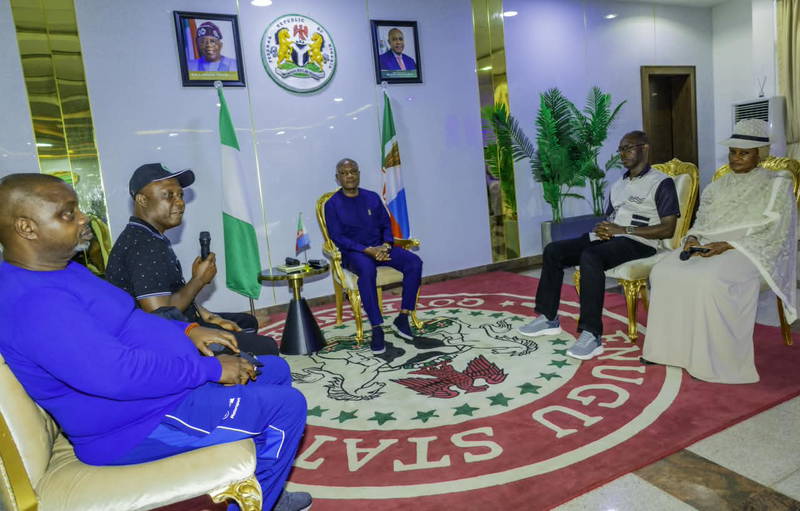
Mbah spoke when editors of print, broadcast and online media organisations visited Enugu as part of activities marking the Annual Conference of the Nigeria Guild of Editors (NGE).

The governor used the opportunity to explain the transformation taking place across the state, particularly the efforts of his administration to expand the economy and develop new sources of internally generated revenue.
Maduka College Advert

He said Enugu was currently among the fastest-growing states in revenue generation, noting that taxation accounted for less than 13 per cent of the state’s revenue.

Mbah said the figure demonstrated that the administration’s strategy was not simply centred on increasing taxes but on growing the economy, creating new economic activities and developing assets capable of generating sustainable revenue for the state.

During their visit, the editors were taken on a tour of some of the major projects being executed by the administration.

Among the projects inspected were the proposed New Enugu City, which is planned to occupy about 10,000 hectares; newly constructed secondary schools; the Enugu Ranch; Pine Forest; a tourism centre; and the Enugu International Hospital, among other projects.

The project tour was similar to the one organised for editors during the Guild’s conference in Enugu last year, giving members of the media an opportunity to assess the progress of some of the projects they had previously seen.

The scale and pace of development reportedly generated considerable interest among members of the Guild, with some of the editors expressing admiration for the transformation taking place across the state.
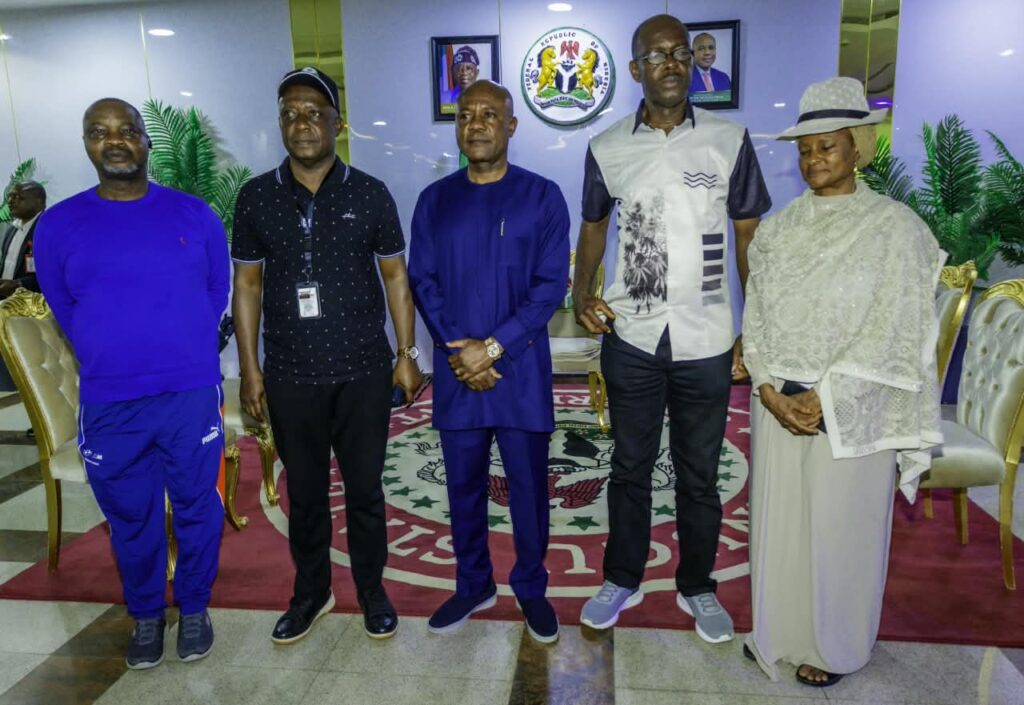
Former Governor of Ogun State and veteran journalist, Chief Segun Osoba, as well as the President of the Nigeria Guild of Editors, Eze Anaba, were among those who commended the Enugu State Government for its development initiatives.

At the end of the tour, the editors engaged Governor Mbah in an interactive session, during which they sought explanations on the sustainability of the projects, the transformation of the state’s economy and the measures being taken to ensure continuity beyond the tenure of the present administration.

Responding to questions on the future of the projects, Mbah explained the administration’s broader economic vision and the rationale behind the investments being made across different sectors.

He said the objective was to create an economy capable of generating sustainable wealth and opportunities rather than relying predominantly on traditional sources of government revenue.

The governor also fielded questions on the long-term sustainability of the projects and the capacity of the state to maintain the pace of development.

The interaction provided the editors with an opportunity to further examine the policies and programmes underpinning the administration’s development agenda, particularly its emphasis on infrastructure, education, healthcare, tourism, agriculture and urban development.

Mbah’s engagement with the editors came against the backdrop of growing attention to the pace of infrastructure development in Enugu and the administration’s stated ambition to reposition the state as a major economic and investment destination in the South-East.

Excerpts:

Let me once again restate how grateful we are as government and people of Enugu to have the honour of hosting you for the second year in a row. We truly understand the value, and we do not take it for granted. I’m also grateful that two days ago I invited you to explore Enugu, to go out and see for yourselves what we’ve done in Enugu. Thank you that you were able to take up that invite.

I’m interested to know what you saw. What surprised you? What disappointed you? What doesn’t add up? And the questions that you may have raised. You know, I just wanted to get feedback. But again, for us, what you saw, the security, the transports, the investments, tourism, and all that, they are all interconnected. They are mutually reinforcing. They’re all designed to achieve a common objective.

When we took office, we laid out a blueprint. One was to grow the economy of the state exponentially, but also to eradicate poverty and to create a state where people can live, work, invest and build futures. What I said to them when I was campaigning was that I was tired of seeing young people leave Enugu after their education to go elsewhere to look for work.

The idea was for us to create something here that will keep people here so they can create wealth here, find employment, live here, have a satisfying life here without necessarily going out. We don’t want our boys only to come back to Enugu when they want to attend funerals or weddings. Those projects in themselves are not the end point.

They’re actually the means for us to achieve that, and if you notice, if we talk about them, you see how they are designed to achieve, for example, the investment in the tourism is to help us attract 3 million people into Enugu. So, we’re currently doing six massive tourism sites. I understand you saw one.
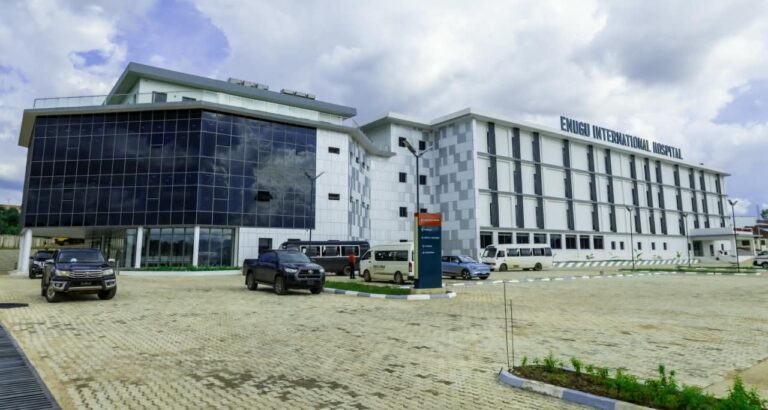
New Enugu International Hospital

You went to the pine forest where we’re doing the zip line. We’re also doing the cable car at Okpatu, 5.6 kilometer cable car. We’re also recasting the Nsude pyramid. It has a history of over 2,000 years. We have the ledger, iron smelting site. That, again, with a history of over 4,000 years.

So, we’re preserving these things, trying to make sure that they become an icon that will bring people here. There are a whole lot of things. Even in the transport sector, we got ourselves into aviation because we want to create connectivity to the state, and we want people to have access to this place with ease.

It’s all designed towards growing the economy exponentially, but also eradicating poverty. That would tell the story about our intervention in the social sector, intervention in education, in healthcare. It’s almost, as I always say, insane.

Doing over 7,000 classrooms within two and a half years. But when you hear 7,000 classrooms, it’s not even about the classroom. That doesn’t tell you the story about the 464,000 furniture items that we also had to procure to go with the 7,000 classrooms.

The solar system, the data and all that. They are not for political acclaim. Our hope is that whoever comes after would have to build on what they see because these things are, for example, our intervention in education is not about the structure. If you go to any of the smart green schools, you see that the future tells a difference. It underscores the fact that our children are entering into a different world.

Not the one we lived 40 years ago where we went to school with chalk and blackboard. We recognise that in designing the smart school to capture the evolving 21st century skills.

This is what these kids must be exposed to. So, once these kids begin to learn what we now call experiential learning, you cannot take them back to the rot system of learning where you teach them to memorise and write. We’re hoping that once we’ve raised the bar, that whoever comes thereafter would just build on it because the citizens would demand for that because they would have been used to that. In any case, we’re now doing the heavy lift.

The capital expenditure we’re carrying now. We’re hoping that whoever comes subsequently will be focusing more on the operating cost. Which we know is sustainable in terms of what we have done.

In terms of growing the revenue of the state. You may already know that in terms of revenue generation, we are the fastest in the country in terms of the speed of growth. We ended last year with N406 billion from N25 billion we started in 2023.

We are only behind Lagos and Rivers in terms of IGR. We tell people that a lot of that doesn’t come from tax because there is this narrative that has been framed – that we’re overtaxing our people. It’s just a three part of it. Less than 13 per cent of our IGR comes from taxation.
Over 87 per cent we get from the businesses we’re building. We’ve activated all our moribund companies, and they are all running.

The United Palm Products. The Sunrise Flower Mill. The Niger Gas. The Presidential Hotel. The International Conference Centre. The terminals. These are major revenue generators. And they have created employment. We are making money from them. And that was our commitment to pluck the leakages and activate, revive all the Moribund industry. And that’s where the revenue is coming from, not from taxation.

The approach, as you said, security is difficult for you to insulate yourself from your neighbours. But what we’ve also done in terms of making sure that our borders are well-policed is that we also have a line of sight of those coming into our states from the different gateways. Whether you’re coming through the formal or informal gateway, we can see you, we know you and we know when you’re leaving.
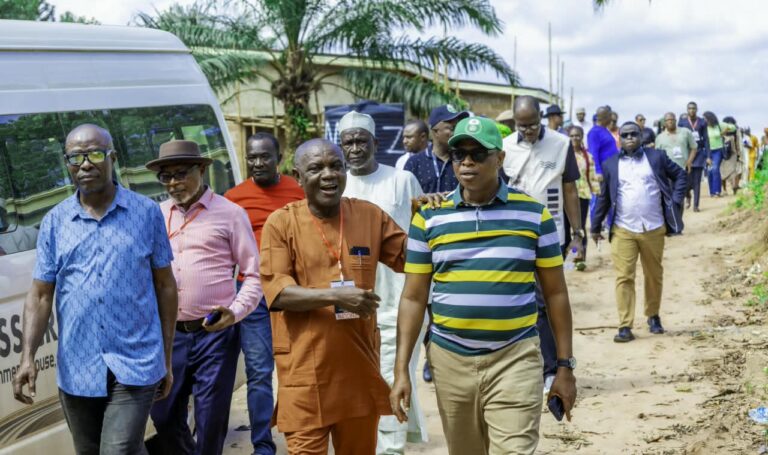
The visiting Editors

But there’s also this conversation around peer review, which is something that is going on now. And we’ve had a number of my colleagues who have come to, of course, see what we’re doing here. And the whole idea is for us to, at some point, also have an integrated system.

Where we can have a common command and control centre for the entire South-East. Not just for intelligence, but also for operations because what tends to happen is if you have tension in a certain location, once you neutralise that, you see those people migrating to other areas.

We’re mindful and it’s a work in progress. It’s something that we do hope to achieve. In terms of the South-East integrated development, we’re lucky that federal government, the president, approved and signed into law the South-East Development Commission.

And that’s somehow now driving these South-East common projects. For example, the SEDC is working on the pressure gas pipe to all the major cities in the South-East. They’ve taken ownership of that. It was something we were working in isolation. But since the coming into force and the operationalisation of the South-East Development Commission, that project is back to life.

In fact, the integrated South-East railway line is also back. They are currently trying to find funds for that project.  I think that we must commend the president for signing the SEDC into law and operationalising and also funding the SEDC because they are now taking up these projects of common interest in the South-East.

Again, on our part in Enugu, we’re also doing our bit in making sure that the airport, which we believe should be a major gateway for the entire South-East, the international wing, as you may already know, has been concessioned. And we are trying to make sure that the investor gets it operationalised. We are working on that.

In terms of our partnership with federal government, we are actually partnering with federal government in several ways, particularly with the road infrastructure. The road you drove through today, I think when you are going through the Enugu-Abakaliki Road, the flyover on that road is being done by federal government. But the dualisation is being done by the states.

So the state is doing the 22-kilometre stretch, we’re dualising it, and then federal government is stepping in. And then you can see that they have also done the Enugu-Onitsha Expressway. That was almost a road that was impossible to get done, but we now can drive easily to Onitsha with ease and quite a whole number of interventions.

So we have quite a good synergy with the federal government, and we also use this opportunity to commend the President for his interest in the South-East, and quite a lot of intervention has taken place since he assumed office. The Enugu-Port Harcourt Expressway now, the whole one carriage of that entire stretch is completely done.

Continue Reading

Trending

Maduka College Advert