News
Over 30 Kwara traditional rulers flee palaces with their families over terror attacks

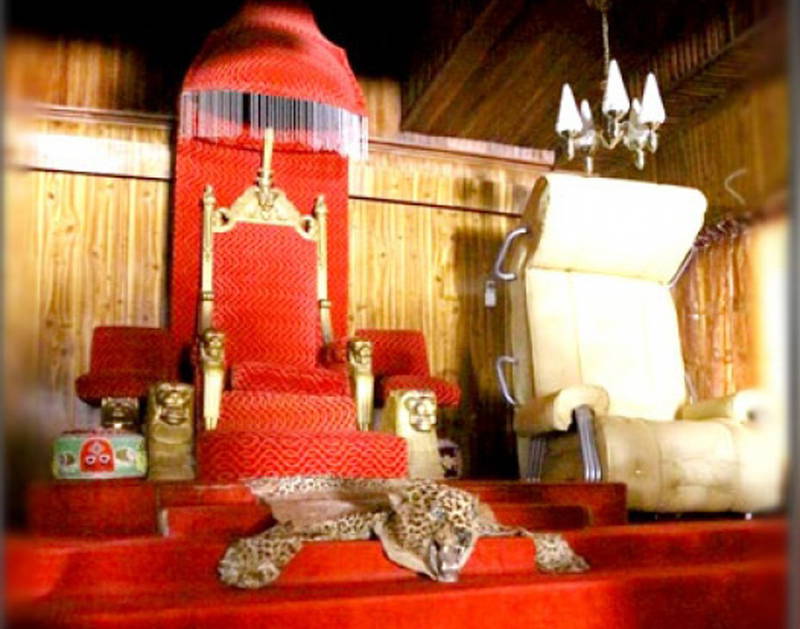
No fewer than 30 traditional rulers across the southern area of Kwara State have fled their palaces following a sustained wave of kidnappings, killings and violent attacks, it has been learnt.
Our correspondents gathered from two credible community leaders that the affected monarchs were seeking refuge in urban centres, including Ilorin, Osogbo, Offa, and Lagos.

Findings show that some of the affected traditional rulers are from Omugo, Afin, Oreke, Oreke Oke-Igbo, Olohuntele, Alabe, Ganmu Ailehri, Ologanmo, and Igbo Agbon communities.
While some have been away from their domains for months, others have been out for nearly a year.
Their displacement, triggered by repeated attacks by armed groups, has created a leadership vacuum in their communities.

A resident of Omugo community, Wale Olasunkanmi, said his traditional ruler, known locally as Eesa, fled due to fear of abduction.
He said, “In the past, our traditional rulers were always around. They lived among us and provided leadership during crises. But now, they don’t stay here anymore. They only come occasionally for meetings or special occasions and leave immediately.
“When attacks became frequent, it was no longer safe for them to remain in the palace. Even ordinary residents are afraid, so you can imagine what it means for a king who is always a target.”
Olasunkanmi recalled that a major attack on the community in March 2026 marked a turning point.
“After the bandits attacked the church on March 22 and abducted about eight people, many families started leaving. The fear was too much. People abandoned their homes overnight,” he said.
He added that while there had been a slight improvement in security in recent weeks, the absence of traditional rulers continued to affect coordination and decision-making.
“Even as some people are trying to return, there is no strong leadership on the ground. That makes it difficult to rebuild confidence,” he stated.
According to him, Omugo is part of the larger Oro-Ago community, which comprises about 15 towns, including Ajegunle, Iragbon, Ago, Oke Ayin, Oyate, and Oke Daba, all of which have experienced varying degrees of attacks.
Further findings by Saturday PUNCH showed that Oreke and Oreke Oke-Igbo communities have been largely deserted since June 2025 following repeated bandit incursions.
The situation escalated after an attack on a marble mining site near Oreke-Okeigbo on June 4, 2025, where two police officers, Assistant Superintendent Haruna Watsai and Inspector Tukur Ogah, were killed.
A palace worker, Samuel Afolayan, said the attacks marked the beginning of mass displacement.
“Initially, they were just stealing food and livestock. But later, they started kidnapping and killing people. That was when everyone began to leave.
“As I speak to you, I have not been to Oreke since June last year. The king is not there, the palace is empty, and the entire community is deserted. Even neighbouring villages along that axis have been abandoned,” he stated.
Afolayan described the area as “completely isolated,” adding that basic social and economic activities had collapsed.
Similarly, the Oniwo of Afin, Oba Simeon Olaonipekun, has not returned to his domain since he was abducted alongside his son on New Year’s Eve.
Gunmen invaded his residence in December 2025 and kidnapped the monarch and his son, who is a corps member.
While the son was released after about 21 days, the monarch regained his freedom after a ransom reportedly exceeding N30m was paid.
A palace source said the monarch was still undergoing treatment.
“Kabiyesi went through a very traumatic experience. He spent almost a month in captivity under harsh conditions. Given his age, it affected him seriously,” the source said.
“Since his release, he has been receiving medical attention. Doctors advised that he should rest and avoid stressful situations. That is why he has not returned to the community.”
Across the affected communities, the impact of the attacks has been devastating.
It was gathered that farms had been abandoned, schools shut down, and markets rendered inactive as residents fled to safer locations.
The latest gunmen attack occurred in Olayinka community in Ifelodun LGA, where armed men stormed the palace of the monarch, Oba Salman Olátúnjí Aweda, in the early hours of Saturday and abducted him alongside his wife and another resident.
Police authorities later confirmed the arrest of 42 suspected illegal miners in connection with the abduction, while sources disclosed that the kidnappers demanded about N400m ransom.
A resident, who identified himself simply as Tunde, recounted the attack.
“It was like a war scene,” he said.
“They came with guns and started shooting. People were running in different directions. Before we knew what was happening, Kabiyesi had been taken.”
Tunde added that the attackers appeared to have prior knowledge of activities in the palace.
“Earlier that day, some miners came to pay royalties to the king. So, when the attackers came at night, they demanded the money. Kabiyesi gave it to them, but they still took him away. After that incident, everyone fled. Nobody wants to stay there again,” he said.
Traditional rulers killed by gunmen
Beyond Olayinka community, a disturbing pattern has emerged across Kwara South, with traditional rulers increasingly becoming targets.
In September 2025, the Baale of Ogbayo in Oke-Ode was killed in his palace after gunmen invaded the community at dawn.
Earlier, in February 2024, the Olukoro of Koro-Ekiti, Oba Olusegun Aremu-Cole, was killed in his palace, while his wife and another person were abducted.
Sources said the kidnappers initially demanded N100m, which was later reduced to N40m.
In November 2025, the Ojibara of Bayagan-Ile, Oba Kamilu Salami, was abducted on his farm and released after about 25 days in captivity following the payment of ransom.
According to findings, ransom demands in recent cases have ranged between N40m and N400m.
A source involved in one of the negotiations said, “They usually start with outrageous figures, sometimes over N100m. After negotiations, it may come down, but it is still a huge burden.
“In many cases, families have to sell properties or borrow money to secure the release of their loved ones.”
‘Development disturbing’
The Coordinator of the Joint Security Watch in Kwara South, Olaitan Oyin-Zubair, said the signs of mass displacement were long ignored.
“There was a time we raised the alarm that communities were being deserted, but people did not take it seriously. The development is really troubling and disturbing” he said.
“Today, more than 28 communities with traditional rulers in Ifelodun have been abandoned. Places like Olayinka, Oro-Ago, Omugo, Ahun, Oke-Oyan, Owa-Kajola, Owa-Onire, and Oba have become ghost towns. Farms are abandoned, schools shut, markets dead. The reality we warned about has become undeniable,” he stated.
Residents said the crisis had severely disrupted agriculture and worsened food insecurity.
A trader from Oro-Ago, Bose Adeyemi, said she had relocated to Ilorin.
“I am a yam seller, but I cannot go back home. Nobody wants to farm anymore because it is too dangerous,” she said.
A retired civil servant, Janet Adebisi, said she had abandoned her investments.
“I used my gratuity to start farming, but I cannot even visit the farm now. My life is more important than any investment,” she said.
Traditional council under scrutiny
The wave of attacks has put the Kwara State Traditional Council under scrutiny, with many questioning its response to the crisis.
While sources within the council confirmed that meetings had been held with government officials and security agencies, critics say the response has not been visible enough.
A community leader in Ekiti LGA, Adebayo Ojo, said, “Our royal fathers must speak with one voice. People expect leadership at a time like this.”
However, a palace source who did not want to be named said engagements were ongoing behind the scenes.
“These issues are being discussed. The traditional rulers are engaging government and security agencies, but not everything can be made public,” the source said.
The crisis has also sparked debate over the role of traditional and spiritual methods in safeguarding communities.
A socio-political advocate in Kwara State, Abdul-Rahoof Bello-Labelabe, raised concerns over what he described as the worsening security situation in Kwara South.
He warned that residents were increasingly vulnerable to attacks and abductions across several communities.
Bello-Labelabe, who identified himself as the Advocate of Igbomina Liberty and Northern Yoruba Nationality, said there had been no meaningful improvement in security, particularly in Ifelodun LGA.
He disclosed that a wave of kidnappings recorded between Wednesday and Thursday affected multiple communities, leaving scores of residents abducted.
He also referenced the abduction of a traditional ruler in Olayinka community alongside his wife, noting that the kidnappers had demanded a ransom running into millions of naira.
The advocate claimed that many traditional rulers no longer resided in their domains due to safety concerns.
“Although not all traditional rulers have abandoned their communities, a significant number of them no longer live there. They only visit when necessary and leave immediately. Very few have the courage to remain. If any of them is still residing in their domain, let them come forward and state it openly,” he said.
Bello blamed abandonment of traditional practices.
“In the olden days, no one dared to touch a king. Today, our monarchs have abandoned traditional ways of protection.
“Our kings have their share of the blame. They harbour these bandits and criminals; they give them land; they know them, they cannot pretend they do not know them.
“They allow aliens to intermarry with the natives; they create markets for them; they install Seriki for them on Yoruba land. If security is made their responsibility, they will take it seriously,” he added.
The community leader linked the worsening insecurity to illegal mining activities and weak local structures.
Traditional rulers abandoned indigenous protection — Monarch
The monarch of Osi community in Akure North LGA, Oba David Olajide, also advised his colleagues to adopt measures to protect themselves and their subjects against criminal attacks.
Olajide, who once survived a bandit attack in his community, also lamented that some rulers had abandoned the traditions of their communities.
He said, “The issue of insecurity in the country is getting worse to the extent that bandits are attacking obas, but we traditional rulers are not resting on our oars. For instance, in my local government here, we are taking proactive measures both traditional and modern, but these are matters we can only discuss in the media cautiously because they are security issues.
“Another issue is that some obas are wrongly chosen in their communities. It is very absurd to hear that bandits are killing monarchs. Bandits cannot kill a real monarch; they cannot even go near where they are, let alone attack them. In the olden days, warriors used to be made obas, so how can you attack a warrior? It is not possible.
“But the problem we are having is that some obas were not chosen the way they should be chosen. They were selected based on connections in government or because they have money. Such persons would not take the tradition of the community seriously. Nowadays, we are having politicians as obas, and people who don’t understand tradition as obas. These are the problems.
“So, obas too need to reduce their flamboyant lifestyle. They should not be seen everywhere, at every ceremony, spraying money or moving in convoy. We obas should understand the issue of insecurity nowadays and reduce all these lifestyles.”
However, the monarch urged the government and security agencies to support efforts aimed at fighting crime and criminality in their domains.
Meanwhile, local vigilante groups say they are struggling to contain the situation due to poor equipment and limited support.
A vigilante member in Ifelodun, who identified himself as Musa, said armed groups had taken over forests in the area.
“We know these forests, but they have better weapons. Sometimes, before help comes, they are gone.
“Even with our local guns, we are always facing them without fear, but you know their superior firepower always gives them the upper hand,” he said.
He, however, called for stronger collaboration between vigilantes and formal security agencies, including better funding and equipment.
The Chairman of the Igbomina Professional Association, Bode Iranloye, described the situation as alarming.
“This menace has destroyed the peaceful nature of our communities. It has affected agriculture, commerce, and communal life,” he said.
Iranloye recommended improved intelligence gathering, deployment of surveillance technology, and stricter regulation of illegal mining activities.
A security analyst, Sadiq Lawal, said the trend was concerning.
He said, “When criminals begin to target traditional rulers, it is a clear indication that authority structures have collapsed. In many African societies, kings are seen as sacred and untouchable. Once they become targets, it means the criminals are no longer afraid of consequence.” (Saturday PUNCH)














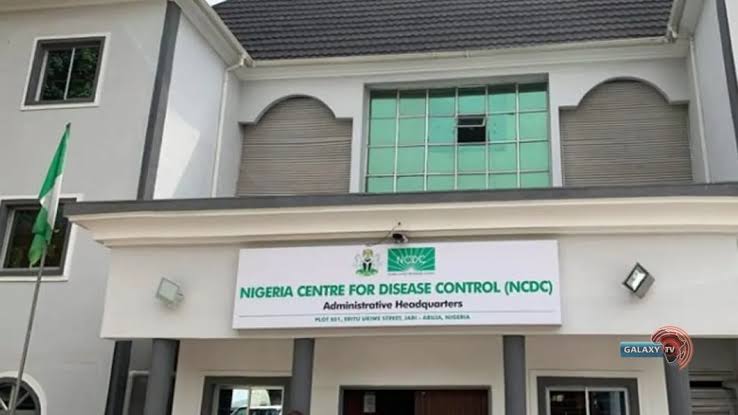
The Nigeria Centre for Disease Control and Prevention (NCDC) has reported two suspected Ebola cases as the number of people being monitored following the country’s confirmed infection rises to 53.
The development has heightened the urgency of efforts to contain the virus and prevent further transmission.
The Director-General of the NCDC, Dr Jide Idris, disclosed this on Sunday, October 25, 2026, during a press briefing in Abuja, where he provided an update on the country’s surveillance and response measures.
“We have established two additional suspected cases and 53 primary contact links. They are primary contacts. We have an isolation centre and a quarantine centre,” Idris said.
However, details surrounding the two suspected cases remained unclear, as other accounts of the briefing indicated that authorities had investigated two cases, including the confirmed infection in Abuja and a suspected case in Rivers State that subsequently tested negative.
The reported suspected cases should therefore not be interpreted as additional confirmed infections without laboratory confirmation.
Providing details of the contact-tracing exercise, Idris said the 53 contacts comprised 44 people linked to the healthcare facility where the confirmed patient received treatment and nine others identified through further investigations.
The additional contacts included three members of the patient’s household, three healthcare workers who attended to her at an earlier medical facility and three personnel involved in collecting samples.
According to the NCDC, the identified contacts had been classified according to their exposure risks and placed under monitoring. None had tested positive for Ebola or developed symptoms as of the briefing.
Idris explained that public health teams would monitor the exposed individuals for 21 days after their last possible exposure, in line with established protocols for detecting and responding promptly to potential infections.
He also disclosed that approximately 12 public and private laboratories were available to conduct Ebola testing in Nigeria as authorities continued to strengthen the country’s diagnostic capacity.
The NCDC director-general urged healthcare facilities nationwide to reinforce screening, patient assessment and infection prevention measures.
He stressed the need to provide healthcare workers with adequate personal protective equipment and ensure the prompt reporting of suspected infections.
Idris further appealed to individuals contacted by public health officials to cooperate with investigators and provide accurate information about their movements, possible exposure and symptoms.
Nigeria confirmed its first Ebola case in the current regional outbreak on October 20, 2026, after a woman with a recent travel history to Uganda tested positive for the Bundibugyo strain of the virus in Abuja.
According to the World Health Organisation, the woman developed symptoms on October 7 and sought treatment at a private health facility on October 11 before laboratory tests confirmed the infection.
The initial contact-tracing exercise identified 44 people, but the figure subsequently increased to 53 as investigations expanded.
The Federal Government has maintained heightened surveillance while strengthening laboratory testing, isolation arrangements and infection prevention protocols.
Health authorities have urged Nigerians to remain vigilant, cooperate with public health officials and avoid spreading unverified information as investigations and monitoring continue.

The Kogi State Police Command has commenced an investigation into the deaths of two individuals in Ajaokuta Local Government Area amid reports of an alleged murder-suicide involving two police officers.
The command’s Public Relations Officer, Afusat Saliu, confirmed the development in an interview with Sunday Punch on Saturday.
According to reports, a police corporal identified as Amos, attached to the Ajaokuta Division, allegedly shot his girlfriend, Grace, who was also a corporal, before turning the weapon on himself.
A source disclosed that Amos reported for night duty as a station guard at about 6 p.m. on Friday but allegedly left his duty post a few hours later.
He was said to have proceeded to Grace’s quarters at about 9 p.m., where he allegedly fired three shots at her, hitting her shoulder, lower abdomen and leg, before shooting himself with his AK-47 rifle.
The source attributed the incident to a lingering crisis in the couple’s relationship.
Reports indicated that the two officers had been dating for several years, but their relationship reportedly deteriorated in recent months amid allegations of infidelity and a breakdown of trust.
Their disagreements allegedly escalated into physical altercations and threats, prompting the Divisional Crime Officer (DCO) to detain them at one point and advise them to end the relationship.
“The two junior police officers had been dating for some years now, but a few months ago, they started having trust issues and cheating allegations. There had been physical fights and threats to the extent that they were detained at some point by the DCO, who later advised them to end the love relationship for the sake of peace,” the source said.
The source added that the disagreements persisted despite the DCO’s intervention.
Confirming the incident, Saliu said the command was investigating the circumstances surrounding the deaths and would provide further information when the investigation was concluded.
“We are aware of the incident, and the case is currently under investigation; we will update members of the public after the investigation is concluded,” she said.
However, the police spokesperson declined to immediately confirm whether the deceased were members of the command.
“I cannot confirm that to you right now, but we are investigating the circumstances that led to their death,” she stated.
Saliu also declined to categorically describe the incident as a murder-suicide, stressing that the police had yet to establish the circumstances surrounding the deaths.
“I cannot also tell you if the couple committed suicide or not until the investigation is concluded. We will release an official statement once I get a conclusive report on the matter,” she added.
The police are expected to provide further details after completing their investigation.

…ESMATA hails end of Monday sit-at-home, improved market infrastructure; governor announces cargo terminal, direct China imports plans
Market leaders across Enugu State have pledged their support for Governor Peter Mbah’s second-term ambition, citing improvements in market infrastructure, the restoration of Monday trading activities and policies aimed at strengthening commercial activities.
The traders, under the umbrella of the Enugu State Market Amalgamated Traders Association (ESMATA), made their position known during a meeting with the governor on Friday, October 23, attended by chairmen and secretaries representing more than 50 markets across the state.

Leading the delegation, ESMATA President, Chief Chinwuba Igwesi, said traders across the 17 local government areas of the state were satisfied with what he described as the administration’s commitment to improving their business environment and addressing challenges confronting the trading community.
Igwesi particularly commended Mbah for ending the Monday sit-at-home disruption, which he said had previously deprived traders of substantial income by forcing them to close their businesses at the beginning of each week.
He noted that the restoration of normal commercial activities on Mondays had enabled traders to operate throughout the week, recover lost business opportunities and improve their earnings.
The ESMATA president also praised the administration for providing transformers to markets experiencing electricity challenges, rehabilitating internal market roads, installing solar-powered streetlights and constructing toilet facilities.
He added that the government had provided utility vehicles to market leadership and appointed some market leaders to positions in the administration, describing the gestures as recognition of traders’ contributions to the state’s economic development.
Igwesi also expressed appreciation for pilgrimage opportunities approved for some market leaders, noting that the administration had demonstrated its willingness to engage with and support the market community.
According to him, Mbah’s background in business has enabled him to understand the challenges traders face, including access to goods, operating costs, infrastructure deficits and the need for a stable commercial environment.
Traders Defend Unified Tax System
Addressing concerns about taxation, Igwesi dismissed reports of a general tax increase, explaining that the administration had introduced a system for consolidating taxes into a single account.
He said traders were willing to fulfil their tax obligations because they could see development projects and infrastructure being delivered across the state.
The ESMATA president maintained that visible investments in public infrastructure had strengthened traders’ confidence in the government and encouraged greater cooperation between the business community and the state authorities.
He also attributed improved commercial prospects in the building materials sector partly to the administration’s directive that contractors handling projects in Enugu should patronise local suppliers where the required materials were available within the state.
According to him, the policy had helped retain business transactions within Enugu, increased patronage for local merchants and created opportunities for businesses dealing in construction materials.
Igwesi further commended the government’s investments in healthcare infrastructure, particularly the international hospital project, which he said had impressed him with its scale and standard.
Describing the development, he said the facility briefly made him feel as though he had travelled to Dubai.
He argued that projects of such magnitude could improve the state’s image, stimulate economic activities and create new opportunities for businesses.
‘No Opposition in Our Markets’
Declaring the traders’ support for Mbah’s second-term bid, Igwesi said the governor’s performance had strengthened his standing among market operators ahead of the next governorship election.
He urged the governor to sustain the pace of development, assuring him that traders would continue to support his administration.
“When the time comes, your work will speak for you,” he said, reiterating the association’s position with the declaration: “No opposition in Enugu State.”
Other market leaders echoed the commitment, arguing that improvements in infrastructure, security and the business environment had reinforced their confidence in the administration.
Mbah Unveils Plans for International Trade
Responding, Governor Mbah thanked the traders for recognising his administration’s efforts and assured them that more development initiatives were in the pipeline.
He said his government remained committed to expanding commercial opportunities, improving infrastructure and positioning Enugu as a major destination for business and investment.
Among the initiatives highlighted was a proposed cargo terminal at the Akanu Ibiam International Airport, Enugu, which the governor said would improve the movement of goods and connect local businesses to international markets.
Mbah also disclosed plans for direct cargo operations between Enugu and China, saying the initiative would enable traders to import goods more directly and at more competitive costs.
He explained that improved access to international supply chains would reduce some of the difficulties traders encounter when sourcing goods, while strengthening the competitiveness of businesses operating in the state.
The governor also highlighted the ongoing construction of the Idodo International Market, describing it as part of the administration’s broader strategy to expand commercial infrastructure and create additional opportunities for traders and investors.
He said the government was deliberately investing in infrastructure and connectivity to attract more businesses, stimulate economic activities and create employment opportunities.
ICC to Boost Commercial Activities
Mbah further explained that the construction of the International Conference Centre (ICC), Enugu, was part of his administration’s efforts to restore the state’s historical prominence as a major political, administrative and commercial centre in the South-East.
According to him, hosting national conferences, major gatherings and other high-profile events in Enugu would attract visitors and businesspeople, creating increased patronage for hotels, restaurants, transport operators, traders and other service providers.
He stressed, however, that sustained investment in security was essential to achieving the ambition, noting that businesses and visitors needed a safe environment to operate and move freely.
The governor said his administration was working to strengthen the state’s security architecture, adding that security, infrastructure and economic planning must complement one another to make Enugu more attractive to investors.
Mbah Targets $30bn Economy
Reaffirming his administration’s economic ambition, Mbah said he was working towards growing Enugu’s economy from an estimated $4 billion to $30 billion.
He linked the target to efforts to increase productivity, attract investments, strengthen local enterprises and expand economic opportunities for residents.
The governor maintained that Enugu possessed considerable economic potential and expressed confidence that ongoing and planned projects would help accelerate the state’s development.
He also assured the traders that their interests would remain a priority, pledging not to support policies designed to undermine their businesses.
Drawing on his own business experience, Mbah said he understood the challenges associated with running enterprises, sourcing goods, meeting financial obligations and sustaining livelihoods.
He assured the market leaders that his administration would continue to consider the impact of its policies on traders and other business operators.
The meeting was attended by key government officials, including the Senior Special Assistant to the Governor on Market Liaison, Hon. Dr. Chinedu Mbah; the Senior Special Assistant to the Governor on Security, Mr. Vincent Onyeaboor; and the Special Adviser to the Governor on Political Matters, High Chief Frank Anioma. The three officials accompanied the governor in receiving the market leaders.
The engagement underscored the importance of sustained dialogue between the state government and the market community, with traders expressing appreciation for completed interventions while the governor outlined further plans aimed at improving infrastructure, expanding access to international trade and strengthening Enugu’s commercial position.
With the ESMATA leadership and representatives of more than 50 markets expressing confidence in the administration, the meeting highlighted the growing significance of the trading sector in the state’s economic and political conversations ahead of the next governorship election.
For the traders, the central message was that market infrastructure, reliable security, access to goods, improved business opportunities and visible development would remain important measures of government performance. For Governor Mbah, the meeting provided an opportunity to reaffirm his commitment to building a more connected, secure and commercially vibrant Enugu State.
-
 Features20 hours ago
Mmesoma Umeorini: When Love Turns Deadly, and a Young Woman Pays With Her Life
-
Features17 hours ago
Why Igbos Celebrate New Yam Festival Worldwide: The History, Cultural Significance and Lessons For The Younger Generation
-
News7 hours ago
Kogi Police Probe Alleged Murder-Suicide Involving Two Officers
-
News2 days ago
Mbah: Why We Built 268 Smart Green Schools Across Enugu State
-
News2 days ago
UBA Commences Contempt Proceedings Against WEMPCO Directors over Alleged Disobidence of Court Order
-
News2 days ago
Enugu CP Orders Probe into Death of Izuchukwu During Police Raid
-
News2 days ago
Macron Postpones Planned Visit to Nigeria Until 2027
-
Politics2 days ago
2027: Atiku, Obi, Duke, Others in Talks on Single Opposition Candidate – Coalition