Connect with us

News

ADC Reps demand prosecution of INEC Chairman

Published

on

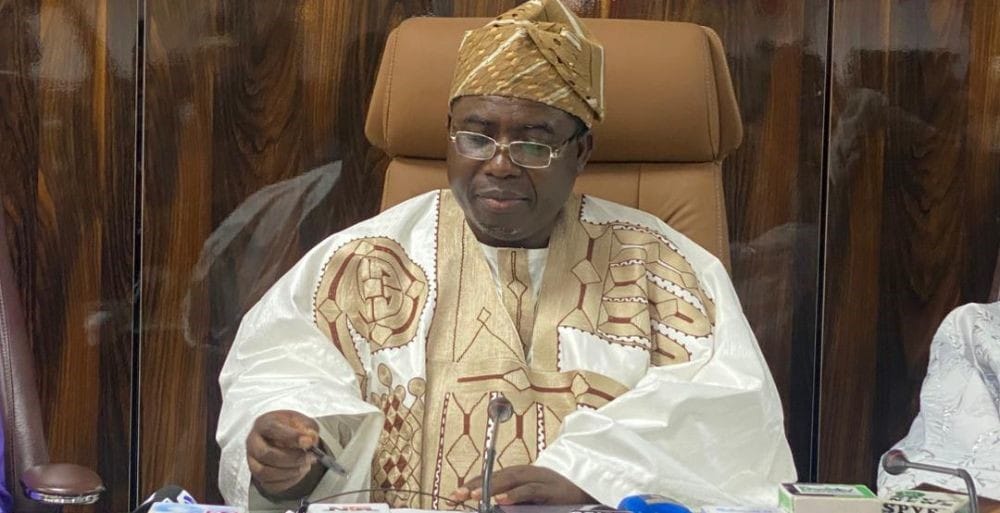
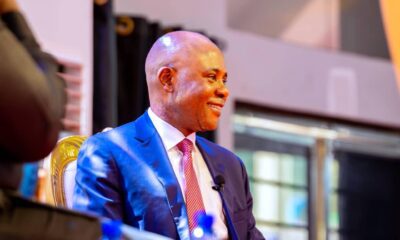
INEC Chairman, Prof Joash Amupitan
Spread the love
The African Democratic Congress (ADC) caucus in the House of Representatives has called for the prosecution and removal of the Chairman of the Independent National Electoral Commission (INEC), Prof Joash Amupitan, over allegations of partisanship and compromised neutrality ahead of the 2027 general elections.

The caucus made its position known following its inaugural meeting held on Sunday, April 12, 2026, where members reviewed recent political developments and expressed deep concern about the credibility of the electoral umpire.

In a strongly worded resolution, the lawmakers accused Amupitan of exhibiting actions and making statements deemed inconsistent with the expectations of an impartial electoral body head.

They cited allegations that the INEC chairman previously operated a personal X (formerly Twitter) account where he reportedly expressed support for the ruling All Progressives Congress (APC) and shared controversial content relating to claims of Christian genocide in Nigeria.

Although the Independent National Electoral Commission has denied any link between Amupitan and the account, the ADC caucus claimed that digital forensic findings and online investigations suggest otherwise, raising questions about his integrity and transparency.

“The office of the INEC chairman is too critical to be tainted by allegations of partisanship,” the caucus stated, warning that failure to address the issue could undermine public trust and jeopardise the credibility of the 2027 elections.

Maduka College Advert

The lawmakers further alleged that under Amupitan’s leadership, INEC has taken steps that could deny the ADC fair participation in upcoming elections. They accused the commission of interfering in the party’s internal affairs by recognising what they described as an illegitimate leadership faction, contrary to the faction led by former Senate President, David Mark, which they said had previously met INEC’s requirements.

According to the caucus, the commission’s actions amount to a breach of its constitutional role as an independent arbiter and risk plunging the nation into undemocratic practices.

The ADC lawmakers also alleged collusion between certain officials of INEC and members of the judiciary to influence the outcome of a pending court case concerning the party’s leadership dispute, scheduled for hearing on April 14, 2026.

Citing provisions of the Electoral Act 2026, particularly Section 83(5), the caucus argued that courts lack jurisdiction over internal party matters and warned against what it described as judicial overreach.

In a further escalation, the caucus vowed to petition the National Judicial Council (NJC) over what it termed the compromise and malfeasance of some judicial officers. It called for investigations and possible removal of judges allegedly influenced by political interests.

The lawmakers referenced recent remarks by Nigerian Bar Association President, Afam Osigwe, who had raised concerns about growing perceptions of judicial bias and undue political influence, including the controversial practice of politicians gifting vehicles to judges.

Describing the situation as an “existential threat” to Nigeria’s democracy, the ADC caucus urged Nigerians across political divides to prioritise the protection of democratic institutions.

They also lamented what they described as a decline in judicial integrity compared to past eras, invoking the legacies of respected jurists such as Chukwudifu Oputa, Niki Tobi, Kayode Eso, and Mohammed Uwais.

“INEC must not only be independent in name but must also demonstrate impartiality, transparency, credibility, and trustworthiness,” the caucus stated, adding that current public perception suggests a growing disconnect from these ideals.


The caucus made its position known following its inaugural meeting held on Sunday, April 12, 2026, where members reviewed recent political developments and expressed deep concern about the credibility of the electoral umpire.

In a strongly worded resolution, the lawmakers accused Amupitan of exhibiting actions and making statements deemed inconsistent with the expectations of an impartial electoral body head.

They cited allegations that the INEC chairman previously operated a personal X (formerly Twitter) account where he reportedly expressed support for the ruling All Progressives Congress (APC) and shared controversial content relating to claims of Christian genocide in Nigeria.

Although the Independent National Electoral Commission has denied any link between Amupitan and the account, the ADC caucus claimed that digital forensic findings and online investigations suggest otherwise, raising questions about his integrity and transparency.

“The office of the INEC chairman is too critical to be tainted by allegations of partisanship,” the caucus stated, warning that failure to address the issue could undermine public trust and jeopardise the credibility of the 2027 elections.

The lawmakers further alleged that under Amupitan’s leadership, INEC has taken steps that could deny the ADC fair participation in upcoming elections. They accused the commission of interfering in the party’s internal affairs by recognising what they described as an illegitimate leadership faction, contrary to the faction led by former Senate President, David Mark, which they said had previously met INEC’s requirements.

According to the caucus, the commission’s actions amount to a breach of its constitutional role as an independent arbiter and risk plunging the nation into undemocratic practices.

The ADC lawmakers also alleged collusion between certain officials of INEC and members of the judiciary to influence the outcome of a pending court case concerning the party’s leadership dispute, scheduled for hearing on April 14, 2026.

Citing provisions of the Electoral Act 2026, particularly Section 83(5), the caucus argued that courts lack jurisdiction over internal party matters and warned against what it described as judicial overreach.

In a further escalation, the caucus vowed to petition the National Judicial Council (NJC) over what it termed the compromise and malfeasance of some judicial officers. It called for investigations and possible removal of judges allegedly influenced by political interests.

The lawmakers referenced recent remarks by Nigerian Bar Association President, Afam Osigwe, who had raised concerns about growing perceptions of judicial bias and undue political influence, including the controversial practice of politicians gifting vehicles to judges.

Describing the situation as an “existential threat” to Nigeria’s democracy, the ADC caucus urged Nigerians across political divides to prioritise the protection of democratic institutions.

They also lamented what they described as a decline in judicial integrity compared to past eras, invoking the legacies of respected jurists such as Chukwudifu Oputa, Niki Tobi, Kayode Eso, and Mohammed Uwais.

“INEC must not only be independent in name but must also demonstrate impartiality, transparency, credibility, and trustworthiness,” the caucus stated, adding that current public perception suggests a growing disconnect from these ideals.

News

Troops rescue Widow of late Major General Rabe Abubakar

Published

on

Spread the love

Troops of the Nigerian Army’s 17 Brigade have rescued Mrs. Abubakar, the widow of the late Major General Rabe Abubakar, who was abducted by bandits shortly before the retired senior military officer died in captivity.

According to military sources, the rescue operation was carried out in Tunga Village, where troops encountered the armed bandits holding her captive. During the exchange, the kidnappers reportedly shot Mrs. Abubakar before fleeing as soldiers advanced on their position.

The troops immediately secured the area, rescued her and administered emergency first aid.

Military authorities said Mrs. Abubakar sustained gunshot wounds and was bleeding when she was rescued. She is currently receiving medical treatment.

The rescue comes days after the burial of Major General Rabe Abubakar, whose death while in captivity sparked widespread outrage and renewed concerns over insecurity in parts of the country.

Following Major General Abubakar’s death, the Defense Headquarters’ Joint Task Force North West, under Operation Fansan Yamma, launched a major offensive operation, codenamed Operation Clean Sweep III, targeting terrorists and bandits operating in Matazu Local Government Area and neighbouring communities in Katsina State.

Maduka College Advert

According to the military, the operation commenced on 14 June 2026 to locate and neutralise those responsible for the attack, dismantling criminal networks, and restoring security across the affected communities.

Continue Reading

News

Popular Businessman dies in captivity despite ₦5 million ransom payment

Published

on

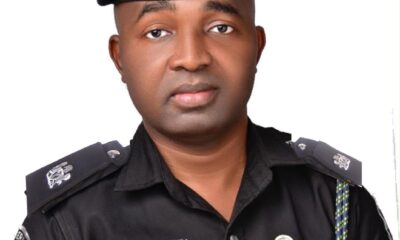
Alhaji Bala Sani Kawo
Spread the love

Residents of Dandume Local Government Area of Katsina State have been thrown into mourning following the killing of a prominent businessman and farmer, Alhaji Bala Sani Kawo, by suspected bandits despite the payment of a N5 million ransom for his release.

Kawo was reportedly abducted alongside one of his workers on June 11 near Dantakari town in Dandume LGA when armed men intercepted them and whisked them away into a forest.

Sources close to the family disclosed that the kidnappers later contacted relatives of the victim and informed them that he was ill while in captivity. They subsequently demanded N5 million as a condition for his release.

According to the source, the family raised the money and delivered it to the abductors as instructed. However, after receiving the ransom, the criminals reportedly directed family members to a designated location where Kawo’s lifeless body was discovered.

The killing has sparked grief across the community, with residents lamenting the loss of a businessman widely known for his contributions to agriculture and his role in providing employment opportunities for many youths in the area.

The incident comes amid renewed security concerns in Katsina State and follows the recent death of a former Director of Defence Information, Major-General Rabe Abubakar, who reportedly died while being held captive by terrorists.

Maduka College Advert

In response to rising insecurity in the North-West, troops of the Joint Task Force North West under Operation FANSAN YAMMA have launched a fresh offensive against terrorist and bandit groups operating in parts of Katsina State.

The task force’s Media Information Officer, Lieutenant Colonel Aliyu Danja, said in a statement on Monday that the operation, code-named “Clean Sweep,” commenced on June 14 as part of efforts to dismantle criminal enclaves and restore security in the region.

Continue Reading

News

Over 50 Bandit Attacks Recorded in a Week as FG Spends N57.78bn on Security

Published

on

Spread the love

The Federal Government spent N57.78bn on security-related projects and operations in the first four months of 2026, despite worsening insecurity across the country, with no fewer than 98 criminal incidents including 51 attacks and abductions recorded nationwide in just one week.

Data obtained from the Open Treasury Portal showed that the spending, which covered defence equipment procurement, security infrastructure, military barracks, police facilities and other security-related projects, represented a 127.97 per cent increase from the N25.35bn spent during the corresponding period of 2025.

The expenditure comes amid persistent attacks by terrorists, bandits, kidnappers and armed criminals across several states, raising concerns among security experts over the effectiveness of government efforts to tackle the crisis.

Analysis of the Treasury Portal data showed that N57.78bn had been spent as of April 2026 from a total security allocation of N4.66tn, indicating that only 1.24 per cent of the approved budget had been utilised within the first four months of the year.

The largest share of the expenditure, N21.39bn, was spent on defence equipment procurement, accounting for about 37 per cent of total security spending during the period.

Another N14.16bn was spent on security equipment, while N5.84bn went to the construction and provision of military barracks. The government also spent N5.17bn on police stations and barracks, N3.26bn on rehabilitation of defence equipment, N2.39bn on defence facilities and N2.16bn on repairs of military barracks.

Maduka College Advert

For routine operations, N3bn was spent on security services, while N320.94m was disbursed as security votes.

However, no expenditure was recorded under the military operations budget line tagged “Operation Lafiya Dole and Other Operations of the Armed Forces,” despite a N500m provision in the 2026 budget.

Similarly, no funds had been released for the kitting of Armed Forces personnel, although N2.53bn was earmarked for the programme.

A year-on-year comparison showed that spending on defence equipment rose from N9.48bn in the first four months of 2025 to N21.39bn in 2026, while military barracks construction increased from zero to N5.84bn.

Despite the increase in spending, budget implementation remained low across most security projects, with many critical programmes recording execution rates below three per cent.

The spending figures emerged as a police security report obtained by The PUNCH revealed that at least 98 criminal incidents were recorded across Nigeria within the last seven days.

The report showed that the incidents comprised 37 homicide cases, 27 banditry attacks, 24 kidnappings, eight armed robbery incidents and two terrorism-related attacks.

The incidents were reported across Kaduna, Katsina, Zamfara, Kebbi and several other states, involving mass abductions, attacks on rural communities and kidnappings along major highways.

Among the most disturbing incidents was the abduction of 39 residents in Zamfara State after they reportedly travelled into the Fadama Forest to negotiate peace with a notorious bandit leader, Jimo Smally.

In Katsina State, bandits blocked the Katsina-Kankara highway and intercepted a commercial vehicle carrying 11 passengers. Police later rescued nine victims, while the driver and another passenger remained missing.

Reacting to the development, security analyst, Lekan Jackson-Ojo, described the situation as the worst insecurity crisis in Nigeria’s history.

“This is the highest level of insecurity in the military and political history of the Federal Republic of Nigeria,” he said.

“It is an indirect pronouncement that Nigeria is an unsafe territory now. We are having a battered economy, and there is no economy anywhere in the world that thrives under insecurity.”

Jackson-Ojo said the country had suffered unprecedented security losses in recent months.

“During the civil war, I did not remember if a general died. In the war between Ukraine and Russia, a general has not lost his life. In the war between Iran, America and Israel, a general has not lost his life. But within the past three months, we have lost almost four generals — and there is no reprisal attack,” he stated.

The analyst also criticised the reintegration of repentant terrorists into society.

“I’ve never heard it anywhere in the world that terrorists who have terrorised, damaged and killed will be integrated back into society. To me, I think the government is totally helpless — total incapability, lack of political will. Something, or many things are wrong now,” he added.

He further lamented what he described as the political elite’s preoccupation with electoral activities rather than security challenges.

“What preoccupies our political class is campaign, campaign, campaign and campaign. This is a sad situation,” he stressed.

Another security analyst, Chidi Omeje, argued that the military remained overstretched despite increased government spending.

“The military, on their own, are completely overstretched. You can count almost over 30 terrorist operations in this country where military guys are deployed,” he said.

“One MRAP alone is almost N100 billion. If you put an aircraft in the sky to do an operation, do you know how much it costs for just one hour? By the time you put that N56 billion in dollars, it amounts to nothing.”

According to him, military operations alone would not solve Nigeria’s security challenges.

“Unless we are able to deal with the root causes, we will keep going in circles. Most of the issues are born out of bad governance, wrong prioritisation, corruption and pervasive poverty, which has made people see crime and criminality as an option for survival,” Omeje said.

He also blamed porous borders and instability across the Sahel region for worsening insecurity in Nigeria.

“From Mali to Burkina Faso to Nigeria — those places are the epicentre of terrorism. Nigeria is an attractive destination because we have porous borders and poor border management,” he stated.

Omeje urged the government to take decisive action.

“The government seems almost clueless about how to go about this matter. They are paid to find solutions — so they must find solutions,” he said.

The latest figures suggest that while the Federal Government has significantly increased security spending compared to last year, insecurity remains widespread, with violent attacks continuing across the country and a large portion of budgeted security funds yet to be utilised. (PUNCH)

Continue Reading

Trending

Maduka College Advert