News
$70,000 peace offering sparked dispute between Tracy Ohiri, lawyer


Tracy Ohiri, a businesswoman who previously accused the Minister of Works, Dave Umahi, of sexual harassment and unpaid campaign-related debt, has alleged that she was coerced into retracting her claims and promised payment that was never fulfilled.
In a new video on Friday, Ohiri claimed that a lawyer, Marshal Abubakar, pressured her to record the retraction and told her that Umahi had agreed to compensate her.

She, however, alleged that the money was not paid before the video was released, contrary to what she described as the agreement.
“Marshal, you gave me a script… you forced me to do this video,” she said.
“You said the person told you he was willing to pay me and compensate me for even arresting me and body-shaming me in public… You told me that I will receive my payment before you release the video.”

Ohiri repeatedly demanded payment in the video, questioning why the footage was made public before she received any money.
“How did you release the video without me collecting my money?” Ohiri asked.
She also alleged that Abubakar threatened her and prevented her from speaking to others about the matter.
“You made sure I did not speak to anybody… you kept on threatening me,” the businesswoman said.
She called on the Nigerian Bar Association (NBA) to investigate the lawyer’s conduct, describing it as unethical.
Ohiri also posted secretly recorded phone conversations she had with the lawyer.
Recall that Ohiri had alleged that Umahi owed her about N250 million for promotional and printing services she provided during his 2015 governorship campaign in Ebonyi State.
According to her, repeated demands for payment were met with alleged advances from the minister, which she said she rejected.
She further alleged that after rejecting the advances, the situation escalated, with threats and eventual police action against her.
Ohiri was arrested in Lagos on allegations of cyberbullying linked to her social media posts about the dispute and was subsequently transferred to Abuja, where she was detained at the FCT Police Command.
She was later arraigned before a magistrate court in Wuse, Abuja, on a defamation charge and granted bail.
The case drew public attention after activist and former presidential candidate, Omoyele Sowore, confronted Umahi at the police headquarters, criticising what he described as the criminalisation of a civil dispute.
Umahi had denied both the allegation of indebtedness and claims of sexual harassment.
In a video response, the minister described the claims as baseless and said his record in public office should speak for him.
“As party chairman, I owed nobody… I presided over both men and women, and nobody ever said I harassed them,” he said.
The minister dismissed the controversy as social media noise.
“What you read on social media, I’m not worried about it… it’s just to make social media alive,” he added.
Amid the controversy, Ohiri released a video retracting her earlier allegations and apologising to the minister and his family.
She said her decision followed consultations with her family, friends and legal team.
In the retraction, Ohiri walked back key elements of her claims, including the allegation that Umahi made threats referencing past incidents.
On the financial dispute, she stated that there was no formally signed agreement between her and the minister, suggesting that any materials she delivered may have been used by aides without his knowledge.
However, her latest video challenges that retraction, alleging that it was scripted and made under pressure, with a promise of payment that was not fulfilled.
She also claimed to have recordings of conversations and said she would release them.
Responding to the allegations in a statement on Saturday, Abubakar denied coercing Ohiri or withholding any payment, describing her claims as false.
Abubakar said he was among those who mobilised support for Ohiri during her arrest, including engaging activists and facilitating her bail.
He said efforts were made to mediate between Ohiri and Umahi, but the minister maintained that he was not indebted to her and would only pay if a court established the existence of a contract.
“He insisted that he wasn’t owing her and wouldn’t pay unless she can establish the existence of a contract,” he said.
According to him, during the mediation process, he found no evidence to support Ohiri’s claims of a contractual agreement or delivery of services to the minister.
“There was no single real evidence of any contractual agreement… no evidence that the minister ever engaged her,” he said.
He added that Ohiri eventually agreed to retract her allegations as part of efforts to resolve the dispute.
Abubakar said a sum of $70,000 was provided by a third party, Joseph Ekumankama, not as compensation or admission of liability, but to facilitate peace.
He denied personally benefiting financially from the process and alleged that Ohiri later demanded a much higher sum.
“She promised to drag my name online unless I… pay her N300 million,” he said.
Abubakar added that he is considering legal action over the allegations made against him. (PUNCH)









…Sen. Nnamani, Nwobodo, Dr. Nnamani, Chime, Ugwuanyi, Prof. Nnaji, Arthur Eze, Frank Nweke, Madueke, others get advisory roles
…Udeh, Nwoye, Utazi, Egumgbe, Ben Collins Ndu, Onyia, others head 51 Directorates
…Council to be inaugurated on Tuesday
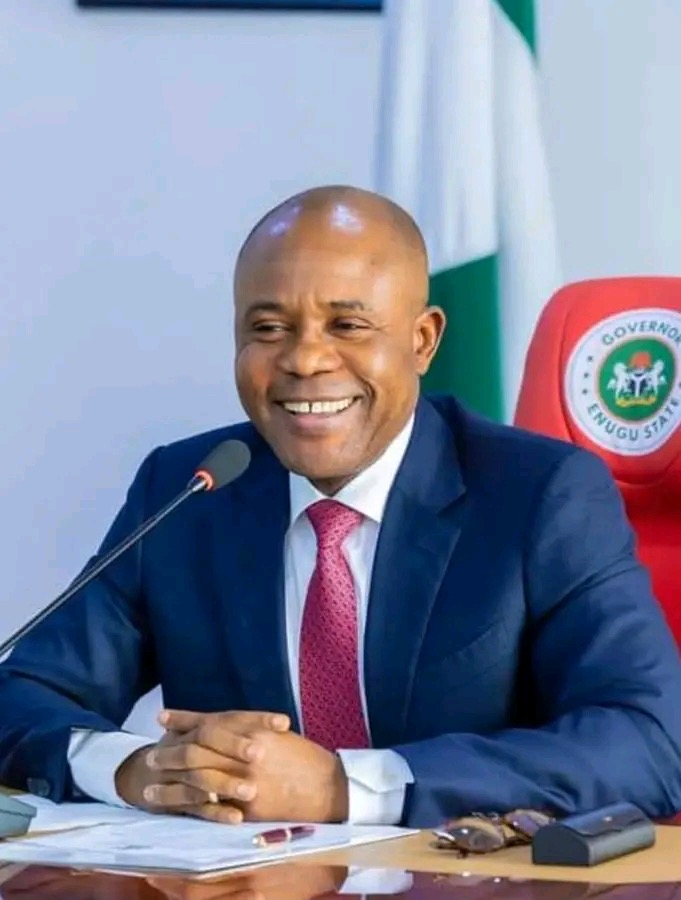
The Enugu State Chapter of the All Progressives Congress (APC), on Monday, unveiled the party’s Campaign Council ahead of the 2027 general elections.
The Campaign Council, comprising 51 Directorates, is chaired by the Governor of the state, Dr. Peter Mbah, while the Deputy Governor, Barr. Ifeanyi Ossai; Deputy National Chairman, APC (South); Speaker, Enugu State House of Assembly, Hon. Uchenna Ugwu; and the Chairman of the party in the state, Dr. Martin Chukwunweike, are Vice Chairmen.
The list signed by Chukwunweike and the Secretary of Enugu APC, Hon. Chukwudi Nnadozie, also has Chief Charlie Mbah as the Director-General of the Campaign Organisation and Dr. Eric Oluedo as the Secretary-General.
Deacon Okey Ogbodo, Dr. Dan Shere, and Hon. S.K.E. Udeh-Okoye are Deputy Campaign DGs for Enugu East Senatorial District, Enugu North Senatorial District, and Enugu West Senatorial District, respectively.
Barr. Steve Oruruo is the Campaign Spokesperson and Director of the Public Communication Committee, with Dr. Austin Okolie as co-spokesperson and Dr. Malachy Agbo as Secretary.
Mazi Uche Anichukwu and Dan Nwomeh, both drawn from the Governor’s media team, head the Directorate of New Media and Strategic Communication and the Directorate of Mainstream Media, respectively. Dr. Collins Ogbu is the Secretary of the former, while Dr. Reuben Onyishi is the Secretary of the latter.
Barr. Victor Udeh leads the Administration Directorate, while Dr. Ben Nwoye and Arc. Uche Nwatu are the Director and Co-Director of the Fundraising Committee, respectively.
Former Chief of the Naval Staff, Vice Admiral Ikechukwu Ogalla (Rtd.), chairs the Security Directorate, while former Inspector General of Police, Ogbono Onovo (Rtd.), is the Secretary.
The Minister of Innovation, Science and Technology is in charge of the Directorate of Government Appointees Coordination (Federal and State), with Prof. Chidiebere Onyia as Secretary, while former Speaker of the Enugu State House of Assembly, Rt. Hon. Eugene Odoh, heads Inter-Party Affairs.
Senator Osita Ngwu, Senator Ikeje Asogwa, and Senator Kelvin Chukwu are Coordinators of the Campaign Council in Enugu West, Enugu North, and Enugu East, respectively.
Meanwhile, in their co-signed statement, Chukwunweike and Nnadozie said the size of the Campaign Council was a reflection of “the conviction that every community, ward, local government area, professional group, support organisation, youth body, women’s group, elder, party faithful and person of goodwill must be seen, heard and meaningfully engaged.”
“Appointment into the campaign structure is therefore not merely an honour; it is a call to duty, accountability and measurable contribution,” they stated.
The Council will be inaugurated at the International Conference Centre, Enugu on Tuesday, October 27, 2026.
All members of the Campaign Council are to be seated before 3pm.
CLICK LINK BELOW TO SEE FULL LIST:
APC ENUGU CAMPAIGN COUNCIL COMPOSITION-1
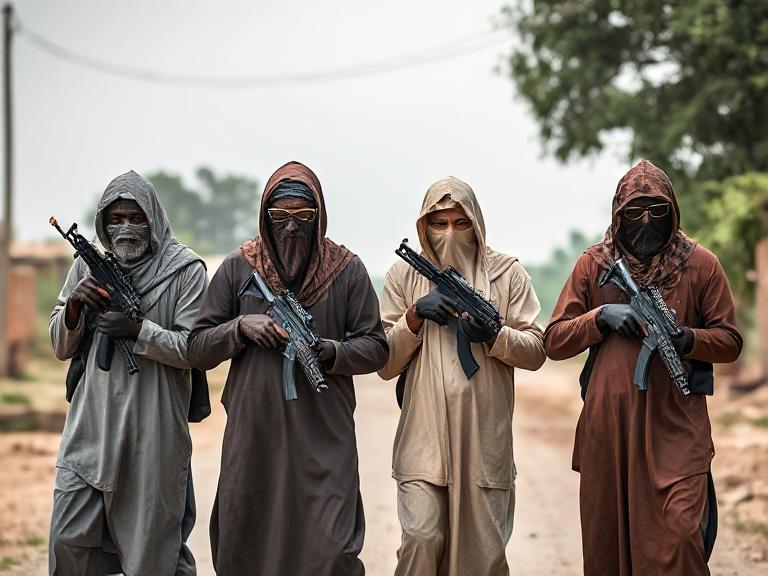
Tension has gripped parts of Kwara State following the reported abduction of members of the Iru Ekun Security Group, a security outfit spearheaded by Yoruba nation agitator Sunday Adeyemo, popularly known as Sunday Igboho.
The assailants reportedly abducted the security operatives and forced them to renounce their activities of protecting communities in the state.
According to reports, the abducted members pleaded for their release and were compelled to renounce their community protection activities.
The Iru Ekun Security Group was established to protect Yoruba communities in Kwara State against terrorist attacks and kidnappings.
The reported abduction has sparked fear among residents who rely on the group for protection against insecurity in their communities.
As of the time of filing this report, Igboho had yet to issue a statement on the reported abduction of the security group members.
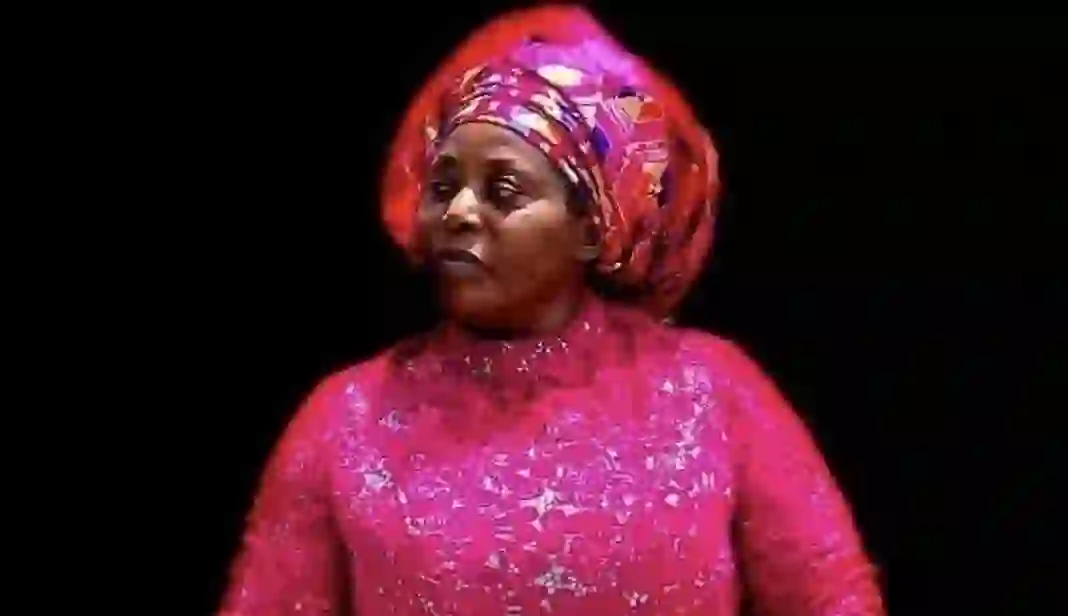
Fidelia Ezinwanne Chigbogu, the immediate elder sister of the late Senator Ifeanyi Ubah, has died at the age of 61.
Mrs Chigbogu, fondly called “Darling” by her husband, reportedly slumped and died on Sunday morning in Lagos while preparing to attend church.
Her husband, Chudi Chidinma Chigbogu, a native of Nnewi in Nnewi North Local Government Area of Anambra State, described her death as a devastating shock, saying she had shown no signs of illness before the incident.
“It was like a shock to me because, even as I am talking to you now, I never believed it,” he said.
Narrating the circumstances surrounding her death, Mr Chigbogu said the family had experienced an electrical incident the previous Thursday when their electricity meter exploded and burnt their changeover room.
He said they had contacted officials of the electricity distribution company, who promised to visit on Monday to replace and relocate the meter.
“We were busy waiting for them. My wife said she would give testimony in church on Sunday, and we were preparing for that,” he said.
According to him, his wife woke up on Sunday morning without any apparent health complaints and was preparing to leave for church when the incident occurred.
“That Sunday morning, she woke up. There was nothing like a headache, nothing like fever, nothing. She finished bathing and was preparing to go to church. She usually leaves home between 7 a.m. and 7:30 a.m. because of the roles she plays in the church,” he said.
Mr Chigbogu explained that he was washing his car because of dust when he became concerned that his wife had not come downstairs.
“I went to wash the car because of dust. Around 8 a.m., I called my son and said, ‘Why has mummy not come down? Go and check.’
“Only for the boy to go and start screaming that he called his mummy and she did not answer. He lifted her hand, and her hand dropped,” he recounted.
He said he immediately rushed upstairs and found his wife lying unresponsive on the bed.
“I called her names, no way. I alerted neighbours, and we carried her to six hospitals. Anywhere we went, they would take me aside and say I didn’t bring her on time, that she had passed on.
“I said no, it was not possible, until we got to Navy Hospital, where they refused to admit her,” he said.
Mr Chigbogu said prayers continued at their home for several hours as the family struggled to come to terms with the tragedy.
He recalled that around 4 p.m., someone told him she had seen his wife in a vision, moving swiftly without looking back, which she interpreted as a sign that the deceased had made it to heaven.
“That was when I changed my mind and allowed an ambulance to come. She left here after 6 p.m. and got to the village around 7 a.m. the next day,” he said.
Describing his late wife, Mr Chigbogu said she was a natural leader, peacemaker and philanthropist who played a significant role in her family, church and community.
“Aside from calling her Darling, I called her many names because she was a leader. No matter the case in the family, she would settle it.
“She is the founder of a women’s group, played a very big role in the church and was known for her charitable work. Before her passing, she was working on her orphanage.
“Even though she is no more, I will not let her down. I will make sure that project comes to pass,” he said.
On her family background, Mr Chigbogu said her parents had seven children—three boys and four girls—and that his late wife was the second daughter.
He added that she was also one of the trustees of the Ubah family.
-
 Features2 days ago
Mmesoma Umeorini: When Love Turns Deadly, and a Young Woman Pays With Her Life
-
Features2 days ago
Why Igbos Celebrate New Yam Festival Worldwide: The History, Cultural Significance and Lessons For The Younger Generation
-
News2 days ago
Kogi Police Probe Alleged Murder-Suicide Involving Two Officers
-
News19 hours ago
BREAKING: Tension as Video Shows Islamic Group Members Allegedly Calling for AK-47 to Kill Christians in Enugu, Jos
-
News11 hours ago
Ifeanyi Ubah’s Elder Sister, Fidelia Chigbogu, Dies Suddenly at 61
-
News2 days ago
NCDC Reports Two Suspected Ebola Cases as Contacts Rise to 53
-
News2 days ago
Enugu Traders Pledge Support for Mbah’s Second Term, Cite Market Reforms
-
News3 days ago
Four Shot as NDC Convoy Attacked in Ebonyi, Campaign Vehicle Burnt