News
Why Enugu Is Smiling: Inside the Growing Approval for Governor Peter Mbah


BY TONY EDIKE
ENUGU — In less than two years in office, Governor Peter Mbah has become one of the most talked-about subnational leaders in Nigeria. Across Enugu State, from the bustling streets of the capital to rural farming communities, a common narrative is emerging: many residents and political leaders say the state is moving in a new direction—and they like what they see. This verdict was vividly conveyed in numerous goodwill messages that dominated the media space to mark Governor Mbah’s 54th Birthday.

This growing approval is not built on rhetoric alone. It is anchored in visible projects, policy reforms, and a governance style that emphasizes speed, scale, and measurable outcomes.
A State Under Construction
Perhaps the most immediate sign of change is the pace of infrastructure development. Road construction and rehabilitation projects have spread across the state, reconnecting communities that were previously difficult to access. For traders, commuters, and transport operators, the impact is already tangible—shorter travel times, reduced vehicle wear, and improved economic activity.
Urban mobility is also receiving attention, with modern transport terminals and plans for a state-backed airline signaling an ambition to position Enugu as a regional hub.

Betting Big on Education
Education reform has emerged as a cornerstone of the administration. The government’s push to establish smart schools equipped with digital tools in all the 260 Wards reflects a long-term vision: preparing a generation of students for a knowledge-driven economy.
For many community leaders, this is a decisive shift from short-term interventions to structural investment in human capital. Parents, too, are beginning to express cautious optimism that the education system may finally align with global standards.
Expanding Economic Base
Beyond physical infrastructure, the administration is also focused on strengthening the state’s financial foundation. Internally generated revenue has seen significant growth, giving the government more room to fund development without overreliance on federal allocations.
The broader economic vision—ambitious in scope—aims to transform Enugu into a major investment destination. For business leaders, the signals are encouraging: improved infrastructure, enhanced security, and policy consistency.
Agriculture as a Business
In rural areas, the shift toward commercial agriculture is gaining attention. Large-scale farming initiatives and partnerships with private investors are gradually redefining agriculture from subsistence activity to viable enterprise.
For young people in particular, this presents an alternative pathway to employment—one that combines modern techniques with market access.
Security and Public Confidence
Security improvements are another factor frequently cited by residents. The deployment of technology-driven surveillance systems has strengthened the state’s ability to respond to threats. While no system is foolproof, the perception of increased safety has boosted confidence among both residents, citizens and investors.
Relief for Workers
Civil servants, a critical segment of the population, have also felt the impact of policy changes. The upward review of wages has provided some relief amid Nigeria’s broader economic pressures, earning the administration goodwill from organized labour and public sector workers. This has eliminated the usual disputes and agitations by the labour.
Praise from Political Leaders
Within political circles, support for the governor appears to cut across various interests. Lawmakers and stakeholders have publicly commended the administration’s multi-sectoral approach, noting that development is not confined to a single area but spread across infrastructure, education, healthcare, and the economy.
This breadth of impact has helped consolidate political backing, even as expectations continue to rise.
A Leadership Style That Stands Out
At the heart of the administration’s appeal is a leadership style many describe as disciplined and results-oriented. Governor Mbah has consistently emphasized timelines, targets, and accountability—an approach that resonates with a public often frustrated by slow governance.
For many residents, the difference is not just in what is being done, but in how it is being done.
The Road Ahead
Despite the optimism, some believe there are challenges that the administration must surmount.. Sustaining momentum, ensuring inclusivity, and translating large-scale projects into everyday benefits for all citizens, they argue, will be critical tests in the coming years.
Yet, for now, the mood in Enugu is one of cautious confidence. In markets, offices, and community meetings, conversations increasingly reflect a belief that the state may be entering a new phase of development.
If that sentiment endures, Governor Peter Mbah’s administration could well become a defining chapter in Enugu’s modern political history.
No wonder, Governor Mbah’s second term in office from 2027 has been endorsed by many to enable the administration sustain the tempo of infrastructural and economic developments which has earned Enugu the status of a progressive state in Nigeria .
Continuity
Enugu Stakeholders across party lines have declared publicly that they are backing Mbah beyond 2027
In politics, performance often shapes the conversation long before campaign posters appear. That reality is beginning to play out in Enugu State, where Governor Peter Mbah is not yet midway into his first term, yet discussions about 2027 are already surfacing in political and civic spaces.
To be clear, no formal re-election campaign has been declared. But across stakeholder circles—traditional leaders, lawmakers, business elites, and sections of the public—there is a growing argument for continuity. The reasoning is straightforward: the scale and ambition of the current administration’s projects demand time, consistency, and policy stability.
At the heart of this sentiment is infrastructure. Enugu is, quite literally, under construction. From road networks to transport modernization, the state is witnessing a pace of development that many residents say has been absent for years. But these are not quick wins; they are long-term investments. Roads, urban systems, and transport ecosystems do not reach full impact within a single four-year cycle. For supporters of continuity, interrupting that momentum could mean slowing progress or, worse, abandoning partially realized plans.
The same logic applies to education. The administration’s push for smart schools is not a one-off intervention but a structural reform aimed at redefining learning in the state. Education, by its nature, is a long game. The benefits—better-skilled graduates, improved competitiveness, and social mobility—take years to materialize. Those advocating for a second term argue that consistency in leadership is essential to protect such reforms from policy reversals.
Then there is the economy. The steady rise in internally generated revenue and the deliberate effort to position Enugu as an investment destination have begun to shift perceptions. Investors, more than anyone else, value predictability. A stable policy environment, they argue, is often more important than bold promises. Continuity, in this sense, becomes an economic strategy, not just a political preference.
Agriculture and job creation add another layer to the debate. The transition from subsistence farming to commercial-scale agriculture is still unfolding. Land development, private sector partnerships, and value chain expansion require sustained coordination. A break in leadership, some fear, could stall that momentum.
Those who literally rolled out drums to celebrate the governor’s 54th birthday this week were united in their view that Dr. Mbah has brought pride to Enugu State across all sectors, and therefore deserves their unwavering support in the upcoming election.











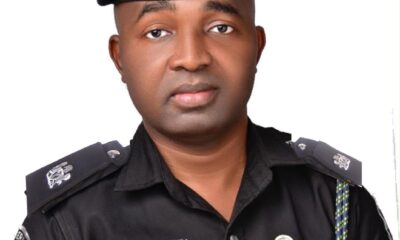


A 21-year-old butcher, identified as Selim Ayodele, has allegedly stabbed his 26-year-old colleague, Ibrahim Wasiu, to death following a disagreement over sweeping their workplace in Ogun State.
The incident reportedly occurred on Sunday, October 18, at a cow meat-selling outlet in the Alagbole area of the Akute/Ajuwon satellite towns in Ifo Local Government Area of the state.
According to reports, trouble started after the day’s business activities when the two colleagues disagreed over the cleaning of their sales outlet, with the argument allegedly escalating into a fatal confrontation.
The Ogun State Police Command’s Public Relations Officer, Oluseyi Babaseyi, confirmed the incident to journalists in Abeokuta on Friday, disclosing that the suspect had been arrested.
Babaseyi said the incident was reported at the Ajuwon Police Divisional Headquarters on Sunday night, prompting police operatives to commence an investigation.
He explained that preliminary findings indicated that the disagreement began after the two men had concluded their day’s work at the meat-selling outlet.
During the altercation, Ayodele allegedly picked up a knife and stabbed Wasiu in the left side of his chest before twisting the weapon.
The victim was reportedly rushed to a nearby hospital for medical attention but was pronounced dead on arrival.
The police spokesperson added that the suspect remained in custody as investigations continued ahead of his prosecution.
He further disclosed that the deceased’s body had been deposited in the morgue of a private hospital for an autopsy.
The Commissioner of Police in Ogun State, Bode Ojajuni, reaffirmed the command’s commitment to prompt response to criminal incidents, thorough investigations and the prosecution of offenders in accordance with the law.
The police commissioner also urged residents to exercise restraint, resolve disagreements peacefully and promptly report criminal incidents to the appropriate authorities.
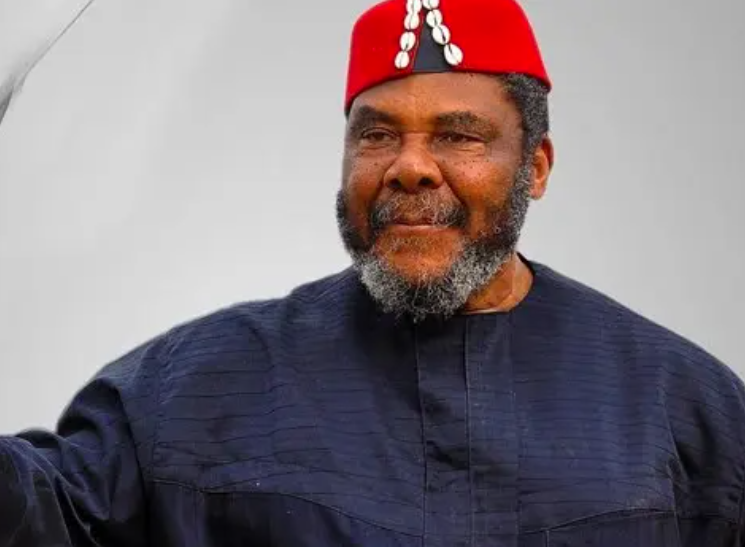
FRED IWENJORA reports that very brave Okonkwo of “Things Fall Apart”, Ebubedike, the Ononenyi of Nteje, Anambra State, and Ibobo Oyi na Omambala shed tears uncontrollably during this tour especially when students and pupils of Knutsford University used his name for different forms of recitations and poetry.
One may ask why Pete Edochie traveled to Ghana?
This visit was for the launching of the Pete Edochie Legacy project, themed “Celebrating the Africa legend; The lion that needs not to roar”.
It is “a cultural initiative created to honor and celebrate one of Africa’s most revered figures” according to the Ghanaian project organisers.
The Legacy project includes a biographical book, a documentary series and international tour with Ghana serving as the launch pad.
The publishers, KPL publishers had noted that the contributions of the 79-year-old screen star to Africa cinema are very noteworthy.
At the end of it all, the star actor had, aside unveiling his autobiography in a gala event, paid courtesy calls to industry and policy makers in Ghana including the visit to Ghana’s Goldbod, the body regulating everything gold in Ghana. Organisers saw the visit as an important segment of the tour because a visit to Ghana may have been incomplete without seeing first hand the reason the country was called Gold Coast.
He had also met and greeted select fans and featured in a public lecture and colloquium in his honor before returning to Nigeria.
From when he landed at Kotoka International Airport Tuesday 29th September, 2026 till his departure from Ghana on Wednesday 7, October 2026, there was no dull moment.
Reception was top notch and indeed out of this world.
Ghanaians as well as Nigerians left businesses and trouped out to see “the president of African screen” according to Elizabeth Ama Tetteh, one of his numerous Ghanaian fans who noted that she had been resident in Enugu, Nigeria. It was indeed heartwarming to see Ghanaian as well as Igbo cultural groups on hand to welcome him to the old Gold Coast. Dispatch riders led his motorcade out of the airport.
On arrival, he first paid a courtesy visit to Eze Dr. Chukwudi Jude Ihenetu, Onyendu Ndi igbo, Ghana and sued for peace between Nigeria and Ghana. The respected Eze Ihenetu had organised a congregation of Igbo and Ghanaian leaders for a traditional cocktail reception.
According to the major propeller of the project Kelvin King Dawie of King Dawie Publishing Ltd (KPL) “When people ask why Pete Edochie, I tell them that no honor for Pete Edochie is too big. He has very much distinguished himself on the continent of Africa and beyond as a custodian of the cultural heritage of Africa and has been consistent in it for decades since mounting the stage at the tender age of 15. He is well known and received a lot of honors and awards globally including Nigeria’s national honor of merit; MON.
“We also looked at the way he has distinguished himself on stage and in communication which has warranted him receiving Honorary Doctorate in Literature and creative arts.
On this continent, Pete Edochie is one of a kind and he needs to be projected and celebrated as that icon of Africa who has held high the heritage of Africa for over six decades of his acting life.
King Dawie, an accountant, business strategist and social impact leader also hinted that “the project is in four phases, the autobiography, a 16-episode documentary to properly chronicle his life’s journey and then also the African youth mentorship initiative to help him pass on information to the next generation and an international tour. It took a lot of several efforts from several people too numerous to mention to set this ball rolling and hopefully achieving. We also remain very grateful to our star guest for accepting our proposal. ” However, there are major take-aways from these nine days Pete Edochie “Presidential visit” to Ghana.
Cultural diplomacy at its highest African peak
Years back, Africa viewers had voted Pete Edochie as their main choice in (AMVCA).
However, this Ghana visit is International cultural diplomacy at its highest African peak.
It seems first in history that a film star would make so much impression in another country that a book would be written and unveiled on him in that country.
It also reveals that Nigeria and Ghana have co-existed as West Africa’s beloved Anglophone countries despite hiccups occasioned by various ‘Ghana must go’ or ‘Nigeria must go’ agitations.
And to see both Nigerians and Ghanaians under one roof because of Pete Edochie, animosities may have been doused even if for a moment.
The unveiling of the autobiographical book; Titan of Africa, the story of Pete Edochie, published by KPL Publishers was a big attraction on its own and first of its kind for a Nigerian actor. The event which held at Kempiski Accra drew together distinguished Ghanaians with highlights including his meeting with Ghanaian legendary actress, broadcaster and musician Grace Omaboe, known to many as Maame Dokono. He also met with 102 years old Warrant Officer 1 and WW2 veteran, Pa Joseph Ashitey Hammond. Their tight hug meant that this meeting for the WW2 veteran was highly anticipated like the story of the nunc dimitis contained in the synoptics.
There are pointers to the huge respect that he commands in the so called Gold Coast and that Africa is so culturally connected in many ways.
Another take away from the tour was that the man Pete Edochie is very well blessed and his star never seems to dim as years roll by.
Despite that he is bound to the wheelchair and could barely walk or sits on the chair in his current films, fans continue to adore him from far and near. (Saturday Vanguard)

Four people were reportedly shot when a convoy of the National Democratic Congress (NDC) came under attack in Ebonyi State, with one of the campaign vehicles set ablaze.
The incident occurred during a campaign movement in the state, according to sources familiar with the development.
The identities and conditions of those injured were not immediately available at the time of filing this report.
The motive for the attack remained unclear, while the attackers had yet to be identified.
Security agencies were expected to investigate the incident and determine the circumstances surrounding the shooting and burning of the campaign vehicle.
Further details were awaited from the NDC, the Ebonyi State Government and the relevant security authorities.
-
 Features2 days ago
Kogi’s Kidnapping Crisis: Why Do Forests Remain Safe Havens for Criminals Under Ododo’s Watch?
-
News2 days ago
Kidnappers kill seven-year-old boy after ransom demand
-
News3 days ago
“It’s not debatable, we can’t go back,” Mbah Backs Tinubu on Fuel Subsidy Removal
-
News1 day ago
Macron Postpones Planned Visit to Nigeria Until 2027
-
News1 day ago
Enugu CP Orders Probe into Death of Izuchukwu During Police Raid
-
News23 hours ago
UBA Commences Contempt Proceedings Against WEMPCO Directors over Alleged Disobidence of Court Order
-
Politics1 day ago
2027: Atiku, Obi, Duke, Others in Talks on Single Opposition Candidate – Coalition
-
News23 hours ago
$242m Petroleum Products Diversion Claim: UBA Secures Court Order Against Vitol, Four Others