News
Nigerians groan over Dangote petrol price hike


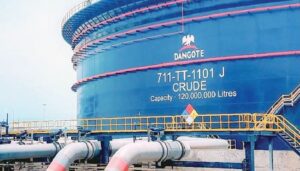
Nigerians across major cities are grappling with rising petrol prices after the Dangote Petroleum Refinery increased its gantry price of Premium Motor Spirit to N995 per litre, triggering retail price adjustments nationwide and pushing pump prices above N1,000 per litre in some states.
Petrol now sells between N1,000 and N1,190 per litre depending on location and retail outlet.

This has led to rising transport fares as costs of goods and services soar in many parts of the country, according to findings by Sunday PUNCH.
Although the price increase has not triggered panic buying in most states due to steady supply, motorists, transport operators and small business owners say the new price regime is placing additional strain on household incomes already stretched by inflation.

Middle East crisis
The latest surge in petrol prices across Nigeria is closely linked to the escalating geopolitical crisis in the Middle East involving Iran, the United States and Israel, which has disrupted global oil supply chains and pushed crude oil prices upward.
The conflict intensified after joint military strikes by the United States and Israel on Iranian targets in late February 2026, leading to retaliatory attacks by Iran across the region and escalating tensions around key energy infrastructure.
One of the most critical developments in the crisis has been the disruption of shipping through the Strait of Hormuz. This is a narrow maritime corridor between Iran and the Arabian Peninsula that serves as one of the world’s most important oil transit routes.
The strait handles nearly 20 per cent of global oil and natural gas shipments, making it a vital chokepoint for international energy trade.
Following the escalation of hostilities, Iran issued warnings to vessels linked to the United States and Israel as attacks on ships in the area made maritime traffic through the strait to drop dramatically.
At one point, tanker movements fell sharply and many vessels remained anchored outside the waterway to avoid security risks.
The disruption has stranded millions of barrels of crude oil and refined products in the Gulf, raising fears of a global supply shortage.
The crises has already pushed Brent crude prices above $90 per barrel, with projections that prices could climb even higher if the conflict persists.
Since global oil prices serve as the primary benchmark for petroleum products, the shock to supply has quickly filtered into fuel markets worldwide, including Nigeria.
Abuja commuters brace for transport hike
In the Federal Capital Territory, commuters are already bracing for higher transport fares as filling stations adjusted pump prices to above the N1,000 mark.
A market survey conducted by Sunday PUNCH showed that most filling stations in Abuja now sell petrol between N1,052 and N1,105 per litre.
At MRS Oil Nigeria, a retail partner of Dangote Refinery, petrol was sold at N1,060 per litre, while Nipco Filling Station along Airport Road dispensed the product at N1,105 per litre, the highest price recorded during the survey.
Other outlets, including Matrix Energy, Bovas, Shafa, Shema and A.A. Rano adjusted pump prices upward to between N1,052 and N1,092 per litre.
Despite the price increase, fuel was readily available at the stations visited and there were no queues.
However, the price hike has already begun to impact transport fares.
A commercial driver operating along the Federal Secretariat-Asokoro route, Daniel Ishyaku, said he had increased fares from N400 to N700 to cope with rising fuel costs.
“Fuel is now more than N1,000 per litre. I bought petrol at N1,060 today. If I don’t increase the fare, I will run at a loss,” the driver said.
Some commuters expressed frustration over the development, saying frequent fuel price adjustments were worsening the cost-of-living crisis.
“When fuel goes up like this, transport fares follow immediately. But our salaries have not increased,” one passenger who doesn’t want to be named lamented.
Lagos motorists pay up to N1,190
In Lagos, the country’s commercial hub, petrol prices climbed as high as N1,190 per litre in some outlets early on Saturday.
Visits by Sunday PUNCH to filling stations across the metropolis showed petrol selling between N1,005 and N1,190 per litre.
At a Mobil Filling Station along Agege Motor Road in Mushin, petrol was sold at N1,018 per litre.
A dispatch rider, Augustine Akor, said the increase had forced him to raise delivery charges.
“I bought fuel at N1,018 in Iju-Ishaga this morning. I delivered a package to Ogba and had to charge N4,800 instead of N4,000 because of the fuel increase,” he said.
At the NNPC Filling Station on Yaya Abatan Road, petrol sold for N1,005 per litre, although the price was not displayed on the station’s signboard.
Nearby, an AP Filling Station sold the product at N1,039 per litre, where customers were seen purchasing fuel with 25-litre jerrycans.
A boutique owner, Chukwudi Anioke, said the rising cost of fuel could force him to increase prices of goods in his shop.
“I pay for Band A electricity but power supply is not stable, so I rely heavily on my generator. Now that petrol has increased again, we will have no option but to increase prices,” he said.
At Oniwaya Bus Stop in Agege, petrol was sold at N1,030 per litre.
A tricycle operator, Kamoru Saheed, said transport fares had already doubled on some routes.
“We have increased fares from N100 to N200 because of the fuel price. Everything keeps increasing,” he said.
Kaduna, Taraba residents buy N1,070
In Kaduna State, checks showed petrol selling between N1,060 and N1,070 per litre across major stations in the Kaduna metropolis.
Stations including AA Rano, Rainoil, NNPC Mega Station and Future View dispensed fuel without the long queues typically associated with price hikes.
A motorist simply identified as Ibrahim said that residents had no reason to panic.
“There is no scarcity of fuel, so there should be no panic buying. Fuel is available everywhere,” he said.
A similar situation was observed in Taraba State, where petrol sold between N1,000 and N1,060 per litre in Jalingo and Wukari.
A commercial driver, Ibrahim Usman, while speaking n the development, said the availability of fuel had prevented panic buying.
Edo, Rivers adjust to new price regime
In Benin City, the Edo State capital, petrol sold between N1,050 and N1,072 per litre on Saturday.
At Hifly filling station on Sakponba Road, motorists purchased fuel at N1,072 per litre without queues.
Similarly, Raptors Filling Station on Sapele Road sold petrol for N1,050 per litre.
However, the NNPC station in the city was not selling the product at the time of visit, though an attendant said petrol sold at N995 per litre the previous day.
In Port Harcourt, Rivers State, petrol prices ranged between N1,050 and N1,075 per litre.
At Restore Park filling station along Elekahia, petrol sold for N1,050 per litre, with only a few vehicles seen buying the product.
A motorist identified as Andy expressed frustration at the sudden increase.
“I bought petrol for N1,030 yesterday. Today it has jumped to N1,050,” he said.
Another motorist, Felix Naamime, lamented the economic impact.
“Petrol is expensive in a country with four refineries. Government must do something to help citizens,” he said.
Fuel sells N1,250 in Gombe
In Gombe, petrol sells for between N1,080 and N1,250 per litre, as residents continue to express concern over the rising cost of the commodity.
A visit to several filling stations within Gombe metropolis revealed that the lowest price was recorded at Bovas Petroleum, where petrol is sold at N1,080 per litre.
However, many other stations dispense the product at prices between N1,150 and N1,250 per litre.
A commercial motorcyclist in Gombe metropolis, Ibrahim Musa, said the high cost of petrol has significantly affected his daily income.
“We are really suffering. Before now, I could buy fuel with less money and still make a profit at the end of the day. Now, most of what we make goes back into buying petrol,” he said.
Similarly, a resident of the city, Aisha Mohammed, said the situation had worsened the cost of living for ordinary citizens.
“The price of everything is increasing because transport fares are going up. When fuel is this expensive, it affects food prices and other essential goods. It is becoming difficult for families to cope,” she said.
Panic buying in Jigawa
Unlike other states, some parts of Jigawa State witnessed panic buying after the price increase.
Another motorist said that motorists in Dutse rushed to filling stations amid fears of further hikes.
At Matric filling station along FUD Road, petrol sold for N1,050 per litre, while the NNPC Mega Station dispensed the product at N1,020 per litre.
A commercial driver, Abubakar Mohammed, described the situation as troubling.
“This price hike will affect our business and daily earnings,” he said.
In Kano, petrol prices climbed to about N1,150 per litre at major stations.
A tricycle rider, Abdulkarim Abdullahi, said the increase had affected transport operators.
“We now spend more on fuel for the same amount of work,” he said.
Residents lament economic impact
In Sokoto, motorists expressed frustration as petrol prices jumped from N930 to between N1,050 and N1,100 per litre.
A resident, Abdulazeez Bello, said that the situation had become unbearable.
“The price of fuel is now on the other side. How does the government expect us to survive?” he asked.
Similarly, in Bauchi, petrol sold between N1,100 and N1,106 per litre.
A motorcycle rider, Umar Musa, said the increase had already affected his livelihood.
“With this kind of increase, commodity prices will also rise in the market,” he said.
In Yobe, residents complained after petrol rose to as high as N990 per litre in Damaturu and Potiskum.
Commercial tricycle operator Musa Ibrahim said the development would reduce daily earnings.
“If petrol is close to N1,000 per litre, most of the money we make will go back to fuel,” he said.
Analysts caution that rising petrol prices often trigger a chain reaction across the economy, as higher transportation and energy costs typically translate into increased food prices, rising production costs and higher market prices for essential goods.
With petrol now selling above N1,000 per litre in several states, many Nigerians fear the economic ripple effects may only just be beginning. (Sunday PUNCH)











News
UBA Commences Contempt Proceedings Against WEMPCO Directors over Alleged Disobidence of Court Order
The Federal High Court, presided over by Honourable Justice Aluko, has granted an application by United Bank for Africa (UBA) Plc for substituted service of Form 49 on directors of Wempco named as alleged contemnors in the case of UBA v. Wempco.
The application forms part of proceedings seeking to determine whether the named individuals disobeyed an order of the court and whether they should be committed to prison for contempt.
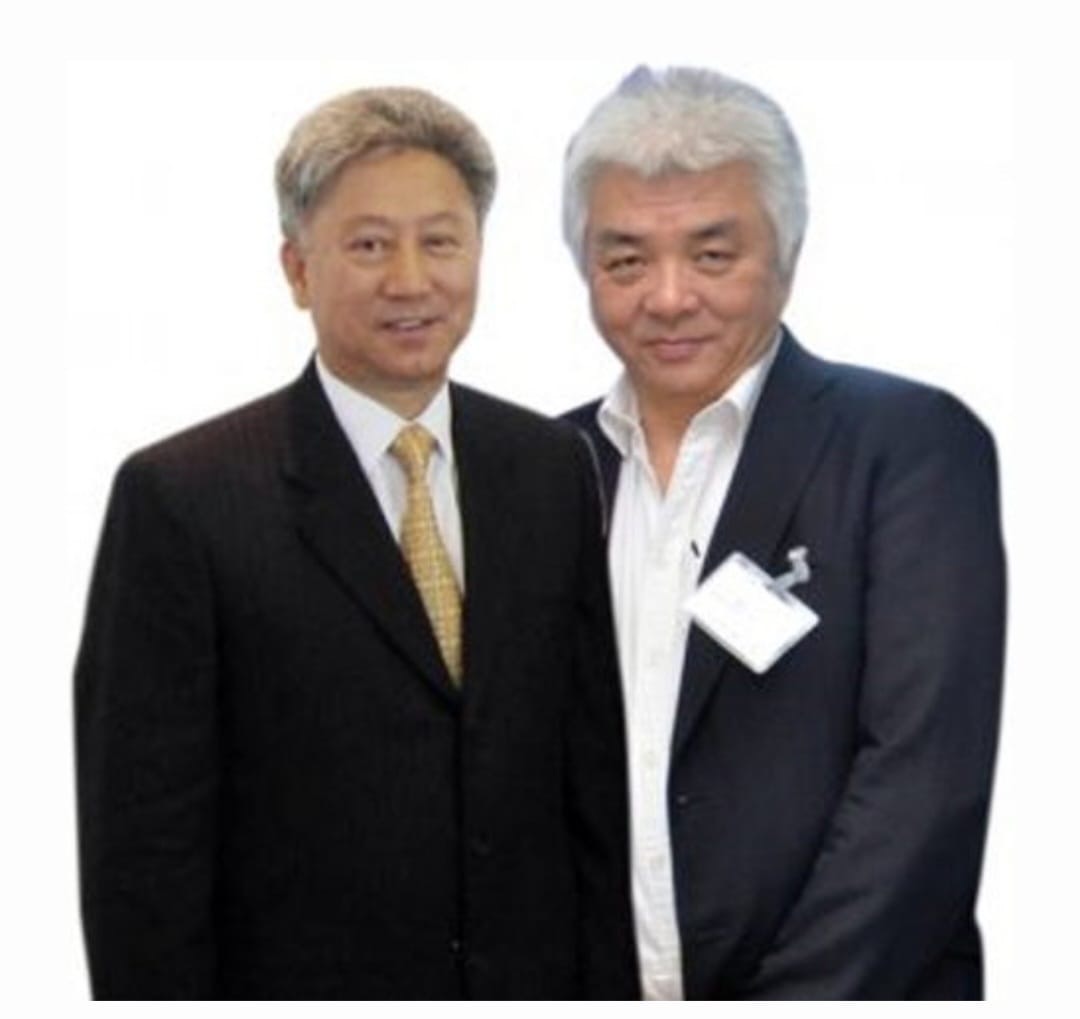
The directors named as alleged contemnors are Lewis Shui Ngor Tung, Phillip Shui Chei Tung, M.A. Ola Yusuf, Tung Lawrence Blake, Aali Aare Hadji Tokunbo, Paul Shui Po Tung, Tung Robert, C.L. Ip and Taiwo Alli.
In advancing the application, counsel to UBA argued that service of Form 49 on the alleged contemnors was necessary to enable them to appear before the court and show cause why an order of committal should not be made against them.
He also argued that the Directors of Wempco and some members of staff took illegal steps in an attempt to disobey the Order of Court.
The court’s decision to grant substituted service provides a procedural step towards bringing the notice to the attention of the individuals concerned in accordance with the court’s directions.
Form 49 is a notice requiring an alleged contemnor to show cause why an order of committal to prison should not be made against them for alleged disobedience of a court order.
The Federal High Court had earlier made an Order of Mareva Injunction and appointed a Receiver/Manager over some of the Assets of Wempco following the indebtedness of Wempco to UBA in the sum of N61,445,695,993.76 (Sixty One Billion FourHundred and Forty-Five Million Six Hundred and Ninety Five Thousand, Nine Hundred and Ninety Three Naira, Seventy Six Kobo).

A Lagos State High Court has granted interim preservative orders, including a Mareva injunction, in favour of United Bank for Africa (UBA) Plc in a dispute involving the alleged diversion of petroleum products valued at $242 million.
The orders, granted last Thursday by Justice K. A. Jose, followed allegations by UBA that Vitol SA, a Switzerland-based energy trading company, wrongfully released cargoes of petroleum products consigned to the bank in the bills of lading.
UBA’s lead counsel, Bode Olanipekun, SAN, urged the court to grant the interim orders to preserve assets and prevent the dissipation of funds pending the determination of the substantive dispute.
In her ruling, Justice Jose granted three of the prayers sought by the bank, including requests to restrain dealings with assets and funds up to the disputed amount.
“Prayers 1–3 are granted as prayed against the 2nd Respondent only,” the judge ruled.
The application was brought pursuant to Order 43 Rule 1 of the High Court of Lagos State (Civil Procedure) Rules 2019 and the Lagos State High Court Practice Direction No. 2 of 2019.
In the substantive proceedings, UBA is seeking to establish the liability of Vitol SA and the owners of the vessels over alleged conversion, misrepresentation and negligence arising from the non-delivery of the petroleum products.
The bank also cited 34 financial institutions and public agencies, including commercial banks, merchant banks, microfinance banks, the Nigerian Ports Authority and the Nigeria Customs Service, in connection with the application.
In an affidavit supporting the application, UBA’s Group Head of Recoveries and Remedial Management, Anthony Chilaka, stated that the bank had issued a letter of credit in favour of Vitol SA to facilitate petroleum products transactions.
According to the affidavit, the cargoes were transported to Nigeria, and the masters of the vessels issued several bills of lading.
UBA alleged that Vitol subsequently endorsed the bills of lading “to the order of” the bank and handed over the original documents to it.
The bank maintained that the endorsement entitled it to take possession of the cargoes upon completion of the voyages.
However, Chilaka stated that UBA had not received the gasoil despite the completion of the voyages.
“The applicant has not been given possession of the gasoil despite completion of the voyage,” the affidavit stated.
UBA alleged that the cargoes were instead diverted for the use of another party, arguing that the failure to deliver the products amounted to conversion and negligence.
The bank further contended that the respondents had obligations arising from the transactions and the endorsement of the shipping documents but failed to fulfil them.
UBA also alleged that cargoes linked to the transactions were diverted to other parties after the completion of their voyages rather than delivered to the bank as stipulated in the shipping documents.
The allegations are expected to be determined in the substantive proceedings.
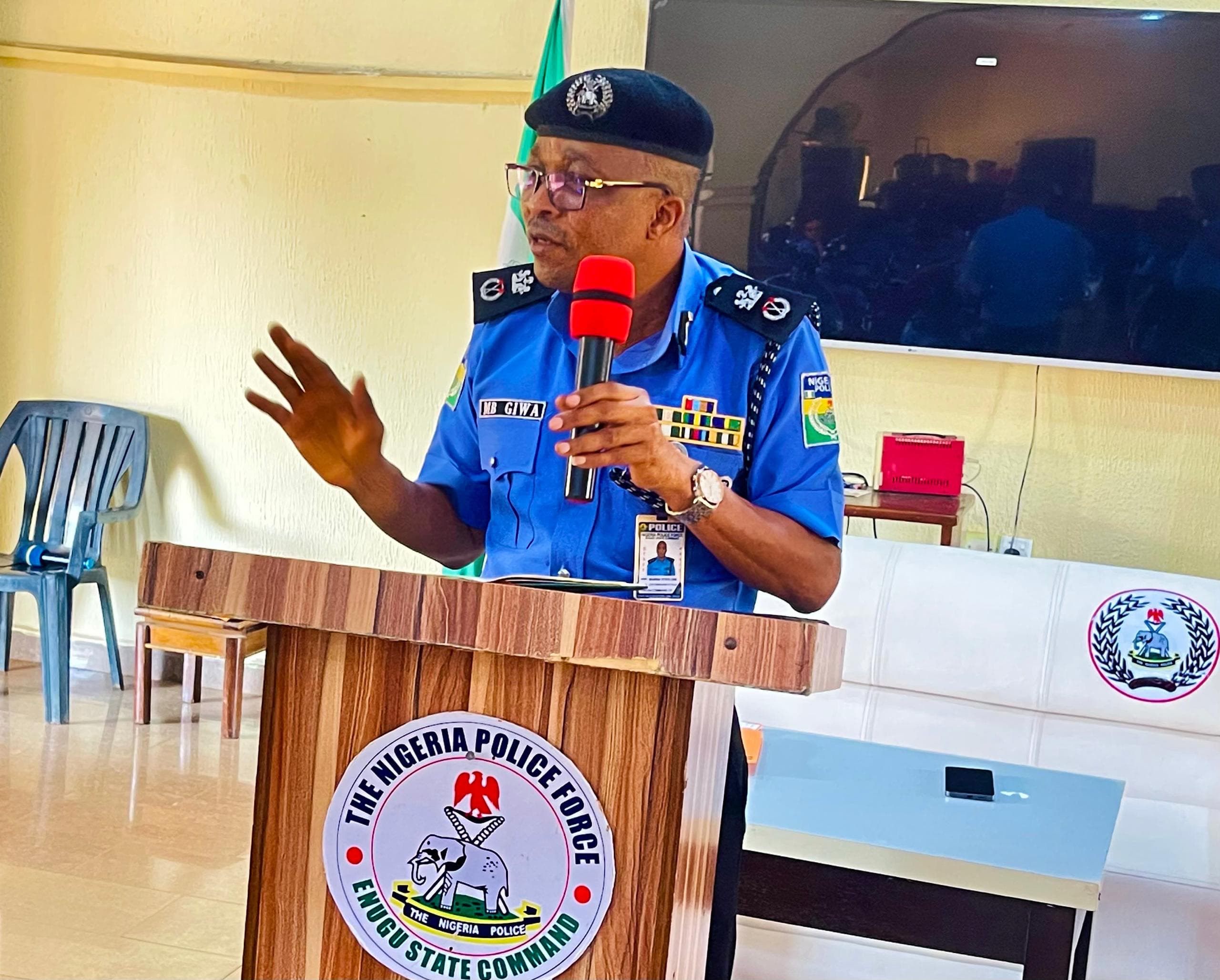
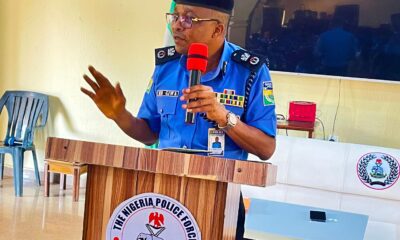
The Commissioner of Police in Enugu State, Mr Mamman Giwa, has warned police officers against degrading treatment of citizens, extortion and other forms of unprofessional conduct.
Giwa gave the warning on Wednesday during an emergency conference with senior officers at the Senior Police Officers’ Mess, Agbani Road, Enugu.
He also directed senior and supervisory officers to strengthen oversight of personnel and improve security management for political and election-related activities ahead of the 2027 General Elections.
The commissioner said the conference followed directives issued by the Inspector-General of Police, Mr Olatunji Disu, during a virtual strategic meeting with senior officers on October 20.
According to him, the I-G emphasised professionalism, compliance with the Nigeria Police Force’s social media policies, adapting policing to contemporary realities, respectful treatment of citizens, and effective management of political activities and election security.
“It is clear that officers cannot effectively discharge their policing responsibilities without treating citizens with respect and conducting their duties in accordance with extant laws and established professional standards,” Giwa said.
He charged senior officers to take responsibility for the conduct of personnel under their supervision, warning that any officer found engaging in misconduct would face the consequences.
The conference also featured a health talk on the Ebola virus, focusing on its symptoms and preventive measures.
Those in attendance included Deputy and Assistant Commissioners of Police, Area Commanders, Divisional Police Officers, heads of formations, tactical and operational units, and heads of various sections of the Enugu State Police Command.
-
 Features1 day ago
Kogi’s Kidnapping Crisis: Why Do Forests Remain Safe Havens for Criminals Under Ododo’s Watch?
-
News2 days ago
“It’s not debatable, we can’t go back,” Mbah Backs Tinubu on Fuel Subsidy Removal
-
News1 day ago
Kidnappers kill seven-year-old boy after ransom demand
-
News2 days ago
Mbah: Enugu Now Produces 120 Million Litres of Water Daily, Expands Agricultural Investment
-
Politics2 days ago
Mike Igini: Politicians Infiltrate Agencies Responsible for Election Personnel as Electoral Laws Go Unenforced
-
Politics9 hours ago
2027: Atiku, Obi, Duke, Others in Talks on Single Opposition Candidate – Coalition
-
News8 hours ago
Macron Postpones Planned Visit to Nigeria Until 2027
-
News6 hours ago
Enugu CP Orders Probe into Death of Izuchukwu During Police Raid