News
Tinubu signs Electoral Act 2026 into Law


….Says ‘We need to avoid glitches, unnecessary hacking’
The bill has generated heated debates, with lawmakers and prominent Nigerians disagreeing over the method to adopt for the transmission of results, ahead of the 2027 general elections.
Tinubu (seated) urged Nigerians have confidence in their system.

President Bola Tinubu has signed the Electoral Act, 2022 (Repeal and Re-Enactment) Bill 2026 into law, following the passage of the bill by the National Assembly on Tuesday after months of deliberations.
Tinubu signed the bill at the State House on Wednesday in the presence of top government officials, including the Senate President, Godswill Akpabio; the Speaker of the House of Representatives, Tajudeen Abbas; and the Chief of Staff to the President, Femi Gbajabiamila.
He said the essence of democracy is to have very solid discussions committed to national development and nation-building, essential for the stability of the nation.

According to him, it is high time Nigerians had confidence in their system.
“It’s not as important as the history aspects of this. What is crucial is the fact that you manage the process to the extent there will be no confusion, no disenfranchisement of Nigerians, and that we are all going to see democracy flourish.
“No matter how good the system is, it’s managed by the people, promoted by the people, and the result is finalised by the people,” The President said.
‘We Need To Avoid Interference’
On the ongoing debates over the transmission of election results,
Tinubu said, “In fact, for final results, you are not going to be talking to the computer; you are going to be talking to human beings who will announce the final results.
“And when you look at the crux of various arguments, maybe Nigerians should question our broadband capability. How technically are we today? How technically will we be tomorrow to answer the call of either real-time or not?
“And as long as you appear personally, as a manual voter in any polling booth, a ballot paper is given to you manually, you decide in a corner and thumbprint the passing of your choice, you cast your votes, without hindrance and any interference, ballots are subsequently counted manually, sorted, and counted manually.”
“It’s just the arithmetic accuracy that is to enter into Form EC8A. It’s the manual, essentially. The transmission of that manual result is what we’re looking at.
“And we need to avoid glitches — I’m glad you did — interference, unnecessary hacking in this age of computer inquisitiveness.
“Nigeria will be there. We will flourish. We will continue to nurture this democracy for the fulfillment of our dream for the prosperity and stability of our country,” the President added.
The bill has generated heated debates in the last one week, with lawmakers and prominent Nigerians disagreeing over the method for the transmission of results, ahead of the 2027 general elections.
The Senate had on Tuesday passed the Electoral Act, 2022 (Repeal and Re-Enactment) Bill 2026 but not without a rowdy session as the upper chamber resumed proceedings with a demand for division over Clause 60 raised by Senator Enyinnaya Abaribe (ADC/Abia South).
The Senate President, Godswill Akpabio, had stated that he believed the demand had previously been withdrawn, but several opposition senators immediately objected to that claim.
Citing Order 52(6), the Deputy Senate President, Barau Jibrin, argued that it would be out of order to revisit any provision on which the Senate President had already ruled.
This submission sparked another uproar in the chamber, during which Senator Sunday Karimi had a brief face-off with Abaribe.
The Senate Leader, Opeyemi Bamidele, then reminded lawmakers that he had sponsored the motion for rescission, underscoring that decisions previously taken by the Senate are no longer valid.
He maintained that, consistent with his motion, Senator Abaribe’s demand was in line.
Akpabio further suggested that the call for division was merely an attempt by Senator Abaribe to publicly demonstrate his stance to Nigerians.
The senate president sustained the point of order, after which Abaribe rose in protest and was urged to formally move his motion.
Rising under Order 72(1), Abaribe called for a division on Clause 60(3), specifically concerning the provision that if electronic transmission of results fails, Form EC8A should not serve as the sole basis, calling for the removal of the proviso that allows for manual transmission of results in the event of network failure.
During the division, Akpabio directed senators who supported the caveat to stand.
He then asked those opposed to the caveat to rise.
Fifteen opposition senators stood in opposition.
However, when the votes were counted, the Senate President announced that 15 senators were not in support of the proviso, while 55 senators voted in support of it.
Clause-By-Clause Consideration
Earlier, proceedings in the Senate were momentarily stalled as lawmakers began clause-by-clause consideration of the Electoral Act, 2022 (Repeal and Re-Enactment) Bill 2026, following a motion to rescind the earlier amendment.
The motion to rescind the bill was formally seconded on Tuesday, paving the way for the upper chamber to dissolve into the committee of the whole for detailed reconsideration and reenactment of the proposed legislation.
During the session, the Senate President, Godswill Akpabio, reeled out the clauses one after the other for deliberation.
However, the process stalled when at clause 60, Senator Enyinnaya Abaribe (ADC/Abia South), raised a point of order, drawing immediate attention on the floor.
Following the intervention, murmurs spread across the chamber as lawmakers began speaking in small groups and approaching the Senate President’s desk for consultations.
The session immediately moved into a closed door session.
Opposition Reps Members Kick
The situation was not different at the House of Representatives as lawmakers disagreed over a motion seeking to rescind the passage of the Electoral Act Amendment Bill, which contained real-time electronic transmission of results.
The Chairman of the House of Representatives Committee on Rules and Business, Francis Waive, had moved a motion for the House to rescind its decision on the bill, which was passed on December 23, in line with the Senate’s position on real-time electronic transmission of election results.
When the Speaker of the House, Tajudeen Abbas, put the motion to a voice vote, the “nays” were louder than the “ayes,” but he ruled that the ayes had it.
The ruling triggered protests from lawmakers, who began shouting in objection, prompting the speaker to call for an executive session.
When the House of Representatives passed the Electoral Act in December 2025, it adopted the compulsory real-time transmission of election results to IReV.










Four people were reportedly shot when a convoy of the National Democratic Congress (NDC) came under attack in Ebonyi State, with one of the campaign vehicles set ablaze.
The incident occurred during a campaign movement in the state, according to sources familiar with the development.
The identities and conditions of those injured were not immediately available at the time of filing this report.
The motive for the attack remained unclear, while the attackers had yet to be identified.
Security agencies were expected to investigate the incident and determine the circumstances surrounding the shooting and burning of the campaign vehicle.
Further details were awaited from the NDC, the Ebonyi State Government and the relevant security authorities.
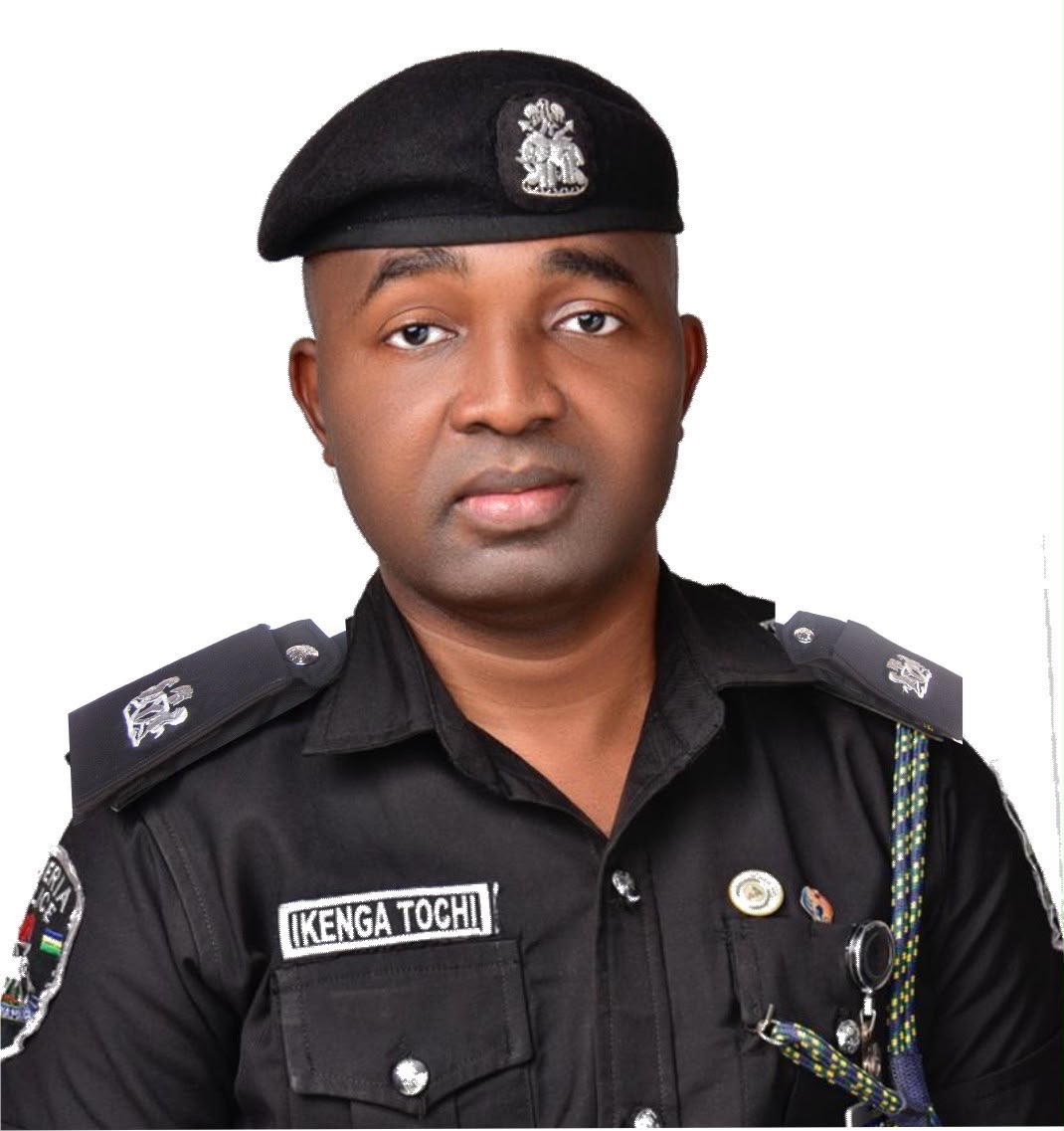
The Anambra State Police Command has arrested a man, identified as Chima Ofoeke, over the suspected murder of 23-year-old Mmesoma Umeorini in Uga, Aguata Local Government Area of the state.
The arrest followed a report by the deceased’s mother to the Divisional Police Officer (DPO) of Umuchu Division that her daughter had been missing since October 16, 2026, despite efforts to locate her.

According to the police, operatives, working with members of the Agunechemba security outfit in Uga, apprehended the suspect following intelligence-led information.
The suspect was identified as the deceased’s alleged former boyfriend.
During preliminary interrogation, Ofoeke allegedly confessed to killing the young woman following the breakdown of their relationship. He reportedly led detectives to the location where her remains were discovered and recovered.
Following the development, the Commissioner of Police in Anambra State, CP Nnanna Oji Ama, has directed that the case be transferred to the State Criminal Investigation Department (SCID), Awka, for a thorough investigation.
The police said the investigation would establish the full circumstances surrounding the incident and ensure that justice was served.
The command reiterated its commitment to protecting lives and property, urging residents to promptly report missing persons and suspicious activities to the appropriate authorities.
It added that further information would be made available as the investigation progresses.
…Assures defects will be addressed
…Threatens to blacklist contractors over defects
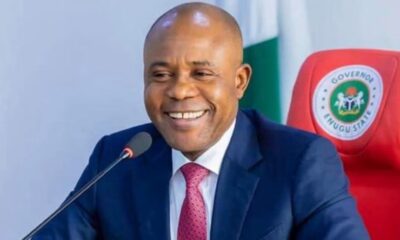
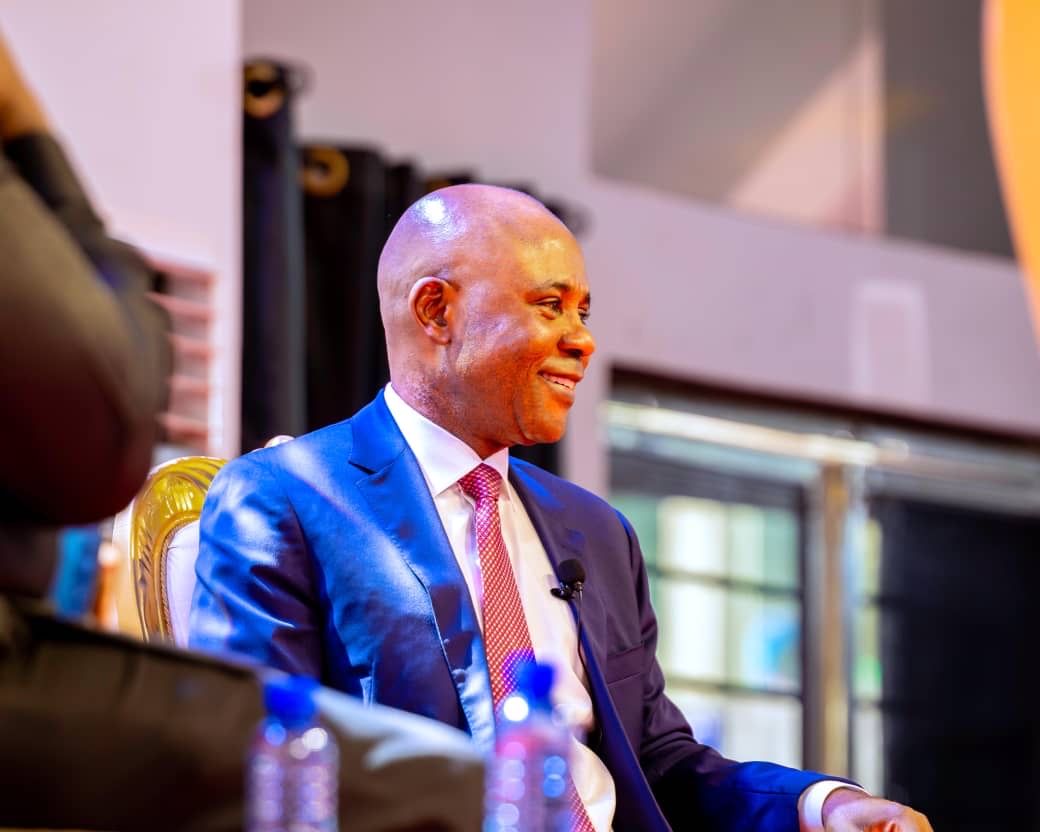
Enugu State Governor, Dr Peter Mbah, has defended the construction of 268 smart green schools across the state, assuring residents that structural defects and other challenges identified in some facilities will be addressed.
Mbah gave the assurance during a town hall meeting, where he explained that the state government deliberately adopted an accelerated approach to the construction of the schools to ensure that every child in Enugu had access to quality education.
According to the governor, the scale of the projects delivered within three years would ordinarily take between 10 and 20 years to accomplish under conventional implementation timelines.
He acknowledged that the speed of execution had resulted in some teething problems, including defects in certain buildings and roofing challenges, but maintained that the government was committed to ensuring that all the facilities were fit for purpose.
“When you have fast-tracked projects at that scale, you are bound to have teething problems, and we are not oblivious of it,” he said, adding that the government was resolved to address the identified shortcomings.
Mbah explained that the decision to build 268 smart green schools was driven by the administration’s determination to expand access to quality education rather than concentrate resources on a few model institutions.
Participants at the Town Hall meeting
He said the government could have opted to construct only three smart schools, one in each senatorial zone, or 17 schools across the state, but chose a broader approach to reach more children.
“We said every child in this state must have access to quality learning, and we did 268 smart green schools,” the governor stated.
He stressed that the administration would not abandon the projects because of the defects identified, adding that corrective measures were already part of the government’s response.
The governor’s remarks come amid concerns over defects reported in some of the newly constructed school facilities.
He maintained that the administration remained committed to ensuring that the projects delivered their intended educational benefits to pupils across Enugu State.
Mbah Threatens to Blacklist Contractors Over Defective School Projects
Governor Mbah also warned contractors handling the state’s smart green school projects that they will face consequences for failing to address defects in their work.
Mbah gave the warning while responding to questions about structural defects and other problems reported in some of the 268 smart green schools constructed by his administration.
The governor said the government had records of the contractors responsible for the projects and would require those whose work was found defective to return to their sites and carry out necessary repairs.

He, however, warned that contractors who refused to comply with the government’s directives would be blacklisted.
“For those that have been recalcitrant, we blacklist. And there are consequences for that,” he said.
Mbah explained that although the projects were executed on an accelerated timeline to expand access to quality education, the fast-tracked approach did not absolve contractors of responsibility for the quality of their work.
He also disclosed that the government obtained advance payment guarantees from the contractors, providing an additional mechanism for enforcing compliance where necessary.
“We do have an option to call those up if it becomes necessary,” the governor said, referring to the guarantees.
The administration has come under scrutiny over reported defects in some of the newly constructed school buildings, including roofing and other structural concerns.
Mbah acknowledged the existence of such challenges but described them as issues the government was determined to resolve.
He said the overriding objective was to ensure that all the smart green schools were fit for purpose and capable of providing the learning environment intended by the state government.
The governor’s comments signal the administration’s intention to hold contractors accountable while continuing its investment in education infrastructure across Enugu State.
-
 Features2 days ago
Kogi’s Kidnapping Crisis: Why Do Forests Remain Safe Havens for Criminals Under Ododo’s Watch?
-
News3 days ago
“It’s not debatable, we can’t go back,” Mbah Backs Tinubu on Fuel Subsidy Removal
-
News2 days ago
Kidnappers kill seven-year-old boy after ransom demand
-
News3 days ago
Mbah: Enugu Now Produces 120 Million Litres of Water Daily, Expands Agricultural Investment
-
News23 hours ago
Macron Postpones Planned Visit to Nigeria Until 2027
-
News21 hours ago
Enugu CP Orders Probe into Death of Izuchukwu During Police Raid
-
Politics1 day ago
2027: Atiku, Obi, Duke, Others in Talks on Single Opposition Candidate – Coalition
-
News18 hours ago
UBA Commences Contempt Proceedings Against WEMPCO Directors over Alleged Disobidence of Court Order