News
How 36 Nigerian youths ended up in Russia-Ukraine war

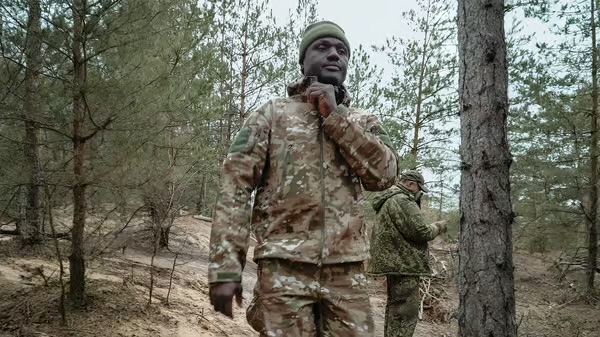
No fewer than 36 Nigerians were reportedly recruited to fight in Russia’s ongoing war against Ukraine, with five confirmed killed.
The revelation comes from a new investigative report exposing how vulnerable young men were lured abroad with false promises of employment and educational opportunities, only to be forced into military service.

The report, titled, ‘The Business of Despair: The Russian Army’s Recruiting of African Fighters’ was published in February 2026 by the investigative group, All Eyes on Wagner.
The research document detailed how Russia, after its invasion of Ukraine in February 2022, allegedly turned to African nations to bolster its ranks.
The report, drawing on a database of 1,417 African recruits between 2023 and mid-2025 obtained from Ukrainian sources, identifies Nigerians as part of a broader strategy in which foreign fighters are deployed as “cannon fodder” in high-risk assault operations.

The average age of African recruits is 31, and many were reportedly drawn from economically challenged backgrounds.
Among confirmed Nigerian fatalities are Abdoulaye Issaka Ismael, 27; Agbo Moses Omale, 43; Adamu Abdulai Ismail, 25; Mikael, 47; and Fajobi Taiwo Omoniyi, 50.
The report said the death toll —316 across all African recruits— might be higher, as the list is not exhaustive and additional deaths were identified through social media verification.
The investigation by the OSINT Accountability Project uncovered networks recruiting African fighters for Russia, including travel agencies in both Russia and Africa advertising “fast-track procedures.”
The agencies were alleged to have collaborated with recruiters based in Russia, who reach potential recruits through social media and messaging platforms, mainly Facebook, Instagram, Telegram, and TikTok, using videos and photos showcasing life in Russia against the backdrop of Moscow skyscrapers or luxury cars, symbols of wealth, power, and success.
The OSINT report showed that Nigeria is among the countries targeted, alongside South Africa, Ghana, Kenya, Uganda, Cameroon, and Gambia.
It noted that recruits were often deceived through social media adverts and travel agencies offering discounted flights and work opportunities, only to be coerced into signing military contracts upon arrival.
According to the report, the offers are highly attractive, with signing bonuses of several thousand dollars, base monthly salaries of $2,000 to $2,500, higher for “specialists”, health insurance, and even facilitated access to Russian citizenship once the contract is completed.
It noted that, however, in practice, many of the promises remain unfulfilled as fighters on the ground, as well as those who managed to leave, report unpaid wages, funds siphoned off by recruiters or superiors, or payments far below what was originally promised.
In 2025, Ukraine’s Foreign Minister, Andrii Sybiha, raised the alarm when he disclosed that more than 1,400 nationals from 36 African countries were fighting for Russia, with many currently held in Ukrainian camps as prisoners of war.
Nigerians caught in the trap
Families of affected Nigerians, particularly from southern states like Rivers and Ogun, expressed grief and outrage.
An unnamed Nigerian man captured by Ukrainian forces while fighting for Russia, recounted the circumstances that led to his conscription.
Speaking in a video posted on X, the man said his phone was confiscated as he was forced to sign a contract in Russia without understanding its content.
He said he had believed he was being trained for work in his field, undergoing an intensive one-week course followed by another two-week programme, only to be abruptly sent to the battlefront.
He also recounted the case of another Nigerian, identified as Abubakar, who suffered a heart-related episode during training and was hospitalised for five days.
He said upon recovery, Abubakar realised he was being forcibly conscripted and refused to obey orders.
Despite signing documents agreeing to a three-month jail term with the promise of eventual return to Nigeria, he was still sent to the frontline without proper training.
The Nigerian said he does not know Abubakar’s current whereabouts.
Days back, one Abubakar Adamu appealed to the Federal Government through his legal representatives for urgent intervention to secure his repatriation from Russia, claiming he was lured into the army under the guise of a civilian security job.
According to a publisher, Zagazola Makama, Adamu’s lawyers informed Nigerian authorities that he travelled to Moscow on a tourist visa issued on October 16, 2025, by the Russian Embassy in Abuja, believing he would work as a security guard.
Upon arrival, his travel documents were reportedly confiscated, and he was compelled to sign enlistment papers written in a Russian language without an interpreter.
Only later did he discover he had been enlisted in the Russian military.
In a formal petition submitted to Nigerian authorities, Adamu’s legal team invoked the doctrine of Non Est Factum, arguing he did not understand the nature or implications of the documents he was made to sign.
They also alleged misrepresentation and coercion, claiming he was lured into military service under false pretences.
According to the lawyers, Adamu is currently being held in a Russian military camp and has refused deployment to combat zones in Ukraine.
They demanded that Russian authorities should halt any deployment, return his seized documents, and facilitate his safe return to Nigeria.
On Thursday, February 12, 2026, the Ukrainian Defence Ministry released photographs of two Nigerians, Hamzat Kazeem Kolawole and Mbah Stephen Udoka, reported to have died while fighting for Russia in Luhansk.
Kolawole had signed a contract to join the Russian military in August 2025, while Udoka enlisted on 28th September of the same year.
Both men had no military training and reportedly died during an attempt to storm Ukrainian positions.
Recruiting hub, denials
A key recruitment hub in Nigeria is alleged to be St. Fortunes Travels and Logistics, a Port Harcourt, Rivers State-based agency run by one Fortune Chimene Amaewhule.
Established in December 2022, the firm was alleged to have openly advertised Russian army enlistment on social media and billboards, promising quick benefits such as citizenship and high salaries.
The agency was also said to have provided Nigerian and Russian contact numbers and was linked to persistent campaigns targeting jobseekers.
Earlier this week, the Russian Ambassador to Nigeria, Andrey Podyolyshev, denied claims that Moscow was recruiting Nigerians to fight in the Russia–Ukraine conflict.
Speaking in Abuja, he said he was not aware of any government-backed programme to enlist Nigerians and added that if such activities were occurring, Russia had no involvement.
“If anybody has this information, we are ready to send it to Russian law enforcement authorities so they can investigate those cases,” he said.
Repatriation completed in 2023 – NIDCOM
Reacting, the Federal Government said its repatriation exercise for Nigerians affected by the Russia–Ukraine conflict concluded more than three years ago, insisting that those who remained in Russia deliberately enlisted in the military after renouncing their Nigerian nationality.
Spokesperson for the Nigerians in Diaspora Commission, Abdulrahman Balogun, while commenting on the case of Adamu, said, “The Federal Government finished repatriation over three years ago. He deliberately enlisted himself in the army, and to do that, he must have renounced his Nigerianess.”
The Ministry of Foreign Affairs did not respond to requests for comment on the findings of the report.
Nigerians are greedy – Alleged enlistment agency
Also reacting to the allegation against his company, Amaewhule denied recruiting Nigerians to fight as mercenaries in Russia.
He said his firm had previously handled a Russia-related travel package but discontinued it after receiving what he described as credible information that some Nigerians were switching from legitimate work-related visas to enlist in the Russian army upon arrival.
Amaewhule explained that prospective recruits were enticed with financial incentives allegedly offered by recruiters, including promises of citizenship, a $30,000 signing bonus and weekly payments of about $3,000.
“Because of that, we had to stop,” he said.
According to him, the package his company offered was not linked to the Russian military.
“It was for teaching, and even that was for Kazakhstan. The two countries are very close, and there is a strong demand for English teachers there,” he said.
Amaewhule added that aside from Kazakhstan, his firm had not taken any clients directly to Russia, stressing that no one was recruited before the package was suspended.
He said around the time the company halted the package, some clients began requesting assistance to work with the Russian army, requests he said were declined.
The travel agent also recounted the case of a client who travelled to Kazakhstan through his firm and later contacted him about military recruitment opportunities.
According to Amaewhule, the client, whom he did not know personally and who had been referred by a family friend, asked the intermediary to speak to him about joining the army.
“I told the woman we would never allow anyone to switch,” he said, adding that he appealed to the family to dissuade the man.
Amaewhule further stated that he gathered more information about the recruitment pipeline through another client whose relatives, based in Qatar, had moved to Russia.
“Through him, I began to understand the process, how they were approached and what was being offered,” he added.
Amaewhule acknowledged that some Nigerians who initially travelled to Kazakhstan on student or work visas later crossed into Russia to join the military, a development he said might have created the impression that his company was involved. (PUNCH)









..As UNICEF, UNESCO, others, hail Mbah’s giant strides in education
Governor Peter Mbah of Enugu State has called for a quantum leap and the declaration of a national emergency in Nigeria’s education sector to guarantee the nation’s development and future prosperity.
Mbah argued that the audacity needed to fund a quantum leap in the nation’s education sector would flow from an appreciation of its necessity.
This was even as the United Nations Children’s Fund (UNICEF), United Nations Educational, Scientific and Cultural Organization (UNESCO), British Council, and other global and national education stakeholders have hailed the governor for making education the centerpiece of his administration’s development agenda.
The governor made the call in his keynote address at the 2026 Enugu Education Summit and the unveiling of the Enugu Education Policy at the International Conference Centre, Enugu, on Wednesday.
Speaking at the summit, themed, “Transforming Education for the Future: Leadership, Innovation, Partnership, Financing and Sustainable Reform,” he said Nigeria had reached the point where education must be treated as a national emergency.
“I believe Nigeria has reached the point where we must treat education as a national emergency.
“Not rhetorically, but in our budgets, our teacher development, our infrastructure, the standards we demand, and the partnerships we build between the Federal Government, states, development agencies, communities and the private sector.
“Our future prosperity depends upon the knowledge and capabilities of our people, after all. And that means every Nigerian child, wherever they are born, must have access to an education capable of preparing them for the world they are entering.
“Whatever education costs us today, ignorance will cost us far more tomorrow.
“Once we understand that, the question changes. It is no longer: Can we afford to make or fund this quantum leap? It becomes: What will happen to us if we do not?” he stated.
He further argued that no nation could truly eradicate poverty or achieve sustainable development without addressing the root causes of poverty, including lack of knowledge, know-how and the capabilities through which people create wealth, find employment, build enterprises, participate intelligently in society and determine the direction of their own lives.
“If we fix the road today but fail to educate the child who will maintain it tomorrow, how sustainable was our investment in the road?
“If we build factories but lack the skilled people capable of running increasingly sophisticated production systems, where is our own Industrial Revolution going to come from?
“And if millions of young people reach adulthood without the knowledge and capabilities to participate meaningfully in the economy, what exactly do we imagine the social cost of that will be?
“So, if Nigeria is to become a creation economy rather than a consumption economy, then we must equip our young people not simply to use what the world creates, but to research, design, engineer and create what the world needs.
“The point here is straightforward: transformation cannot survive on aspiration alone. Eventually, somebody has to pay for it,” he stated.
Mbah cited his administration’s decision to invest 33 per cent of the state’s annual budget in education for three consecutive years, building, among other facilities, 268 Smart Green Schools and more than 7,000 classrooms equipped with 21st-century learning tools.
“If Enugu’s experience offers one lesson, it is that when the scale of the challenge demands a quantum leap, audacity is not a luxury. It is a necessity.
“When we came into government, we had to look at that reality very closely. We could have repaired the existing system. We could have renovated some classrooms, supplied some desks, put computers into a few schools and called it reform.
“But we had to ask ourselves a more difficult question: would it be enough? Would an education system essentially designed for the world of 40 years ago prepare an Enugu child for the world of 20 years from now? Our answer was ‘No’.
“What we have attempted in Enugu is, therefore, not a collection of education projects. It is a change in the entire development model – a quantum leap,” he explained.
Unveiling the Enugu State Education Policy, Mbah explained that his administration was already implementing the policy, saying it would serve as the benchmark for the state’s education sector over the next six to 10 years.
“This is also a strong indication that nothing in our entire policy is knee-jerk – everything is a product of careful thought,” he concluded.
Meanwhile, represented by the UNICEF Chief of Field Office, Enugu, Mrs Juliet Chilewe, the agency’s Country Representative to Nigeria, Wafaa Saeed, said Enugu State had demonstrated a strong commitment to UNICEF’s vision of education transformation through investments in Smart Green Schools, teachers, foundational learning, digital literacy and experiential learning.
She said UNICEF was proud to have supported the development of the Enugu State Education Sector Plan 2026–2035.
In its remarks, UNESCO commended the governor for investing heavily in education, citing the 268 Smart Green Schools, the Centre for Experiential Learning and Innovation (CELI), and the plan to recruit more than 6,000 teachers.
Represented by the Officer-in-Charge of the Education Sector, Mr Adeyemi Oladeji, the UNESCO Representative to Nigeria, Dr Isaias Barreto da Rosa, said, “I congratulate Governor Peter Ndubuisi Mbah for his leadership and for making education the centerpiece of Enugu’s development agenda.
“The establishment of 268 Smart Green Schools is a landmark achievement that shows schools can be digitally enabled and environmentally responsible at the same time, preparing learners for a changing world while advancing the climate-conscious education that UNESCO promotes globally,” he stated.
Also, the British Council, represented by its Director on English and School Education, Nigeria, Fwanshihsak Daniel, expressed pride in the Mbah Administration’s achievements in the education sector, saying it would continue to partner with the government to ensure that the good policies yield better outcomes in classrooms.
“We commend Enugu State’s bold ambitions of an education system in which every learner develops strong foundations, creativity and the necessary skills to the society and the economy,” Daniel added.
The Commissioner for Education, Enugu State, Prof. Ndubueze Mbah, while thanking the Governor and stakeholders for their support, assured that Enugu had begun a journey of irreversible educational progress.
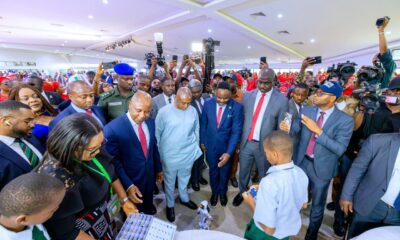
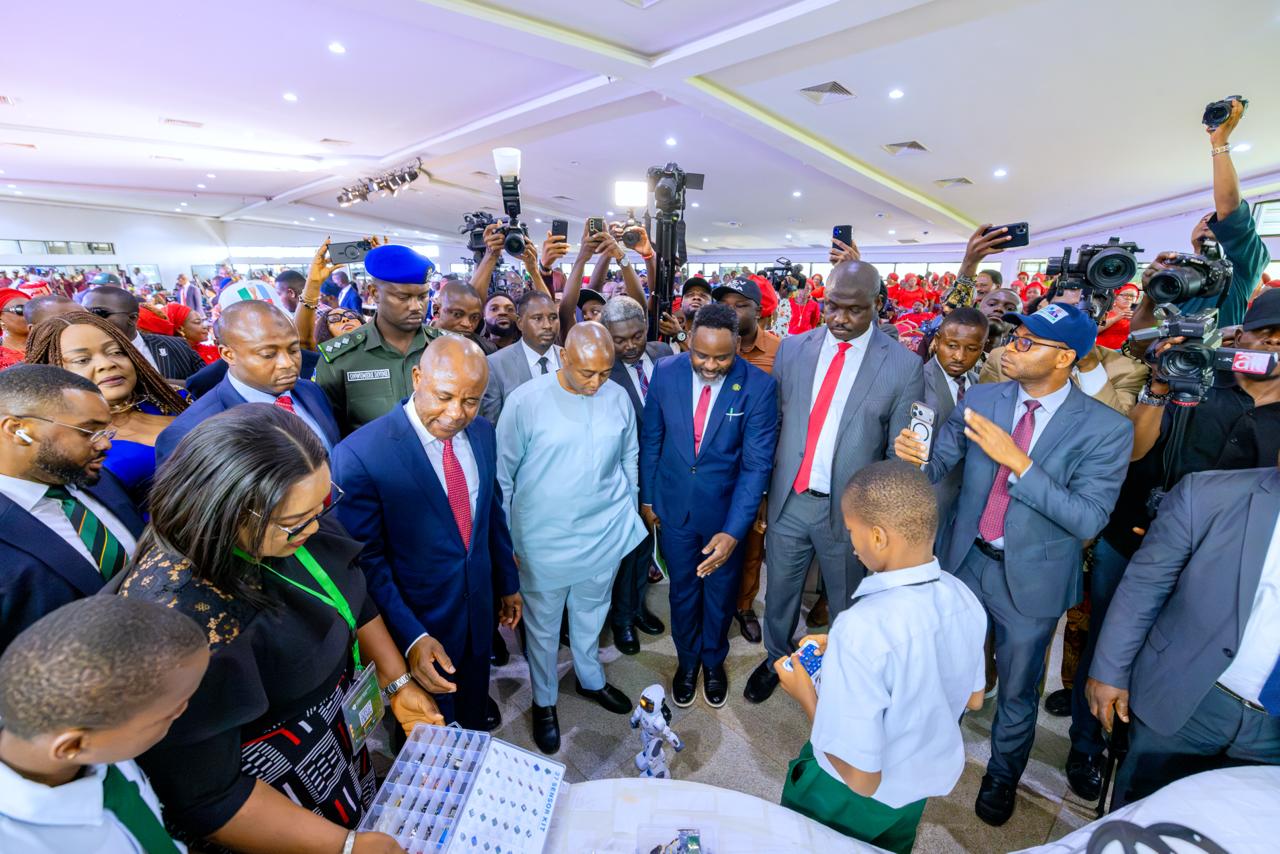
The high point of the event was the official unveiling of the Enugu State Education Policy and a tour of the exhibition of the Smart Green School Innovation Studio, set up by students of the state’s Smart Green Schools.
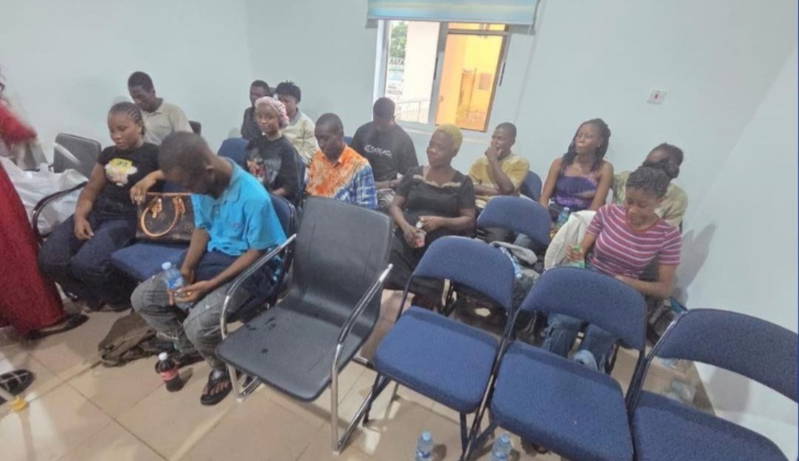
Photo Credit: Nigeria Police Force/X
Twenty prospective National Youth Service Corps, NYSC, members and one civilian abducted in Imo State have been rescued.
The were rescued in an intelligence-led operation involving the military, Department of State Services, DSS, police and other security agencies.
The victims were reportedly abducted while travelling through the state, prompting security agencies to launch an operation to locate and rescue them.
The rescued victims are currently receiving medical attention at a DSS facility, according to security sources, while efforts are ongoing to establish the circumstances surrounding the abduction and apprehend any remaining suspects.
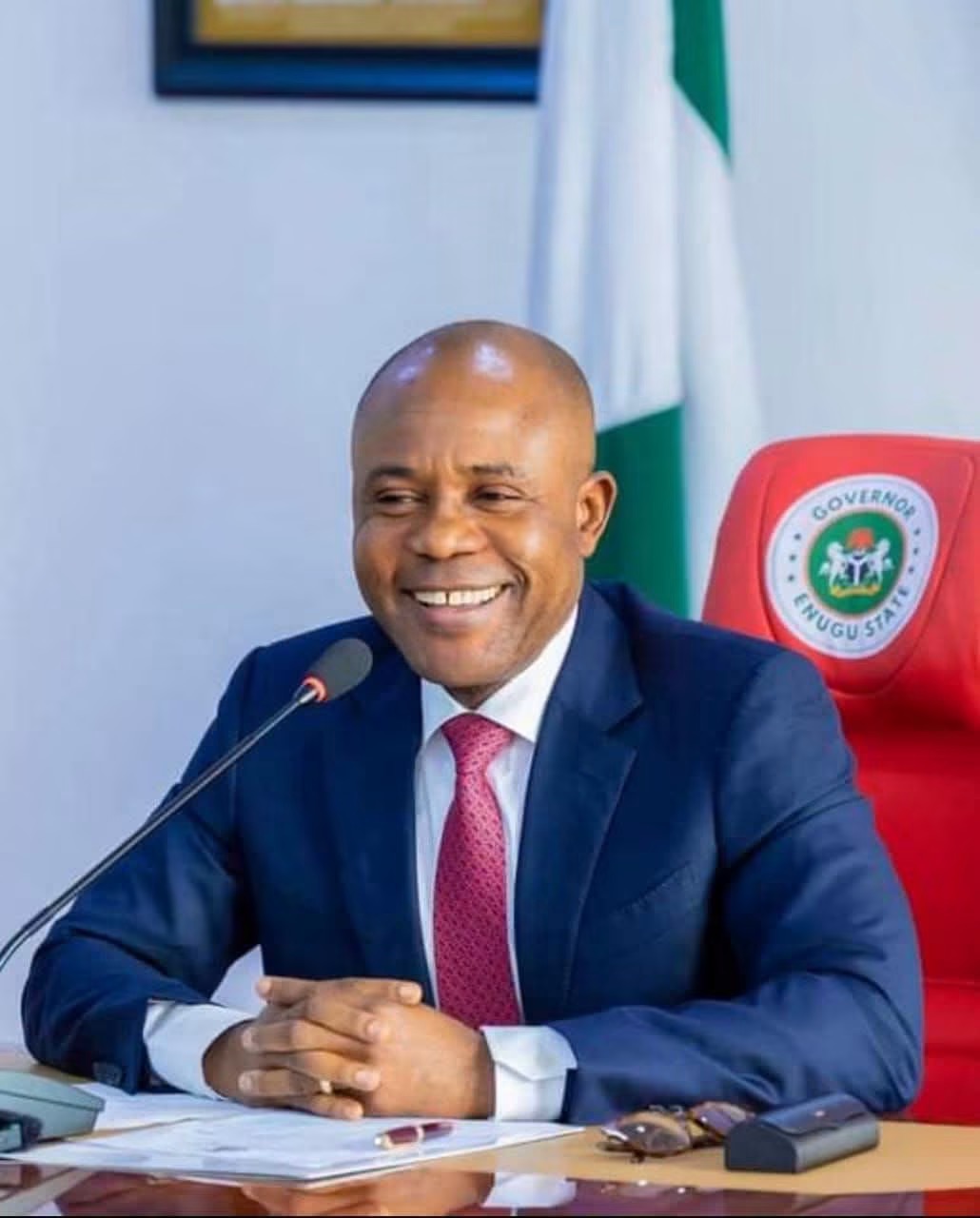
Governor of Enugu State, Peter Ndubuisi Mbah, has approved the appointment of new officials to fill existing vacancies in various Development Centres across the state.
The appointments, according to the state government, are part of the administration’s ongoing efforts to strengthen grassroots participation in governance and decision-making, while promoting inclusivity and broad-based representation across communities.
A statement announcing the appointments said the move was also aimed at ensuring that communities have effective channels through which they can contribute to government programmes and policies, thereby deepening the reach of government at the local level.
The appointments are expected to enhance the coordination of grassroots development initiatives, improve community engagement and responsiveness, and facilitate the implementation of the administration’s development agenda with greater participation from people at the community level.
The government said the newly appointed officials would help strengthen the connection between government programmes and the needs of communities across the state.
Accordingly, the following appointments have been approved:
ANINRI LOCAL GOVERNMENT AREA
ANINRI EAST DEVELOPMENT CENTRE
1. Udeh Sunday, Administrator (Ndeaboh)
2. Okorie Alexander Adindu, Secretary (Mpu)
3. Eleh John Obiora, Member (Ndeaboh)
4. Eze Kelvin, Member (Ndeaboh)
5. Eze Roseline, Member (Ndeaboh)
6. Onu Chigozie, Member (Ndeaboh)
7. Abbah Juliet Ijeoma, Member (Mpu)
8. Mba Stanley Ogbonna, Member (Mpu)
9. Chukwu Rosemary, Member (Mpu)
10. Blessing Chinyere Chukwu, Member (Mpu)
ANINRI NORTH DEVELOPMENT CENTRE
1. Anyim Chibuike Anthony, Administrator (Oduma 3)
2. Uka Boniface O., Secretary (Oduma 4)
3. Nwankwo Ifeoma, Member (Oduma 4)
4. Ekwe Janeth C., Member (Oduma 2)
5. Onyeabor Caroline, Member (Oduma 2)
6. Madu Goodness, Member (Oduma 1)
7. Onuoha Celestine, Member (Oduma 3)
8. Nworu Vivian, Member (Oduma 1)
9. Udeh Uloaku, Member (Oduma 4)
10. Anih Sabina, Member (Oduma 4)
ANINRI SOUTH DEVELOPMENT CENTRE
1. Ijeoma Chukwu, Administrator (Okpanku)
2. Igwe Vincent Ogbonnaya, Secretary (Mpu)
3. Ani Donatus Emeka, Member (Mpu)
4. Onu Charity, Member (Mpu)
5. Chukwuaja Shedrack, Member (Mpu)
6. Emmanuel Ozoemene Augustin, Member (Mpu)
7. Dr. Martin Elechi, Member (Okpanku)
8. Uche Chukwu Okorie, Member (Okpanku)
9. Udeh Ogbonnaya Cletus, Member (Mpu)
10. Nnabuisi Aja Okorie, Member (Okpanku)
ANINRI WEST DEVELOPMENT CENTRE
1. Hon. Osita Nwachukwu, Administrator (Nenwe 2)
2. Hon. Engr. Nathanel Chukwu, Secretary (Nenwe 1)
3. Hon. Ikenna Aniude, Member (Nenwe 1)
4. Hon. Uchenna Mba, Member (Nenwe 1)
5. Hon. James C. Nwaru, Member (Nenwe 2)
6. Hon. Chiugo Sunday Alinta, Member (Nenwe 3)
7. Hon. Collins Ude Ibeabuchi, Member (Nenwe 3)
8. Hon. Amachi Bernard Okoro, Member (Nenwe 3)
9. Hon. Nicholas Khama, Member (Nenwe 3)
10. Hon. Khama Godwin, Member (Nenwe 3)
AWGU LOCAL GOVERNMENT AREA
ANIKE DEVELOPMENT CENTRE
1. Hon. Sabastine Chukwu, Administrator (Ezere)
2. Hon. Tobias Chukwu, Secretary (Awgunta)
3. Hon. Mrs. Mary Uwa, Member (Agulese-Ugw ueme)
4. Hon. Benbenneth Udeogu Chidolue, Member (Nkwe)
5. Hon. Lawrence Onuora, Member (Nenwenta)
6. Hon. Bonaventure Chukwu Uche, Member (Ezinese-Mgbidi)
7. Hon. Iloabuchi Abire, Member (Eziobu-Ugwueme)
8. Hon. Mrs. Patricia Uzochukwu, Member (Nkwe)
9. Hon. Onu Chimaobi Nichodemus, Member (Ezere)
10. Hon. Eucharia Okorie, Member (Eziobu-Ugwueme)
AWGU DEVELOPMENT CENTRE
1. Hon. Engr. Jude Aniokete, Administrator (Obeagu)
2. Mrs. Okibe Akubuomma M., Secretary (Ekpulato-Mgbowo)
3. Hon. Fabian Chukwundu, Member (Ogboli-Awgu)
4. Hon. Raphael Uzoigwe, Member (Ugwuleshi-Awgu)
5. Hon. Osondu Stanley Agwu, Member (Mmaku-Ugwu)
6. Hon. Ikechukwu Umeh, Member (Ezineri-Mgbidi)
7. Hon. Mrs. Jane Nwafor, Member (Ugwuleshi-Awgu)
8. Hon. Mrs. Elizabeth Oti, Member (Adogbalato-Awgu)
9. Hon. Izuchukwu Henry Akpa, Member (Ekpulato-Mgbowo)
10. Hon. Celestine Ani, Member (Obeagu)
MBANABO NORTH DEVELOPMENT CENTRE
1. Hon. Odinaka Okeke, Administrator (Ibite-Ogbaku)
2. Hon. Patrick Chime, Secretary (Akaanwu-Agbogugu)
3. Hon. Chisom Ene, Member (Isu Awaa)
4. Hon. James Ndubuisi Onuoha, Member (Enugunato-Ihe)
5. Hon. Amobi Mbaka, Member (Ituku)
6. Hon. Mrs. Igwe Gloria, Member (Agbudu)
7. Hon. Ethel Okolo, Member (Obodoakpu-Agbogugu)
8. Hon. Mrs. Chioma Okeke, Member (Enuguoke-Ihe)
9. Hon. Onyedikachi Onyia, Member (Eziama-Agbogugu)
10. Hon. Mrs. Chizoba Okolo, Member (Eziama-Ogbaku)
MBANABO SOUTH DEVELOPMENT CENTRE
1. Hon. Charles Okafor, Administrator (Ugbonabo)
2. Hon. Victor Okonkwo, Secretary (Ogugu)
3. Hon. Mrs. Nnenna Okolie, Member (Amabor-Owelli)
4. Hon. Mrs. Jacinta Okonkwo, Member (Ugbo-Okpala)
5. Lady Gina Okolie, Member (Owelli)
6. Hon. Gloria Okolo, Member (Ogugu)
7. Hon. Chinedu Udegbo, Member (Ngene-Ugbo)
8. Hon. Chinonyelum Zobaobodo, Member (Enyimba-Amoli)
9. Hon. Daniel Nwonu, Member (Enugu-Owelli)
10. Hon. Victor C. Okolie, Member (Enyimba-Amoli)
ENUGU EAST LOCAL GOVERNMENT AREA
ENUGU EAST CENTRAL DEVELOPMENT CENTRE
1. Mrs. Caroline Ogbu, Administrator (Umuenwene)
2. Stephen Ogbu, Secretary (Umuchigbo)
3. Nneka Nnamchi, Member (Umuenwene)
4. Okoh Ezekiel Chibuzor, Member (Umuchigbo)
5. Engr. Chris Edozie, Member (Abakpa)
6. Promise Madu, Member (Abakpa)
7. Mrs. Chinwendu Anike, Member (Umuchigbo)
8. Mr. Peter Okpala, Member (Abakpa II)
9. Emmanuel Onukwube Ugwu, Member (Umuenwene)
10. Andrew Okolo, Member (Umuchigbo)
ENUGU EAST DEVELOPMENT CENTRE
1. Chukwungwu Gabriel, Administrator (Amorji)
2. Obinwanne Nnamani, Secretary (Mbuluowehe)
3. Peter Mba, Member (Amorji)
4. Anothnia Bony Ede, Member (Ibeagwa Edem)
5. Mrs. Martha Mbaeke, Member (Mbuluowehe)
6. Emeka Ugwu, Member (Ibeagwa Edem)
7. Ifeanyi Nwobodo, Member (Trans-Ekulu)
8. Surv. Genavive Okwor, Member (Trans-Ekulu)
9. Mr. Donatus Okolo, Member (Ibeagwa Edem)
10. Ugwu Anike Christiana, Member (Amorji)
IYIUKWU DEVELOPMENT CENTRE
1. Ugwu Micheael Okwudili, Administrator (Mbuluiyikwu)
2. Chinedu Oliver Anike, Secretary (Ugwogo)
3. Chukwunonso Eze, Member (Mbuluiyikwu)
4. Mrs. Mbaeze Chinyere, Member (Iyiukwu)
5. Eke Chidiebere, Member (Ugwogo)
6. Mrs. Pauline Oguegbe, Member (Ugwogo)
7. Chukwuka Ruben, Member (Iyiukwu)
8. Pastor Ejike Okwueze, Member (Iyiukwu)
9. Prince Chika Okolo, Member (Ugwogo)
10. Mrs. Ebele Okoh, Member (Ugwogo)
UJODO WEST DEVELOPMENT CENTRE
1. Surv. Agbo Anthony Tochukwu, Administrator (Ujodo West)
2. Chief John Ede, Secretary (Ujodo West)
3. Nnamani Raymond S., Member (Ujodo East)
4. Gorge Ugwu, Member (Ujodo East)
5. Ekene Ugwuogbu, Member (Ujodo West)
6. Alphosus Mba, Member (Ujodo West)
7. Ude Richard, Member (Ujodo West)
8. Nnamdi Ugwu, Member (Ujodo West)
9. Florence Ozioma Obi, Member (Ujodo)
10. Okwor Modester, Member (Ujodo West)
ENUGU NORTH LOCAL GOVERNMENT AREA
ENUGU NORTH CENTRAL DEVELOPMENT CENTRE
1. Kenechukwu Ikeneɡbu, Administrator
2. Hon. Kenneth Praisegod Agu, Secretary
3. Nnaemeka Okwo Nnamani, Member
4. Ukamaka Emma Ngwu, Member
5. Hon. Chikodili Okoh, Member
6. Julian Arinze, Member
7. Chuka Elvis Anyaogu, Member
8. Lady Ndidiamaka Okorie, Member
9. Obinna Onunze, Member
10. Ojogwu Chukwudi, Member
ENUGU NORTH EAST DEVELOPMENT CENTRE
1. Kester Agu, Administrator
2. Ozonoh Chukweumeka Christian, Secretary
3. Chinedu Agu, Member
4. Ekene Udeani, Member
5. Ozoani Somaya, Member
6. Agu Chuka, Member
7. Susan Agu, Member
8. Emma Boviv, Member
9. Ebuka Mgbadike, Member
10. Emmanuel Chijioke Nnaji, Member
ENUGU NORTH SOUTH DEVELOPMENT CENTRE
1. Bar. Chidubem Anibueze, Administrator
2. Okechukwu Onunze, Secretary
3. Emeka Ileje (Awila), Member
4. Ifesinachi Ngwu, Member
5. Peter Onu, Member
6. Chikwado Ngwu, Member
7. Uchenna Chukwu (Oboko), Member
8. Ifeanyi Valentine Eze, Member
9. Eze Jessica, Member
10. Amuche Anioko, Member
ENUGU NORTH WEST DEVELOPMENT CENTRE
1. Ezike Fortune (Tension), Administrator
2. Prince Orji, Secretary
3. Jones Nwachinaemelü, Member
4. Mrs. Nkiru Ugwu, Member
5. Chidi Opara, Member
6. Ifeoma Okoronkwo, Member
7. Monday Ede, Member
8. Chief Chiemezie Ugwu, Member
9. Nkiru Anyadifu Hellen, Member
10. Mrs. Jennifer Ani, Member
ENUGU SOUTH LOCAL GOVERNMENT AREA
ENUGU SOUTH CENTRAL DEVELOPMENT CENTRE
1. Akuabata Sandra Onyia, Administrator (Ward 5)
2. Onwe Victor Kelvin, Secretary
3. Samuel Uche Itam, Member (Ward 4)
4. Adindu Pamela, Member (Ward 4)
5. Afam Nwachukwu, Member (Ward 5)
6. Obiesie Ijeoma, Member (Ward 5)
7. Okonkwo Tochukwu Stephen, Member (Ward 6)
8. Chukwuani Chinwendu, Member (Ward 9)
9. Ogbodo Nnenna, Member (Ward 4)
10. Eke Okechukwu Paul, Member
ENUGU SOUTH EAST DEVELOPMENT CENTRE
1. Offia Chidimma Sandra, Administrator (Ward 7)
2. Nnamani Richard Chukwuebuka, Secretary (Ward 13)
3. Paul Nwachukwu, Member (Ward 7)
4. Chief Friday Dan Agbo, Member (Ward 10)
5. Aninwene Florence Chiboor, Member (Ward 10)
6. Chime Henry Amache, Member (Ward 10)
7. Ogochukwu Adaeze Ngene, Member (Ward 13)
8. Chime Henry Amache, Member (Ward 13)
9. Mr. Chukwunonso Ugwuanyi, Member (Ward 13)
10. Ugwu Nnenna Pauline, Member (Ward 10)
ENUGU SOUTH SOUTH DEVELOPMENT CENTRE
1. Okenwa Nnaji Raymond, Administrator (Ward 2)
2. Dorothy Ifeoma Agbo, Secretary (Ward 2)
3. Adaora Anthonia Agha, Member (Ward 2)
4. Mr. Julius Ndubuisi Agbo, Member (Ward 2)
5. Hon. Chukwujekwu Ngene, Member (Ward 3)
6. Mrs. Ngozi Nnaji, Member (Ward 3)
7. Mrs. Ayim Sandra Amarachi, Member (Ward 8)
8. Uche Ngene, Member (Ward 8)
9. Okoh Uche Martha, Member (Ward 3)
10. Comfort Nnamani, Member (Ward 8)
ENUGU SOUTH WEST DEVELOPMENT CENTRE
1. Tochukwu Egbo, Administrator (Ward 11)
2. Felix Onyia, Secretary (Ward 12)
3. Ali Amedi, Member (Ward 1)
4. Mrs. Sammie Eche Egbo, Member (Ward 1)
5. Nkwo Joy Ngozi, Member (Ward 1)
6. Ene Ogochukwu Linda, Member (Ward 11)
7. Ngene Jeremiah C., Member (Ward 11)
8. Mrs. Kate Chime, Member (Ward 12)
9. Okoh Ifeanyi Favour, Member (Ward 11)
10. Ugwu Blessing, Member (Ward 12)
EZEAGU LOCAL GOVERNMENT AREA
EZEAGU CENTRAL DEVELOPMENT CENTRE
1. Oji Calistus, Administrator (Imezi Owa I)
2. Chumaife Pius Nze, Secretary (Aguobu Owa II)
3. Obinna Ozokoli Esq., Member (Imezi Owa II)
4. Ejike Ekwueme, Member (Aguobu Owa I)
5. Ozo Theophilus Chiawa, Member (Aguobu Owa II)
6. Ikenna Ibe, Member (Mgbagbu Owa II)
7. Adibe Cosmas Chibuzo, Member (Mgbagbu Owa I)
8. Ikeche Ngozi, Member (Mgbagbu Owa I)
9. Madu Sochima Joseph, Member (Mgbagbu Owa)
10. Ozoani Oluchi, Member (Agwobu Owa I)
EZEAGU NORTH DEVELOPMENT CENTRE
1. Victor Uche Chukwu Chidiobu, Administrator (Amansido)
2. Chidera Iloputaife, Secretary (Iwollo)
3. Ifeoma Nnachetam, Member (Amansido)
4. Aneke Chibuike, Member (Iwollo)
5. Agu Chidi, Member (Neke/Oyofo)
6. Okafor Chizoba, Member (Neke/Oyofo)
7. Chibunine Chukwuka Chris, Member (Akama/Amankwo)
8. Onwuama Kelvin Okwudili, Member (Akama/Amankwo)
9. Umeh Chikah, Member (Okpogho)
10. Ezieke Stanley, Member (Okpogho)
EZEAGU SOUTH DEVELOPMENT CENTRE
1. Arinze Kenneth C., Administrator (Obeleagu)
2. Ugwu Kingsley Nnabuike, Secretary (Umumba Ndiuno)
3. Enekwe Lotenna, Member (Umumba Ndiagu)
4. Ozojukwu Clifford, Member (Obinofia)
5. Ogugofor Peter, Member (Agba)
6. Evuje Stephen, Member (Agba)
7. Uche Nweke, Member (Umanadiagu/Ndiuno)
8. Ozoilo Vincent, Member (Obinofia)
9. Mbachi Agness, Member (Umanadiagu/Ndiuno)
10. Anieke Happiness, Member (Obeleagu Umumana)
EZEAGU WEST DEVELOPMENT CENTRE
1. Zeigbo Angela Onuma, Administrator (Awha)
2. Ozor Maris, Secretary (Olo 2)
3. Chibueze James Okwudili, Member (Olo 1)
4. Obiefune Wilfred Nwaora, Member (Olo 1)
5. Ogbuke Ifeanyi, Member (Olo 2)
6. Okwudili Ilochi, Member (Awha)
7. Aniamalu Chinonso Tochukuwu, Member (Awha)
8. Chidiume Chinedu, Member (Olo)
9. Aniagbaoso Onyeka Remigius, Member (Olo 1)
10. Akabogu Edward Emeka, Member (Olo 2)
IGBO ETITI LOCAL GOVERNMENT AREA
IGBO ETITI CENTRAL DEVELOPMENT CENTRE
1. Commr. Ugwu Adolphus Kelechi, Administrator (Onyoho)
2. Amunabor Samuel, Secretary (Ikolo)
3. Amu Chiagozie, Member (Ochima)
4. Ogbonna Osmond, Member (Umunko)
5. Akabue Ernest, Member (Diogbe)
6. Atunya Emmanuel O., Member (Idoha)
7. Ekwelu Joshua, Member (Onyoho)
8. Gugu Raymond, Member (Umunа)
9. Mrs. Ibe Annastecia, Member (Ikolo)
10. Mrs. Uzobuibole Eucharia, Member (Umunko)
IGBO ETITI EAST DEVELOPMENT CENTRE
1. Ayogu Nnamdi, Administrator (Ukehe 3)
2. Ozo Simon Tony, Secretary (Ukehe 2)
3. Nkeonadi Chukwudi, Member (Ukehe 3)
4. Ozoenyi Kenneth, Member (Ukehe 4)
5. Simon Okwuche, Member (Ukehe 4)
6. Mrs. Onyika Monica Chiamaka, Member (Ukehe 3)
7. Odonu Agolu T., Member (Ukehe 2)
8. Iyoke Joseph Jacob, Member (Ukehe 2)
9. Odoh Obinna Collins, Member (Ukehe 1)
10. Odoh Valeria Ngozika, Member (Ukehe 1)
IGBO ETITI NORTH DEVELOPMENT CENTRE
1. Amobi Ekwueme, Administrator (Ozalla)
2. Agbowo Ekene Cyprain, Secretary (Ohodo)
3. Hon. Ikeoha Fidelis, Member (Ozalla)
4. Ojobeagu Casmir, Member (Ozalla)
5. Ugwuodo Juliet Obianuju, Member (Ekwegbe)
6. Nwogah Venitius Ikenna, Member (Ekwegbe)
7. Nneka Nwoga, Member (Ekwegbe)
8. Chinedu Ochiagha, Member (Ekwegbe)
9. Cdr. Emeka Ugwuja (Rtd.), Member (Ohodo)
10. Mrs. Eze Susana, nee Ogbuabor, Member (Ohodo)
IGBO ETITI WEST DEVELOPMENT CENTRE
1. Mr. Ogbobe Ugonna, Administrator (Aku 5)
2. Barr. Sunday Odoh, Secretary (Ejuona/Udueme)
3. Hon. Ugwuja Francis, Member (Aku 3)
4. Mr. Oyidi Christian, Member (Aku 2)
5. Mr. Ugwuoju Nnaemeka, Member (Aku 5)
6. Mr. Akarekwe Milicent, Member (Aku 4)
7. Mrs. Oluka Jacinta, Member (Aku 1)
8. Mr. Igwebueze Everistus, Member (Ejuona/Udueme)
9. Mrs. Ezukwoke Anastasia, Member (Aku 3)
10. Mrs. Ugwu Eucharia Ubochi, Member (Aku 4)
IGBO-EZE NORTH LOCAL GOVERNMENT AREA
IGBO-EZE NORTH CENTRAL DEVELOPMENT CENTRE
1. Odo Kenneth Ifeanyi, Administrator (Ozzi 7)
2. Onu Samson, Secretary (Ozzi 5)
3. Hon. Romanus Eze, Member (Umuozzi 1)
4. Ugwuanyi Chinago, Member (Umuozzi 1)
5. Uroko Kennedy Chizoba, Member (Umuozzi 5)
6. Ali Jude Chukwuebuka, Member (Umuozzi 6)
7. Mr. Christopher Eke, Member (Umuozzi 6)
8. Nnaji Chinagorom, Member (Umuozzi 7)
9. Abugu Uchenna Eric, Member (Umuitodo 3)
10. Ugwu Jane Nwakego, Member (Umuitodo 3)
IGBO-EZE NORTH EAST DEVELOPMENT CENTRE
1. Eze Bonaventure Ejike, Administrator (Umuitodo 2)
2. Ekeja Celestina Ngozi, Secretary (Umuozzi 4)
3. Ali Chinedu, Member (Umuitodo)
4. Anthony Elugwu Omabe, Member (Umuitodo 2)
5. Ugwuanyi Emmanuel Izuchukwu, Member (Ezzodo)
6. Eze Levi Chukwuemeka, Member (Ezzodo)
7. Mamah Romanus Emeka, Member (Umuozzi 3)
8. Mrs. Eze Juliana, Member (Umuozzi 3)
9. Itodo Onyekachi, Member (Umuitodo)
10. Abugu Chinedu, Member (Umuozzi 4)
IGBO-EZE NORTH SOUTH DEVELOPMENT CENTRE
1. Odum Fidel Chijioke, Administrator (Ozzi 9)
2. Chief Eze John C., Secretary (Ozzi 10)
3. Mr. Eze Kelechi Linus, Member (Ozzi 2)
4. Apeh Scholastica O., Member (Ozzi 8)
5. Ali Christian, Member (Ozzi 8)
6. Odum Godwin Uchenna, Member (Ozzi 9)
7. Miss Ngozi Omeh, Member (Ozzi 2)
8. Mr. Odugu Felix Okechukwu, Member (Ozzi 10)
9. Ezeugwu Cathrine, Member (Essodo 3)
10. Idoko Levi, Member (Essodo 3)
IGBO-EZE NORTH WEST DEVELOPMENT CENTRE
1. Ali Nathaniel C., Administrator (Essodo 1)
2. Bar. Haruna Ali, Secretary (Ette 1)
3. Ugwuanyi Paschal Ogbonna, Member (Essodo 2)
4. Apeh Ifesinachi Festus, Member (Essodo 2)
5. Omeh Charles Tochukwu, Member (Essodo 1)
6. Hon. Peter Uja, Member (Ette 1)
7. Philip Ekele, Member (Ette 2)
8. Wilfred Aba, Member (Ette 2)
9. Mrs. Ochai Joy Chinwe, Member (Ette 3)
10. Onu Apolonia, Member (Ette 3)
IGBO-EZE SOUTH LOCAL GOVERNMENT AREA
EKETE DEVELOPMENT CENTRE
1. Hon. Jude Oge Asogwa, Administrator (Likke/Akutarа)
2. Edith Chinasa Eze, Secretary (Umulolo)
3. Mr. Ugwu Ejike, Member (Umulolo)
4. Hycent Onyishi, Member (Ajuona/Ovoko)
5. Okenwa Ifeanyi Eze, Member (Ajuona/Ovoko)
6. Attama Johnson Ubaka, Member (Ajuona/Ovoko)
7. Eze Christopher Ugochukwu, Member (Ugo/Ekoyi)
8. Eze Juliet Ngozi, Member (Ugo/Ekoyi)
9. Mrs. Ego Mba, Member (Ugo/Ekoyi)
10. Mr. Paul Abonyi, Member (Akautara)
IGBO-EZE SOUTH CENTRAL DEVELOPMENT CENTRE
1. Egugwu Ernest Chima, Administrator (Nkalagu/Obukpa)
2. Hon. Chizoba Ezeja (Commander), Secretary (Ezema)
3. Hamza Idris Ukwuaba, Member (Ezema)
4. Mr. Ayogu Solomon Chinonso, Member (Amebo)
5. Asadu Chukwudi, Member (Nkalagu)
6. Ayogu Chinonso, Member (Amebo/Hausa/Yoruba)
7. Ugwuoke Ambrose Chinedu, Member (Amebo/Hausa/Yoruba)
8. Charles Ayogu, Member (Echara/Isiagu)
9. Abugwu Stanley, Member (Echara/Isiagu)
10. Lydia Ijenwa Nnadi, Member (Echara/Isiagu)
IGBO-EZE SOUTH EAST DEVELOPMENT CENTRE
1. Mr. Joseph Ifeanyichukwu Ezugwu, Administrator (Ezzi Ngwu)
2. Aloysius Ejiofor Eze, Secretary (Umuelo/Ovoko Agu)
3. Hon. Christopher Ugwuoke, Member (Uhunowerre)
4. Odo Jude Chinonso, Member (Umuelo/Ovoko Agu)
5. Innocent Eze Obata, Member (Ezi/Ngwu)
6. Ugwu Jude Ofor, Member (Ezi/Ngwu)
7. Hon. Ignatius Odo, Member (Uhunowerre)
8. Mrs. Amechi Nwamaka Ozor, Member (Umuelo/Ovoko Agu)
9. Hon. Uchenna Eze, Member (Ogbagu/Ajuona)
10. Odo Linus Ejike, Member (Ogbagu/Ajuona)
UDEZE DEVELOPMENT CENTRE
1. Prince Ekene Eze, Administrator (Unadu)
2. Ngozi Elizabeth Odo, Secretary (Itchi Uwani II)
3. Hon. Nnaemeka Omeje, Member (Itchi Uwani III)
4. Mrs. Stella Okpe, Member (Unadu)
5. Abigail Ngozi Omeje, Member (Alor-Agu)
6. Hon. Celestine Omeje, Member (Alor Agu)
7. Mr. Omada Christopher, Member (Itchi Uwani)
8. Mr. Ozioko Douglas, Member (Alor Agu)
9. Lilian Ukamaka Eze, Member (Itchi Uwani)
10. Ugwuoke Samuel Ejiofor, Member (Alor Agu)
ISI-UZO LOCAL GOVERNMENT AREA
AMANYI ISI-UZO DEVELOPMENT CENTRE
1. Ugwu Emmanuel Chibogu, Administrator (Mbu 1)
2. Agbo Obinna Augustine, Secretary (Neke 1)
3. Ogbodo John Beluchi, Member (Neke 1)
4. Agbor Chukwuemeka Stanley, Member (Mbu 1)
5. Nnamchi Chinweuba, Member (Neke 2)
6. Ugwuodo Eunice, Member (Neke 2)
7. Agbo Chika Christopher, Member (Neke 2)
8. Nnamani Tobias, Member (Mbu 2)
9. Agbo Stella Ifeyinwa, Member (Mbu 2)
10. Odo Ogochukwu, Member (Neke 2)
EHA-AMUFU WEST DEVELOPMENT CENTRE
1. Hon. Calistus Ikechukwu, Administrator (Eha-Amufu 1)
2. Edeoga Stanley Onyekachi, Secretary (Eha-Amufu 4)
3. Achigbo Innocent, Member (Eha-Amufu 4)
4. Ogbu Nkeiruka, Member (Eha-Amufu 4)
5. Ugwu Cecilia N., Member (Eha-Amufu 4)
6. Charles Ilodi, Member (Eha-Amufu 4)
7. Ogenyi Obinna, Member (Eha-Amufu 4)
8. Ani Janeth, Member (Eha-Amufu 1)
9. Uzu Cyprain, Member (Eha-Amufu 1)
10. Eze Cecilia, Member (Eha-Amufu 4)
EHA-AMUFU EAST DEVELOPMENT CENTRE
1. Mr. Ejike Ede, Administrator (Eha-Amufu 3)
2. Hon. Ogenyi Eziokwu, Secretary (Eha-Amufu 2)
3. Hon. Lotachukwu I. Odo, Member (Eha-Amufu 2)
4. Olinya Simon Ibe, Member (Eha-Amufu 3)
5. Hon. Isaac Chinedu, Member (Eha-Amufu 3)
6. Mr. Obeagu Kingley Arinze, Member (Eha-Amufu 2)
7. Mrs. Pepertua Odo, Member (Eha-Amufu 3)
8. Mr. Ede Abuchi, Member (Eha-Amufu 3)
9. Mrs. Faith Ugwu, Member (Eha-Amufu 2)
10. Chuka Nnamani, Member (Eha-Amufu 3)
ISI-UZO CENTRAL DEVELOPMENT CENTRE
1. Odo Monday Micheal, Administrator (Ikem 1)
2. Ngwu Patrick, Secretary (Umualor)
3. Ugwudike Gerald, Member (Ikem 2)
4. Ugwualu Maurice Ejike, Member (Umualor)
5. Chinedu Ijeoma Nnamdi, Member (Ikem 3)
6. Agbo Abel Sunday, Member (Ikem 2)
7. Engr. Emeka Eze, Member (Ikem 2)
8. Aaron Ugwunnaji Chinedu, Member (Umualor)
9. Ogenyi Benedict Chidera, Member (Ikem 2)
10. Ugwu Emmanuel, Member (Ikem 1)
NKANU EAST LOCAL GOVERNMENT AREA
AMANKANU DEVELOPMENT CENTRE
1. Obinna Ngwu, Administrator (Owo)
2. Sunday Agbo, Secretary (Ubahu)
3. Sabastine Adenyi, Member (Mbulu/Owo)
4. Joseph Sunday Eze, Member (Ubahu)
5. Okechukwu Ani, Member (Amankanu)
6. Mrs. Ann Chinyere Ngwu, Member (Amankanu)
7. Mba Charles Onyedikachi, Member (Amechi Idodo)
8. Mrs. Agnes Nnaji, Member (Amechi Idodo)
9. Ugwu Daniel Nnamani, Member (Oruku)
10. Chukwudi Mbonu, Member (Umuode)
ASU NKANU DEVELOPMENT CENTRE
1. Uwadia Godwin Ekube, Administrator (Nara)
2. Bar. Emeka Nwoye, Secretary (Ugbawka 2)
3. Engr. Daniel Ebubechukwu Okoh, Member (Ugbawka 1)
4. Ede Nnaemeka Nelson, Member (Ugbawka 1)
5. Juliet Chinonso Okonkwo, Member (Ugbawka 1)
6. Hon. Sunday Okafor, Member (Ugbawka 2)
7. Edemba Samuel Onyebuchi, Member (Ugbawka 2)
8. Hon. Edenta Chudi, Member (Nara 2)
9. Anichukwu Frank Friday, Member (Nara 1)
10. Linda Onu, Member (Nara 1)
NKANU EAST CENTRAL DEVELOPMENT CENTRE
1. Eze Chukwudebelu Onyebuchi, Administrator (Ihuokpara)
2. Bar. Uzoaro Amuchekwu Loveth, Secretary (Onichagu)
3. Amushi O. Chiene, Member (Akpawfu)
4. Chika Nwaebem, Member (Isienu)
5. Ogwudile Kanayo Chukwu Kingsley, Member (Ihuokpara)
6. Ndubuisi Innocent Nnamani, Member (Isienu)
7. Chubby Okafor, Member (Ohuani/Onichagu)
8. Ede Ibezimako, Member (Akpawfu)
9. Nwafu Judith Nebechi, Member (Ihuokpara)
10. Precious Nwachukwu, Member (Ohuanu/Onichagu)
NKANU EAST SOUTH DEVELOPMENT CENTRE
1. Hon. Emmanuel Sopuluchukwu Ede, Administrator (Mburubu)
2. Darlington Okoye, Secretary (Nomeh)
3. Engr. Emmanuel Chukwudi Ani, Member (Nomeh)
4. Modester Amechi, Member (Nomeh)
5. Mrs. Cecelia Ajaeze, Member (Nkerefi 2)
6. Mrs. Obiageli Anyim, Member (Nkerefi 2)
7. Okereke Chidozie, Member (Nkerefi 2)
8. Ogbu Grace Chiajulam, Member (Nkerefi 1)
9. Chibuzo Solomon, Member (Nkerefi 1)
10. Njoku Romanus Azubuike, Member (Mburubu)
NKANU WEST LOCAL GOVERNMENT AREA
AGBANI/AMURRI DEVELOPMENT CENTRE
1. Nwobodo Chidiebere, Administrator (Agbani)
2. Nwodo Chigozie Augustine, Secretary (Amurri)
3. Nnamani Uzoamaka, Member (Agbani Ward)
4. Nwoha Obiora, Member (Agbani)
5. Akwila Chiedozie, Member (Agbani Ward)
6. Ugochukwu Ogbonna, Member (Agbani Ward)
7. Nwodo Ikechukwu, Member (Amurri)
8. Nsiegbu Nnanna Francis, Member (Amurri)
9. Ozioma Chukwu, Member (Amurri Ward)
10. Okwudili Christian Okoh, Member (Amurri)
AKPUGO DEVELOPMENT CENTRE
1. Arinze Nwodo, Administrator (Akpugo 5)
2. Sunday Collins Nwodo, Secretary (Akpugo Ward 3)
3. Uzoamaka Dick Edeh, Member (Akpugo Ward 4)
4. Ani Nneka Juliet, Member (Akpugo Ward 3)
5. Egbo Okwudiri Michael, Member (Akpugo Ward 1)
6. Nonona Patrick O, Member (Akpugo Ward 1)
7. Prince Arinze Nwodo, Member (Akpugo Ward 5)
8. Gabriel Chike Nwodo Ona, Member (Akpugo Ward 4)
9. Chigozie Nnamani, Member (Akpugo 2)
10. Prince Chidiebere Nwatu, Member (Akpugo 2)
NKANU WEST DEVELOPMENT CENTRE
1. Steve Nweke, Administrator (Obuoffia)
2. Odougwu Charles Ikenna, Secretary (Akegbe Ward 2)
3. Hon. Solomon Ifeanyi Nwobodo, Member (Obuoffia)
4. Chinasa Nwachukwu Priscilla, Member (Akegbe Ugwu 2)
5. Hon. Ikechukwu Nwobodo, Member (Akegbe Ugwu Ward 1)
6. Hon. Ani Chinonso Patrick, Member (Akegbe Ugwu Ward 1)
7. Okoh Prince Ekene, Member (Amodu Ward)
8. Ogbodo Charles Chinweuba, Member (Umueze Ward)
9. Agu Meec Jireh, Member (Umueze Ward)
10. James Ogbodo Nweze, Member (Amodu)
OBE/OZALLA DEVELOPMENT CENTRE
1. Hon. Onyeka Nnamani, Administrator (Obe Ward)
2. Uchenna Oha, Secretary (Ozalla)
3. Mr. John Onyejiuwa Owo, Member (Obe Ward)
4. Mr. Tony Chidi Eneh, Member (Obe Ward)
5. Mr. Christian Okonkwo, Member (Obe Ward)
6. Chinyere Okeke, Member (Obe Ward)
7. Okeke Maureen Ada, Member (Ozalla Ward)
8. Chris Chukwuekee (Alhaji Meme), Member (Ozalla Ward)
9. Hon. Donatus Nwachukwu, Member (Ozalla Ward)
10. Hon. Nwagbara Henry Chijioke, Member (Ozalla Ward)
NSUKKA LOCAL GOVERNMENT AREA
NSUKKA CENTRAL DEVELOPMENT CENTRE
1. Aha Anthony Anayo, Administrator (Owerre Umuoyo)
2. Onyishi Aloysius Onukwube, Member (Nkpunnano)
3. Nwoke Ndubuisi, Member (Ihe)
4. Ezugwu Stephen Oguejiofor, Member (Owerre Umuoyo)
5. Ugwuanyi Jane Chinyere, Member (Nru)
6. Augustine Alumona, Member (Nkpunnano)
7. Ifeanyi Chike, Member (Obukpa)
8. Ezema Sunday Hillary, Member (Obukpa)
9. Dr. Ezeity Onyebuchi Benjamin, Member (Obukpa)
10. Mrs. Ugwu Echeria Adaku, Member (Umuoyo)
NSUKKA EAST DEVELOPMENT CENTRE
1. Hon. Dan Ugwu, Administrator (Idi Ogbozara)
2. Dr. Ik Onugwu, Secretary (Eha Ulo)
3. Hon. Uwakwe Ezema, Member (Eha Ndiagu)
4. Chioma Nwamba, Member (Eha Ndiagu)
5. Peter Eze, Member (Eha Ndiagu)
6. Benjamin Eze, Member (Eha Ndiagu)
7. Hon. Innocent Eze, Member (Agbamere)
8. Ugwuoke Josephat, Member (Agbamere/Umabo)
9. Alphonsus Onah, Member (Ibеку)
10. Hon. Sunday Agbo, Member (Ibеку)
NSUKKA SOUTH DEVELOPMENT CENTRE
1. Amos Agbo, Administrator (Ede Ukwu)
2. Ugwuoke Fidelis Ezenwa, Secretary (Obimo/Ikwoka)
3. Ezugwu Amogechi Chinenye, Member (Edenta)
4. Asogwa Ikechukwu, Member (Edenta)
5. Ozor John Paul, Member (Akaibute)
6. Valentine Ezea Ikechukwu, Member (Ejuona/Uwani)
7. Ugwuda Godwin Iroabuchi, Member (Ejuona/Uwani)
8. Mrs. Ugwuja Martha Nkechi, Member (Akaibute)
9. Kingsley Agbo, Member (Ede Ukwu)
10. Livinus Emeka Ugwoke, Member (Obimo/Ikwoka)
NSUKKA WEST DEVELOPMENT CENTRE
1. Chijioke Onah, Administrator (Akpaozzi)
2. Nathan Ugochukwu Ugwuanyi, Secretary (Edem-Ani)
3. Chijioke Aguonah, Member (Akpa Edem)
4. Ugwu Ejike Malachy, Member (Ibeagwani/Ibeagwagu)
5. Mr. Obute Ejiofor Obiora, Member (Okpuje/Okutu)
6. Eze Ukamaka O., Member (Alor Uno)
7. Onah Chijioke Aguonah, Member (Akpaozzi)
8. Eze Mathias N., Member (Anuka)
9. Hon. Nnajiuba Ugwu, Member (Edemani)
10. Donatus Idoko, Member
OJI RIVER LOCAL GOVERNMENT AREA
MMAMU DEVELOPMENT CENTRE
1. Charles Okoroafor, Administrator (Inyi 2)
2. Ugomsi Blossom Chimnaza, Secretary (Awlaw)
3. Charity Ifeoma Okonkwo, Member (Awlaw)
4. Justice Onyekwere, Member (Inyi 1)
5. Maduabuchi Onwumere, Member (Inyi 1)
6. Amaka Onuigwe, Member (Inyi 4)
7. Echezona Timothy Ezi, Member (Inyi 4)
8. Christian Obinna Onwubuko, Member (Inyi 3)
9. Cyril Chukwuedozie, Member (Inyi 3)
10. Gabriel Nwekenzenagu, Member (Akpugoeze)
OJI RIVER CENTRAL DEVELOPMENT CENTRE
1. Mazi Okwu Nnabuike Emmanuel, Administrator (Achi Uno 3)
2. Ugonna Agba, Secretary (Achi Uno 2)
3. Ngozi Mba, Member (Achi Uno 3)
4. Elisha Obiri, Member (Achi Uno 4)
5. Anthonia Azuka, Member (Achi Uno 4)
6. Jonas Orji, Member (Achi Uno 1)
7. Ifeanyi Okolo, Member (Achi Uno 1)
8. Anurika Ude, Member (Achi Uno 1)
9. Ekene Edwin Ozoemena, Member (Achi Uno 4)
10. Ekene Dirichukwu, Member (Achi Uno 3)
OJI RIVER EAST DEVELOPMENT CENTRE
1. Onyia Nwokeabia, Administrator (Oji Urban 4)
2. Malachy Chukwu, Secretary (Achi Agu 3)
3. Agunwenyi Kingsley, Member (Achi Agu 2)
4. Okenna Jonas Egwuchineke, Member (Achi Agu 2)
5. Eziama Alloysius, Member (Oji Urban 3)
6. Ikechukwu Romanus Ume, Member (Oji Urban 4)
7. Sunday Onwudiwe, Member (Achi Agu 3)
8. Ikechukwu Kenechukwu, Member (Achi Agu 1)
9. Mbaekwe Mercy Nkeiruka, Member (Achi Agu 1)
10. Cyril Akason, Member (Achi Agu 1)
OJI SOUTH DEVELOPMENT CENTRE
1. Ifeanyi Chibueze, Administrator (Oji Urban 2)
2. Hon. Ifeanyi Nwozor, Secretary (Ugwuoba 1)
3. Anayo Ikeh, Member (Ugwuoba 3)
4. Afam Ejimofor, Member (Ugwuoba 2)
5. Hon. Obum Anya, Member (Ugwuoba 2)
6. Vitus Maduka, Member (Oji Urban 2)
7. Anigbogu Chibuzor, Member (Ugwuoba 3)
8. Catherine Okechukwu, Member (Oji Urban 1)
9. Alli Marazu, Member (Ugwuoba 1)
10. Jude Chukwu, Member (Oji Urban 1)
UDENU LOCAL GOVERNMENT AREA
ORBA DEVELOPMENT CENTRE
1. Okanya Cyril Ikechukwu, Administrator (Orba 1)
2. Agbodo Anthony Divine, Secretary (Orba 2)
3. Makata Onyinyechi, Member (Orba 1)
4. Eze Osita, Member (Orba 1)
5. Onugwu Everistus Nwankwo, Member (Orba 2)
6. Madu Gideon Chudi, Member (Orba 2)
7. Attama Clement Okechukwu, Member (Orba 1)
8. Ugwu Paul Chibogwu, Member (Orba 1)
9. Ugwuede Nestor Chinedu, Member (Orba 1)
10. Abonyi Ogochukwu, Member (Orba 2)
UDENEDEM DEVELOPMENT CENTRE
1. Eya Hillary Chinweume, Administrator (Udunedem)
2. Onah James Chidi, Secretary (Imilike)
3. Ugwueya Cornelus Chidi, Member (Ezimo)
4. Ugwu Christian Nnabuike, Member (Ezimo)
5. Onah Kingsley Amuche, Member (Imilike)
6. Ugwu Michael, Member (Udunedem)
7. Eze Kyrian Nnamdi, Member (Ezimo)
8. Mbaeje Nnaemeka Henry, Member (Imilike)
9. Mba Patience, Member (Imilike)
10. Mrs. Nneka Ogbonna, Member (Udunedem)
UDENU EAST DEVELOPMENT CENTRE
1. Ugwueke Sunday, Administrator (Ogbodu Aba)
2. Ogbuishi Celestine Obinna, Secretary (Obollo Etiti)
3. Sunday Ezeokwor, Member (Ogbodu Aba)
4. Hillary Eze, Member (Ogbodu Aba)
5. Emeka Ngwu, Member (Obollo Etiti)
6. Nnadi Robinson, Member (Obollo Etiti)
7. Ernest Ogbonna, Member (Obollo Eke)
8. Ugwueke Shulamite, Member (Obollo Eke)
9. Nkechi Mary Eze, Member (Obollo Eke)
10. Barr. Christian Okoro, Member (Obollo Eke)
UDENU NORTH DEVELOPMENT CENTRE
1. Okpe Meletus, Administrator (Obollo Afor)
2. Joseph Kenneth, Secretary (Amalla)
3. Uroko Promise Chinago, Member (Amalla)
4. Omame Sunday, Member (Obollo Afor)
5. Nkechi Urama, Member (Obollo Afor)
6. Onah Onyekachi, Member (Obollo Afor)
7. Omeke Tochukwu, Member (Obollo Afor)
8. Okpe Kenneth, Member (Obollo Afor)
9. Odo Ifeanyi Kingsley, Member (Amalla)
10. Akor Onyebuchi, Member (Amalla)
UDI LOCAL GOVERNMENT AREA
OJEBE OGENE DEVELOPMENT CENTRE
1. Hon. Chike Ngwu Vincent, Administrator (Umulumgbe)
2. Okolo Malachy, Secretary (Ebe)
3. Agwagu Bonaventure Osita, Member (Umulumgbe)
4. Ihueze Rachael, Member (Ebe)
5. Mrs. Nneka Eneje, Member (Okpatu)
6. Ozougwu Ebere, Member (Okpatu)
7. Udeh Kenneth, Member (Awhum/Ukana)
8. Charles Ike, Member (Awhum/Ukana)
9. Amahalu Hillary Chinedu, Member (Abor)
10. Egbuji Evaristus Jr, Member (Abor)
UDI CENTRAL DEVELOPMENT CENTRE
1. Chris Eneogbuagu, Administrator (Abia)
2. Kelvin Ozougwu, Secretary (Nsude)
3. Aneke Udochukwu Charles, Member (Abia)
4. Mrs. Ebere Mba, Member (Nsude)
5. Onuorah Jude Adam, Member (Obioma)
6. Ukamaka Ethel Amalu, Member (Obioma)
7. Ani Chigbo Cletus, Member (Ngwo Uno)
8. Eze Philip Ajuluchukwu, Member (Ngwo Uno)
9. Engr. Emeka Ugwu, Member (Ngwo Asaa)
10. Eze Nneka Ukamaka, Member (Ngwo Asaa)
UDI SOUTH DEVELOPMENT CENTRE
1. Eucharia Adaeze Ezeh, Administrator (Umuaga)
2. Mr. Luke Onyebuchi Aneke, Secretary (Amokwe)
3. Greg Aneke, Member (Udi/Agbudume)
4. Chinedu Onyia, Member (Udi/Agbudume)
5. Eze Chinwendu Onyia, Member (Umuabi)
6. Mr. Chidiebere Onyia, Member (Umuabi)
7. Ndubuisi Kenneth Eneze, Member (Obinagu)
8. Mrs. Uju Agu, Member (Obinagu)
9. Amobi Eze, Member (Nachi)
10. Chijoke Uzoigwe, Member (Nachi)
UGWUNYE/EZEDIKE DEVELOPMENT CENTRE
1. Jude Igiliegbe, Administrator (Akpakwume/Nze)
2. Akah Vincent, Secretary (Egede/Umuoka)
3. Ikeagu Chinyere, Member (Egede/Umuoka)
4. Uche Obute, Member (Affa/Ikono/Oghu)
5. Gerald Iruka Ejiofor, Member (Eke)
6. Frank Ogbuka, Member (Egede/Umuoka)
7. Mrs. Chibuzor Bridget, Member (Akpakwume/Nze)
8. Anijiofor Rufina, Member (Eke)
9. Odenigbo Ngozi, Member (Affa/Ikono/Oghu)
10. Ugodu Ebuka Augustus, Member (Affa/Ikono/Oghu)
UZO UWANI LOCAL GOVERNMENT AREA
ADADA DEVELOPMENT CENTRE
1. Ogbobe Patrick Ogonna, Administrator (Uvuru)
2. Odinaka Nwabueze Boniface, Secretary (Akpugo)
3. Lucy Chinenye Nnadozie, Member (Akpugo)
4. Alphonsus Ochi, Member (Akpugo)
5. Okwudili Nnadi, Member (Nkpologu)
6. Igata Virginia, Member (Nkpologu)
7. Ezugwu Peter Onyemachi, Member (Nkpologu)
8. Ajogwu Charity, Member (Nkpologu)
9. Offor Emmanuel, Member (Uvuru)
10. Pascal Okoro, Member (Uvuru)
IGBO-ANO DEVELOPMENT CENTRE
1. Oke Victor Obi, Administrator (Abbi)
2. Ugwu Cosmas Ogbonna, Secretary (Ugbene II)
3. Catherine Onunze, Member (Ugbene II)
4. Charles Ogbuanya, Member (Nrobo)
5. Odo Cordelia Nneka, Member (Nrobo)
6. Utazi Godwin, Member (Nimbo II)
7. Okeagu Stella Ifeoma, Member (Nimbo II)
8. Akor Collins Ugochukwu, Member (Nimbo I)
9. Okweli Virginia, Member (Nimbo I)
10. Ezike Amaechi, Member (Ugbene I)
MBANANO DEVELOPMENT CENTRE
1. Okika Okwesili John, Administrator (Adaba/Nkume)
2. Barr. Titus Ugwonna, Secretary (Ukpata)
3. Chidozie Albert Chidiebere, Member (Ukpata)
4. Eke Blessing Chizoba, Member (Ukpata)
5. Chukwuma Chinasa, Member (Umulokpa)
6. Sussan Anichebe, Member (Umulokpa)
7. Nzekwesi Chidubem, Member (Umulokpa)
8. Egwuatu Arinze, Member (Umulokpa)
9. Anayo Ezike, Member (Adaba/Nkume)
10. Stanley Melone, Member (Adaba/Nkume)
OGBOLI DEVELOPMENT CENTRE
1. Romanus Chikwelu, Administrator (Ojjor)
2. Idu Francis, Secretary (Adani)
3. Mrs. Achuguda Victoria, Member (Adani)
4. Onyebuchi Idu, Member (Adani)
5. Ekene Isani, Member (Ogurugu)
6. Ikani Titus, Member (Ogurugu)
7. Chukwuemeka Joseph, Member (Ogurugu)
8. Peter Nweke, Member (Igga/Asaba)
9. Aniagor Lorita, Member (Igga/Asaba)
10. Engr. Collins Nnalue, Member (Ojjor)
-
 Entertainment3 days ago
BREAKING: Temi Nkem wins BBNaija season 11
-
News1 day ago
Nigerian Air Force releases names of passengers on board crashed Aircraft in Ondo
-
News2 days ago
NAF confirms ownership, launches rescue operation after aircraft crash in Ondo
-
News2 days ago
Bandits allegedly kidnap 18 Oyo students, kill driver
-
News2 days ago
NAF aircraft crashed with 32 passengers, crew – Keyamo
-

 International3 days ago
Six people missing as plane vanishes from Bermuda to Boston
-
News2 days ago
“Stop chasing shadows” – Obi’s camp fires back at Soludo over anti-Obi campaign
-
Editorial7 hours ago
Nigeria’s Roads: Where a Driver’s Licence May Not Mean a Driver Can Drive