News
Wanted drug kingpin ‘Kanmo-Kanmo’ arrested 12 years after murder of 3 NDLEA officers

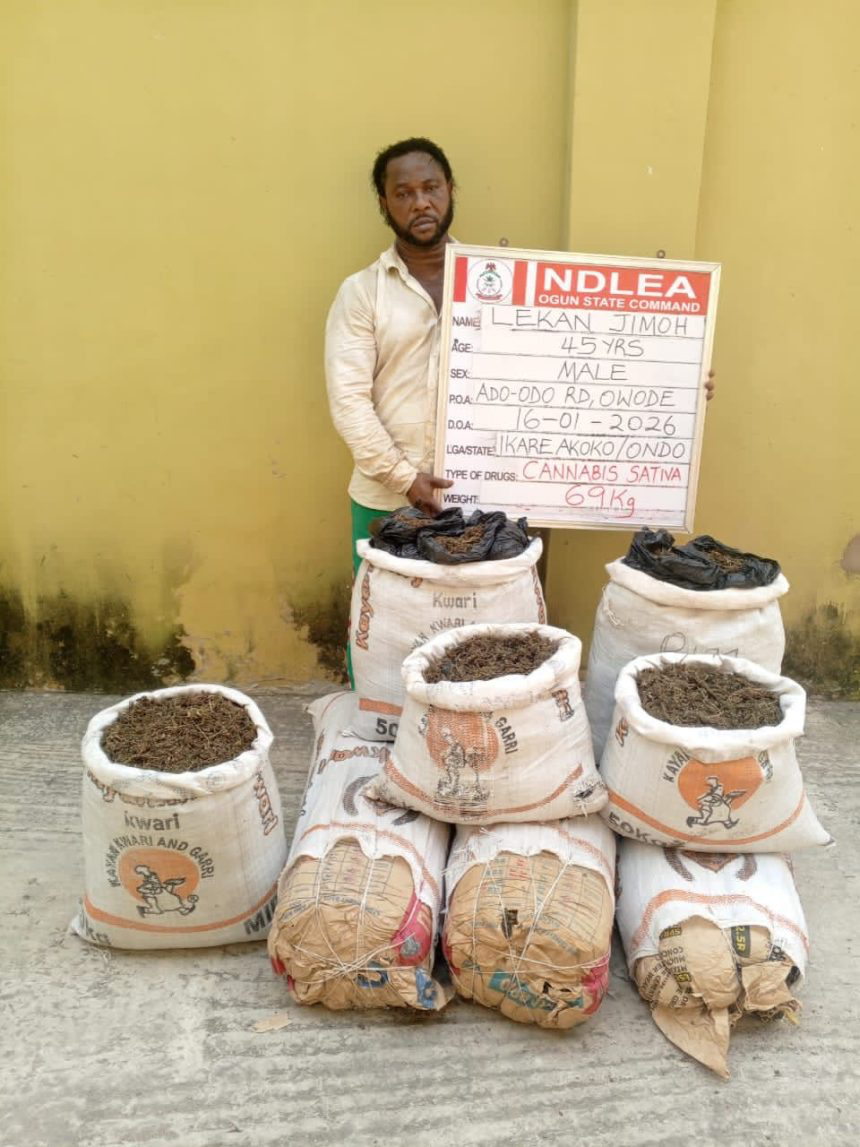
Operatives of the National Drug Law Enforcement Agency have successfully apprehended a long-wanted drug kingpin, Lekan Jimoh, popularly known as “Kanmo-kanmo”, ending a 12-year manhunt following his involvement in the brutal killing of three NDLEA officers.
Kanmo-Kanmo, who is notorious for drug trafficking, evading arrest and mobilizing armed thugs against security agents was on Friday 16th January 2026 tracked to his hideout in Owode town, Ogun State by tactical teams of the Agency following credible intelligence.

During the clinical operation, the suspect was found in possession of 69 kilograms of skunk, a strain of cannabis.
The arrest marks a significant breakthrough in the Agency’s commitment to ensuring that no fugitive, regardless of how long they evade justice, remains beyond the reach of the law.
Lekan Jimoh’s criminal history is marked by extreme violence and lawlessness. As a result, he had on 15th June 2014 orchestrated a barbaric mob action against a team of NDLEA officers who had attempted to arrest him at his enclave.

The attack resulted in the cold-blooded murder of three NDLEA officers, including Rabiu Usman Kazaure and two others, who were killed by armed thugs mobilized by Jimoh.
While the suspect managed to escape the scene that day, the Agency remained resolute in its pursuit of justice for the fallen heroes.
In another encounter with Jimoh on 12th August 2023, when NDLEA operatives stormed his residence in Ado-Odo town, Ogun state, he managed to escape while operatives succeeded in recovering 139 sacks of skunk with a total weight of 1,922 kilograms. Following assets forfeiture proceedings instituted in court by the Agency, the house in Ado-Odo, which served as a warehouse for his illicit drug trade, has since been finally forfeited to the Federal Government.
Meanwhile, NDLEA operatives in Edo state on Tuesday 13th January raided the Arokpa forest, Uzebba town, Owan West LGA, leading to the arrest of another drug lord, Isihor Edika, 53, and seizure of 320kg skunk and seeds.
In the Federal Capital Territory, Abuja, operatives on Friday 16th January tracked and arrested a 44-year-old lady Yinka Agboola following intelligence on her online sale of illicit substances. At the time of her arrest, 2.2kg skunk and litres of cannabis oil which she produces in her kitchen and sells through online advertisement were recovered from her home at the Kaura district, Abuja. Another suspect, Tordue Pius Richard, 30, was on Tuesday 13th January arrested with 148.3 grams of cocaine and skunk at his 12 Biskira street, Abacha Estate, Abuja home.
While 118.1kg skunk was seized from the duo of Dauda Kareem and Saheed Obisesan at Fadeyi area of Mushin Lagos on Friday 16th January, not less than 116kg of same substance was recovered from a warehouse at new market area of Enugu, Enugu state same day.
Two suspects: Zaharadeen Yahaya, 25, and Sanusi Maman, 23, were on Thursday 15th January arrested by NDLEA operatives along Onitsha -Asaba expressway, Delta state, while conveying 410,800 pills of tramadol; 84.2 litres of codeine syrup; 82,250 tablets of diazepam; 900 tabs of swinol and 65 pills of Molly.
In Oyo state, Adetunji Ahmed Abayomi, 33, was nabbed on Thursday 15th January at Moniya, Ibadan, with 321 litres of skuchies, and 2.5kg Colorado, a synthetic strain of cannabis, while Rasheed Ajao, 28, was caught same day at Odo-Ona, Ibadan, in possession of 5.4kg Scottish Loud; 1.696kg skunk and 2.5kg Colorado, bringing the total weight to 9.696 kilograms. In another raid at Agbeni area of the state capital, 52,430 pills of tramadol and bromazepam were recovered from the store of Orji Edwin, currently at large, on Saturday 17th January.
In Kwara state, NDLEA operatives on Tuesday 13th January raided a residential building at Gamo area of Ilorin where they seized 42 bags of skunk that weighed 387.40kg, while a total of 157,519 bottles of codeine syrup were discovered in a container at the Apapa port in Lagos during a joint examination of the shipment by NDLEA, Customs and other security agencies on Friday 16th January.
An ex-convict, Gaddafi Ammani, 26, was arrested with various quantities of skunk and exol-5 pills along his accomplice Ahmed Sani, 32, at Nassarawa GRA, Ringim LGA Jigawa state on Saturday 17th January. Before Gaddafi’s arrest, he attempted to escape by
climbing the roofs of many houses in his bid to escape. He was armed with a machete which he used to threaten NDLEA operatives and even inflicted injury on one of the officers.
While commending the officers and men of the Ogun, Lagos, Apapa, Edo, Delta, Oyo, FCT, Enugu, and Kwara Commands for the arrests and seizures, Chairman/Chief Executive Officer of NDLEA, Brig. Gen. Mohamed Buba Marwa (Rtd) acknowledged their commitment and enjoined them as well as their colleagues nationwide to maintain the current tempo of their balanced approach to the Agency’s drug control efforts.
He described the arrest of Kanmo-kanmo as a triumph of justice and a testament to the Agency’s long memory, adding that the arrest sends a clear and unambiguous message to all drug barons and fugitives: “You may run, and you may hide for a season, but the long arm of the law will eventually find you.”
“The arrest of Lekan Jimoh is particularly significant because it closes a painful chapter that began on June 15, 2014. For twelve years, this individual lived with the blood of our gallant officers—Rabiu Usman Kazaure and two others—on his hands. He mistakenly thought that time had erased his crimes. Today, we have proven that the NDLEA does not forget its own. We do not forget the sacrifices of those who laid down their lives in the service of our fatherland. This arrest is for the families of those three officers who have waited 12 years for justice”, Marwa said in a tribute to the officers lost over a decade ago.




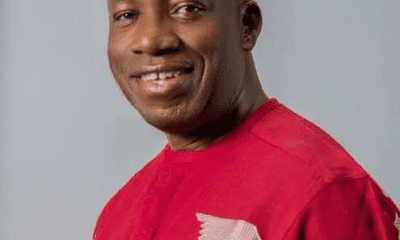




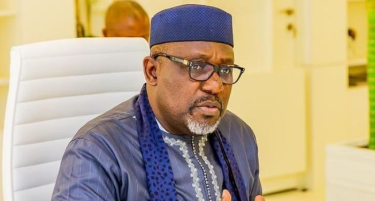
Former Imo State Governor, Senator Rochas Okorocha, was arrested by the Nigeria Police Force (NPF) on Monday night.
The Nigeria Police Force Public Relations Officer, CSP Aniete Iniedu, confirmed the development to Channels Television.
Okorocha, who was arrested at REIZ Continental Hotel in central Abuja, was, however, released on bail by the NPF following an hour of interrogation over allegations of criminal conspiracy, forgery and impersonation.
CSP Iniedu, who confirmed the arrest and subsequent release on bail to our correspondent, noted that the former governor was asked to return to the Force Headquarters on Tuesday for further interrogation as investigations into the allegations continue.
The arrest reportedly followed Okorocha’s failure to honour previous police invitations in connection with the ongoing investigation.
He was initially invited to the Force Headquarters on September 2, but the appointment was rescheduled to September 8 at the request of his lawyers, a date he reportedly failed to honour.
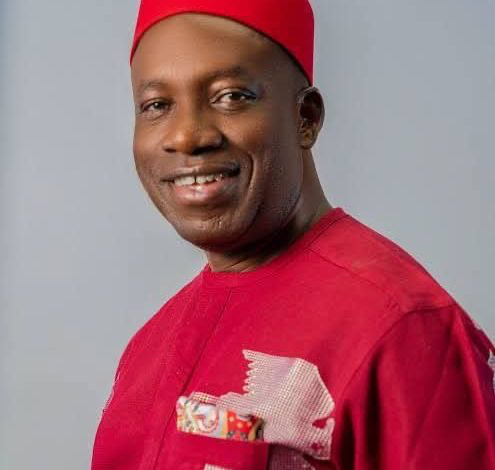
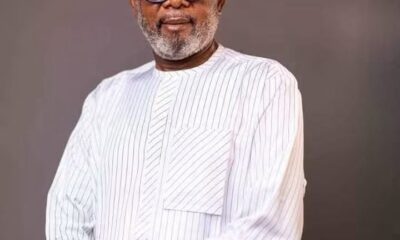
Anambra State Governor, Prof. Chukwuma Soludo, has been appointed a member of the All Progressives Congress (APC) 2027 Presidential Campaign Council list released last night.
This is despite the fact that he is the National Leader of the opposition All Progressives Grand Alliance (APGA).
Similarly, Federal Capital Territory (FCT) Minister Nyesom Wike, the National Leader of the opposition Peoples Democratic Party (PDP) and Osun State Governor, Senator Ademola Adeleke of the opposition Accord Party (AP), are on the expanded and all-inclusive team headed by President Bola Ahmed Tinubu.
Other members include Presidential Adviser on Policy and Coordination, Hadiza Bala Usman, former Ogun State Governor Ibikunle Amosun, former Lagos State Governor Akinwunmi Ambode, Aviation Minister Festus Keyamo, and former House of Representatives member Patrick Obahiagbon.
Also named as members are former Osun APC governorship candidate Bola Oyebamiji, former National Legal Advisers Dr. Muiz Banire and Babatunde Ogala, Chief Ayiri Emami, Victor Giadom, Magnus Abe, and former Ogun State Governor Gbenga Daniel.
The list, according to a report by The Nation, reflects inter-party cooperation and harmony based on the shared vision of propelling the country to the horizon of progress.
The report quoted a statement by APC National Secretary, Senator Ajibola Basiru, as saying that the campaign council will be inaugurated tomorrow in Abuja.
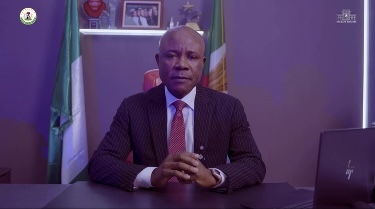
Enugu State Governor, Dr Peter Mbah, has called for a thorough and impartial police investigation into the recent violence surrounding a political gathering in the state, assuring that anyone found responsible will face the law regardless of political affiliation.
Mbah, in an address to the people of Enugu State, expressed concern over reports of violence, particularly a shooting incident that left a citizen injured.
The governor said his immediate concern was the welfare of those injured, residents who experienced fear during the incident, and families affected by the violence.
He assured the victims and affected residents that their safety and well-being remained a priority for his administration.
“I know how much our people value the peace and security we have worked so hard to establish in Enugu. Incidents such as these cause anxiety and deserve our full attention,” the governor said.
Mbah stressed that every citizen, irrespective of political affiliation, must be able to exercise their political rights without fear, intimidation or violence.
He reiterated the state government’s commitment to protecting lives, upholding the law and ensuring that justice was served without favour.
The governor also stated that, in view of the preliminary findings regarding the incident, he expected the police to conduct a comprehensive and impartial investigation to establish the circumstances surrounding the violence and identify those responsible.
According to him, anyone found culpable would be held accountable through the appropriate legal process, irrespective of their political connections.
“The Enugu State Government has made its position clear regarding allegations of involvement in this violence,” Mbah stated, reaffirming his administration’s responsibility to maintain peace and security across the state.
The incident has raised concerns over political tolerance and the safety of citizens participating in political activities in Enugu State.
The governor’s call for an impartial investigation underscores the need for the relevant security agencies to establish the facts surrounding the shooting and ensure that those responsible are brought to justice.
He concluded his address by thanking the people of Enugu State and praying for God’s continued blessings upon the state.
-
 News3 days ago
Why UK varsities are cancelling Nigerians’ admission — Report
-
News2 days ago
2027: Enugu Accuses Opposition of Plotting to Import Armed Thugs, Bandits
-
News2 days ago
Alleged Magistrate Court Order To Arrest Araraume, Okorocha Is Fake, Non-Existent — Imo First Group
-
News2 days ago
Benue APC Delegation Involved in Ghastly Accident En Route to Rally
-
News2 days ago
2027: Over 30,000 Enugu Teachers Endorse Mbah, Tinubu, List Welfare, Increased Education Funding
-
News3 days ago
Why men with braids, tattoos were banned from mosque, Ogun Chief Imam clarifies
-
News3 days ago
Man stabs wife in Anambra community, kills himself with poison
-
News3 days ago
EFCC recovers $105,000 for US-based businesswoman