Connect with us
Maduka University Advert

News

Canada deports 366 Nigerians as nearly 1,000 face removal

Published

on

Spread the love

Canada deported 366 Nigerian nationals between January and October 2025 as immigration authorities intensified enforcement at a pace not seen in more than a decade, according to official data obtained over the weekend.

Figures from the Canada Border Services Agency (CBSA) removals programme also show that 974 Nigerians are currently listed under “removal in progress,” indicating they are awaiting deportation.

The statistics, last updated on November 25, 2025, placed Nigeria ninth among the top 10 nationalities deported from Canada during the period under review. Nigeria also ranked fifth among countries with the highest number of individuals awaiting removal.

Historical data revealed fluctuating deportation numbers over recent years. In 2019, Canada removed 339 Nigerians, a figure that declined to 302 in 2020, 242 in 2021, and 199 in 2022. Nigeria did not appear among the top 10 deported nationalities in 2023 and 2024 but re-entered the list in 2025, with 366 removals recorded within just 10 months—an increase of eight per cent compared with 2019.

The removals are occurring amid a broader immigration enforcement push by Canadian authorities. The CBSA is now deporting nearly 400 foreign nationals each week, marking the highest weekly removal rate in over a decade. In the 2024–2025 fiscal year alone, Canada removed 18,048 individuals, spending about $78m on the exercise.

Under the Immigration and Refugee Protection Act, the CBSA is required by law to remove any foreign national subject to an enforceable removal order. Individuals may be deemed inadmissible on several grounds, including security concerns, human or international rights violations, criminal activity, organised crime, health or financial reasons, misrepresentation and failure to comply with immigration regulations.

Maduka College Advert

Data show that failed refugee claimants make up the bulk of removals, accounting for approximately 83 per cent of cases. Criminality-related removals represent about four per cent.

Canadian law recognises three categories of removal orders: departure orders, which mandate exit within 30 days; exclusion orders, which prohibit re-entry for one to five years; and deportation orders, which permanently bar return unless special authorisation is granted.

The Canadian government has said the intensified deportation drive is part of efforts to meet tighter immigration targets and respond to challenges such as housing shortages, labour market strain, and border security concerns. To support this, Ottawa has earmarked an additional $30.5m over three years for removals, alongside a $1.3bn commitment to strengthen border security.

President of the Canadian Association of Refugee Lawyers, Aisling Bondy, warned that deportations could increase further if Bill C-12—commonly referred to as the ‘border bill’—is passed.

“One of the clauses in that bill is that a lot of people will be permanently banned from filing a refugee claim in Canada,” Bondy said.

An analysis of CBSA data indicated that Nigeria is the only African country listed among the top 10 nationalities deported in 2025. Other African countries fall under the category of “remaining nationals,” which together accounted for 6,233 removals during the year.

The top 10 countries for deportations in 2025 are Mexico (3,972), India (2,831), Haiti (2,012), Colombia (737), Romania (672), the United States (656), Venezuela (562), China (385), Nigeria (366), and Pakistan (359).

A similar pattern appears in the removal-in-progress inventory, where Nigeria, with 974 individuals awaiting deportation, is again the only African country in the top 10. India leads the list with 6,515 cases, followed by Mexico (4,650), the United States (1,704), China (1,430), Nigeria (974), Colombia (895), Pakistan (863), Haiti (741), Brazil (650), and Chile (621).

Despite the rising deportation figures, Canada remains a major destination for Nigerians seeking improved economic and educational opportunities. The 2021 Canadian census showed that more than 40,000 Nigerians migrated to Canada between 2016 and 2021, making them the fifth-largest group of recent immigrants and the largest African migrant population in the country.

Further data from Immigration, Refugees and Citizenship Canada revealed that 6,600 Nigerians became new permanent residents within the first four months of 2024 alone, ranking them fourth after India, the Philippines, and China. Between 2005 and 2024, a total of 71,459 Nigerians acquired Canadian citizenship, placing Nigeria 10th among countries of origin for new Canadian citizens.

Canada’s ageing population and persistent labour shortages continue to make the country an attractive option for skilled Nigerian professionals and students, even as immigration enforcement tightens.


News

Attorney General asks Court to deregister ADC, Accord, three other parties

Published

on

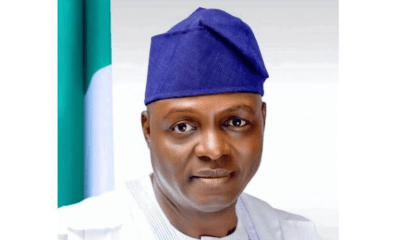
The Attorney General of the Federation and Minister of Justice, Prince Lateef Fagbemi, SAN
Spread the love

The Attorney General of the Federation has urged the Federal High Court in Abuja to compel the Independent National Electoral Commission (INEC) to deregister five political parties, arguing that their continued existence violates constitutional provisions and undermines Nigeria’s electoral integrity.

In court filings, the Attorney General contended that unless the court intervenes, INEC would “continue to act in breach of its constitutional duty” by retaining parties that have failed to meet the minimum requirements prescribed by law.

The filing stressed that the right to associate as a political party is not absolute and must be exercised within constitutional limits. It further argued that it is in the interest of justice for the court to grant the reliefs sought by the plaintiffs.

The suit, marked FHC/ABJ/CS/2637/2026 and filed at the Abuja Judicial Division of the Federal High Court, lists the Incorporated Trustees of the National Forum of Former Legislators as the plaintiff.

The defendants include INEC as the first defendant and the Attorney General of the Federation as the second defendant, alongside five political parties: African Democratic Congress (ADC), Action Alliance (AA), Action Peoples Party (APP), Accord (A), and Zenith Labour Party (ZLP).

At the center of the issue in the case is whether INEC has a constitutional obligation to remove parties that fail to meet electoral performance thresholds set out in Section 225A of the 1999 Constitution (as amended) and reinforced by the Electoral Act 2022 and INEC’s own regulations.

Maduka College Advert

The plaintiffs argue that the affected parties have persistently failed to satisfy the constitutional benchmarks required to retain their registration. These include winning at least 25 per cent of votes in a state during a presidential election or securing at least one elective seat at the national, state or local government level.

They contend that the parties performed poorly in the 2023 general elections and subsequent by-elections, failing to win seats across key tiers of government, yet continue to be recognised by INEC as eligible political platforms.

The plaintiffs maintain that this continued recognition is unlawful and undermines the integrity of Nigeria’s electoral system.

In the affidavit supporting the suit, the forum’s national coordinator, Igbokwe Raphael Nnanna, states that allowing parties that have not met constitutional requirements to remain on the register “is unconstitutional, illegal and a violation” of the governing legal framework.

The suit asks the court to declare that INEC is duty-bound to deregister such parties and to compel the commission to do so before preparations for the 2027 elections advance further.

Beyond declaratory reliefs, the plaintiffs are also seeking far-reaching orders that would bar the affected parties from participating in the next general elections or engaging in political activities such as campaigns, rallies and primaries. They further request injunctions restraining INEC from recognising or dealing with the parties in any official capacity unless and until they comply strictly with constitutional provisions.

Central to the plaintiffs’ argument is their interpretation of the law as imposing a mandatory duty on INEC. They argue that the use of the word “shall” in the Constitution leaves no room for discretion once a party fails to meet the stipulated thresholds.

In their written address, they rely on statutory provisions and judicial precedents to contend that electoral performance is an objective condition that must be enforced to maintain discipline, transparency, and accountability in the political system.

Attorney General backs plaintiff
In a notice filed pursuant to Order 15 Rule 1 of the Federal High Court (Civil Procedure) Rules, 2019, the Attorney General, who is a defendant in the suit, formally admitted the plaintiff’s case to the extent of his constitutional responsibilities.

He maintained that, as the chief law officer of the federation, he is duty-bound to defend and uphold the Constitution, including ensuring compliance with the Electoral Act and other laws governing elections in Nigeria.

The filing emphasised that the Attorney General’s role extends beyond litigation to preventive oversight, ensuring that laws are faithfully implemented to maintain public confidence in the electoral process. It described the case as a public interest litigation aimed at safeguarding democratic integrity and promoting constitutional observance.

According to the document, the Attorney General argued that citizens, including the plaintiff group, have the right to challenge constitutional breaches, particularly where electoral processes are concerned. He added that supporting such litigation aligns with his dual role as both a defender of the state and an advocate for citizens’ rights.

The submission also highlighted the broader implications of non-compliance by political parties. It argued that the continued existence of parties that fail to meet constitutional thresholds contributes to ballot congestion, increases the cost of election administration, and undermines the intent of Section 225A of the 1999 Constitution (as amended), which empowers INEC to deregister underperforming parties.

The plaintiff further contended that INEC has no residual discretion to retain parties that do not satisfy the constitutional criteria, insisting that failure to deregister them constitutes a continuing breach of constitutional duty. The suit warned that such inaction could be challenged through public interest litigation, as is the case before the court.

Additionally, the filing noted that the plaintiff, comprising former legislators, possesses the requisite standing to institute the action, having been directly involved in the enactment and oversight of Nigeria’s constitutional and electoral framework.

The Attorney General also underscored the importance of access to justice, arguing that his support for the suit would help bridge gaps faced by citizens seeking to enforce constitutional rights. He maintained that collaboration between government institutions and civic actors is essential to strengthening legal literacy, accountability, and democratic participation.

The Attorney General of the Federation is represented in the suit by a team of lawyers led by Prof. J. O. Olatoke, SAN, alongside O. J. David, U. O. Olufadi, D. O. Bamidele, V. D. Maiye, Waheed Abdulraheem and A. K. Abdulmumin, all of whom signed the court filing before the Federal High Court in Abuja.

The case, which has drawn significant attention within political and legal circles, could have far-reaching implications for Nigeria’s party system ahead of future elections, particularly if the court grants the request to compel INEC to act against the affected parties. (TRIBUNE)

Continue Reading

News

Tinubu names Bianca Odumegwu-Ojukwu as Minister of Foreign Affairs

Published

on

Bianca Odumegwu-Ojukwu, Minister of Foreign Affairs
Spread the love

…Nominates Amb. Sola Enikanolaiye as Minister of State

President Bola Tinubu has appointed Ambassador Bianca Odumegwu-Ojukwu as Nigeria’s new Minister of Foreign Affairs after the resignation of Ambassador Yusuf Tuggar, who is reportedly preparing for a political move ahead of the 2027 general elections.

The President also forwarded the name of Ambassador Sola Enikanolaiye for appointment as Minister of State for Foreign Affairs, pending approval by the Senate.

The appointments were disclosed in a statement released on Wednesday by presidential spokesman Bayo Onanuga.

According to the statement, the reshuffle is aimed at improving Nigeria’s diplomatic strategy and ensuring that the country’s foreign policy supports the administration’s economic agenda more effectively.

“These adjustments are part of ongoing efforts to reposition Nigeria’s foreign policy architecture for greater efficiency, strategic engagement, and stronger global partnerships,” the statement read.

Odumegwu-Ojukwu, who previously served as Minister of State for Foreign Affairs and has years of diplomatic experience, is expected to oversee Nigeria’s international relations as the government intensifies focus on economic diplomacy, regional peace, and wider global partnerships.

Maduka College Advert

The presidency highlighted her long-standing involvement in global affairs, stating:

“Ambassador Odumegwu-Ojukwu brings decades of diplomatic experience and a deep understanding of Nigeria’s engagement with the global community,” the statement read.

Enikanolaiye, a seasoned career diplomat, had earlier worked as Senior Special Assistant to the President on Foreign Affairs and International Relations.

He has represented Nigeria in several cities around the world, including Addis Ababa, London, Ottawa, Belgrade, and New Delhi.

The statement noted that his nomination is expected to strengthen institutional continuity within the foreign service.

“Ambassador Enikanolaiye’s extensive experience across multiple diplomatic missions will support Nigeria’s evolving foreign policy objectives,” the statement added.

President Tinubu congratulated the two diplomats and urged them to place national interest at the forefront while promoting economic diplomacy and improving the welfare of Nigerians living abroad.

Continue Reading

News

Awka blacksmiths lament neglect by Govt, indigenes

Published

on

Spread the love

Continue Reading

Trending

Maduka College Advert