News
ADC, federal lawmakers demand suspension of Gazetted Tax Laws over alleged forgery, alteration


The African Democratic Congress (ADC) and two members of the House of Representatives – Hon. Muhammad Bello Fagge, representing Fagge Federal Constituency of Kano State, and Hon. Yusuf Shitu Galambi, representing Gwaram Federal Constituency in Jigawa State – have called for the immediate suspension of the tax laws, scheduled to take effect on January 1, 2026.
A member of the House of Representatives, Hon. Abdulsammad Dasuki (PDP Sokoto), raised a matter of privilege on the floor of the House last Wednesday, alleging discrepancies between the tax laws passed by the National Assembly and the versions subsequently gazetted and made available to the public.

Under Order Six, Rule Two of the House Rules, on a Point of Privilege, Dasuki told the House that his legislative privilege had been breached, insisting that the content of the tax laws as gazetted did not reflect what lawmakers had debated, voted on, and passed on the floor of the House.
Presiding over the plenary, the Speaker, Tajudeen Abbas, constituted a seven-member ad hoc committee to investigate discrepancies between the tax bills passed and the versions later assented to and gazetted.
Reacting to the development in a statement issued by its National Publicity Secretary, Mallam Bolaji Abdullahi, ADC yesterday warned that tampering with a piece of legislation after the National Assembly had passed it was an indication that President Bola Tinubu desires to concentrate all powers onto himself.

The opposition party demanded the immediate suspension of the tax laws to allow the legislature to determine the extent of alleged forgery inserted by the Tinubu administration and to take the necessary corrective actions.
It also called for a public inquiry to investigate the circumstances surrounding the criminal alterations of a duly passed law, and to ensure that perpetrators are brought to justice.
The ADC said it has reviewed various reports that confirm doubts that the tax laws passed by the National Assembly and signed into law by President Tinubu contain substantial forgery of key provisions not in the original law passed by the legislature.
According to Abdullahi, ADC’s forensic review of the original laws and the gazetted versions has established beyond a doubt that key accountability provisions were deleted and new provisions inserted, granting the Executive coercive powers to enforce tax laws without recourse to the courts. For example, one of the criminal provisions in the law grants the Bola Tinubu government the express power to arrest and seize the property of anyone who does not comply with the tax laws.
The ADC’s position on the so-called tax reforms is clear. We do not support any tax that would compound the misery and hardship already faced by citizens and businesses. But this issue goes beyond taxation. It speaks to the criminal mindset of a government that has no ethical boundaries, has no regard for democratic institutions, and will do anything to pursue its narrow, selfish agenda.”
The ADC therefore called for the immediate suspension of all 2025 tax laws signed by President Tinubu to allow for a full legislative review.
Speaking in a BBC Hausa’s Ra’ayi Riga programme, Hon. Fagge said the opposition had initially objected to the bills, a move that led to wider consultations across the country before their eventual passage.
“We in the opposition initially objected to the tax bills because of fears that certain provisions could be introduced without proper scrutiny. This led the Speaker of the House of Representatives, Tajudeen Abbas, to convene a committee that traveled across the country, met with traditional rulers and governors, and asked them to submit their grievances and suggestions to the National Assembly. After that process, the bills were harmonised and approved,” he said.
Fagge said the controversy arose when the gazetted versions of the laws differed from what lawmakers approved.
“However, when the laws were later gazetted, what appeared was different from what we approved in Parliament. There were discrepancies, meaning that what was signed is not what we at the National Assembly passed,” he said.
He cited the Nigeria Revenue Service Act, noting discrepancies in Section 25 (accounts and audit) and Sections 26 and 30, and added that the Joint Revenue Board Act also contains discrepancies, particularly in Sections 9, 14, 30, 40, and 44.
“Even if it is just one part that is different from what we agreed, there is a problem,” he added.
The lawmaker warned that some provisions appear to have transferred powers from the legislature and the judiciary to the Executive, particularly to the Nigeria Revenue Service.
“There is no way the legislature will make a law without giving itself oversight functions. That is the essence of checks and balances. The issue goes beyond party politics. This is not about opposition politics. This is about saving Nigeria.”
Also speaking in the programme, Hon. Galambi said public opposition to taxation is often driven by mistrust over how the government spends public funds.
“We all know that people do not like taxes because of the mistrust they have about how the government utilises their money. But if people are certain and have trust, nobody will object,” he said.
Galambi described the allegations of alterations as disturbing, though unproven, and said the National Assembly has established a committee to investigate the matter.
He urged the government to suspend implementation of the tax laws scheduled for January 2026 pending the committee’s findings.
“If alterations are found, the law should be brought back and corrected in line with what the legislators passed. If nothing is found, then implementation can go ahead,” Galambi said.
He also raised concerns about alleged changes that grant the Nigeria Revenue Service enforcement powers without court orders, contrary to what lawmakers approved.
“We said enforcement should only be with a court order. If the court order requirement has been removed, it can create tension in the country, and people will not agree with it,” he said. (Thisday)








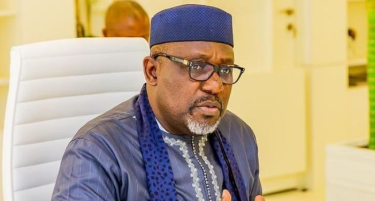
Former Imo State Governor, Senator Rochas Okorocha, was arrested by the Nigeria Police Force (NPF) on Monday night.
The Nigeria Police Force Public Relations Officer, CSP Aniete Iniedu, confirmed the development to Channels Television.
Okorocha, who was arrested at REIZ Continental Hotel in central Abuja, was, however, released on bail by the NPF following an hour of interrogation over allegations of criminal conspiracy, forgery and impersonation.
CSP Iniedu, who confirmed the arrest and subsequent release on bail to our correspondent, noted that the former governor was asked to return to the Force Headquarters on Tuesday for further interrogation as investigations into the allegations continue.
The arrest reportedly followed Okorocha’s failure to honour previous police invitations in connection with the ongoing investigation.
He was initially invited to the Force Headquarters on September 2, but the appointment was rescheduled to September 8 at the request of his lawyers, a date he reportedly failed to honour.
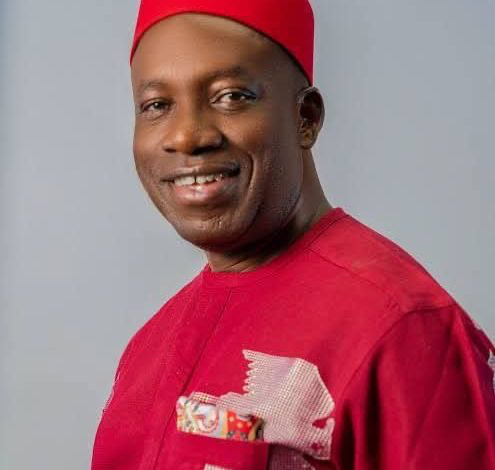
Anambra State Governor, Prof. Chukwuma Soludo, has been appointed a member of the All Progressives Congress (APC) 2027 Presidential Campaign Council list released last night.
This is despite the fact that he is the National Leader of the opposition All Progressives Grand Alliance (APGA).
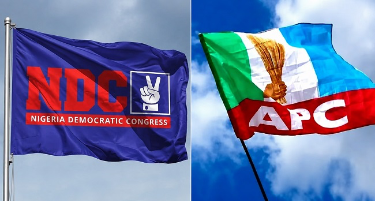
Similarly, Federal Capital Territory (FCT) Minister Nyesom Wike, the National Leader of the opposition Peoples Democratic Party (PDP) and Osun State Governor, Senator Ademola Adeleke of the opposition Accord Party (AP), are on the expanded and all-inclusive team headed by President Bola Ahmed Tinubu.
Other members include Presidential Adviser on Policy and Coordination, Hadiza Bala Usman, former Ogun State Governor Ibikunle Amosun, former Lagos State Governor Akinwunmi Ambode, Aviation Minister Festus Keyamo, and former House of Representatives member Patrick Obahiagbon.
Also named as members are former Osun APC governorship candidate Bola Oyebamiji, former National Legal Advisers Dr. Muiz Banire and Babatunde Ogala, Chief Ayiri Emami, Victor Giadom, Magnus Abe, and former Ogun State Governor Gbenga Daniel.
The list, according to a report by The Nation, reflects inter-party cooperation and harmony based on the shared vision of propelling the country to the horizon of progress.
The report quoted a statement by APC National Secretary, Senator Ajibola Basiru, as saying that the campaign council will be inaugurated tomorrow in Abuja.
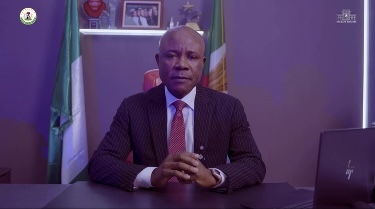
Enugu State Governor, Dr Peter Mbah, has called for a thorough and impartial police investigation into the recent violence surrounding a political gathering in the state, assuring that anyone found responsible will face the law regardless of political affiliation.
Mbah, in an address to the people of Enugu State, expressed concern over reports of violence, particularly a shooting incident that left a citizen injured.
The governor said his immediate concern was the welfare of those injured, residents who experienced fear during the incident, and families affected by the violence.
He assured the victims and affected residents that their safety and well-being remained a priority for his administration.
“I know how much our people value the peace and security we have worked so hard to establish in Enugu. Incidents such as these cause anxiety and deserve our full attention,” the governor said.
Mbah stressed that every citizen, irrespective of political affiliation, must be able to exercise their political rights without fear, intimidation or violence.
He reiterated the state government’s commitment to protecting lives, upholding the law and ensuring that justice was served without favour.
The governor also stated that, in view of the preliminary findings regarding the incident, he expected the police to conduct a comprehensive and impartial investigation to establish the circumstances surrounding the violence and identify those responsible.
According to him, anyone found culpable would be held accountable through the appropriate legal process, irrespective of their political connections.
“The Enugu State Government has made its position clear regarding allegations of involvement in this violence,” Mbah stated, reaffirming his administration’s responsibility to maintain peace and security across the state.
The incident has raised concerns over political tolerance and the safety of citizens participating in political activities in Enugu State.
The governor’s call for an impartial investigation underscores the need for the relevant security agencies to establish the facts surrounding the shooting and ensure that those responsible are brought to justice.
He concluded his address by thanking the people of Enugu State and praying for God’s continued blessings upon the state.
-
 News3 days ago
Why UK varsities are cancelling Nigerians’ admission — Report
-
News2 days ago
2027: Enugu Accuses Opposition of Plotting to Import Armed Thugs, Bandits
-
News2 days ago
Alleged Magistrate Court Order To Arrest Araraume, Okorocha Is Fake, Non-Existent — Imo First Group
-
News2 days ago
Benue APC Delegation Involved in Ghastly Accident En Route to Rally
-
News2 days ago
2027: Over 30,000 Enugu Teachers Endorse Mbah, Tinubu, List Welfare, Increased Education Funding
-
News3 days ago
Why men with braids, tattoos were banned from mosque, Ogun Chief Imam clarifies
-
News3 days ago
Man stabs wife in Anambra community, kills himself with poison
-
News3 days ago
EFCC recovers $105,000 for US-based businesswoman