News
Nigeria Under Siege: 2,496 students abducted in 92 school attacks since Chibok

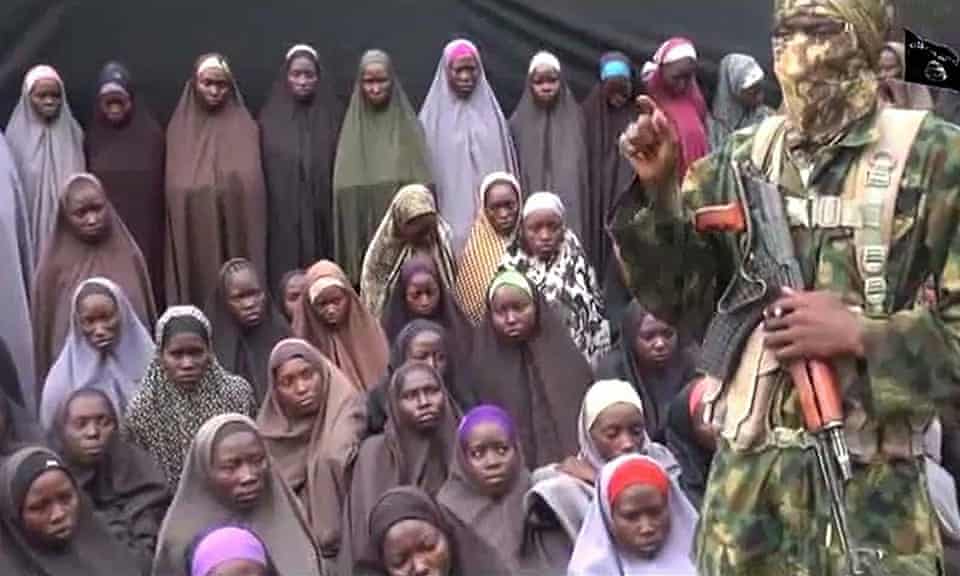
Fresh assaults on schools last week, including two major abductions in Niger and Kebbi states, have revived painful memories of earlier tragedies and renewed questions about the safety of children in parts of Nigeria, particularly the North.
On Friday, gunmen seized 303 students from a Catholic school in Niger State.

The attack came only five days after 25 students were abducted in Kebbi State.
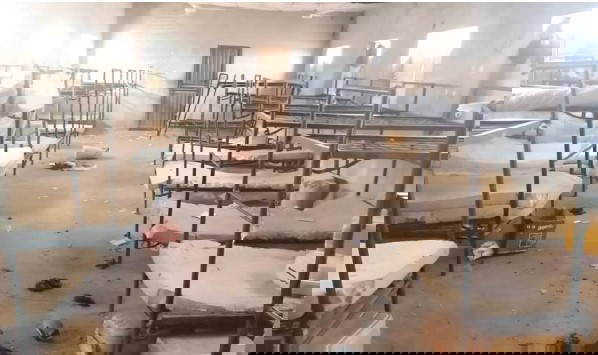
A hostel at Government Girls Comprehensive Senior Secondary School, Maga, Kebbi State, where bandits kidnapped 25 students, killing the vice-principal in the process.
These incidents followed a pattern that has continued since April 2014, when Boko Haram kidnapped 276 girls from Chibok and dragged the world’s attention to the vulnerability of Nigerian schools.

According to Save the Children International and UNICEF, about 70 attacks on schools occurred between April 2014 and December 2022, with more than 1,680 students abducted.
Over 180 children, according to the bodies, were killed, 90 injured, and more than 90 remain missing. About 60 school staff members, they said, were also kidnapped in the same period.
Findings by Sunday Vanguard indicate that between January 2023 and November 2025, Nigeria recorded another 22 attacks on educational institutions, with 816 students kidnapped.
These figures represent only verified incidents reported by police and eyewitnesses.
Many more, especially in remote communities in Niger, Zamfara, Sokoto and Katsina, are believed to have gone unreported.
If those cases were included, the total number of incidents would likely exceed 92.
The Chibok abduction marked a turning point.
Boko Haram fighters stormed a local school at night, overpowered guards and carted away 276 girls. Some escaped by jumping from the vehicles, but most were taken into remote forest camps.
Years later, many have returned through rescue operations or negotiated releases, yet UNICEF reports that about 90 are still missing.
Rather than deter future attacks, Chibok opened the way for an escalating crisis.
As Boko Haram’s power shifted, criminal groups in the North-West turned mass abduction into a lucrative business.
Kidnapping students became a reliable source of income, and communities across Kaduna, Katsina, Zamfara, Sokoto, Niger and Kebbi states began to experience recurring assaults.
UNICEF’s monitoring reports show that only 37 percent of schools across ten high-risk states have even basic early-warning systems.
Human Rights Watch, for its part, described the situation as one sustained by impunity, saying bandit groups now attack schools with little fear of consequences.
How each crisis unfolded Chibok, April 2014
Armed militants invaded the Government Girls Secondary School at night, forcing students into trucks and driving them deep into the forest.
The abduction shook the world, sparked the #BringBackOurGirls movement and brought unprecedented scrutiny to the state of school security. Although some girls were rescued or released through negotiations, scores remain unaccounted for ten years later.
Kuriga, Kaduna, March 2024
Gunmen arrived as students assembled for the morning session. Early reports indicated that 287 pupils were taken. The kidnappers reportedly demanded one billion naira. Security experts argued that the steady rise in ransom-driven abductions reflected the state’s inability to disrupt criminal networks.
The human toll
Behind the numbers lies widespread trauma. Many children refuse to return to school out of fear, and parents withdraw others because they can no longer guarantee safety. UNICEF estimates that more than one million Nigerian children have reported fear of attending school due to insecurity. In 2020 alone, about 11,500 schools were closed.
Survivors often struggle with psychological trauma, social stigma and disrupted education. Reintegration programmes remain limited and underfunded, leaving many children without the support they need.
National response
After every major abduction, state and federal authorities issue strong condemnations and promise rescue operations. Some responses have been swift, with security deployments and task force creation. For instance, following the recent Kebbi attack, President Bola Tinubu directed the Minister of Defence to relocate to the state.
However, these reactions have not always translated into consistent action. Some rescues have been quick and coordinated, while others were protracted or incomplete. Analysts argue that the government’s approach has lacked coherence and long-term planning.
Public outrage often follows each incident. Chibok inspired global activism, while later events triggered mass protests, vigils and renewed calls for accountability. International partners also expressed concern and, at times, provided technical support.
Several state governments have temporarily shut schools, strengthened perimeter security or reviewed boarding policies. Yet, many of these measures have been reactive rather than preventive. UNICEF and civil society groups continue to push for full implementation of safe-school standards, better funding, improved law enforcement capacity and reliable early-warning systems.
Human Rights Watch maintains that the cycle of kidnappings reflects structural weaknesses in governance and security planning, and that Nigeria’s most vulnerable communities continue to pay the price.
Ransom dilemma
Although the Federal Government repeatedly denies paying ransom, accounts from communities, parents and independent investigators suggest that ransom payments have occurred in several cases.
Chibok (2016 and 2017 releases)
Multiple reports indicate that about N3 million was paid in two instalments to secure the release of roughly 103 girls.
Kuriga, Kaduna (2024)
SBM Intelligence reported that large sums of cash were delivered in vehicles and then ferried on motorcycles into a forest. The government denied paying ransom.
Greenfield University (2021)
Parents disclosed that they paid ¦ 180 million and provided ten motorcycles after an initial ¦ 55 million “feeding money” was demanded.
Dapchi (2018)
UN documentation suggested that a substantial ransom was paid to secure the release of most of the girls.
Kankara (2020)
Media accounts quoted a ¦ 344 million demand and reported an initial ¦ 30 million payment, though the government denied it.
Tegina, Niger State (2021)
Kidnappers demanded ¦ 110 million. It remains unclear how much was eventually paid.
Afaka (2021)
Some reports alleged that detained criminals were exchanged and about ¦ 15 million was involved.
National concern
Stakeholders warn that unless Nigeria strengthens the systems meant to protect children, the country risks normalising a crisis with long-term consequences for education and national stability.
President of the National Parent and Teacher Association of Nigeria, Alhaji Haruna Danjuma, described the situation as alarming. He said parents were desperate to educate their children but could no longer trust the safety of school environments.
Comrade Alao John, South-West Coordinator of NANS, urged government to secure school environments and resist the growing threat posed by kidnappers.
They, like many voices across the country, insist that Nigeria must confront the structural failures driving these attacks. Without meaningful investment in safe-school standards, clear policy on ransom, stronger intelligence systems and sustained community engagement, the fear and uncertainty that haunt classrooms in northern Nigeria may become a permanent feature of the national landscape.
Timeline of attacks
Here is a timeline of key school kidnapping/mass abduction incidents in Nigeria since 2014, based on reported cases:
14 April 2014: 276 girls abducted from Government Girls’ Secondary School, Chibok, Borno State.
25 May 2017: Igbonla Model College: In Lagos (Epe), armed men abduct six pupils from the college hostel.
19 February 2018: About 110 schoolgirls kidnapped from Government Girls’ Science and Technical College, Dapchi, Yobe State.
11 December 2020: Over 300 boys taken from Government Science Secondary School, Kankara, Katsina State.
17 February 2021: 27 students (plus some staff/relatives) abducted from Government Science College, Kagara, Niger State.
26 February 2021: Around 279 girls taken from Government Girls Science Secondary School, Jangebe, Zamfara State.
11 March 2021: 39 students (23 female, 16 male) kidnapped from Federal College of Forestry Mechanization, Afaka, Kaduna State.
20 April 2021: At least 20 students taken from Greenfield University, Kaduna State.
5 July 2021: Over 120 students abducted from Bethel Baptist High School, Chikun, Kaduna.
30 May 2021: About 200 of Islamic school pupils abducted in Tegina, Niger State.
17 June 2021: About 11 students kidnapped in Yauri, Kebbi State
20 January 2023: LGEA Primary School, Nasarawa: Six pupils kidnapped in early morning raid
20 January 2023: Kidnappers abduct six pupils in Doma, Nassarawa.
14 February 2023: Kidnappers abduct 15 National Youth Service Corps (NYSC) members in Ihiala, Anambra.
28 February 2023: Nine children kidnapped by a 16-year-old teenager in Lagos State.
25 March 2023: Two children abducted in Suleja Local Government Area of Niger State.
2 April 2023: Bandits abduct two students in Bungudu, Zamfara.
8 April 2023: Bandits abduct over 80 children between the ages of 12 and 17 in Tsafe Local Government Area of Zamfara State.
3 April 2023: Eight students of Government Secondary School, Awon in Kachia LGA, and an unspecified number of residents in Kaduna State kidnapped.
21 April 2023: Gunmen abduct a student of a polytechnic in Enugu State.
4 April 2023: At least 10 students of Government Secondary School in Kaduna State abducted during an attack
16 May 2023: Kidnappers abduct about five National Youth Service Corps (NYSC) members in Emuoha, Rivers.
27 May 2023: Kidnappers abduct four children in Njaba, Imo.
14 June 2023: Gunmen abduct seven students of the University of Jos.
24 August 2023: Gunmen attack school, killing one and kidnapping seven students and one teacher in Chikun, Kaduna.
22 September 2023: 24 female students abducted from their hostel at the Federal University Gusau, Zamfara State.
26 September 2023: Gunmen abduct a student of Isa Mustapha Agwai Polytechnic in Lafia, Nasarawa State.
4 October 2023: Suspected terrorists kidnap five female students of Federal University in Katsina
10 October 2023: Gunmen abduct four Nasarawa Varsity students
30 January 2024: Gunmen abduct six pupils + teachers from a school bus of Apostolic Faith School in Ekiti State.
7 March 2024: About 287 pupils kidnapped from LEA School in Kuriga, Kaduna State.
9 March 2024: 15 pupils abducted from a Tsangaya (Islamic) school in Gidan Bakuso, Gada LGA, Sokoto State.
17 November 2025: Bandits kidnap 25 students from Government Girls Secondary School, Kebbi State
21 November 2025: Terrorists raid Niger Catholic school, kidnap 303 students. (Vanguard)















The Nigeria Police Force National Cybercrime Centre has arrested a 27-year-old woman, Hafsat Abubakar, over the creation and circulation of a forged document falsely suggesting that fintech company OPay Nigeria Limited was shutting down its operations.
The Force Public Relations Officer, Anietie Iniedu, disclosed this during a press briefing at the NPF-NCCC in Abuja on Wednesday.
Iniedu said the arrest followed a formal petition received from OPay Digital Services Limited on August 31, 2026, requesting an urgent investigation, tracing and apprehension of those responsible for creating and circulating the fraudulent document.
He said the petition was submitted through the office of the Deputy Inspector-General of Police in charge of the Force Criminal Investigation Department, Abuja.
According to him, the document was falsely presented as an official communication issued by OPay Nigeria Limited.
“On the 31st of August 2026, the Nigeria Police Force National Cybercrime Centre, NCCC, received a formal petition from OPAY Digital Services Limited through the office of the Deputy Inspector-General of Police in charge of the Force Criminal Investigation Department, Abuja, requesting urgent investigation, tracing and apprehension of persons responsible for the creation and simulation of a fraudulent document falsely presented as an official communication issued by OPay Nigeria Limited,” Iniedu said.
The FPRO said the NCCC immediately deployed digital forensic tools to examine the document and trace its origin.
“Upon receipt of the approved petition, the Nigeria Police Force National Cybercrime Centre, NCCC, deployed digital forensic tools to analyse the content, which was traced to a post on the X handle, @haifah_er_abba, registered and operated by one Hafsat Abubakar,” he said.
Iniedu said police operatives subsequently arrested Abubakar on September 4, 2026.
“On the 4th of September 2026, police operatives of the NCCC arrested one Hafsat Abubakar, a 27-year-old female graduate of Library and Information Science from Ahmadu Bello University, Zaria,” he said.
He said the incident demonstrated the dangers posed by digitally fabricated information, particularly when such content could trigger public panic, financial disruption and reputational damage.
The police spokesman also warned members of the public against sharing sensitive information without first verifying it through official channels.
He said the investigation was ongoing and assured that suspects found culpable would face prosecution after the conclusion of the investigation.
OPay had earlier denied a viral claim that it would shut down operations from September 1, 2026, describing the notice as false and urging customers to rely on its official communication channels.
A fabricated document titled “Official Note” had circulated on social media, claiming that OPay would stop processing transactions and account services indefinitely from September 1.
OPay’s Head of Corporate Communications, Folayemi Joshua, described the notice as “completely false” and said the company remained fully operational.
The company also pointed out inconsistencies in the document, including an outdated logo, a misspelt brand name and a layout that differed from its official communications.
OPay’s Chief Legal Counsel, Akinfolabi Rokosu, had also confirmed that the company was working with the Department of State Services and the Nigeria Police Force to investigate the source of the false information.
The company warned that individuals deliberately spreading false information about its operations could face legal action. (The PUNCH)
….Records 1,521km of roads, 7,000 classrooms, 260 Type-2 PHCs, sweeping reforms
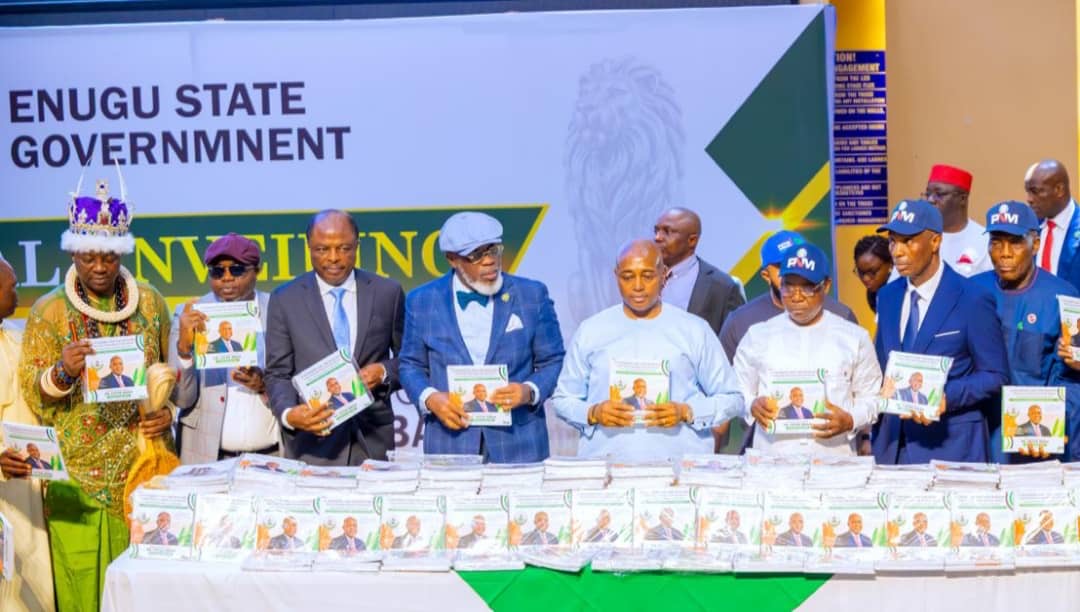
Governor of Enugu State, Dr. Peter Mbah, has unveiled a compendium of more than 10,000 milestones recorded in the first term of his administration across critical sectors of the Enugu State economy.
The compendium, entitled “A Thousand and One Reasons Why Dr. Peter Ndubuisi Mbah Should be Re-elected as Governor of Enugu State,” was presented to the public at the International Conference Centre, Enugu, on Wednesday.
The compendium of milestones records, among others, over 1,521 kilometres of constructed and reconstructed roads, over 7,000 classrooms, 260 Type-2 Primary Healthcare Centres, Enugu Air, the New Enugu Smart City, and the revamp of moribund assets.
Represented by the Deputy Governor, Barr. Ifeanyi Ossai, Mbah said the compendium aligns with the Citizens Charter, also known as Executive Order 001, which he executed immediately he was sworn into office on 29th May 2023 to emphasise his administration’s commitment to accountability, traceability and transparency.
He, however, said the compendium highlighted the administration’s philosophy of disruptive innovation and its focus on large-scale infrastructure, noting that it did not contain all that had been done up to the day of unveiling.
“Our assignment today is not just to unveil the Citizens Charter via the compendium. It is a lot more than that. It is a conversation on the sacrosanct duty and responsibility you gave to us to midwife and preside over your resources.
“But above all, it is important to note that the document we are about to unveil does not entirely capture everything this government has done because, given the time it took to prepare this document, there was a cut-off point running months behind.

“So, this document that we shall unveil shortly does not in any particular material represent the actual successful modest achievements of this government as at 9th of September 2026.”
He thanked those who believed in his vision and worked for his election in 2023 and urged those affected in any way by the tough decisions the administration had to make, assuring them that Enugu was on its way to greatness as a $30bn economy and the preferred destination for investment, business, tourism, and living.
“I also want to thank all those who made sacrifices, who lost their friends because they felt supporting us was the right thing to do. I want to thank all those who invested their resources. I want to thank all those who took pains in very unimaginable circumstances to ensure that Enugu moves to the next level.
“But what you must take home with you is that our intentions are noble. What we try to do is to put Enugu on a reversible path of greatness. What we try to do is to ensure that Enugu will not compete with Nigeria or within Nigeria,” he added.
In his welcome address, the Secretary to Enugu State Government, Prof. Chidiebere Onyia, said the state had pursued an extensive urban development agenda, including the New Enugu Smart City, environmental sustainability and urban renewal.
He added that the State’s fiscal architecture had undergone significant reform through revenue automation, reforms at the Enugu State Internal Revenue Service, improved financial management, the Treasury Single Account, enterprise resource planning and broader institutional restructuring.
According to him, the administration had also sustained investments in youth empowerment, women development, technology, skills acquisition, social protection, tourism, environmental sustainability and community development.
He said the ultimate goal is to improve the lives of the people.
“Behind every project is a community; behind every policy is a citizen; and behind every statistic is a human being whose life government seeks to improve,” he concluded.
He also stressed the importance of institutional reforms in sustaining government programmes, stating: “Sustainable development requires not only projects that citizens can see, but institutions and systems that can sustain those projects.”
The Deputy National Chairman (South) of the All Progressives Congress, Dr. Ben Nwoye, commended the administration for its development record and the scale of projects executed across the State.
The Speaker of the Enugu State House of Assembly, Hon. Uchenna Ugwu, commended the Governor for his developmental strides, pledging the continued support of the legislative arm of the state government.
The Chairman of the Enugu State Council of Traditional Rulers, Igwe Samuel Asadu, equally spoke glowingly about the administration’s performance, saying a performing government should be supported to continue till 2031.
“We have never had it so good. It is not about party. But let us give the job to those who understand the job. The governor wants to move the Enugu State economy to a $30bn economy and that is exactly what he is doing,” he stated.
Chief of Staff to the Governor, Victor Udeh, described the compendium as an evidence-based publication and a commitment to accountability.
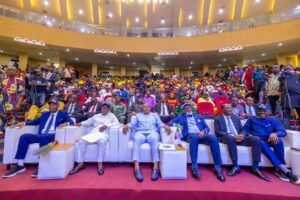
The event brought together political leaders, traditional and religious leaders, captains of industry, professionals, public servants and other stakeholders, who commended the administration for the scale and spread of its interventions across the State.

Twelve years after his ministry in Kenya, East African Italian-born Catholic priest Sandro Ferretto has married Sharon Jepng’ok, a Tugen woman from Baringo County.
According to Kenya Times, the couple exchanged vows in a traditional ceremony on 6 September at Seretion Village in Kasiela, a community where Mr Ferretto previously served as parish priest.
The event brought together relatives, local leaders, elders and friends of the bride, who witnessed the Koito ceremony, a significant Kalenjin custom centred on dowry negotiations and family blessings.
Ferretto’s ministry
Mr Ferretto, 55, began his priesthood in Italy before taking his ministry to Kenya, where he spent more than a decade working with local communities.
The Diocese of Padua ordained him as a priest, and he arrived in Kenya in 2008 to begin missionary service. He worked around Kasiela and Mochongoi under the Diocese of Nyahururu and became involved in pastoral outreach, youth programmes and community-based development efforts in Baringo.
He eventually returned to Italy in December 2020 with another missionary, Fr Mariano Dal Ponte.
In 2023, the priest assumed responsibility for a pastoral unit in Saletto, Borgo Veneto, in the Padua diocese. His duties covered eight churches in the area.
His tenure, however, lasted only several months. In December 2023, he celebrated a final Mass before stepping aside from the position to take time for reflection.
The decision reportedly caught some of his colleagues off guard because he gave them little notice.
The Diocese of Padua later acknowledged his withdrawal from pastoral duties, stressing that he continued to serve as a priest and had no connection to any controversy. The diocese described the decision as a requested period away from pastoral ministry.
During his break, Mr Ferretto was reportedly involved in volunteer work with a migrant support group in Padua.
Reunion and law
Mr Ferretto later returned to Kenya and reunited with Ms Jepng’ok, whom he met during his missionary work in Baringo.
Residents of the area widely knew him as “Father Sandro” after he spent more than a decade working with families, youth organisations and church congregations. Baringo is also Ms Jepng’ok’s home region.
Catholic canon law requires Latin Rite priests to observe celibacy and bars them from marrying while they remain in active ministry. The Church considers the commitment a lifelong obligation of the priesthood.
For a priest to marry, he must first be formally removed from the clerical state through a process approved by the Vatican. Known as laicisation, the process ends his status as a priest and normally includes a dispensation from the obligation of celibacy.
Only after receiving the necessary approval can a former priest marry. Without it, the marriage would contravene Catholic canon law and would not be recognised by the Church.
-
 News21 hours ago
46 arrested for allegedly obstructing Obi’s convoy in Benue
-
News2 days ago
Enugu begins commercial production of Palm Oil, targets product refining
-
News21 hours ago
24 die after consuming herbal drinks in Ondo
-
News2 days ago
Obi ignored protocol, courting trouble – Benue commissioner
-
News22 hours ago
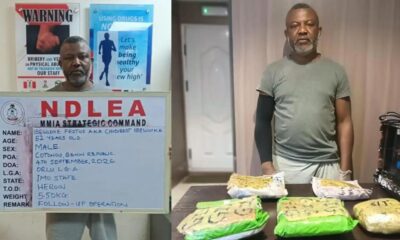
49.70kg Heroin: Fugitive drug kingpin, Festus Ibewuike, arrested after years on the run
-
News2 days ago
Again, armed thugs disrupt Peter Obi’s visit to Benue
-
News2 days ago
FCC boss, Omidiran set to lead Youth-Focused Conversation at Peter Eze Youth Connect 2026
-
News2 days ago
Benue PDP guber candidate, Obidient Movement condemn attack on Peter Obi in Makurdi