Christian Association of Nigeria, CAN, has accused the Presidency of twisting facts and misrepresenting its position on the on-going killings of Christians across the country.
It also insisted that what was happening in several parts of northern Nigeria and the Middle Belt amounted to a ‘Christian genocide’.

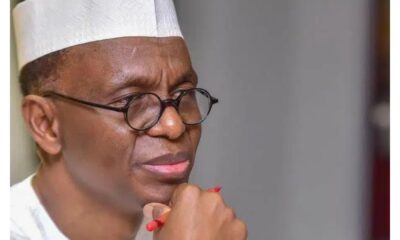
However, the Catholic Bishop of Sokoto Diocese, Bishop Matthew Hassan Kukah, has urged the international community not to re-designate Nigeria as a “Country of Particular Concern”, CPC, over alleged religious persecution, warning that such a move could undermine ongoing efforts to foster peace and interfaith dialogue.
Efforts made to get the reaction of the presidency through the presidential spokesman, Mr. Bayo Onanuga, did not yield any positive results.
At press time, he neither picked the phone calls to his GSM line nor responded to the message sent to him for his reaction.

The Minister of Information and National Orientation, Mohammed Idris, who could also not be reached
But in a statement issued by the President, Archbishop Daniel Okoh, CAN clarified that it did not, at any point, dismiss or describe the widespread killings as a ‘so-called Christian genocide’, as claimed in a press statement reportedly issued by Barrister Daniel Bwala, Special Adviser to the President on Media and Policy Communication.
According to the statement, the controversy followed Bwala’s visit to the CAN Secretariat at the National Christian Centre, Abuja, on Monday, during which he sought to understand CAN’s position on remarks made by United States senator, Ted Cruz, who described the persistent killings of Christians in Nigeria as a ‘Christian genocide’.
“CAN made it clear that its position on this issue has long been established and remains unchanged. Across many parts of northern Nigeria and the Middle Belt, Christian communities have suffered repeated, organised and brutal attacks which have left thousands dead, villages destroyed and families displaced.
”These are not isolated crimes but a continuing pattern of violence that has persisted for years without justice or closure,” the CAN President said.
CAN expressed alarm over the Presidency’s subsequent statement, titled ”Presidency Debunks Western Christian Genocide Narrative in Dialogue with CAN Leadership.”
The apex Christian body said the report falsely suggested that Archbishop Okoh had downplayed the killings by describing them as a ‘so-called Christian genocide’.
“That portrayal is completely false and grossly unfair. The meeting was recorded by CAN’s media team, and at no point did Archbishop Okoh use such words or express such a view. Referring to the tragedy as a ‘so-called genocide’ trivialises the pain of countless Christians who have lost loved ones, homes and places of worship in targeted attacks,” Archbishop Okoh said.
The Christian body added that during the meeting, Bishop Mike Akpami, its Director of Planning, Research and Strategy, presented verified data from www.orfa.africa showing consistent and targeted attacks on Christians across several regions of Africa, including Nigeria.
“We call on the federal government and security agencies to act with urgency, fairness and transparency to halt these killings and bring all perpetrators to justice.
“We also urge media professionals and government officials to speak with truth, empathy and responsibility, as careless words can deepen wounds and undermine peace,” Archbishop Okoh said.
CAN reiterated that its commitment to peace didn’t mean silence in the face of injustice, adding that truth must always guide engagement among the Church, the State and the public.
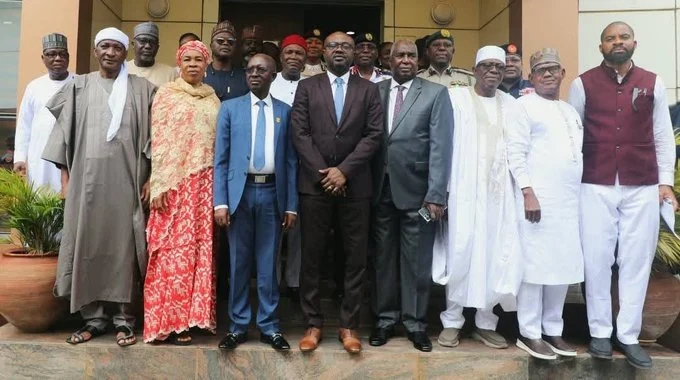
Those present at the meeting included Archbishop Daniel Okoh, President; Rev. Stephen Panya Baba, Vice President; Apostle Samson Fatokun, General Secretary; Dean Rev. Emmanuel Nicodemus Ozumba, Director of Education, Women and Youth; and Dame Comfort Otera Chigbue (Esq), Director of Legal and Public Affairs, among others.
Don’t designate Nigeria country of concern, Kukah tells Global Community
Meanwhile, Bishop Matthew Hassan Kukah, the Catholic Bishop of Sokoto Diocese, has urged the international community not to re-designate Nigeria as a “Country of Particular Concern” over alleged religious persecution, warning that such a move could undermine ongoing efforts to foster peace and interfaith dialogue
Speaking at the launch of the Aid to the Church in Need, ACIN, 2025 World Report on Religious Freedom in the World held at the Augustinianum Hall, Vatican City, on Monday, Bishop Kukah acknowledged the country’s deep-seated challenges but insisted that Nigeria should be supported, not punished, as it worked to overcome religious violence and national disunity.
The report, which spans 1,248 pages, documents a global decline in religious freedom, with more than 5.4 billion people living in countries where such rights are restricted.
It identifies authoritarianism, religious extremism, ethno-religious nationalism, and organised crime as key drivers of persecution across the world.
Kukah, delivering a paper, titled “A Plea and Testimony from Nigeria,” said while Nigeria continued to grapple with terrorism, insecurity, and ethnic tensions, the situation could not simply be categorised as targeted persecution of Christians.
“We are not dealing with people going around wielding machetes to kill me because I am a Christian. I live and work in Sokoto, right in the womb of Islam, where collaboration between Christians and Muslims remains possible. Our lives should be defined by a better narrative, he said.
The cleric, however, admitted that Nigeria’s security breakdown had created conditions for what he described as “genocide” in some communities, citing the federal and state governments’ failure to contain violence and protect citizens.
“Nigerians are dying unacceptable deaths across the country, not only because of their religion but also their ethnicity. We are in the cusp of a weak state with a clear lack of capacity to arrest the descent into anarchy,” Kukah lamented.
He described the eight years under former President Muhammadu Buhari as “the worst phase in interfaith relations,” accusing the administration of policies that alienated Christians and emboldened jihadists.
“Under Buhari, to gain power, it was more important to be a northern Muslim than to be a citizen of Nigeria,” he said.
In contrast, Bishop Kukah noted that President Bola Tinubu’s administration had shown inclusiveness and goodwill through recent appointments that balanced religious representation in government.
“The President and Vice President are Muslims, yet Christians have not felt alienated. The Chief of Defence Staff, the Director of DSS, and the INEC Chairman are Christians. These are confidence-building measures aimed at restoring trust among Nigerians,” he observed.
Citing the Global Terrorism Index Report 2025, Kukah acknowledged a 37 per cent decline in terrorist attacks in 2024 but cautioned that religious identity still played a decisive role in violence, particularly against Christians in northern Nigeria.
He also called on the government to ensure full constitutional compliance across all states, particularly regarding the application of Sharia law in 12 northern states, which he said fuelled mob justice and discrimination.
“The President should go to court to have the adoption of Sharia law declared unconstitutional. The secular state anticipated by the Constitution must be enforced,” he said.
Kukah further highlighted subtle forms of persecution faced by Christian minorities in the north, such as denial of land for church construction, lack of access to religious education in public schools and exclusion from employment opportunities. (Vanguard)