News
How rogue soldiers divert weapons to bandits – Sources reveal

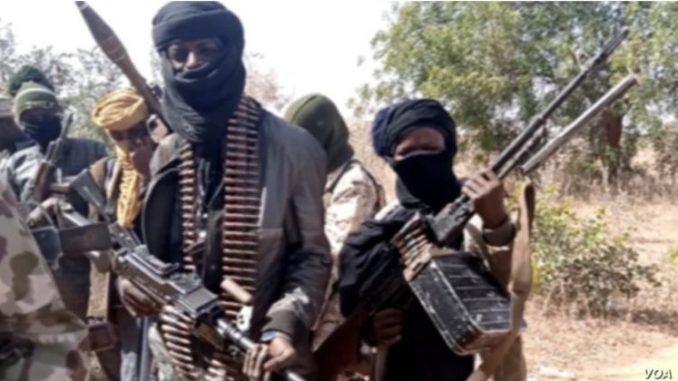
Some serving soldiers have revealed how officers and commanders sell arms and ammunition meant for Nigeria’s war against terrorism and banditry.
The revelation followed the outrage that trailed resurfaced footage showing the confession of an arms dealer, which has been widely shared online.

In the viral clip, the suspect, identified as a 30-year-old Nigerien, Shehu Ali Kachalla, narrated how military personnel provided armed escorts and protection for his illicit weapon deliveries to bandit groups operating in northern Nigeria.
Kachalla was arrested on May 14, 2021 by the Zamfara State Police Command in a joint operation with the Federal Intelligence Bureau and Special Tactical Squad.
During his parade and interrogation, he confessed to smuggling over 450 rifles and 8,000 rounds of ammunition from Niger Republic into Nigeria, selling them to bandit groups in Zamfara, Kaduna, and Niger states.

He said the weapons were transported in convoys that crossed porous border areas, and that “military men usually escort and cover him” during these deliveries.
According to him, this protection included armed soldiers riding alongside the convoys, providing security against rival gangs, customs officials, or anti-smuggling patrols.
“I have sold four hundred and fifty rifles and eight thousand live ammunition to different criminal gangs,” Kachalla said.
Also, recently, a Nigerian Army Special Court-Martial sentenced three soldiers to life imprisonment for illegal arms trafficking and “aiding and abetting the enemy.”
The 7 Division’s Acting Deputy Director, Army Public Relations, Lt. Col. Haruna Sani, said another soldier bagged a 15-year jail term.
He said all the four soldiers were found guilty of stealing and selling military-grade weapons and ammunition, with some items allegedly smuggled across state lines hidden in bags of food.
Sani said the soldiers were jailed after they pleaded guilty to counts of theft, unlawful dealing in ammunition, offence in relation to service property as well as aiding “the enemy”.
How officers, commanders sell arms – Soldiers
Speaking in separate interviews with Sunday PUNCH, four serving soldiers from different commands confirmed that the illegal acts were ongoing and gave different reasons why it had become rampant.
A soldier serving in Borno State, who spoke on condition of anonymity due to the sensitivity of the matter, told our correspondent that senior military officers and commanders were complicit in the illegal arms deals.
The Private said the practice was well-known within the force.
“It is not a new thing,” he said. “But one thing is certain, the majority who engage in arms dealing are soldiers and commanders.”
He added that the development had sparked resentment among troops on the ground.
“The majority hate the soldiers and commanders involved in those arms dealings. But those things are happening. They are going on right now as we speak,” he said.
In an interview with Sunday PUNCH, another serving soldier alleged that some troops sell weapons and ammunition to terrorists, blaming the criminal act on harsh living conditions in the military.
Speaking on condition of anonymity, the soldier said low salaries often pushed personnel into illegal deals.
“Soldiers at the war front are hungry, and many of them only depend on their salary, which is not adequate. It is very difficult to survive on your salary when you are fighting for your country, and the living conditions are pathetic,” he said.
He described the illegal trade as “highly lucrative”, noting that desperation made it easy for personnel to convince themselves to participate.
The soldier identified three major sources of fast money within the military as illegal arms sales, drug smuggling, and oil bunkering.
He warned, however, that those who ventured into the business found it hard to stop.
According to him, soldiers deployed in conflict zones have easier access to excess rounds of ammunition, which creates opportunities for diversion.
“Those who indulge in the illegal sale of ammunition are those who have made up their minds to leave the army, and they always devise the means to carry out their deals.
“Especially those who are in operational grounds like Katsina and Maiduguri; those that are in operation like that are not assigned limited numbers of rounds. That is where the opportunity to engage in illegal sale of rounds is. Those ones don’t return unexpended rounds,” he revealed.
He also criticised military remuneration, saying it fuels corruption.
“In the military, even paramilitary, the salary is a scam; it is not enough to survive. That is why many of those who are in business with terrorists do not mind the danger in it,” he said.
Sharing a personal experience, another soldier also confirmed the existence of such shady deals but declined to provide further details.
He said that although names of offenders were often circulated in military group chats, such arrests had become rare in recent times.
The soldier disclosed that he once returned from Maiduguri, Borno State, with unexpended rounds but chose to bury them rather than risk being caught with the ammunition.
An army officer also said he witnessed the arrest of some soldiers who attempted supplying arms to Boko Haram insurgents in Maiduguri.
He noted that the incident happened before his redeployment to the 8 Division, Sokoto.
In October last year, during the destruction of arms by the National Centre for the Control of Small Arms and Light Weapons in Abuja, the National Security Adviser, Nuhu Ribadu, blamed the proliferation of weapons in Nigeria on corrupt dealings within the security agencies.
Visibly enraged by the trend, Ribadu rained curses on security personnel who facilitated the movement of arms to terrorists, bandits, and other non-state actors.
According to him, a sizeable number of the illicit arms used to commit crimes in the country originally belonged to the government but ended up in the wrong hands because of compromised officials.
The NSA warned that the threat was not only internal but also fuelled by “merchants of death and evil from outside the world.”
He stressed that the proliferation of illicit small arms and light weapons remained “a major threat to national security.”
Calls and messages to the Director of Defence Media Information, Maj. Gen. Markus Kangye were not replied to as of the time of going to press. (PUNCH)










…As SEDC seals deal with GasSync, commits $3m
• Tinubu says S’East must rise from potential to reality
• Mbah, governors hail Tinubu, pledge support for 400km pipeline
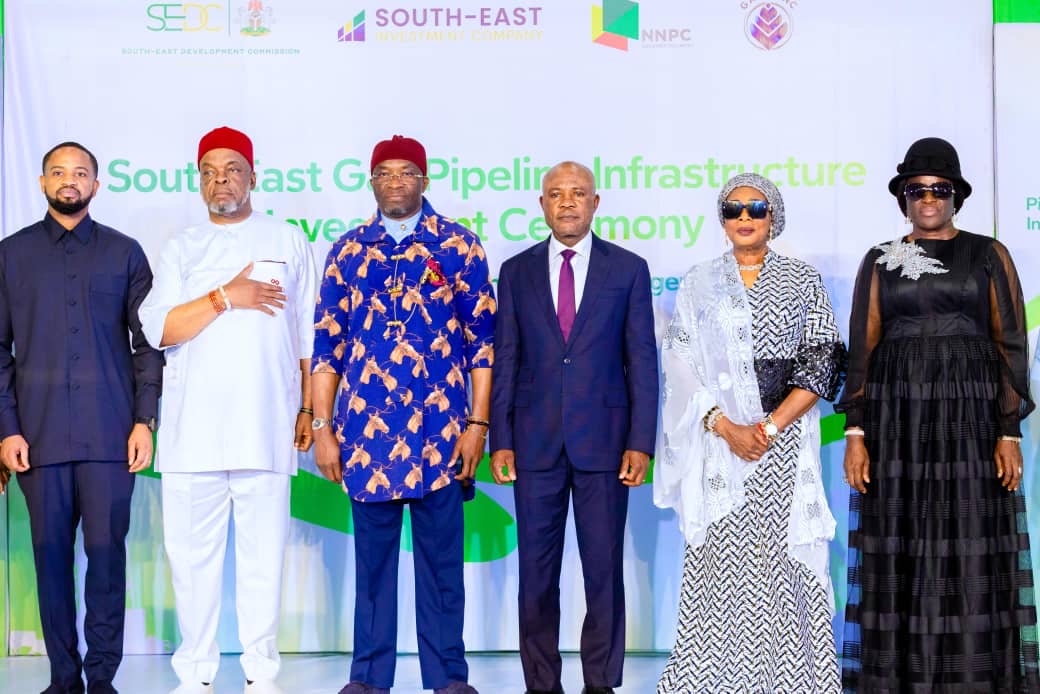
The Federal Government, through the South East Development Commission (SEDC) has kicked off a $100 million gas distribution pipeline project to boost industrialisation, attract investments and create jobs in the South East.
The 400-kilometre pipeline, designed to connect gas resources to industrial and commercial centres across Enugu, Anambra, Imo, Abia and Ebonyi states, has about 150 potential customers identified, with projected demand of 254 million standard cubic feet of gas per day.
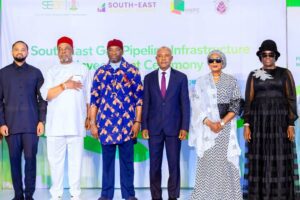
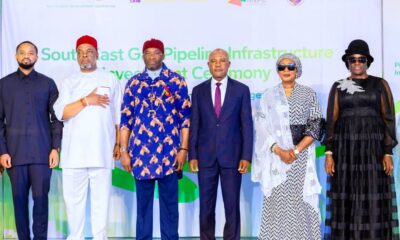
The investment agreement for the project was signed on Tuesday at the South-East Gas Infrastructure Investment and Project Development Ceremony held at Hotel Presidential, Enugu, marking a significant step towards establishing a regional gas distribution network.
Tinubu, represented by the Deputy Speaker of the House of Representatives, Benjamin Kalu, described the project as a strategic investment that would connect the region’s natural gas resources to industries, strengthen manufacturing and unlock economic opportunities across the five states.
“The Southeast’s entrepreneurial spirit is one of Nigeria’s greatest economic assets. I have always believed that the prosperity of the Southeast is inseparable from the prosperity of Nigeria,” the President said.
He said the project aligned with his administration’s commitment to building an integrated regional economy, stressing that gas infrastructure should support industrial development across state boundaries rather than serve isolated markets.
“Gas infrastructure must therefore serve industries and markets, not stop at political boundaries. That is the economic logic of regional integration,” he said.
The President said the pipeline would benefit manufacturers in Aba, strengthen industrial clusters in Nnewi and Onitsha, attract productive enterprises to Enugu, expand agro-processing and manufacturing in Ebonyi and connect Imo’s gas resources to the wider regional economy.
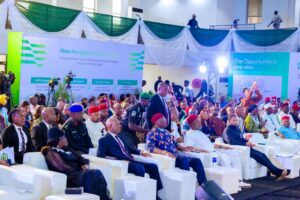
He, however, said the ambition extended beyond supplying existing factories to creating the conditions for new industries, industrial parks and investments that had stalled because of unreliable energy supply.
“Our ambition is not simply to deliver gas to existing factories. It is to make possible factories that do not yet exist, industrial parks yet to be developed, and investments that have remained on the drawing board because reliable energy was unavailable,” Tinubu said.
He described the South-East Development Commission (SEDC) as an institution established to deliver measurable development outcomes, urging it to assess its performance by the investments it mobilised, infrastructure it enabled, opportunities it created and lives it improved.
The President said the South-East Vision 2050 development framework, supported by Vice-President Kashim Shettima and the governors of the region, provided a foundation for coordinated economic growth.
He also cited his approval of the South-East Investment Company as part of efforts to attract private capital into strategic development projects, noting that governments could not finance every development ambition from public funds.
“This is the model I expect from our development institutions: identify strategic economic opportunities, prepare credible projects, commit public resources responsibly and mobilise private capital at a scale government budgets alone cannot achieve,” he said.
Tinubu commended the SEDC for committing $3 million to the gas project and establishing a framework to mobilise additional investments from state governments, institutions and private investors.
He said the project’s initial phase required approximately $100 million, describing the partnership between public institutions and private investors as essential to developing sustainable infrastructure.
“We are not investing in pipelines for their own sake. We are investing in the industries, businesses and jobs those pipelines will make possible,” the President said.
He urged the commission and its partners to uphold commercial discipline, transparency, environmental responsibility, community engagement and the highest safety standards throughout the project’s implementation.
“The true measure of government’s commitment is not what we promise, but what we deliver,” he said, expressing optimism that the investment would help create an industrial economy capable of competing in African and global markets.
Tinubu said the ultimate objective was to translate the region’s natural resources into productive economic activity, employment and improved living standards.
“Let the gas beneath our soil power our industries. Let that energy become production. Let production become employment. Let employment become prosperity for our people,” he said.
The President urged the SEDC, state governments and project partners to establish clear implementation timelines, measurable milestones and regular progress reports, stressing that the project’s success would ultimately be measured by its ability to attract investments, revive industries, create jobs and improve the economic fortunes of people across the five Southeast states.
Enugu State Governor, Dr. Peter Mbah, commended Tinubu for establishing the SEDC, describing the commission as the institutional vehicle needed to realise the Southeast’s longstanding industrialisation aspirations.
“Tinubu loves the Igbo. The SEDC is a commission whose time has come. It was an idea conceived many decades ago, but it took President Tinubu to establish this long-awaited dream of industrialisation of the Southeast,” Mbah said.
He described the signing of the investment agreement as the commencement of the investment process, adding that the initiative would help realise the region’s aspiration for a common market and coordinated industrial development.
“What we have just signed here today is an investment agreement, meaning that investment has commenced,” he said.
Mbah, who said he was excited that the project was advancing less than 13 months after he publicly advocated the idea, praised the commission for adopting an innovative financing model that brings governments and private investors together.
He said the project would create opportunities for young people to build their futures in the Southeast rather than migrate to other parts of the country in search of jobs.
“Before now, it was our young people running out of the region in search of greener pastures. But with what we have now, our young people can sit back and find their future here in the region. This is all thanks to President Tinubu,” he said.
The governor assured the SEDC and its partners that the Southeast governors were committed to the pipeline project, promising to expedite right-of-way arrangements and environmental impact assessment approvals.
“We, the Southeast governors, are committed to this. We will ensure that the right of way and EIA are given accelerated approval,” he said.
Imo State Deputy Governor Lady Chinyere Ekomaru, who represented Governor Hope Uzodimma, commended Tinubu and the SEDC for initiating the project, noting that Imo’s substantial natural gas resources placed the state in a strategic position to benefit.
She said the project was coming at an opportune time, particularly as companies were seeking to become offtakers of gas from the Assa North–Ohaji South development.
Ekomaru urged residents to consider the Federal Government’s infrastructure investments in the Southeast in making their political choices ahead of the 2027 general elections.
“A vote for APC is a direct vote for the continuation of this project. A bird in hand is worth more than 10 in the bush. Let’s reason wisely,” she said.
Anambra State Deputy Governor Dr Onyekachukwu Ibezim, representing Governor Chukwuma Soludo, commended the commission but stressed that its success would ultimately be determined by its impact on the people.
“We will clap for you when we begin to feel the impact of what you are doing,” he said.
Ibezim noted that states across the region had gas resources that could support industrial growth if properly developed. He urged communities along the pipeline route to embrace the project and cooperate with its promoters.
“I want to urge the communities through which the pipelines will pass to have a buy-in. We are strongly behind the commission,” he said, while commending the enthusiasm shown by industrialists at the event.
Ebonyi State Deputy Governor Mrs Patricia Obila, representing Governor Francis Nwifuru, described energy as fundamental to industrial growth, lamenting that inadequate power supply had contributed to the decline of several enterprises in the region.
“Energy is power. Its importance cannot be overemphasised. With it, factories will produce, the economy will blossom and employment will be great,” she said.
Obila expressed the Ebonyi government’s readiness to support the project, promising to provide the necessary cooperation to facilitate its implementation and help moribund companies resume operations.
“We will give you all the support needed to operate in Ebonyi to ensure that our moribund companies return back to operations,” she said.
Permanent Secretary of the Federal Ministry of Regional Development, Dr Mary Ogbe, said the SEDC was developing initiatives capable of improving living standards across the Southeast.
She assured the governors that the commission would complement their development efforts rather than compete with them, while urging investors to take advantage of the opportunities emerging from the project.
Managing Director and Chief Executive Officer of SEDC, Mark Okoye, said the commission had conducted technical, financial and legal due diligence before committing funds to the project, which received approval from its governing board.
Okoye said the commission was targeting aggregate regional investment participation of up to $30 million, including its initial $3 million commitment, as part of efforts to mobilise the private capital required to advance the project.
He said the initiative aligned with the commission’s industrialisation programme and its commitment to developing infrastructure that would benefit the entire region.
Representing GasSync, the project promoter, Callistus Mba said the pipeline would connect gas resources close to the Southeast to industrial users across the five states, reducing dependence on the expensive transportation of compressed natural gas (CNG) and liquefied natural gas (LNG) by road.
Mba said the proposed network would originate from the Ohaji area of Imo State, run through Owerri and branch towards Aba in Abia State and Onitsha in Anambra State, with extensions to Enugu and Ebonyi.
He said the company planned to begin construction at two points simultaneously to accelerate delivery, following concerns raised by Enugu State Governor Peter Mbah that constructing the entire network sequentially from Imo could delay gas supply to other states.
“We are going to start at Ohaji and Onitsha at the same time,” Mba said, explaining that the approach would allow construction towards Enugu and Ebonyi to progress alongside work on the Imo and Anambra sections.
He said the company had identified about 150 prospective customers across the region and was engaging industries to secure demand for the gas, including manufacturing companies, power-generation facilities and agro-processing businesses.
Mba cited Geometric Power in Abia State among the companies with which engagement was already underway. He added that the pipeline would support efforts to revive moribund industries in Enugu and develop agro-processing facilities in Ebonyi.
On the project timeline, he said procurement activities had commenced, funding arrangements were advancing towards financial close, and preparations for engineering, procurement and construction were progressing.
“We intend to start construction in the first quarter of 2027,” Mba said, projecting that the project would be ready for first gas delivery in the second quarter of 2028, subject to the completion of the necessary requirements.
He identified regulatory approvals, right-of-way arrangements, community engagement and coordination among federal and state authorities as critical to meeting the schedule, urging the governors and relevant institutions to facilitate permits and work with host communities along the pipeline route.
News
Mbah Inaugurates Enugu APC Campaign Council, Expresses Confidence in Victory on Strength of Achievements
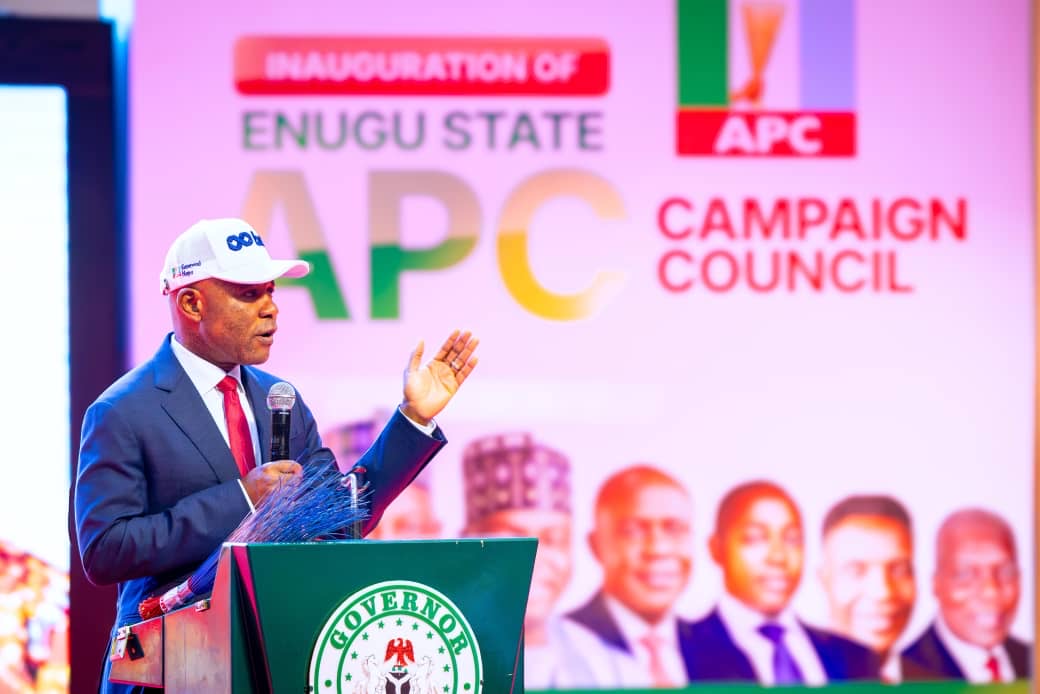
…Tells party faithful to campaign on performance, be unapologetically APC
…Says opposition shallow, has nothing to offer
…Sen. Nnamani, Nwobodo, Dr. Nnamani, Chime, Ugwuanyi, Prof. Nnaji, Arthur Eze, Madueke, Ogalla, Ezeilo make list
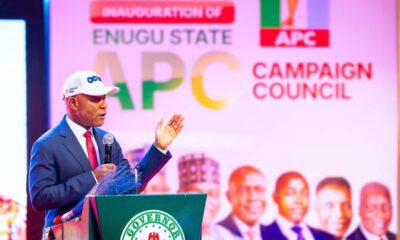
Governor of Enugu State, Dr. Peter Mbah, on Tuesday, inaugurated the All Progressives Congress (APC) Campaign Council for Enugu State, expressing strong confidence in a resounding victory for the party in all the 2027 elections.
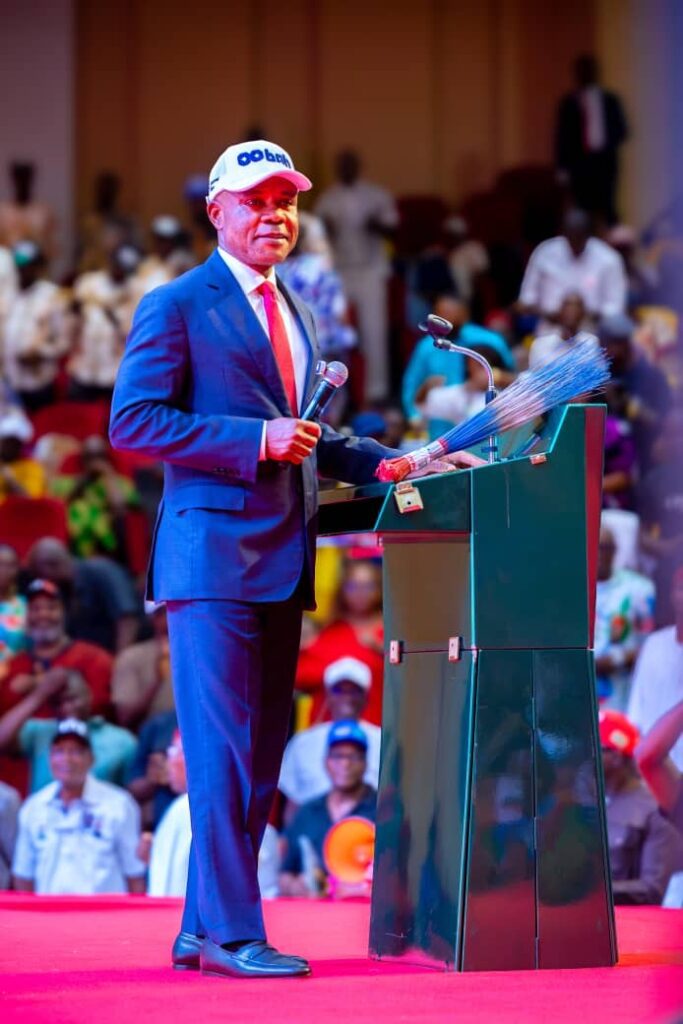
The Campaign Council, comprising 51 Directorates, is chaired by the Governor of the state, Dr. Peter Mbah, while the Deputy Governor, Barr. Ifeanyi Ossai; Deputy National Chairman, APC (South); Dr Ben Nwoye, Speaker, Enugu State House of Assembly, Rt. Hon. Uchenna Ugwu; Chairman of the party in the state, Dr. Martin Chukwunweike; and the Secretary to the State Government, Prof. Chidiebere Onyia, are Vice Chairmen.
It is also headlined by an Advisory Council comprising former President of the Senate, Ken Nnamani; former governor of old Anambra State, Senator Jim Nwobodo; former military governor of old Anambra State and Chief of the Naval Staff, Rear Admiral Allison Madueke (Rtd.); former Minister of Power, Prof. Barth Nnaji; former Minister of Information and governorship candidate of the All Progressives Grand Alliance (APGA) in the 2023 governorship election in the state, Mr. Frank Nweke Jr.; business mogul, Prince Arthur Eze; Senator Chuka Utazi; and former deputy governors Mrs. Cecilia Ezeilo, Bishop Ralph Nwoye, Dr. Sunday Onyebuchi, and Chief Okechukwu Itanyi, among other high-profile personalities.
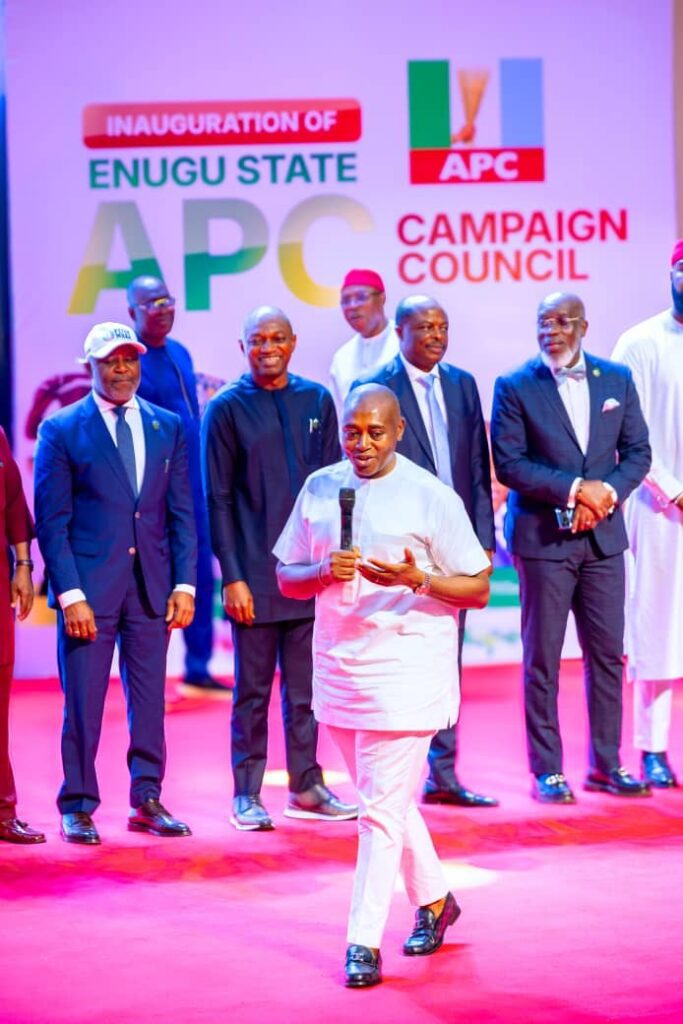
Chief Charlie Mbah is the Director-General, while Dr. Eric Oluedo served as the Secretary-General.
Senator Osita Ngwu, Senator Ikeje Asogwa, and Senator Kelvin Chukwu are Coordinators of the Campaign Council in Enugu West, Enugu North, and Enugu East, respectively.
Speaking at the event, which took place at the International Conference Centre, Enugu, Mbah said his administration had justified the mandate handed to him in 2023, while President Bola Tinubu’s bold reforms had greatly stabilised the macroeconomic indicators while also making funds available for the administration to embark on impactful projects across the state on a large scale.
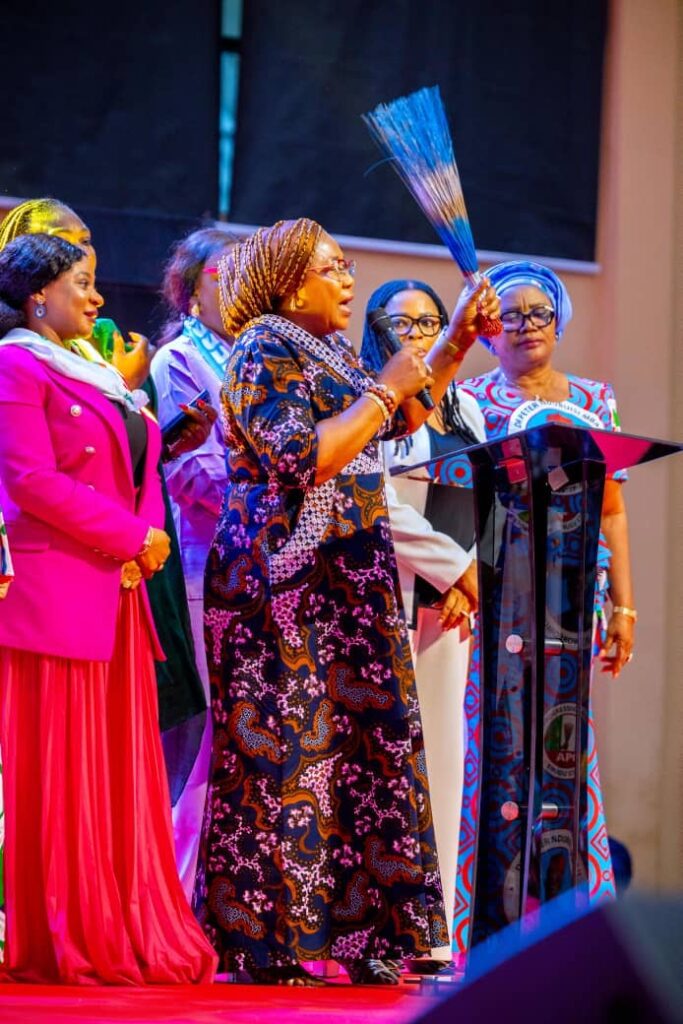
He, therefore, urged party faithful to campaign hard on the administration’s achievements and be unapologetically APC in doing so, saying the opposition had nothing but propaganda to offer.
The governor said he was gearing up to campaign in each of the 68 Development Centres and also commission at least two projects in each of the 260 political wards in the state.
Mbah recalled that the 2026 Phillips Consulting State Performance Momentum Index ranked Enugu as the fastest-improving state, having recorded a Momentum Score of +1.15, the highest by any of the 33 states assessed.
He noted that, in terms of Ease of Doing Business, the state, under his leadership, had leaped from 36th out of 37 subnationals in 2023 to sixth position nationally in 2025, according to the Presidential Enabling Business Environment Council (PEBEC) report.
“So, you should be proud of Enugu. You should be unapologetically APC. I am really excited because we are going to go to all the 68 Development Centres. I will personally visit all the Development Centres. I will go to the markets with you.
“The people of Enugu cannot wait to see us. They are so excited. And as I go, I will also take time to go to every ward to commission both the Smart Green School and the Primary Healthcare Centre.
“As I go to every ward and Development Centre, I will commission all projects without exception, the Smart Green Schools and the Type 2 Primary Healthcare Centres in all the wards where they are cutting the ribbon. And so, it is indeed my honour and privilege to formally inaugurate this APC Enugu State Campaign Council,” he stated.

Dr Ben Nwoye
Mbah, however, reminded them that all the achievements could not have been possible without the economic reforms and support of the President Bola Tinubu administration, which had, among other things, made more funds available to the states.
“We must also campaign hard for the President because it also took those bold and courageous policies of his to achieve what we accomplished in the last three years. You can have all this vision and conviction, but if you do not back it up with money, you cannot do anything. Therefore, we also need to recognise and acknowledge that,” he stated.
Mbah also listed several major infrastructural interventions by President Tinubu in the South East, and Enugu State in particular, noting that although the region gave him a marginal percentage of its votes in 2023, he had nevertheless shown good faith towards Ndigbo in terms of development projects, strategic appointments, among others.
The Deputy Governor, Barr. Ifeanyi Ossai; Speaker, Enugu State House of Assembly, Hon. Uchenna Ugwu; Deputy National Chairman (South) of the APC, Dr. Ben Nwoye; Senator Osita Ngwu, who spoke on behalf of all serving and aspiring National Assembly members; Minister of Innovation, Science and Technology, Dr. Kingsley Udeh, SAN; Chairman of the party in the state, Dr. Martin Chukwunweike; Commissioner for Children, Gender Affairs and Social Development, Mrs. Ngozi Enih; and former Ambassador of Nigeria to Switzerland and Liechtenstein, Mrs. Fidelia Njeze, charged the people to go all out for victory, enumerating the many achievements of the Mbah administration and the benefits of the Tinubu government to Enugu State.
In his remarks, the Director-General of the Campaign Organisation, Chief Charlie Mbah, while thanking the party leaders and faithful for the confidence reposed in him and his team, promised to lead a formidable campaign that would guarantee APC’s victory in the state.
“My commitment is to build an inclusive, organised, result-oriented and issues-based campaign that reaches every senatorial zone, local government area, ward, community, and polling unit across Enugu State,” he reassured.
*Other members of the Council Composition*
Deacon Okey Ogbodo, Dr. Dan Shere, and Hon. S.K.E. Udeh-Okoye are Deputy Campaign DGs for Enugu East Senatorial District, Enugu North Senatorial District, and Enugu West Senatorial District, respectively.
Barr. Steve Oruruo is the Campaign Spokesperson and Director of the Public Communication Committee, with Dr. Austin Okolie as co-spokesperson and Dr. Malachy Agbo as Secretary.
Mazi Uche Anichukwu and Dan Nwomeh, both drawn from the Governor’s media team, head the Directorate of New Media and Strategic Communication and the Directorate of Mainstream Media, respectively. Dr. Collins Ogbu is the Secretary of the former, while Dr. Reuben Onyishi is the Secretary of the latter.
Barr. Victor Udeh leads the Administration Directorate, while Dr. Ben Nwoye and Arc. Uche Nwatu are the Director and Co-Director of the Fundraising Committee, respectively.
Former Chief of the Naval Staff, Vice Admiral Ikechukwu Ogalla (Rtd.), chairs the Security Directorate, while former Inspector-General of Police, Ogbono Onovo (Rtd.), is the Secretary.
The Minister of Innovation, Science and Technology is in charge of the Directorate of Government Appointees Coordination (Federal and State), with Prof. Chidiebere Onyia as Secretary, while former Speaker of the Enugu State House of Assembly, Rt. Hon. Eugene Odoh, heads Inter-Party Affairs.
APC State Woman Leader, Mrs. Esther Edeh, is at the helm of the Women Mobilisation Directorate, with the APC South East Woman Leader, Dr. Oby Ajih, as Co-Director and Commissioner for Children, Gender Affairs and Social Development, Mrs. Ngozi Enih, as Secretary.
Senator Chuka Utazi heads the Directorate of Parliamentary Mobilisation, with former Deputy Minority Leader, Hon. Toby Okechukwu, as Secretary, while Senator Ben Collins Ndu is the Director of Contact and Mobilisation, with Barr. Peter Okonkwo as Co-Director and Mrs. Lovelyn Obioma Nweze appointed as Secretary.
Barr. Victor Udeh is the Director of the Directorate of Election Planning and Monitoring, which has the Political Adviser to the Governor, Chief Frank Anioma, as Secretary.
Commissioner for Culture and Tourism, Dame Ugochi Madueke, leads the Directorate of Welfare, which has Barr. Mrs. Amaka Alinta as Secretary, while Dame Rita Mbah is the Director of Event Management, with Ifeoma Azike as Secretary.
Commissioner for Chieftaincy Affairs, Chief Charles Egumgbe, leads the Directorate of Monitoring, which has former Speaker of the Enugu State House of Assembly, Rt. Hon. Edward Ubosi, as Secretary.
Engr. Uchenna Nwobodo is in charge of the Directorate of Works and Venue, with Engr. Christian Enebe as Secretary.
Hon. USA Igweshi has returned to his 2023 role as Director of the Directorate of Support Groups, while Dr. Chiedozie Nwafor will serve as Secretary.
Nollywood star Rachael Okonkwo, popularly known as Nkoli Nwa Nsukka, is the Director of the Directorate of Creativity and Entertainment, while the General Manager of the Enugu State Community and Social Development Agency (CSDA), Monday Diamond, heads the Directorate’s secretariat.
The Town Unions Coordination Directorate is headed by Chief Arinze Ogbodo, while the secretariat will be manned by Hon. Charles Chime.
News
BREAKING: El-Rufai Tests Positive for Drug-Resistant Bacteria, Shows Signs of Possible Severe Infection—Report
…doctors recommend admission in hospital
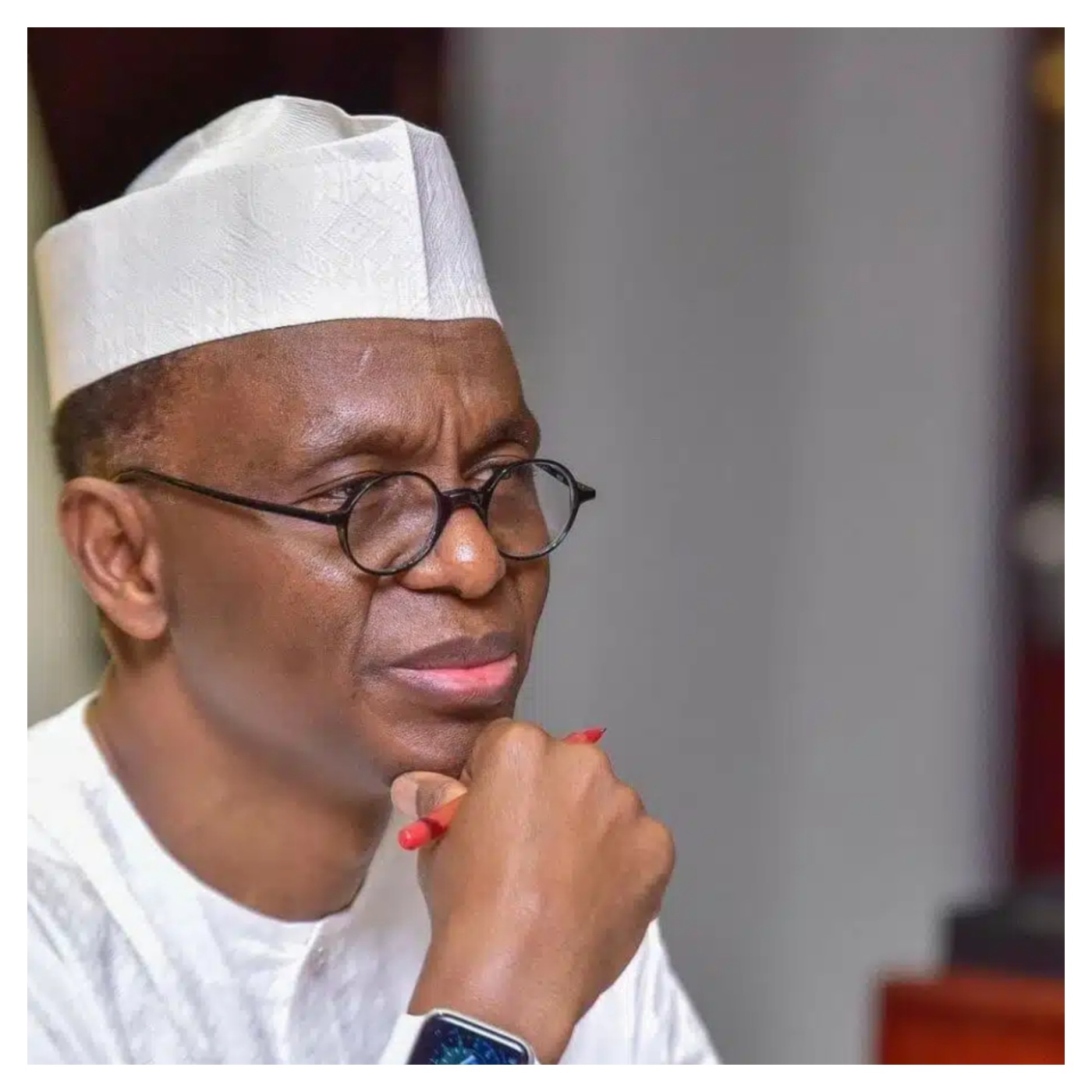
A medical report on former Kaduna State Governor Nasir Ahmad El-Rufai has revealed that a blood culture test detected Enterococcus faecium, a bacterium resistant to the antibiotic vancomycin, while his doctors listed possible sepsis among their clinical concerns.The findings are contained in two medical documents dated October 22, 2026, concerning the 66-year-old former governor, who is currently being detained by the Independent Corrupt Practices and Other Related Offences Commission (ICPC) amid his prosecution.A laboratory report issued by Cerba Lancet Nigeria showed that both aerobic and anaerobic blood cultures tested positive for Enterococcus faecium after 24–48 hours of incubation.
The report stated: “Culture positive After 24-48 hours incubation.”
It identified the organism as Enterococcus faecium and explicitly described it as a “Vancomycin Resistant Enterococcus (VRE).”
The laboratory report listed vancomycin as resistant, while several other antibiotics, including ampicillin/amoxicillin, erythromycin, levofloxacin, minocycline and linezolid, were marked as sensitive.

However, the laboratory document was marked “INTERIM REPORT” and stated: “Final Verified Report to Follow.”
This means the final verified laboratory result was still pending in the document provided.
A separate medical report issued by ASK+ Medical & Diagnostics on October 22 also documented the blood culture finding and detailed El-Rufai’s symptoms, clinical assessment and proposed treatment.
Under its clinical history section, the report stated: “The patient is a 66-year-old man with dyslipidemia, persistent headaches and insomnia. He presented with mild generalized headache and dizziness, without aura or photophobia. There is a reported history of hypotension.”
The report also noted that he appeared mildly dehydrated, with the clinical impression including dehydration in a case documented as resistant malaria and possible sepsis.
Under the clinical history section, the document described the assessment as “dehydration with resistant malaria and possible sepsis, with a suspected Para umbilical focus.”
The report recorded El-Rufai’s blood pressure at 93/70 mmHg and his pulse rate at 68 beats per minute.
His temperature was recorded as 36.2 degrees Celsius, while his oxygen saturation was 98 per cent on room air. The physical examination described him as being in no apparent respiratory or painful distress.
The report also contained an apparent difference in its assessment of his hydration status. While the clinical history described him as mildly dehydrated, the physical examination stated: “No dehydration.”
Under the investigations section, the ASK+ report confirmed the laboratory finding, stating: “Blood Culture: Enterococcus faecium (Gram-positive) isolated.”
It added that the organism was sensitive to several antibiotics, including ampicillin, erythromycin, levofloxacin, minocycline and linezolid, but resistant to vancomycin.
The report also listed gentamicin as sensitive, although the laboratory document presents the gentamicin result differently in its aerobic and anaerobic culture sections. The discrepancy requires clarification from the laboratory.
The ASK+ report stated that results from several other investigations, including a full blood count, malaria test, renal function test, liver function test, fasting lipid profile, random blood glucose, urinalysis and HbA1c, were within normal limits.
Despite those results, the positive blood culture prompted a recommendation for further medical evaluation and treatment guided by the laboratory findings.
Under its treatment plan, the report recommended admission for observation, intravenous fluids and medication for the documented clinical concerns.
It also advised that the blood culture and antibiotic sensitivity results be reviewed in consultation with an infectious disease physician.
The report stated: “Review the blood culture result and sensitivity results and, in consultation with Infectious disease physician, consider appropriate IV antibiotic therapy and admission for at least three days as advised by the clinical pathologist.”
It listed possible intravenous antibiotic options, including Augmentin, Gentalex, L-Flox and linezolid, subject to further clinical assessment and review of the culture results.
The findings come as El-Rufai remains in ICPC custody while facing prosecution. However, the medical documents do not establish any connection between his detention and the bacterial finding.
-
 Features3 days ago
Mmesoma Umeorini: When Love Turns Deadly, and a Young Woman Pays With Her Life
-
Features3 days ago
Why Igbos Celebrate New Yam Festival Worldwide: The History, Cultural Significance and Lessons For The Younger Generation
-
News2 days ago
BREAKING: Tension as Video Shows Islamic Group Members Allegedly Calling for AK-47 to Kill Christians in Enugu, Jos
-
News2 days ago
Kogi Police Probe Alleged Murder-Suicide Involving Two Officers
-
News1 day ago
Ifeanyi Ubah’s Elder Sister, Fidelia Chigbogu, Dies Suddenly at 61
-
News10 hours ago
BREAKING: El-Rufai Tests Positive for Drug-Resistant Bacteria, Shows Signs of Possible Severe Infection—Report
-
News2 days ago
NCDC Reports Two Suspected Ebola Cases as Contacts Rise to 53
-
News1 day ago
Terrorists Abduct Sunday Igboho’s Iru Ekun Security Group Members in Kwara