News
Court stops PENGASSAN, others from cutting Gas supply to Dangote Refinery


The National Industrial Court Abuja, has restrained the Petroleum, Natural Gas Workers Association of Nigeria (PENGASSAN) from embarking on its planned industrial action against Dangote Petroleum Refinery and Petrochemicals FZE.
Justice Emmanuel Danjuma Subilim delivered the ruling on Monday.

Dangote Refinery had sought an ex-parte application seeking to restrain the defendants which included Nigeria National Petroleum Company Ltd, (NNPCL), Nigeria Midstream and Downstream Petroleum, and the Nigeria Upstream Petroleum Regulatory Commission from cutting crude and gas supply to Dangote Refinery.
A Senior Advocate of Nigeria, George Ibrahim argued the application and secured the order against the defendants.
The senior lawyer in the ex-parte motion applied for order of interim injunction restraining the 1st Defendant its members, agents, servants, privies, representatives, assigns or whatsoever and howsoever called from calling or directing the halt of crude and Gas supply to the Claimant under any guise and or embarking on any industrial action against the Claimant with a view to crippling, blocking roads or obstructing the flow of vehicular movement, shutting down operations of the Claimant or licensees of the 2nd to 4th Defendants named in the 1st Defendant Directives dated September 26, 2025 or by any means frustrating the businesses/activities of the Claimant/Applicant pending the hearing and determination of the Motion on notice.

“An order of interim injunction restraining the 2nd – 4th Defendants, their employees, members, agents, servants, privies, representatives, licensees, assigns or whatsoever and howsoever called from giving effect to the directives of the 1st Defendant to halt the supply of crude and gas to the Claimant or joining, continuing, embarking on, or in any manner participating in the planned industrial action of the 1st Defendant and its affiliates and cronies or any other strike whatsoever against the Claimant/Applicant with a view to frustrating her businesses and operations pending the hearing and determination of the Motion on Notice.
Ibrahim argued that the Applicant is a petroleum production and or distribution companies licensed to own, operate and produce petroleum and petrochemical products for the general consumption of the Nigerian public, and whose business provides essential services to the Nigerian economy and the general public.
He said that in recent times, there have been incidents of sabotage by some employees of the Claimant at the Claimant’s plant which sprang up issues of grave health concern and safety of human lives.
According to him, the management of the Claimant came to an irresistible conclusion that there should be re-organisation in the plant which led to relieving of some of its staff of their employment and same was communicated to all staff by a memo or circular dated 25th September, 2025.
The senior lawyer said that in the early hours of Friday the 26th day of September 2025, the Claimant received online report that the Nigerian Workers were laid off by the Claimant because they joined the 1st Defendant’s union.
According to him, the management of the Claimant by a press statement refuted the said report and explained in clear terms that the Claimant was not averse to its members unionizing as that is their constitutional right but however clarified that the Claimant has over 3,000 Nigerians in its workforce and that only a neglible number of staff were affected by the re-organisation of the plant as a result of sabotage and safety concerns.
The lawyer asserted that by a letter dated September 26, 2025 and circulated online, the 1st Defendant through its General Secretary, Comrade Lamumba Ighotemu Okugbawa wrote to the Hon. Minister of Petroleum, Gas and warned that the 1st Defendant and its members were going to take action that would force the Claimant to its knees if the Claimant fails to recall the affected staff which was described in the said letter as over 800.
“The 1st Defendant issued a press statement on the 26th day of September, 2025 wherein it erroneously referred to the laying off of the workers by the Claimant as anti-labour practices, alleging that the workers were being victimized because they joined the 1st Defendant as members of the union which is not correct.
“Irrespective of the explanation offered by the Claimant in Exhibit DR3, the 1st Defendant became more provoked and directed its Executives and Members in the licensees of the 2nd – 4th Defendants through whom the Claimant accesses crude and gas for its plant to stop supplying gas to the Claimant.
“The 2nd – 4th Defendants are on standby to carry out the directives of the 1st Defendant through their agents and licensees as mentioned in Exhibit DR6 with a view to stopping the supply of gas and crude oil to the Claimant in order to halt its business and operation as threatened unless the Honourable Court intervenes.
“The 1st Defendant is going to make good its threat to shut down operations of the Claimant knowing the strength of its membership across the country unless the Honourable Court intervenes.
“The Claimant’s plant was constructed with over 20 Billion UD Dollars by its promoters to solve the energy problem of Nigeria that has been lingering for decades and has been sailing with good results to consumer satisfaction and have been making significant contribution to the economy of Nigeria, but the 1st Defendant if allowed to make good its threat will undoubtedly plunge Nigeria into the dark days of energy dearth and crisis and again, jeopardise the livelihood of the Nigerian’s end users and consumers and negatively impact on the economy
“The 1st Defendant, its members and protegees in the services of the 2nd – 4th Defendants have perfected plans to embark on an industrial action which will cripple to operations and services of the Claimant to the Nigerian public as well as the economy.
“The 1st Defendant has not engaged the Claimant with respect to a dispute, if any, before championing and calling for an industrial action against the Claimant contrary to the extant laws of the Federal republic of Nigeria.
In his brief ruling on ex-parte application, Justice Subilim held that the balance of convenience is in favour of the Applicants as the continuation of the strike would irreparably damage its business and cripple to provision of essential services to the Nigerian public.
The Judge held that it was in the interest of justice for the Court to restrain the Respondents to preserve the industrial peace and further aid the continuous provision of essential services to the Nigerian public pending the hearing and determination of the substantive suit.
Justice Subilim while granting the restraining order, directed that same be served on the defendants immediately along with motion on notice.
The judge held that the restraining order shall last for seven days only.
He subsequently fixed October 13 for hearing of the motion on notice.
It was learnt on Monday that PENGASSON has already implemented the cut off of gas and crude oil supply to Dangote Refinery.
The company earlier described the action as “criminal and economic sabotage”.



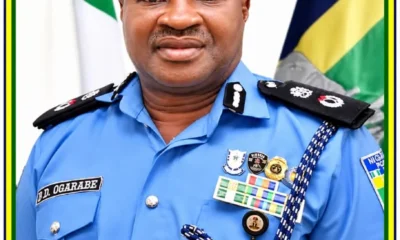






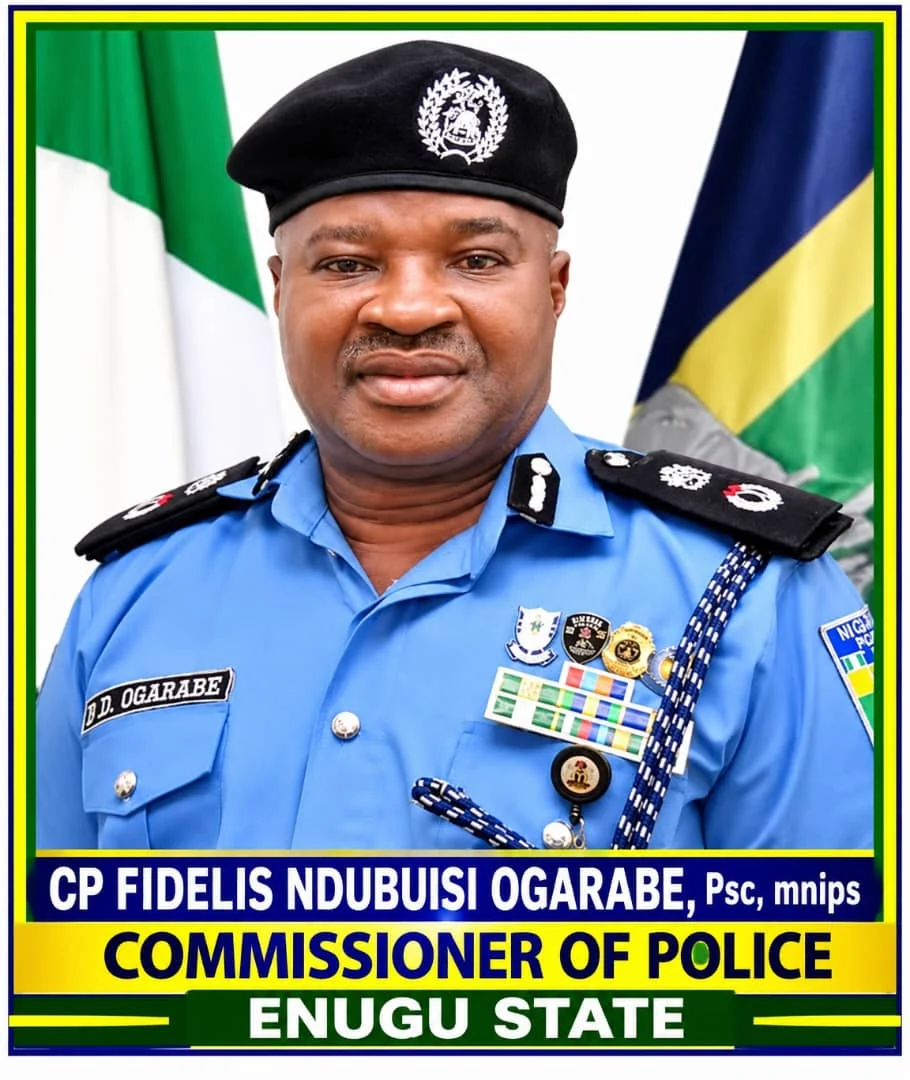
The Police Service Commission (PSC) has appointed Commissioner of Police Fidelis Ogarabe as the new Commissioner of Police for Enugu State.
Ogarabe’s appointment is part of the deployment of four commissioners of police to Enugu, Plateau, Nasarawa and Ondo states following interviews conducted by the commission to assess the officers’ competence and suitability for their new assignments.
Before his appointment, Ogarabe served as the Commissioner of Police in charge of INTERPOL Annex, Lagos.
Ogarabe’s career in Nigeria Police Force
Ogarabe has served in several strategic positions within the Nigeria Police Force.
His previous assignments include:
• Deputy Commissioner of Police (DCP), State Criminal Investigation Department (SCID), Enugu.
• DCP, General Investigation, Force Criminal Investigation Department (FCID).
DCP Administration, Anambra State Police Command.
• Commissioner of Police, INTERPOL Annex, Lagos.
He also served in other operational and administrative capacities within the police force.
He served two Enugu governors as Chief Security Officer
One of the most significant aspects of Ogarabe’s career is his long-standing relationship with Enugu State.
He reportedly served three consecutive terms as Chief Security Officer to two former governors of Enugu State between 2007 and 2023. The governors were:
Barrister Sullivan Chime: 2007–2015.
Rt. Hon. Ifeanyi Ugwuanyi: 2015–2023.
Ogarabe’s appointment is particularly interesting because he has considerable institutional familiarity with Enugu State, having spent approximately 16 years serving two successive administrations.
His previous experience in criminal investigation, police administration, international law enforcement coordination and Government House security would be useful in managing the state’s security challenges.
The other officers deployed are CP Sunday J. A. Okoebor, former Commissioner of Police, Police Accounts and Budget, Force Headquarters, who has been posted to Plateau State.
CP Sheikh Mohammed Danko, formerly of the Force Intelligence Annex, Lagos, was deployed to Nasarawa State, while CP Johnson Ayodeji Babalola, who served at the Special Inquiry Unit, Force Headquarters, Abuja, was posted to Ondo State.
The deployments were approved on Thursday at the Solomon Arase Conference Hall, Police Service Commission Headquarters, Abuja.
According to a statement issued on Thursday by the commission’s Head of Protocol and Public Relations, Torty Kalu, the appointments were made in line with the commission’s constitutional mandate.
The Chairman of the commission, DIG Hashimu Salihu Argungu, said the deployments were carried out in accordance with Section 215(1)(b) of the 1999 Constitution, which empowers the PSC to appoint Commissioners of Police for each state of the federation and the Federal Capital Territory.
Argungu, who was represented by a board member, Justice Paul Adamu Galumje (JSC, retd.), said the officers were found worthy in learning and character.
He urged the newly deployed commissioners to discharge their responsibilities with impartiality and uphold the standards and expectations of their respective offices.
… As Mbah highlights agro-industrial strides, says Enugu ready for agribusiness
The Federal Government and Enugu State Government have reaffirmed their commitment to transforming agriculture into a commercially driven, agro-industrialised sector capable of boosting food security, creating jobs and stimulating economic growth.
The two governments restated their shared policy objective on Thursday at the 48th Regular Meeting of the National Council on Agriculture and Food Security, hosted by the Enugu State Government, with Governor Peter Mbah of Enugu State and the Minister of Agriculture and Food Security, Senator Abubakar Kyari, highlighting ongoing interventions to strengthen agricultural value chains, improve productivity and expand market access.
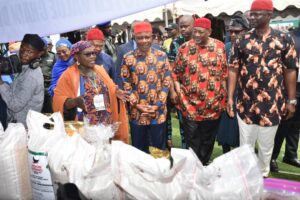
The meeting, held at Hotel Presidential, Enugu, and themed, “Enhancing Agricultural Value Chains, Agro-Industrialization and Market Access for Economic Growth,” brought together Commissioners and delegates from the 36 states and the Federal Capital Territory, development partners and other stakeholders in the agricultural sector.
Addressing the delegates, Governor Mbah said the transformation of agriculture required more than increased food production, stressing the need to connect farmers to mechanisation, processing facilities, industries and viable domestic and international markets.
He said his administration’s ambition to grow Enugu’s economy from approximately $4.4 billion to $30 billion by 2031 informed its decision to position agriculture as a major driver of economic growth.
“We want Enugu to become a place where agriculture supports industry, industry creates opportunities for farmers and entrepreneurs, and our products compete successfully in domestic and international markets,” he noted.
The governor disclosed that more than 60,000 farmers had benefited from agricultural support programmes, while 84,000 farmers had been captured in a digital registry to improve the distribution of interventions.
Mbah equally said his administration was addressing the problem of scale through the 260 Farm Estates Programme.
“We are working to establish organised agricultural production hubs across all 260 wards of Enugu State, creating opportunities for farmers, cooperatives, agribusinesses and young entrepreneurs to participate in larger, more productive agricultural enterprises.
“To support this, we have developed an Agricultural Land Bank, securing approximately 187,000 hectares through strategic partnerships with communities,” he stated.
The governor also highlighted the assembly of 107 tractors through a partnership with Nortra Tractors to ensure the availability of machines to scale up production.
On agro-industrialisation, Mbah cited the expansion of the hitherto moribund Enugu United Palm Products Limited plantation to 6,917 hectares, thus creating more than 3,500 jobs in the process.
Mbah also highlighted the revival of Enugu Songhai Farms in partnership with Tribu Limited as a 10,000-hectare agro-industrial hub, and the reactivation of Sunrise Flour Mills.
He also cited the Integrated Livestock Development Centre at Ubahu, designed to accommodate between 15,000 and 20,000 cattle, as part of efforts to strengthen the state’s agricultural value chain.
“These investments are connected by a common purpose: we want more of the value generated by our agricultural resources to remain within our economy,” he stated.
The governor called for stronger collaboration among federal and state governments, development partners and the private investor, noting that agricultural transformation depended on coordinated investments in production, processing, infrastructure and market access.
“Enugu is open for agribusiness. We have fertile land, a strategic location connecting the South East with other parts of Nigeria, a young and enterprising population, and a government committed to supporting productive investment.
“We welcome partnerships with other states, federal institutions, development agencies and private enterprises that share our ambition,” he concluded.
In his remarks, Kyari said the Federal Government was implementing various interventions to improve agricultural productivity, protect farmers’ incomes and strengthen food security.
He disclosed that the National Agricultural Development Fund’s Farm Input Support Programme had reached more than 115,000 beneficiaries across 25 states and the FCT, while the fund had disbursed ₦16.27 billion through agribusiness financing facilities.
The minister added that the Bank of Agriculture had financed more than 500,000 smallholder farmers, while the second phase of the Renewed Hope National Agricultural Mechanisation Programme was expected to deliver an additional 1,500 tractors and more than 8,000 complementary pieces of equipment.
He stressed the importance of strengthening commodity supply chains to ensure that agricultural production translated into dependable raw materials for industries and affordable food for consumers.
Kyari said Nigeria’s economy grew by 4.43 per cent in the second quarter of 2026, with agriculture recording 4.39 per cent growth and contributing 26.15 per cent of real Gross Domestic Product.
In his remarks, the Minister of Innovation, Science and Technology, Dr. Kingsley Udeh, SAN, thanked Governor Mbah for successfully hosting the programme, saying the 48th Regular Meeting on Agriculture and Food Security would shed light on both Enugu State’s agro-industrialisation policies and initiatives and the Federal Government’s milestones in the agricultural sector.
“The reforms and agricultural transformation of the state and federal governments are enough to commend both Governor Mbah and President Bola Ahmed Tinubu for a second term in office,” he stated.
Earlier, the Enugu State Commissioner for Agriculture and Agro-Industrialisation, Dr. Patrick Ubru, said the state was repositioning its agricultural sector from subsistence production towards a commercially driven and agro-industrialised economy.
He disclosed that agriculture and agro-industrialisation were expected to contribute $12 billion to the state’s $30 billion economic target by 2031, pledging the state government’s support for federal agricultural interventions through the provision of warehouses for storing and distributing farm inputs, as well as facilities for agricultural programmes and capacity-building activities.
In his vote of thanks, the Minister of State for Agriculture and Food Security, Senator Sabi Abdullahi, urged stakeholders to ensure the effective implementation of the resolutions reached at the meeting, stressing that stronger collaboration remained essential to building a productive and competitive agricultural sector.
The programme was also attended by the Deputy National Chairman (South) of the All Progressives Congress (APC), Dr. Ben Nwoye; Chairman of APC in Enugu State, Dr. Martin Chukwunwike; Speaker of the Enugu State House of Assembly, Rt. Hon. Uche Ugwu; Secretary to the Enugu State Government, Prof. Chidiebere Onyia; Head of Service, Dr. Godwin Anigbo; among others.
Side attractions at the event included exhibitions of food products and agricultural equipment, which were also toured by Governor Mbah and other dignitaries.
News
2027 Elections: IPC Trains Online Publishers on Fact-Checking, Accountability, Inclusive Reporting
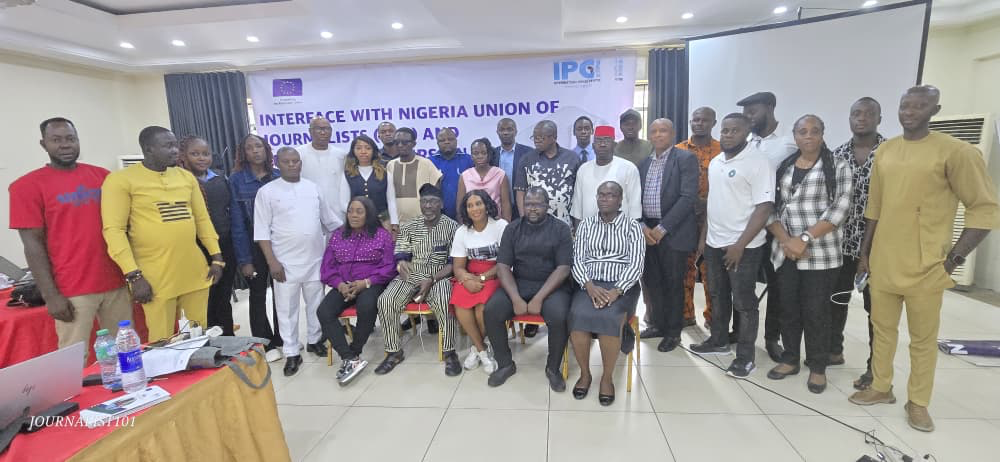
The International Press Centre (IPC), Lagos, has urged journalists and online publishers to strengthen fact-checking, professional ethics, accountability and inclusive reporting ahead of the 2027 general elections.
The centre also called on media organisations to move beyond partisan political coverage and prioritise issues affecting citizens, including insecurity, unemployment, education, healthcare, electricity, transportation and access to public services.
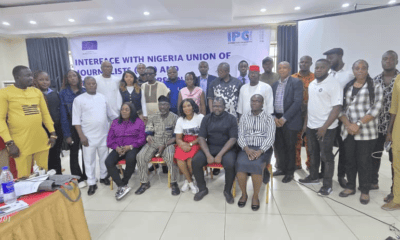
The call was made during a two-day media interface with the Nigeria Union of Journalists (NUJ) and editors and publishers on the Democratic Scorecard (Enugu State Edition), held from November 4 to 5, 2026, at BON Hotel Platinum, Independence Layout, Enugu.
The initiative was organised under the European Union Support to Democratic Governance in Nigeria (EU-SDGN) programme, aimed at strengthening the capacity of journalists in credible electoral reporting, combating corruption and promoting informed citizen participation in democratic processes.
Speaking at the workshop, the Executive Director of IPC, Dr Lanre Arogundade, represented by the programme manager, Stella Nwofia, stressed the need for journalists to prioritise accuracy over speed, uphold professional standards and hold political office holders accountable through credible and independent reporting.
He urged online publishers and editors to ensure inclusive electoral coverage by giving adequate attention to women, young people, persons living with disabilities, internally displaced persons and other underrepresented groups.
Arogundade observed that while digital platforms had expanded opportunities for information sharing and public participation, they had also accelerated the spread of misinformation, manipulated content, hate speech and divisive narratives.
He, therefore, urged online publishers to strengthen their fact-checking and verification skills, particularly when reporting politically sensitive issues, warning against the pressure to break stories at the expense of accuracy.
He maintained that fact-checking and verification must remain integral to responsible electoral journalism rather than optional additions to the profession.
The IPC executive director also emphasised the need to protect the safety and professional independence of journalists, insisting that media practitioners must be allowed to discharge their legitimate responsibilities without intimidation, harassment or unlawful interference.
In a presentation titled, “2027 General Elections in the Context of Democratic and Accountability Reporting: Scanning the Electoral Environment and Reporting Citizens’ Priority Concerns,” Professor Ifeoma Dunu, Director of UNIZIK Radio, Nnamdi Azikiwe University, Awka, challenged journalists to place citizens’ interests at the centre of electoral reporting rather than focusing predominantly on politicians and their activities.
Dunu observed that media coverage often gives prominence to political rallies, campaign promises and party differences, while critical issues affecting ordinary citizens receive insufficient attention.
She urged journalists to interrogate campaign promises, scrutinise government budgets, track the implementation of public projects and evaluate the performance of elected officials.
She identified insecurity, unemployment, education, healthcare, electricity, transportation and access to public services as key issues that should dominate the media agenda ahead of the 2027 elections.
The university don also highlighted the importance of monitoring the electoral, legal, political, institutional, economic, social inclusion, public service, security and information environments to ensure comprehensive electoral coverage.
Another presentation, delivered by Mr Olusola Oludiran, focused on fact-checking and the utilisation of digital tools in journalism.
Oludiran examined the growing challenge of misinformation, manipulated information and artificial intelligence-generated content, stressing the importance of verification and responsible dissemination of information in protecting public trust and the credibility of the media.
The workshop also examined the Democratic Scorecard as a tool for measuring democratic performance and strengthening accountability.
Participants were encouraged to scrutinise the obligations of public institutions, examine the management of public resources and budgets, monitor government promises against actual delivery and assess government interventions through measurable outcomes.
The engagement further emphasised the importance of community participation and sustained investigations into citizens’ concerns, urging journalists to translate public priorities into editorial decisions and consistent accountability reporting.
In her opening remarks, Nwofia acknowledged the importance of the capacity-building initiative, noting that the growing demand for speed and visibility in online publishing sometimes undermined accuracy.
She observed that many online publishers in Enugu were experienced journalists who had moved from established media organisations to establish their own platforms, making continuous professional development necessary.
She expressed optimism that the training would improve participants’ professional capacity, create better opportunities for online publishers in the state and strengthen their visibility in the national media space.
Nwofia urged participants to take the lessons seriously, share the knowledge acquired with their staff and incorporate the best practices into their daily newsroom operations.
Also speaking, the Chairman of the Corporate Online Chapel of the NUJ, Enugu State Council, Clinton Umeh, pledged that online publishers in the state would translate the lessons from the workshop into improved newsroom practices.
Umeh described the initiative as an important intervention for independent online media practitioners, many of whom had acquired years of experience in established media organisations before establishing their own platforms.
He acknowledged the intense competition for speed and visibility in digital publishing, noting that the pressure to break stories first could sometimes compromise accuracy.
He said the training would help participants consolidate their existing knowledge, improve their professional output and strengthen the visibility of Enugu-based online publishers.
Umeh particularly welcomed the opportunity for practitioners in the state to benefit from professional exposure and networking opportunities available to online publishers in major media centres such as Lagos and Abuja.
He assured the organisers that participants would put the knowledge acquired into practice and extend its benefits to their employees and other members of their respective organisations.
The NUJ chapel chairman also noted that independent online publishers largely depend on their capacity and productivity to earn a living, making professional competence and commitment essential to the sustainability of their media businesses.
He called for the continuation of similar interventions, stressing that opportunities to interact with media practitioners across the country would promote networking, collaboration and professional growth.
Arogundade, in his remarks, urged participants to make the engagement practical by sharing experiences from their respective media organisations, asking critical questions and developing ideas that would improve electoral reporting across print, broadcast and online platforms.
He said the success of the engagement should not be measured merely by the quality of discussions or the number of participants, but by the stories published, claims verified, citizens’ concerns amplified, accountability questions raised and professional standards upheld in the months leading to the 2027 elections.
He appreciated the NUJ Enugu State Council for supporting the engagement, as well as the resource persons who accepted the invitation to lead the deliberations. He also acknowledged the European Union for providing funding support for the project.
The Advocate reports that the initiative is expected to translate into stronger verification practices, more inclusive electoral coverage and sustained public-interest journalism as media organisations prepare for the 2027 general elections.
-
 News1 day ago
BREAKING: Court Nullifies Atiku’s ADC Presidential Ticket, Removes David Mark-Led Leadership
-
News3 days ago
Forgery Trial: NYSC Disowns Nnaji’s Certificate, Identifies Four Discrepancies
-
News3 days ago
NDC Spokesperson Dismisses Concerns Over Peter Obi’s Health, Attributes Condition to Exhaustion
-
News1 day ago
Presidency Reacts as NDC Opens Up on Peter Obi’s Health Challenge
-
News3 days ago
Police Rescue Seven Officers, Recover Five Bodies After Deadly Bandit Ambush in Zamfara
-
News1 day ago
‘19 Years of Waiting!’ Enugu Pensioner Breaks Down in Joy as Mbah Pays Long-Overdue Gratuity [VIDEO]
-
News2 days ago
Enugu Air to Begin Lagos–London Flights in December – Official
-
News3 days ago
Gunmen Abduct Two Visually Impaired Persons in Plateau, Demand N50m Ransom