News
Airlines airlifting passengers without valid entry visas to be sanctioned – FG


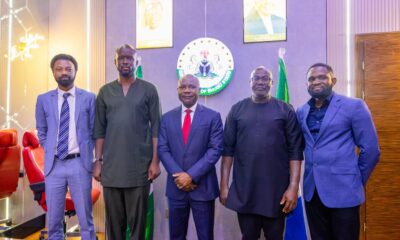
The federal government has cautioned that airlines airlifting passengers into Nigeria without a valid entry visa, landing and exit cards would be penalised.
Minister of Interior, Dr Olubunmi Tunji-Ojo, made the remarks at a stakeholders’ sensitisation programme on the implementation of the e-visa, landing and exit cards on Friday in Lagos.

According to the minister, Nigeria is not a testing ground, and no foreigner should be allowed entry without a visa.
He said that although Nigeria was making entry more accessible with the introduction of the e-visa, it would not compromise on national security.
He urged the Nigeria Civil Aviation Authority (NCAA) on the enlightenment and enforcement of its oversight function as a regulator to ensure that airlines adhere to the 2025 Nigeria Visa Policy.

While tasking airlines with national security, Tunji-Ojo stated that the e-visa was of national interest to improve border security, tourism and sustainable economic growth.
“I plead with the NCAA to regulate; that is why this meeting is a strategic collaborative effort of the ministry, the Nigeria Immigration Service and the NCAA.
“For the airlines, I know you are here to do business, but you also have a responsibility in terms of national interest and security.
“Before anybody comes to Nigeria, please see their visas, not proof of payment or their tickets.
“It is not acceptable in the UK, US, Canada and other climes, and it will not be acceptable in Nigeria any more,” he added.
On the ease of applying for the e-visa, landing and exit cards, Tunji-Ojo said that it was necessary for the purpose of opening Nigeria’s frontiers to investors.
He disclosed that as of May 22nd, the NIS had received a total of 5,814 applications, approved 5,671, rejected 66 and queried 62 applications since the introduction of e-visas on May 1, 2025.
According to him, the e-visa process will improve the database of the NIS with information on travellers.
He explained the features of the e-visa, the landing and exit cards with a barcode.
“That you applied for a Nigerian visa does not mean you will have the visa; you will need to meet certain criteria for the visa to be issued,” he added.
Also speaking, Director-General of the NCAA, Capt. Chris Najomo, said that the introduction of the e-Visa and the associated Landing and Exit card systems was a milestone.
Najomo said that was a significant milestone in Nigeria’s journey towards enhancing air travel facilitation while ensuring the highest standards of aviation security and operational efficiency are maintained.
“The e-Visa showcases one of the practical ways we continually align with global best practices by complying with the ICAO provisions of Annex 9 to the Convention on International Civil Aviation – on Facilitation.
“It is, inherently, designed to improve the experience of travellers while strengthening our border control mechanisms.
The importance of seamless inter-agency collaboration cannot be overemphasised in a bid to ensure the effective implementation of these systems without compromising safety, security, or service delivery.
“The benefits derived from e-Visa applicants being able to complete visa applications entirely online, with processing time reduced to less than 48 hours, would have a multiplier effect.
“It will showcase Nigeria as an investor- and tourist-friendly nation, invariably translating to economic growth.”
In her closing remarks, the Controller General of the NIS, Kemi Nanna Nandap, expressed her appreciation to the Minister of Aviation and Aerospace Development, the NCAA D-G, the Managing Director of the Federal Airports Authority and the NIS team.
She called for more inter-agency collaborations to further strengthen the seamless implementation of the e-visa, landing and exit card innovation.



•NIPCO raises petrol price by N170 in Port Harcourt; Rain Oil, Matrix hike diesel to N1,900 in Warri; NNPC sells at N1,360, MRS at N1,338 in Lagos; Brent rises to $104.50 per barrel
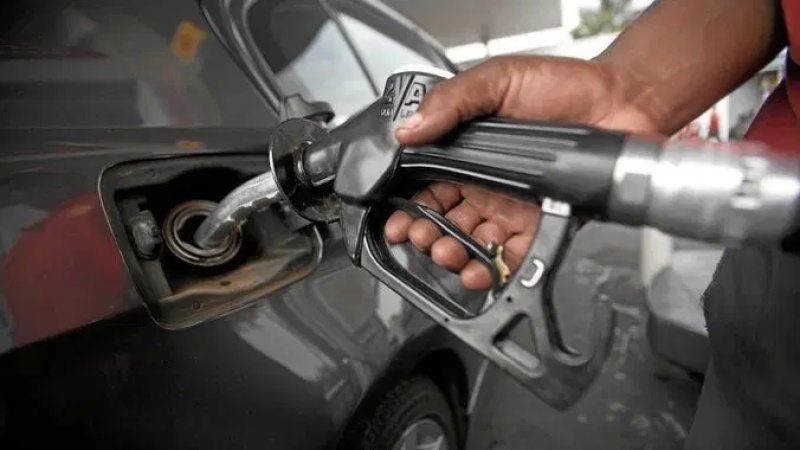
There are indications that domestic petroleum product prices could rise further as petrol depot prices surged across Lagos, Port Harcourt, Warri and Calabar on Friday, with several marketers in Port Harcourt raising their prices to N1,900 per litre, despite lower pump prices at some filling stations in Lagos.
NIPCO led the increases in Port Harcourt, raising its Premium Motor Spirit, PMS, price by N170 per litre to N1,900 from N1,730, while six other depots increased their prices by N150 to the same level.
The developments coincided with an increase in international crude oil prices, as Brent crude climbed to $104.50 per barrel from $104.28, while the US benchmark, West Texas Intermediate, WTI, rose to $91.73 from $91.49.
A review of depot prices showed that African Terminal, Ascon, Eterna, Gulf Treasure, Ibachem and Ibeto raised their petrol prices in Port Harcourt to N1,900 per litre from N1,750 each.
Duport and Integrated, however, increased their prices to N1,806 per litre from N1,750, representing an increase of N56 per litre.
In Lagos, Masters raised its petrol price to N1,350 per litre from N1,303, while Matrix increased its price to N1,360 from N1,330.
Sigmund and T.S.L raised their prices to N1,350 per litre from N1,300 each, while NIPCO increased its price to N1,350 from N1,326.
In Calabar, Matrix raised its price to N1,370 per litre from N1,315. In Warri, Keonamex, Matrix, Nepal and Parker increased their prices to N1,360 per litre from N1,315 each, while Optima raised its price to N1,360 from N1,330.
Pump prices vary
At the retail end, the NNPC Limited sold petrol at N1,360 per litre at its filling stations in Lagos and surrounding areas.
MRS Oil Nigeria Plc sold the product at N1,338 per litre, while 11 Plc sold at N1,338.80. Independent marketers charged between N1,368 and N1,400 per litre, depending on location.
Consequently, motorists patronising MRS and 11 Plc paid less than those buying from some independent marketers, whose prices reached N1,400 per litre.
The price differences highlight the divergent pricing trends across the supply chain, with depot prices rising in several locations even as some filling stations continued to sell below the rates charged by independent marketers.
Diesel prices climb
The diesel market also recorded significant increases in Warri, where Rain Oil and Matrix raised their Automotive Gas Oil, AGO, prices by N180 per litre to N1,900 from N1,720 each.
In Port Harcourt, Dangote increased its diesel price to N1,720 per litre from N1,702, while Masters raised its price to N1,825 from N1,788.
The increases could add to operating costs for manufacturers, transport operators and other businesses that rely on diesel for power generation and transportation, particularly if the higher prices persist.
Crude oil market mixed
On the international market, the OPEC Basket rose to $109.50 per barrel from $108.59, while WTI Midland increased to $92.74 from $92.32.
Natural gas prices climbed to $3.235 from $3.168, but Murban crude fell to $108.50 per barrel from $110.49.
Among refined products, gasoline declined to $3.293 from $3.316, while heating oil dropped to $4.724 from $4.883. The Indian Basket rose to $121.10 per barrel from $117.63.
The mixed movements across international benchmarks indicate that domestic depot price increases should not be attributed solely to the day’s crude oil gains. Product replacement costs, supply conditions, transportation expenses and individual marketers’ pricing decisions may also influence local prices.
Commenting on the developments in an interview with Vanguard, the Chief Executive Officer of Petroleumprice.ng, Olatide Jeremiah, said: “Despite domestic issues and development in Nigeria, the downstream sector would continue to respond or react to developments at the global oil market.”
With petrol reaching N1,900 per litre at several Port Harcourt depots and diesel hitting the same level in Warri, the latest price movements underscore the pressures facing Nigeria’s downstream market and the continuing differences between wholesale and retail prices. (Saturday Vanguard)
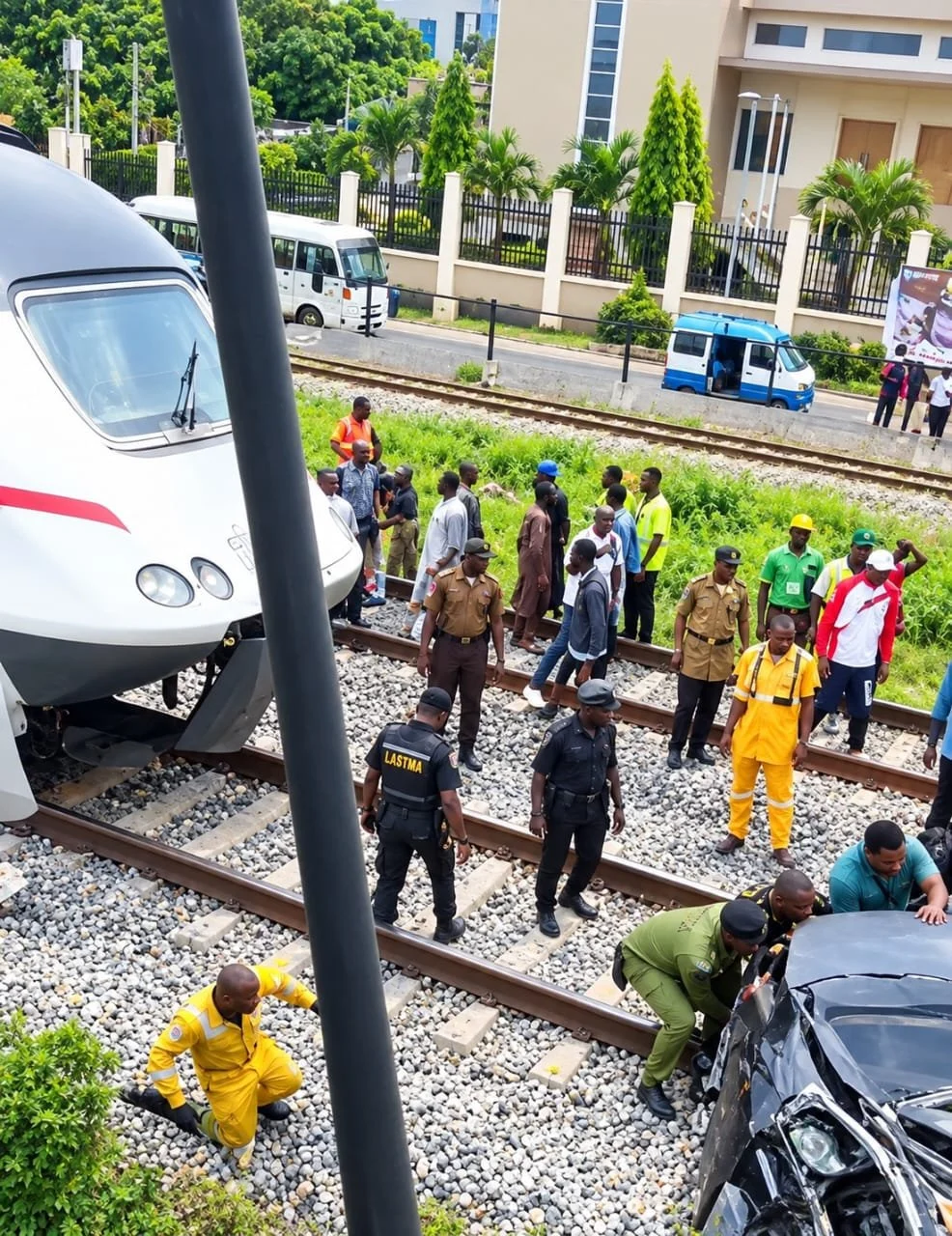
A 55-year-old driver escaped injury after a train rammed into his Honda car at the PWD railway crossing in Lagos.
The accident involved a train heading towards Agege and a Honda car with registrationi number EKY 902 JT, which sustained extensive damage.
The Lagos State Traffic Management Authority said its officials, alongside security personnel, rescued the motorist and cleared the damaged vehicle from the tracks, enabling the train to continue its journey.
Despite the clearance, traffic congestion remained around the PWD area after the incident.
LASTMA said the wrecked vehicle was handed over to security personnel to facilitate an investigation into the circumstances surrounding the collision.
The agency’s General Manager, Olalekan Bakare-Oki, praised the officials and security personnel for their swift response, noting that their joint efforts highlighted the need for effective collaboration during emergencies involving railway lines and adjoining roads.
He advised motorists to be vigilant when approaching railway crossings and areas designated for train movement.
Bakare-Oki cautioned drivers against crossing railway tracks when a train was approaching or in motion, warning that “reckless disregard for railway safety protocols could precipitate devastating and irreversible consequences”.
LASTMA also urged road users to obey traffic rules and railway safety guidelines.
The agency emphasised that “the preservation of human life must remain paramount in all road-use decisions”, adding that responsible driving and compliance with safety instructions were essential to preventing avoidable accidents.
Recall that in March, the Nigerian Railway Corporation announced that 26 passengers and crew members sustained varying degrees of injuries following a train incident along the Abuja–Kaduna rail corridor on Monday.
The Managing Director of the NRC, Kayode Opeifa, said the incident occurred near Asham Station when a loud bang was heard as part of the train formation collided.
He said the Kaduna–Abuja service (KA-2) departed Rigassa Station at 7:15 a.m. and arrived at Jere Station one minute ahead of schedule at 8:52 a.m.
News
Ihejirika lauds Mbah’s infrastructure drive as Coal City University inaugurates Governing Council
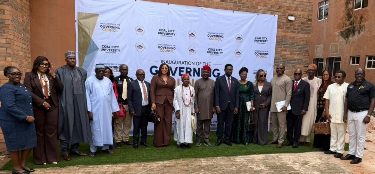
Former Chief of Army Staff, Lt. Gen. Azubuike Ihejirika (rtd.), has commended Enugu State Governor, Peter Ndubuisi Mbah, for his infrastructural development efforts across the state.
Ihejirika gave the commendation in a special message to Governor Mbah during the inauguration of the Governing Council of Coal City University, Enugu, held on Wednesday, October 7, 2026.
The former Army Chief’s commendation came as the university formally inaugurated its new Governing Council, with its chairman pledging to provide strategic leadership aimed at strengthening academic excellence, good governance and sustainable growth.
In his inaugural address, the Chairman of the Governing Council described his appointment as both an honour and a major responsibility, saying the council had been entrusted with the future of an institution impacting thousands of young people.
He commended the Chancellor and Proprietor of the university, Sir Chinedu Ani, for his vision, determination and personal commitment to establishing and developing Coal City University.
ADVERTISEMENT
According to him, building a university requires enormous resources, infrastructure, courage and perseverance, stressing that universities remain critical to nation-building because they prepare young people for employment, responsible citizenship and leadership.
The council chairman said the new Governing Council would work closely with the Chancellor, Vice-Chancellor and management to ensure that the university remained faithful to its founding vision.
He identified five major principles that would guide the council: academic excellence; good governance and accountability; student development; institutional growth and sustainability; and preservation of institutional values and integrity.
He said the university would support initiatives aimed at strengthening teaching, research, innovation and scholarship, while promoting transparency, prudent management of resources and adherence to regulatory standards.
On student development, he stressed the need to produce graduates who combine intellectual excellence with discipline, integrity, entrepreneurship, creativity, leadership and respect for human dignity.
The chairman also noted that the higher education sector was changing rapidly due to technology, artificial intelligence, evolving workplace demands, research and innovation.
He therefore called for stronger partnerships, international outlook, research capacity, infrastructure development and financial sustainability to enable Coal City University to anticipate and respond effectively to emerging challenges.
He further warned that the reputation of the university would depend not only on its physical infrastructure but also on the integrity, professionalism, fairness and accountability of members of its community.
The council chairman assured the university’s management of the council’s support while emphasising that the governing body would respect the distinction between governance and administration.
He charged the Vice-Chancellor and principal officers to maintain high standards of excellence, transparency and accountability, while commending members of staff for their contributions to the development of the institution.
He also urged students to take full advantage of the opportunities offered by the university, pursue knowledge with seriousness and cultivate discipline and integrity.
He said the long-term ambition should be for Coal City University to gain recognition for the quality of its graduates, relevance of its research, integrity of its leadership and positive contribution to society.
The chairman expressed appreciation to the Board of Trustees and the Chancellor for the confidence reposed in the newly inaugurated council and prayed for wisdom and courage for its members.
The event was attended by the Chancellor and Proprietor of Coal City University, Sir Chinedu Ani; the Vice-Chancellor; members of the Board of Trustees; principal officers; members of the newly inaugurated Governing Council; university staff and other distinguished guests.
The event ended with prayers for the continued growth of Coal City University, the development of Enugu State and the progress of Nigeria.
-
 Editorial3 days ago
Nigeria’s Roads: Where a Driver’s Licence May Not Mean a Driver Can Drive
-
News2 days ago
Over 1,000 Islamic clerics ask Tinubu to drop 2027 re-election bid
-
Features2 days ago
TWENTY YEARS IN MEMORY: MARIA UKAMAKA IFEOMA OJUKWU
-
News3 days ago
Military, DSS, police rescue 20 NYSC corps members, civilian in Imo
-
News2 days ago
GOCOP Trains Members On Deployment Of AI Tools to Boost Efficiency, Profitability
-
News3 days ago
Gov Mbah Seeks National Emergency in Education, Launches Enugu Education Policy
-
News1 day ago
GOCOP conference: Agbakoba urges media to test right to announce election results
-
News1 day ago
Enugu Secures $200m Investment for 100MW Solar Power