Connect with us

News

Peter Obi joins global leaders in Rome to pay last respects to Pope Francis

Published

on

Peter Obi joins global leaders to honour Pope Francis in Rome. Credit: X | PeterObi
Spread the love
Former Governor of Anambra State and 2023 presidential candidate, Peter Obi, joined thousands of mourners, global dignitaries, and clergy today at St. Peter’s Basilica, Vatican City, to pay his final respects to the late Pope Francis, who passed away on April 21.

The solemn lying-in-state ceremony marked the beginning of a series of events leading to the funeral of the revered Pontiff, scheduled for Saturday, April 26.

This was made known in a statement shared on his X (formerly Twitter) on Wednesday.

Describing the moment as one of deep reflection, Obi paid tribute to the Pope’s life of humility, service, and unwavering commitment to the poor and marginalised.

He recalled his encounters with the late Pope, highlighting the profound impact they had on his understanding of leadership and moral responsibility. Obi also shared his experience as a member of Scholars Occultantes, an international think-tank founded by the Pope during his tenure as Archbishop, focused on ethical leadership and truth-driven social transformation.

He further called on leaders across Africa, political, religious, and community, to emulate the values Pope Francis championed which he said were justice, peace, and human dignity.

Maduka College Advert

Peter Obi joins global leaders to honour Pope Francis in Rome. Credit: X | PeterObi

Sharing photos Obi wrote, “Today, I joined Francis Cardinal Arinze, global dignitaries, and thousands of mourners at St. Peter’s Basilica, Rome, to pay my final respects to His Holiness, Pope Francis, who passed away on April 21. The solemn lying-in-state ceremony was a moment of deep reflection, as the world bids farewell to a man who embodied humility, simplicity, and selfless service.

“Pope Francis was more than a Pontiff; he was a moral light in a world darkened by inequality and indifference. His life was a testament to leadership as a sacred duty, one rooted in compassion, truth, and service to the poor and marginalised. He lived for others, spoke for the voiceless, and reminded us all that leadership must be about lifting others, not self-exaltation.

“I came to truly appreciate what he stood for after my appointment as a member of Scholars Occultantes – an international circle of thinkers he founded during his time as Archbishop. The organisation, dedicated to truth, ethical leadership, and social transformation, gave me a deeper insight into the intellectual and moral force behind his teachings.

“I was blessed to meet Pope Francis on three occasions. Each encounter left a lasting impression. He radiated peace and inspired faith, and his presence was a quiet yet powerful reminder of the divine responsibility that leadership entails. His humility was infectious, his vision deeply human.

Peter Obi joins global leaders to honour Pope Francis in Rome. Credit: X | PeterObi

“As we mourn this great soul, I urge political, religious, and community leaders, especially across Africa, to reflect on his life and commit to the values he upheld: justice, peace, and human dignity. Let this moment not just be one of mourning, but a call to lead with conscience, walk with the people, and govern with love.
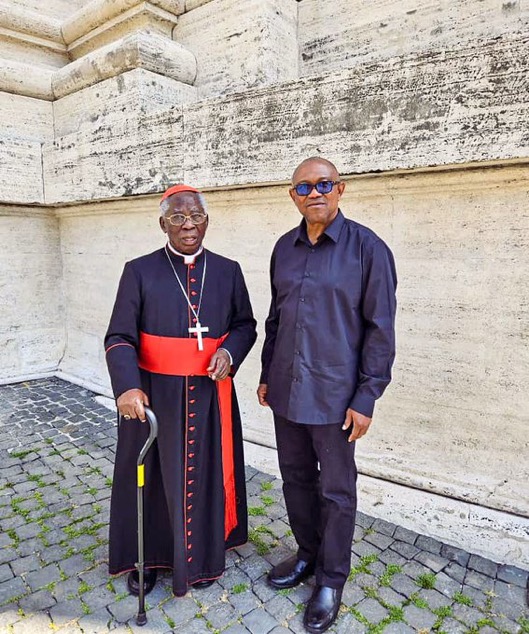
Cardinal Francis Arinze and Peter Obi in Rome to honour Pope Francis Credit: X | PeterObi

“May Pope Francis’ soul rest in perfect peace, and may his legacy live on in all who seek to serve humanity selflessly.”

Pope Francis died on Monday at the age of 88, marking the end of a papacy defined by humility, reform, and a deep commitment to the marginalised.

The Holy See Press Office had announced that the funeral of Pope Francis will take place on Saturday, April 26, 2025, at 10am in St. Peter’s Square


News

North-east Governors raise N10.8bn to form regional airline

Published

on

North East Governors
Spread the love
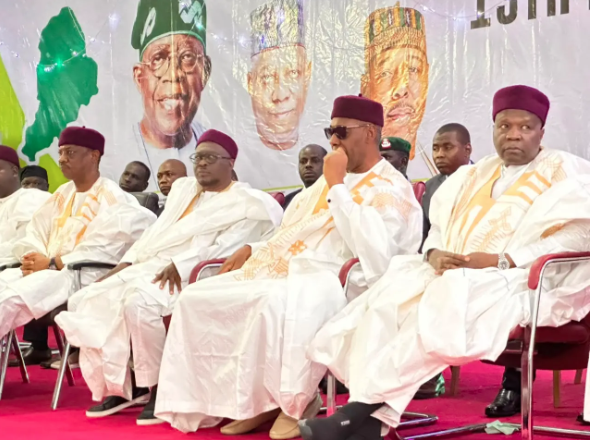
The North East Governors’ Forum (NEGF) has concretised its plan to establish a regional carrier by raising N10.8 billion in counterpart funding for the airline already named, ‘North East Airline

The chairman of the forum and Governor of Borno State, Babagana Zulum, disclosed this recently during the opening ceremony of the 10th meeting of the North East Governors’ Forum in Maiduguri.

Addressing the other governors of member states and other regional leaders, Zulum stated that the balance of the counterpart fund would be remitted before the end of the month to enable the immediate rollout of the flight operations.

“The establishment of the North East Air Shuttle is a significant step towards improving connectivity within the sub-region, and we look forward to the commencement of these operations soon,” Zulum said.

“To this end, N10.8 billion has been realised as counterpart contributions from the governors of the North-east region. Insha Allah, the remaining counterpart funds shall be received before the end of this month, this year, with a view to actualising our dream of having the North East Air Shuttle,” Zulum further said.

He urged member states—Adamawa, Bauchi, Borno, Gombe, Taraba, and Yobe—to consolidate their commitments and work in unison to ensure the smooth take-off of the regional carrier. (This Day)

Maduka College Advert
Continue Reading

News

Criticism of Tinubu’s petrol relief disappointing — Lagos APC

Published

on

APC sweeps Imo LG election
Spread the love

The Lagos State chapter of the All Progressives Congress has criticised opposition parties for rejecting the Federal Government’s proposed 30-day petrol discount, describing their reaction as disappointing and politically motivated.

The party accused the opposition of prioritising “political point-scoring over the welfare of Nigerians struggling with rising transportation and living costs”.

The Lagos APC spokesman, Seye Oladejo, stated this in a statement issued on Friday while commenting on the Federal Government’s plan to introduce the temporary discount through Nigerian National Petroleum Company Limited retail outlets, with priority given to public transport operators.

Oladejo said the opposition should welcome efforts to ease the burden on Nigerians while offering constructive suggestions to improve the initiative.

He said, “At a time when Nigerians are grappling with the impact of rising petrol prices on transportation, food prices, household budgets and business operations, one would ordinarily expect a responsible opposition to welcome any credible intervention aimed at easing the burden on citizens, while offering constructive suggestions for improvement.

“Instead, we are confronted with the familiar spectacle of political opportunism masquerading as economic criticism.”

Maduka College Advert

Former Vice-President Atiku Abubakar, the Obidient Movement, the Nigeria Democratic Congress and the presidential campaign organisation of Oyo State Governor Seyi Makinde have rejected the proposed discount, describing it as inadequate and politically motivated.

The Federal Government announced on Thursday that NNPC Limited would forgo its retail profit margin on petrol to sell the product at a discounted price as part of measures to cushion Nigerians against global crude oil price shocks.

The Presidency said the arrangement, backed by President Bola Tinubu, was not a return to the petrol subsidy regime, which ended on May 29, 2023.

Addressing allegations that the discount amounted to a return of fuel subsidy through the back door, the Lagos APC urged the opposition to examine the policy’s structure and financing rather than rely on political labels.

It said critics should present evidence of fiscal irresponsibility or legal irregularities, adding that allegations made without a thorough examination of the policy did not amount to serious economic analysis.

The party acknowledged, however, that the 30-day discount alone could not resolve Nigeria’s cost-of-living challenges. It urged the Federal Government to sustain efforts to stabilise prices, improve domestic refining and distribution, reduce logistics costs, support public transportation, expand access to affordable credit and strengthen household purchasing power.

Oladejo said the government must ensure transparency in implementing the discount, verify that its benefits reached the intended beneficiaries and communicate measures to be taken after the initiative expires.

He challenged the opposition to propose workable alternatives if it considered the intervention inadequate.

“If the opposition believes the 30-day arrangement is inadequate, let it tell Nigerians precisely what it would do differently, how it would finance its proposal and how quickly its alternative would produce tangible benefits.

“Nigerians deserve more than slogans, cynical commentary and the perpetual conversion of economic hardship into campaign material,” he said.

The Lagos APC said concerns about the sustainability of the intervention and what would happen after the 30-day period were legitimate, but should not be used to dismiss the immediate relief it could provide.

Oladejo urged the government to communicate its exit strategy, the criteria for reviewing the intervention and complementary measures to promote price stability.

“Temporary interventions have a legitimate place in economic management, particularly when households and businesses are under immediate pressure. Their value should be judged by their design, implementation, affordability and outcomes—not dismissed simply because they have a defined duration,” he said.

The party urged political actors to avoid exploiting public concerns for partisan advantage as the country approaches another election cycle, insisting that economic hardship required practical solutions rather than political theatrics.

Continue Reading

News

US asks American business executives to be wary of insecurity, corruption, detention risk in Nigeria

Published

on

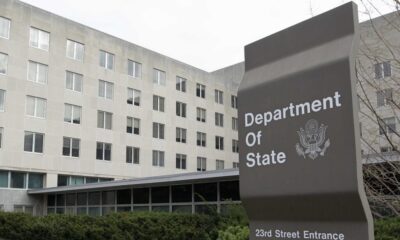
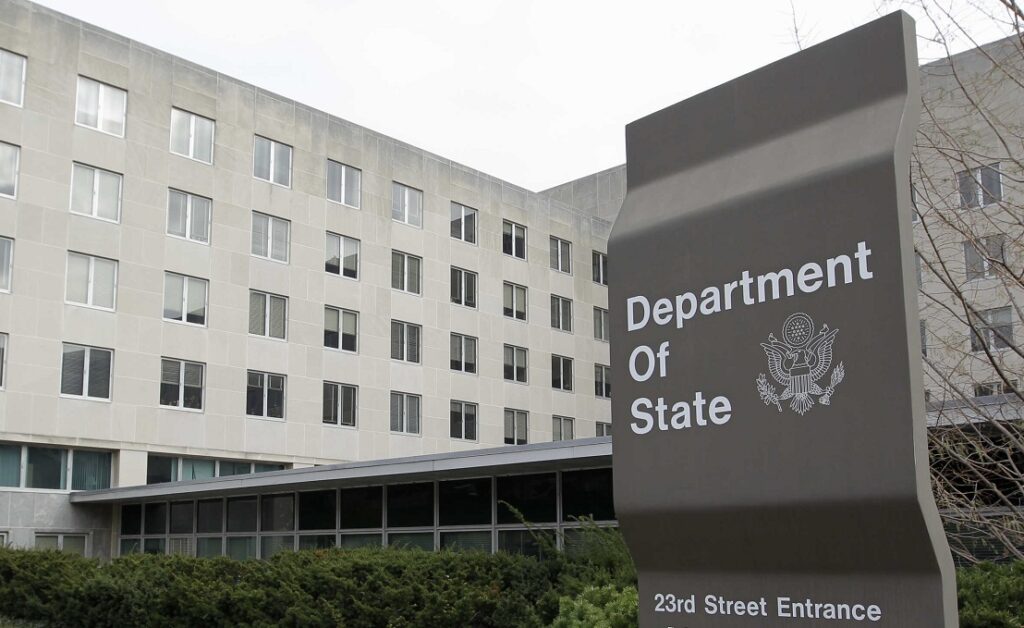
The State Department in Washington | Photo: AP/Luis M. Alvarez
Spread the love
A report by the United States Department of State has identified insecurity, corruption, port inefficiencies and regulatory uncertainty as major obstacles to investment in Nigeria, warning that these challenges continue to weigh on the country’s business environment despite signs of macroeconomic stability.

In its ‘2026 Investment Climate Statements on Nigeria’, the department said the country’s investment landscape has been shaped by the outcomes of “painful but necessary” structural reforms introduced by the President Bola Tinubu administration.

The report said the removal of fuel subsidies and liberalisation of the foreign exchange market initially triggered significant economic volatility, although indicators in early 2026 suggested some stabilisation.

However, it warned that security concerns, administrative bottlenecks and the social consequences of economic reforms remain significant considerations for foreign investors.

“The security environment is a primary variable which gives pause to potential investors,” the report said.

It noted that although attacks on oil infrastructure in the Niger Delta have decreased, oil theft and illegal bunkering persist.

Maduka College Advert

“In the North, the expansion of terrorist and ‘bandit’ groups continues to degrade the climate for agribusiness and mining,” the document added.

The report also raised concerns about the treatment of foreign business executives in regulatory disputes, citing the detention of Tigran Gambaryan, a US citizen and Binance executive, for nearly eight months in 2024.

“Furthermore, the use of coercive exit bans and detentions — highlighted by the high-profile nearly eight-month detention in 2024 of U.S. citizen Binance employee Tigran Gambaryan — serves as a cautionary note for foreign executives regarding the risks of aggressive regulatory friction,” it said.

The report said such cases could influence the perception of Nigeria as a destination for foreign investment.

PORT DELAYS DESCRIBED AS ‘HIDDEN TAX’ ON INVESTMENT

The department identified inefficiencies at Nigerian seaports as another major challenge for businesses, particularly those dependent on imports and exports.

“Port inefficiency remains a significant ‘hidden tax’ on investment,” the report said.

It noted that the Lekki Deep Seaport handled $9.6 billion in trade in 2025 and operated at 50 percent capacity, helping to ease pressure on older facilities.

However, it said traditional ports in Apapa and Tin Can Island continue to experience cargo dwell times exceeding 20 days because of manual examinations.

“To address this, the government launched phase one of the National Single Window (NSW) on March 27, 2026,” the report said.

The platform is designed to integrate trade agencies, including the Nigeria Customs Service, the National Agency for Food and Drug Administration and Control and the Standards Organisation of Nigeria, into a single digital workflow.

According to the report, the initiative targets a reduction in cargo dwell time to fewer than seven days and the elimination of 80 percent of manual paperwork by the end of 2026.

92% OF CAPITAL INFLOWS WAS PORTFOLIO INVESTMENT

The report acknowledged an increase in capital inflows but said the figures did not necessarily reflect a corresponding surge in long-term investment in physical infrastructure.

“Nigeria’s capital importation reached $21 billion in October 2025, a large increase from 2024,” it said.

“However, 92 percent was made up of foreign portfolio investment (‘hot money’) seeking high interest rates, while actual foreign direct investment (FDI) in physical infrastructure remained modest.”

The report said Nigeria continues to permit full foreign ownership in most sectors, subject to restrictions in certain industries and licensing requirements.

It also noted that the Nigerian Investment Promotion Commission’s One-Stop Investment Centre coordinates 27 government agencies to help investors navigate administrative processes.

The report said US foreign direct investment in Nigeria reached $7.9 billion by the end of 2024, representing a 25 percent increase from the previous year.

It added that bilateral trade between Nigeria and the United States reached $14.8 billion in 2025.

The department said Nigeria’s economic reforms had improved some macroeconomic indicators but imposed high costs on households.

“The fiscal correction came at a high social cost,” the report said.

It added that the removal of fuel subsidies had caused petrol prices to “quintuple from 2023 levels”, contributing to an estimated national poverty rate of 63 percent in 2025, citing an April 2026 World Bank report.

The report said Nigeria’s gross domestic product growth rose from 3.3 percent in 2023 to 4.1 percent in 2024 before easing slightly to four percent in 2025.

It also noted that the Central Bank of Nigeria reported foreign exchange reserves of $50.45 billion in February 2026, which it described as a 13-year peak.

On inflation, the report said headline inflation reached 34.8 percent in late 2024 before falling to 15.15 percent by December 2025 following the rebasing of the Consumer Price Index and subsequent methodological changes.

Food inflation stood at 10.84 percent in December 2025 under the rebased index, it added.

‘CORRUPTION REMAINS A SYSTEMIC BARRIER’

The report identified corruption as a persistent obstacle to investment, including in port operations.

“Corruption remains a systemic barrier, including at seaports where customs delays impede trade,” it said.

It also described Nigeria’s trade regime as “somewhat protectionist”, pointing to high tariffs and import restrictions intended to protect domestic industries.

According to the report, some companies are required to invest in local production in exchange for permits and quotas to import the same products.

It said the government had introduced reforms to improve the regulatory environment, but implementation remains uneven.

“Nigeria’s regulatory environment has transitioned toward a ‘structural reset’ designed to improve predictability, though implementation remains uneven,” the report said.

The department also highlighted the transition from the Pioneer Status Incentive scheme to the Economic Development Tax Incentive, which took effect in January 2026, as an area requiring administrative adjustment for foreign businesses. (The Cable)

Continue Reading

Trending

Maduka College Advert