•Govt sets 8,000MW power goal by 2027, taps private sector for grid expansion
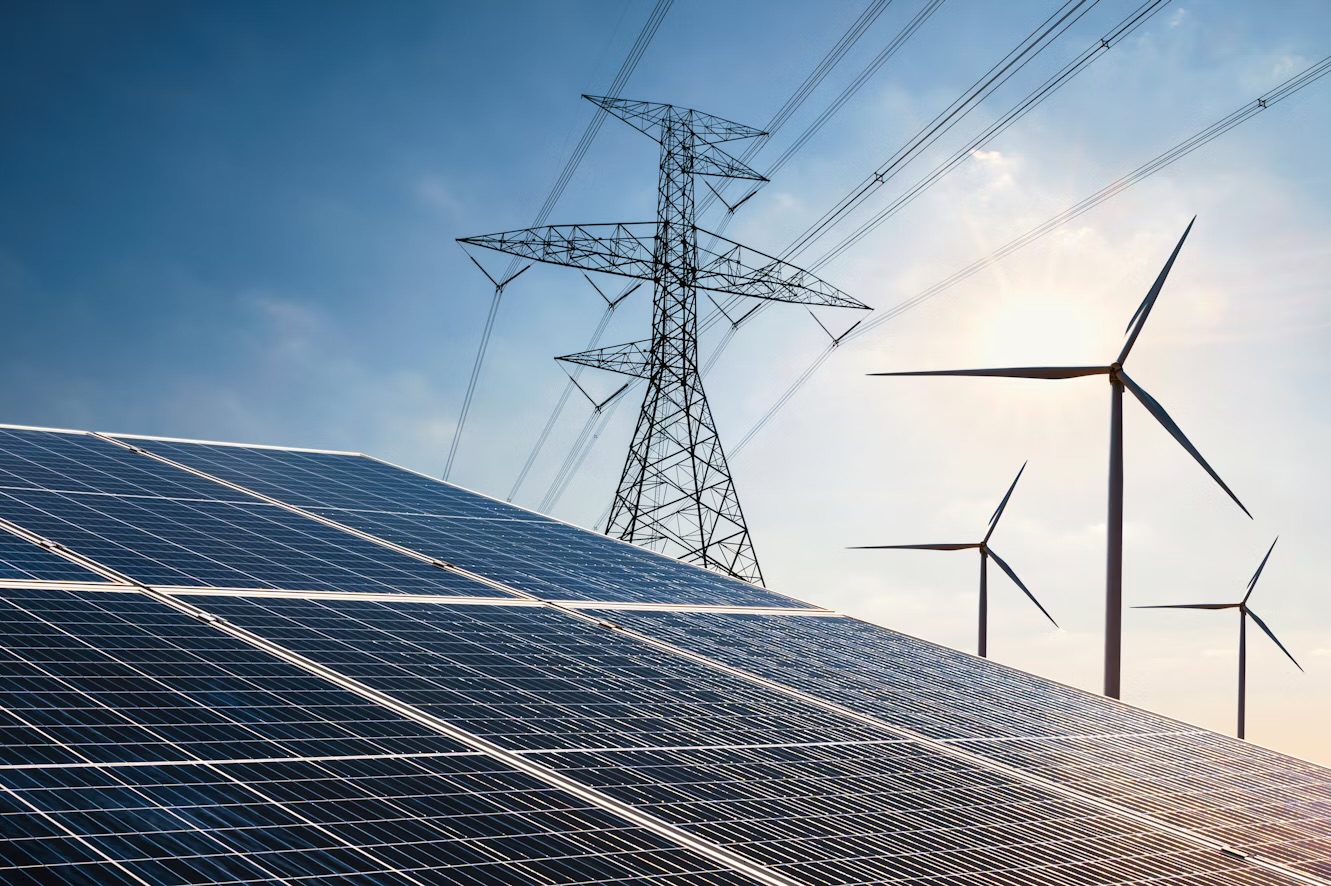
The Federal Government has revealed plans to construct modular solar power plants with a combined capacity of 1,900 megawatts for the 19 northern states, as part of efforts to boost renewable energy adoption and expand the national grid.
It also disclosed its target to generate and distribute about 8,000MW of electricity before the end of President Bola Tinubu’s first term in office in 2027.
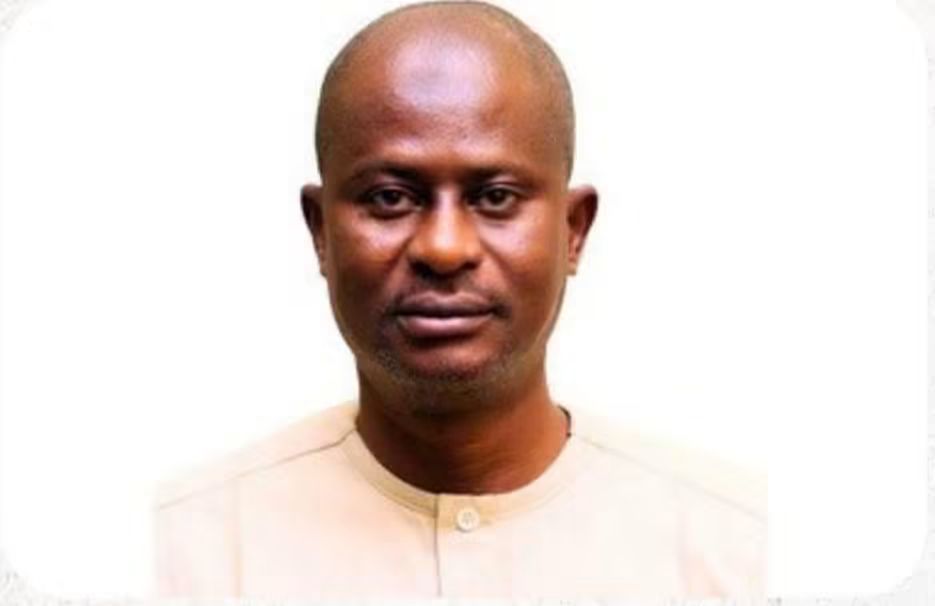
The Minister of Power, Adebayo Adelabu, announced this during the sixth edition of the 2025 Ministerial Press Briefing Series held on Thursday in Abuja.
Adelabu said each solar-powered station will produce approximately 100MW of electricity, enabling states to become more energy-independent and reducing reliance on the national grid.
He also stated that the government is pursuing private investment to help expand the grid and improve generation.
The northern region recently faced challenges with a stable power supply due to a surge in vandalism and theft of critical transmission infrastructure.
Last October, vandals destroyed the important 330kV Shiroro-Kaduna power line that supplies the states of Kano and Kaduna, and another line that supplies Bauchi, Gombe, and other parts of the northeast.
This incident led to a month-long blackout in 17 out of 19 northern states in the country. Following the repairs, the governors of the 19 northern states called for the diversification of energy to ensure improved electricity supply.
The states include Niger and Kwara, Kaduna, Kano, Jigawa, Gombe and Katsina. Others are Sokoto, Zamfara, Bauchi, Yobe, Borno, Adamawa, Taraba, Niger, Plateau, Nasarawa, Kogi and Benue.
But speaking at the event to update the public and highlight achievements recorded so far, the minister emphasized that with Nigeria’s abundant sunshine, there is no reason the country cannot achieve utility-scale solar power generation.
He said, “In addition to these initiatives, private investors like Sun Africa Energy and Skipper Electric are keen to invest in Nigeria’s power sector, emphasising renewable generation and grid expansion. What we have today on our grid are just two types of power, hydropower and gas-powered plants.
“But with the abundance of sunshine that we have in Nigeria, nothing stops us from having utility-scale solar power generation. And we have two companies that have expressed interest in this. We have evaluated, and discussions are at a very, very high stage.
“Number one is Sun Africa, which intends to bring in about 1,000MW of solar energy to complement the efforts of Niger Delta Power Holding Company at their various locations. And this will go straight into the grid. That’s adding solar power to our grid.
“Then the second is Skipper Energy, who has also decided to construct modular solar power plants in the 19 states of the northern part of Nigeria, about 100MW each, so that each state will be independent and the dependence on the national grid will be reduced. This will ensure that we have solar power in our national grid.”
Continuing, Adelabu described the 8,000MW target as realistic, noting that power generation has already improved by about 40 per cent since the current administration took office.
He said average daily generation rose from 4,100MW in Q3 2023 to 5,700MW in the last quarter of 2025, peaking at 5,800MW.
He highlighted that while it took Nigeria nearly 40 years, from 1984 to 2022, to grow from 2,000MW to 4,000MW, the current administration added 1,700MW in just over a year.
“I assumed office in August 2023, and within a short time, we’ve moved from an unstable 4,100MW to a steady 5,800MW,” he said, adding that if past governments had added just 1,000MW each year since 1999, Nigeria would now be producing over 30,000MW.
Adelabu credited the recent progress to President Tinubu’s support and expressed confidence that, if current momentum continues, the country could reach 8,000MW by 2027.
“Now that we have created a trajectory, if we sustain this trajectory, I can assure you that before the end of this administration in 2027, we should be able to generate and distribute nothing less than 8,000MW of power,” he assured.
The minister further observed the paucity of funds, stressing that given the competition for funding among various ministries and agencies, the government is looking to the private sector to secure financing for the construction of new transmission lines, substations, and the installation of additional transformers.
“We have received various offers from private investors. The national grid is owned 100 per cent by the government. But I can tell you, with other ministries competing for funds, we cannot fund the national grid alone. We are looking to expand the national grid. If you look at the grid, I will give you the features of the grid. It is too large, and there are some dedicated lines in which some private investors have expressed interest.
“And with the Nigerian Independent System Operator, it will be much easier for us to invite the private sector investors and let them finance the construction of new lines, construction of new substations, and introduction of new transformers,” the former CBN director noted.
As part of its achievements, the minister said the national grid has been stronger in Tinubu’s administration, as the Transmission Company of Nigeria strengthened the critical network by commissioning 61 new transformers.
“It is a huge grid to cover over 200 million people, and it’s been there for so long, and we know that the maintenance history has been poor, replacement history has been poor, expansion history has been poor,” the minister said.
He added, “It is old, so collectively enabling our grid 8.7 gigawatt operational capacity, as of today, if we grow our generation to 8,700 megawatts, the grid can still carry it, thanks to the activities of the TCN and the FGN power company. Two years ago, once it gets to 5,000MW, the grid collapses, then we have evacuated 5,800MW successfully without the grid blinking, it was still stable, so we can transport 8,700MW.
“To strengthen this critical network, TCN commissioned 61 new transformers, totalling 5,589 MVA in 2024. Followed by nine additional transformers in quarter one of 2025 across key locations in Lagos, Benin, Bauchi, Oshogbo, Kano, and Kaduna, we have the list of the sites. I once mentioned that TCN had over 100 unfinished projects.
“In the 2025 appropriation, we already have N25 billion to support TCN to complete some of these projects, and that will also improve power supply. Beyond TCN, we have the activities of the presidential power initiative, which is being executed by the FGN Power Company. The pilot phase delivered infrastructure across 13 locations, adding 700 megawatts to the national grid.
“We experienced several grid disturbances towards the end of last year, but since January up till today, four months into the new year, we have not seen any major disturbance to the grid. I can assure you, we do everything possible to maintain and sustain the current scenario. If there’s any little disturbance, our turnaround time is being worked upon; within one to two hours, the grid will be up.”
As a result of these efforts, Adelabu stated that around 150 million Nigerians now have access to adequate electricity, while an estimated 80 million still lack a reliable power supply.
“As it is today, Nigeria—a country with about 240 million people—has access for 150 million people already, while about 80 million lack access to adequate electricity in Nigeria.
“The real challenge lies in the stability and affordability of electricity. That’s how we measure reliability. We must ensure that those who have access enjoy consistent and affordable power,” he said
Another remarkable initiative announced during the briefing is the progress made towards regionalising the national grid, adding supergrid eastern and western supergrid approvals currently in progress, which will revolutionise the national grid and reduce failures.
The minister added that Nigeria needs regionalisation of the national grid so that if there is a problem in one part of the country, it will not affect other parts.
On the previously abandoned Kaduna Power Plant, he said that the facility is being revamped, now 87 per cent complete, and is expected to become operational by the end of 2025.
The 215MW facility constructed by the Federal Ministry of Power had been abandoned for six years before the current administration intervened.
Adelabu emphasised that his inspection of the project led to securing President Bola Tinubu’s approval for its completion.
“It is 87 per cent completed, but was neglected for six years since 2018/2019. They have stopped working on it.
“I inspected it and ensured that we got Mr President’s approval for us to complete this project, and it has a capacity of 215MW. So, before the end of the year, the Kaduna Power Plant will be in operation. I can assure you,” Adelabu stated.
The power plant contract, awarded in November 2009 to General Electric and Rockson Engineering for a dual thermal plant running on Low Pour Fuel Oil and natural gas, was originally scheduled for completion by December 31, 2013.
PUNCH