News
Interpol joins EFCC in N1.3tn CBEX probe as investors lament losses

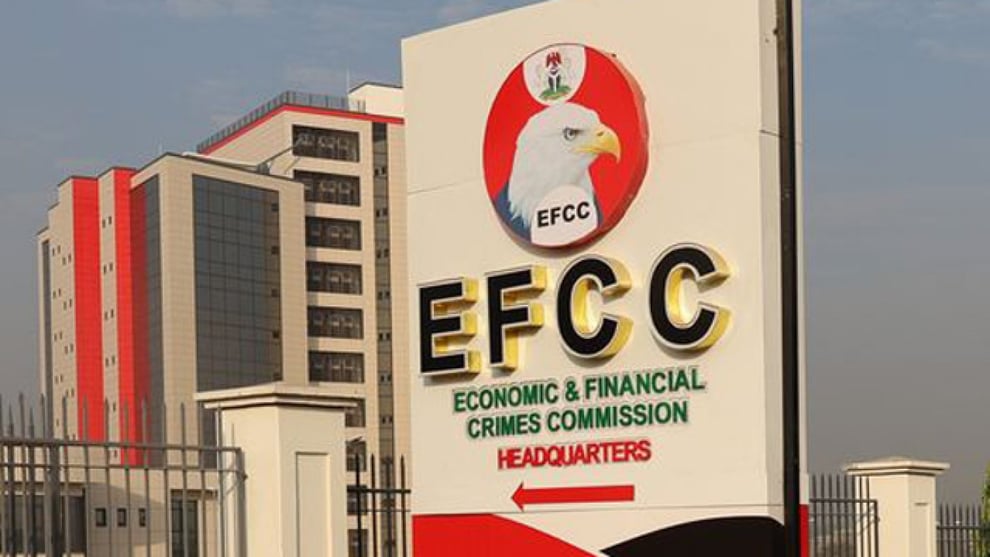
The Economic and Financial Crimes Commission has launched an investigation into the alleged N1.3tn frauds perpetrated through a digital investment platform, CryptoBank Exchange.
CBEX, operated by a group of foreign nationals in collaboration with their Nigerian partners, reportedly collapsed on Monday, leaving thousands of investors stranded and unable to access their funds.

The EFCC spokesman, Dele Oyewale, confirmed on Tuesday that the commission would collaborate with the International Criminal Police Organisation to investigate the incident.

Oyewale stated that the agency had already begun investigating CBEX before its collapse.

He added that efforts were underway to arrest both the local and international operators behind the fraudulent scheme.
He said, “We had our intelligence before the incident. We were already working on it, but now that the scheme has collapsed, the major actors and their collaborators will be brought in.
“We will ensure that we save Nigerians from all these troubles associated with Ponzi schemes. Don’t forget that we already issued an advisory — the 58 companies we alerted the public about. There are many more we are currently investigating.”
He also revealed that the commission was working to uncover other Ponzi schemes operating across the country.
“We are actively working to handle the CBEX situation. We will collaborate with other regulatory agencies to ensure that Nigerians are protected from this kind of scheme. We will do our job—where recovery is possible, we will recover; where prosecution is possible, we will prosecute.
“Overall, we will do our best. Additionally, there are similar frauds across the country that people are unaware of, and we are working to uncover them. We are on the local collaborators while we are partnering INTERPOL to trace the foreign operators,” he added.
The quantum of the CYBEX fraud could not be immediately verified but unconfirmed reports claimed Nigerian and foreign investors on the platform lost about N1.3trn in USDT.
Reports put the volume of stolen investors’ funds at $847m, which may likely increase.
The investment platform claims to offer 100 per cent returns within 30 days via online trading, but it restricted withdrawals on April 9, 2025.
Users were shocked to find that their accounts balance had been wiped out. The platform curiously asked them to deposit at least $100 to access their funds.
Several new users were said to have signed up in the days after the restricted withdrawals, in the belief that it was only a temporary security glitch and would be resolved in a matter of days.
Shortly before locking out its subscribers, the platform sent a message to them stating, “All accounts need to undergo the following verification steps to ensure their authenticity. For accounts with funds below $1,000 before any losses, a deposit of $100 is required. For accounts with funds exceeding $1,000, a deposit of $200 is required. Additionally, please keep your deposit receipts to ensure you can prove the authenticity of the account during future withdrawal reviews.”
CBEX had reportedly changed its domain name several times between January 2024 and February 1, 2025.
The platform, widely promoted on social media and among peer networks, promised high returns on investment, which induced Nigerians to invest substantial amounts.
The development came a few days after the Securities and Exchange Commission warned Nigerians to stay clear of unregistered trading platforms.
The SEC particularly pointed out that, in accordance with the Investment and Securities Act, 2025, recently signed by President Bola Tinubu, it is now an offence for any entity to operate an online forex trading platform or provide related services without prior registration with the commission.
The Director-General of the commission, Dr. Emomotimi Agama, described the new law as “a landmark step in positioning Nigeria’s capital market to be more inclusive, robust, and in tune with global best practices.”
Agama stated, “The ISA 2025 has given the Commission the legal backing to provide clarity, ensure investor protection, and enhance market confidence, especially in new and previously unregulated segments such as digital asset exchanges and online foreign exchange platforms.
“By virtue of this act, it is an offence in Nigeria for any entity that is not registered by the commission to carry out the business of online foreign exchange trading platforms or related services.
“Any business entity planning to set up a business in any of these areas is advised to visit the HOD DRM Department of the commission for further direction on how to register with the commission to avoid sanctions.”
Meanwhile, the crash of the platform has triggered nationwide outrage.
In Ibadan, Oyo State, aggrieved investors stormed the CBEX office in the Oke Ado area, forcing their way into the building and carting away furniture and office equipment in a show of frustration.
Members of the Nigeria Police Force and Western Nigeria Security Network, codenamed Operation Amotekun, were subsequently drafted to maintain peace at the CBEX office.
One of our correspondents, who visited the area on Tuesday, observed that patrol vehicles belonging to both the police and Amotekun were strategically stationed in the area.
An eyewitness said, “The crash of the online platform was announced yesterday (Monday). That’s what prompted many of those who invested in the scheme to storm the office to express their displeasure.
“As you can see, some security agents have been stationed at the office to prevent breakdown of law and order.”
The state Police Public Relations Officer, Adewale Osifeso, could not be reached for comments as of the time of filing this report.
In Abuja, the CBEX office located in the Jahi district was under lock and key when The PUNCH visited on Tuesday.
A private security guard stationed at the gate said access was now strictly limited to prevent possible attacks.
He also said no staff of the company came to work on Tuesday for fear of being attacked by frustrated investors.
“The instruction we received this morning was to lock the gate and carry out a due check to ensure the facility is not invaded. They are not the only ones here, and it may affect other businesses.
“That is why we did not allow you in. People have been coming, but we have refused to allow them to enter. Apart from this, none of their staff came to work today. I think they might have been informed not to show up, “the security guard said.
An investor lamented that she lost $10,000 to the scheme, adding that she was convinced that the business was legitimate when she saw her friend’s huge profit.
The victim, who spoke on condition of anonymity, stated, “I invested over $10,000 in the scheme. It has been a tough time for me. I was introduced by a friend and was convinced after I was shown evidence of the amount she made.”
She urged the security agencies to intervene and help them recover their funds.
“If the security agencies can help us recover our money back, we would be grateful.”
A businessman said he introduced three friends who invested about $8,000, while bemoaning the situation.
He said, “I am lucky to have escaped being defrauded. I invested $100 and I have made more than I invested, so I didn’t lose anything, though my $100 capital is trapped.
“But I feel bad that the people I introduced to the scheme might have lost their $8,000 investment. I don’t know how to broach the issue with them.”
In a post on Instagram, #the_real_aduke posted that she lost the $1,000 she was saving for her wedding.
She said, “I lost $1,000. That was my bridal savings. I don’t even know how to tell my fiancé. I feel numb.”
Chinenye Nduka disclosed her brother’s loss in a Facebook post, saying, “My brother invested his school fees and now he can’t even face my parents. God, this country keeps dealing with us.”
The Minister of the Federal Capital Territory’s spokesman, Lere Olayinka, called on the EFCC and the police to intensify efforts to unravel the fraudulent scheme.
However, he criticised the victims for their greed.
In a post on X (formerly Twitter), Olayinka wrote, “As for victims of CBEX, police and EFCC should be on the lookout. I don’t have sympathy for greed and foolishness.”
In March, the EFCC released a list of 58 companies involved in illegal investment schemes across Nigeria.
The EFCC spokesman, in a statement, revealed that some of the companies have already faced prosecution with five convicted for fraudulent activities.
He said another five companies pleaded guilty and are awaiting further legal procedures, but other companies on the list are yet to be arraigned in court.
Among the indicted companies are Wales Kingdom Capital and Bethseida Group of companies.
Others include AQM Capital Limited, Titan Multibusiness Investment Limited, and Farmforte Limited & Agro Partnership Tech, Richfield Multiconcepts Limited, Forte Asset Management Limited, and Biss Networks Nigeria Limited and others.
The commission said the companies lured investors with promises of quick and unrealistic profits in agriculture, real estate, and forex trading.
“They operated without proper licenses, deceiving the public with false investment opportunities. Many investors suffered heavy financial losses after these companies disappeared with their money. The EFCC has intensified efforts to recover stolen funds from these fraudulent companies,’’ the anti-graft commission stated.
Oyewale warned Nigerians to exercise caution before committing funds to any financial entity not duly registered with regulatory bodies.
“We urge the public to verify any investment opportunity with the CBN and SEC before engaging. The EFCC remains committed to safeguarding the public from predatory operators and ensuring a corruption-free economic environment,” the statement added.
He urged victims of fraudulent schemes to come forward with complaints and assured them that efforts were ongoing to recover funds where possible.
Meanwhile, as news of the collapsed CBEX scheme continues to ripple through Nigeria’s financial space, the staggering losses have left many questioning how such a massive fraud flew under the radar.
But for experts, the answer lies in a painful mix of unchecked greed and willful ignorance.
A banker and financial educator, Kelechi Godfrey, told The PUNCH how he was wooed to join the scheme.
He said, “Someone approached me to join CBEX, saying, ‘you are into finance, you can talk about this, generate leads and get people on it.’ When I asked, I said that they traded crypto using AI and they get plenty of returns. And in 30 days, you can get like 100 per cent of what you invested. I told the person that while AI is good when you start allowing AI to trade for you, some things happen in the market that AI cannot understand. But the person insisted that it was legitimate.
“Here’s one thing about us Nigerians, we are greedy, we want to eat our cake and have it back. You want to invest N100 and get N200 in the next hour and that has eaten deep into the finances of so many people and the funny part is due diligence is not being done. Google is your friend, and ChatGPT is there, how many minutes would it take to search for information on something that they want to invest in?
“We are talking about $800m worth of investment going down the drain. This amount of money put into the economy can impact positively on the economy and it’s lost to a Ponzi scheme that ran for how many days. Always do your due diligence, when you see returns that are not normal, that is too good to be true, just know that there is something fishy going on there. I also heard that they were forcing them to register people. A system that works well will not need you to bring in people. There is a lot we need to do.”
A financial analyst and investment banker, Segun Aremu, echoed similar sentiments saying that basic human greed was forcing Nigerians to go into these Ponzi schemes.
“From experience, I have discovered that our investors are oriented in such a way that they want big returns but not big risks. When it comes to this type of scheme, the number one reason is greed. Everyone who has become a victim of the Ponzi scheme is greedy. You may say that the economy is tough and people are trying to beat inflation but the truth is, there are verifiable investment products in the market for people. We keep saying these things but people turn a deaf ear. People are bullish without fundamentals.
“Secondly, the higher the returns, the higher the risks involved. Anywhere they are telling you about 100 per cent returns, just know that your money can also go missing. Many Nigerians don’t understand their risk appetite vis-à-vis their investment objective. That means when you are saving for school fees, you don’t use such funds for risky investments. Also, a lot of Nigerians don’t see financial advice and we are many in the market.”
Aremu projected that this experience would stop the next set of victims of the Ponzi scheme.
PUNCH














• Critics question legality of arming local security operatives, warn against possible political misuse ahead of polls
The inauguration of more than 200 personnel of a community-based security outfit, known as Neighbourhood Watch, by the Chairman of Ohaozara Local Government Area of Ebonyi State, Engr. Osborne Umahi, has sparked controversy amid concerns over its legality, composition and possible political implications ahead of the 2027 general elections.
The development has generated mixed reactions, with residents and social commentators questioning the authority of a local government council to establish and arm a security outfit, particularly as preparations for the 2027 elections gather momentum.
The personnel were inaugurated on Friday at the council headquarters in Obiozara.
Osborne is the son of the Minister of Works and former Governor of Ebonyi State, David Umahi.
Speaking at the ceremony, the council chairman said the initiative was designed to strengthen grassroots security, protect lives and property, and complement the efforts of conventional security agencies, particularly during the Christmas and New Year festivities.
He charged the newly inaugurated personnel to discharge their duties with discipline, commitment and professionalism, warning them against any conduct capable of undermining public confidence in the outfit.
Umahi stressed the importance of respecting the rule of law and maintaining effective collaboration with established security agencies to ensure the safety of communities across the local government area.
He also assured the personnel of his administration’s commitment to their welfare, provision of a conducive working environment and necessary operational infrastructure.
The chairman subsequently announced Mr Amos Eze of Umunaga Ward as the Leader and Commander of the Neighbourhood Watch.
According to him, the outfit, comprising more than 200 personnel, would work alongside existing security institutions to promote peace and protect residents, businesses and property throughout Ohaozara.
However, the initiative has attracted criticism from social commentators, who have raised questions about the legal basis for its establishment, the training of its personnel, the nature of weapons reportedly issued to them and the possibility of political interference.
A social critic, Mr Nwoba Chika Nwoba, criticised the development in a social media post, questioning the constitutional authority of a local government council to establish and arm such a security outfit.
He wrote: “This is not a good beginning. Does a local government have the constitutional authority to establish a security outfit and arm them, moreover as election is two months away?”
Nwoba further expressed fears that the outfit could be deployed to intimidate political opponents and undermine the credibility of the 2027 general elections.
He also alleged that the personnel could be used for partisan political activities, although no evidence was presented to substantiate the allegation.
Another social media commentator, Mr Idaga, questioned the type of firearms reportedly issued to the operatives, arguing that personnel without adequate and coordinated security training should not be allowed to handle sophisticated weapons.
“My interest is the type of guns those guys are armed with. People without coordinated security training have no business being armed with the type shown in this optic,” he wrote.
Similarly, another commentator, Mr Kelvin, expressed concern over the implications of arming civilians, drawing a connection between the development and the ongoing national debate over the establishment of state police.
He argued that if civilians could be equipped with sophisticated firearms without adequate training and oversight, the introduction of state police could present additional security challenges.
The controversy has renewed calls for clarification on the legal framework governing the establishment, recruitment, training, supervision and arming of community-based security outfits, as well as their operational relationship with conventional security agencies.
With the 2027 general elections approaching, concerns are also mounting over the need to ensure that local security initiatives are not turned into instruments of political intimidation or partisan interests.
Stakeholders are therefore expected to demand greater transparency and accountability from the authorities, particularly regarding the weapons, operational guidelines and oversight mechanisms governing the newly inaugurated outfit.
News
South-East Policy and Impact Conference to chart pathway from economic reforms to regional prosperity
• Policymakers, investors, business leaders and development stakeholders to converge in Enugu on November 26
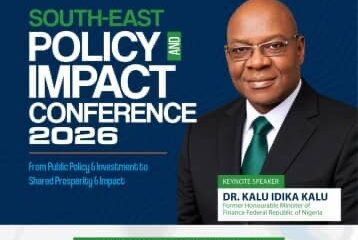
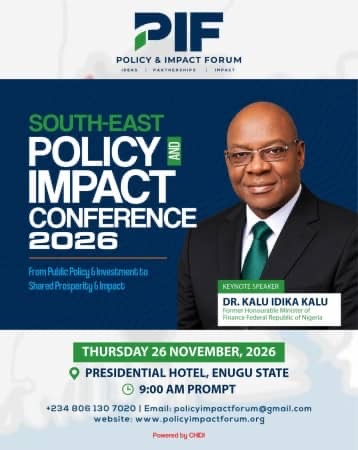
The Policy and Impact Forum (PIF) will convene the South-East Policy and Impact Conference 2026 on Thursday, November 26, at the Presidential Hotel, Enugu, bringing together policymakers, business leaders, investors, professionals, academics and development stakeholders to examine how economic reforms, public investments and emerging opportunities can translate into shared prosperity across the South-East.
The conference, themed “From Policy and Investment to Shared Prosperity and Impact,” will provide a platform for constructive dialogue on the policies, investments and partnerships required to accelerate economic transformation, strengthen enterprises, create jobs and improve livelihoods across the region.
The gathering comes at a time when Nigeria is implementing significant economic reforms aimed at addressing longstanding structural challenges, improving economic stability and creating a more sustainable environment for investment and growth. Participants will examine the implications of these reforms for the South-East and identify practical ways for the region to position itself to benefit from emerging opportunities.
“The real test of economic reforms and public investments is their impact on people’s lives. We must ask how policies translate into opportunities for businesses, jobs for our young people, stronger institutions and prosperity for our communities. This conference provides an opportunity to have those conversations and identify practical pathways to action,” said Agwu Amogu, Executive Director of the Policy and Impact Forum.
The programme will feature a keynote address by Dr. Kalu Idika Kalu on economic transformation and the future of South-East Nigeria, alongside a presentation by Professor Okey Ikechukwu on the Federal Investments and Development Scorecard, 2023–2026. The Governor of Enugu State is also expected to deliver a special address.
A high-level panel discussion will explore how public policies, government investments and private capital can drive inclusive economic growth and measurable development outcomes.
Discussions will cover infrastructure and connectivity, agriculture and value chains, manufacturing, MSMEs, trade and export, investment mobilisation, public-private partnerships, education, skills development, research and innovation.
The conference will also feature an interactive stakeholder session designed to bring government, businesses, investors, professional bodies, community leaders, civil society, young people and other stakeholders into a practical conversation about regional priorities and opportunities. The organisers expect the engagement to generate actionable recommendations, partnership opportunities and priority actions for sustained development across the five South-East states.
“Our objective is to move beyond policy conversations and investment announcements to focus on implementation, collaboration and results. We want participants to leave with a clearer understanding of the opportunities before the region and with practical ideas, relationships and commitments that can contribute to inclusive growth and shared prosperity,” Amogu added.
The Policy and Impact Forum is a platform for constructive policy dialogue, public engagement, accountability and development-oriented conversations. It brings together government, business, academia, civil society and other stakeholders to examine policies, investments and programmes and identify practical pathways towards sustainable development and measurable impact.
ADVOCATE SUNDAY DISCOURSE
By Tony Edike
As counterfeiters devise new ways to deceive consumers, the agency records hundreds of enforcement cases, thousands of product seizures and dozens of convictions, raising fresh concerns about the safety of medicines, food, water and everyday consumer products in Nigeria.
The growing circulation of fake, adulterated and substandard products in Nigeria has assumed an alarming dimension, prompting the National Agency for Food and Drug Administration and Control (NAFDAC) to demand tougher punishment, including life imprisonment or the death penalty, for manufacturers and distributors of counterfeit regulated products.
NAFDAC DG, Professor Mojisola Adeyeye
The agency’s Director-General, Professor Mojisola Adeyeye, recently described individuals involved in the production and distribution of fake products as “merchants of death”, arguing that their activities amount to a deliberate threat to the lives of millions of Nigerians.
Her demand comes amid renewed efforts by the agency to dismantle networks involved in the manufacture, importation and distribution of counterfeit medicines, adulterated food, contaminated water, fake cosmetics and other potentially dangerous consumer products.
The concern is that while NAFDAC continues to intensify its enforcement operations, those involved in the illicit business are equally devising new methods to evade regulatory authorities, exploit weaknesses in the supply chain and maximise profits at the expense of public health.
A disturbing picture of counterfeit products
The scale of the problem is reflected in NAFDAC’s enforcement statistics.
Between January and August 2026, the agency recorded 474 new cases, 821 product seizure entries and 213 raids nationwide.
Its Directorate of Investigation and Enforcement also reported 52 arrests, 179 establishments closed or sealed, 218 administrative sanctions and 295 concluded cases within the eight-month period.
The operations covered medicines, cosmetics, packaged water, drinks, food, medical devices and chemicals.
Cosmetics accounted for the highest number of seizure entries, with 401, followed by drinks with 215 and drugs with 112.
The figures demonstrate that the threat extends beyond counterfeit medicines to virtually every category of regulated product consumed by Nigerians.
In another surveillance exercise between May and July 2026, NAFDAC’s Post-Marketing Surveillance Directorate reportedly visited 5,738 facilities across the 36 states and the Federal Capital Territory, mopping up 7,210 brands of products considered non-compliant.
Food and water accounted for 3,633 products, while drugs and herbal products accounted for 2,459.
These figures provide an indication of the scale of regulatory concerns confronting the agency.
From fake medicines to counterfeit drinking water
One particularly disturbing dimension of the menace is the counterfeiting of products belonging to established and trusted manufacturers.
NAFDAC recently uncovered the activities of three companies allegedly involved in counterfeiting CWay dispenser water bottles.
According to Professor Adeyeye, the operators collected empty 19-litre bottles bearing the identity and branding of the legitimate water company, refilled them with water from unapproved production sources and reintroduced them into the market.
The counterfeit products were reportedly distributed to major hotels and supermarkets.
The development raises serious concerns about the safety of drinking water consumed in homes, offices, hotels, restaurants and other public establishments.
Unlike properly manufactured and regulated bottled water, water obtained from unapproved sources may not have undergone the necessary treatment, filtration and quality-control procedures.
Contaminated water can expose consumers to dangerous microorganisms and waterborne diseases, including cholera, typhoid and diarrhoeal infections.
The CWay incident also demonstrates how counterfeiters exploit the reputation of established brands to deceive unsuspecting consumers.
For many Nigerians, the appearance of a familiar brand on a product is enough to create confidence, without necessarily verifying where the product originated or how it was manufactured.
Fake toothpaste, medicines and cosmetics
The counterfeiting of everyday household products has also become a source of concern.
NAFDAC disclosed that it had investigated the production of counterfeit Oral-B and Colgate toothpastes and arrested individuals allegedly involved in the operations.
The agency also uncovered the counterfeiting of products bearing the Nivea and Listerine brand names during an enforcement operation at Igbudu Market in Warri, Delta State.
The operation, conducted by officers from NAFDAC’s Asaba Zonal Office with the support of the Department of State Services, the Nigerian Army and the market union, led to the seizure of suspected counterfeit cosmetics and other regulated products.
In a related warning, NAFDAC cautioned Nigerians against purchasing KY Jelly lubricant currently circulating in the market.
According to the agency, the product’s marketing authorisation holders confirmed that the last authorised supply was made more than five years ago. Consequently, any such product currently being sold should be treated as suspect.
Although the agency did not declare every product bearing the affected brand names counterfeit, the developments underscore the importance of verifying the authenticity and source of consumer products before purchase.
The danger associated with counterfeit cosmetics and personal-care products is particularly worrying because such products are applied directly to the skin or used in sensitive parts of the body.
Where their ingredients, manufacturing conditions and safety standards are unknown, consumers may be exposed to harmful substances, contamination, skin reactions and other health complications.
The deadly consequences of fake medicines
Perhaps the most dangerous aspect of the counterfeit products business is the circulation of fake and substandard medicines.
Medicines are manufactured to treat specific illnesses, control medical conditions and save lives. However, when counterfeiters introduce products containing the wrong ingredients, inadequate quantities of active substances or harmful contaminants, the consequences can be devastating.
A patient who purchases a fake antimalarial drug, for instance, may continue to suffer from malaria because the medicine does not contain the required active ingredients.
Similarly, counterfeit antibiotics may fail to treat bacterial infections, allowing illnesses to worsen and potentially contributing to antimicrobial resistance.
The consequences can be particularly severe for children, pregnant women, elderly people and patients battling serious medical conditions.
There is also the danger of patients losing confidence in genuine medicines after experiencing treatment failures caused by counterfeit alternatives.
In some cases, victims may spend additional money treating complications arising from the consumption of fake medicines, thereby worsening the financial burden on families already struggling with the rising cost of healthcare.
The business is therefore not simply an economic crime. It is a serious public health threat capable of causing avoidable illnesses, permanent injuries and deaths.
Pharmaceutical Insecurity: Pharmacists Sound the Alarm
The concerns surrounding counterfeit medicines have also attracted strong warnings from the Pharmaceutical Society of Nigeria (PSN), which believes that the country’s drug crisis has reached a level that requires urgent government intervention.
The society has called on the Federal Government to declare a state of pharmaceutical insecurity in Nigeria, warning that drug diversion, illicit trafficking, uncontrolled distribution and the circulation of counterfeit medicines pose serious threats to public health and national security.
Speaking at the opening ceremony of the PSN’s 99th Annual National Conference, tagged PSN-IJELE 2026, in Awka, Anambra State, the society’s President, Ayuba Ibrahim Tanko, expressed concern that the government appeared to have surrendered significant control of the nation’s pharmaceutical supply chain to private interests, resulting in uncontrolled distribution and dispensing of medicines.
Tanko maintained that medicines should not be treated as ordinary commercial commodities because their misuse, diversion and circulation outside regulated channels carry serious public health, regulatory and security consequences.
He specifically warned that the diversion and abuse of controlled medicines were closely connected to the country’s insecurity challenges, insisting that pharmaceutical distribution required stronger government supervision and regulatory control.
According to him, the activities of unregulated open drug markets and the uncontrolled movement of medicines across the country undermine public health protection and national security.
The PSN president also raised concerns about the possible consequences of allowing private operators to dominate critical aspects of the pharmaceutical supply chain, arguing that such arrangements could weaken collaboration among government agencies responsible for regulating medicines.
Nigeria’s pharmaceutical regulatory framework relies significantly on the activities of NAFDAC, the Pharmacists Council of Nigeria (PCN) and the National Drug Law Enforcement Agency (NDLEA), which have distinct responsibilities covering medicine quality, pharmaceutical premises and practitioners, and controlled substances.
Tanko warned that weakening coordination among these agencies could create further opportunities for illegal operators to exploit gaps in the system.
To address the situation, the PSN called for the establishment of a Federal Drug Management Agency, backed by legislation, to provide a transparent and accountable framework for the procurement, distribution and management of medicines across federal health institutions.
The society also advocated replacing unregulated open drug markets with licensed Coordinated Wholesale Centres, integrating community pharmacists into the national security architecture and establishing a Presidential Committee on the Pharmaceutical Sector.
The PSN’s intervention underscores an important dimension of Nigeria’s fake drug crisis: the problem is not limited to the manufacture and importation of counterfeit products but also involves the channels through which medicines are distributed, stored, diverted and eventually sold to unsuspecting consumers.
Until these weaknesses are addressed, enforcement efforts against counterfeit drug manufacturers and dealers may continue to face significant challenges.
NAFDAC moves beyond seizures to convictions
In defending its enforcement record, Adeyeye disclosed that NAFDAC had secured 64 convictions against individuals involved in counterfeiting across the country.
The offenders reportedly received prison sentences ranging from one to seven years without an option of fine.
The agency also recalled its major enforcement operations between February and March 2025 in Idumota, Lagos; Aba, Abia State; and Onitsha Bridgehead, Anambra State.
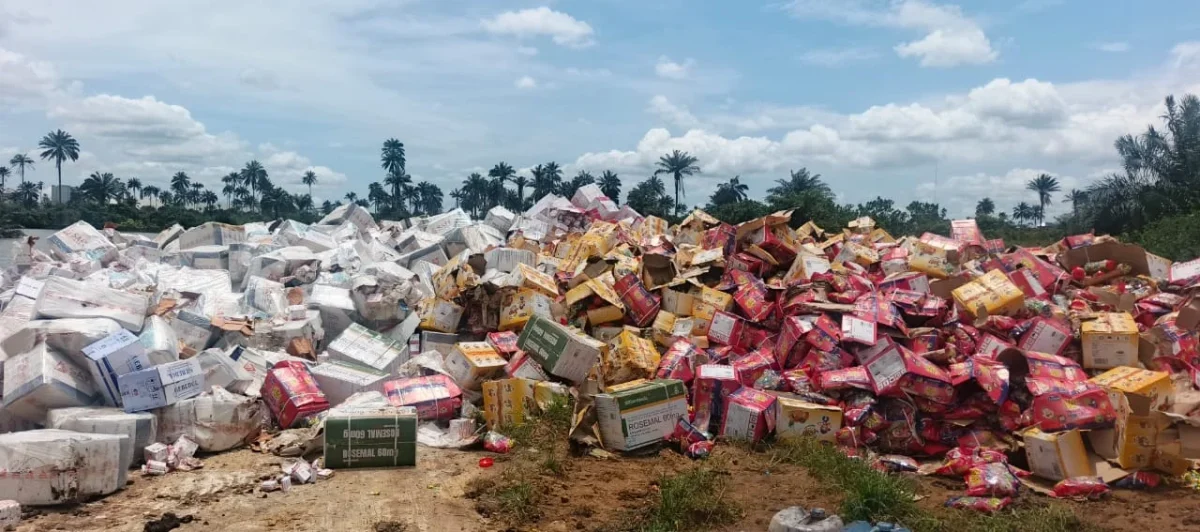
Those operations resulted in the seizure and destruction of more than 137 truckloads of counterfeit and substandard products valued at over N1.5 trillion.
In February 2026, NAFDAC also destroyed fake, expired, counterfeit and banned medicines worth more than N15 billion in Ibadan, Oyo State.
The products included Analgin, co-codamol, codeine syrups, tramadol, oxytocin and expired vaccines.
Another destruction exercise in Kuje, Abuja, in March 2026 involved counterfeit medicines and other regulated products valued at N1.8 billion.
At the Lagos Trade Fair Market in February 2026, the agency seized more than 10 million doses of counterfeit malaria medicines and cosmetics valued at approximately N3 billion.
Four suspects were reportedly arrested following the discovery of the products in a three-storey building allegedly used as a warehouse.
These operations indicate that the agency is increasingly focusing on the criminal networks behind the trade rather than limiting its activities to the removal of suspicious products from markets.
Why NAFDAC wants the death penalty
Against this background, Adeyeye has called for the introduction of tougher penalties for individuals who deliberately manufacture and distribute fake regulated products.
She argued that existing punishments are insufficient to deter individuals who continue to risk human lives for financial gain.
“The penalties should include death penalty or life imprisonment to people who produce and sell fake regulated products,” she said.
The NAFDAC boss disclosed that the agency’s enabling laws and other relevant legislation were undergoing review, expressing the expectation that the revised legal framework would provide stronger sanctions.
Her position is based on the argument that individuals who knowingly manufacture and distribute products capable of killing unsuspecting consumers should face punishment proportionate to the harm their activities can cause.
However, the proposed death penalty has also opened up a wider debate about criminal justice, proportionality of punishment and the effectiveness of severe sanctions in addressing economic crimes.
Under the existing Counterfeit and Fake Drugs and Unwholesome Processed Foods (Miscellaneous Provisions) Act, Cap C34, Laws of the Federation of Nigeria 2004, a person convicted of producing, importing, manufacturing, selling or distributing counterfeit, adulterated, banned, substandard or expired drugs, or unwholesome processed food, faces a fine of up to N500,000 or imprisonment for between five and 15 years, or both.
The law also provides punishment for the unauthorised sale of drugs in unlicensed premises.
Importantly, the death penalty is not the punishment prescribed under this existing law for these offences. NAFDAC’s proposal would therefore require legislative action before it could become an applicable punishment.
The challenge of enforcement and prosecution
While tougher legislation may serve as a deterrent, the fight against counterfeit products requires more than the introduction of harsher punishments.
One major challenge is the ability of regulatory authorities to identify and dismantle the entire supply chain, including manufacturers, importers, financiers, warehouse operators, distributors and retailers.
In many instances, the individuals selling counterfeit products in markets may not be the same people responsible for manufacturing them.
This makes intelligence gathering, investigation, laboratory analysis and successful prosecution particularly important.
NAFDAC must also strengthen its surveillance of production facilities, warehouses, distribution networks, border entry points and online marketplaces where counterfeit products may be advertised and sold.
The involvement of other security and regulatory institutions, including the Nigeria Police Force, Nigeria Customs Service, Department of State Services and relevant state authorities, is equally important.
Another concern is the possibility of regulatory compromise, inadequate monitoring and the continued operation of illegal production facilities despite repeated enforcement exercises.
For the proposed tougher penalties to achieve their intended purpose, investigations must be thorough, prosecutions must be successful and offenders must be held accountable regardless of their financial status or political connections.
Consumers must also become more vigilant
NAFDAC has repeatedly stressed that the fight against counterfeit products cannot be left entirely to government agencies.
Consumers have a responsibility to pay attention to the products they purchase and report suspicious items to the appropriate authorities.
Nigerians are advised to purchase medicines from licensed pharmacies and other authorised outlets rather than relying on roadside vendors or unverified online sellers.
They should also examine product packaging, registration numbers, manufacturing and expiry dates, batch numbers and seals before purchasing regulated products.
However, consumers must understand that the presence of a NAFDAC registration number does not, on its own, guarantee authenticity, as counterfeiters can reproduce the registration details of genuine products.
Product details should therefore be checked against NAFDAC’s official registration databases, including its Greenbook and NAPAMS platforms.
Suspiciously cheap products, damaged packaging, spelling errors, unusual changes in colour or texture and sellers unable to explain the source of their goods should also attract caution.
NAFDAC has urged Nigerians to report suspected fake and unsafe products through its official complaint channels.
The agency can be reached on 0800-1-623322 or through its official reporting channels.
Beyond death penalty: Nigeria needs a sustained war against counterfeiters
The growing circulation of fake products raises fundamental questions about the effectiveness of Nigeria’s consumer protection and public health regulatory systems.
How can a country guarantee the safety of its citizens when counterfeit medicines, questionable drinking water, fake cosmetics and adulterated food products continue to find their way into markets?
How can legitimate manufacturers compete when criminal operators can exploit established brands, avoid quality-control expenses and make enormous profits from products that may endanger human lives?
And how many Nigerians have unknowingly consumed counterfeit products without realising that what they purchased could expose them to serious health risks?
These are questions that require urgent answers.
NAFDAC’s demand for life imprisonment or the death penalty reflects the seriousness of the threat confronting the country. However, the ultimate measure of success will not be the severity of the punishment announced but the agency’s ability to prevent dangerous products from reaching consumers, dismantle the criminal networks behind their production and distribution, and secure convictions against those responsible.
Nigeria must also strengthen public awareness, support genuine manufacturers, improve product traceability and ensure that regulatory agencies have the resources and institutional independence required to carry out their responsibilities.
Ultimately, the fight against fake products is a fight to protect human lives. No Nigerian should have to worry that the medicine purchased from a pharmacy, the water served in a hotel, the toothpaste used by a child or the food consumed by a family could become a source of illness or death.
The business of counterfeiting must no longer be treated as an ordinary commercial offence. It is a threat to public health, consumer confidence and national development that demands sustained action from government, industry stakeholders and citizens.
• The Advocate
-
 News3 days ago
BREAKING: Enugu Billionaire, Ferotex Boss Festus Oshaba-Onuh Feared Dead in Road Accident
-
News2 days ago
Gunmen Machete Football Legend Segun Odegbami in Abeokuta Home Attack
-
News3 days ago
Festus Onu’s Death: Enugu APC Campaign Council Suspends Activities
-
News3 days ago
Anambra Billboard Saga: Onyima Challenges Soludo Govt to Cite Law Behind Umeh’s Billboard Removal
-
News2 days ago
2027: Obi Urges Nigerians to ‘Sacrifice One Day for Nigeria to Be Good Again’
-
News3 days ago
EFCC Arraigns Socialite Over Alleged ₦603.4m NNPC Appointment Scam
-
Editorial2 days ago
FAKE DRUGS: Nigeria’s Deadly Trade in Human Lives Must End
-
News3 days ago
Rev Chidi Okorafor Emerges New Assemblies of God General Superintendent