News
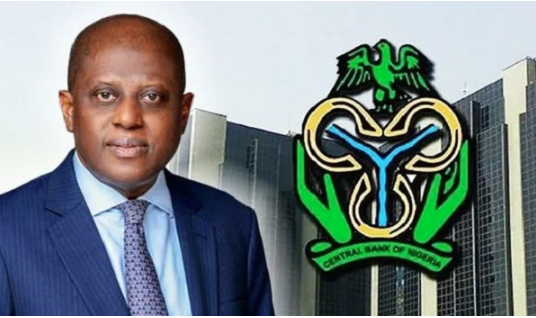
Alleged Marginalisation of South East: Prominent Nigerians in US, UK, others move against CBN Governor Cardoso

…seek National Assembly’s intervention
Some prominent Nigerians of South East extraction in the Diaspora have initiated a petition against Central Bank of Nigeria (CBN) Governor, Mr. Olayemi Cardoso, over the alleged marginalisation of South Easterners in the apex bank.
The petition already signed by leading scholars, religious leaders and business titans of South East origin based in Germany, USA, United Kingdom, Finland, Australia, Ghana, Netherlands, South Africa, Canada, Norway, and Portugal, called on the NigerianNational Assembly to immediately investigate and review the appointments made by the CBN Governor “to ensure fairness and adherence to federal character principles.”

Entitled “Protest Against Marginalization of the South East in the CBN,” the petition was still gathering more signatures as at the time of filing this report on Saturday, April 5, 2025.
The petitioners are urging the National Assembly to intervene in the matter just as they threatened electoral repercussions for any office holder perpetuating the marginalisation of South Easterners.
The petition reads in full:

Protest Against Marginalization of the South East in the CBN
“We, the umbrella body of South East Socio-cultural Associations in the diaspora, express deep concern and disappointment over the recent directorship appointments at the Central Bank of Nigeria (CBN).
A particular publication by Rufai Oseni, a respected columnist and TV personality, has brought to light serious allegations of lopsided and exclusionary appointments within the CBN.
The article, which can be found here https://veonewsng.com/index.php/2025/03/10/allegations-against-the-cbn/ provides a detailed and well-researched analysis of these appointments.
“Of utmost concern is the marginalization of South Easterners in the CBN under the leadership of Governor Olayemi Cardoso. As highlighted in the publication, the South East currently has only one director in the entire CBN—an outright injustice.
Systematic Exclusion of South Easterners
“Since assuming office as CBN Governor, Olayemi Cardoso has systematically marginalized South East staff. In May 2024, he dismissed all South East directors, including:
Chibuzor Efobi (Director, Financial Policy and Regulation)
Dr. Scholastica Ozoemena Nnaji (Director, Trade and Exchange)
Mr. Chibuike Nwaegerue (Director, Other Financial Institutions Supervision)
Mrs. Nkiru Asiegbu (Director, Special Duties)
“In addition to these dismissals, over 20 Deputy Directors—including some of the most competent specialists recruited from abroad—were also sacked. Among them were:
Dr. Valentine Ururuka (Macro-prudential specialist from the University of Lancaster)
Dr. Odim Orji (Monetary Policy expert)
Mrs. Angela Ofili (HR specialist from London)
Mr. Eze Christian (HR specialist)
“Furthermore, 15 Assistant Directors of South East origin, as well as numerous Senior and Junior staff, were dismissed across various departments. The South East was disproportionately affected by Cardoso’s ill-advised purge, which lacked due process and has resulted in multiple legal battles currently embarrassing the CBN in court.
“These dismissals were neither reviewed nor approved by the CBN Board. They were not subjected to the Central Disciplinary Committee, and the affected staff were never informed of any offenses committed. At the time of these actions, there was no board in place, and Cardoso’s legal team has since struggled in court due to the lack of due process and supporting documents. This reckless and impulsive decision-making has created significant financial liability for the CBN and, by extension, Nigerian taxpayers.
Unfair Directorship Appointments
“Rufai Oseni’s publication also exposes the deliberate exclusion of South Easterners from directorship positions after their mass sack. Based on our analysis, five highly qualified South East candidates performed excellently in their respective interviews but were unjustly overlooked:
“Rita Ijeoma Sike – Competed for Director, Banking Supervision Department, outperformed her South West opponent (Adetona Sikiru Adedeji), but was given a different role. Meanwhile, Adedeji, despite losing, was appointed Director of Currency.
“Chikelu Edison Oballum – Won the interview for Development Finance Institutions Supervision Department against Monsurat Vincent (South West), yet was denied a position. Instead, Monsurat was appointed Director, Strategy, a role she neither applied for nor interviewed for.
“Paul Ihuoma Oluikpe – Competed in two categories (Strategy Management and Innovation Department and Corporate Communications Department) and ranked in the top two for both. Yet, he was denied both positions, with Strategy being handed to Monsurat Vincent, who never applied for it, and Corporate Communications arbitrarily merged with Investor Relations, changing the rules midway after candidates had participated rigorously in the process.
“Promise Joe-Ibekwe – A highly competitive South East female candidate for Director, Payments System Management Department, was replaced by Rakiya Opemi Yusuf, who never applied for the role.
“Ifeoma Geraldine Okwor – Placed among the top candidates for Banking Services Department but was not appointed, while less qualified South West candidates secured directorship positions.
A Pattern of Exclusion and Tribal Favoritism
“The findings in Oseni’s report reveal an alarming trend: South East candidates who performed excellently were sidelined, while South West candidates were rewarded—even when they underperformed or never even applied for certain positions.
“Governor Cardoso has set a dangerous precedent by appointing 13 Yoruba candidates to directorship positions in one sweep while leaving the South East with just one appointment out of 29 departments. This unprecedented level of regional favoritism in a national institution cannot be justified under the guise of “competence.”
“Unlike previous administrations that ensured regional balance, Cardoso has blatantly ignored federal character principles. Even former CBN Governor Godwin Emefiele—despite his flaws—ensured that every region had at least four directors. Cardoso’s appointments, by contrast, expose him as a tribal champion who prioritizes ethnic loyalty over national unity.
Demand for Accountability and Justice
“We call on the National Assembly to:
(a) Investigate and review these appointments to ensure fairness and adherence to federal character principles.
(b) Reform the CBN governance structure to separate the roles of Governor and Board Chairman to prevent future abuses of power.
(c) Hold Governor Cardoso accountable for the unjust dismissal of South East staff and the financial liabilities incurred due to illegal terminations.
“The South East has contributed immensely to Nigeria’s development, paying taxes and supplying resources essential to national growth. We will not tolerate systemic exclusion from national institutions.
“We are mobilizing our representatives and senators to challenge these injustices.
“Furthermore, the South East community in the diaspora will actively work to ensure that policies and institutions that discriminate against us will face political consequences in 2027.
“Enough is enough!”










…Denies government involvement in NDC airport, secretariat incidents
_Says Mbah’s performance more than enough to win free, fair election
The Enugu State Government said it has uncovered alleged plans by some opposition elements to import armed thugs and bandits into the state to create panic and a false sense of insecurity ahead of the 2027 general elections.
The Secretary to the State Government (SSG), Prof. Chidiebere Onyia, made these known on Sunday while addressing a press conference at the Government House, Enugu, on the incidents involving the Nigeria Democratic Congress (NDC) at the Akanu Ibiam International Airport and the party’s state secretariat in Enugu on Saturday.
Onyia denied any involvement of the government or the Governor’s Chief Security Officer, Ifeanyi Osondu, in both incidents, describing the airport confrontation as a matter between the NDC and federal authorities, while noting that the shooting incident at the party’s secretariat was under police investigation.
According to the SSG, the government’s preliminary findings indicated that the airport incident followed the NDC’s attempt to hold what it described as a “Grand Statewide Campaign Flag-off 2026” at the facility without securing the necessary approval from the Federal Airports Authority of Nigeria (FAAN).
He said the party had published notices inviting its members and supporters to the event, including on the Facebook page of its governorship candidate in the state.
Onyia explained that the police had advised the party to obtain FAAN’s approval before security personnel could be deployed to the airport for the event.
“Further findings, however, revealed that the NDC did not secure the approval of FAAN to host a grand statewide rally at its facility. Security agencies, therefore, advised the organisers of the rally to rethink it,” he said.
The SSG alleged that the party proceeded to mobilise its members to the airport and attempted to gain entry into the facility, resulting in a confrontation with airport authorities.
He said security agencies intervened to disperse the “riotous” party members and restore order around the airport, which he described as a strategic national asset.
Onyia added that the state government’s account was consistent with the statement issued by the Enugu State Police Command on Sunday.
NDC Secretariat Shooting
On the shooting incident at the NDC state secretariat in the GRA area of Enugu, the SSG said security reports had established that a violent clash occurred at the party’s office and that the police were investigating the matter.
The SSG disputed reports alleging fatalities, stating that the government’s findings indicated that no death had occurred in the incident.
He disclosed that a 43-year-old man, identified as Ifeanyi Nworie, sustained a gunshot wound and was taken to the Enugu State University Teaching Hospital, Park Lane, where he was stabilised before being transferred to the National Orthopaedic Hospital, Enugu, for further examination.
“We can, therefore, authoritatively report that there were no deaths as falsely claimed by some reports and NDC leaders,” he said.
Onyia also faulted allegations that the Governor’s Chief Security Officer was present at the party secretariat and supervised the shooting, maintaining that the official was with Governor Peter Mbah at the Teachers Grassroots Movement mega rally at Okpara Square, Enugu, at the time of the incident.
The SSG further criticised the reported holding of a minute’s silence for an individual he said was still alive, describing it as an attempt to mislead the public for political advantage.
Reaffirming the state government’s position, Onyia said Governor Mbah had sworn to protect the lives and property of all residents, irrespective of their religious beliefs or political affiliations, and condemned.
He said the administration’s ambition to grow Enugu into a $30 billion economy and make it a preferred destination for investment, business, tourism and living depended significantly on sustained peace and security.
According to him, this informed the government’s substantial investments in security infrastructure and operations over the past three years.
“Consequently, the Enugu State Government strongly condemns in its entirety any form of violence, including politically induced violence in the state. We welcome healthy debate and freedom of association and peaceful assembly,” he said.
He, however, urged political parties and their candidates to exercise restraint and embrace issue-based campaigns ahead of the 2027 elections.
The SSG said democratic rights should be exercised responsibly, arguing that political parties ought to serve as models of decorum and integrity.
He questioned the decision to announce a statewide campaign flag-off at the airport and without the approval of the relevant authorities.
“Without holding brief for FAAN, is it not sheer rascality to attempt to hold a “Grand Statewide Campaign Flag-off 2026” of the NDC at the airport as publicised by the party and its gubernatorial candidate, especially without the approval by the appropriate authorities?
“Is it not equally gross mischief and a sign of political desperation to hold a minute silence for a living person, just to mislead the public for political traction?” he queried.
Onyia accused opposition elements in the state of attempting to create the impression that Enugu was unsafe and that the government was intolerant of opposing political parties.
He alleged that some opposition groups had been attributing internal disagreements and violent clashes to the All Progressives Congress (APC) in the state.
As an example, he cited the September 12, 2026 incident at Obuofia in Nkanu West Local Government Area, claiming that investigations had identified the alleged perpetrators, who were being prosecuted by the police.
The SSG described the opposition as factionalised and alleged that some of its members were seeking to draw the state government into controversies for political relevance.
Onyia also reiterated the government’s allegation that some opposition elements were plotting to bring armed thugs and bandits into Enugu to create panic and undermine public confidence in the state’s security ahead of the 2027 general elections.
“We, however, make bold to say that the peace and security we have achieved in Enugu State in the last three years, and at huge material costs and sacrifices by our security agents, are non-negotiable and irreversible,” he said.
The SSG said the Mbah administration remained committed to protecting citizens’ democratic rights, including the freedom to campaign for and vote for candidates of their choice in the forthcoming elections.
He described the right of residents to elect their leaders through free, fair and credible polls as fundamental to the state’s democratic development.
Onyia added that the government was confident of securing a second term for Mbah based on what it described as the governor’s performance and delivery on campaign promises.
“Indeed, these inalienable rights of Ndi Enugu to elect their leaders in free, fair and credible polls are our surest hope for re-election come 2027,” he said.
He added that the administration had no reason to resort to desperate measures, maintaining that its record in office would be the basis for seeking a renewed mandate from the electorate.
News
2027: Over 30,000 Enugu Teachers Endorse Mbah, Tinubu, List Welfare, Increased Education Funding
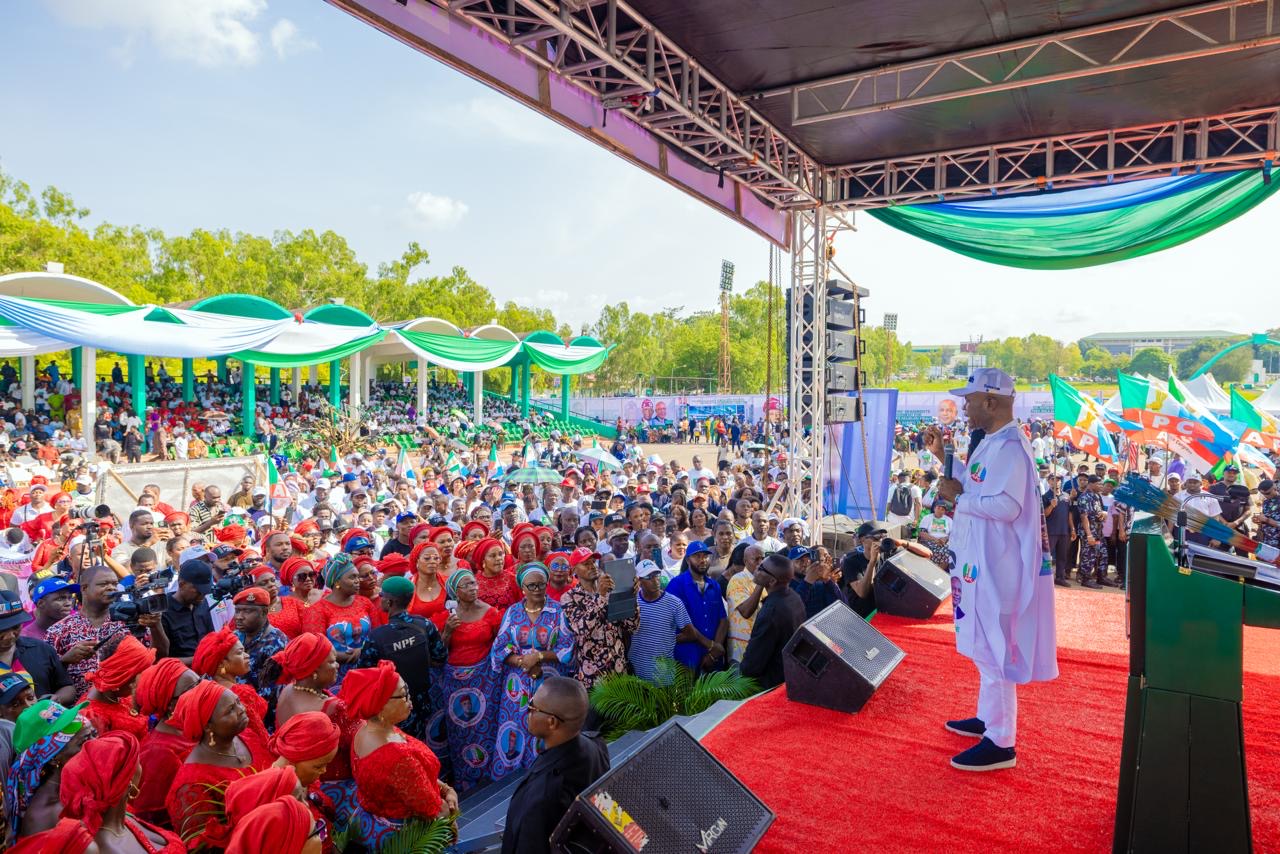
Teachers in both public and private schools in Enugu State have resoundingly endorsed the Governor of the state, Dr. Peter Mbah, for a second term, citing improved teachers’ welfare, increased education funding, promotions and other interventions.
The teachers also endorsed President Bola Ahmed Tinubu, whose economic reforms, Mbah said, had made more resources available to states to embark on massive projects such as the construction of over 267 Smart Green Schools across all the 260 political wards of Enugu State.
The teachers made their position known through over 12,000 of their members, who marched through parts of Enugu metropolis before holding an endorsement rally at Okpara Square, Enugu, on Saturday under the auspices of Teachers for Grassroots Movement (TGM).
In his address, the Chairman of the Enugu State chapter of the Nigeria Union of Teachers (NUT), Comrade Theophilus Odo, described Mbah as a Godsend, reeling out the concrete steps taken by the Governor to address the challenges that had bedevilled the education sector in the state before now.
“On behalf of the NUT, I want to say that we are happy today because God has given us a caring governor, Peter Mbah.
“He was instrumental to the domestication of the harmonised retirement benefits for the teachers even before he became governor.
“The building of over 260 Smart Green Schools is a very positive change. Our teachers and children can now compete favourably with their peers in other places.
“He has started recruiting thousands of teachers, and he is also building smart teachers by ensuring that they attend symposiums and other training programmes to gain more knowledge.
“There are no outstanding promotions, and our salaries are coming at the appropriate time.
“So, we, the teachers, are endorsing our governor for a second term in office. The votes of our teachers are only for Governor Mbah,” Odo stated.
On his part, the Chairman of the National Association of Proprietors of Private Schools (NAPPS) in Enugu State, Nelson Agu, said private school teachers were joining such a rally in the state for the first time ever to encourage what he described as Mbah’s revolution in the education sector.
He noted that the introduction of Smart Green Schools had challenged private schools in the state to improve.
“When you came and started the idea of over 260 Smart Green Schools, we thought we were out of service. But we went and upgraded our schools to meet the required standards.
“Importantly, the idea of allocating 33 per cent of the budget to the education sector for three consecutive years is something to laud your administration for,” Agu told Mbah.
The Chairman of the Trade Union Congress (TUC) in the state, Simeon Akaeme, said the Mbah administration had restored the dignity of teachers and made life better through huge investments in infrastructure and social services.
The Director-General of the Teachers for Grassroots Movement, Dr. Nwakaego Aja, described education as a springboard to liberation, self-reliance and economic development amid the systemic collapse experienced by the nation.
Aja assured him of the total support of the over 30,000 teachers in the state.
“Through experiential learning and innovation, you brought answers to the quest by our nationalists, elevating education to a catalyst for economic development,” she asserted.
“We, the teachers, are not ingrates. We see what you are doing. You promised disruptive innovation, and you have delivered disruptive innovation. That is why we are here.
“We promise you this: we will take your good news to the communities, to the staff rooms, to every market, to every polling unit, and we will deliver. Our vote is for the All Progressives Congress (APC) from bottom to top,” she stressed.
The Commissioner for Education and patron of TGM, Prof. Ndubueze Mbah, said the endorsement by the teachers in their thousands was a tip of the iceberg of the support coming his way and that of the President ahead of the 2027 general election.
He added, “On behalf of every teacher gathered here today, I have one message, and that is to thank you for believing and investing in the vision that it is through education that Enugu State will attain greater heights. You have committed so many resources to giving every Enugu child a future.”
In his remarks, Governor Mbah said the endorsement meant so much to him beyond the 2027 polls, as the future his administration wanted to build for the state depended on education and the teachers.
“Today’s endorsement carries a particular significance, and that is because everything we do, all the promises we have made, all the projections we have made — growing Enugu’s economy, becoming one of the top three states in terms of GDP, making Enugu State the number one state in terms of investment, business, living and tourism — are in the hands of our teachers.
“That is why it appears as if we are insane about education when you consider what we are doing in the sector —building over 7,000 classrooms. And we are not talking about the details because we do not talk about 464 furniture items, we do not talk about 25,000 desktop computers, we do not talk about over 5,000 tablets or the free feeding and uniforms, among others.
“For us, it is about transformation —transforming an education system. And that whole transformation, whether we fail or succeed, would lie largely in your hands.
“That is why, when I say that I see you and I value you, it comes from the depths of my heart because I understand what you go through to inculcate this knowledge into our children so that we can become that great state. So, we love you and appreciate you dearly,” he emphasised.
The wife of the Governor, Mrs. Nkechinyere Mbah, who was represented by the Commissioner for Children, Gender Affairs and Social Development, Mrs. Ngozi Enih, said the endorsement was a great reward for a government that had made education the cornerstone of its development agenda.
The event attracted senior government officials, political and community leaders, among others.
News
Alleged Magistrate Court Order To Arrest Araraume, Okorocha Is Fake, Non-Existent — Imo First Group
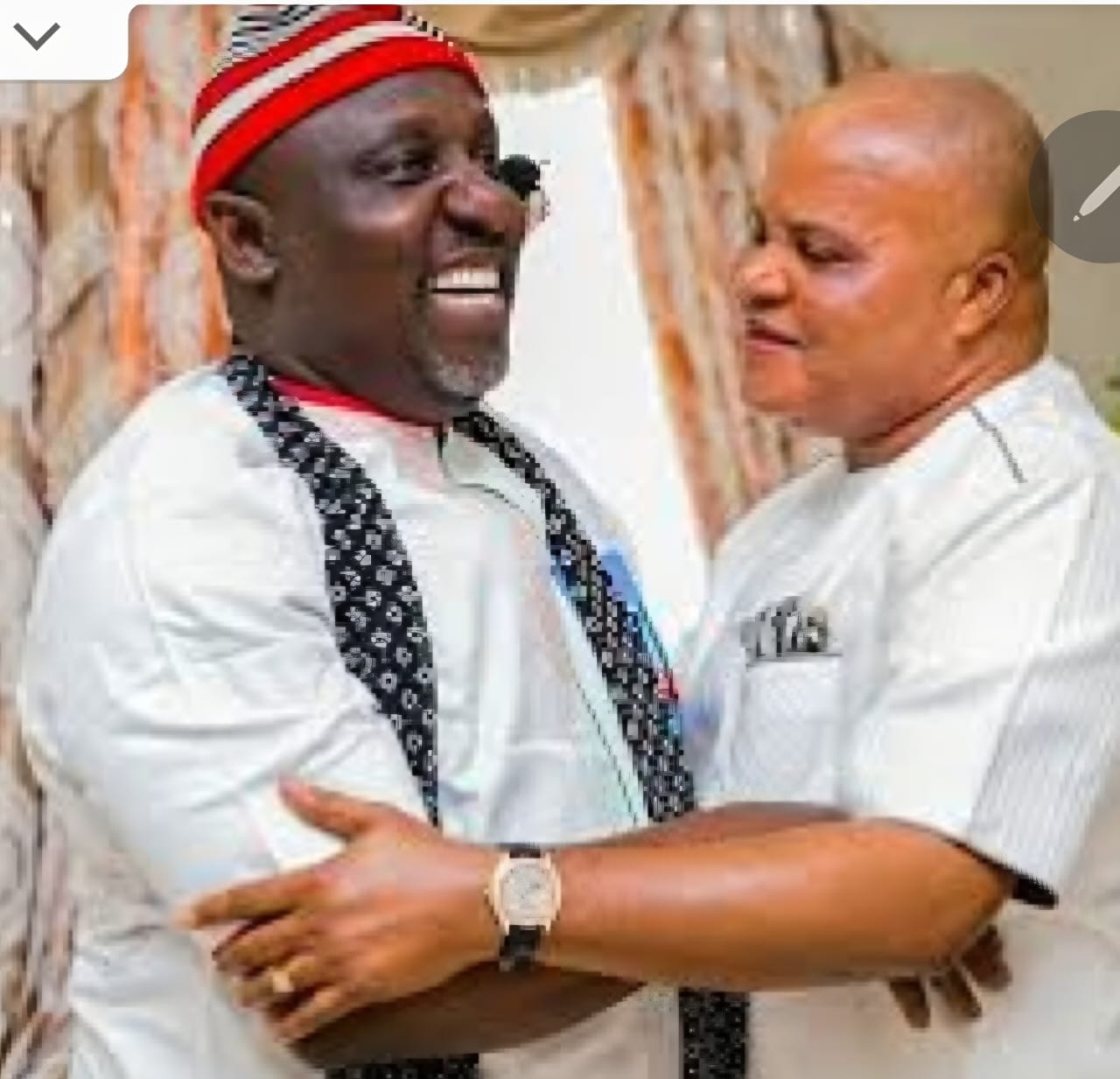
A group, Imo First Group, has described as total falsehood reports circulating online that a Magistrate Court in Abuja has issued an order to arrest Senators Ifeanyi Araraume and Rochas Okorocha.
The group said no such order was ever made, describing it as a hoax fabricated to blackmail two reputable sons of Imo State who have won elections clean and square.
“Purported Magistrate Court Order to arrest Senators Araraume and Rochas Okorocha is a hoax and never existed,” the group said in a statement.
It alleged that purveyors of the falsehood, in what it called their usual gutter politics, attempted to procure an ex parte order from a magistrate but met a brick wall.
“As usual, Imo politics, taken to the gutters, reared its head in a different dimension but was averted by a vigilant magistrate. The purveyors and harbinger of killing anyone who dares to speak the truth came in their guy man way to trick the magistrate via ex parte order but met a brick wall. The magistrate bluntly refused to grant their ex parte (motion) and threatened to arrest them, but yet they carried their falsehood about,” the statement said.
Imo First Group challenged those behind the report to produce the court order or warrant of arrest, insisting that none exists.
“We challenge anyone in this macabre dance to show the court order or warrant of arrest. It’s preposterous to blackmail decent Imo sons on the altar of dirty politics,” it said.
The group took a swipe at the current administration in Imo, questioning its democratic credentials and its record of political elevation.
“What’s the problem of occupants of office that never won free and fair elections before… Those whose palm kernel is cracked by benevolent chi (God) should never forget to be humble. Show us anyone in Imo who has seen light or political elevation in this almost past 7 years of this fraudulent Imo administration. Ask yourself this: Where are those who helped him to move from 4th position in 2019 guber elections to No.1? That issue will soon come up,” it stated.
It warned that the online publication of the fallacy has endangered the magistrate involved, disclosing that the FCT Chief Judge is considering suspending him over the false report circulating on social media.
“Now, the online publication of this fallacy has put the magistrate in danger of losing his job. FCT Chief Judge is about suspending the magistrate based on what is circulating in the social media space,” the group said.
Imo First Group warned that those peddling the falsehood will face prosecution and jail, stressing that politics should not be taken too far.
“Those carrying this falsehood will face prosecution…. People shouldn’t take politics too far. We are in civilised clime, and political matters shouldn’t be treated in a criminal manner. Imo people should be vigilant and say no to those derailing our democracy,” it added.
-
 News21 hours ago
Why UK varsities are cancelling Nigerians’ admission — Report
-
News1 day ago
US asks American business executives to be wary of insecurity, corruption, detention risk in Nigeria
-
News3 days ago
GOCOP conference: Agbakoba urges media to test right to announce election results
-
News3 days ago
Enugu Secures $200m Investment for 100MW Solar Power
-
News3 days ago
How passenger died aboard Kenya Airways flight from Nairobi to Lagos
-
News2 days ago
Ihejirika lauds Mbah’s infrastructure drive as Coal City University inaugurates Governing Council
-
News1 day ago
Petrol hits N1,900/litre as depot prices surge despite NNPC cut
-
News3 days ago
Hardship: FG proposes N1,350 ceiling for petrol ex-gantry price