News
Rivers Crisis: Outrage as NASS approves emergency rule through voice vote


The two chambers of the National Assembly, on Thursday, approved President Bola Tinubu’s declaration of a state of emergency in Rivers State which resulted in the suspension of Governor Siminalayi Fubara, his deputy and other elected officials for six months, and the appointment of a sole administrator by a voice vote.
This is contrary to Section 305(4) of the 1999 Constitution, as amended, which requires a resolution of the National Assembly supported by a two-thirds majority of members to back the president’s request.

As the 2023 presidential candidate of the Labour Party, LP, Mr. Peter Obi, slammed the National Assembly for the approval, arguing that a two-thirds majority could not be determined through a voice vote, Senate President, Godswill Akpabio, said the legislators’ approval was done with unanimity without a single nay.
While approving the emergency rule, the Senate said all regulations in Rivers State must be subjected to the approval and oversight of the National Assembly Joint Ad-hoc Committee.
It also urged the federal government to institute a reconciliation mechanism, including setting up a peace and reconciliation committee, composed of the National Assembly, the executive, eminent Nigerians and other relevant stakeholders, to ensure lasting peace and stability in Rivers.

In the House of Representatives, the legislators amended the proclamation of President Tinubu, insisting that Rivers State Sole Administrator, Vice Admiral Ibok Ibas, report back to the National Assembly and not the Federal Executive Council, FEC.
Reps amendments
The House made three amendments which were passed through a voice vote, with 243 members in attendance.
Another amendment was that a national committee, composed of members from the Presidency, National Assembly and other eminent Nigerians be set up to mitigate and restore peace to Rivers State.
The third amendment was that the President can review the period of emergency to a shorter period than six months.
Though few members were allowed to make comments on the president’s request, others expressed concerns over constitutional provisions.
Senate’s approval
The Senate approved the state of emergency in Rivers State after about one and a half hours closed door session.
Speaking after the closed-door meeting on the resolutions reached by senators, Senate President Akpabio said: “The Senate invokes the powers conveyed on it by Section 305 of Section 2 of the 1999 Constitution of the Federal Republic of Nigeria (as amended ), approves the proclamation of state of emergency declared by Mr. President in Rivers State of Nigeria.
“The Senate further directs that the declaration of the state of emergency stated in the proclamation documents demands that the President can review and even terminate the state of emergency at any given time, but not later than six months.
“The Senate further resolved that Section 11, Subsection 4 be invoked, providing the National Assembly the authority to set up a joint ad hoc committee of both chambers to oversee the administration of Rivers State, henceforth.
“The Senate further resolved that a committee of eminent Nigerians be set up to reconcile the warring groups in the government of River State within the period of the state of emergency.
“The Senate further resolved that a committee of eminent Nigerians to reconcile the warring factions in Rivers State be set up to carry out their action during the period of state of emergency.
“For final ratification, I put it to the Senate that those in favour of the proclamation of the state of emergency 2025 in Rivers State, should say aye “, which was affirmatively responded to by all the senators in the chamber.”
An elated Akpabio, who was impressed with the affirmative response to the question by senators, said “This approval is done with unanimity, without a single nay.”
The Senate President continued: “Therefore, pursuant to Section 60 of the constitution, Section 305 (2) and pursuant to our rules, Rule 1 (b) of the standing orders of the Senate and also pursuant to Rules 133, 134, 135 and 136 of the Senate of the Federal Republic of Nigeria, the state of emergency proclamation in Rivers State was approved and other vital resolutions taken.”
To give the entire process the required legislative backing, the Senate, thereafter, adjourned for one hour and reconvened later to pass the votes and proceedings of the entire session and finally adjourned to Tuesday, March 25, 2025.
Disquiet at closed-door session
It was gathered that during the closed door session, senators were sharply divided over the issue.
According to sources, quorum was not formed, hence senators present resorted to voice vote, against actual voting.
Senators Seriake Dickson, PDP, Bayelsa West; Enyinnaya Abaribe, APGA, Abia South; Aminu Tambuwal, PDP, Sokoto South; and others stormed out of the chamber in anger as a result.
Vanguard reports that 64 senators signed the attendance register, though the presiding officers do not sign the register as they normally walk into the hallowed chamber with the principal officers.
Earlier, Akpabio had informed his colleagues of President Tinubu’s letter on the proclamation of emergency rule in Rivers State and the letter was read at plenary.
Akpabio, after reading the letter, said: This letter is committed to the committee of the entire Senate for immediate passage.’’
The Senate Leader, Senator Opeyemi Bamidele, APC, Ekiti Central, then raised Order 1(b) of the Senate Standing Orders to suspend all other items in the Order Paper to discuss only the Proclamation letter, he was seconded by the Minority Leader, Senator Abba Moro, PDP, Benue South, and the Senate immediately went into a closed door session.
Akpabio, Dickson clash over Point of Order
Prior to the closed-door session, there was a mild altercation between Senate President, Akpabio, and Senator Seriake Dickson when Dickson raised a point of Order after Akpabio read Tinubu’s letter.
As Senator Dickson raised the point of Order, Akpabio told him to sit down and that he already knew where he stood on the state of emergency, having watched him on television on Wednesday, where he said his views would not align with that of the Senate.
Akpabio and Dickson disagreed sharply over the procedure for handling President Tinubu’s proclamation of a state of emergency in Rivers State.
The problem started when the Leader of the Senate, Opeyemi Bamidele, moved a motion to amend the order of proceedings, allowing the Senate to prioritize debate on the state of emergency before attending to other items on the order paper.
As Bamidele rose to present the motion, Dickson raised a point of order, seeking to draw attention to what he described as a procedural requirement that the Senate should first convene a closed-door session before debating such a sensitive matter.
Akpabio appeared reluctant to acknowledge Dickson’s point of order but as tension rose, he allowed Dickson to raise the point of order.
The Bayelsa lawmaker drew the attention of the Senate to Order 133 of the Senate Standing Rules, which required matters of state of emergency to be deliberated upon in a closed door session.
Akpabio upon hearing that, upheld his point of order, which was later held by the Senate where all its resolutions were taken on the state of emergency.
The motion for the adoption of votes and proceedings of Wednesday was adopted by Senator Barinada Mpigi, PDP, Rivers South-East and seconded by Senator Idiat Adebule, APC, Lagos West.
Obi slams NASS for approving emergency rule
Faulting the National Assembly, Obi said the use of voice vote on such crucial issues was an insult to Nigerians and a breach of the 1999 constitution.
Obi, who had along with several other opposition leaders made a passionate appeal to members of the National Assembly to reject the illegal removal of Rivers State governor, Similaya Fubara, and the State Assembly, in a series of tweets on his X handle, yesterday, wrote: “While still agonizing over the ongoing deterioration of democracy in our nation, especially with the situation in Rivers State, and trying to reach out to our National Assembly members not to support and sustain the unconstitutionality and arbitrariness, I just heard that they have added salt to injury by using a voice vote.
“The constitution is clear that this cannot be done through a voice vote but by calling individuals to answer ‘yes’ or ‘no.’ You cannot determine a two-thirds majority by a voice vote.
“While a two-thirds majority is crucial, it does not justify bypassing proper procedures and undermining the principles of transparency and accountability. The use of a voice vote in such a significant decision not only disregards constitutional requirements but also erodes public trust in the democratic process.
“Decisions of such magnitude must be made with integrity, following the letter and spirit of the law. It’s disheartening that a decision as crucial as approving an emergency proclamation — one that could alter the course of the nation — was handled with such casual disregard for constitutional standards.
“The 1999 Constitution of Nigeria (as amended) clearly requires that such a proclamation must be approved by at least two-thirds of all members of each arm of the legislature — the Senate and the House of Representatives.
‘’A simple call of “Aye” or “Nay” cannot accurately measure this crucial threshold. When a supermajority is required, it demands a recorded vote — whether by division, roll call, or electronic means.
‘’This isn’t just a technicality; it’s a matter of law and legitimacy. The Senate Standing Orders and House Rules were established to ensure that decisions of this magnitude are made transparently, with accountability. Ignoring these procedures is not just an oversight; it is a betrayal of the democratic process.”
Some lawyers also faulted the process of approving the state of emergency proclamation through voice vote, arguing that the process was not sufficient and could not guarantee fairness and transparency.
A voice vote was insufficient to pass the resolution -Prof. Erugo, SAN
Prof. Sam Erugo, SAN, said: “It is apparent that the Senate and House of Representatives did not appreciate the gravity of the President ‘s proclamation, which was referred to them for approval.
‘’By Section 305(2) of the Constitution, they were required to ‘consider the situation and decide whether or not to pass a resolution approving the Proclamation.’
“Going by subsection (6), if there was no resolution supported by two-thirds of all the members of each House of the National Assembly approving the Proclamation, it would have lapsed after two days.
“This provision shows the seriousness of the matter the National Assembly treated just like any other business.
“That is the reason the two-thirds majority of each House is required. A voice vote is insufficient to pass the resolution approving the President’s proclamation, which, as it were, required a special resolution and, obviously, the voice vote is unconstitutional.
“There is no way to determine that two-thirds majority ‘of all the members’ voted in favour of the proclamation, as required by the Constitution.
“One wonders why the hurry. In other jurisdictions, we should have seen robust debates in both Houses, considering the situation in Rivers State, to determine whether it required the extreme measure of declaration of state of emergency, and to the extent of removing an elected governor.
“It is unfortunate that Nigerians were deprived the opportunity to have vital information beyond the President’s partisan remarks that would appear to have decided against the governor.”
Voice voting does not guarantee fairness, transparency -Edun, SAN
In his reaction, Kunle Edun, SAN, said: “The Rules of the House will guide the legislators how the voting would be done. However, members can insist on a transparent process and considering the national importance of this issue, they should request for physical or electronic voting and counting of the votes.
“Voice voting does not guarantee fairness and transparency as shown in previous sessions presided over by the Senate President particularly.
“To show to the whole world the fairness of the entire process, voting must be done either electronically or physically and how each senator voted must be published for Nigerians to see.”
Uzodimma backs Tinubu, says it’s a proactive step
The Chairman of the Progressive Governors’ Forum and Governor of Imo State, Hope Uzodimma, has thrown his weight behind President Bola Tinubu’s decision to declare a state of emergency in Rivers State. He described the move as a proactive step necessary to prevent a looming crisis that could destabilize both the state and Nigeria’s economy.
Addressing journalists in Owerri, Governor Uzodimma emphasized the significance of Rivers State to the nation’s economic survival, particularly in crude oil production. He noted that the ongoing political tensions and refusal of key players to heed advisory interventions had escalated into a national security concern. The governor referenced recent reports of pipeline bombings and explosions in the state, stressing that at a time when Nigeria is striving to boost crude oil production to strengthen its currency and economy, such unrest cannot be tolerated.
“The President was very proactive, and his actions are highly commendable. Prevention, they say, is better than cure. Imagine what would have happened if the impeachment went ahead—it would have triggered actions and reactions, leading to violence and widespread unrest,” Uzodimma stated.
He also commended the National Assembly for supporting President Tinubu’s decision, describing it as a step taken in the national interest. He expressed confidence in the Federal Executive Council’s ability to oversee the situation effectively and ensure that law and order prevail. While acknowledging that the Progressive Governors’ Forum had not yet convened since the declaration, Uzodimma assured that, as chairman, he could confidently affirm that the forum stands firmly behind the President.
“To the best of my knowledge, none of our members will go against the actions of the President. We support any decision that protects the security and stability of the country,” he concluded.
Vanguard



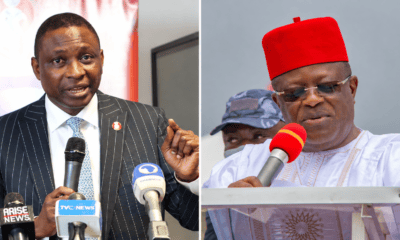








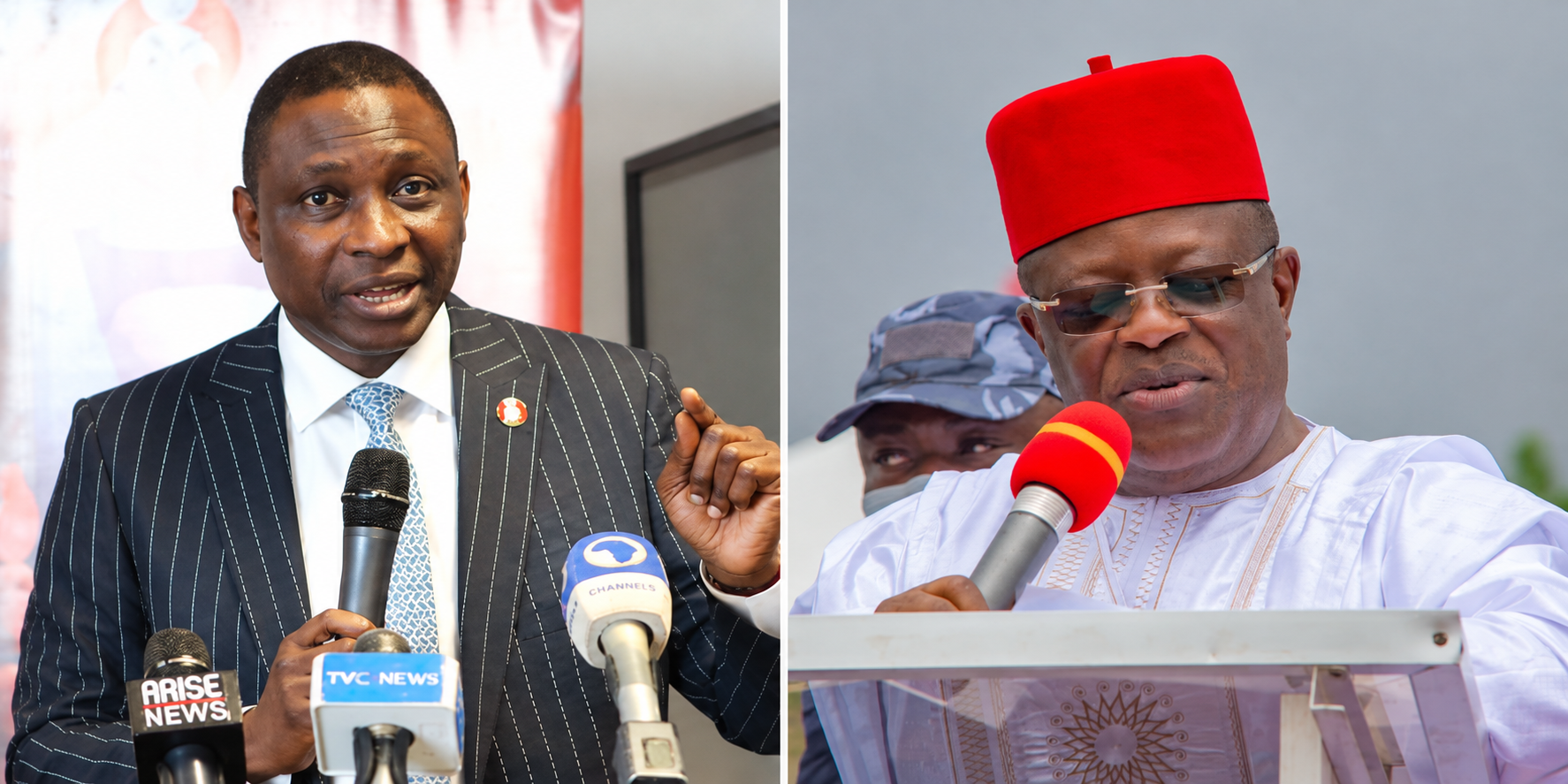
The Minister of Works, Chief David Nweze Umahi, has urged Nigerian journalists to promote democracy and maintain impartiality by avoiding bias towards political parties or candidates ahead of the 2027 general elections.
Umahi, a former Governor of Ebonyi State, gave the charge on Thursday evening while delivering a lecture at the Nigeria Union of Journalists (NUJ), Enugu Correspondents’ Chapel Press Week.
The event was themed, “Strengthening Democracy Through Responsible Journalism: 2027 Polls in Focus.”
Represented by his media aide, Emmanuel Uzor, the minister said journalists should not take sides in the political process or determine which candidate has the best manifesto.
He noted that as the watchdog of society and the Fourth Estate of the Realm, the media must discharge their constitutional responsibilities impartially, without favouring one political party or candidate over others.
While acknowledging the media’s critical role in holding leaders accountable, Umahi cautioned against partisan reporting and urged journalists to remain objective in their coverage of political activities.
“Journalists should not take sides. 2027 is here, and every party and all the candidates are presenting their manifestos. It is not your duty to say that this candidate or that candidate is better,” he said.
He maintained that the media had a responsibility to bridge the gap between leaders and the people, stressing that democracy thrives when journalists discharge their duties professionally.
Umahi, however, observed that journalists often face hostility when they hold those in authority accountable, adding that they are more readily accepted when they engage in praise-singing.
He warned journalists against abandoning their professional responsibilities, urging them to continue serving as a link between the government and the governed.
“You should fill in the gap between the leaders and the led,” he said.
Olukoyede Tasks Media on Anti-Corruption Fight
In his keynote address, titled “The Role of Media and Other Critical Stakeholders in Sustaining the Fight Against Corruption,” the Chairman of the Economic and Financial Crimes Commission (EFCC), Mr Ola Olukoyede, underscored the importance of the media in combating corruption and financial crimes.
Olukoyede, who was represented by the EFCC’s South Zonal Director, Mr Daniel Isei, said the media had continued to play a critical role in promoting good governance and building a better society.
He urged journalists to sustain their efforts in holding public officials and institutions accountable.
According to him, the Nigerian media deserve commendation for their contributions to sanitising society and promoting accountability.
“The media in Nigeria deserve their flowers for the critical roles they play in ensuring good governance and a better society.
“You have been playing your watchdog role, and that is holding the people and institutions accountable,” he said.
The EFCC chairman noted that the importance of the media’s watchdog function was recognised by the framers of the Nigerian Constitution, who assigned the press the responsibility of holding the government accountable to the people.
However, he cautioned journalists against losing focus or allowing cynicism to undermine their anti-corruption reporting.
“In fighting corruption, the media should not amplify public cynicism of the facts,” he warned.
Ani Emphasises Fact-Checking
The Chairman of the occasion, Chief Anthony Ani, SAN, also acknowledged the media’s significant role in society.
Ani urged journalists to verify information thoroughly before publishing or disseminating it to the public, stressing the importance of accuracy and responsible reporting in strengthening democracy.
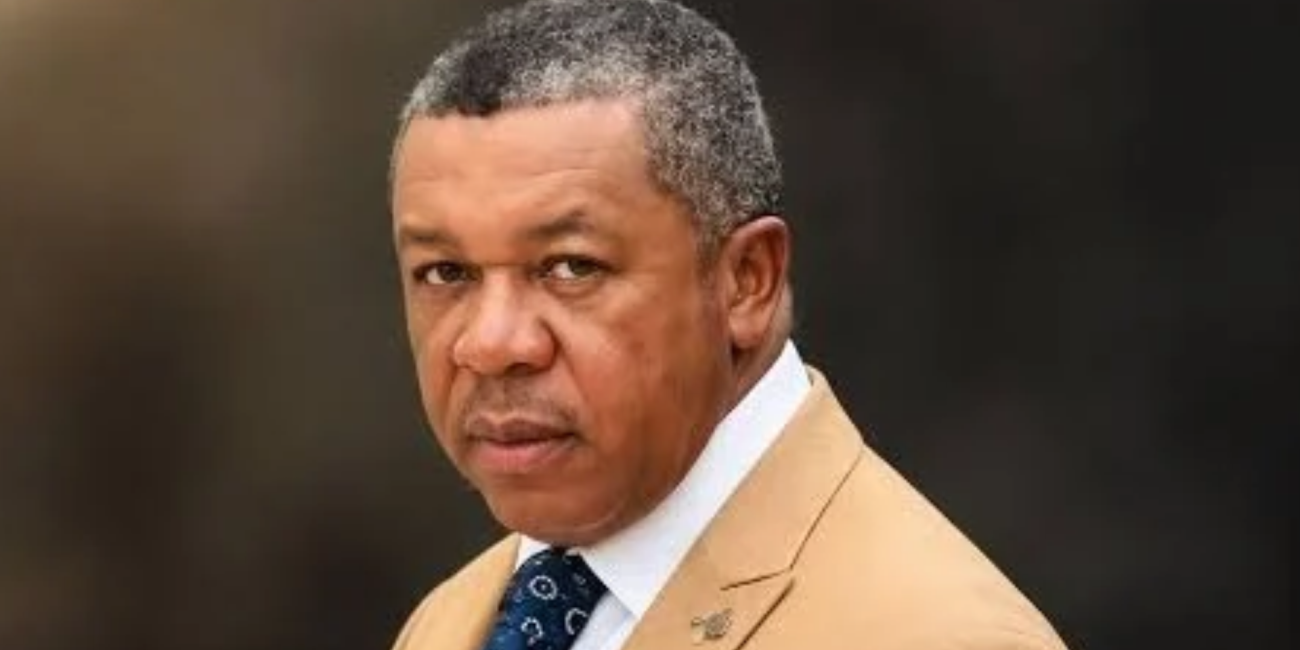
Veteran Nollywood actor Francis Duru has died at the age of 57 following a brief illness, his family has announced.
The family disclosed his death in a statement posted on the actor’s official Instagram page in the early hours of Friday, expressing gratitude to fans, colleagues and well-wishers for their prayers and support.
“We, the family of Francis Duru, regret to announce his passing following a brief illness.
“We appreciate your prayers, love, and understanding. May his soul rest in perfect peace. Amen,” the statement read.
The family did not disclose the nature of the illness or announce funeral arrangements as of the time of filing this report.
Duru’s death comes months after he dismissed reports that he was battling a life-threatening illness. In June, a video showing him looking frail circulated on social media, raising concerns among fans and colleagues.
The actor subsequently released a video on Instagram, describing the footage as “fabricated and malicious” and dismissing the claims about his health.
Early Life and Education
Born Francis Ogide Duru on July 27, 1969, in Cameroon to Nigerian parents from Imo State, the actor spent his formative years in the Central African country, where he completed his primary and secondary education.
He later returned to Nigeria to pursue his university education at the University of Port Harcourt, Rivers State, where he studied Theatre Arts and graduated with a Bachelor of Arts degree in 1996.
His academic background in theatre helped lay the foundation for a career that spanned more than three decades, during which he established himself as one of Nollywood’s recognisable performers.
Rise to Fame in Nollywood
Duru began his acting career in 1989 with Missing Mark, a film directed by the late filmmaker Ndubuisi Oko.
However, his breakthrough came in 1995 when he played Ahanna in Rattlesnake, an action-comedy produced by the late filmmaker Amaka Igwe.
The film became a defining production in the history of Nollywood, and Duru’s performance helped bring him wider recognition among Nigerian audiences.
His portrayal of Ahanna remains one of the roles associated with his rise during the formative years of Nigeria’s home-video film industry.
Over the years, Duru demonstrated his versatility by featuring in films across different genres, including drama, crime, family stories and comedy. He worked alongside several established actors and filmmakers, building a reputation for his ability to interpret diverse roles.
Notable Movies
Throughout his career, Duru featured in numerous Nigerian films and productions. Some of his notable screen credits include:
- Missing Mark (1989)
- Rattlesnake (1995)
- Blood Money (1997)
- Narrow Escape (1999)
- Home in Exile (2010)
- Nnenda (2009)
- Stigma (2013)
- Mortuary Gate (2014)
- Lipstick (2016)
- Who Killed Chief? (2017)
- Merry Men: The Real Yoruba Demons (2018)
- Why Not? (2019)
- The Good Husband (2020)
- Mboputa (2020)
- The Locals (2021)
- Blood Vessel (2023)
- Abigail’s Memoir (2024)
- Ugly Bird (2024)
His extensive filmography reflected his ability to remain relevant across different generations of Nollywood productions, from the industry’s early video-film era to more recent cinematic releases.
Awards and Industry Contributions
Duru received several honours in recognition of his contributions to the Nigerian entertainment industry.
In 2007, he was named a United Nations Ambassador of Peace in recognition of his positive influence on young people.
He was appointed interim president of the Actors Guild of Nigeria (AGN) in 2010, reflecting his involvement in the affairs of the professional body representing Nigerian actors.
In the same year, he received a nomination for Best Actor in a Supporting Role at the Africa Movie Academy Awards.
In 2020, he won the Best Actor in a Leading Role in an Igbo-language film category at the Best of Nollywood Awards for his performance in Mboputa.
Beyond his acting career, Duru was also associated with humanitarian and youth-development initiatives, contributing to efforts aimed at improving the welfare and opportunities available to young people.
Family Life
Duru married his wife, Adokiye, in 2003, and they had four children together.
The family suffered a devastating loss in August 2024 when their son, Ifeanyi, died at the age of 15.
The actor publicly mourned his son at the time, attracting messages of sympathy and support from colleagues, fans and members of the entertainment community.
His death on Friday marks the loss of a veteran performer whose career connected different generations of Nigerian cinema.
With memorable roles in productions such as Rattlesnake, Blood Money and Mboputa, Duru leaves behind a body of work that reflects his contribution to the growth and development of Nollywood over more than three decades.

A seven-year-old boy, Abdullahi Rabi’u, has been found dead hours after suspected kidnappers abducted him in the Majema area, along Ring Road in Jos North Local Council of Plateau State and demanded a N2.5million ransom.
The boy was reportedly abducted on Monday evening after being sent on an errand to a neighbour’s house.
Narrating the incident, his uncle, Sukairaj Danladi Me Gado, said Abdullahi delivered the message but failed to return home, prompting the family to search for him.
He said their efforts to locate the boy proved unsuccessful until Tuesday morning, when the family received a call from an unidentified number.
According to him, the caller demanded N2.5million as ransom and informed the family that the boy had been kidnapped.
Me Gado said the family had agreed to pay the ransom in the hope of securing the child’s release.
However, their hopes were shattered later on Tuesday when they learnt that his body had been found in a narrow passage near their residence.
The discovery plunged the family and residents of the neighbourhood into mourning.
The grieving uncle expressed sorrow over the killing and alleged that the perpetrators might be familiar with the neighbourhood.
He called on security agencies to investigate the incident, apprehend those responsible and ensure they were brought to justice.
Efforts to obtain the reaction of the Plateau State Police Command were unsuccessful, as its spokesman, SP Alfred Alabo, did not respond to journalists’ inquiries as of press time. (Guardian)
-
 News3 days ago
FG confirms Ebola case in FCT, identifies 44 contacts
-
Features22 hours ago
Kogi’s Kidnapping Crisis: Why Do Forests Remain Safe Havens for Criminals Under Ododo’s Watch?
-
News2 days ago
“It’s not debatable, we can’t go back,” Mbah Backs Tinubu on Fuel Subsidy Removal
-
News22 hours ago
Kidnappers kill seven-year-old boy after ransom demand
-
News3 days ago
Afenifere leader, Fasoranti, dies at 100
-
News2 days ago
Mbah: Enugu Now Produces 120 Million Litres of Water Daily, Expands Agricultural Investment
-
Politics2 days ago
Mike Igini: Politicians Infiltrate Agencies Responsible for Election Personnel as Electoral Laws Go Unenforced
-
Politics1 hour ago
2027: Atiku, Obi, Duke, Others in Talks on Single Opposition Candidate – Coalition