News
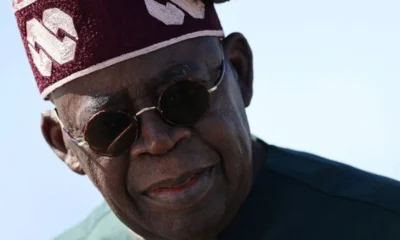
What Tinubu said in 2013 when Jonathan declared a State of Emergency in Borno


“Jonathan Bares His Fangs,” By Bola Ahmed Tinubu
[Published in Premium Times on May 15, 2013]
It is now abundantly clear that President Jonathan has finally bared his fangs confirming what was widely speculated. By declaring a state of emergency in Borno, Yobe and Adamawa, he has intimidated and emasculated the governors of these States. We are witnessing a dangerous trend in the art of governance and a deliberate ploy to subvert constitutional democracy.

The body language of the Jonathan administration leads any keen watcher of events with unmistakable conclusion of the existence of a surreptitious but barely disguised intention to muzzle the elected governments of these states for what is clearly a display of unpardonable mediocrity and diabolic partisanship geared towards 2015.
Borno and Yobe states have been literally under armies of occupation with the attendant excruciating hardship experienced daily by the indigenes and residents of these areas. This government now wants to use the excuse of the security challenges faced by the Governors to remove them from the states considered hostile to the 2015 PDP/Jonathan project.
Let me be quick to say that this administration will be setting in motion a chain of events the end of which nobody can predict. Experience has shown clearly that actions, such as this one under consideration, often give root to radical ideologies and extremist tendencies, a direct opposite of the intended outcome of unwarranted and unintelligent meddlesomeness. The present scenario playing out in the country reminds one of the classical case of a mediocre craftsman who continually blames the tools of his trade for his serial failure but refuses to look at his pitiable state with a view to adjusting.

It has become crystal clear, even to the most incurable optimist, that the country is adrift. That the ship of the Nigerian state is rudderless is clearly evident in the consistent and continual attacks ferociously executed by elements often referred to as the insurgents in some northern states of the federation, particularly Borno and Yobe states respectively.
Indeed, no part of the country is immune from the virulent but easy attacks, veritable indices of a failing state. Unfortunately, the tenuous and uncoordinated approach adopted by this government betrays a grossly incompetent disposition which stands at variance with current realities in the country, nay the international community where acts of terrorism are engaged and contained. No Governor of a state in Nigeria is the Chief Security Officer. Putting the blame on the Governors, who have been effectively emasculated, for the abysmal performance of the government at the centre which controls all these security agencies, smacks of ignorance and mischief.
Terrorist acts are perpetrated routinely and the government at the centre appears incapable of stemming the tide of the horrendous crimes unleashed on the hapless populace. The considerable ease, with which lives and property are destroyed on a daily basis, should excite deep introspection on the part of a government truly desirous of finding a lasting solution.
The Constitution provides that the safety and welfare of citizens shall be the primary purpose of having that structure of any political leadership in the first instance. This Government, through acts of omission and commission, has fallen far short of expectation. It actively encourages schisms and all manner of divisive tendencies for parochial expediency. Ethnicity and religion become handy weapons of domination. Things have never been this bad.
The response to the pervasive chaos in the Northern region of the country has been militarisation, mass arrests and extra judicial killings by the Joint Task Force, JTF, a convenient euphemism for an army of occupation seemingly set loose on the people of the localities concerned. The tenor of the State of Emergency declared by the Federal Government yesterday portends danger for the polity. The full militarisation of security operations in these states will compound the already tense situation.
Both local and international media are awash with news of reckless attitudes of the invading forces. The fact that security operatives are killed cheaply and reprisals from the state find expressions in organised pogroms in the immediate communities is sure evidence of a government, which lacks basic understanding to appreciate the enormity of the current security challenges. If development is about the people, all measures put in place for the sustenance and maintenance of the super-structure of the society must take into cognisance local contents.
It is evident from the grim experiences in recent times that this government has failed, or does not know that it is necessary for it to avail itself of the benefits accruable from exchange of ideas and notes on the latest in terms of technology and human resources among nations of the modern world, especially those which have been fighting terrorist organisations over the years, on the most effective mode of combating this menace. Technologically advanced countries of the world will never discard the idea on the need for the establishment of an effective local intelligence outfit.
Our suggestions along this path have always been met with suspicion and acerbic criticisms from both the informed and the ignorant alike. A government which stoutly defends its opposition to the decentralisation of the police force from its present over-centralised command structure is already experimenting with all manner of means patently extra-legal.
The massacres of local communities attendant upon the attacks on security agents by unknown elements will further alienate the people who should, ordinarily, partner with the government in securing their immediate environments. An army which invades a community maiming, raping and killing defenceless civilians will end up radicalising the youths whose parents and young ones have been wiped out most cowardly and recklessly. This government should concentrate more on encouraging the development of local intelligence which will, inexorably, lead to the practice of true federalism. Adopting the use of excessive force against those perceived as harbouring terrorists does not portray this government as possessing the wherewithal to find abiding solutions to the lingering security challenges.
The President’s pronouncement, which seeks to abridge or has the potential of totally scuttling the constitutional functions of Governors and other elected representatives of the people, will be counterproductive in the long run. A State of Emergency already exists in the states where JTF operates. Residents of these communities live in constant fear. Their rights are violated with impunity under the guise of searching for terrorists in their respective domains.
Hiding under some nebulous claims which border on the intractability of the security challenges posed by Boko Haram or some acclaimed traditionalists who have killed some policemen to render ineffective the constitutional powers vested in elected Governors and other representatives of the people, perceived as not amenable to manipulation for the 2015 project amounts to reducing serious issues bordering on the survival of the country to partisan politics.
Let all those who love this country genuinely advise the federal government not to tinker with the mandates of these Governors under any guise. It is a potentially destructive path to take. If security of a society is about the protection of lives and property of the citizenry, the involvement of the people is a sine qua non to effective intelligence gathering. Any measures put in place which alienate the people, in particular their elected representatives, should be considered as fundamentally defective by every right thinking person in the country.
Mr. Bola Ahmed Tinubu, was a two-term governor of Lagos State, and now a leading voice of the opposition party, the Action Congress of Nigeria, ACN.
https://www.premiumtimesng.com/opinion/134435-jonathan-goes-for-broke-by-bola-ahmed-tinubu.html?tztc=1








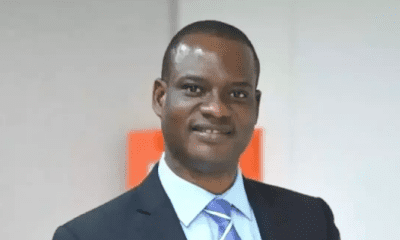


Ondo State Governor, Lucky Aiyedatiwa, has approved a fresh round of appointments involving a commissioner, three Special Advisers and 1,000 other aides.
The appointments comprise 90 Senior Special Assistants and 910 Special Assistants, with the governor saying the move is intended to reinforce his administration and improve its reach across the state.
Erelu Taibat Yemi Oloruntoba, from Akoko North-West Local Government Area, has been nominated as Commissioner for Special Duties. Her nomination has been transmitted to the state House of Assembly for consideration and confirmation.
The governor also appointed Hon. Abimbola Fajolu as Special Adviser on Environment, Chief Ade Adeniyi as Special Adviser on Rural and Community Development, and Mr Muyiwa Ogunyemi as Special Adviser on Transport.
Among those named as Senior Special Assistants are Erelu Toyin Ogungbure, Women Mobilisation (South); Bidemi Obayangbon, Forestry; Gboluge Olufunmi Alex, Community Engagement (South); Hon. Akin Adeniyi, Community Engagement (Central); and Obayan Theophilus Ayodeji, Community Engagement (North).
Others include Kelvin Solomon, Students Affairs; Adeolu Iwakun, Volunteer Services; Samson Job Bazuaye, Oil and Gas; Fade Ojamomi, Youth Empowerment and Job Creation; Sam Adepoju, Public Engagement; and Alhaji Samad Orijeminiyi, Scholarship.
Also appointed are Victor Omodara, Grassroots Mobilisation; Abayomi Adefolalu, Photography; and Alhaji Abdukadiri Adenoyi, Prince Nzuoma Egbulefu and Alhaji Garba Goni, all for Non-Indigenes.

About 40 people are suspected to have lost their lives after a boat carrying farmers to their rice farms capsized in Gorau town, Goronyo Local Government Area of Sokoto State.
The incident occurred while the victims were crossing a stream to access their farms.
An eyewitness said more than 70 people were on the boat when it capsized shortly after taking off.
The village head was among those on board but he was reportedly rescued.
“So far, we have recovered about 40 bodies, while six people, including the village head, were rescued,” a local journalist who was at the scene, Sharhabilu Yahuza Kiliya, told our reporter.
According to him, the victims comprised farm owners and labourers who had been engaged to harvest rice.
“The canoe capsized shortly after take-off. Rescue operations are still ongoing, with local divers searching for those still missing and recovering bodies,” he said. (Daily Trust)
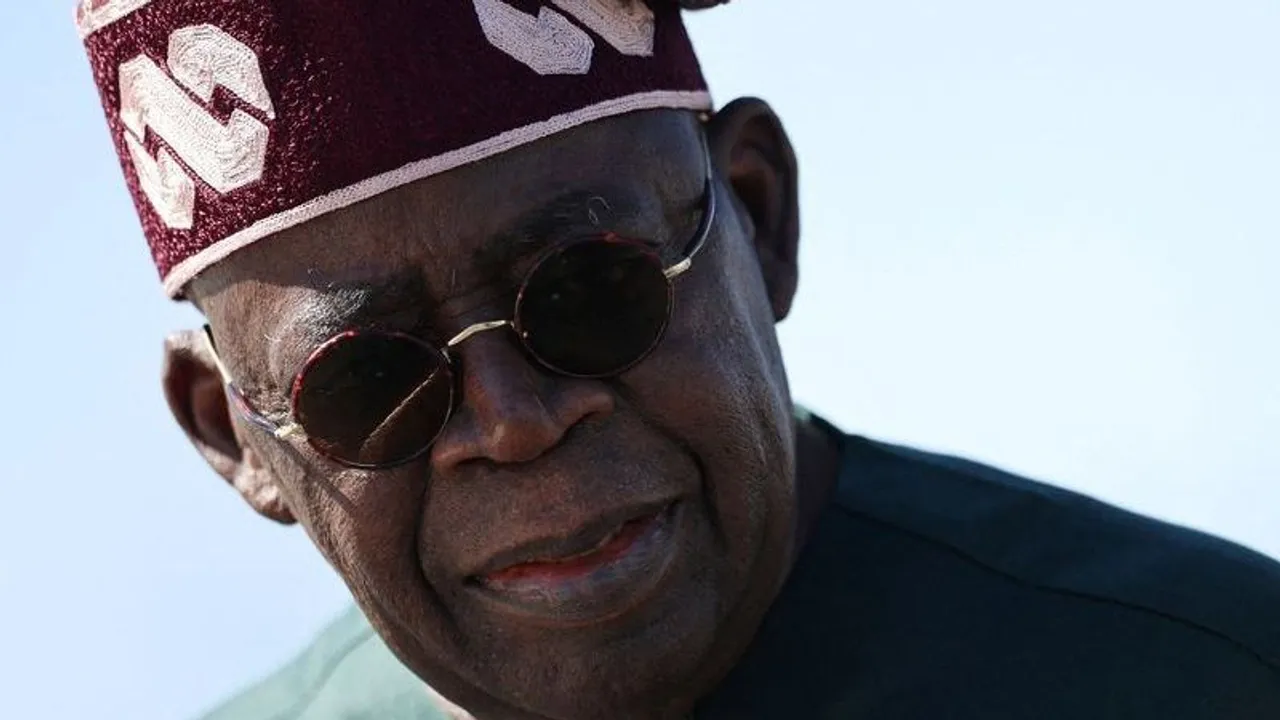
Ahmed Tinubu has joined the US Department of Justice in seeking a 10-day extension to respond to a motion seeking the release of records relating to allegations of drug trafficking.
Tinubu’s legal team filed a notice of joinder before the US District Court for the District of Columbia, asking to be placed on the same schedule as the defendants in the case.
The filing was published online by Von Batten-Montague-York, L.C., a US-based policy advisory and lobbying firm retained by former Vice President Atiku Abubakar.
In the notice, Tinubu’s lawyers said they were joining the defendants’ request for a 10-day extension to respond to the motion for summary judgment.
“Intervenor joins Defendants’ motion for a 10-day extension of time to file response to the motion for summary judgment (DE 92), inasmuch as Intervenor requests that the responses remain on the same schedule,” the filing stated.
The notice was signed by Christopher W. Carmichael and Victor P. Henderson of Henderson Parks, LLC.
According to the filing, the plaintiff opposed the request, while the defendant did not.
However, US District Judge Beryl Howell subsequently denied the application for an extension, according to the lobbying firm.
In a post on X, Von Batten-Montague-York alleged that the requested delay could give Tinubu additional time to lobby US officials against the release of the records.
The firm claimed that the records could become a subject of discussions around US-Nigeria relations and Tinubu’s cooperation with Washington on security matters.
It also raised concerns about what it described as possible attempts by US government officials to influence the judicial or Freedom of Information Act process.
The case, Aaron Greenspan v. Executive Office for U.S. Attorneys, et al., Civil Action No. 23-1816 (BAH), has been pending for more than three years.
The records sought in the case concern US investigations and allegations relating to Tinubu and suspected drug-trafficking activities.
Previous reports have linked a $460,000 asset forfeiture involving Tinubu to a US federal investigation into a Chicago-based heroin-trafficking network in the late 1980s and early 1990s.
Court records and affidavits from US authorities have been cited in reports about the forfeiture proceedings.
In 1993, a US District Court ordered the forfeiture of $460,000 held in an account in Tinubu’s name to the US government.
The order stated that the funds represented proceeds of narcotics trafficking or were involved in transactions violating money-laundering laws.
Tinubu has consistently denied wrongdoing and rejected allegations that he was involved in drug trafficking.
His lawyers have maintained that the forfeiture proceeding was an in rem civil action against the money, rather than a criminal case against Tinubu.
They have also argued that he was never arrested, indicted, arraigned or convicted of a drug offence in the United States. (Nigerian Tribune)
-
 News23 hours ago
BREAKING: Gunmen attack Adeleke’s convoy in Osogbo shortly after receiving Certificate of Return
-
International1 day ago
Canada invites 1,000 candidates to apply for permanent residence
-
Uncategorized1 day ago
2027: Obi unfolds agenda as campaigns begin
-
News21 hours ago
Lagos shuts churches over noise pollution
-
News1 day ago
Why I won’t apologise to Okpebholo — Davido
-
News20 hours ago
Two shot as police attempt to arrest suspects in Anambra
-
News1 day ago
Even if Tinubu appoints Seyi as INEC chairman, he’ll be defeated in 2027 — Dalung
-
News1 day ago
Access Bank asks court to recover N1.3bn stolen by Yahoo Boys