News
Mbah at 53: Enugu’s Journey on the Road Less Traveled


By Ejeh Josh
When in April 2024, a syndicate – faculty and participants in the Executive Intelligence Management Course 17 of the National Institute of Security and Strategic Studies (NISS) drawn from 26 agencies of 5 African countries; Nigeria, Ghana, Gambia, Chad and Rwanda – visited the Southeast zone to understudy the state of security affairs and draw strategic comparisons with their experiences (past and present), the West Africa security chiefs left some indelible impressions consequent upon the observation in Enugu.

Led by the directing NISS staff and syndicate supervisor, Bolarinwa Adekunle, the security team gave a graphic disconcerting observation of the situation of security affairs in 2022 and what it was in April 2024 – less than a year after Governor Peter Mbah assumed office as the state’s security chief. Blending a panoramic imagery of a radical shift from the dreadful state of the past where renegade non-state actors held sway, unleashed reign of terror and laid siege on the nooks and crannies of the east to a state of freedom, Adekunle had this to say;
“I came to Enugu in 2022 as a participant of this prestigious course. We arrived in Enugu on a Sunday, and on Monday, we were made to stay in our hotel. We could not go anywhere. But, today, the situation is not the same.” Simple as the terse statement might appear, the coming of Mbah into office as governor was a defining moment not just among residents of Enugu State but the span of the Southeast enclave.
The ante Mbah administration witnessed a state under suffocation and under the jugular of criminals who dictated the way of life of the people. It was an excruciating experience that the memory continues to haunt survivors. Life was shut down. Government appeared to have lost the grip of authority to the rampaging marauders. Schools were under lockdown. The once burgeoning economy – market, industry, tourism – got smothered. People lived in perpetual fear. It’s a nightmare that even the relics of the Biafra war would not compare. And then came in quick succession the deafening silence of the inglorious sit-at-home where citizens and residents were forced to shudder and crouch under their bed for safety.

The situation seemingly appeared irredeemable dotted with daily gunshots. Hundreds of innocent civilians and operatives were abruptly cut short. Authorities were undermined and even cringed in cowardice for safety across the East. Regardless, sit-at-home orders were issued at the draconian whims and caprices of criminals; some of whom issued these orders from faraway foreign lands. Paralysed with fears, residents could only blow muted trumpets while maintaining unquestionable obedience to the dictates of the miscreants. Across the cities, towns and streets were the trail of the felons – silent streets deserted like ghost towns where war had consumed every breathing flesh. In his 1920’s The Second Coming, the Irish poet, W.B Yeats, painted the gory atmosphere that bedeviled the East. “Things fall apart; the centre cannot hold; mere anarchy is loosed upon the world.”
It was in this state of confusion and anarchy that Mbah came in as governor. Dismayed by the reigns of terror, he proclaimed as unacceptable the continuous mortgage of lives of the citizens. He was resolute and committed to flourishing out the hydra-headed monster and put an end to their rampage. But like people long subjugated and mentally coerced by their tormentors, the decision to wrestle and “escort” the monsters out of the state and by extension, the Southeast zone, was resisted. They had accepted their fate of continuous whimpering. Mbah’s decision was very unpopular and the road he had decided to tread was the road less traveled.
In 1915, Robert Lee Frost, an American poet, published his well celebrated poem, The Road Not Taken, where he narrated how sojourners defined their journey of life. Competing and often conflicting choices are presented amidst uncertainty. The average human being is known to take the easy and popular path that resonates with peers and countrymen often borne out of rave of the moment. In Mbah’s governing philosophy, he is known as an unapologetic – unrepentant, rightly added, nonconformist who defied conventions in his uncanny path to dismantling traditions of inefficiency through his disruptive innovation mantra. In May 2023, Mbah mounted the rostrum as a new governor offering inaugural speech, and one take away on the lips of every listener and watcher was the “business unusual” phrase.
When he commenced the radical architectural departure which began to disrupt the webs of underdevelopment, the conservative society was befuddled, questioning and grappling to unravel the riddles the administration was demonstrating. Months later, the recondite administrative reforms began to set the pace for an unprecedented optimism. With the security restructuring, enabled by the deployment of technology to preempt, thwart and eliminate crime the state escorted criminal renegades out of the state. Sit-at-home became a memory consigned to the past. Life burgeons again! Economy, education, investment, infrastructure, and most importantly, emancipation from psychological slavery all became a dream fulfilled. That was the road less traveled taken by Mbah. A sacrifice only few would make in the country.
On Sunday, 16 March, I was at the Holy Trinity Catholic Church, Independence Layout, Enugu, for the Holy Mass. During the homily, the priest announced the communique issued by the Catholic Bishops’ Conference of Nigeria at its 1st Plenary held between 8 and 14 March in Abuja. The communique made some consequential observations on the state of the nation and called on the governments at all levels to prioritise security and safety of the citizens. Of interest was the tacit commendation of Enugu State over its security re-engineering which led to the deployment of high technology to fight crimes and guarantee life of the people. When the governor embarked on this journey, which today had attracted several states to Enugu to understudy the security infrastructure, it was, for many, a tall dream. Importing the American modern security system which is tech-driven and AI-enabled in gathering intelligence was probably the height of the road less traveled and which would never been taken by many leaders. Mbah did. That was daring audacity of courage.
Born March 17, 1972, Mbah, has continued to receive encomiums from Nigerians, especially among his people, as he marks 53rd birthday anniversary. His life-transforming projects are now left to speak for themselves.
Different sections of the society are pouring in their tributes, describing the young governor as a man of many qualities, shattering the barriers of leadership and doing the seemingly impossible through his mantra of disruptive innovation which he introduced into governance.
“He has done it before. He did it in the private sector, where he disrupted the supply chain of the downstream sub-sector of the oil and gas industry. It was an unimaginable feat, and when he embarked on the journey, many of us who were already established players in that sector thought such uncanny idea would end up into a cesspit of nightmare and tale of failure.
“He, however, pulled the plug. From 14 days to 24 hours. He displaced the inefficiencies, consigned the waste and singlehandedly saved the nation of costs – environment, human health, that ephialtes called demurrage, and made the process more efficient for Nigerians. That almost eliminated the tortuous riddle of fuel scarcity.
“So, when he promised disruptive innovations in the public space during his campaign, I knew he had a lot to offer, but not to the extent of what we are seeing today. There is almost a 360-degree turnaround in what used to be the notion behind public leadership – and the governor has laid that foundation, the state has rapidly taken off on its development trajectory, and you start wondering if this was the Enugu we used to know few years ago,” Engr. Rafiu Briggs, a major dealer in the oil and gas industry had reeled out the testimony about Mbah.
Mr Briggs’ immersive impression of the governor was only one out of many. Only recently, a former senator from Enugu North senatorial district, Chuka Utazi, had narrated how he lost his way in the state as a result of the sudden shift in the development process which realigned the state’s landscape. The state of infrastructure was swamped with decay arising from years of leadership droughts and mismanagement. There was a great hue and cry among the residents of the state calling for intervention on the decaying state of infrastructure and total relapse of the economy.
In less than two years, the magic was done. This rather was a magical moment, used figuratively to describe the science behind the disruption witnessed in the governance model that shattered that leadership ceiling in the state. Across the 260 electoral wards of the state, landmark projects worth billions of naira are on top gear. The state transitioned from its static stature of a stunted adult to one setting a giant pace in the country. Enugu became the beautiful bride where analysts and Nigerians point to as a rallying point for good governance.
That is a quick reminder of Ruchir Sharma’s “The Rise and Fall of Nations” which highlighted key indicators he called rules of thumbs to understanding a nation’s economic trajectory and the intentionality of triggering a shift from the cobwebs of established traditions to something novel and innovative. While the journey to disrupting the “incremental development process” became increasingly unpopular among the political leeches rationalised by their conservative prejudices was ongoing, Mbah’s will to recalibrate the state from a state belonging to a cartel of parasites to people-oriented society gives Enugu the shape it has taken in recent months.
From restoration of security confidence to re-tooling the economy, infrastructure, human capital development, youths’ upskilling and education, Enugu shot itself into the moon, becoming a new beacon of hope; a city on the hill. Today, Enugu has maintained that reference point for good governance as people travel from other states to behold its magnificent sites and sweeping vistas made possible by the emerging governance model. Only a leader who is not just competent and disciplined but uncannily financially prudent can muster the courage to pick a state wobbling from years of abuse and neglect and remodel it within months to the envy of its contemporaries.
In describing the governor’s selfless service, the President-General of Enugu State Development Association, Igwe Abel Nwobodo, an elder statesman, referred to the inspiring transformation the state is experiencing under the current dispensation. Moving Enugu from a public service status to private-driven economy appeared insane an idea to conceive looking at the incompatibility it posed. But Mbah had not only shown its possibility, Enugu state is priding itself as an investment hub with opportunities for local and international investors.
While those from the private and public sectors have something warm and positive to say about the governor from the prisms of his commitment and dedication to service, public servants – teachers, civil servants, retirees, local governments’ workers are not left out. They have found their voices through the governance structure set up by the Mbah administration to help them fulfill their dreams and live meaningful life. That’s the society where inclusion, equity, equality and justice reign.
Promotions of workers as at when due, salaries and emoluments, pensions and gratuities, including other incentives are now taken for granted under Mbah’s leadership. While not stopping there, the governor marshalled what is now known as, “Rural Dwellers’ Allowance” for teachers as a way of encouraging quality education among people in rural communities.
With the Smart Green Schools, the primary healthcare system and other social services going on across all the electoral wards in the state – the first in the history of Nigeria – the coast to birthing a new smart state positioned as one of the future largest economies in Africa is a matter of time.
Happy 53rd Birthday to the Sheriff of Good Governance.












News
UBA Commences Contempt Proceedings Against WEMPCO Directors over Alleged Disobidence of Court Order
The Federal High Court, presided over by Honourable Justice Aluko, has granted an application by United Bank for Africa (UBA) Plc for substituted service of Form 49 on directors of Wempco named as alleged contemnors in the case of UBA v. Wempco.
The application forms part of proceedings seeking to determine whether the named individuals disobeyed an order of the court and whether they should be committed to prison for contempt.
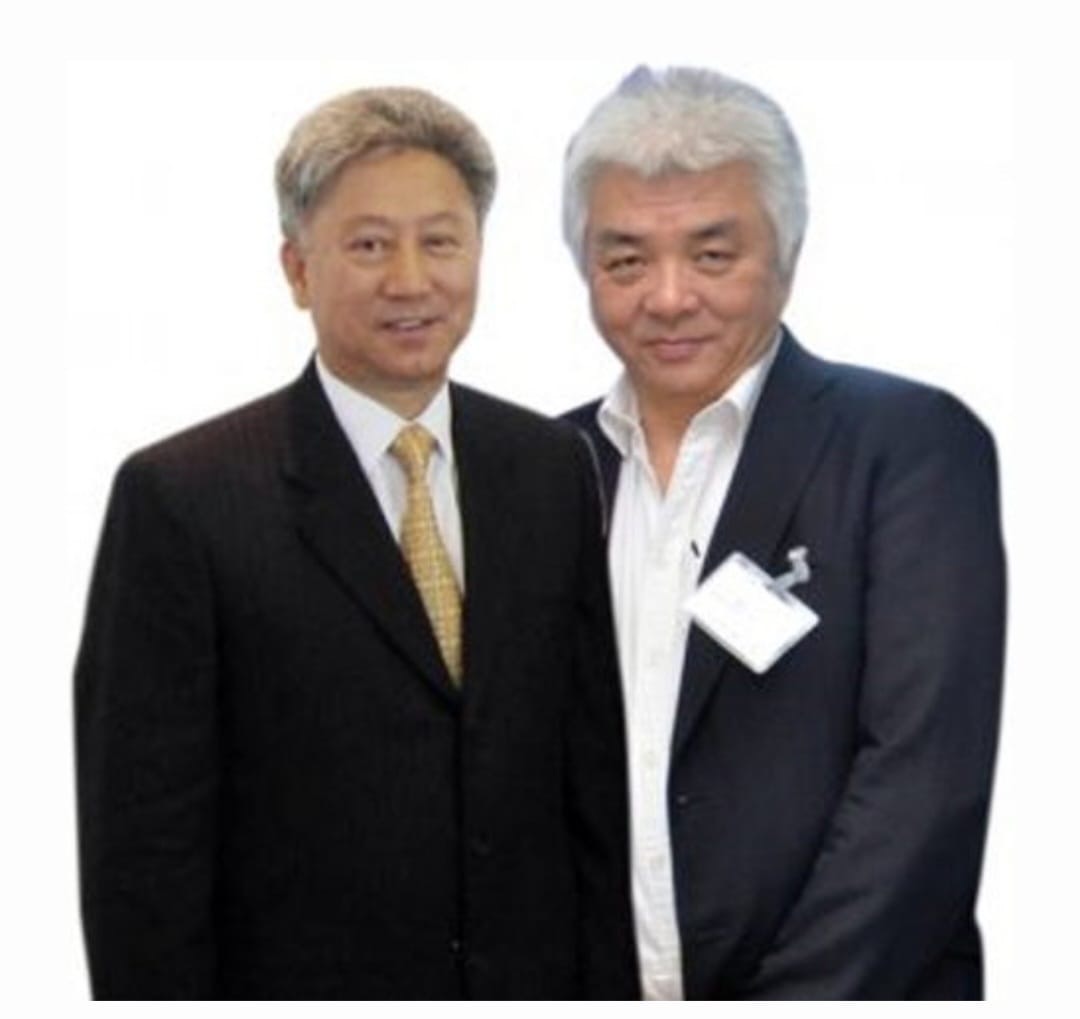
The directors named as alleged contemnors are Lewis Shui Ngor Tung, Phillip Shui Chei Tung, M.A. Ola Yusuf, Tung Lawrence Blake, Aali Aare Hadji Tokunbo, Paul Shui Po Tung, Tung Robert, C.L. Ip and Taiwo Alli.
In advancing the application, counsel to UBA argued that service of Form 49 on the alleged contemnors was necessary to enable them to appear before the court and show cause why an order of committal should not be made against them.
He also argued that the Directors of Wempco and some members of staff took illegal steps in an attempt to disobey the Order of Court.
The court’s decision to grant substituted service provides a procedural step towards bringing the notice to the attention of the individuals concerned in accordance with the court’s directions.
Form 49 is a notice requiring an alleged contemnor to show cause why an order of committal to prison should not be made against them for alleged disobedience of a court order.
The Federal High Court had earlier made an Order of Mareva Injunction and appointed a Receiver/Manager over some of the Assets of Wempco following the indebtedness of Wempco to UBA in the sum of N61,445,695,993.76 (Sixty One Billion FourHundred and Forty-Five Million Six Hundred and Ninety Five Thousand, Nine Hundred and Ninety Three Naira, Seventy Six Kobo).

A Lagos State High Court has granted interim preservative orders, including a Mareva injunction, in favour of United Bank for Africa (UBA) Plc in a dispute involving the alleged diversion of petroleum products valued at $242 million.
The orders, granted last Thursday by Justice K. A. Jose, followed allegations by UBA that Vitol SA, a Switzerland-based energy trading company, wrongfully released cargoes of petroleum products consigned to the bank in the bills of lading.
UBA’s lead counsel, Bode Olanipekun, SAN, urged the court to grant the interim orders to preserve assets and prevent the dissipation of funds pending the determination of the substantive dispute.
In her ruling, Justice Jose granted three of the prayers sought by the bank, including requests to restrain dealings with assets and funds up to the disputed amount.
“Prayers 1–3 are granted as prayed against the 2nd Respondent only,” the judge ruled.
The application was brought pursuant to Order 43 Rule 1 of the High Court of Lagos State (Civil Procedure) Rules 2019 and the Lagos State High Court Practice Direction No. 2 of 2019.
In the substantive proceedings, UBA is seeking to establish the liability of Vitol SA and the owners of the vessels over alleged conversion, misrepresentation and negligence arising from the non-delivery of the petroleum products.
The bank also cited 34 financial institutions and public agencies, including commercial banks, merchant banks, microfinance banks, the Nigerian Ports Authority and the Nigeria Customs Service, in connection with the application.
In an affidavit supporting the application, UBA’s Group Head of Recoveries and Remedial Management, Anthony Chilaka, stated that the bank had issued a letter of credit in favour of Vitol SA to facilitate petroleum products transactions.
According to the affidavit, the cargoes were transported to Nigeria, and the masters of the vessels issued several bills of lading.
UBA alleged that Vitol subsequently endorsed the bills of lading “to the order of” the bank and handed over the original documents to it.
The bank maintained that the endorsement entitled it to take possession of the cargoes upon completion of the voyages.
However, Chilaka stated that UBA had not received the gasoil despite the completion of the voyages.
“The applicant has not been given possession of the gasoil despite completion of the voyage,” the affidavit stated.
UBA alleged that the cargoes were instead diverted for the use of another party, arguing that the failure to deliver the products amounted to conversion and negligence.
The bank further contended that the respondents had obligations arising from the transactions and the endorsement of the shipping documents but failed to fulfil them.
UBA also alleged that cargoes linked to the transactions were diverted to other parties after the completion of their voyages rather than delivered to the bank as stipulated in the shipping documents.
The allegations are expected to be determined in the substantive proceedings.
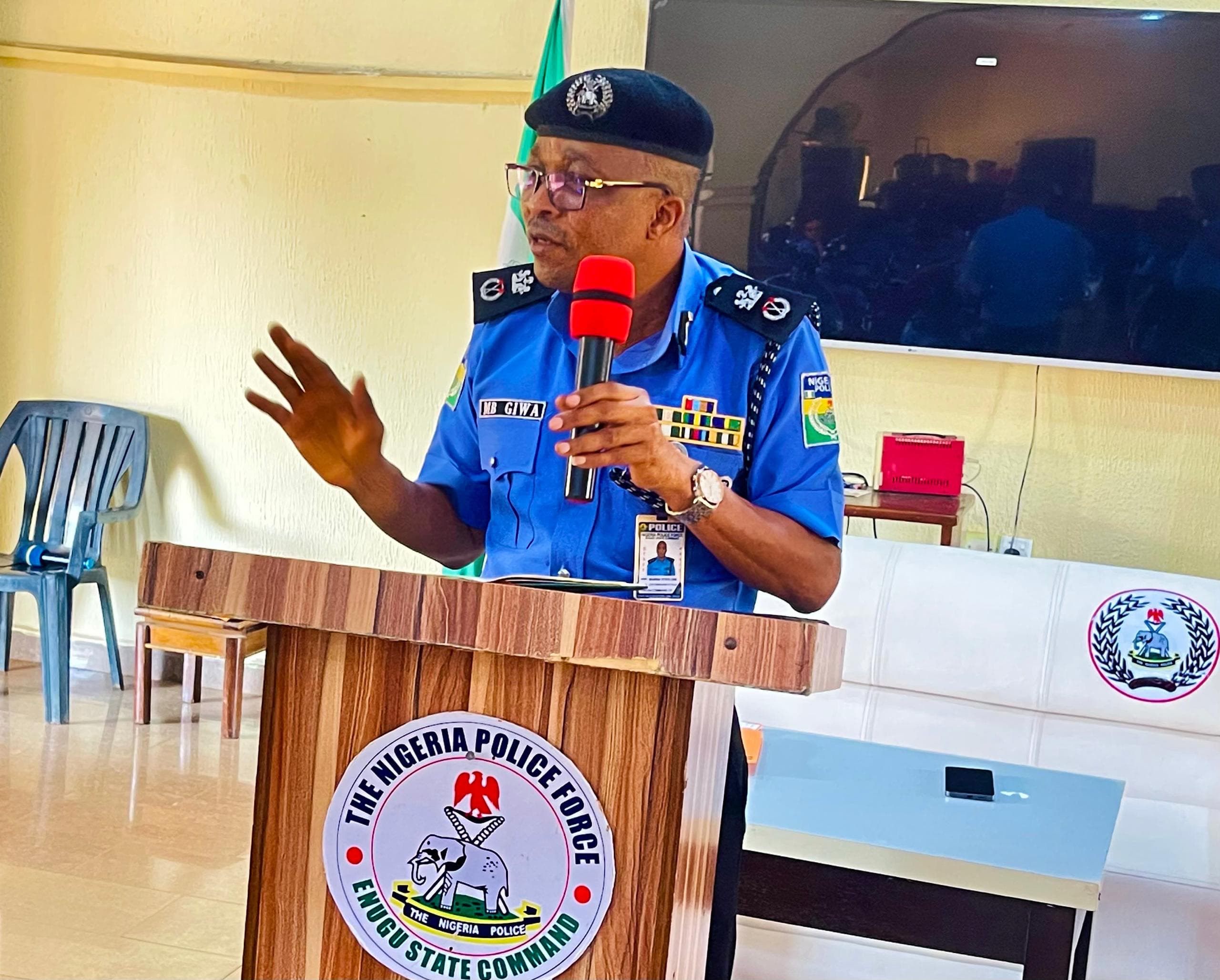
The Commissioner of Police in Enugu State, Mr Mamman Giwa, has warned police officers against degrading treatment of citizens, extortion and other forms of unprofessional conduct.
Giwa gave the warning on Wednesday during an emergency conference with senior officers at the Senior Police Officers’ Mess, Agbani Road, Enugu.
He also directed senior and supervisory officers to strengthen oversight of personnel and improve security management for political and election-related activities ahead of the 2027 General Elections.
The commissioner said the conference followed directives issued by the Inspector-General of Police, Mr Olatunji Disu, during a virtual strategic meeting with senior officers on October 20.
According to him, the I-G emphasised professionalism, compliance with the Nigeria Police Force’s social media policies, adapting policing to contemporary realities, respectful treatment of citizens, and effective management of political activities and election security.
“It is clear that officers cannot effectively discharge their policing responsibilities without treating citizens with respect and conducting their duties in accordance with extant laws and established professional standards,” Giwa said.
He charged senior officers to take responsibility for the conduct of personnel under their supervision, warning that any officer found engaging in misconduct would face the consequences.
The conference also featured a health talk on the Ebola virus, focusing on its symptoms and preventive measures.
Those in attendance included Deputy and Assistant Commissioners of Police, Area Commanders, Divisional Police Officers, heads of formations, tactical and operational units, and heads of various sections of the Enugu State Police Command.
-
 Features1 day ago
Kogi’s Kidnapping Crisis: Why Do Forests Remain Safe Havens for Criminals Under Ododo’s Watch?
-
News2 days ago
“It’s not debatable, we can’t go back,” Mbah Backs Tinubu on Fuel Subsidy Removal
-
News1 day ago
Kidnappers kill seven-year-old boy after ransom demand
-
News3 days ago
Mbah: Enugu Now Produces 120 Million Litres of Water Daily, Expands Agricultural Investment
-
Politics3 days ago
Mike Igini: Politicians Infiltrate Agencies Responsible for Election Personnel as Electoral Laws Go Unenforced
-
News12 hours ago
Macron Postpones Planned Visit to Nigeria Until 2027
-
Politics14 hours ago
2027: Atiku, Obi, Duke, Others in Talks on Single Opposition Candidate – Coalition
-
News11 hours ago
Enugu CP Orders Probe into Death of Izuchukwu During Police Raid