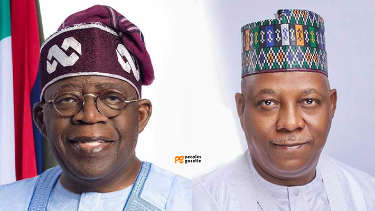
President Bola Tinubu and Vice President Kashim Shettima have collectively inaugurated at least 42 committees to drive various programmes of the administration since assuming office about 20 months ago, The PUNCH reports.
The committees traverse various sectors including education, agriculture, health, security, the digital economy and the civil service.
Further analysis revealed that the total cost of running key presidential committees since 2018 amounted to N21.17bn.
Over the past seven years, the government earmarked an average of N3bn on presidential committees annually. More so, the amount allocated for these committees in the 2025 budget proposal now stands at N3.73bn.
On June 19, barely three weeks into the administration, then-Special Adviser to the President on Communications, Special Duties and Strategy, Dele Alake, announced the creation of a steering committee to consider the various demands presented by the organised labour following the abrupt discontinuance of petrol subsidies.
The committee was mandated to produce a workable framework within eight weeks.
On July 7, Tinubu established the Presidential Committee on Fiscal Policy and Tax Reforms. He appointed former Fiscal Policy Partner and Africa Tax Leader at PriceWaterhouseCoopers, Mr Taiwo Oyedele, as its chair. The committee was inaugurated the following month.
In the same month, the FG created the Presidential Steering Committee on Palliatives to forestall an impending nationwide labour crisis.
On September 14, Tinubu created the Presidential Committee on Implementation of Livestock Reforms which heralded the establishment of a new Ministry of Livestock Development.
On October 10, he created the Presidential Committee on Flood Mitigation, Adaptation, Preparedness and Response, directing an immediate plan of action to mitigate the impact of flooding disasters nationwide. Then Kogi State Governor, Yahaya Bello, chaired the committee.
The committee produced a road map harmonising the National Economic Council report on the flood, the 2022 National Flood Emergency Preparedness and Response Plan as well as all other national reports on flood eventually approved on November 23.
Six days later, the Federal Executive Council chaired by Tinubu created the Presidential Council on Industrial Revitalisation Roadmap, with the President as its chairperson.
The then Minister of Industry, Trade and Investment, Dr Doris Uzoka-Anite, said the 10 subcommittees in the Council would consider all the policies within various ministries, as well as the Ministry of Industry, Trade and Investment.
At the meeting of the Nigeria Police Council, on November 1, Tinubu received a briefing from the newly-appointed Inspector-General of Police and consequently set up a special committee to assess the shortcomings in the 1999 constitution to enhance coordination and align technology and manpower resources towards strengthening the police.
A week later, he inaugurated the National Coordination Committee on Civil Registration and Vital Statistics System alongside the National Geospatial Data Repository.
On November 10, Vice President Kashim Shettima constituted an ad-hoc committee to harmonise Nigeria’s agenda at the COP28 Climate Change Conference in the United Arab Emirates that began on November 30.
10 days later, Shettima established a multi-sectoral committee to drive the FG’s Human Capital Development programme. It was inaugurated in May 2024.
On December 21, the National Economic Council, chaired by the Vice President, created two committees on Economic Affairs and Crude Oil Theft and Management. Both committees were headed by Kwara State Governor, AbdulRahman AbdulRazak and his Imo State counterpart, Hope Uzodimma, respectively.
On January 11, 2024, the Minister of Steel Development, Shuaibu Audu, revealed that his ministry received Tinubu’s nod to create a committee to scout for an appropriate site to establish a new steel plant in the country.
A day later, the President asked state governors to create a committee that would provide a framework to make the school feeding programme more comprehensive and successful across all states, taking into consideration the peculiarities of each locality.
“We should set up a committee to look into the methods. I am ready to invest in school feeding. We have children of school age who are out of school…We should not measure the children as statistics. We should measure their return to classrooms as our achievement. We should see economic growth in terms of value and empowerment,” the President said.
On January 13, Tinubu approved the establishment of a Special Presidential Panel headed by the Coordinating Minister of the Economy and Minister of Finance, Wale Edun, to, among other functions, “conduct a comprehensive diagnostic on the financial architecture and framework of the social investment programmes to conclusively reform the relevant institutions and programmes in a determined bid to eliminate all institutional frailties for the exclusive benefit of disadvantaged households and win back lost public confidence in the initiative.”
This followed the suspension of the former Minister of Humanitarian Affairs and Poverty Alleviation, Betta Edu, on January 7, 2024.
On January 17, the FEC chaired by Tinubu set up a committee to review the laws guiding the control of explosives in the country. It came days after a devastating explosion rocked the ancient city of Ibadan, the Oyo state capital, earlier.
On January 31, VP Shettima inaugurated a 37-member Tripartite Committee on the New National Minimum Wage comprising officials from across federal and state governments, the private sector and organised labour.
On February 8, Tinubu created a Special Presidential Committee on Emergency Food Intervention which facilitated the release of 102,000 metric tons of various grain types from the Strategic Reserve and the Rice Millers Association of Nigeria.
Shettima, on February 13, inaugurated an implementation committee for the Pulaku Initiative, a large-scale resettlement programme to address the causes of clashes between farmers and herders in various flashpoints nationwide.
Two days later, President Tinubu approved the establishment of a committee comprising state governors and FG representatives to, among other things, explore the modalities for establishing state police.
On February 20, the VP revealed that a committee led by the Minister of Finance and Coordinating Minister of the Economy, Wale Edun, is finalising a report on the Ban of Agriculture’s recapitalisation and restructuring.
Two days later, he reinstated an ad-hoc committee to produce a roadmap for flood prevention over warnings of potential flooding from Lagdo dam in October 2023.
On February 26, Tinubu created an economic advisory committee comprising the FG, sub-nationals and the private sector.
Some prominent private sector players on the committee include the Chairman of United Bank for Africa, Mr. Tony Elumelu, and the Chairman of Dangote Group, Aliko Dangote.
At the FEC meeting the next day, the President constituted a committee to implement the mergers, scrapping and relocations of government ministries, departments, and agencies as part of the implementation of the Oronsaye report.
Also, Tinubu convened a committee to establish a consumer credit scheme. The committee comprised the Chief of Staff to the President, Femi Gbajabiamila, as its chair, with the Minister of Budget and Economic Planning, the Attorney-General of the Federation and the Coordinating Minister of the Economy as members.
On March 20, Vice President Shettima reconstituted the National Council on Skills.
Five days later, former Youth Minister, Jamila Ibrahim announced that Tinubu commissioned a technical committee to review and restructure the Nigerian Youth Investment Fund to institutionalise it through a legal framework, which will lead to the establishment of the Nigerian Youth Fund.
On March 27, The PUNCH learned that the President had set up a committee recommending qualified individuals to fill ambassadorial roles.
The next day, the President established a 31-man Presidential Economic Coordination Council comprising himself, the Vice President, the Senate President and the Chairman of the Nigerian Governors Forum, among others.
Tinubu also established a 19-member Economic Management Team Emergency Taskforce which he mandated to meet twice weekly and submit a six-month comprehensive plan of economic interventions for 2024.
On April 17, he directed the Presidential Steering Committee on the National Single Window Project to “Dismantle all block webs” in the way of trade efficiency.
Between May 14 and May 19, Tinubu established a tripartite committee to streamline visa processes and acquisition for investors interested in investing in Nigeria. He also established a 25-person Presidential Steering Committee on Project Evergreen, the supervisory technical working group, to oversee the country’s green economic initiatives.
In June, the President created a cabinet committee to oversee the emergency operations centre led by the National Center for Disease Control in response to a cholera outbreak.
On July 4, the Vice President inaugurated a Steering Committee for the “Clean Nigeria: Use the Toilet” Campaign.
Tinubu also inaugurated the presidential committee on CNG months into his administration.
In early September, the National Economic Council led by the VP established a Committee on the Eradication of Vaccine-Derived Poliovirus.
Following the collapse of the Alau Dam in August, Tinubu established a technical committee to reassess the integrity of the Borno State dam and others nationwide on September 23.
On November 1, VP Shettima inaugurated the National Flood, Erosion, Drought, and Desertification Management Council at the State House, Abuja. This followed recommendations from an updated roadmap on disaster management developed by a committee led by Kogi State Governor Usman Ododo under the direction of the National Economic Council.
Four days later, Tinubu established an Administrative Committee led by the Ministry of Humanitarian Affairs to review all aspects related to the arrest, detention, treatment, and eventual release of 76 minors linked to the #EndBadGovernance protests.
On November 22, the NEC established a committee to strengthen states’ participation in the Electricity Reform Act 2023 and implement the National Electrification Strategy and Implementation Plan.
On February 10, 2025, Vice President Shettima inaugurated the Presidential Committee on Economic and Financial Inclusion.
While most of the presidential committees had definite timelines to conclude their assignments, others have perpetual mandates.
To keep these running, the Federal Government has earmarked no less than N18.9bn for sitting allowances and other remunerations for committee members since 2018.
In 2018, the Office of the Secretary to the Government of the Federation, which oversees the operations of the committees, earmarked N2.13bn.
These include N1.73bn for Political Officers and Standing Committees, N6m for the organisation of the presidential standing committee on private jetties & other research activities of the special duties office, N187.95m for the presidential standing committee on inventions and innovations and N20m for the presidential standing committee on private jetties.
Others include N8.06m for the presidential committee on barracks rehabilitation, N200m for the presidential advisory committee, N342.12m for the presidential technical committee on land reforms and N3m for the organization of the presidential advisory committee on the prerogative of mercy activities.
In 2019, the OSGF earmarked N2.5bn for committees. These include N1.73bn for Political Officers and Standing Committees, N6.6m for the presidential standing committee on private jetties & other research activities of the special duties office and N168.62m for the presidential standing committee on inventions and Innovations and N20m for the presidential standing committee on private jetties.
Others include N6.52m for establishing the presidential committee on e-government, N8.06m for the presidential advisory committee, and N69.62m for the presidential technical committee on land reforms.
N3m for the organisation of the presidential standing committee on private jetties and other research activities of the special duties’ office, N2m for the organisation of the presidential advisory committee on the prerogative of mercy, and N500m to run the presidential enabling business environment council.
In 2020, the OSGF earmarked N1.84bn for running committees. The breakdown is as follows: N1.19bn for Political Officers and Standing Committees, N30.98m for the presidential standing committee on private jetties & other research activities of the special duties office and N70.72m for the presidential standing committee on inventions and Innovations.
Others include N6.52m for the establishment of the presidential committee on e-government, N5.51m for the presidential advisory committee, N47.63m for the presidential technical committee on land reforms, N3m for the organisation of the presidential advisory committee on the prerogative of mercy and N500m to run the presidential enabling business environment council.
In 2021, the OSGF earmarked N5.01bn for committees. A breakdown by The PUNCH revealed that N1.92bn was allocated for Political Officers and Standing Committees, N58.49m for the presidential standing committee on private jetties & other research activities of the special duties office, N164.94m for the presidential standing committee on inventions and Innovations and N50m for the presidential standing committee on private jetties.
Others include N6.52m for the establishment of the presidential committee on e-government, N5.51m for the presidential advisory committee, N162.31m for the presidential technical committee on land reforms, N3.01m for the organisation of the presidential advisory committee on the prerogative of mercy and N1bn to run the presidential enabling business environment council.
In 2022, the OSGF budgeted 3.22bn for committees. These include N1.93bn allocated for Political Officers and Standing Committees, N50m for the presidential standing committee on private jetties and N100m for the presidential standing committee on inventions and Innovations.
Others are N8.06m for the presidential advisory committee, N142.97m for the presidential technical committee on land reforms, N2m for the presidential advisory committee on the prerogative of mercy and N1bn to run the presidential enabling business environment council.
In 2023, the Presidency budgeted N3.73bn for Political Officers and Standing Committees, the presidential standing committee on private jetties and the presidential standing committee on inventions and Innovations.
The rest include the Presidential Advisory Committee, the Presidential Technical Committee on Land Reforms, the Presidential Advisory Committee on the Prerogative of Mercy and the Presidential Enabling Business Environment Council.
In 2024, N2.58bn was allocated for Political Officers and Standing Committees, N50m for the presidential standing committee on private jetties and N89.29m for the presidential standing committee on inventions and innovations.
The rest include N10.73m for the Presidential Advisory Committee, N221.3m for the Presidential Technical Committee on land reforms, N9.8m for the Presidential Advisory Committee on the Prerogative of mercy and the Presidential Enabling Business Environment Council.
In 2025, N2.58bn was allocated for Political Officers and Standing Committees, N65m for the presidential standing committee on private jetties and N89.29m for the presidential standing committee on inventions and innovations.
The rest include N15.38m for the presidential advisory committee, N478.45m for the presidential technical committee on land reforms, N8m for the presidential advisory committee on the prerogative of mercy and the presidential enabling business environment council.
The Special Adviser to the President on Information and Strategy, Bayo Onanuga, has yet to respond to queries on the issue as of this report.
A sociopolitical activist and former leader of the Concerned Nigerians Advocacy Group, Mr Deji Adeyanju, argued that the committees must justify their existence by the results they produce.
He said “I think it is all about political patronage because none of the committees has led to anything significant. Whether it’s to improve the economy, improve societal values or issues around even the policy, none of them has been able to come up with anything substantial. There’s always this policy flip-flop. So, that is money down the drain in several committees like that.”(PUNCH)