News
Gov. Mbah’s 18-month governance in Enugu truly transformational – LEAD Network Africa

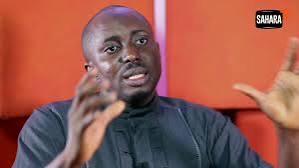
The Executive Director of Leadership, Entrepreneurship and Advocacy Network (LEAD Network) Africa, an NGO, Chief Chukwuma Okenwa, says ‘Gov. Peter Mbah’s governance in Enugu state is truly and highly transformational.
Okenwa said this on Tuesday in Enugu while reacting to the recent scorecard presented by Gov. Mbah on his governance in a Town Hall Meeting, which was themed: ‘Governance Issues: The Journey So Far”.

The LEAD Network boss said that what the governor had done in the past 18 months is commendable in terms of infrastructure and should be emulated by leaders who intend to serve their people in all sincerity.
He said that after delivering water to Enugu residents within six months in office, the governor is doing over 1,000 projects running simultaneously and turning the state into a huge construction site.
This, he said, remained unprecedented in the history of achievements of previous governors in the state.

According to him, each of the 260 political wards in the state, notwithstanding how remote the area is, have at least two projects or more being completed or running in them currently.
Okenwa noted that Mbah had given attention to over 16 years abandoned monumental and international projects such as the International conference Centre (ICC Enugu), Hotel Presidential and International Ultra-Modern Hospital among others.
“We are witnesses to massive road construction and reconstruction within Enugu metropolis and solar-powered street-lights everywhere to boost commerce, nightlife and security.
“Our ‘Mr Projects Governor’ has also constructed lots of rural link roads as well as directed each chairman of council areas to construct at least 10 kilometres of rural roads and install solar-powered street-lights in them.
“We are ‘eye-marking’ brand new smart basic schools and type-2 Primary healthcare centres in each of the 260 political wards in the state.
“We are seeing the three new commercial vehicles terminals in Enugu and Nsukka coming on stream, modern bus stop stands as well as the Enugu Air and aero-space hub projects coming up.
“Opened up the electricity market in Enugu State, opened up the basic health, nursing and midwifery schools and created more transparency in the land use system and work of the ministry of lands,” he said.
Okenwa said that Mbah remained the only governor that had kept his word in providing top notch and modern security systems through using hi-tech technology.
“Within 18-months, the state bought 100 brand new vehicles for its Distress Responses Squad (DRS); installed hi-tech cameras and searchlights in bus stops, junctions of densely populated areas and along major highways, while inaugurating a security Command and Control Centre.
“This is to show that Mbah is preparing Enugu State as a place people world over can come, do business, live and spend time on leisure with security full guarantee, while they contribute their quota to the development of the state.
“This is why he is currently building a new smart city in Enugu for such high worth and high net personalities within the country, Africa and the world, who will use Enugu as a base and home,” he said.
The LEAD Network boss said that what baffles the entire residents remained that Enugu State is not a high federal allocation and Internally Generated Revenue (IGR) earner; but “Gov. Mbah is practically pushing all these projects at the same time”.
Okenwa urged residents and people of the state to keep supporting Mbah’s programmes and projects, adding: “All these initiatives and projects will reposition the state as a human capital development, health, commercial, tourism and financial hub”.
“We can see that gradually the vision of Gov. Mbah building the Enugu State economy from $4 million to $30 million within eight years is possible and achievable as the people support his sincere and visionary governance,” he said.




President Bola Tinubu has ordered the suspension of three permanent secretaries over the discovery of another fake agency operating within the Office of the Secretary to the Government of the Federation.
The affected PS are M.S. Danjuma, Nadungu Gagare, and Richard P. Pheelangwah.
The President also ordered the arrest of one George Buchi Nwabueze.
Chairman of the Independent Corrupt Practices and Other Related Offences Commission, Dr Musa Aliyu, SAN, disclosed this to State House correspondents on Friday after briefing the President for the second time in two days, following an earlier meeting on Thursday.The
Aliyu said the newly uncovered fake office, operating under the name “National Brands Development and Made-in-Nigeria Special Project Office,” had been illegally allocated office space within the premises of the OSGF, contrary to extant laws and without presidential authorisation.
He said the discovery emerged in the course of the commission’s broader investigation, as earlier directed by the President.
The ICPC boss identified the promoter of the fake office as one George Nwabueze, who was said to be operating under multiple aliases.
“The fake agency office, National Brands Development and Made in Nigeria Special Project Office, was promoted by one George Buchi Nwabueze, with active suspected collaborators in the Office of the Secretary to the Government of the Federation, contrary to extant laws and without authorisation of the President of the Federal Republic of Nigeria.
“The promoter was discovered to also operate under four other variations of his name: George Nathan, George Nathan Nwabueze, Honourable George Buchi Nwabueze, Prince George Buchi Nwabueze and George Nwabueze,” Aliyu said.
He revealed that the ICPC had engaged the OSGF to ascertain vital information relating to the fake office under investigation, and had comprehensively briefed the President on the new developments.
“I have briefed Mr President comprehensively on these new developments. ICPC will continue with its investigations accordingly,” he said.
Aliyu said following the discovery, “Mr President has directed as follows: the immediate arrest of Prince George Buchi Nwabueze; the immediate suspension of the following permanent secretaries; M.S. Danjuma, Nadungu Gagare, and Richard P. Pheelangwah,” he said.
Friday’s development is the latest in a scandal that began with the exposure of the fictitious Presidential Foreign Intervention Promotion Council, whose self-styled Director-General, Adeniyi Adeyemi, is currently facing prosecution on charges of forgery and impersonation.
The ICPC’s interim report, submitted to the President on August 6 after a 30-day investigation, had earlier disclosed the existence of two other fictitious bodies, the FCT Investment Promotion Agency and the Foreign Investment Promotion Agency and Public-Private Partnership.
The National Brands Development and Made-in-Nigeria Special Project Office is the fourth fake agency uncovered after the PFIFC scandal since early April.
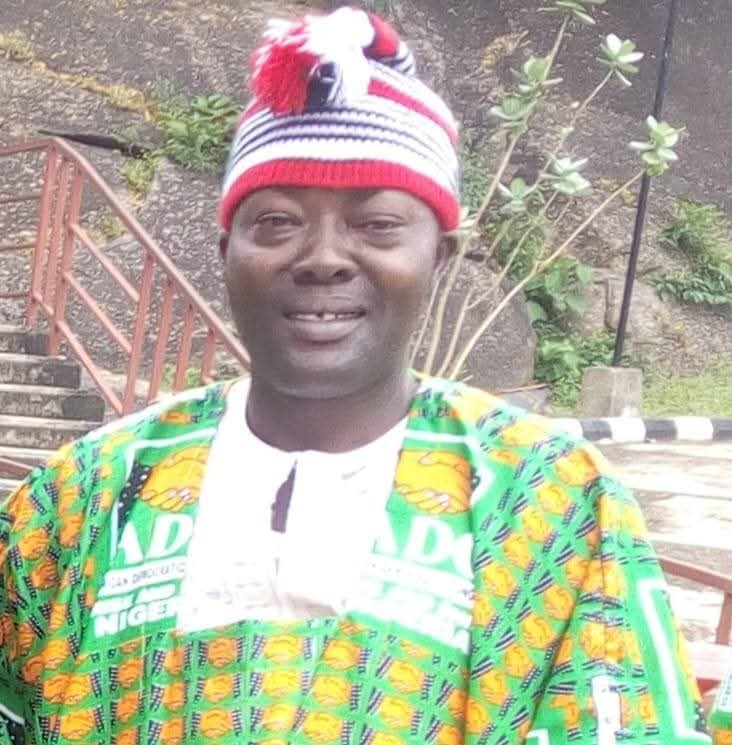
Tension and grief have enveloped the political community in Enugu State following the suspected murder of the African Democratic Congress (ADC) Chairman in Udenu Local Government Area, Chisimdiri Emmanuel Ngwu.
Ngwu, said to be one of the longest-serving members of the ADC in the state, was reportedly found dead in the early hours of Wednesday, August 19, 2026, in circumstances suspected to be suspicious.
A family source, who spoke to our correspondent, said Ngwu left the house shortly after waking up on Wednesday morning but never returned alive.
“He woke up early in the morning on Wednesday and walked out and that was the last we heard of him,” the source said.
According to the source, the family became worried after discovering that Ngwu was missing, before his lifeless body was later found outside the compound.
“When we woke up, we didn’t see him only to discover his lifeless body in front of our compound. We saw scratches on his neck which was twisted backwards,” the source added.
The circumstances surrounding his death have continued to generate concern among family members, friends and political associates.
Meanwhile, two persons have reportedly been arrested in connection with the incident.
However, their identities and the circumstances surrounding their arrest were not immediately disclosed as of press time.
The development has reportedly sent shock waves through the ADC in Udenu and the wider political community in the state, with calls for a thorough investigation into the circumstances surrounding Ngwu’s death.
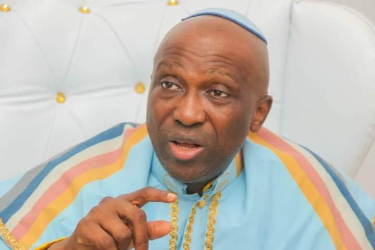
Leader of INRI Evangelical Spiritual Church, Primate Elijah Ayodele has claimed that President Bola Tinubu will relocate the capital of Nigeria to Lagos if he is declared the winner of the 2027 general elections.
Primate Ayodele made this statement in a video posted on X.
President Tinubu is seeking re-election under the platform of the ruling All Progressives Congress, APC.
Speaking about Tinubu’s re-election, the cleric said, “Lagos architecture will change. You may not see this one very seriously, but if Tinubu wins the second time, the capital of Nigeria will be relocated to Lagos.
“When this happens, the capital can be in Epe or Lekki or anywhere at all in Lagos.”
-
 News2 days ago
BREAKING: Gunmen attack Adeleke’s convoy in Osogbo shortly after receiving Certificate of Return
-
International3 days ago
Canada invites 1,000 candidates to apply for permanent residence
-
Uncategorized3 days ago
2027: Obi unfolds agenda as campaigns begin
-
News2 days ago
Lagos shuts churches over noise pollution
-
News2 days ago
Two shot as police attempt to arrest suspects in Anambra
-
News3 days ago
Even if Tinubu appoints Seyi as INEC chairman, he’ll be defeated in 2027 — Dalung
-
News3 days ago
Why I won’t apologise to Okpebholo — Davido
-
News3 days ago
Access Bank asks court to recover N1.3bn stolen by Yahoo Boys