Politics
What Dr. Nnamdi Azikiwe said about Ojukwu and his role in Biafra


FROM THE ARCHIVES
Dr Nnamdi Azikiwe’s Opinion of the Biafran Leader, Chukwuemeka Odumegwu Ojukwu and his diplomatic roles to resolve the face off between Nigeria and Biafra.
Excerpts from the interview Zik of Africa granted to New Nigerian Newspapers, 1979, as Presidential aspirant under the platform of Nigerian People’s Party.
“Yes. I played a prominent role in Biafra for the unity of the country in order to restore peace and bring about unity of the country. That’s the role I played. I advised Ojukwu. I said well look, you have declared secession.

What we should do is to get the elder statesmen and women of the nation to reconcile you and Gowon. I said by declaring secession, you get so many people who do not believe you to remain there.
You see all of us were interned. As we were interned then, we couldn’t express our own views as we see it because, he made Decree Number 5 which vested absolute powers in himself and if you were against his views, it then constituted an act of subversion and the penalty was death by shooting.
Well, it was a war-time measure and that is understandable. So, I advised him. I said go to the conference table and iron out your differences. Allow elder statesmen and elder stateswomen to bring the two of you to the conference table and settle this matter so that there will no more be civil war and the country may be united. He agreed. But Gowon was advised by the Ministry of External Affairs to insist on pre-conditions .

That is that before he could negotiate with the secessionists, that they must accept certain terms; accept the 12-state structure and all. So, it was quite obvious that the Federal Government wanted Biafra to come to the conference table with their hands tied and their feet tied. But they won’t be free agents.
That was the diplomatic mistake on the part of the Federal Government. So, when they did that, then Lt- Col. Ojukwu told me, “How can I go to the conference table based on these ultimatums?”
Still I advised Ojukwu to go to the OAU and ask them to use their good offices to settle the dispute and that we should avoid loss of lives. He accepted my advice in good faith.
Then he said, ‘Now, you have some heads of state in Africa who are your friends, would you mind going to appeal to them to use their good offices so that the Nigerian civil war could be an item on the agenda for OAU summit in Kinshasa?’ I said I would gladly go. So he sent me to Monrovia as a peace envoy.
I went there and met my friend, President Tubman. Tubman expressed his willingness to use his good offices. He told me he would see another mutual friend, the late Haile Sellassie, Emperor of Ethiopia, and both of them would see that the civil war was placed as first item on the agenda of the OAU Summit in Kinshasa.
I returned and broke the news to Ojukwu. He was very pleased.
Then, when the OAU summit opened, Chief Awolowo, as Vice-Chairman of the Federal Executive Council and Commissioner for Finance, led a strong Nigerian delegation to Kinshasa and raised a very strong objective on the Nigerian civil war being placed as an item on the agenda on the grounds that according to the OAU Charter, this was a domestic affairs and member states were precluded from interfering in the domestic affairs of each other, which was really sound according to international law.
But we wanted to solve it in the African way, to use mediation and conciliation to bring two warring brothers together.
The OAU accepted the submission of Chief Awolowo and so it was not put into the agenda. Well, history will show now between Chief Awolowo and myself, who actually accentuated the war. I was trying to get the OAU to settle the dispute so they could go to the conference table and he was thinking of legalism, that it would amount to interference in the domestic affairs of a member-state.
But meanwhile here you have two brothers killing each other.Well, Ojukwu told me, I have done my best. You see, Nigeria was relying on law and we are relying on humanity.
What’s next? I said why not try other heads of states and see what could be done to bring about peace? He then said he left the initiative with me. I suggested going to some heads of state and see what can be done. But his advisers led by Dr. Nwakama Okoro suggested recognition.
That if we can get other states to recognize Biafra, maybe the hands of Nigeria may be forced to go to the conference table.
Well, I thought that was a sound idea and I placed my services at their disposal so as to meet my friends.
We had in mind President Senghor of Senegal, President Houphouet Boigny of Ivory Coast, President Julius Nyerere of Tanzania, President Milton Obote of Uganda, President Kenneth Kaunda of Zambia and of course Francois Bongo, he is now Omar. He now has become a Muslim. He was then a Christian.
The long and short of it all was that I and these great African statesmen agreed that if Gowon persisted with pre-conditions, then they would accord recognition to force the hands of Gowon to go to the conference table and bring about peace.
That was one.
Two, Gowon had already predicted that the war would end on March 31 and as far as these African statesmen were concerned, these killings and atrocities did not do any credit to the image of Africa and as such what should be done was to stop it as soon as possible.
Therefore if the war didn’t end by March 31, then the propaganda of ‘Biafra’ that it was an act of genocide would be justified. And they didn’t want to accept that.
I went on this mission and succeeded in persuading these heads of state to agree to give recognition just to force the hands of Nigeria, diplomatically speaking, to the conference table.
President Senghor said he couldn’t because the majority of his supporters were Muslims and rightly or wrongly they felt it was a religious war. And he said well, if he granted recognition, then his government would fall.
But he supported the idea of forcing the hands of Nigeria to the conference table. Houphouet Boigny was prepared, provided his people backed him. Ditto for the others except Milton Obote who told us that Prince Mutesa and the Bagandans wanted to secede and he couldn’t support secession when his own state was confronted with similar problems. It left four of them.
That is, President Nyerere, Houphouet Boigny, Kaunda and Bongo. They agreed on the understanding that the war did not end by March 31, 1968 and pre-conditions would be removed to make it easy for both Ojukwu and Gowon to go to conference table.
So they granted recognition and it worked like magic because immediately after this, Dr. Okoi Arikpo, who must be presumed to be responsible for this diplomatic blunder (he was the Commissioner for External Affairs]—a good man no doubt, but he is a very poor diplomat in my own humble opinion – announced to the outside world that Nigeria would no longer insist on pre-conditions and that he was prepared for conference table but the war did not end on March 31 and so, they left the impression, you see, that Nigeria wanted to annihilate the Ibos.
You noticed the Soviets gave Nigeria more arms and Nigeria used those arms to destroy the secessionists. Here, I came in again and I advised Ojukwu. I said look since Gowon has withdrawn the pre-conditions, go to the conference table and argue the points so as to pave way for a peace conference.
It was agreed that they should meet in Niamey. I advised Ojukwu to go. Again Gowon was ill-advised so he couldn’t come.
At Niamey here was Ojukwu. I was on his side. Gowon wasn’t there but Haile Sellassie, Hamani Diori, Tubman and General Akran were there representing OAU. So, I told Ojukwu, I said now you have an upper hand.
These respected leaders of the OAU were there. I had briefed Ojukwu. I said ‘look your line of approach is to express appreciation for what the OAU was doing in order to maintain peace in Africa but you were prepared to co-operate and you are leaving the whole matter in the hands of the OAU to see what could be done to bring an earlier cessation of hostilities.
I said just say that and thank them and sit down.Now Gowon didn’t attend. He sent a junior man, I think Alhaji Femi Okunnu or so, to represent him. And they didn’t even attend this conference at which the four heads of state presided. It was only the Biafran side.
So Ojukwu won a diplomatic victory and you know Ojukwu is a very good speaker if you give him all the facts. He was a good public relations expert and he won. He said, ‘well if Gowon was sincere why did he spite such great men and didn’t attend?’ That worked.
They agreed that Nigeria could be contacted so that we have a peace conference in Addis Ababa. It was a diplomatic victory for Biafra and so we returned to Biafra highly elated. And Ojukwu insisted that I should accompany him to Addis Ababa.
Then something happened. Some of his advisers felt that I was becoming a victim of compromise and that I was a bad influence. That all I was trying to do was to make Biafra impotent. They told Ojukwu that Biafra was holding its own militarily. And why should we want a peace conference?
That he should be very, very careful with me, especially as an Onitsha man because they thought that I was using him as a means to give publicity for myself internationally and that time will come when people will look more to me than to himself.
Well, as a young man, human, he fell for such flattery. I don’t want to mention all the names, but particularly influential in swinging his opinion at that material time was Mr. C. C. Mojekwu, who was based in Lisbon. Then Mr. Matthew Mbu was our Commissioner for External Affairs and he himself did as much as possible, but then he realized that he was having someone who has power of life and death over everybody.
So, we went to Addis Ababa and on the night before the conference, Matthew came to my bedroom at about 10 in the night. He said, “Do you know that all we have done, this man is going to undo them tomorrow?’ I said ‘No’. Then he brought out a printed version of a long speech.
The world press said it lasted for 90 minutes.
He [Ojukwu] went back on everything we discussed. He attacked the United Kingdom, the United States, the Soviet Union – all the nations of the world and the OAU, and said that they were misleading us and that the sovereignty of ‘Biafra’ was not negotiable.
We went to the conference. I sat next to him. I thought that he was going to speak in accordance with the spirit of Niamey. But he spoke for 90 minutes and he just got the whole place upside down.
Naturally, Tony Enahoro – he led the Nigerian delegation – replied in kind and so we were back to square one. So, when we returned, I advised him. I told him that I was surprised at what he did but it was not late. He said, ‘The sovereignty of Biafra is not negotiable and if anybody should try to compromise that sovereignty, then it will be an act of subversion.’
Well, that was quite clear to me so I said, ‘Your Excellency, you still have Port Harcourt and you can still bargain from position of strength – after all, the main issue in the civil war is oil and they say that in international politics, oil is combustible and as you have a combustible situation you can begin from the position of strength’. He said, ‘No, Port Harcourt is impregnable.’ ‘Very well, Your Excellency,’ I said. I went back to Nekede where I had been in protective custody since February, 1968. Two weeks later, Port Harcourt fell.
He sent for me. I said, ‘Well, Your Excellency, I did warn you. You cannot now negotiate from a position of strength but having received recognition from four states, we can still use them to see what we can do to appeal to the outside world.’ He said, ‘Very well, I think you should go to the United Nations to seek for recognition.’ I said, ‘Your Excellency, let us wait until after OAU summit in Algiers and find out what Africa thinks.’ In the meantime, I went to Tunisia to see my friend Habeeb Bourguiba of Tunisia. He wasn’t quite well, so we moved from Carthage to Hermit where he stayed. Ojukwu had always said the civil war would be won on the battlefield and not on the conference table, and Bourguiba didn’t take kindly to that. He said don’t you people advise this young man? I explained to him that I have done everything I could to advise him, but he insists on going to the battle field.
So we crossed our fingers awaiting the verdict of Algiers. You know it was decided by 33 to 4 in favour of Nigeria. I advised Ojukwu that to go to the United Nations to seek recognition would be unrealistic since Africa had decided by 33 to 4 in favour of Nigeria. I said Nigerian envoys, the Nigerian delegations, would just percolate the membership of the United Nations and they would frown at the whole thing. He insisted. I was then in Paris. I wrote him a letter. I said,
‘Since you refuse to go to the conference table to negotiate for peace, since you prefer that the civil war should end on the battle field and not on the conference table; since you said that the sovereignty of Biafra is not negotiable, I am afraid I cannot continue as a peace envoy because you have destroyed all the vestiges of any optimism for peace.
Therefore I am relieving myself of my services as a peace envoy. I cannot continue as a peace envoy. I cannot continue as a peace envoy because you have let me down. You left me under the impression that if I succeeded in getting recognition you will go to the conference table. You got four recognitions; you did not go to the conference table. I am therefore going to London on exile.’
I went to London in voluntary exile and the British government granted me asylum. I do not see how anybody could say that I ran away from my country.
I crossed the Atlantic 46 times, trying to negotiate with various heads of state so that they could grant recognition or make OAU to settle the dispute. How could the head of state turn round now and accuse all those who were politicians in pre-1966 and post-1966 as being responsible for the downfall of the republic?
I did my best to preserve the unity of Nigeria and also to preserve the lives of old men, able-bodied men and women and children but I failed. What could I do? I went on free exile and they keep saying that I was among those responsible for the downfall of the republic. I plead not guilty”.









…Promises to prioritise roads, agriculture, education, electricity and peace
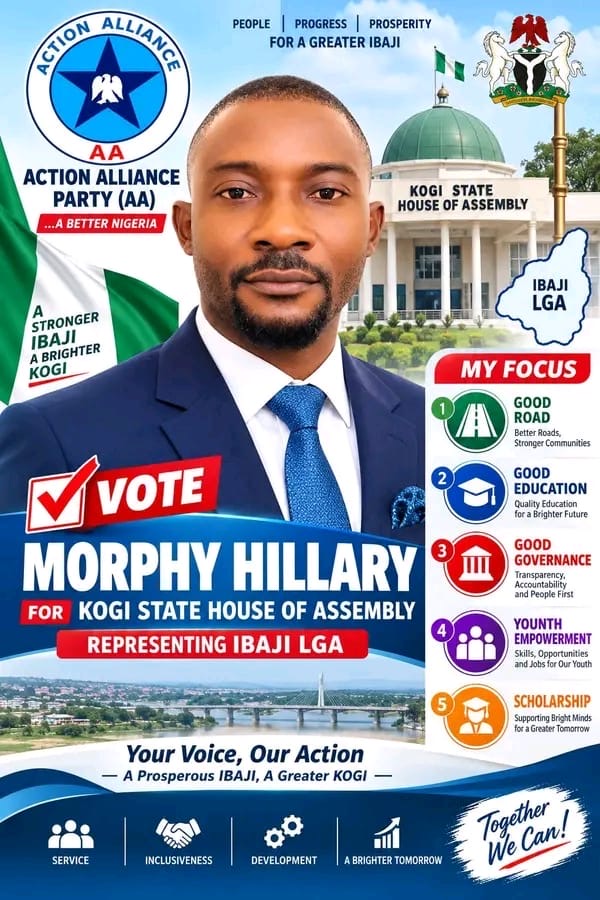
IYANO, Kogi State — The African Action Alliance(AA) candidate for the Kogi State House of Assembly seat representing Ibaji Local Government Area, Ugbaje Friday, has unveiled a development agenda focusing on road infrastructure, agriculture, education, electricity and peaceful coexistence among communities.
Friday, who hails from Iyano Ward in Ibaji, said his proposed legislative agenda would address critical challenges confronting residents and promote economic growth and improved public services across the local government.
Roads, Flooding and Rural Connectivity
The AA candidate identified poor road infrastructure and recurrent flooding as major obstacles to transportation, trade, education, healthcare delivery and other economic activities in Ibaji.
He said he would advocate the construction and rehabilitation of roads designed to withstand flooding and improve connectivity among communities.
According to him, better road networks would ease movement, improve access to essential services and enable farmers to transport their produce to markets more efficiently.
Agriculture and Economic Development
Highlighting agriculture as a major source of livelihood in Ibaji, Friday said he would pursue policies and legislative initiatives to strengthen the sector and support local farmers.
He noted that the area produces rice, yam and other agricultural commodities, adding that attention should also be given to processing, storage, transportation and market access to reduce post-harvest losses and improve farmers’ earnings.
He said a stronger agricultural value chain could create economic opportunities and support the growth of local enterprises.
Education and Electricity
Friday also pledged to make education a priority, promising to advocate improved school infrastructure and increased government investment in the education sector across Ibaji.
On electricity, he said he would seek government intervention to address persistent power supply challenges, noting that provision of electricity would benefit households, schools, healthcare facilities and small businesses.
He maintained that access to essential infrastructure and public services was critical to improving living standards and accelerating development in the area.
Peaceful Coexistence and Conflict Resolution
Addressing the issue of communal conflicts, the AA candidate said dialogue, reconciliation and cooperation would be central to his approach to promoting peace in Ibaji.
He pledged to work with traditional rulers, community leaders, youth groups, women’s organisations, security agencies and relevant government institutions to address the causes of disputes and encourage peaceful resolutions.
Friday stressed that sustainable development would be difficult to achieve without peace and cooperation among communities.
Constituency Projects and Legislative Priorities
The candidate said that, if elected, he would seek to facilitate constituency projects in critical sectors, including roads, education, healthcare, water supply, electricity and agriculture.
He also pledged to sponsor bills and support legislative measures aimed at addressing the needs of Ibaji residents and advancing their welfare.
He listed infrastructure development, agricultural support, education, electricity, community peace and effective constituency representation among the key areas of his proposed legislative agenda.
Calls for Credible Electoral Process
With the Kogi State local government council elections scheduled for October 17, 2026, Friday called on the Kogi State Independent Electoral Commission to ensure a transparent, credible and lawful electoral process.
He urged the electoral body to adhere to established procedures, ensure proper counting of votes and protect the integrity of the election.
The AA candidate also appealed to residents of Ibaji to support his candidacy and participate actively in the democratic process as he seeks to represent the local government in the Kogi State House of Assembly.
He said his campaign would remain focused on the interests of the people, peaceful coexistence and sustainable development.
For enquiries and further engagement:
* Email: morphyhillary@gmail.com
* Phone: 08038275895
Ugbaje Friday is the African Action Congress candidate seeking election to represent Ibaji Local Government Area in the Kogi State House of Assembly.
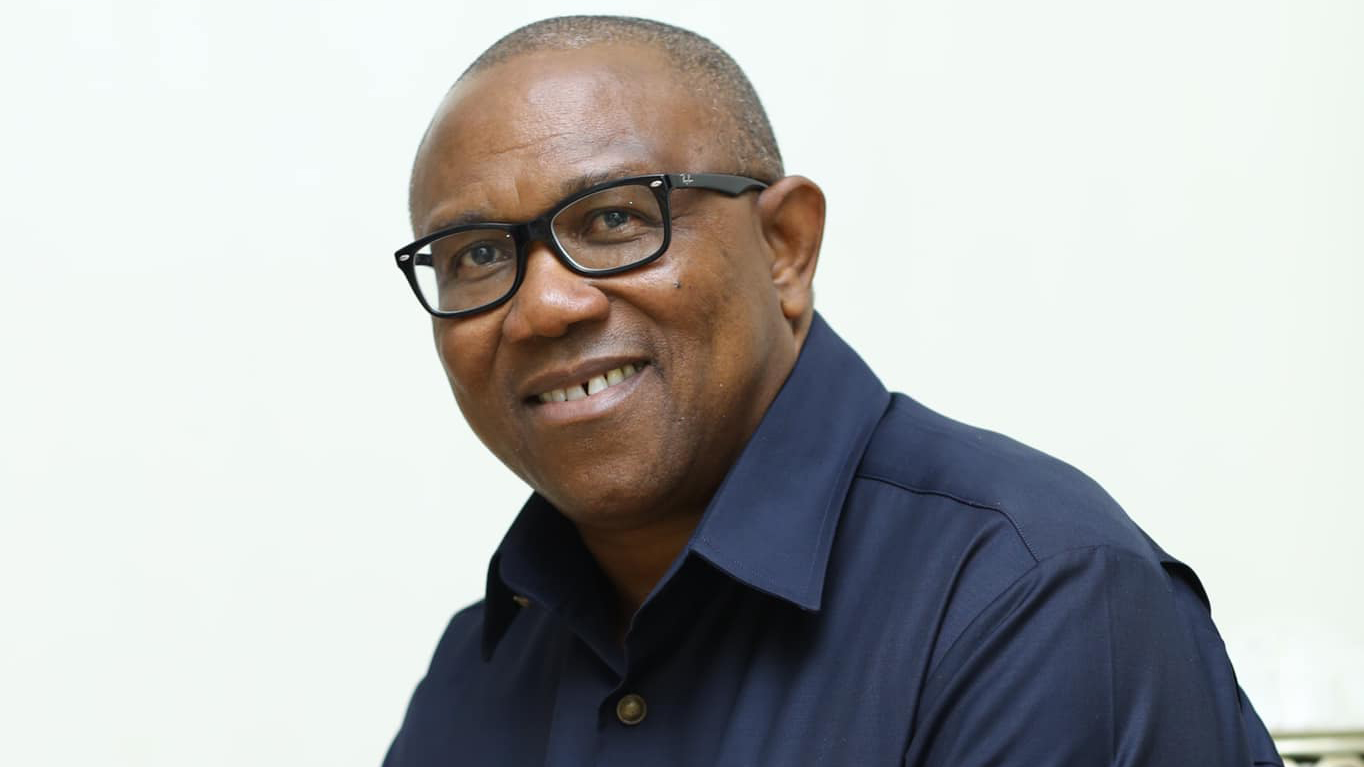
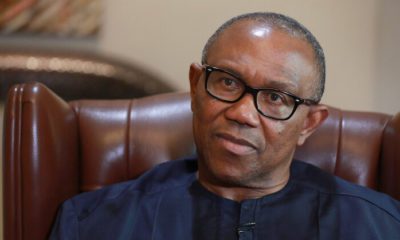
The Peter Obi Media Office has accused Vice-President Kashim Shettima of applying double standards in his treatment of opposition leaders, questioning why he would demand respect for former Vice-President Atiku Abubakar while reportedly describing Peter Obi as “diminished”.
In a statement issued on Sunday, October 18, 2026, the spokesman of the Peter Obi Media Office, Idris Zekeri Jnr., criticised Shettima’s reported remarks, describing them as contrary to the principles of political decency and mutual respect.
The office said the apparent contrast between Shettima’s call for respect for Atiku and his alleged disparagement of Obi raised questions about consistency, political tolerance and the treatment of opposition figures in Nigeria’s political space.
Zekeri argued that although Shettima had the right to disagree with Obi politically, such differences should not prevent him from extending the same courtesy he demanded for Atiku to other opposition leaders.
“Although Shettima has the right to oppose Obi, it is difficult to understand why he would demand respect for one opposition leader while casually dismissing another,” the statement said.
The media office questioned what it described as selective respect, insisting that political disagreements should not determine which opposition figures deserve dignified treatment.
According to the statement, the issue was not whether Shettima supported Atiku or opposed Obi, but whether the principle of respecting political opponents should apply equally, regardless of their regional backgrounds, political affiliations or electoral ambitions.
The office also maintained that Obi had conducted his political engagements with decorum, focusing on governance and public policy rather than personal attacks against political opponents.
It challenged Shettima to compare their respective records as former governors of Borno and Anambra states, claiming that Obi’s performance in key areas of governance surpassed that of the Vice-President.
The statement highlighted Obi’s record in fiscal discipline and investments in education and healthcare during his tenure as governor of Anambra State, arguing that his achievements should be assessed on the basis of verifiable facts.
It urged Shettima to provide evidence to counter Obi’s record if he disagreed with the former Anambra governor’s achievements, rather than resorting to personal descriptions.
“If Shettima contests any aspect of Obi’s record, he should present the facts rather than resort to political name-calling,” the statement added.
The media office further called on political leaders from the South-East, particularly members of the All Progressives Congress (APC), to reflect on the implications of the Vice-President’s reported comments.
It criticised South-East political figures who had allegedly shown disrespect towards Obi, arguing that political loyalty should not come at the expense of defending the dignity of fellow Nigerians.
The office insisted that no political affiliation should justify a situation in which respect was demanded for one opposition leader but withheld from another.
“Nigeria needs a contest based on records and ideas, not selective respect and political denigration,” the statement said.
It added that the Nigerian electorate, rather than political rhetoric or dismissive remarks by public office holders, would ultimately determine Obi’s political relevance.

The All Progressives Congress (APC) has won all chairmanship and councillorship positions in the just-concluded local government election in Kogi State.
The Chairman of the Kogi State Independent Electoral Commission (KOSIEC), Mamman Nda Eri, announced the results at the commission’s secretariat in Lokoja.
Speaking after the announcement, Eri emphasised that elections should not be seen as battles between enemies but as democratic contests among citizens with a shared destiny.
He noted that although political parties might differ in ideology and approach, the people of Kogi State had a collective responsibility to sustain peace and promote the development of the state.
The KOSIEC chairman urged residents to remain peaceful, law-abiding and united to accelerate the state’s development.
According to him, the election has produced representatives who now face the greater responsibility of building stronger communities and improving the living conditions of the people.
Eri also reaffirmed the commission’s commitment to protecting the integrity of the electoral process and strengthening grassroots democracy in the state.
Thirteen political parties participated in the local government election, which was described as generally peaceful across Kogi State.
-
 News1 day ago
JUST IN: Former Delta Governor, Uduaghan, dies
-
Faith2 days ago
Awka Anglican Diocese Rejects Ibezim’s Suspension, Threatens to Leave Church of Nigeria
-
News3 days ago
BREAKING: Mbah Extends Enugu Movement Restriction to 10pm, Scraps Keke Ticketing
-
Politics2 days ago
Nigeria’s Weak Opposition and the Cost of One-Party Dominance: Can the Opposition Rebuild Before 2027?
-
News3 days ago
2027: Keke Riders Endorse Mbah, Tinubu
-
News1 day ago
Federal High Court Upholds ENSSAA’s N150m Political Campaign Billboard Fee, CTC Reveals
-
News2 days ago
Corruption turning Nigerian Courts to ‘market stalls’ — Retired Justice Augie
-
Politics1 day ago
AA Assembly Candidate, Ugbaje Friday, Unveils Development Agenda for Ibaji