News
We recovered drugs from serving Senator’s house—NDLEA


We recovered illicit drugs from serving Senator’s house—NDLEA
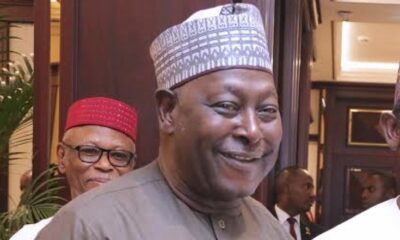
The National Drug Law Enforcement Agency (NDLEA) said it recovered illicit drugs from the personal house of Kwara South Senator, Oyeyola Ashiru, attributing the lawmaker’s recent outburst against the agency to the recovery.

The Senator during plenary on October 15 said: “The National Drug Law Enforcement Agency is corrupt and compromised…” calling for the establishment of another anti-drug agency.
But the chairman of the agency, Brig Gen Buba Marwa (Rtd), during a briefing on Monday, said the Senator’s outburst was borne out of vendetta rather than based on any altruistic motive or national interest.
Represented by the Director, Media and Advocacy, Femi Babafemi, Marwa said the agency remains undeterred as it will continue to dismantle illicit drug networks including the one operating in the lawmaker’s house.

Babafemi was in the company of NDLEA Area Commander, Offa Area Commander, Kwara State, Ayodeji Olaoluwa and the Officer in charge of Special Enforcement, Kwara State Command during the briefing.
Responding to the accusation, Marwa said: “While acknowledging the great work of the Senate towards the upliftment of Nigeria and Nigerians especially their support for the ongoing concerted efforts towards the amendment of the NDLEA Act, the Agency however is duty-bound to respond to the unprovoked attack against it by Senator Ashiru during his contribution to the debate on a new bill for an Act to establish the National Institute for Drug Awareness and Rehabilitation on Tuesday, October 15, 2024.”









Governor of Enugu State, Dr Peter Mbah, has charged the newly sworn-in chairmen of the 17 local government areas in the state to immediately commence work, stressing that the local government system is not a passive arm of government in the state, but an active partner in the development agenda of the state government.
Mbah gave the charge following the swearing-in of the newly elected local government chairmen and vice chairmen at Government House, Enugu.
The Enugu State Independent Electoral Commission (ENSIEC) had on Sunday declared candidates of the All Progressives Congress (APC) winners of the 17 chairmanship and 260 councillorship seats in the council election conducted across the state on Saturday.
The chairmen and their council areas are John Ogbodo, Nkanu West; Mike Ogbuekwe, Nkanu East; Ugochukwu Nwanjoku, Aninri; Jude Chinedu Asogwa, Nsukka; Caleb Ani, Enugu South; Ugo Ferdinand Ukwueze, Igboeze South; Brendan Emeka Ani, Isi-Uzo; Ibenaku Onoh, Enugu North; Martin Amadieze, Igbo-Etiti; and Innocent Ezeoha, Udenu.
Others are Chris Onyekachi Simon, Igboeze North; Chijioke Ezeugwu, Uzo Uwani; Hyginus Agu, Udi; Uche Okolo, Awgu; Beloved Dan Anike, Enugu East; Greg Anyaegbudike, Oji River; and Vitals Ndu, Ezeagu.
Speaking at the inauguration ceremony the governor reminded the chairmen that the promises they made during the electioneering period had now become obligations to the electorate, describing the relationship between elected officials and the people as a social contract.
“In the last few weeks, you went around the communities, meeting our people, soliciting their votes. They have done you that honour of giving you their mandates to serve them and it is now your turn to discharge those commitments.
“So, what you have just done here today is beyond symbolism. It is quite significant because it means that you have just sealed the social contract you have with the people.
“I would, therefore, imagine that you are going to hit the ground running because there is really no honeymoon when we have quite a whole number of tasks ahead of us at this point,” he asserted.
Mbah stressed the strategic importance of the local government system, describing it as the tier of government closest to the people and a critical partner in the state’s development agenda.
He said the government’s objective to eradicate poverty could not be achieved without addressing poverty in rural communities where there is prevalence of poverty.
He, therefore, urged them to align their programmes and priorities with the broader development agenda of his administration, particularly in education, healthcare, sanitation, agriculture and poverty reduction.
Mbah further charged them to make themselves accessible and accountable to the people.
“You must be accessible to the people that elected you. You must be accountable to them. And you must spend their resources responsibly,” Mbah stressed.
On education, the governor urged the chairmen to go beyond physical infrastructure and focus on measurable outcomes, including literacy, numeracy and school enrolment.
“It should equally interest you to have the statistics of those kids that are of school age that are not in school in your local government and to be actively working to ensure that you have zero — and I mean zero — not even one child who is of school age should be out of school,” he said.
He urged the chairmen to make the welfare of poor and vulnerable residents a priority, saying poverty eradication would require deliberate measurement of progress rather than mere political declarations.
Responding on behalf of the chairmen, the re-elected Chairman of Igboeze South Local Government Area and Deputy Chairman of the Association of Local Government of Nigeria, Enugu State, Barr. Ugo Ferdinand Ukwueze, expressed appreciation to the people of the state and Mbah for giving them the privilege to serve.
He said some of them, who had previously served under Mbah, had acquired valuable experience during the period and pledged the commitment of the chairmen to good governance and expressed confidence that, at the end of their tenure, they would be proud of their contributions to the development of Enugu State.
“For those of us that were privileged to serve under your leadership in the past two years, I can tell you that the knowledge gained, experience acquired cannot be measured in words.
“We want to sincerely commit and recommit ourselves to the course of your good governance so that at the end of our tenure, we will be proud that Enugu State gave you the opportunity to groom us to what we are actually becoming,” he said.
The event was witnessed by the Deputy Governor, Barr. Ifeanyi Ossai; members representing Nkanu East and West, as well as Igboeze North and South Federal Constituencies, Hon. Nnolim Nnaji and Hon. Dennis Agbo, respectively; Deputy National Chairman (South) of the All Progressives Congress, Dr. Ben Nwoye; State APC Chairman, Dr. Martin Chukwunweike; Secretary to the State Government, Prof. Chidiebere Onyia; Chief of Staff, Barr. Victor Udeh, among several other dignitaries and senior government officials.

The African Democratic Congress (ADC) presidential candidate, Atiku Abubakar, has demanded the immediate release of five men reportedly arrested for wearing “Tinubu Must Go” T-shirts in Borno State.
Atiku made the demand on Wednesday in a statement by his Special Senior Media Adviser, Phrank Shaibu.
He criticised the administration of President Bola Tinubu for presiding over a cost-of-living crisis driven by high fuel, food and electricity costs.
According to him, wearing a political slogan is not a crime in a democracy, noting that President Tinubu once protested against former President Goodluck Jonathan over fuel prices.
“Tinubu opposed Jonathan’s fuel policy in the streets. Nigerians are living with the consequences of Tinubu’s fuel policy in their homes. Parents are cutting meals. Workers can scarcely afford the journey to work.
“Families are being crushed by bills that rise faster than their income, and when citizens put their anger on a T-shirt, the response is reportedly an arrest. What kind of democracy grants its President the right to protest, then takes that right away from everyone else?
“‘Tinubu Must Go’ is a demand for political change. It is not a weapon, a threat or a crime. President Tinubu can disagree with those words. He can campaign against them. He cannot make people disappear into custody for wearing them,” Atiku said.
He called on the authorities to disclose the detainees’ whereabouts, grant them immediate access to their families and lawyers, and release them if the slogan is the basis for their arrest.
“Tinubu was free to tell Jonathan that his policies were hurting Nigerians. Nigerians must be free to tell Tinubu that his own policies are hurting them. Release these five citizens now,” Atiku demanded.
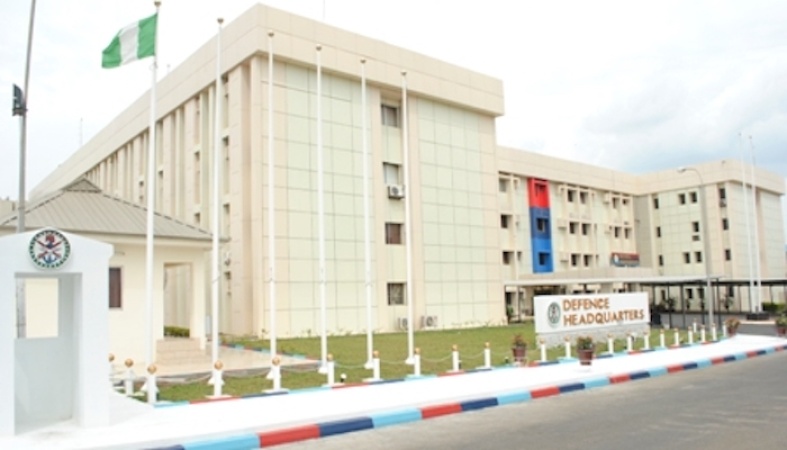
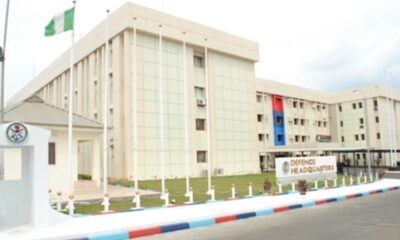
The Defence Headquarters has said it recorded 367 attacks across various theatres of operation in September 2026.
A breakdown showed that Operation Enduring Peace recorded the highest number of attacks with 147 incidents, followed by Operation Fansan Yamma with 115 and Operation Whirl Stroke with 55.
Operation Hadin Kai recorded 33 attacks, while Operation Savannah Shield recorded 13 and Operation Udo Ka recorded four. Operation Delta Safe recorded no attacks during the period.
Speaking while reeling out the achievements of the military across the theatres of operation on Wednesday, the Director, Defence Media Operations, Maj. Gen. Michael Onoja, said troops responded decisively to the incidents, swiftly engaging the assailants with superior firepower and tactical manoeuvre and successfully countering the attacks.
He said, “During the period under review, the AFN recorded a total of 367 attacks across various theatres of operation. Operation HADIN KAI recorded 33 attacks, Operation FANSAN YAMMA recorded 115, Operation SAVANNAH SHIELD recorded 13, Operation ENDURING PEACE recorded 147, Operation WHIRL STROKE recorded 55, and Operation UDO KA (OPUK) recorded 4, while Operation DELTA SAFE recorded no attacks. Troops responded decisively to these incidents, swiftly engaging the assailants with superior firepower and tactical manoeuvre, and successfully countering the attacks.”
Onoja also said troops arrested 350 terrorists and criminals, rescued 655 kidnapped civilians and facilitated the surrender of 75 insurgents.
He added that troops recovered 52 arms and 2,335 rounds of ammunition, dismantled eight illegal refining sites and recovered more than 304,822 litres of stolen petroleum products during the period.
“The operational record for the month of September is indicative of the AFN’s resolve across all operational theatres to ensure the creation of a safe and secure environment in the country,” he said.
He added, “The AFN neutralised 52 terrorists and criminals; arrested 350 terrorist/criminals; rescued 655 kidnapped civilians; 75 insurgents surrendered; recovered 52 arms and 2,335 rounds of ammunition; dismantled 8 illegal refining sites; and recovered over 304,822 litres of stolen petroleum products.”
For the third quarter, Onoja said troops killed 554 terrorists and arrested 1,333 terrorists and criminals.
Onoja said, “The AFN demonstrated sustained capacity in confronting the full spectrum of security challenges facing the nation, from terrorism and banditry in the northern theatres to kidnapping, oil theft and secessionist agitation in the southern theatres.
“The scale of successes recorded for the Third Quarter 2026, ranging from the neutralisation of 554 terrorists and criminals; arrest of 1,333 terrorist/criminals; rescue of 1,736 kidnapped civilians; surrender of 333 insurgents; capture of 244 arms and 8,160 rounds of ammunition; dismantling of 104 illegal refining sites; and recovery of 1,610,402 litres of stolen petroleum products represents a significant degradation of criminal and terrorist operational capacity nationwide.”
-
 News2 days ago
2027: How Atiku told me to persuade Peter Obi to accept VP slot – Babachir Lawal Ex-SGF Babachir Lawal
-
News22 hours ago
Ojukwu Property Dispute: OTL petitions IGP over demolition, construction at Macpherson Avenue Property
-
News3 days ago
APC wins all Chairmanship, Councillorship seats in Enugu
-
News2 days ago
SDGs: Mbah moves Enugu beyond projects, targets lasting development impact
-
News20 hours ago
‘I’m strong, ready to work’ – Tinubu speaks after return from vacation
-
News2 days ago
FG slashes interest rate on late tax payment
-
Politics2 days ago
APC chairmen reject Wike’s coalition, demand defection
-
News20 hours ago
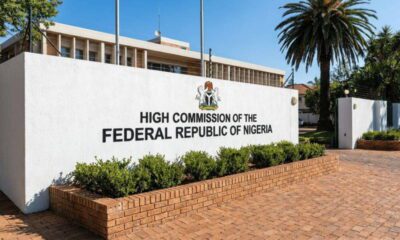
Xenophobia: Nigerian Consulate condemns killing of three Nigerians in South Africa