News
Obi reaffirms ‘Consumption to Production’ Mantra as Nigeria ranks among top 20 Most Hungry Nations

…82 Million Nigerians at risk of hunger
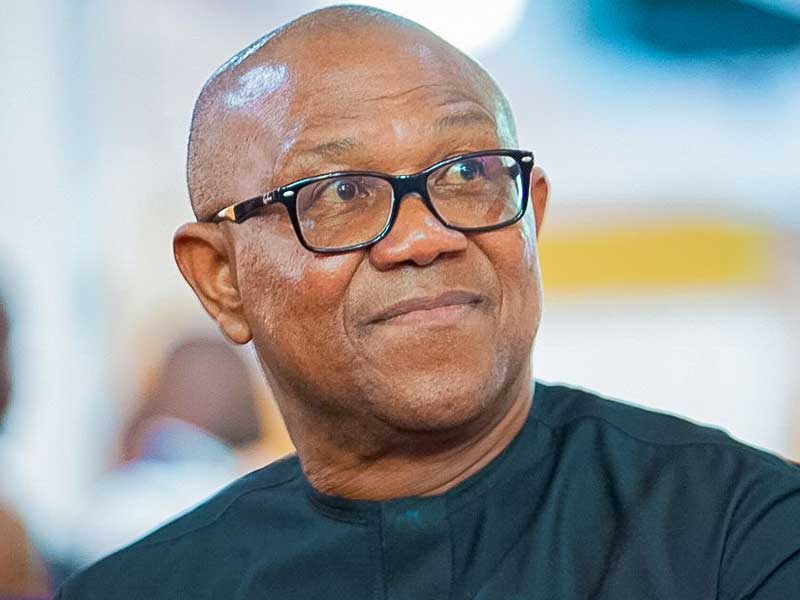
The Labour Party leader and 2023 Presidential Candidate, Peter Obi, has reiterated his core campaign message amid alarming reports that Nigeria now ranks among the top 20 most food-insecure countries globally.
In a statement marking World Food Day, Obi expressed deep concern over the Global Hunger Index, which places Nigeria among the 20 nations facing the worst hunger crises.

He pointed out that by August 2024, more than 31.8 million Nigerians were experiencing severe food shortages due to escalating security issues and the removal of fuel subsidies.
“It was also reported that 15.6 million Nigerian children are grappling with hunger,”
Obi said. “Furthermore, the United Nations has warned that 82 million Nigerians could face hunger by 2030 if urgent steps are not taken to address food insecurity.”

Obi highlighted that Nigeria’s domestic food inflation is among the highest worldwide, with food prices increasing by 37.5% year-on-year as of August 2024.
As the world observes World Food Day, Obi stressed that this global event serves to raise awareness of hunger and food insecurity, urging a renewed commitment to tackling the issue head-on.
“This global observance is especially significant to us in Nigeria, where food prices are soaring daily, making even basic necessities unaffordable for the majority,”
Obi stated. “Severe hunger has now tragically become a member of many Nigerian households. This is a nation that was once considered the giant of Africa, with the most arable land on the continent.”
Obi lamented Nigeria’s current struggle with hunger, given the country’s vast agricultural potential. “It is disheartening that despite our richly blessed, fertile lands, Nigeria is suffering from a deepening food crisis,” he added.
“In the past, I was concerned that many Nigerian households spent most of their income on food, leaving little to no room for savings or other essentials. Today, it is even more painful to see that many households can no longer afford even the most basic sustenance,” Obi remarked.
He noted that the food crisis has worsened significantly, with prices continuing to climb and hunger escalating into a national emergency.
Citing a recent Food Security Update from the World Bank, Obi warned that Nigeria’s food crisis has been likened to that of war-torn countries like Yemen, where acute food shortages and widespread hunger prevail.
“These distressing reports are just a glimpse of the harsh reality,” Obi said.
“For years, I have consistently argued that moving our country from consumption to production is the only viable solution to tackling food insecurity and lifting the nation out of this crisis.”
Obi emphasized the immense potential of Nigeria’s uncultivated lands, particularly in the North, coupled with the nation’s large population.
“We must invest deliberately in agriculture,” he stated.
“Take Niger State, for example, which is twice the size of the Netherlands in land area (excluding water), yet it struggles to feed itself, while the Netherlands exports over $100 billion worth of agricultural products annually.”
To combat hunger, Obi called for targeted investment in agriculture, focusing on improving security to allow farmers to return to their lands and adopting modern mechanised farming techniques.
“A nation brimming with productivity, free from hunger, and abundant in food supply is the vision of the new, more prosperous Nigeria we are committed to building. It is possible!” Obi concluded.



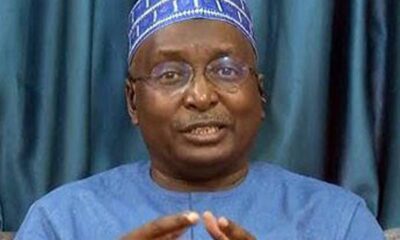






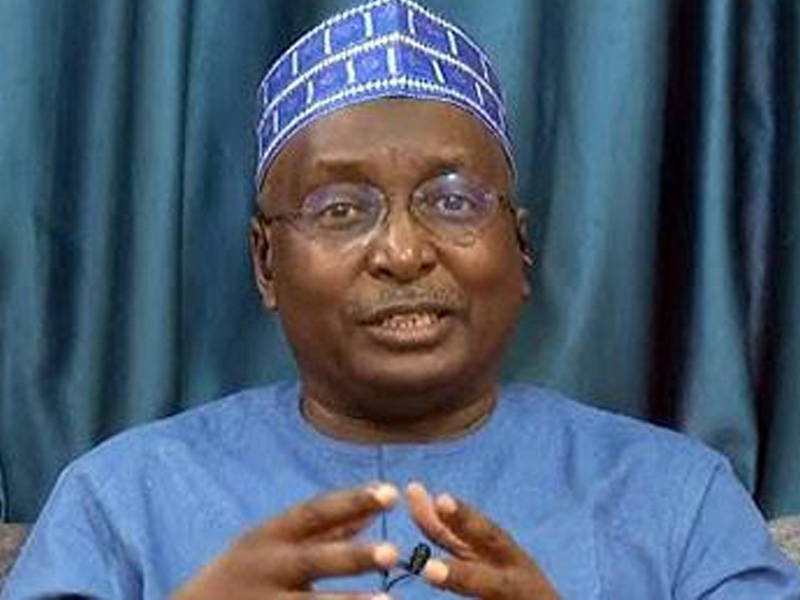
The convener of the G100 political pressure group, Salihu Lukman, has said opposition parties working in alliance with the group will announce a single presidential candidate for the 2027 general elections, possibly only days before the poll.
Lukman, a former National Vice Chairman of the All Progressives Congress (APC), spoke on Channels Television’s programme, Hard Copy.
“I can tell you categorically, and my confidence about that comes from what I see in the leadership of the parties: they are committed and they are working, taking all the steps necessary.
“So it could be two months, some weeks to the election, or a few days to the election; they will come out and tell Nigerians this is the direction, and everybody will queue”, he said.
According to him, the effort has gone beyond the six parties currently involved. “They are also working to expand; they are reaching out to other parties,” he said.
The G100 was formed to push the opposition towards a united front after an all-opposition summit in Ibadan in April 2026 resolved to field a consensus candidate against the ruling APC.
Lukman said the parties and their candidates have since taken over the process from the group.
“When the parties owned the process we had started and took it beyond, took it out of our hands and began to engage each other based on the need to develop the kind of confidence they need to trust one another,” he said.
He identified the biggest obstacle as “the trust deficit among even the parties and the candidates.”
He explained that a summit on August 31 “agreed to have five working groups, and one of the working groups is the one that will work on that single consensus candidate.”
Each party, he said, will nominate members into the group, either through its candidate or through the party itself, under agreed terms of reference.
“The collegiate is basically about ensuring that both the parties and their candidates are the ones taking the decisions, and at the same time the people doing the work are people who have the mandate of both the parties and the candidates, not anybody from outside,” he said.
Asked how the group would handle supporters of Peter Obi, Atiku Abubakar and the Kwankwasiyya movement, who have shown no sign of yielding, Lukman said rigid positions help the ruling party.
“Taking a hardline position, a rigid position, is almost like working for the APC and the Tinubu government at this point,” he said.
He said many signatories to the G100’s open letter support Obi or Atiku, but that the group has told them “the country is superior to any individual.”
Lukman said John Cardinal Onaiyekan recently made the same point on Channels Television, that opposition candidates cannot split votes five ways and expect one of them to defeat a ruling party.
“The arithmetic is simple: you can’t split votes five ways and expect victory in one of you,” Lukman said.
On the differing manifestos of the parties, including the Social Democratic Party (SDP) candidate’s pledge of a 300 naira starting pump price for petrol, Lukman said the group would not merge documents.
“It’s not harmonising manifestos; it’s basically to come up with a minimum programme of action which the government to be produced post-2027 will prioritise implementing,” he said.
He said all candidates would subscribe to the programme in advance, so that “in the event that any of them emerge as the candidate there is no debate.”
Lukman said much of the groundwork already exists, since the candidates’ campaigns have developed their own positions.
“I’m sure the Peter Obi campaign has also done some work; I am also sure Prince Adewole Adebayo and all the other candidates have also done their own work,” he said.
He said the outcome could be “ADC, it could be any other party, or it could be an alliance that will produce a new party,” and added: “I don’t have ambition to contest election and I don’t have ambition to hold any appointive or elective office.”
Warning candidates against clinging to their tickets, Lukman said: “Politicians can lie to themselves, and at the end of the day let the candidates continue to hang on to their candidature; at the end of the day only one person will be president of the Federal Republic of Nigeria.”
Lukman also addressed his withdrawal of membership of the African Democratic Congress (ADC), which he attributed to internal issues in Kaduna and said he has now resumed membership of the party.
He said he feared the party was “shifting to a direction where we will end up reproducing the old parties we have left.” (Saturday Vanguard)
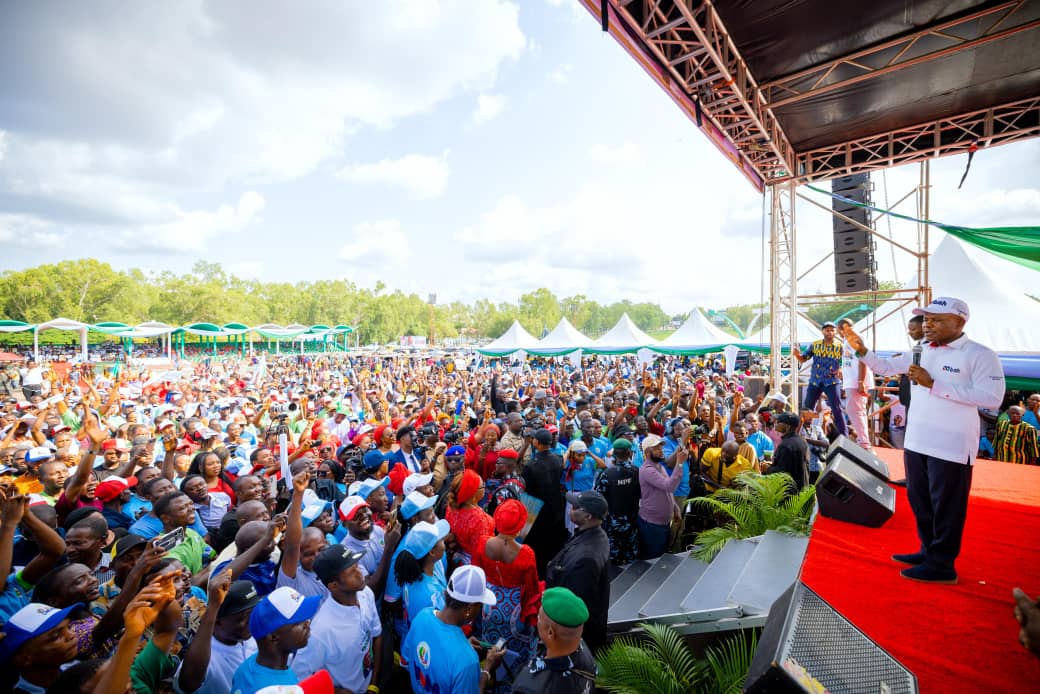
..Reiterates Enugu’s zero tolerance for political violence
The Tricycle Riders Association of Enugu State has endorsed the state governor, Dr. Peter Mbah, for a second term in office, citing improved security, road infrastructure, and social amenities in the state.
The association, popularly known as Keke Riders, also endorsed President Bola Tinubu, citing the Enugu–Onitsha Road, Enugu–Port Harcourt Expressway, New Artisan Bridge, Obinagu Flyover, and strategic appointments.
This was even as Governor Mbah scrapped the N750 daily payment by tricycle operators and also extended their operational time from 9pm to 10pm.
Mbah also said they would continue to operate at no cost at all the state’s modern transport terminals.
Leading the endorsement at Okpara Square, Enugu, during the conclusion of a “One Million March” event on Saturday, the state Chairman of the Tricycle Riders Association of Nigeria, Comrade Kingsley Edeh, said the endorsements were predicated on achievements, especially those that have impacted the lives and businesses of tricycle riders, their families, and the people of Enugu State in general.
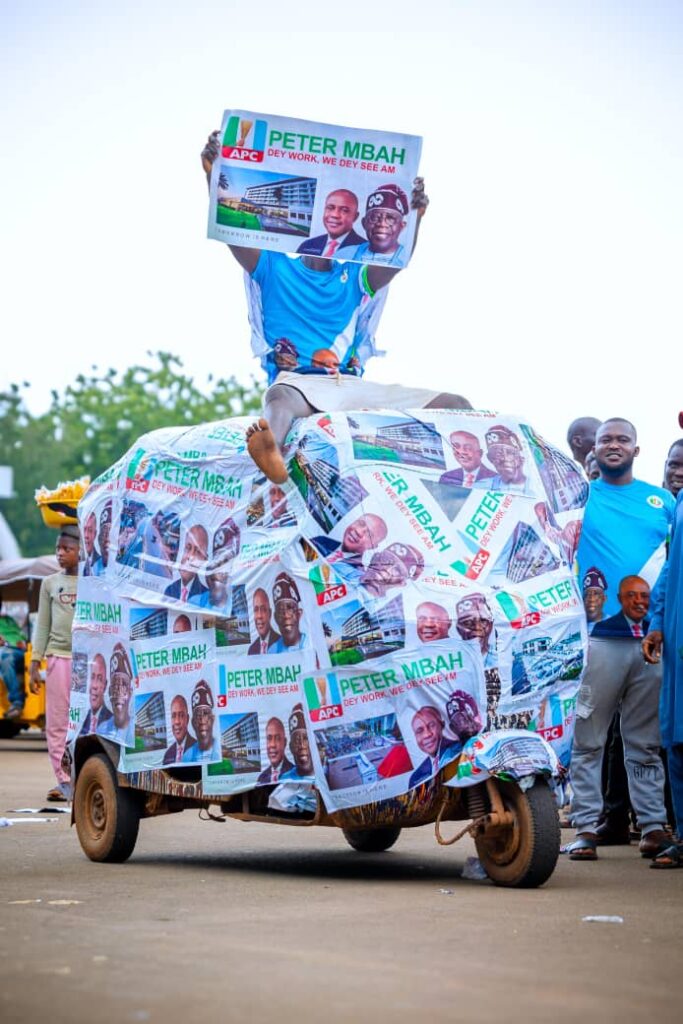
“Which will we reel out and leave the other? Is it the security and good roads, which now enable us to ply our trade without any problems, the 267 Smart Green Schools, the completion of long-abandoned projects such as the International Conference Centre, Nigergas Limited, Sunrise Four Mills, Hotel Presidential, and many more?
“We can also see the infrastructure President Tinubu is building in the South East and the support he is giving to our governors.
“So, we will vote APC from top to bottom come 2027,” he declared.
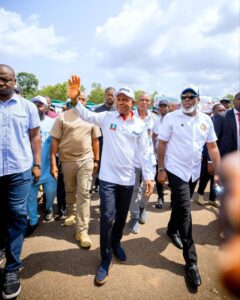
Corroborating the position of the Tricycle Riders Association in Enugu, the body’s National Secretary, Comrade Sunday Enang, described Mbah as a ‘magician’ in the art of governance, stressing that no governor anywhere had done what he was able to accomplish in three years.
“Your ‘Tomorrow Is Here’ vision is evident in the construction of modern transport terminals, the establishment of Enugu Air, investment in an asphalt plant, intra- and inter-city road construction, and efforts to improve traffic flow and urban transportation.
“These initiatives are promoting safer, more organised, and more efficient movement across the state.
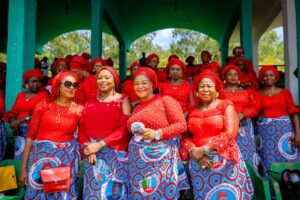
“We also commend the policy allowing tricycle operators to use designated terminals without paying toll fees. This support recognises their contribution to the economy and the livelihoods of thousands of families.
“These practical policies reflect disruptive innovation and demonstrate how effective leadership can turn vision into tangible opportunities,” he said.
In his response, Mbah described tricycle operators as critical players in the state’s economy, stressing that while his administration was focused on growth, it was equally determined to eradicate poverty, hence the various interventions to increase their disposable incomes.
“You are the powerhouse of our economy because you set out early in the morning, working long hours, navigating traffic, taking our workers to work, taking our students to school, moving our people from urban areas to rural communities, connecting businesses, and helping traders get to their businesses. A lot of people earn their living because of what you do.
“But we also see your struggles. So, I have started engaging with your executives on how we can make life better for you. As the Managing Director of the Transport Terminal just said, no more payment by our tricycle riders at any of the transport terminals.
“Let me also recognise something. Our government, as you know, is not just about growth. We are also interested in ending poverty and making sure that you have more money or disposable income to take care of your family. And so, the issue of tickets is sealed. No more tickets for you.
“Again, when we came into the office in 2023, we inherited a curfew on tricycle operators such that they could only operate from 6am to 9pm. There was a sit-at-home, but we have ended that with your support. Today, Enugu State is safe. So, we will be shifting your operational time limit from 9pm to 10pm,” he said.
While acknowledging their commendation for the rapid construction of roads, Mbah said this was part of the government’s deliberate steps to increase their disposable incomes by reducing their spending on repairs, assuring them that his administration would construct and reconstruct all the remaining 1,022 urban roads in the state.
“Because I understand how bad roads can be terrible, not only for your tricycles and the money you spend on repairs, but also for the time you spend at the mechanic, all the roads in Emene, Abakpa, Idaw River, Trans-Ekulu, Awkunanaw Area, Coal Camp, New Haven, Thinkers Corner, Uwani, among others, are paved or being paved.
“I can assure you that there will be no road in our city that will be unpaved. We are going to pave all the remaining 1,022 roads,” he emphasised.
Meanwhile, Mbah has vowed that his administration would take every step within the law to preserve the security and peace that the people of Enugu had worked to build in the state.
“You must treasure it. You must protect it. Enugu is on an upward trajectory. We will not allow those deceptive voices and politicians who campaign in poetry but only govern in prose. With our government, you have experienced real development and real growth.
“Let me also warn that we have worked extremely hard to establish a safe state. Nobody, no matter their ambition, will take that away from us. And we will not stop at anything, deploying all means necessary within the law to bring to book any violator or anybody who tries to import thugs to disrupt the peace and public safety we enjoy in this city and this state. We have zero tolerance for violence.”
He enjoined the people to make good their endorsements by getting their PVCs ready for the 2027 elections and voting massively for him, all APC candidates, and President Bola Tinubu, whose policies, he said, ensured the availability of resources to execute the numerous projects they listed.
Other speakers at the event were the Enugu State Chairman of the APC, Dr. Martins Chukwunweike; Grand Patron of the Enugu State Traditional Rulers Council, HRH Igwe Greg Ugwu; and the Managing Director, Enugu East Zone Transport Terminals, Dr. John Egbo.
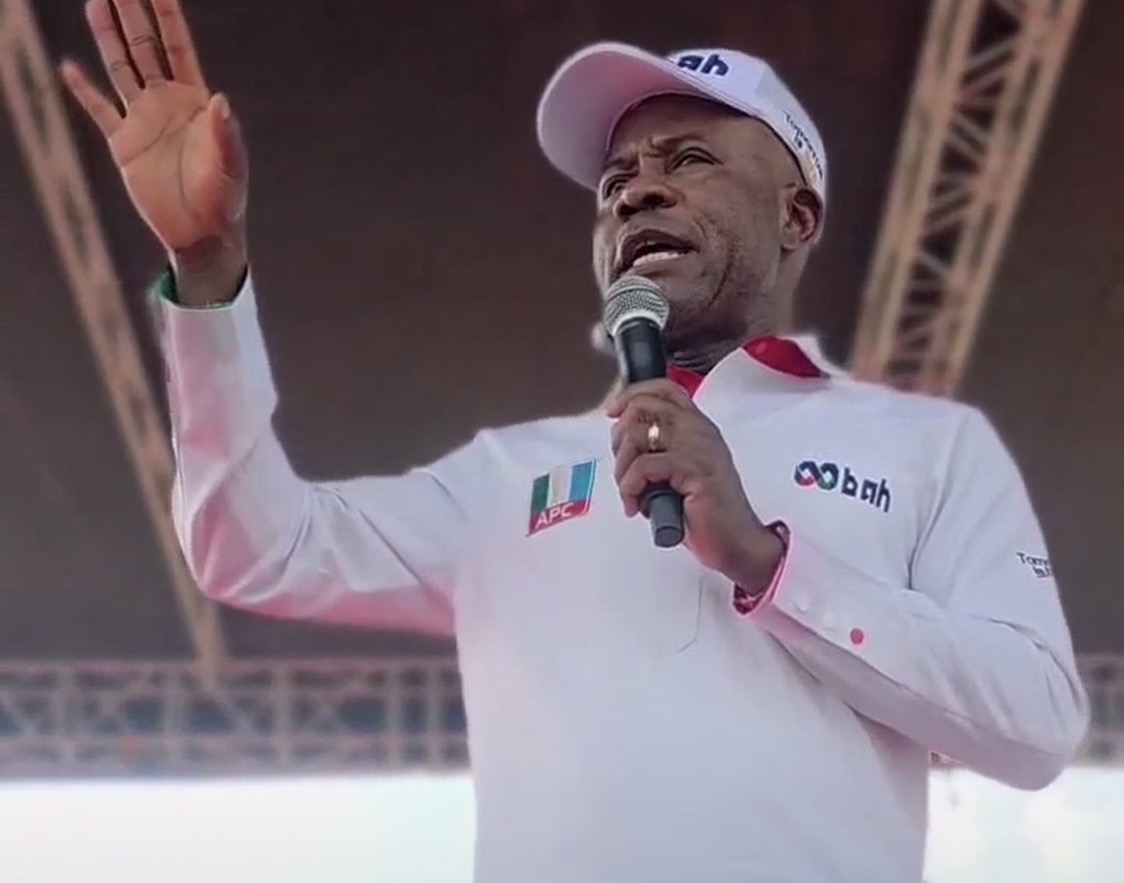
…Move gives tricycle operators additional operating hours
By Tony Edike
Enugu State Governor, Dr Peter Mbah, has extended the state’s existing 9pm movement restriction to 10pm and directed an end to ticketing for commercial tricycle operators, popularly known as keke riders.
The governor announced the measures on Saturday, October 17, 2026, during the One Million Man March organised in his honour by the Tricycle Riders Union in Enugu State at Okpara Square, Enugu.
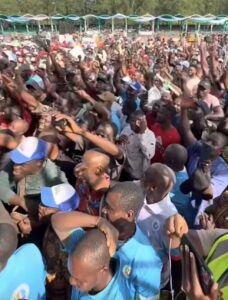
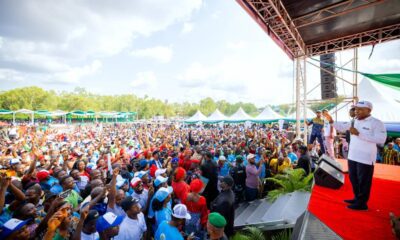
Large crowd of Keke riders at the rally
The decisions represent changes to the movement restrictions and enforcement arrangements affecting commercial transport operators and other road users across the state.
Under the revised arrangement, the restriction previously enforced from 9pm will now take effect at 10pm, giving residents and commercial transport operators an additional hour to carry out their legitimate activities in the evening.
Mbah also directed that commercial tricycle operators should no longer be issued tickets under the previous enforcement arrangement, a decision that is expected to ease some of the financial and operational concerns associated with the system.
Background to the movement restriction
The Enugu State Government had maintained restrictions on the operating hours of commercial tricycles and buses since 2023 as part of measures to tackle kidnapping and violent crime.
The Advocate reports the restriction had limited commercial transport activities to the period between 6am and 9pm, affecting evening movement and business activities across the state.
The extension to 10pm therefore provides an additional hour for commercial transport operators to convey passengers and for residents to complete their journeys before the restriction begins.
For keke riders, the end of ticketing under the previous arrangement is another significant aspect of the announcement.
The governor’s directive is expected to reduce the burden associated with the former ticketing system, although details of its implementation and the treatment of any other applicable transport charges would need clarification.
Implications for residents and transport operators
The revised restriction could provide additional flexibility for residents returning from work, traders concluding their daily activities and passengers who depend on commercial tricycles for evening transportation.
Tricycle operators may also benefit from the additional operating hour, potentially allowing them to serve more passengers before the movement restriction takes effect.
The state government’s implementation arrangements will be important in ensuring that the governor’s directive is understood and consistently enforced by the relevant agencies.
The latest measures come amid continuing efforts to balance public safety with the movement and economic activities of residents and commercial transport operators.
The governor’s announcement at the union-organised gathering places the revised operating hours and the end of the previous ticketing arrangement at the centre of discussions about commercial transportation in Enugu State.
However, the governor’s directive triggered wild jubilation by the tricycle operators who declared their unflinching support for the continuity of his government.
-
 Faith1 day ago
BREAKING: Anglican Church Places Archbishop Ibezim on Six-Month Leave, Bars Him From Church Duties
-
News2 days ago
Senate fumes over death of NYSC Corps member at Enugu Camp, orders probe
-
News2 days ago
How Senator Mandiya died after bathroom fall in Abuja Home – Ningi
-
Politics2 days ago
2027: I can bet my life Obi will humiliate Soludo in Anambra – Momodu
-
News1 day ago
Gunmen Abduct Catholic Priest in Benue, Police Launch Rescue Operation
-
News1 day ago
Tinubu Orders Rescue of Kidnap Victims, Demands Peaceful 2027 Elections
-
News2 days ago
NDC secretariat attacked in Edo
-
News5 hours ago
BREAKING: Mbah Extends Enugu Movement Restriction to 10pm, Scraps Keke Ticketing